Method, base station and user equipment for reducing a cognitive pilot channel bandwidth
US20120108247A1
2012-05-03
13/263,677
2010-04-09
✅ Patent granted
US 9,020,543 B2
2015-04-28
WO; PCT/JP2010/002627; 20100409
WO; WO2010/116765; 20101014
Mahendra Patel | Natasha Cosme
Sughrue Mion, PLLC
2032-05-13
Abstract:
The invention relates to a method for reducing a Cognitive Pilot Channel (CPC) bandwidth used for transmitting lists of information to a plurality of meshes of a geographical area comprising at least one base station (4) covering n meshes to allow a User Equipment camping on a given mesh among said plurality of meshes to select an operator and/or an access technology and/or a communication frequency available in said given mesh.
According to the invention, for a given mesh #i (i=2 to n), the base station transmits to said mesh #i an identifier of a predetermined reference mesh and the difference between the list of information intended for said given mesh and the list of information intended for said reference mesh.
Significant Figure: FIG. 2
Inventors:
- Jerome Tring 1 🇬🇧 Berkshire, United Kingdom
- Lahouari Korbaa 1 🇬🇧 Berkshire, United Kingdom
- Belkacem Mouhouche 1 🇬🇧 Berkshire, United Kingdom
- Jerome Tring 1 🇬🇧 Reading, United Kingdom
- Lahouari Korbaa 1 🇬🇧 Reading, United Kingdom
- Belkacem Mouhouche 1 🇬🇧 Reading, United Kingdom
Assignee:
- NEC Corporation 20,055 🇯🇵 Tokyo, Japan
Applicant:
Interested in similar patents?
Get notified when new applications in this technology area are published.
Classification:
H04W40/00 IPC
Communication routing or communication path finding
H04W36/385 » CPC main
Hand-off or reselection arrangements; Reselection control by fixed network equipment of the core network
H04W4/14 IPC
Services specially adapted for wireless communication networks; Facilities therefor; Messaging; Mailboxes; Announcements Short messaging services, e.g. short message services [SMS] or unstructured supplementary service data [USSD]
G06F7/00 IPC
Methods or arrangements for processing data by operating upon the order or content of the data handled
H04W36/38 IPC
Hand-off or reselection arrangements; Reselection control by fixed network equipment
Description
TECHNICAL FIELD
The invention pertains to telecommunication field and concerns a method for reducing a Cognitive Pilot Channel (CPC) bandwidth used for transmitting lists of information to a plurality of meshes of a geographical area comprising at least one base station covering said plurality of meshes to allow a User Equipment camping on a given mesh among said plurality of meshes to select an operator and/or an access technology and/or a communication frequency available in said given mesh.
The invention also concerns a base station covering a geographical area comprising a plurality of meshes receiving a Cognitive Pilot Channel (CPC) carrying lists of information on operators, access technology and radio frequencies available in each mesh.
The invention further concerns User Equipment (UE) camping on a mesh of a geographical area comprising a plurality of meshes receiving a Cognitive Pilot Channel (CPC) carrying lists of information on operators, access technology and radio frequencies available in each mesh.
BACKGROUND ART
Cognitive Pilot Channel (CPC) is a concept used in cognitive radio to provide information to cognitive mobiles about the available operators, Radio Access Technologies (RAT) and Frequencies available in a geographical area.
Two Major concepts for Cognitive Pilot Channel are proposed by the E3 project and ETSI RRS Group: Mesh based and Optimised broadcast approach.
-
- Mesh based concept in which a cell in the geographical area is divided into a plurality of meshes and information is provided about operators, RAT and Frequencies available in each mesh.
- Optimised broadcast concept in which information about all the RATs and frequencies available in the cells is transmitted.
DISCLOSURE OF INVENTION
Although Mesh based concept is more precise than Optimised broadcast concept, it presents a drawback resulting from the fact that the transmission of information to the meshes requires a larger frequency band to be allocated to CPC.
One of the proposed methods to reduce the CPC data rate is to transmit the same CPC for the whole cell, not to meshes of said cell, and transmit the coverage area for each technology and frequency. The problem with this kind of approach is that coverage areas are not easily characterized and transmitting a detailed coverage area may result in a large data-rate as well.
MEANS TO SOLVE THE PROBLEM
The present invention aims at reducing the CPC data rate.
Another object of the invention is to reduce the CPC message length to enable a shorter period between mesh information occurrences for the same bit rate.
The invention also aims at reducing the required bandwidth for the CPC use while increasing CPC message robustness.
The invention is based on the fact that close meshes usually differ by only few frequencies.
Thus instead of transmitting the whole information each time, in the method according to the invention, all the information is first transmitted to a reference mesh, and only information about the difference between each mesh is subsequently transmitted to a given mesh.
This object is achieved by means of a method for reducing a Cognitive Pilot Channel (CPC) bandwidth used for transmitting lists of information to a plurality of meshes of a geographical area comprising at least one base station covering said plurality of meshes to allow a User Equipment camping on a given mesh among said plurality of meshes to select an operator and/or an access technology and/or a communication frequency available in said given mesh.
The method according to the invention comprises the following steps:
-
- providing the base station with said lists of information,
- defining a reference list of information associated to a reference mesh,
- associating an identifier to said reference mesh,
- transmitting the reference list of information to the reference mesh, and for each subsequent transmission of information to a given mesh,
- comparing the list of information intended for said given mesh to the list of information comprised in the reference list,
- determining from said comparison a difference between the list of information intended for said given mesh and the list of information comprised in the reference list,
- transmitting to said given mesh the identifier of the reference mesh along with the determined difference, and,
- upon reception of said identifier and said difference, the User Equipment automatically infers a complete list of operators, technologies and frequencies available in said given mesh from the difference between the list of information intended for said given mesh and the reference list.
According to a first variant of the invention,
-
- For i=2 to n, n being the number of meshes in the geographical area, the base station receives information about the operators, the technologies and the frequencies present in each mesh and selects mesh #1 as a reference mesh,
- the base station transmits the complete list of information concerning operators, Radio Access technologies (RAT) and frequencies present in the reference mesh #1,
- For i=2 to n, n being the number of meshes in geographical area, the base station compares information intended respectively for the mesh #i and mesh #i−1 and derives the differences between the list of information of each mesh and the following mesh,
- the base station transmits said difference to the mesh #i,
- upon reception of said difference, the User Equipment analyses the information intended for the reference mesh, and,
- For i=2 to m, where m is the rank of the mesh in which the UE is located, the UE determines the list of operators, RATs and frequencies present in mesh #m by including all the differences between consecutive meshes.
According to a second variant of the invention,
-
- the base station receives information about the operators, the technologies and the frequencies present in each mesh.
- For i=1 to n, n being the number of meshes in the geographical area, the base station compares the list of information intended for a given mesh #m (1<m<n) to the list of information intended for each mesh #i (i=1 to n) and determines the closest mesh #A (A<i) to the given mesh #m and the difference between said closest mesh A and said mesh #m,
- the base station transmits the complete list of information concerning operators, Radio Access technologies (RAT) and frequencies present in the reference mesh #1,
- For i=2 to n, the base station transmits the information intended for the closest mesh #A and the difference in the available operators, RATs and frequencies between said given mesh #m and said closest mesh #A, and,
- upon reception of information intended for the closest mesh #A and the difference in the available operators, RATs and frequencies between the mesh #m and the closest mesh #A,
- the User Equipment determines the list of operators, RATs and frequencies present in mesh #m by including all the differences between said meshes #m and said closest meshes #A.
Preferably, the closest mesh #A (A<i) is the one whose information list is the closest to the information list of the mesh in which the UE is located.
In order to avoid error propagation, the base station transmits periodically a plurality of reference meshes to the geographical area.
The transmission periodicity is chosen depending on the reliability of the Cognitive Pilot Channel decoding.
The invention is implemented by at least one base station covering a geographical area comprising a plurality of meshes receiving a Cognitive Pilot Channel (CPC) carrying lists of information on operators, access technology and radio frequencies available in each mesh.
The base station according to the invention comprises:
-
- means for defining a reference list of information,
- means for associating said reference list of information to a reference mesh,
- means for associating an identifier to said reference mesh,
- means for transmitting the reference list of information to the reference mesh,
- means for comparing the list of information intended for a given mesh to the list of information comprised in the reference list prior to each subsequent transmission of information to said given mesh,
- means for determining from said comparison a difference between the list of information intended for said given mesh and the reference list,
- means for transmitting to said given mesh the identifier of the reference mesh along with the determined difference in order to allow a User Equipment camping on said given mesh to automatically infer a list of operators, technologies and frequencies available in given mesh from differences between the list of information intended for the reference mesh and the list of information intended for the given mesh.
The User Equipment implementing the method according to the invention comprises means for automatically inferring a list of operators, technologies and frequencies available in the mesh in which said User Equipment is located from differences between the list of information intended for a predetermined reference mesh and the list of information intended for the mesh in which said User Equipment is located.
BRIEF DESCRIPTIONS OF DRAWINGS
The forgoing summary, as well as the following detailed description, will be better understood when read in conjunction with the appended figures illustrating an exemplary embodiment of the invention in which:
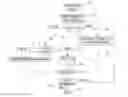
FIG. 1 schematically represents an area in which the method according to the invention is implemented;
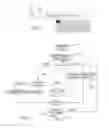
FIG. 2 is flow chart illustrating the steps of a first embodiment of the method according to the invention;
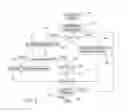
FIG. 3 is flow chart illustrating the steps of a second embodiment of the method according to the invention.
BEST MODE FOR CARRYING OUT THE INVENTION
The invention will be described when implemented in a geographical area covered by at least one wireless telecommunication network and in which a Cognitive Pilot Channel is used for broadcasting information on the available Radio Access technologies (RATS) and frequencies to allow cognitive receiver such as mobile phones, PDA, or laptops to choose the most convenient RAT and frequency for communicating in the network. Said geographical area is divided into a number M of contiguous elementary meshes.
As illustrated by FIG. 1, the geographical area is divided into M=32 (thirty two) contiguous elementary meshes 2 covered by a base station 40 that broadcasts a Cognitive Pilot Channel (CPC) carrying lists of information on operators, access technology and radio frequencies available for each mesh #i (i=1 to 32).
The processing module of the base station 40 comprises means for defining a reference list of information, means for associating said reference list of information to a reference mesh, means for associating an identifier to said reference mesh.
Said processing module is provided with software for comparing the list of information intended for any given mesh #i (i=1 to 32) to the list of information comprised in the reference list and for determining the difference between said lists of information.
In a first embodiment illustrated by FIG. 1, at step 50, the base station 4 transmits to mesh #1 a list of information indicating the operators, the Radio access technology and the communication frequency available in said mesh #1.
At step 52, the processing module of the base station sets the information transmission delay between two successive transmission at value D taking into account the size of the geographical area and the transmission conditions in that area.
At step 54, the processing module checks whether the period D has elapsed or not.
If the period D has elapsed (arrow 56), the base station transmits the complete list of information to any mesh #i (i=1 to 32).
At step 60, the processing module increments the rank of the mesh to receive the list of information and compare the current rank (step 62) with the total number (32) of meshes.
If all the meshes have received the list of information, the base station stops transmitting said lists (step 64), else, the process is resumed from step 54.
If the period D has not elapsed (arrow 68), for a given mesh #i (2<i<32), at step (70) the processing module compares the list of information intended for said mesh #i to the list of information intended for the preceding mesh (#i−1).
If the lists compared are identical (arrow 72), the processing module considers that the list to transmit to mesh #i is the list of information previously transmitted to mesh #i−1 (step 73).
Else, the base station transmits to mesh #i the information which is present in the list of mesh #i but absent from the list of mesh #i−1 (step 74).
At step 60, the processing module increments the rank of the mesh to receive the list of information and compare the current rank (step 62) with the total number (32) of meshes.
If all the meshes have received the list of information, the base station stops transmitting said lists (step 64), else, the process is resumed from step 54.
FIG. 2 is a flow chart illustrating the steps of a second embodiment of the method according to the invention comprising identical steps 50-68 as the first embodiment.
This second embodiment differs from the first embodiment by the steps 80 to 90 which will be described below.
At step 80, for a given mesh #i (i=2 to 32) the processing module determine a reference mesh which is not necessary the preceding mesh #i−1.
In this embodiment, the reference mesh is the closest mesh #A (A<i) to said mesh #i in the sense that the difference between the list of information intended for mesh #i and the list of information intended for mesh #A is minimum.
The closest mesh #A (A<i) is determined by means of a specific software programmed in the processing module and in the UE equipments roaming in the geographical area.
At step 82, the processing module compares the list of information intended for said mesh #i to the list of information intended for the the closest mesh #A (A<i).
If the lists compared are identical (arrow 84), the processing module considers that the list to transmit to mesh #i is the list previously transmitted to mesh #A (step 86).
Else (arrow 90), the base station transmits to mesh #i the information which is present in the list of information intended for mesh #i and absent from the list of mesh #A.
At step 60, the processing module increments the rank of the mesh to receive the list of information and compare the current rank (step 62) with the total number (32) of meshes.
If all the meshes have received the list of information, the base station stops transmitting said lists (step 64), else, the process is resumed from step 54.
It is to be noted that the User Equipment implementing the method according to the invention should comprises means for automatically inferring a list of operators, technologies and frequencies available in the mesh in which it is located from differences between the list of information intended for the predetermined reference mesh and the list of information intended for the mesh in which it is located.
Claims
1. A method for reducing a Cognitive Pilot Channel (CPC) bandwidth used for transmitting lists of information to a plurality of meshes wherein each mesh is covered by at least one base station to which a User Equipment camping on, said method characterized by the following steps:
defining a reference list of information associated to a reference mesh,
associating an identifier to said reference mesh,
transmitting the reference list of information,
determining difference from the reference mesh by comparing the list of information intended for the given mesh with the reference list of information, and,
transmitting the determined difference from the reference list of information associated with the reference mesh as the list of information.
2. Method according to claim 1 further comprising the following steps:
determining difference from the given mesh by comparing the list of information intended for the mesh close to the given mesh with the list of information of the given mesh,
transmitting the determined difference to the given mesh as the list of information.
3. Method according to claim 1, wherein the list of information includes list of operators and/or technologies and/or frequencies available.
4. Method according to claim 1 further comprising the following steps:
the User Equipment receives the determined difference from the reference mesh and the reference list, and
infers a complete list of the given mesh based on the determined difference from the reference mesh and the reference list.
5. Method according to claim 2 further comprising the following steps:
the User Equipment receives the determined difference from the given mesh, the determined difference from the reference mesh, and the reference list, and infers a complete list of the mesh in which the User Equipment is located based on the determined difference from given mesh, the determined difference from the reference mesh and the reference list.
6. Method according to claim 4, wherein a complete list includes operators and/or technologies and/or frequencies available of the User Equipment.
7. Method according to claim 1 further comprising the following steps:
For i=1 to n, n being the number of meshes in the area covered by a base station, the base station receives information of each mesh and selects mesh #1 as a reference mesh,
the base station transmits the complete list of information of the reference mesh #1, and,
For i=2 to n, the base station derives the differences between the list of information of mesh #i and the list of information of mesh #i−1, and,
the base station transmits the differences.
8. Method according to claim 7 further comprising the following step:
the UE determines the list of information of mesh #m wherein the UE is located by the reference list and the differences between mesh #i and mesh #i−1 (i=2 to m).
9. Method according to claim 1 further comprising the following steps:
for i=1 to n, n being the number of meshes in the area covered by a base station, the base station receives information of each mesh and selects mesh #1 as a reference mesh,
the base station transmits the complete list of information of the reference mesh #1, and,
for i=2 to n, the base station derives the differences between the list of information of mesh #i and the list of information of the closest mesh #A (A<i) to mesh #i, and,
the base station transmits the differences.
10. Method according to claim 8 further comprising the following step:
the UE determines the list of information of mesh #m wherein the UE is located by the reference list and the differences between mesh #i and mesh #i−1 (i=2 to B) wherein the B is the number of the closest mesh to mesh #m.
11. Method according to claim 8 wherein the period of the transmission of the list of information is chosen depending on the reliability of the Cognitive Pilot Channel decoding.
12. A base station for reducing a Cognitive Pilot Channel (CPC) bandwidth used for transmitting lists of information to a plurality of meshes wherein each mesh is covered by at least one base station to which a User Equipment camping on, the base station characterized in that it comprises:
definer that defines a reference list of information associated to a reference mesh,
associater that associates an identifier to said reference mesh,
transmitter that transmits the reference list of information,
determiner that determines difference from the reference mesh by comparing the list of information intended for the given mesh with the reference list of information,
transmitter that transmits the determined difference from the reference list of information associated with the reference mesh as the list of information.
13. A base station according to claim 12 further comprising:
determiner that determines difference from the given mesh by comparing the list of information intended for the mesh close to the given mesh with the list of information of the given mesh,
transmitter that transmits the determined difference from the given mesh as the list of information.
14. A base station according to claim 13, wherein the list of information includes list of operators and/or technologies and/or frequencies available.
15. User Equipment for reducing a Cognitive Pilot Channel (CPC) bandwidth used for transmitting lists of information to a plurality of meshes wherein each mesh is covered by a base station to which the User Equipment camping on, the User Equipment characterized in that it comprises:
receiver that receives a reference list of a reference mesh and a determined difference from the reference mesh in which the User Equipment is located,
inferrer that infers a complete list of the mesh wherein User Equipment is located based on the determined difference from the reference mesh and the reference list.
16. User Equipment according to claim 15 further comprising:
receiver that receives a reference list of a reference mesh and a determined difference from given mesh in which the User Equipment is located.
17. User Equipment according to claim 15, wherein the complete list includes operators and/or technologies and/or frequencies available of the User Equipment.
Images & Drawings included:
Sources:
- United States Patent and Trademark Office - verify current appl. status at the USPTO↗
Recent applications in this class:
- » 20250088935 2025-03-13
CELL RESELECTION POLICY METHOD, SYSTEM, DEVICE, AND COMPUTER-READABLE MEDIUM - » 20240422646 2024-12-19
METHOD AND SYSTEM FOR NETWORK SLICE-BASED HIGH PRIORITY SERVICE HANDLING IN RADIO ACCESS TECHNOLOGY (RAT) SWITCHING - » 20240214902 2024-06-27
METHOD AND APPARATUS FOR REASSIGNMENT OF ACCESS AND MOBILITY MANAGEMENT FUNCTION IN COMMUNICATION SYSTEM - » 20230354142 2023-11-02
NETWORK HANDOVER PROCESSING METHOD, NETWORK HANDOVER PROCESSING APPARATUS, COMPUTER-READABLE MEDIUM, AND ELECTRONIC DEVICE - » 20230354141 2023-11-02
NETWORK HANDOVER PROCESSING METHOD, NETWORK HANDOVER PROCESSING APPARATUS, COMPUTER-READABLE MEDIUM, AND ELECTRONIC DEVICE - » 20230076033 2023-03-09
SYSTEM AND METHOD FOR CONNECTION AND HAND-OVER MANAGEMENT ACROSS NETWORKS AND SSIDS - » 20220417823 2022-12-29
Method and system for network slice-based high priority service handling in radio access technology (RAT) switching - » 20220070754 2022-03-03
Behavior-based UAV detection for communication networks - » 20210227444 2021-07-22
Enable a network-trigger change of network slices - » 20210105696 2021-04-08
Online learning based smart steering system for wireless mesh networks
Recent applications for this Assignee:
- » 20250295043 2025-09-18
SUPERCONDUCTING QUANTUM CIRCUIT - » 20250294700 2025-09-18
ELECTRONIC DEVICE RACK, ELECTRONIC DEVICE UNIT, AND METHOD OF INSTALLING ELECTRONIC DEVICE RACK - » 20250294570 2025-09-18
RADIO ACCESS NETWORK NODE, RADIO TERMINAL, AND METHODS AND NON-TRANSITORY COMPUTER-READABLE MEDIA THEREFOR - » 20250294518 2025-09-18
MONITORING DEVICE, TRACKING METHOD, AND NON-TRANSITORY COMPUTER-READABLE MEDIUM - » 20250294486 2025-09-18
METHOD, DEVICE AND COMPUTER READABLE MEDIUM FOR COMMUNICATIONS - » 20250294444 2025-09-18
CELL SELECTION BASED ON USER CAPABILITY - » 20250293871 2025-09-18
PRIVATE KEY RECOVERY DEVICE, PRIVATE KEY RECOVERY METHOD, AND STORAGE MEDIUM - » 20250293866 2025-09-18
QUANTUM KEY DISTRIBUTION SYSTEM, KEY MANAGEMENT APPARATUS, AND KEY MANAGEMENT METHOD - » 20250293833 2025-09-18
METHODS, DEVICES, AND COMPUTER READABLE MEDIUM FOR COMMUNICATION - » 20250293791 2025-09-18
COMMUNICATION CONTROL APPARATUS, COMMUNICATION APPARATUS, COMMUNICATION SYSTEM, STORAGE MEDIUM, AND COMMUNICATION CONTROL METHOD