METHOD AND CHAMBER MACHINE FOR SEALING PACKAGING MATERIAL
US20120110956A1
2012-05-10
13/271,747
2011-10-12
Abstract:
The disclosure relates to a method for sealing packaging material and a chamber machine or a belted chamber machine for implementation of the method for pre-heating at least one sealing bar to a first temperature in order to facilitate the escape of liquid, preferably
Assignee:
- MULTIVAC SEPP HAGGENMUELLER GMBH & CO. KG 44 🇩🇪 Wolfertschwenden, Germany
Interested in similar patents?
Get notified when new applications in this technology area are published.
Classification:
B29C65/18 » CPC further
Joining of preformed parts ; Apparatus therefor by heating, with or without pressure using heated tools
B29C66/0242 » CPC further
General aspects of processes or apparatus for joining preformed parts; General aspects dealing with the joint area or with the area to be joined; Preparation of the material, in the area to be joined, prior to joining or welding; Thermal pre-treatments Heating, or preheating, e.g. drying
B29C66/0342 » CPC further
General aspects of processes or apparatus for joining preformed parts; General aspects dealing with the joint area or with the area to be joined; After-treatments in the joint area; Thermal after-treatments Cooling, e.g. transporting through welding and cooling zone
B29C66/1122 » CPC further
General aspects of processes or apparatus for joining preformed parts; General aspects dealing with the joint area or with the area to be joined; Particular design of joint configurations particular design of the joint cross-sections; Joint cross-sections comprising a single joint-segment, i.e. one of the parts to be joined comprising a single joint-segment in the joint cross-section; Single lapped joints Single lap to lap joints, i.e. overlap joints
B29C66/3494 » CPC further
General aspects of processes or apparatus for joining preformed parts; General aspects dealing with the joint area or with the area to be joined; Cooling the welding zone on the welding spot while keeping the welding zone under pressure
B29C66/43121 » CPC further
General aspects of processes or apparatus for joining preformed parts; General aspects of joining substantially flat articles, e.g. plates, sheets or web-like materials; Making flat seams in tubular or hollow articles; Joining single elements to substantially flat surfaces; Joining substantially flat articles ; Making flat seams in tubular or hollow articles; Joining a relatively small portion of the surface of said articles; Joining the articles to themselves for making flat seams in tubular or hollow articles, e.g. transversal seams Closing the ends of tubular or hollow single articles, e.g. closing the ends of bags
B29C66/7373 » CPC further
General aspects of processes or apparatus for joining preformed parts characterised by the composition, physical properties or the structure of the material of the parts to be joined; Joining with non-plastics material characterised by the intensive physical properties of the material of the parts to be joined, by the optical properties of the material of the parts to be joined, by the extensive physical properties of the parts to be joined, by the state of the material of the parts to be joined or by the material of the parts to be joined being a thermoplastic or a thermoset characterised by the state of the material of the parts to be joined Joining soiled or oxidised materials
B29C66/8322 » CPC further
General aspects of processes or apparatus for joining preformed parts; General aspects of machine operations or constructions and parts thereof characterised by the movement of the joining or pressing tools; Reciprocating joining or pressing tools Joining or pressing tools reciprocating along one axis
B29C66/849 » CPC further
General aspects of processes or apparatus for joining preformed parts; General aspects of machine operations or constructions and parts thereof; Specific machine types or machines suitable for specific applications Packaging machines
B29C66/91421 » CPC further
General aspects of processes or apparatus for joining preformed parts; Measuring or controlling the joining process by measuring or controlling the temperature, the heat or the thermal flux by controlling or regulating the temperature, the heat or the thermal flux by controlling or regulating the temperature of the joining tools
B29C66/91951 » CPC further
General aspects of processes or apparatus for joining preformed parts; Measuring or controlling the joining process by measuring or controlling the temperature, the heat or the thermal flux characterised by specific temperature, heat or thermal flux values or ranges in explicit relation to another variable, e.g. temperature diagrams in explicit relation to time, e.g. temperature-time diagrams
B29C66/92921 » CPC further
General aspects of processes or apparatus for joining preformed parts; Measuring or controlling the joining process by measuring or controlling the pressure, the force, the mechanical power or the displacement of the joining tools characterized by specific pressure, force, mechanical power or displacement values or ranges in explicit relation to another variable, e.g. pressure diagrams in specific relation to time, e.g. pressure-time diagrams
B29C66/944 » CPC further
General aspects of processes or apparatus for joining preformed parts; Measuring or controlling the joining process by measuring or controlling the time by controlling or regulating the time
B29C66/9672 » CPC further
General aspects of processes or apparatus for joining preformed parts; Measuring or controlling the joining process characterised by the method for implementing the controlling of the joining process involving special data inputs or special data outputs, e.g. for monitoring purposes involving special data inputs, e.g. involving barcodes, RFID tags
B65B31/024 » CPC further
Packaging articles or materials under special atmospheric or gaseous conditions; Adding propellants to aerosol containers; Filling, closing, or filling and closing, containers or wrappers in chambers maintained under vacuum or superatmospheric pressure or containing a special atmosphere, e.g. of inert gas specially adapted for wrappers or bags
B65B51/146 » CPC further
Devices for, or methods of, sealing or securing package folds or closures; Devices for gathering or twisting wrappers, or necks of bags; Applying or generating heat or pressure or combinations thereof by reciprocating or oscillating members Closing bags
B29C66/723 » CPC further
General aspects of processes or apparatus for joining preformed parts characterised by the composition, physical properties or the structure of the material of the parts to be joined; Joining with non-plastics material characterised by the structure of the material of the parts to be joined being multi-layered
B29C66/81811 » CPC further
General aspects of processes or apparatus for joining preformed parts; General aspects of machine operations or constructions and parts thereof; General aspects of the pressing elements, i.e. the elements applying pressure on the parts to be joined in the area to be joined, e.g. the welding jaws or clamps characterised by the cooling constructional aspects, or by the thermal or electrical insulating or conducting constructional aspects of the welding jaws or of the clamps ; comprising means for compensating for the thermal expansion of the welding jaws or of the clamps characterised by the cooling constructional aspects of the welding jaws
B29C66/919 » CPC further
General aspects of processes or apparatus for joining preformed parts; Measuring or controlling the joining process by measuring or controlling the temperature, the heat or the thermal flux characterised by specific temperature, heat or thermal flux values or ranges
B65B9/12 » CPC further
Enclosing successive articles, or quantities of material, e.g. liquids or semiliquids, in flat, folded, or tubular webs of flexible sheet material; Subdividing filled flexible tubes to form packages; Enclosing successive articles, or quantities of material, in preformed tubular webs, or in webs formed into tubes around filling nozzles, e.g. extruded tubular webs Subdividing filled tubes to form two or more packages by sealing or securing involving displacement of contents
B65B51/32 » CPC further
Devices for, or methods of, sealing or securing package folds or closures; Devices for gathering or twisting wrappers, or necks of bags Cooling, or cooling and pressing, package closures after heat-sealing
B65B55/24 » CPC further
Preserving, protecting or purifying packages or package contents in association with packaging Cleaning of, or removing dust from, containers, wrappers, or packaging ; Preventing of fouling
B29C66/71 » CPC further
General aspects of processes or apparatus for joining preformed parts characterised by the composition, physical properties or the structure of the material of the parts to be joined; Joining with non-plastics material characterised by the composition of the plastics material of the parts to be joined
B65B51/10 IPC
Devices for, or methods of, sealing or securing package folds or closures; Devices for gathering or twisting wrappers, or necks of bags Applying or generating heat or pressure or combinations thereof
B65B63/08 IPC
Auxiliary devices, not otherwise provided for, for operating on articles or materials to be packaged for heating or cooling articles or materials to facilitate packaging
B65B17/00 IPC
Other machines, apparatus, or methods for packaging articles or materials
B65B31/04 IPC
Packaging articles or materials under special atmospheric or gaseous conditions; Adding propellants to aerosol containers Evacuating, pressurising or gasifying filled containers or wrappers by means of nozzles through which air or other gas, e.g. an inert gas, is withdrawn or supplied
Description
CROSS-REFERENCE TO RELATED APPLICATIONS
This application claims foreign priority benefits under 35 U.S.C. §119(a)-(d) to German patent application number DE 102010048401.6, filed Oct. 13, 2010 which is hereby incorporated by reference in its entirety.
TECHNICAL FIELD
The disclosure relates to a method for sealing packaging material, preferably a bag, and a chamber machine or belted chamber machine for implementing the method.
BACKGROUND
From the state of the art, chamber machines and belted chamber machines are known which seal plastic bags under vacuum and/or modified atmosphere. Here, the operator can specify the sealing time, sealing temperature and the time point as a function of the set negative pressure in the chamber. The contact pressure of the sealing bar onto a counter-pressure strip for the sealing process is present here at an adequate level and is set by a pressure reducer. Automatic means of control during the evacuation and sealing process is not provided.
In DE 19815763 C2 a method is disclosed of improving the detachment of the bag from the sealing bar after sealing in that the sealing bar is heated at a second time point after sealing to a second temperature which is above the sealing temperature.
In practice, with particular combinations of the material property of the bag and the product and its intended use, requirements arise which cannot be satisfied with the known solutions in sufficient quality and an adequate level of process safety is not provided.
For example, this occurs when packing products which have a watery wetted surface, e.g. a whole chicken which has had an aqueous marinade rubbed into it. Often the products are packed into so-called “boil-proof” bags which in this case have a high temperature resistance for temperatures of 200° C. or more.
Compared to the usual plastic bags, this leads to a very narrow sealing temperature range of a few degrees Celsius in which the bag can be sealed. In this respect, if the sealing temperature is set slightly too high to increase the performance or to shorten the sealing times or for the improvement of the sealing, then irreparable melting of the film and an unsealed sealing weld is produced and thus also a packed product which is unsatisfactory and has to be eliminated.
A further problem is presented by deposits, such as for example product parts of a marinade in the region of the sealing weld, which are present on the inner sides of the bag due to the product filling process. For example, this may be a herbal mixture dissolved in water. Small constituent parts of the herbs, which are located in the region where the sealing weld is to be produced, are enclosed within the sealing weld by both sides of the film. Despite this, they may permit a tight sealing weld and a reliably closed bag. However, at the usual sealing temperatures the presence of moisture or water particles leads to an increase in the volume of the water particles and thus to inadequate sealing, because firstly, the sealing weld is not closed off throughout or secondly, weakening of the sealing weld occurs due to blister formation and local leaks arise due to the inclusion of blisters.
SUMMARY
The object of the present disclosure is to make a method available for sealing packaging material with which the disadvantages described above can be remedied.
The following steps are provided in a method according to the disclosure for the closure of packaging material in a packaging machine.
At least one sealing bar is heated to a first temperature before or while contact with the packaging material is established. The first temperature is lower than a sealing temperature and higher than a temperature at which liquid product parts are at least partially disintegrated or dissolved to facilitate escape of the product parts from a region in which the packaging materials are to be sealed together. The first temperature is maintained over a defined holding time.
The temperature of at least one sealing bar is increased to a sealing temperature and held until sealing of the packaging material is concluded.
The method is particularly advantageous for packaging in which a product which, for example, has been externally treated with an aqueous marinade, is enclosed by a packaging material, preferably introduced into a bag, and the packaging material or the sealable bag exhibits a particular suitability or a prescribed use by an end user. For example, later the bag with the product can be subjected to a higher temperature in an oven or in boiling water and consequently the packaging material must have a very high required temperature resistance of up to, for example, 250° C. Plastic bags of this nature are for reasons of cost preferably made from a mono-material such as polyamide or nylon.
The method according to the disclosure is however also suitable for all other currently available packaging materials in permitting product parts to escape from the sealing region.
With aqueous product parts the first temperature preferably corresponds to a temperature above 40° C. and preferentially the temperature corresponds to the vaporisation temperature of water or it lies in a temperature range of 40° C. to 220° C.
A preferred embodiment of the method provides for a first pressure, which acts relatively between the sealing bar and a counter-pressure strip or another sealing bar, being lower than a second pressure during the sealing process. In this way the application of heat by the sealing bar into the packaging material and the possibility of the escape of product parts from the sealing region are optimised.
The packaging material can preferably be a plastic film or a plastic laminated material preferably in the form of a bag.
Preferably, the packaging material can have a temperature resistance, preferably for boiling or roasting the product, preferably in a range from 120° C. to 250° C.
Preferably the sealing temperature is higher than 250° C. so that the sealing weld remains closed during boiling or roasting. To permit vapour to escape and for pressure equalisation of an internal pressure which arises, normally small holes are pierced in the packaging material or in the bag, for example with a fork or knife, by the end user.
To shorten the process time for the packaging process, preferably at least one sealing bar can be heated to a pre-heating temperature before being pressed onto the counter-pressure strip or onto the other sealing bar in order to shorten the warm-up time to the first temperature.
The process time can preferably also or additionally be brought to a cooling temperature by means of active cooling at which the sealing bar is not immediately removed from the counter-pressure strip or oppositely situated further sealing bar, but instead after the sealing weld has solidified.
Before sealing, gassing may follow the evacuation process in order to produce a modified atmosphere, or steam purging may occur instead of evacuation.
A chamber machine or belted chamber machine according to the disclosure for the implementation of the method according to the disclosure comprises a controller which is set up for the closed-loop or open loop control of the temporal progression of the first temperature and the sealing temperature of at least one sealing bar and the pressure of the sealing bar on the counter-pressure strip or the further sealing bar as well as the first time and the sealing time.
Preferably the controller regulates the temperatures of at least two sealing bars, enclosing the packaging material in order to ensure an optimised heat transfer from the sealing bars into the packaging material and to optimise the complete packaging process.
Preferably, the controller comprises an input device on which an operator can specify the values, such as temperature, pressure and their temporal progression for a process.
The method can also be used with packaging processes to heat product parts such as sauces, meat juice and other liquids in the sealing region before the sealing process such that they change their state of aggregation and/or escape from the sealing region due to the temperature change or they can be removed due to the pressure on the film inner sides of the packaging material on the product parts.
In the following, an advantageous embodiment of the disclosure is presented in more detail with reference to the below drawings.
BRIEF DESCRIPTION OF THE DRAWINGS
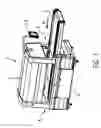
FIG. 1 illustrates a schematic view of a belted chamber machine;
FIG. 2a illustrates a schematic view of the inside of a belted chamber machine with a sealing bar in an open position;
FIG. 2b illustrates a schematic view of the inside of a belted chamber machine with a sealing bar in a closed position;
FIG. 3a illustrates a schematic view of the inside of a belted chamber machine with two oppositely situated sealing bars in an open position,
FIG. 3b illustrates a schematic view of the inside of a belted chamber machine with two oppositely situated sealing bars in a closed position,
FIG. 4 illustrates a time/temperature and a time/pressure graph of a method according to the disclosure;
FIG. 5 illustrates a time/temperature and a time/pressure graph in a variant; and
FIG. 6 illustrates a time/temperature and a time/pressure graph in a further variant.
DETAILED DESCRIPTION
In the figures identical components are designated with the same reference numerals throughout.
FIG. 1 illustrates an embodiment of a belted chamber machine 1 with a feed belt 2 on which bags, which are not illustrated, are deposited filled with products. The belted chamber machine has a transport direction R, an insertion end E and an exit end A. In its lowered position, which is not illustrated, a chamber upper part 3 with a machine table 4 forms a closed chamber which can be evacuated. A controller 14 controls the processes of the belted chamber machine 1, displays operational information to an operating person and is used for the operating person to make entries.
FIG. 2a illustrates a bag 6 and a product 7. The product 7 in the bag 6 is inserted into a chamber machine or several bags are fed to a belted chamber machine 1 via the feed belt 2. Then the chamber is closed and a vacuum is produced inside the chamber in order to evacuate the bag 6. Here, a neck 8 of the bag is located between a sealing bar 9 and a counter-pressure strip 10. During the evacuation process of the chamber the sealing bar 9 is located in an open position so that the inside of the bag 6 is also evacuated. Once the evacuation is terminated in that a vacuum value set by the operating person is reached, the sealing bar 9, as illustrated in FIG. 2b, is moved against the counter-pressure strip 10 and a contact pressure P1 is produced so that the sealing bar 9 comes into contact with the bag 6 and the heat is transferred from the sealing bar 9 to the bag 6. The heating of the sealing bar 9 is realised by means of electrical resistance heating elements, for example, sealing wire. The sealing bar 9 is heated to a first temperature T1 before or during the contact with the neck 8 of the bag. Due to the heating of the product residues 11 in the region 12 of the sealing weld to a first temperature T1, the liquid part 11′ of the product parts 11 vaporises and escapes from the region 12. This first temperature T1 is lower than a sealing temperature Ts of the packaging material in order to prevent premature sealing. For the subsequent sealing the temperature of the sealing bar 9 is raised to the sealing temperature Ts and also a sealing pressure Ps between the sealing bar 9 and the counter-pressure strip 10 is produced during a defined period.
It is also conceivable that the contact pressure P1 is the sealing pressure Ps right from the start.
FIGS. 3a respectively 3b illustrate a variant of FIGS. 2a respectively 2b in which, instead of an unheated counter-pressure strip 10, a further heatable sealing bar 13 is present. After producing the contact pressure P1 of the sealing bar 9 on the sealing bar 13, the heat is transferred from the sealing bars 9 and 13, which are heated to the first temperature T1, from both sides onto the bag 6. This gives an efficient and fast heat transfer onto the bag 6. The time for this process or for maintaining the temperature in the sealing bars 9 and 13 at the first temperature T1 can be set by the operating personnel and is regulated by the controller 14.
The increase of the temperature on the sealing bars from the first temperature T1 to the sealing temperature Ts can be carried out before, simultaneously or after the increase in pressure from the contact pressure P1 to the higher sealing pressure Ps.
FIG. 4 illustrates a t/P (time/pressure) and a t/T (time/temperature) graph which relates to the embodiment of the FIGS. 2a and 2b, respectively 3a and 3b.
The method according to the disclosure provides for a variant in which the sealing bars 9 and 13 crimp the bag 6 and a first temperature T1 is transferred to the bag 6 by the contact with it during the (holding) time t1. The temperature T1 is higher or equal to a product temperature Tp which must at least be attained in order to change the state of aggregation of the product parts 11. This is preferably carried out until the product parts 11, 11′ have escaped from the region 12 of the sealing weld to be produced to an extent adequate for the sealing. For the sealing the temperature of the sealing bars 9 and 13 is raised to the temperature Ts and maintained over the period ts. Thereafter the sealing bars 9, 13 are cooled to an initial temperature Ta which corresponds to the ambient temperature. The sealing bars 9, 13 are here cooled by means of cooling water which passes through cooling holes in the sealing bars 9, 13. Here, the sealing bars 9 and 13 are first moved away from one another once the temperature has reduced and cooling and thus hardening of the sealing weld has taken place. In this way the risk of the sealing weld adhering to the sealing bars 9, 13 is reduced.
The graph in FIG. 5 illustrates in relation to a second variant that the sealing bars 9, 13 are heated to a pre-heating temperature Tv before the sealing bars 9, 13 are moved together in order to attain the first temperature T1 quickly. Following that, the sealing bars 9, 13 are brought into contact with the packaging material and a contact pressure Ps is established. After the sealing process, cooling occurs to the pre-heating temperature Tv or to a cooling temperature Ta which can correspond to the ambient temperature. The temperature increase from Tv to T1 can also occur simultaneously or partially overlapping in time with the pressure increase to Ps.
The sequence of the method is illustrated in a further variant in FIG. 6. Here, a contact pressure P1 is set for the displacement of the product parts 11, 11′. This contact pressure P1 can act during the time t1, but also before or after the heating of the sealing bars 9, 13 to the first temperature T1. The increase in the contact pressure P1 to the sealing pressure Ps can be carried out simultaneously with the temperature increase to Ts. However, also other variants are conceivable which are not illustrated and in which the pressure increase occurs after or before the temperature increase from the first temperature T1 to the sealing temperature Ts.
Cooling takes place to a cooling temperature Ta which preferably corresponds to the ambient temperature or which is set by the active cooling of the sealing bars 9, 13. At the start of a new packaging process the sealing bar 9, 13 is heated to the pre-heating temperature Tv.
The method according to the disclosure is not restricted to the previously described processes. The pressure increase to the contact pressure Ps or P1 can also occur before, during or after the heating of the sealing bars 9, 13 to T1 or Ts.
The pre-heating temperature Tv can also be equal to the first temperature T1 at the start of the packaging process.
In a preferred variant the temperature closed-loop control of the sealing bars 9 and 13 occurs using the controller 14 in the same form in order to improve the effect during the packaging process and to speed it up, leading to an increase in the performance of the packaging machine.
While embodiments of the disclosure have been illustrated and described, it is not intended that these embodiments illustrate and describe all possible forms of the disclosure. Rather, the words used in the specification are words of description rather than limitation, and it is understood that various changes may be made without departing from the spirit and scope of the disclosure.
Claims
What is claimed is:1. A method for sealing packaging materials in a packaging machine, the method comprising:
heating a sealing bar before or during establishing a contact with the packaging material to a first temperature, which is lower than a sealing temperature and higher than a temperature at which liquid product parts are at least partially disintegrated to facilitate escape of the product parts from a region in which the packaging material is sealed together and maintaining the first temperature for a defined holding time; and
increasing the temperature of the sealing bar to the sealing temperature and maintaining the sealing temperature until sealing of the packaging material is concluded.
2. The method according to claim 1, wherein the first temperature is at least 40° C. and corresponds to the vaporization temperature of water.
3. The method according to claim 1, wherein a first contact pressure, which acts relatively between the sealing bar and a counter-pressure strip or a further sealing bar when they are pressed together, is lower than a sealing pressure during the sealing process in a sealing time.
4. The method according to claim 1, wherein the packaging material is a plastic film or a plastic laminated material and is preferably a bag.
5. The method according to claim 1, wherein the packaging material has a temperature resistance in a temperature range from 120° C. to 250° C.
6. The method according to claim 1, wherein the sealing temperature is higher than 250° C.
7. The method according to claim 3, wherein the sealing bar is heated to a pre-heating temperature before being pressed against the counter-pressure strip or a further sealing bar.
8. The method according to claim 1, wherein after sealing, the sealing bar is actively brought to a cooling temperature.
9. The method according to claim 1, wherein an interchange of gas follows an evacuation process.
10. A belted chamber machine for implementing the method of claim 3, wherein the belted chamber machine has a controller that is set up to automatically control the temporal progression of the first temperature and the sealing temperature of the sealing bar and the contact pressure of the sealing bar against a counter-pressure strip or against a further sealing bar as well as a holding time for maintaining the first temperature and a sealing time.
11. The belted chamber machine according to claim 10, wherein the controller is designed for the closed-loop or open-loop control of the temperatures of at least two sealing bars enclosing the packaging material.
12. The belted chamber machine according to claim 10, wherein the controller comprises an input device on which an operating person can specify the values, such as temperature, pressure and time, needed for a sealing process.
13. The method of claim 5 wherein the packaging material comprises a plastic bag.
14. A method for sealing packaging materials in a packaging machine, the method comprising:
providing a chamber machine having a chamber and a movable belt that feeds into the chamber;
introducing a packaging material containing liquid product parts into the chamber via movement of the belt;
heating a sealing bar before or during establishing a contact with an unsealed portion of the packaging material to a first temperature, which is lower than a sealing temperature and higher than a temperature at which the liquid product parts are at least partially disintegrated to facilitate escape of the liquid product parts from the unsealed portion of the packaging material, and maintaining the first temperature for a defined holding time; and
increasing the temperature of the sealing bar to the sealing temperature and maintaining the sealing temperature until the unsealed portion of the packaging material is sealed.
15. The method of claim 13, further comprising creating a vacuum inside the chamber after the packaging material has been introduced into the chamber.
16. The method of claim 15, wherein the first temperature is in a range of 40° C. to 220° C.
17. The method of claim 16, wherein the packaging material comprises a plastic bag and has a temperature resistance in a range from 120° C. to 25° C.
18. The method according to claim 17, wherein the sealing temperature is higher than 250° C.
19. The method according to claim 18, wherein a first contact pressure, which acts relatively between the sealing bar and a counter-pressure strip or a further sealing bar when they are pressed together, is lower than a sealing pressure during the sealing process in a sealing time.
20. A belted chamber machine for sealing packaging material containing product parts, the machine comprising:
a chamber;
a movable belt capable of introducing packaging materials into the chamber;
a sealing bar located in the chamber, the sealing bar capable of being heated before or during establishing a contact with a packaging material to a first temperature, which is lower than a sealing temperature and higher than a second temperature at which the product parts are at least partially disintegrated to facilitate escape of the product parts from a region in which the packaging materials are sealed together;
the first temperature of the sealing bar capable of being maintained for a defined holding time and also being capable of being increased to the sealing temperature and maintained at the sealing temperature until sealing of the packaging materials is concluded; and
a controller associated with the machine, the controller capable of automatically controlling the temporal progression of the first temperature and the sealing temperature of the sealing bar and the contact pressure of the sealing bar against a counter-pressure strip or against a further sealing bar as well as a holding time for maintaining the first temperature and a sealing time.
Images & Drawings included:



Sources:
- United States Patent and Trademark Office - verify current appl. status at the USPTO↗
Recent applications in this class:
- » 20190240923 2019-08-08
Repair method for a workpiece of a plastics material, repair apparatus
Recent applications for this Assignee:
- » 20140248408 2014-09-04
Device and method for the high-pressure treatment of products - » 20130068370 2013-03-21
Thermoforming packaging machine for producing upright standing packages with undercut - » 20130038077 2013-02-14
Suction gripper assembly - » 20130038010 2013-02-14
Container for accommodating products during a high-pressure treatment - » 20130037391 2013-02-14
Tightener - » 20120291400 2012-11-22
Tool changing device for a work station of a thermoforming packaging machine - » 20120283083 2012-11-08
Cutting station with complete cutting tool - » 20120279171 2012-11-08
Tool arrangement with detachable tool locking - » 20120272623 2012-11-01
Packaging machine with transport device - » 20120247926 2012-10-04
Method for transferring articles in a conveyor system