Halogen-free and phosphorus-free resin formulation and composite materials prepared therefrom
US20120129413A1
2012-05-24
13/078,973
2011-04-03
✅ Patent granted
US 8,680,196 B2
2014-03-25
-
-
Jennifer A Chriss | Camie Thompson
Pai Patent & Trademark Law Firm | Chao-Chang David Pai
2031-05-13
Abstract:
A halogen-free and phosphorus-free resin formulation, prepared by the following method, is provided. The method includes mixing a carboxy anhydride derivative, diisocyanate, a styrene maleic anhydride (SMA) copolymer derivative and a solvent to form a mixture, and heating the mixture to form a resin formulation. The disclosure also provides a halogen-free and phosphorus-free composite material with a low dielectric constant and flame resistance prepared from the resin formulation.
Assignee:
- INDUSTRIAL TECHNOLOGY RESEARCH INSTITUTE 186 🇹🇼 Hsinchu County, Taiwan
Applicant:
Interested in similar patents?
Get notified when new applications in this technology area are published.
Classification:
C08G18/345 » CPC further
Polymeric products of isocyanates or isothiocyanates with compounds having active hydrogen characterised by the compounds used containing active hydrogen; Low-molecular-weight compounds; Carboxylic acids; Esters thereof with monohydroxyl compounds; Polycarboxylic acids having at least three carboxylic acid groups having three carboxylic acid groups
C08L35/02 » CPC further
Compositions of homopolymers or copolymers of compounds having one or more unsaturated aliphatic radicals, each having only one carbon-to-carbon double bond, and at least one being terminated by a carboxyl radical, and containing at least one other carboxyl radical in the molecule, or of salts, anhydrides, esters, amides, imides or nitriles thereof; Compositions of derivatives of such polymers Homopolymers or copolymers of esters
Y10T442/2631 » CPC further
Fabric [woven, knitted, or nonwoven textile or cloth, etc.]; Coated or impregnated woven, knit, or nonwoven fabric which is not [a] associated with another preformed layer or fiber layer or, [b] with respect to woven and knit, characterized, respectively, by a particular or differential weave or knit, wherein the coating or impregnation is neither a foamed material nor a free metal or alloy layer Coating or impregnation provides heat or fire protection
Y10T442/2721 » CPC further
Fabric [woven, knitted, or nonwoven textile or cloth, etc.]; Coated or impregnated woven, knit, or nonwoven fabric which is not [a] associated with another preformed layer or fiber layer or, [b] with respect to woven and knit, characterized, respectively, by a particular or differential weave or knit, wherein the coating or impregnation is neither a foamed material nor a free metal or alloy layer; Coating or impregnation provides heat or fire protection Nitrogen containing
B32B27/12 IPC
Layered products comprising synthetic resin next to a fibrous or filamentary layer
C09D135/02 IPC
Coating compositions based on homopolymers or copolymers of compounds having one or more unsaturated aliphatic radicals, each having only one carbon-to-carbon double bond, and at least one being terminated by a carboxyl radical, and containing at least another carboxyl radical in the molecule, or of salts, anhydrides, esters, amides, imides or nitriles thereof; Coating compositions based on derivatives of such polymers Homopolymers or copolymers of esters
B05D3/10 IPC
Pretreatment of surfaces to which liquids or other fluent materials are to be applied; After-treatment of applied coatings, e.g. intermediate treating of an applied coating preparatory to subsequent applications of liquids or other fluent materials by other chemical means
B32B17/02 IPC
Layered products essentially comprising sheet glass, or glass, slag, or like fibres in the form of fibres or filaments
C08L77/00 IPC
Compositions of polyamides obtained by reactions forming a carboxylic amide link in the main chain ; Compositions of derivatives of such polymers
C08F8/30 IPC
Chemical modification by after-treatment Introducing nitrogen atoms or nitrogen-containing groups
B32B5/02 IPC
Layered products characterised by the non- homogeneity or physical structure, i.e. comprising a fibrous, filamentary, particulate or foam layer; Layered products characterised by having a layer differing constitutionally or physically in different parts characterised by structural features of a layer
B32B27/04 IPC
Layered products comprising synthetic resin as impregnant, bonding, or embedding substance
B05D3/02 IPC
Pretreatment of surfaces to which liquids or other fluent materials are to be applied; After-treatment of applied coatings, e.g. intermediate treating of an applied coating preparatory to subsequent applications of liquids or other fluent materials by baking
C08L37/00 IPC
Compositions of homopolymers or copolymers of compounds having one or more unsaturated aliphatic radicals, each having only one carbon-to-carbon double bond, and at least one being terminated by a heterocyclic ring containing oxygen ; Compositions of derivatives of such polymers
C08F8/00 IPC
Chemical modification by after-treatment
Description
CROSS REFERENCE TO RELATED APPLICATIONS
This application claims priority of Taiwan Patent Application No. 99140317, filed on Nov. 23, 2010, the entirety of which is incorporated by reference herein.
BACKGROUND
1. Field
The disclosure relates to a resin formulation, and more particularly to a halogen-free and phosphorus-free resin formulation and a halogen-free and phosphorus-free composite material with a low dielectric constant and flame resistance prepared from the resin formulation.
2. Description of the Related Art
In a halogen-free material formulation composition, generally, phosphide is selected as a flame retardant, which replaces the halogen compound in the material formulation composition. But if the phosphorus content is too high, it will hinder heat resistance. Therefore, a formulation composition with an appropriate amount of phosphorus content with aluminum hydroxide added thereto is selected, so that the UL-94 V0 flame resistance requirement may be met. Currently, even for a halogen-free and phosphorus-free formulation composition with high flame resistance, aluminum hydroxide is added thereto so that the UL-94 V0 flame resistance requirement may be met. Currently, epoxy resin is the main type of heat-resistant material used when selecting organic substrate materials with high flame resistance, in addition to BT (Bismaleimide Triazine) resin, wherein the Tg point of epoxy resin is measured at around 180° C. by TMA measurement.
BRIEF SUMMARY
One embodiment provides a halogen-free and phosphorus-free resin formulation prepared by mixing a carboxy anhydride derivative, diisocyanate, a styrene maleic anhydride (SMA) copolymer derivative and a solvent to form a mixture, and heating the mixture to form a resin formulation.
One embodiment provides a halogen-free and phosphorus-free composite material with a low dielectric constant and flame resistance prepared by providing the disclosed halogen-free and phosphorus-free resin formulation, impregnating a fiber with the resin formulation, and hardening the fiber by heating to prepare a halogen-free and phosphorus-free composite material with a low dielectric constant and flame resistance.
The disclosed composite material is an environmentally friendly (halogen-free and phosphorus-free) material with high heat resistance and a low dielectric constant mainly synthesized from raw materials such as carboxy anhydride derivative, diisocyanate such as methylene diphenyl diisocyanate (MDI), toluene diisocyanate (TDI) or isophorone diisocyanate (IPDI), and a styrene maleic anhydride (SMA) copolymer derivative. The composite material meets the UL-94 V0 flame resistance requirement, which can be apply to flame resistance materials, such as high-heat-resistant and high-frequency substrate.
In the disclosure, diisocyanate monomer with high nitrogen content (for example MDI, TDI or IPDI), carboxy anhydride monomer (for example trimellitic anhydride (TMA)) and resin (for example SMA copolymer) with proper ratios are mixed and reacted under an appropriate temperature to synthesize the halogen-free and phosphorus-free composite material with a low dielectric constant and flame resistance.
A detailed description is given in the following embodiments.
DETAILED DESCRIPTION
One embodiment provides a halogen-free and phosphorus-free resin formulation, prepared by the following method. First, carboxy anhydride derivative, diisocyanate, a styrene maleic anhydride (SMA) copolymer derivative and a solvent are mixed to form a mixture. The mixture is then heated to form a resin formulation.
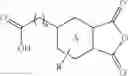
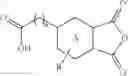
The carboxy anhydride derivative is represented by the following formula.
In the formula, A may be benzene or cyclohexane, R may be H, CH3 or COOH, and n may be 0-8. In an embodiment, the carboxy anhydride derivative is preferably trimellitic anhydride (TMA).
The diisocyanate may comprise methylene diphenyl diisocyanate (MDI), toluene diisocyanate (TDI) or isophorone diisocyanate (IPDI), preferably methylene diphenyl diisocyanate (MDI).
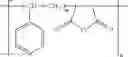
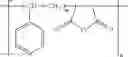
The styrene maleic anhydride (SMA) copolymer derivative is represented by the following formula.
In the formula, m may be 1-7, preferably 2-3, and n may be 2-15.
The solvent may comprise dimethyl formamide (DMF), N-methyl-2-pyrrolidone (NMP) or dimethyl sulfoxide (DMSO).
In the mixture, the carboxy anhydride derivative has a weight ratio of about 10-30 parts by weight, based on 100 parts by weight of the solid content of the mixture. The diisocyanate has a weight ratio of about 10-35 parts by weight, based on 100 parts by weight of the solid content of the mixture. The styrene maleic anhydride (SMA) copolymer derivative has a weight ratio of about 35-80 parts by weight, based on 100 parts by weight of the solid content of the mixture. The solvent has a weight ratio of about 20-60 parts by weight, based on 100 parts by weight of the mixture.
The mixture is heated at about 80-140° C., preferably 95-110° C.
One embodiment provides a halogen-free and phosphorus-free composite material with a low dielectric constant and flame resistance, is prepared by the following method. First, the disclosed halogen-free and phosphorus-free resin formulation is provided. A fiber is then impregnated with the resin formulation. The fiber is then hardened by heating. A halogen-free and phosphorus-free composite material with a low dielectric constant and flame resistance is thus prepared.
The fiber may comprise glass fiber cloth or polyamide fiber.
The disclosed composite material is an environmentally friendly (halogen-free and phosphorus-free) material with high heat resistance and a low dielectric constant mainly synthesized from raw materials such as carboxy anhydride derivative, diisocyanate such as methylene diphenyl diisocyanate (MDI), toluene diisocyanate (TDI) or isophorone diisocyanate (IPDI), and a styrene maleic anhydride (SMA) copolymer derivative. The Tg point of the composite material is greater than 180° C. Also, the composite material meets the UL-94 V0 flame resistance requirement, which is advantageous for the future development of high-heat-resistant and high-frequency substrate materials.
In the disclosure, diisocyanate monomer with high nitrogen content (for example MDI, TDI or IPDI), carboxy anhydride monomer (for example trimellitic anhydride (TMA)) and resin (for example SMA copolymer) with proper ratios are mixed and reacted under an appropriate temperature to synthesize the halogen-free and phosphorus-free composite material with a low dielectric constant and flame resistance.
Example 1
Preparation of the Halogen-Free and Phosphorus-Free Composite Material with a Low Dielectric Constant and Flame Resistance (1)
100 g of trimellitic anhydride (TMA, Fu-Pao Chemical Co.), 25 g of styrene maleic anhydride (SMA3000F, Cray Valley Co.), 137.5 g of methylene diphenyl diisocyanate (MDI, Fu-Pao Chemical Co.) and 262.5 g of dimethylformamide (DMF, C-ECHO Co.) were added to a 500 ml three-neck glass reactor and uniformly stirred using a two-impeller stir bar at 80-140° C. After cooling to room temperature, a halogen-free and phosphorus-free resin formulation was prepared. A glass fiber cloth was then impregnated with the resin formulation to form a pre-preg. The pre-preg was then stacked, heated at 200° C. and pressurized for 3 hours. A halogen-free and phosphorus-free composite material with a low dielectric constant and flame resistance was prepared.
Example 2
Preparation of the Halogen-Free and Phosphorus-Free Composite Material with a Low Dielectric Constant and Flame Resistance (2)
100 g of trimellitic anhydride (TMA, Fu-Pao Chemical Co.), 100 g of styrene maleic anhydride (SMA3000F, Cray Valley Co.), 155.4 g of methylene diphenyl diisocyanate (MDI, Fu-Pao Chemical Co.) and 355.4 g of dimethylformamide (DMF, C-ECHO Co.) were added to a 500 ml three-neck glass reactor and uniformly stirred using a two-impeller stir bar at 80-140° C. After cooling to room temperature, a halogen-free and phosphorus-free resin formulation was prepared. A glass fiber cloth was then impregnated with the resin formulation to form a pre-preg. The pre-preg was then stacked, heated at 200° C. and pressurized for 3 hours. A halogen-free and phosphorus-free composite material with a low dielectric constant and flame resistance was prepared.
Example 3
Preparation of the Halogen-Free and Phosphorus-Free Composite Material with a Low Dielectric Constant and Flame Resistance (3)
100 g of trimellitic anhydride (TMA, Fu-Pao Chemical Co.), 25 g of styrene maleic anhydride (SMA3000F, Cray Valley Co.), 375 g of methylene diphenyl diisocyanate (MDI, Fu-Pao Chemical Co.) and 499.3 g of dimethylformamide (DMF, C-ECHO Co.) were added to a 500 ml three-neck glass reactor and uniformly stirred using a two-impeller stir bar at 80-140° C. After cooling to room temperature, a halogen-free and phosphorus-free resin formulation was prepared. A glass fiber cloth was then impregnated with the resin formulation to form a pre-preg. The pre-preg was then stacked, heated at 200° C. and pressurized for 3 hours. A halogen-free and phosphorus-free composite material with a low dielectric constant and flame resistance was prepared.
Example 4
Preparation of the Halogen-Free and Phosphorus-Free Composite Material with a Low Dielectric Constant and Flame Resistance (4)
100 g of trimellitic anhydride (TMA, Fu-Pao Chemical Co.), 25 g of styrene maleic anhydride (SMA3000F, Cray Valley Co.), 83.3 g of methylene diphenyl diisocyanate (MDI, Fu-Pao Chemical Co.) and 208 g of dimethylformamide (DMF, C-ECHO Co.) were added to a 500 ml three-neck glass reactor and uniformly stirred using a two-impeller stir bar at 80-140° C. After cooling to room temperature, a halogen-free and phosphorus-free resin formulation was prepared. A glass fiber cloth was then impregnated with the resin formulation to form a pre-preg. The pre-preg was then stacked, heated at 200° C. and pressurized for 3 hours. A halogen-free and phosphorus-free composite material with a low dielectric constant and flame resistance was prepared.
Example 5
Preparation of the Halogen-Free and Phosphorus-Free Composite Material with a Low Dielectric Constant and Flame Resistance (5)
100 g of trimellitic anhydride (TMA, Fu-Pao Chemical Co.), 12.5 g of styrene maleic anhydride (SMA3000F, Cray Valley Co.), 134.5 g of methylene diphenyl diisocyanate (MDI, Fu-Pao Chemical Co.) and 247 g of dimethylformamide (DMF, C-ECHO Co.) were added to a 500 ml three-neck glass reactor and uniformly stirred using a two-impeller stir bar at 80-140° C. After cooling to room temperature, a halogen-free and phosphorus-free resin formulation was prepared. A glass fiber cloth was then impregnated with the resin formulation to form a pre-preg. The pre-preg was then stacked, heated at 200° C. and pressurized for 3 hours. A halogen-free and phosphorus-free composite material with a low dielectric constant and flame resistance was prepared.
Example 6
Preparation of the Halogen-Free and Phosphorus-Free Composite Material with a Low Dielectric Constant and Flame Resistance (6)
30 g of trimellitic anhydride (TMA, Fu-Pao Chemical Co.), 240 g of styrene maleic anhydride (SMA3000F, Cray Valley Co.), 30 g of methylene diphenyl diisocyanate (MDI, Fu-Pao Chemical Co.) and 300 g of dimethylformamide (DMF, C-ECHO Co.) were added to a 500 ml three-neck glass reactor and uniformly stirred using a two-impeller stir bar at 80-140° C. After cooling to room temperature, a halogen-free and phosphorus-free resin formulation was prepared. A glass fiber cloth was then impregnated with the resin formulation to form a pre-preg. The pre-preg was then stacked, heated at 200° C. and pressurized for 3 hours. A halogen-free and phosphorus-free composite material with a low dielectric constant and flame resistance was prepared.
Example 7
Preparation of the Halogen-Free and Phosphorus-Free Composite Material with a Low Dielectric Constant and Flame Resistance (7)
60 g of trimellitic anhydride (TMA, Fu-Pao Chemical Co.), 75 g of styrene maleic anhydride (SMA3000F, Cray Valley Co.), 75 g of methylene diphenyl diisocyanate (MDI, Fu-Pao Chemical Co.) and 210 g of dimethylformamide (DMF, C-ECHO Co.) were added to a 500 ml three-neck glass reactor and uniformly stirred using a two-impeller stir bar at 80-140° C. After cooling to room temperature, a halogen-free and phosphorus-free resin formulation was prepared. A glass fiber cloth was then impregnated with the resin formulation to form a pre-preg. The pre-preg was then stacked, heated at 200° C. and pressurized for 3 hours. A halogen-free and phosphorus-free composite material with a low dielectric constant and flame resistance was prepared.
Example 8
Preparation of the Halogen-Free and Phosphorus-Free Composite Material with a Low Dielectric Constant and Flame Resistance (8)
20 g of trimellitic anhydride (TMA, Fu-Pao Chemical Co.), 110 g of styrene maleic anhydride (SMA3000F, Cray Valley Co.), 70 g of methylene diphenyl diisocyanate (MDI, Fu-Pao Chemical Co.) and 200 g of dimethylformamide (DMF, C-ECHO Co.) were added to a 500 ml three-neck glass reactor and uniformly stirred using a two-impeller stir bar at 80-140° C. After cooling to room temperature, a halogen-free and phosphorus-free resin formulation was prepared. A glass fiber cloth was then impregnated with the resin formulation to form a pre-preg. The pre-preg was then stacked, heated at 200° C. and pressurized for 3 hours. A halogen-free and phosphorus-free composite material with a low dielectric constant and flame resistance was prepared.
Example 9
Preparation of the Halogen-Free and Phosphorus-Free Composite Material with a Low Dielectric Constant and Flame Resistance (9)
100 g of cyclohexane-1,2,4-tricarboxylic acid-1,2-anhydride (c-TMA, Fu-Pao Chemical Co.), 100 g of styrene maleic anhydride (SMA3000F, Cray Valley Co.), 155.4 g of methylene diphenyl diisocyanate (MDI, Fu-Pao Chemical Co.) and 355.4 g of dimethylformamide (DMF, C-ECHO Co.) were added to a 500 ml three-neck glass reactor and uniformly stirred using a two-impeller stir bar at 80-140° C. After cooling to room temperature, a halogen-free and phosphorus-free resin formulation was prepared. A glass fiber cloth was then impregnated with the resin formulation to form a pre-preg. The pre-preg was then stacked, heated at 200° C. and pressurized for 3 hours. A halogen-free and phosphorus-free composite material with a low dielectric constant and flame resistance was prepared.
Example 10
Preparation of the Halogen-Free and Phosphorus-Free Composite Material with a Low Dielectric Constant and Flame Resistance (10)
100 g of trimellitic anhydride (TMA, Fu-Pao Chemical Co.), 100 g of styrene maleic anhydride (SMA3000F, Cray Valley Co.), 155.4 g of isophorone diisocyanate (IPDI, Fu-Pao Chemical Co.) and 355.4 g of dimethylformamide (DMF, C-ECHO Co.) were added to a 500 ml three-neck glass reactor and uniformly stirred using a two-impeller stir bar at 80-140° C. After cooling to room temperature, a halogen-free and phosphorus-free resin formulation was prepared. A glass fiber cloth was then impregnated with the resin formulation to form a pre-preg. The pre-preg was then stacked, heated at 200° C. and pressurized for 3 hours. A halogen-free and phosphorus-free composite material with a low dielectric constant and flame resistance was prepared.
Comparative Example 1
Preparation of Conventional Halogen-Free and Phosphorus-Free Material with a Low Dielectric Constant and Flame Resistance
110 g of amideimide resin (AIN, Fu-Pao Chemical Co.), 67.3 g of epoxy resin (828EL, Shell Chemical Co.) and 13.3 g of dimethylformamide (DMF, C-ECHO Co.) were added to a 500 ml three-neck glass reactor and uniformly stirred using a two-impeller stir bar at 120° C. After cooling to room temperature, 13.3 g of 4,4-diaminodiphenyl sulfone (DDS, Ciba Chemical Co.) was added to the glass reactor and stirred. A halogen-free and phosphorus-free resin formulation was prepared. A glass fiber cloth was then impregnated with the resin formulation to form a pre-preg. The pre-preg was then stacked, heated at 200° C. and pressurized for 3 hours. A halogen-free and phosphorus-free material with a low dielectric constant and flame resistance was prepared.
Comparative Example 2
Preparation of Conventional Halogen-Free and Phosphorus-Free Material with Flame Resistance
110 g of amideimide resin (AIN, Fu-Pao Chemical Co.), 67.3 g of epoxy resin (828EL, Shell Chemical Co.) and 13.3 g of dimethylformamide (DMF, C-ECHO Co.) were added to a 500 ml three-neck glass reactor and uniformly stirred using a two-impeller stir bar at 120° C. After cooling to room temperature, 13.3 g of 4,4-diaminodiphenyl sulfone (DDS, Ciba Chemical Co.) and 114 g of aluminum hydroxide (Al(OH)3, Showa Denko Co.) were added to the glass reactor and stirred. A halogen-free and phosphorus-free resin formulation with flame resistance was prepared. A glass fiber cloth was then impregnated with the resin formulation to form a pre-preg. The pre-preg was then stacked, heated at 200° C. and pressurized for 3 hours. A halogen-free and phosphorus-free material with flame resistance was prepared.
In Table 1, the data (for example Dk and Tg) were obtained from the resin material of the impregnated glass fiber cloth.
| TABLE 1 | |||||||||||||
| TMA | c-TMA | SMA | MDI | IPDI | AIN | 828EL | DDS | Al(OH)3 | Tg | CTE | |||
| (g) | (g) | (g) | (g) | (g) | (g) | (g) | (g) | (g) | Dk | (° C.) | (ppm/° C.) | UL-94 | |
| Example 1 | 100 | X | 25 | 137.5 | X | X | X | X | X | 3.9 | 211 | 53 | V0 |
| Example 2 | 100 | X | 100 | 155.4 | X | X | X | X | X | 3.6 | 186 | 57 | V0 |
| Example 3 | 100 | X | 25 | 375 | X | X | X | X | X | 4.2 | 197 | 58 | V0 |
| Example 4 | 100 | X | 25 | 83.3 | X | X | X | X | X | 3.7 | 191 | 59 | V0 |
| Example 5 | 100 | X | 12.5 | 134.5 | X | X | X | X | X | 4.0 | 206 | 54 | V0 |
| Example 6 | 30 | X | 240 | 30 | X | X | X | X | X | 3.6 | 181 | 59 | V0 |
| Example 7 | 60 | X | 75 | 75 | X | X | X | X | X | 3.7 | 196 | 56 | V0 |
| Example 8 | 20 | X | 110 | 70 | X | X | X | X | X | 3.8 | 189 | 59 | V0 |
| Example 9 | X | 100 | 100 | 155.4 | X | X | X | X | X | 3.9 | 186 | 59 | V0 |
| Example 10 | 100 | X | 100 | X | 155.4 | X | X | X | X | 4.0 | 181 | 60 | V0 |
| Com. | X | X | X | X | X | 110 | 67.3 | 13.3 | X | 4.8 | 165 | 58 | V1 |
| Example 1 | |||||||||||||
| Com. | X | X | X | X | X | 110 | 67.3 | 13.3 | 114 | 5.1 | 168 | 45 | V0 |
| Example 2 | |||||||||||||
| Dk: dielectric constant; Tg: glass transition temperature; CTE: coefficient of thermal expansion; glass fiber cloth 7628 |
The physical properties of the resin materials prepared from Examples 1-10 and Comparative Examples 1-2 are shown in Table 1.
While the disclosure has been described by way of example and in terms of preferred embodiment, it is to be understood that the disclosure is not limited thereto. To the contrary, it is intended to cover various modifications and similar arrangements (as would be apparent to those skilled in the art). Therefore, the scope of the appended claims should be accorded the broadest interpretation so as to encompass all such modifications and similar arrangements.
Claims
What is claimed is:1. A halogen-free and phosphorus-free resin formulation, prepared by the following method:
mixing a carboxy anhydride derivative, diisocyanate, a styrene maleic anhydride (SMA) copolymer derivative and a solvent to form a mixture; and
heating the mixture to form a resin formulation.
2. The halogen-free and phosphorus-free resin formulation as claimed in claim 1, wherein the carboxy anhydride derivative is represented by the following formula:
wherein A is benzene or cyclohexane, R is H, CH3 or COOH, and n is 0-8.
3. The halogen-free and phosphorus-free resin formulation as claimed in claim 1, wherein the diisocyanate comprises methylene diphenyl diisocyanate (MDI), toluene diisocyanate (TDI) or isophorone diisocyanate (IPDI).
4. The halogen-free and phosphorus-free resin formulation as claimed in claim 1, wherein the styrene maleic anhydride (SMA) copolymer derivative is represented by the following formula:
wherein m is 1-7 and n is 2-15.
5. The halogen-free and phosphorus-free resin formulation as claimed in claim 1, wherein the solvent comprises dimethyl formamide (DMF), N-methyl-2-pyrrolidone (NMP) or dimethyl sulfoxide (DMSO).
6. The halogen-free and phosphorus-free resin formulation as claimed in claim 1, wherein the carboxy anhydride derivative has a weight ratio of 10-30 parts by weight, based on 100 parts by weight of the solid content of the mixture.
7. The halogen-free and phosphorus-free resin formulation as claimed in claim 1, wherein the diisocyanate has a weight ratio of 10-35 parts by weight, based on 100 parts by weight of the solid content of the mixture.
8. The halogen-free and phosphorus-free resin formulation as claimed in claim 1, wherein the styrene maleic anhydride (SMA) copolymer derivative has a weight ratio of 35-80 parts by weight, based on 100 parts by weight of the solid content of the mixture.
9. The halogen-free and phosphorus-free resin formulation as claimed in claim 1, wherein the mixture is heated at 80-140° C.
10. A halogen-free and phosphorus-free composite material with a low dielectric constant and flame resistance, prepared by the following method:
providing a halogen-free and phosphorus-free resin formulation as claimed in claim 1;
impregnating a fiber with the resin formulation; and
hardening the fiber by heating to prepare a halogen-free and phosphorus-free composite material with a low dielectric constant and flame resistance.
11. The halogen-free and phosphorus-free composite material with a low dielectric constant and flame resistance as claimed in claim 10, wherein the fiber comprises glass fiber cloth or polyamide fiber.
Images & Drawings included:
Sources:
- United States Patent and Trademark Office - verify current appl. status at the USPTO↗
Recent applications in this class:
- » 20250043061 2025-02-06
PROCESS FOR THE PRODUCTION OF A THERMOPLASTIC POLYOXAZOLIDINONE - » 20240309147 2024-09-19
TWO-COMPONENT SYSTEM FOR PREPARING DEODORANT POLYURETHANE FOAMS - » 20240052091 2024-02-15
POLYURETHANE COMPOSITIONS HAVING IMPROVED FORCE RETENTION AND MOISTURE RESISTANCE - » 20240026065 2024-01-25
METHOD FOR THE PRODUCTION OF THERMOPLASTIC POLYOXAZOLIDINONE POLYMERS - » 20230323012 2023-10-12
UREA RESIN COMPOSITION AND POLYUREA FOAM - » 20230295370 2023-09-21
FILLED POLYURETHANE OR POLYISOCYANURATE FOAM AND METHOD OF MAKING SAME - » 20230235114 2023-07-27
Chafe layer for a fluid conduit, fluid conduit, method for producing a fluid conduit and use of a polyurethane as a chafe layer and use of an ethylene copolymer as an additive - » 20230130031 2023-04-27
Thermoplastic Polyurethane Compositions Comprising Nitro-Substituted Polyester Diols - » 20230065894 2023-03-02
HIGH-ENERGY DENSITY SHAPE MEMORY POLYMERS USING STRAIN-INDUCED SUPRAMOLECULAR NANOSTRUCTURES - » 20220325032 2022-10-13
Composition comprising a thermoplastic polyisocyanate polyaddition product and a flame retardant
Recent applications for this Assignee:
- » 20200077486 2020-03-05
Light source apparatus and display apparatus - » 20190058561 2019-02-21
Methods and apparatus for indicating a radio resource to a receiver in a wireless communication system - » 20190034761 2019-01-31
Deep neural network with side branches for recognizing and classifying media data and method for using the same - » 20170174877 2017-06-22
COMPATIBILIZER AND THERMOPLASTIC RESIN EMPLOYING THE SAME - » 20170100810 2017-04-13
Chatter avoidance method and device - » 20170082536 2017-03-23
Scattering measurement system and method - » 20170062189 2017-03-02
Apparatus for coating a film in a container and method for coating the film - » 20160276631 2016-09-22
Method for producing glass substrate - » 20160176176 2016-06-23
Method for preparing carbon fiber composite material - » 20150236290 2015-08-20
Blue light emitting device and light emitting device