Hurdle
US20120129656A1
2012-05-24
13/386,226
2010-06-16
Abstract:
A hurdle includes at least two support structures and an at least approximately horizontal component therebetween. In addition, in at least one embodiment, a height adjustment device for the height of the transverse element above the ground is provided. Each support structure includes two legs, which are connected to each other at an angle in the area of the transverse element. The two legs are connected to each other by an adjustable retaining structure.
Interested in similar patents?
Get notified when new applications in this technology area are published.
Classification:
A63K3/043 » CPC main
Equipment or accessories for racing or riding sports; Hurdles or the like Athletics hurdles
A63B5/02 IPC
Apparatus for jumping High-jumping posts
Description
PRIORITY STATEMENT
This application is the national phase under 35 U.S.C. §371 of PCT International Application No. PCT/CH2010/000158 which has an International filing date of Jun. 16, 2010, which designated the United States of America, and which claims priority to Swiss patent application number CH 1198/09 filed Jul. 31, 2009, the entire contents of each of which are hereby incorporated herein by reference.
FIELD
An embodiment of the invention generally relates to a hurdle.
BACKGROUND
A hurdle is known from numerous documents, such as the WO 91/12053 or the U.S. Pat. Nos. 3,024,022 and/or 3,366,381. With hurdles of this type, different heights can be adjusted without having to provide or store hurdles of different sizes.
SUMMARY
The inventor recognized that disadvantage of known structures include:
- rods or pipes made of iron are extremely heavy materials;
- a specific hurdle would be required for each height;
- when exercising and/or training, anxiety of being injured on the hurdle always develops to a higher or lesser degree;
- the hurdles can damage the floor of an exercise room or gym and are therefore not used in this room or gym;
- hurdles cause a lot of noise when they topple over;
- hurdles cannot be adjusted to a lower height;
- hurdles are difficult to transport and hard to store because of the rigid construction.
An embodiment of the present invention is directed to adjustable hurdles. In at least one embodiment, if mention is made of a transverse component, this element can be embodied in an optionally form, for example as a pipe, profile or bar or the like. The aforementioned holding structure can be a telescoping pipe which, for example, is attached articulated between the legs but is preferably formed by scissor-type two crossbars. Of course, it can also take the form of a lattice grate.
At least one embodiment of the innovation concerns a training equipment for recreational and school sports, especially for training which permits jumping across the equipment without worry of getting injured. The equipment should be easy to transport and should fold up for storage. Additional advantages of embodiments include:
- it is ideal for jumping, coordination and conditioning training;
- the height is individually adjustable, starting at approximately 1 (one) cm;
- high quality materials are used, such as plastic, lightweight metal, wood or the like;
- the optimization of time, location and transport costs;
- the fast setup and breakdown.
In at least one embodiment, it is possible per se to connect the telescoping pipe and/or the crossbars articulated in such a way that they would be hard to move (high friction), thereby already securing the respectively adjusted angle with a frictional connection. However, in at least one embodiment, it is preferable and more reliable to provide per se an optional type of fastening device—e.g. a snap-in type fastening, with holes or with insertable pins or the like—which can simply be a clamping screw or brake discs.
BRIEF DESCRIPTION OF THE DRAWINGS
The invention is explained in further detail in the following with the aid of an example embodiment shown in the drawings, showing:
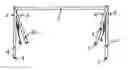
FIG. 1a is a perspective view of the hurdle according to an embodiment of the invention;
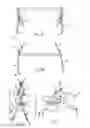
FIG. 1b shows a view from above;
FIGS. 2 and 3 illustrate in a perspective view and at a slant from above two different heights, resulting from different angles between the straddled legs; and
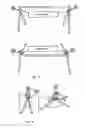
FIGS. 4a, 4b and 5 illustrate that, as a result of the different straddling angles α and β, different heights can be adjusted for the hurdle.
DETAILED DESCRIPTION OF THE EMBODIMENTS
FIG. 1a shows an embodiment of a hurdle comprising a support structure including respectively two legs 1, 1a which are respectively hinged together in a hinge point 2. Between each pair of legs 1 extends a transverse component 3 which is formed integrally with respectively one leg, as shown in the view according to FIG. 1b, wherein this corresponds to a preferred embodiment. A holding structure is advantageously provided between each pair of legs, so as to make it easier and more secure to maintain a straddling angle α or β (FIGS. 2,3).
As shown in particular in FIGS. 2 and 3, an embodiment of the holding structure preferably includes a scissor-type arrangement with a pair of crossbars (5), even though a lattice grate would theoretically also be possible. As mentioned before, an articulated telescopic rod can also be used, meaning the type of holding structure can be an optional structure as disclosed in the prior art. The crossbars (5) are are hinged with one end (8) to the legs (1) and in the center, at the sides facing each other, are connected articulated to each other at a hinge point (7). A fixing screw (6) can be provided at this hinge point (7) which reinforces the hinge point (7) through clamping, thereby securely preventing an unintended spreading of the legs 1. Alternatively, the joint (7) (and/or the joints 8 provided on the legs) can also be embodied such that it is hard to move with the aid of a frictional connection, thus making it possible to achieve the holding effect at the point (2) without the fixing screw (6), e.g. with the aid of braking discs, as shown in FIG. 4a, 4b as well as FIG. 5.
It is understood that other types of fastening devices are possible as well, for example by providing catches or holes for inserting bolts on the aforementioned telescoping rod.
A fastening device can thus be embodied in the same way for the crossbars (5), or at the hinge point (2) for the connected legs 1, 1a for example with the aid of braking discs (10 and 11) in such a way that they are extremely hard to move (high friction) and such that the respectively adjusted angle is already frictionally secured.
To improve the stability of the hurdle on a smooth floor, for example the floor of an exercise room or a gym, it is advantageous if the underside of the legs (1) is respectively provided with a flexible covering (9), which can be made of felt but is preferably made of a rubber-elastic material that increases the friction. To improve the hold of a tarpaulin covering the device during the storage—as shown in Figure (1b)—such a coating (9) can also be provided on the top of the leg (1a) that is connected only via the joint (2) to the transverse component (3).
The legs (1, 1a) and/or the transverse component (3) preferably include pipes, in particular made of a lightweight material such as plastic, aluminum or lightweight metal. This has the advantage that the legs can be rendered more stable, if applicable, by filling them with a bulk material during the use, wherein the the bulk material can be removed for the transport.
FIGS. 2, 3, 4a, 4b and 5 show that as a result of the different straddling angles α and β, different heights h and H can be adjusted for the hurdle according to embodiments of the invention.
Example embodiments being thus described, it will be obvious that the same may be varied in many ways. Such variations are not to be regarded as a departure from the spirit and scope of the present invention, and all such modifications as would be obvious to one skilled in the art are intended to be included within the scope of the following claims.
Claims
1. A hurdle, comprising:
at least two support structures, each of the at least two support structures including a joint;
an approximately at least horizontal transverse component disposed between the at least two support structures; and
a height adjustment device to adjust a height of the approximately at least horizontal transverse component, relative to a surface upon which the hurdle may be placed, the at least two support structures each respectively including two legs joined at an angle a region of the approximately at least horizontal transverse component the two legs being connected to each other via an adjustable holding structure, the approximately at least horizontal transverse component being integrally formed together with at least one of the two legs of each of the respective at least two support structures and the joint of each of the respective at least two support structures being embodied as hinge point.
2. The hurdle according to claim 1, wherein the adjustable holding structure for maintaining the respective straddling angle and wherein the adjustable holding structure is formed with at least two crossbars, one of the crossbars being hinged with one side to one of the legs and on another side to a different one of the at least two crossbars.
3. The hurdle according to claim 2, further comprising:
a fastening device, to secure the respectively adjusted angle.
4. The hurdle according to claim 3, wherein the fastening device includes a fastening screw.
5. The hurdle according to claim 3, wherein the fastening device includes at least one braking disc.
6. The hurdle according claim 1, wherein at least one of the legs and the transverse component are embodied as pipes, profiles or bars and wherein at least some, from among the total number of pipes, profiles or bars, are made of a lightweight material.
7. The hurdle according to claim 6, wherein the lightweight material is plastic or a lightweight metal.
8. The hurdle according to claim 7, wherein the lightweight metal is aluminium.
9. The hurdle according to claim 2, further comprising:
a fastening device, to secure the angle.
10. The hurdle according to claim 9, wherein the fastening device includes a fastening screw.
11. The hurdle according to claim 9, wherein the fastening device includes at least one braking disc.
12. The hurdle according to claim 2, wherein at least one of the legs and the transverse component are embodied as pipes, profiles or bars and wherein at least some, from among the total number of pipes, profiles or bars, are made of a lightweight material.
13. The hurdle according to claim 12, wherein the lightweight material is plastic or a lightweight metal.
14. The hurdle according to claim 13, wherein the lightweight metal is aluminum.
Images & Drawings included:
Sources:
- United States Patent and Trademark Office - verify current appl. status at the USPTO↗
Similar patent applications:
- » 20180099171
COLLAPSIBLE EXERCISE HURDLE, COLLAPSIBLE EXERCISE HURDLE AND MAT SYSTEM, AND METHODS OF USE THEREOF - » 20080020899
Portable hurdle - » 20120015780
Portable hurdle - » 20080268108
Hurdle Technology for Producing Shelf-Stable Guacamole - » 20100075809
Portable hurdle - » 20110263386
Folding hurdle - » 20080085816
FITNESS TRAINING HURDLE - » 20120196725
Universal Cone Hurdle - » 20130053219
Hurdle with automatic displacement of counterweights - » 20060183142
Method of increasing discrimination for single base mismatch using hurdle DNA and artificially mismatched probe
Recent applications in this class:
- » 20240115969 2024-04-11
TRACK HURDLE ASSEMBLY - » 20230405486 2023-12-21
Pedal operated hurdle - » 20210086098 2021-03-25
Hurdle assist - » 20200122051 2020-04-23
BREAKAWAY ATHLETIC TRACK HURDLE AND TRAINING DEVICE - » 20200078700 2020-03-12
Hurdle structure - » 20170354899 2017-12-14
DIRECTION CONTROL TRAINING DEVICE FOR THE PHYSICAL AND VISUAL TRAINING OF ATHLETIC MOVEMENT - » 20160096121 2016-04-07
Adjustable hurdle - » 20160045839 2016-02-18
Adjustable height hurdle - » 20140287878 2014-09-25
Sports training ladder - » 20130053219 2013-02-28
Hurdle with automatic displacement of counterweights