USE OF COMPOSITE MATERIALS BASED ON CARBON NANOTUBES AS THICKENING AGENTS FOR AQUEOUS SOLUTIONS
US20120132843A1
2012-05-31
13/339,517
2011-12-29
Abstract:
The present invention relates to the use of composite materials as thickening agents for aqueous solutions, said material comprising carbon nanotubes (CNTs) and at least one hydrophilic (co)polymers. The invention relates more particularly to the use of the materials described above as thickening agents n one of the fields chosen: from the following: the papermaking field, the oil field and also the fields of paint, water treatment, detergents, ceramics, cements, or hydraulic binders, civil engineering, inks and varnishes, and textile sizing.
Inventors:
- Stephanie Magnet 21 🇫🇷 Morlanne, France
- Laurence Couvreur 8 🇫🇷 Paris, France
- Olivier Guerret 45 🇫🇷 La Tour De Salvagny, France
- Christelle Guerret-Piecourt 3 🇫🇷 Mazerolles, France
Assignee:
- Arkema France 1,693 🇫🇷 Colombes, France
- C.N.R.S. 10 🇫🇷 Paris Cedex, France
Interested in similar patents?
Get notified when new applications in this technology area are published.
Classification:
D06M15/233 » CPC main
Treating fibres, threads, yarns, fabrics, or fibrous goods made from such materials, with macromolecular compounds; Such treatment combined with mechanical treatment with synthetic macromolecular compounds; Macromolecular compounds obtained by reactions only involving carbon-to-carbon unsaturated bonds of hydrocarbons, or reaction products thereof, e.g. afterhalogenated or sulfochlorinated aromatic, e.g. styrene
B82Y30/00 » CPC further
Nanotechnology for materials or surface science, e.g. nanocomposites
C08J5/005 » CPC further
Manufacture of articles or shaped materials containing macromolecular substances Reinforced macromolecular compounds with nanosized materials, e.g. nanoparticles, nanofibres, nanotubes, nanowires, nanorods or nanolayered materials
C09K8/03 » CPC further
Compositions for drilling of boreholes or wells; Compositions for treating boreholes or wells, e.g. for completion or for remedial operations; Well-drilling compositions Specific additives for general use in well-drilling compositions
C09K8/42 » CPC further
Compositions for drilling of boreholes or wells; Compositions for treating boreholes or wells, e.g. for completion or for remedial operations Compositions for cementing, e.g. for cementing casings into boreholes; Compositions for plugging, e.g. for killing wells
C11D3/3719 » CPC further
Other compounding ingredients of detergent compositions covered in group; Organic compounds; Polymers; Macromolecular compounds obtained otherwise than by reactions only involving carbon-to-carbon unsaturated bonds Polyamides or polyimides
C11D3/3746 » CPC further
Other compounding ingredients of detergent compositions covered in group; Organic compounds; Polymers Macromolecular compounds obtained by reactions only involving carbon-to-carbon unsaturated bonds
C11D7/02 » CPC further
Compositions of detergents based essentially on non-surface-active compounds Inorganic compounds
C11D17/003 » CPC further
Detergent materials or soaps characterised by their shape or physical properties aqueous liquid non soap compositions Colloidal solutions, e.g. gels; Thixotropic solutions or pastes
D06M15/21 » CPC further
Treating fibres, threads, yarns, fabrics, or fibrous goods made from such materials, with macromolecular compounds; Such treatment combined with mechanical treatment with synthetic macromolecular compounds Macromolecular compounds obtained by reactions only involving carbon-to-carbon unsaturated bonds
D21H17/34 » CPC further
Non-fibrous material added to the pulp, characterised by its constitution; Paper-impregnating material characterised by its constitution; Macromolecular organic compounds; Synthetic macromolecular compounds obtained by reactions only involving carbon-to-carbon unsaturated bonds
D21H19/00 » CPC further
Coated paper ; Coating material
D21H21/00 » CPC further
Non-fibrous material added to the pulp, characterised by its function, form or properties; Paper-impregnating or coating material, characterised by its function, form or properties
C02F1/56 » CPC further
Treatment of water, waste water, or sewage by flocculation or precipitation of suspended impurities using organic material Macromolecular compounds
C02F2305/08 » CPC further
Use of specific compounds during water treatment Nanoparticles or nanotubes
C04B2103/44 » CPC further
Function or property of ingredients for mortars, concrete or artificial stone Thickening, gelling or viscosity increasing agents
C09K2208/10 » CPC further
Aspects relating to compositions of drilling or well treatment fluids Nanoparticle-containing well treatment fluids
D21H13/50 » CPC further
Pulp or paper, comprising synthetic cellulose or non-cellulose fibres or web-forming material; Inorganic fibres or flakes; Non-siliceous fibres, e.g. from metal oxides Carbon fibres
D21H19/44 » CPC further
Coated paper ; Coating material; Coatings with pigments characterised by the other ingredients, e.g. the binder or dispersing agent
C04B24/2641 » CPC further
Use of organic materials as active ingredients for mortars, concrete or artificial stone, e.g. plasticisers; Macromolecular compounds obtained by reactions only involving carbon-to-carbon unsaturated bonds Polyacrylates; Polymethacrylates
C04B40/0039 » CPC further
Processes, in general, for influencing or modifying the properties of mortars, concrete or artificial stone compositions, e.g. their setting or hardening ability; Aspects relating to the mixing step of the mortar preparation Premixtures of ingredients
C04B14/026 » CPC further
Use of inorganic materials as fillers, e.g. pigments, for mortars, concrete or artificial stone; Treatment of inorganic materials specially adapted to enhance their filling properties in mortars, concrete or artificial stone; Granular materials, e.g. microballoons; Carbon of particular shape, e.g. nanotubes
C04B24/163 » CPC further
Use of organic materials as active ingredients for mortars, concrete or artificial stone, e.g. plasticisers; Sulfur-containing compounds; Macromolecular compounds comprising sulfonate or sulfate groups obtained by reactions only involving carbon-to-carbon unsaturated bonds
C08L53/00 » CPC further
Compositions of block copolymers containing at least one sequence of a polymer obtained by reactions only involving carbon-to-carbon unsaturated bonds; Compositions of derivatives of such polymers
C09D153/00 » CPC further
Coating compositions based on block copolymers containing at least one sequence of a polymer obtained by reactions only involving carbon-to-carbon unsaturated bonds; Coating compositions based on derivatives of such polymers
C08L2666/02 » CPC further
Composition of polymers characterized by a further compound in the blend, being organic macromolecular compounds, natural resins, waxes or and bituminous materials, non-macromolecular organic substances, inorganic substances or characterized by their function in the composition Organic macromolecular compounds, natural resins, waxes or and bituminous materials
C08L33/02 IPC
Compositions of homopolymers or copolymers of compounds having one or more unsaturated aliphatic radicals, each having only one carbon-to-carbon double bond, and only one being terminated by only one carboxyl radical, or of salts, anhydrides, esters, amides, imides or nitriles thereof; Compositions of derivatives of such polymers Homopolymers or copolymers of acids; Metal or ammonium salts thereof
D06M15/263 » CPC further
Treating fibres, threads, yarns, fabrics, or fibrous goods made from such materials, with macromolecular compounds; Such treatment combined with mechanical treatment with synthetic macromolecular compounds; Macromolecular compounds obtained by reactions only involving carbon-to-carbon unsaturated bonds of unsaturated carboxylic acids; Salts or esters thereof
C04B28/02 IPC
Compositions of mortars, concrete or artificial stone, containing inorganic binders or the reaction product of an inorganic and an organic binder, e.g. polycarboxylate cements containing hydraulic cements other than calcium sulfates
C09D5/02 IPC
Coating compositions, e.g. paints, varnishes or lacquers, characterised by their physical nature or the effects produced ; Filling pastes Emulsion paints including aerosols
C02F5/10 IPC
Softening water; Preventing scale; Adding scale preventatives or scale removers to water, e.g. adding sequestering agents; Treatment of water with complexing chemicals or other solubilising agents for softening, scale prevention or scale removal, e.g. adding sequestering agents using organic substances
C11D3/37 IPC
Other compounding ingredients of detergent compositions covered in group; Organic compounds Polymers
Description
This application is a continuation application of U.S. application Ser. No. 12/301,108 filed Jul. 10, 2009, which claimed priority to international patent application serial number PCT/FR07/051286 filed May 16, 2007, which claimed priority to U.S. provisional patent application Ser. No. 60/830148 filed Jul. 11, 2006 and French patent application serial number 06.51816 filed May 18, 2006.
TECHNICAL FIELD
The present invention relates to the use of composites based on carbon nanotubes as viscosity enhancers for aqueous solutions.
PRIOR ARTS
In the current state of the art, the viscosity enhancers used to increase the viscosity of aqueous solutions are natural polymers, such as polysaccharides and cellulose derivatives, but also synthetic polymers of the acrylic or vinyl or urethane-based type, such as poly(meth)acrylamides, optionally partially hydrolysed, and poly(meth)acrylates, and also copolymers thereof, These polymers develop a viscosity thanks to their molar mass and to the interchain ionic repulsions. The mechanism governing the viscosity is due to an increase in the hydrodynamic volume and to interchain repulsions.
However, in the presence of electrolytes or surfactants, or when they are subjected to high operating temperatures, these polymers do not always develop good thickening properties. This is manifested by a substantial reduction in their thickening power. In addition, it is found that aqueous solutions containing these polymers are not very stable over time.
It has now been discovered that the use of a composite based on carbon nanotubes as a viscosity enhancer for aqueous solutions allows these problems to be overcome.
BRIEF DESCRIPTION OF THE DRAWINGS
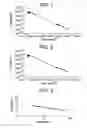
FIG. 1 is a graph of viscosity versus shear rate for Example 1.
FIG. 2 is a graph of viscosity versus shear rate for Example 2.
FIG. 3 is a graph of viscosity versus shear rate for Example 3.
DESCRIPTION OF THE INVENTION
The present invention therefore relates to the use of a composite based on carbon nanotubes as viscosity enhancer for aqueous solutions, characterized in that said composite comprises carbon nanotubes (CNTs) and at least one hydrophilic (co)polymer.
According to the invention, the (co)polymer is adsorbed and/or grafted on the surface of the CNTs in an irreversible manner. The expression “irreversibly adsorbed (co)polymer” is understood to mean a polymer that is no longer extractable from the CNT by various washings of the CNT/polymer mixture with water.
The WO 03/106600 and WO 03/050332 disclose CNTs aqueous dispersions obtained by dispersing a compound in particular polymeric in water and by adding the CNTs thereof. These documents do not disclose the use of a composite containing a (co)polymer adsorbed and/or grafted on the surface of CNTs as viscosity enhancer.
According to the invention, the CNT/hydrophilic (co)polymer mass ratio is between 1/1 and 99/1, advantageously between 5/1 and 50/1 and preferably between 5/1 and 35/1.
Carbon nanotubes are composed of wound graphitic sheets terminating in hemispheres consisting of pentagons and hexagons with a structure close to that of fullerenes and have a tubular structure with a diameter ranging between 0.4 and 50 nm, preferably less than 100 nm, and a very high length/diameter ratio, typically greater than 10 and often greater than 100. According to the invention, the CNTs are single-wailed, double-walled and/or multi-walled carbon nanotubes.
Carbon nanotubes may be prepared using various methods, such as electrical discharge, laser ablation or chemical vapour deposition. Among these techniques, the latter seems to be the only one capable of ensuring that a large quantity of carbon nanotubes can be manufactured. The reader may for example refer more particularly to documents WO 86/03455 and WO 03/002456 for the preparation of separate or non-aggregated multi-walled carbon nanotubes.
The term “hydrophilic (co)polymers” is understood to mean (co)polymers that are composed of at least 50 wt % of hydrophilic monomers and consequently are readily dispersible in water.
The hydrophilic monomers may be ionic (cationic or anionic) monomers (A), neutral monomers (B) and/or amphoteric monomers (C).
The hydrophilic monomers according to the invention may be selected from styrene sulphonate (A), acrylic acid, methacrylic acid, itaconic acid, maleic acid or its salts, maleic anhydride, alkyl or alkoxy- or aryloxypolyalkylene glycol maleates or hemi-maleates, fumaric acid, 2-acrylamido-2-methyl-1-propanesulphonic acid in acid form or partially neutralized (B or A depending on whether they are neutralized or not), 2-methacrylamido-2-methyl-1-propanesulphonic acid in acid form or partially neutralized (B or A depending on whether they are neutralized or not), 3-methacrylamido-2-hydroxy-1-propanesulphonic acid in acid form or partially neutralized (B or A depending on whether they are neutralized or not), acrylamidomethylpropanesulphonic acid (AMPS) in acid form or partially neutralized (B or A depending on whether they are neutralized or not), allylsulphonic acid, methallylsulphonic acid, allyloxybenzenesulphonic acid, methallyloxybenzenesulphonic acid, 2-hydroxy-3-(2-propenyloxy)propanesulphonic acid, 2-methyl-2-propene-1-sulphonic acid, ethylenesulphonic acid, propenesulphonic acid, 2-methylsulphonic acid, styrenesulphonic acid and their salts (B or A depending on whether they are neutralized or not), vinylsulphonic acid, sodium methallylsulphonate, sulphopropyl acrylate or methacrylate (B or A depending on whether they are neutralized or not), sulphomethylaerylamide, sulphomethylmethacrylamide (B) or else selected from acrylamide, methylacrylamide, n-methylolacrylamide, n-acryloylmorpholine, ethylene glycol methacrylate, ethylene glycol acrylate, propylene glycol methacrylate, propylene glycol methacrylate, propylene glycol acrylate (B), propenephosphonic acid (B or A depending on whether they are neutralized or not), ethylene or propylene glycol (B) methacrylate or acrylate (A) phosphate or else vinylpyridine (B), vinylpyrrolidinone (B), vinylpyrrolidone (B), aminoalkyl methacrylates such as 2-(dimethylamino)ethyl methacrylate (DAEMA), methacrylates of amine salts such as [2-(methacryloyloxy)ethyl]trimethylammonium chloride or sulphate or [2-(methacryloyloxy)ethyl]dimethylbenzylammonium chloride or sulphate, methacrylamidopropyltrimethylammonium chloride or sulphate (A), trimethylammonioethyl methacrylate chloride or sulphate, and also their acrylate and acrylamide homologues whether quaternized (A) or not, such as 2-(dimethylamino)ethyl acrylate (DMAEA), acrylates of amine salts, such as [2-(acryloyloxy)ethyl]trimethylammonium chloride or sulphate or [2-(acryloyloxy)-ethyl]dimethylbenzylammonium chloride or sulphate and/or ammonium dimethyldiallyl chloride, and also their mixtures (A).
The hydrophilic (co)polymers according to the invention may be gradient and/or random block copolymers, one of the blocks of which is hydrophilic in nature and represents at least 50% of the copolymer by weight, the other block(s) being formed of at least one ethylenically unsaturated monomer copolymerizable with the hydrophilic monomer(s), by means of which the final copolymer is dispersible in water.
According to the invention, the number of blocks is advantageously between 2 and 5.
The ethylenically unsaturated monomers may be selected from alkyl(meth)acrylates, vinyl aromatic or styrene monomers and their substituted derivatives, and/or diene monomers.
In particular, the (meth)acrylates are those of the formulae CH2=C(CH3)—COOR° and CH2=CH—COO—R°, respectively, in which R° is selected from linear or branched, alkyl radicals containing 1 to 18 carbon atoms, primary, secondary or tertiary radicals, cycloalkyl radicals containing 5 to 18 carbon atoms, (C1-C18)alkoxy)-C1-C18)alkyl radicals, (C1-C18)alkylthio-(C1-C18)alkyl radicals, aryl and arylalkyl radicals, all these radicals possibly being substituted with at least one halogen (such as fluorine) atom and/or at least one hydroxyl group after this hydroxyl group has been protected, the above alkyl groups being linear or branched; and glycidyl, norbornyl or isobornyl (meth)acrylates.
As examples of methacrylates, mention may be made of methyl, ethyl, 2,2,2,-trifluoroethyl, n-propyl, isopropyl, n-butyl, sec-butyl, tert-butyl, n-amyl, i-amyl, n-hexyl, 2-ethylhexyl, cyclohexyl, octyl, i-octyl, nonyl, stearyl, phenyl, benzyl, β-hydroxyethyl, isohornyl, hydroxypropyl and hydroxybutyl methacrylates.
As examples of acrylates of the above formula, mention may be made of methyl, ethyl, n-propyl, isopropyl, n-butyl, sec-butyl, tert-butyl, hexyl, 2-ethyhexyl, isooctyl, 3,3,5-trimethylhexyl, nonyl, isodecyl, lauryl, oxtadecyl, cyclohexyl, phenyl, methoxymethyl, methoxyethyl, ethoxymethyl, ethoxyethyl and perfluorooctyl acrylates.
The term “vinyl aromatic monomer” is understood for the purpose of the present invention to mean an ethylenically unsaturated aromatic monomer such as styrene, vinyltoluene, α-methylstyrene, 4-methylstyrene, 3-methylstyrene, 4-methoxystyrene, 2-hydroxymethylstyrene, 4-ethylstyrene, 4-ethoxystyrene, 3,4-dimethylstyrene, 2-chlorostyrene, 3-chlorostyrene, 4-chloro-3-methylstyrene, 3-tert-butylstyrene, 2,4-dichlorostyrene, 2,6-dichlorostyrene and 1-vinylnaplithalene.
As vinyl esters, mention may be made of vinyl acetate, vinyl propionate, vinyl chloride and vinyl fluoride.
As vinylidene monomer, mention may be made of vinylidene fluoride.
The term “diem monomer” is understood to mean a diene selected from linear or cyclic, conjugated or unconjugated, dienes such as, for example, butadiene, 2,3-dimethylbutadiene, isoprene, 1,3-pentadiene, 4-pentadiene, 4-hexadiene, 1,5-hexadiene, 1,9-decadiene, 5-methylene-2-norbornene, 5-vinyl-2-norbornene, 2-alkyl-2,5-norbonadienes, 5-ethylene-2-norbornene, 5-(2-propenyl)-2-norbornene, 5-(5-hexenyl)-2-norbornene, 1,5-cyclooctadiene, bicycle [2.2.2]octa-2,5-diene, cyclopentadiene, 4,7,8,9-tetrahydriondene and isopropylidene tetrahydroindene.
The hydrophilic (co)polymers according to the invention may be obtained by conventional or controlled radical polymerization, by ionic polymerization, by polyaddition or by polycondensation, it being understood that certain monomers may be polymerized using one or more of these polymerization techniques.
-
- The composites according to the invention may principally be prepared in two modes:
- either by CNTs being brought into contact with/dispersed in a molten polymer, a blend of molten polymers or a solution of one or more polymers in a solvent;
- or by CNTs being brought into contact with/dispersed in a monomer, a blend of monomers, a solution of one or more monomers in a solvent or one or more polymers dissolved in one or more monomers.
- The composites according to the invention may principally be prepared in two modes:
Before any chemical modification, the carbon nanotubes according to the invention may advantageously be physically or chemically purified, especially by washing them using acid solutions (for example sulphuric acid and/or hydrochloric acid solutions) so as to strip them of mineral and metallic impurities and/or by treating them with sodium hypochlorite so as to obtain a larger quantity of oxygen-containing functional groups. The CNTs may also be ground before being brought into contact with the monomers or polymers.
The CNTs may be brought into contact with the monomers or polymers in various ways:
-
-
- if the monomer or polymer is in liquid form, the contacting of the CNT powder with the monomer or polymer corresponds for example to a dispersion, either by direct introduction, by pouring the monomer or polymer into the powder or, on the contrary, by introducing the monomer or polymer drop by drop into the CNT powder, or by atomizing or nebulizing the monomer or polymer using an atomizer and spraying it onto the CNT powder.
-
The dispersion method may also take place by pouring the CNT powder into the monomer or polymer solution, which may or may not be in the form of a fluid film or fine droplets (dew) deposited on a solid surface:
-
-
- if the monomer or polymer is in gaseous form, the contacting of the CNT powder with the monomer or polymer corresponds to an adsorption of monomer or polymer vapour, possibly transported by a gas, preferably an inert gas;
- if the monomer or polymer is in solid form, the contacting of the CNT powder with the monomer or polymer corresponds to powder blending or dry blending and must be followed by a heat treatment, during which the monomer or polymer passes into a liquid or gaseous form so as to ensure intimate and homogenous mixing of the monomer or polymer with the CNTs.
-
The CNTs may also be dispersed in the monomer or polymer using a preliminary step of dissolving the monomer or polymer, in the presence of the CNTs, in a solvent with a CNT/monomer or CNT/polymer concentration generally less than 30%, advantageously less than 20% and preferably less than 15%.
The solvent optionally present with the monomers or polymers may be selected from the following: water; cyclic or linear ethers; alcohols; ketones; aliphatic esters; acids, such as for example acetic acid, propionic acid or butyric acid; aromatic solvents, such as benzene, toluene, xylene or ethylbenzene; halogenated solvents, such as dichloromethane, chloroform or dichloroethane; alkanes, such as pentane, n-hexane, cyclohexane, heptane, octane, nonane or dodecane; amides, such as dimethylformamide (DMF); dimethyl sulphoxide (DMSO), by themselves or as mixtures.
In this case, said preliminary step will be followed by a solvent evaporation step, preferably with stirring, so as to recover the composition in powder form. Advantageously, a filtration method may be used so as to shorten the cycle time while obtaining the CNT powder/monomer or polymer composition in dry form.
If monomers or polymers of different physical form are introduced, the contacting of the compounds of different physical form with the CNTs will preferably take place in succession: for example, adsorption of the monomer and/or polymer in gaseous form on the CNTs followed by dry blending with a second monomer or polymer in solid form, or in liquid form.
This contacting/dispersing step may be carried out in conventional synthesis reactors, in fluidized-bed reactors or in mixing equipment of the Z-blade mixer or Brabender mixer type, or in an extruder or in any other mixing equipment of the same type known to those skilled in the art.
After this first contacting/dispersing step, the CNT/monomer or polymer mixture remains in solid form and retains good flowability properties (it does not set into a solid mass). If necessary, it may or may not be mechanically stirred, or put into suspension in a gas in the form of a fluidized bed or not.
The amount of monomer or polymer introduced is such that, after this contacting/dispersing step, it is below the threshold for obtaining a liquid CNT suspension, or a paste in which the CNT particles are partially or completely bound together. This threshold depends in particular on the capacity of the monomer or polymer to impregnate the CNT powder and, if the monomer or polymer is a. liquid or a solution, it depends on the viscosity of the liquid introduced.
If the monomer is acrylic acid, this quantity is generally between 30 and 90%.
The method of obtaining the composites according to the invention includes an optional heat treatment of the powder after the contacting/dispersing step.
This heat treatment consists in heating the powder obtained after the contacting,/dispersing step in such a way that the physicochemical properties of the powder are modified by this heat treatment.
If a liquid containing monomers has been introduced into the contacting/dispersing step (one or more monomers in the liquid state, solution of one or more monomers, etc.), this heat treatment step may consist for example in a heating operation for polymerizing the monomers and/or a strong physical adsorption and/or a chemical adsorption with the creation of bonds between the CNTs and a fraction of the monomer(s) or polymer(s) formed.
The creation of bonds between the CNTs and the polymer synthesized in situ via the monomers introduced in the first step, or with the polymer added during the first step, is characterized in that a portion of this polymer created in situ or added to the CNTs before the heat treatment can no longer be extracted from the CNTs by various washing operations using selective solvents for the polymers, whereas the same washing operations on the (CNT/monomer or polymer) mixture resulting from the contacting/dispersing step allow all the monomer or polymer to be extracted from the CNTs.
If a solution of one or more (co)polymers is used in the contacting/dispersing step, the heat treatment causes strong physical adsorption or chemical adsorption with the creation of covalent bonds between the CNTs and the polymer and/or the continuation of the polymerization, with for example an increase in the molar mass of the polymer.
If the monomer or polymer is in liquid faun or dissolved in a solvent, the heat treatment may also improve the distribution between the liquid and the CNTs.
When it is desired for polymerization to take place during the heat treatment, the temperature and pressure conditions of this heat treatment step will be in accordance with the usual polymerization conditions known to those skilled in the art, During the polymerization, the atmosphere may or may not be inert, depending on the nature of the monomers and polymers in question.
In the case of acrylic acid polymerization during the heat treatment, the pressure is in general between 0 and 300 kPa and the temperature between 40 and 150° C. The heating time is then between 5 and 1000 minutes and more precisely between 300 and 600 minutes. Advantageously, the heat treatment takes place according to the following thermal cycle: firstly, a temperature hold at 64° C. for 150 to 500 minutes followed by a second temperature hold at 120° C. for 100 to 200 minutes, before cooling to room temperature, the pressure also remaining at atmospheric pressure.
After the heat treatment, the product obtained remains in the form of a solid. powder and retains good flowability properties (it does not set into a solid mass). After this step, the product obtained is below the threshold for obtaining either a liquid CNT suspension or a paste in which the CNF particles are partially or completely bound together.
The method of obtaining the compositions according to the invention includes an optional step of separating the compounds that are present in the CNT-based powder composition but not bonded to the composition after the contacting/dispersing step or the physical and/or chemical adsorption heat treatment. This step may for example consist in a washing operation using a solution containing a solvent for the compounds to be removed and/or of a drying operation in order to devolatilize the volatile products. For thorough washing, a solvent solution may for example be used. The washing may be carried out in several steps, preferably between 1 and 5 steps, in order to improve the separation of the non-bonded compounds. It is also possible to combine several separation techniques, such as washing and drying.
The drying consists in placing the volatile compounds under temperature and pressure conditions such that their desorption is facilitated, Thus, it may be preferable to use a partial vacuum at a temperature lower than the chemical decomposition temperature of the compounds, more particularly below 200° C., and a pressure of between 100 Pa and 200 kPa.
To speed up this extraction of the volatile compounds, it is also possible to start with a first filtration phase. It is possible to carry out the final drying phase, for example, with stirring so as to recover a non-agglomerated CNT powder, which would he outside the scope of the invention.
In the ease of a method with no heat treatment, and if the monomer is acrylic acid, the purification/separation step may consist of washing with an aqueous alcohol solution and more particularly a 50% aqueous ethanol solution.
The composites according to the invention may advantageously replace the conventionally employed viscosity enhancers and/or thickeners for aqueous solutions.
More particularly, the invention relates to the use of the composites described above as viscosity enhancers in industrial sectors such as, especially, the papermaking sector, and in particular for coating paper and for weighting paper, in the oil sector, or else in the paint, water-treatment, detergent, ceramic, cement, hydraulic-binder, public-works, ink, varnish and textile-sizing sectors.
The invention also relates to an aqueous dispersion comprising the composite described above, used as a viscosity enhancer. The percentage by weight of composite in the dispersion is between 0.1 and 10%, advantageously between 0.1 and 5% and preferably between 0.1 and 3%.
The aqueous dispersions according to the invention, because of the presence of the carbon nanotubes, have a high viscosity and a high stability with time. In the event of prolonged exposure to high temperatures, especially temperatures above 150° C., they undergo no chemical degradation, and they retain a high viscosity. They also have a very high resistance to shear forces. Furthermore, they are very insensitive to multivalent metal ions, and very resistant to oxygen and carbon dioxide, and they are also stable in the presence of salts.
The invention is not limited to aqueous dispersions consisting of water and the composite described above, but also relates to aqueous solutions comprising, in particular, inorganic salts and, optionally, one or more water-miscible organic solvents. The dispersion may also contain other constituents, such as plasticizers, deflocculants, anti-foam agents, corrosion inhibitors, etc.
The following examples illustrate the present invention without however limiting its scope.
EXAMPLES
FIGS. 1 to 3 show the variation in the viscosity of aqueous dispersions of each of Examples 1 to 3 described below, at 50° C., as a function of the shear rate.
The viscosity was measured in a Couette geometry using an SR200 rheometer.
The carbon nanotubes used were obtained by the CVD process, by decomposing ethylene at 650°-700° C. on an alumina-supported iron catalyst. These nanotubes were multi-walled nanotubes with an external diameter of around 10 to 30 nm and a total content of mineral impurities, in the form of iron oxide and aluminium oxide, of 6.4%.
In Example 1, the dispersion tested was an aqueous (distilled water) solution containing 2 wt % of CNT composites grafted by polyacrylic acid (PAA) obtained by polymerizing acrylic acid. The polyacrylic acid had a number-average molecular weight (Mn) of about 5000 g/mol and a polydispersity index of 1.4. The CNT/PAA ratio by weight was about 30/70. The CNT content of the aqueous suspension obtained was therefore about 6000 ppm. FIG. 1 corresponds to the dispersion of Example 1.
In Example 2, the tested dispersion was an aqueous (distilled water) solution containing 1 wt % of CNT composites grafted by a PAA-PMA (neutralized polyacrylic acid/polymethyl acrylate) block copolymer. The PAA block had a number-average molecular weight of about 5000 g/mol and a polydispersity index of 1.4, and the PMA block had a number-average molecular weight of about 10000 g/mol. The CNT/PAA-PMA ratio by weight was about 10/90. The CNT content of the aqueous suspension obtained was therefore about 1000 ppm. FIG. 2 corresponds to the dispersion of Example 2.
In Example 3, the dispersion tested was an aqueous (distilled water) solution containing 1 wt % of CNT composites in the presence of PAA obtained by a controlled radical polymerization process, said PAA being adsorbed on the CNT. An aqueous solution of polyacrylic acid (PAA) obtained by a controlled radical polymerization process, with a number-average molecular weight of about 10000 g/mol and a polydispersity index of 1.3, was added at room temperature to the CNT powder and mechanically stirred for 30 minutes. The CNT/FAA ratio by weight was about 30/70. The CNT content of the aqueous suspension obtained was therefore about 3000 ppm. FIG. 3 corresponds to the dispersion of Example 3.
These three examples demonstrate that the addition of CNTs, surface-modified by or mixed with a hydrophilic polymer, to an aqueous distilled-water solution makes it possible for the viscosity of the solution to be appreciably increased. Specifically, the water had a viscosity of 0.7 cP at 50° C.
Claims
1. A method of enhancing the viscosity of an aqueous solution comprising adding to an aqueous solution a composite comprising at least one hydrophilic polymer adsorbed and/or grafted onto the surface carbon nanotubes, said carbon nanotubes having a length from about 0.4 to 5 nm and a length to diameter ratio greater than 10.
2. The method of claim 1, wherein the mass ratio of carbon nanotubes to hydrophilic polymer in said composite is between 1/1 and 99/1.
3. The method of claim 1, wherein the mass ratio of carbon nanotubes to hydrophilic polymer in said composite is between 5/1 and 50/1.
4. The method of claim 1, wherein the mass ratio of carbon nanotubes to hydrophilic polymer in said composite is between 5/1 and 35/1.
5. The method of claim 1, wherein the hydrophilic polymer comprises at least 50 wt % hydrophilic monomer selected from the group consisting of ionic hydrophilic monomers, neutral hydrophilic monomers and amphoteric hydrophilic monomers.
6. The method of claim 5, wherein said hydrophilic monomers are selected from the group consisting of styrene sulphonate, acrylic acid, methacrylic acid, itaconic acid, maleic acid, salts of maleic acid, maleic anhydride, alkyl glycol maleates, alkoxy glycol maleates, aryloxypolyalkylene glycol maleates, fumaric acid, 2-acrylamido-2-methyl-1-propanesulphonic acid, 2-methacrylamido-2-methyl-1-propanesulphonic, allylsulphonic acid, methallylsulphonic acid, allyloxybenzenesulphonic acid, methallyloxybenzenesulphonic acid, 2-hydroxy-3-(2-propenyloxy)propanesulphonic acid, 2-methyl-2-propene-1-sulphonic acid, ethylenesulphonic acid, propenesulphonic acid, 2-methylsulphonic acid, styrenesulphonic acid, vinylsulphonic acid, sodium methallylsulphonate, sulphopropyl acrylate, ulphopropyl methacrylate, sulphomethylacrylamide, sulphomethylmethacrylamide, acrylamide, methylacrylamide, n-methylolacrylamide, n-acryloylmorpholine, ethylene glycol methacrylate, ethylene glycol acrylate, propylene glycol methacrylate, propylene glycol methacrylate, propylene glycol acrylate, propenephosphonic acid, ethylene glycol, propylene glycol, vinylpyrrolidinone, vinylpyrrolidone, aminoalkyl methacrylate, [2-(methacryloyloxy)ethyl]trimethylammonium chloride, [2-(methacryloyloxy)ethyl]trimethylammonium sulphate, [2-(methacryloyloxy)ethyl]dimethylbenzylammonium chloride, [2-(methacryloyloxy)ethyl]dimethylbenzylammonium sulphate, methacrylamido-propyltrimethylammonium chloride, methacrylamidopropyltrimethylammonium sulphate, trimethylammonioethyl methacrylate chloride, trimethylammonioethyl methacrylate sulphate, 2-(dimethylamino)ethyl acrylate, [2-(acryloyloxy)ethyl]-trimethylammonium chloride, [2-(acryloyloxy)ethyl]trimethylammonium sulphate, [2-(acryloyloxy)ethyl]dimethylbenzylammonium chloride, [2-(acryloyloxy)ethyl]dimethylbenzylammonium sulphate, ammonium dimethyldiallyl chloride and mixtures thereof.
7. The method of claim 1, wherein said hydrophilic polymers are gradient block copolymers and/or random block copolymers, wherein a first block, comprising at least 50% of the copolymer, is hydrophilic.
8. The method of claim 7, wherein in a second block is formed from at least one ethylenically unsaturated monomer copolymerizable with the first block and further wherein said copolymer is dispersible in water.
9. The method of claim 8, wherein the ethylenically unsaturated monomer is selected from the group consisting of alkyl (meth)acrylates, styrene monomers, diene monomers, and mixtures thereof.
10. The method of claim 1 wherein said aqueous system is selected from the group consisting of paint, water-treatment chemicals, detergents, ceramic materials, cement, hydraulic-binders, inks, varnishs and textile-sizing chemicals.
Images & Drawings included:
Sources:
- United States Patent and Trademark Office - verify current appl. status at the USPTO↗
Similar patent applications:
Recent applications in this class:
- » 20220356641 2022-11-10
Treatment agent for elastic fiber - » 20210131027 2021-05-06
Flame retardants for textile applications - » 20180230643 2018-08-16
INSULATION COATED CARBON FIBER, METHOD OF PRODUCING INSULATION COATED CARBON FIBER, CARBON FIBER-CONTAINING COMPOSITION, AND THERMALLY CONDUCTIVE SHEET - » 20170009396 2017-01-12
FABRIC WITH SURFACE COOLING FUNCTION AND PREPARATION METHOD THEREFOR - » 20150322623 2015-11-12
Light-weight mold making material and process of manufacture of the same - » 20150284901 2015-10-08
Textile coating composition - » 20140199511 2014-07-17
MODIFIED NANOPARTICLES, THEIR PREPARATION AND USE TO IMPROVE CATIONIC DYEABILITY OF FIBROUS SUBSTRATE - » 20120015575 2012-01-19
Flourine-free aqueous dispersion for treating textile fabrics - » 20100136332 2010-06-03
RUBBER-REINFORCING CARBON FIBER CORD AND METHOD FOR PRODUCING THE SAME - » 20090306276 2009-12-10
USE OF COMPOSITE MATERIALS BASED ON CARBON NANOTUBES AS THICKENING AGENTS FOR AQUEOUS SOLUTIONS
Recent applications for this Assignee:
- » 20250162215 2025-05-22
PEBA COMPRISING HOLLOW GLASS BEADS FOR DIRECT ADHESION TO TPE - » 20250154321 2025-05-15
Continuous method for preparing polyamide by polycondensation - » 20250145763 2025-05-08
PEKK MANUFACTURING PROCESS - » 20250092577 2025-03-20
RECYCLABLE ELASTIC FILAMENT BASED ON A POLYAMIDE-POLYETHER BLOCK COPOLYMER - » 20250091323 2025-03-20
MULTILAYER STRUCTURE FOR TRANSPORTING OR STORING GAS OR FOR EXPLOITING OFFSHORE OIL DEPOSITS UNDER THE SEA - » 20250083373 2025-03-13
BLOW MOLDING COMPOSITIONS BASED ON BRANCHED POLYAMIDES AND USES THEREOF - » 20250075066 2025-03-06
(METH)ACRYLIC COMPOSITION, COMPOSITE MATERIAL OBTAINED FROM SUCH A COMPOSITION, METHOD FOR PRODUCING SAID COMPOSITION AND USES THEREOF - » 20250059418 2025-02-20
WASH-RESISTANT COPOLYMER - » 20250059115 2025-02-20
STABILISED (HYDRO)HALOGENATED OLEFIN COMPOSITION - » 20250058512 2025-02-20
METHOD FOR PRODUCING A BENT THERMOPLASTIC COMPOSITE, A BENT THERMOPLASTIC COMPOSITE AND A SYSTEM FOR MANUFACTURING A BENT THERMOPLASTIC COMPOSITE