Microfluidic-channel embeddable, laterally oscillating gravimetric sensor device fabricated with micro-electro-mechanical systems (MEMS) technology
US20120148448A1
2012-06-14
13/391,349
2009-08-20
✅ Patent granted
US 8,480,956 B2
2013-07-09
WO; PCT/TR2009/000106; 20090820
WO; WO2011/021984; 20110224
Brian J Sines
2029-08-20
Abstract:
Laterally oscillating gravimetric sensing device embeddable under micro-fluidic channels and fabricated with micro-electro mechanical systems (MEMS) technology, which detects biological cells and analytes by measuring the change of mass attached on its surface is composed of four main groups, namely a resonator that can be placed onto the basis of the channel, components of the resonator bio-activation, a micro fluidic channel, and the microfabrication techniques, and its main components are the proof mass (1), comb fingers fixed to proof mass (2), folded spring beams (3), channel floor and mechanical soil (4), stationary electrodes (5), comb fingers attached to the stationary electrodes (6), golden film deposited onto the mass (7), immobilized biologic recognition molecules (8), and micro fluidic channel placed on resonator structure (9).
Applicant:
Interested in similar patents?
Get notified when new applications in this technology area are published.
Classification:
G01G3/16 » CPC main
Weighing apparatus characterised by the use of elastically-deformable members, e.g. spring balances wherein the weighing element is in the form of a solid body stressed by pressure or tension during weighing measuring variations of frequency of oscillations of the body
G01N29/022 » CPC further
Investigating or analysing materials by the use of ultrasonic, sonic or infrasonic waves; Visualisation of the interior of objects by transmitting ultrasonic or sonic waves through the object; Analysing fluids Fluid sensors based on microsensors, e.g. quartz crystal-microbalance [QCM], surface acoustic wave [SAW] devices, tuning forks, cantilevers, flexural plate wave [FPW] devices
G01N29/036 » CPC further
Investigating or analysing materials by the use of ultrasonic, sonic or infrasonic waves; Visualisation of the interior of objects by transmitting ultrasonic or sonic waves through the object; Analysing fluids by measuring frequency or resonance of acoustic waves
G01N29/222 » CPC further
Investigating or analysing materials by the use of ultrasonic, sonic or infrasonic waves; Visualisation of the interior of objects by transmitting ultrasonic or sonic waves through the object; Details, e.g. general constructional or apparatus details Constructional or flow details for analysing fluids
G01N2291/0256 » CPC further
Indexing codes associated with group; Indexing codes associated with the analysed material; Change of phase or condition Adsorption, desorption, surface mass change, e.g. on biosensors
G01N2291/0427 » CPC further
Indexing codes associated with group; Wave modes and trajectories; Wave modes Flexural waves, plate waves, e.g. Lamb waves, tuning fork, cantilever
Y10T436/11 » CPC further
Chemistry: analytical and immunological testing Automated chemical analysis
G01N30/00 IPC
Investigating or analysing materials by separation into components using adsorption, absorption or similar phenomena or using ion-exchange, e.g. chromatography or field flow fractionation
G01N33/48 IPC
Investigating or analysing materials by specific methods not covered by groups - Biological material, e.g. blood, urine ; Haemocytometers
Description
RELATED FIELD OF THE INVENTION
This invention represents a laterally oscillating gravimetric sensing device embeddable under micro-fluidic channels and fabricated with micro-electro mechanical systems (MEMS) technology, which detects biological cell and analytes by measuring the change of mass attached on its surface.
BACKGROUND OF THE INVENTION
Prior Art
A perturbation in the total mass of a resonating mechanical structure induces a shift in the frequency of the resonance. When combined with the micro-electro-mechanical systems, this method called gravimetric detection, may realize devices that can recognize target molecules or structures in the microscale. Gravimetric detectors are employed in many micro systems for biomedical and chemical applications. These can be found in various applications ranging from cell detection for diagnosis of cancer, AIDS or similar diseases to tests for bioterror agents in the air.
Reported biomedical sensors using gravimetric detection in the literature are realized in cantilever structure. Main drawbacks of cantilever type gravimetric detectors are as follows: 1) Vertical oscillation nature with respect to the large area of the cantilever results in squeeze film damping to be more dominant, and thus leads to a very low quality oscillation (quality factor is a parameter indicating the bandwidth of the oscillation; narrower the bandwidth is, higher the frequency resolution and quality factor is) or prevents the oscillation due to over damping within the liquid. For this reason, these systems operate by first immersing into the liquid, then drying and detecting the frequency difference. Therefore, cantilever method prevents high resolution and on-line monitoring. 2) In order to overcome explained low quality factor problem, mass of the cantilevers is decreased significantly and hence the operating frequency is increased too much. Since electronic methods are insufficient in such large frequencies, expensive optical excitation and read-out methods are needed. 3) Since the targets are attached on the surface area randomly in terms of location, frequency shifts that are observed in cantilever type resonators depend on target attachment sites. This situation usually decreases the quantitative concentration resolution. Even if the targets are attached to the adjacent locations, the frequency shift may be non-linear due to large mass-distribution of thin cantilevers.
The proposed device solves mentioned problems using resonators with comb fingers oscillating laterally. The achievements can be summarized as follows:
1) Since oscillation is lateral, the quality factor of system inside water is quite high. Thus, it is possible to realize online and high resolution detection. 2) Since the quality factor is high enough, it is not required to decrease the mass substantially and oscillation frequencies can be kept relatively low. In addition, these systems operate electromechanically and detection system do not need optical marking and read-out since they can be fabricated with electronic read-out circuit. Consequently, they are stand alone and be fabricated with quite low prices. 3) Targets can be redirected to the attachment surface inside the channel where the devices are embedded. Also, thanks to the proof mass having a four-beam mechanical balance, output changes linearly with respect to quantity but independent of target attachment position. Thus, it is possible to obtain devices with high concentration resolution and reproducibility. 4) Using known fabrication techniques, these devices can be produced together with micro fluidic channel and electronic circuit. In addition, quality factor is kept high by a unique technique used for the fabrication.
The following table compares proposed system with cantilever type gravimetric detectors in recent literature.
| TABLE 1 |
| A comparison of proposed device with cantilever type gravimetric |
| detectors in recent literature. |
| Davilla | Gfeller | Gupta | Ghatkesar | ||
| et. al, 2007 | et. al, 2005 | et. al, 2004 | et. al, 2003 | Invented Device |
| Reference | [1] | [2] | [3] | [4] | Worst | Best |
| Environment | Water and | Humid | Air | Air | Liquid | Liquid |
| Air | Air | |||||
| Operating | Not | 30 kHz | 1.27 MHz | 13th, 14th and | 565 kHz | 296 kHz |
| Frequency | reported | to | 15th harmonics | |||
| 32 kHz | 569, 686, 818 | |||||
| kHz | ||||||
| Quality | Water < 5, | Not | For the air | 13th, 14th and | 16 in | 86 in |
| Factor | air < 90 | reported | 5 | 15th harmonics | water | water |
| 28.5, 29.2 and | ||||||
| 30.7 | ||||||
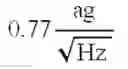
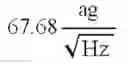
| Minimum Sensitivity | 0.63 pg | Not reported | 9.5 pg | 80 pg | 0.77 ag Hz | 67.68 ag Hz |
| Detection | Laser | None | Laser | Laser | CMOS | CMOS |
| Type | Doppler | reported | Doppler | Doppler | Electronics | Electronics |
| Vibrometer | Vibrometer | Vibrometer | ||||
AIMS OF THE INVENTION
This invention is a gravimetric sensor device aimed at biological cell and analyte detection, which oscillates laterally and can be embedded under micro-fluidic channels. The main characteristics of this device are:
High resolution
Fast
Fabricated with low-cost
Low operating costs
Lower sample consumption
CMOS compatible and stand-alone
Highly reproducible
Unique, yet can be produced easily using known fabrication technologies
Small and portable
Disposable or reusable
Able to operate without complex and expensive external equipment
Not requiring optical marking and microscope
Can be used for cell detection and counting
Can be used for analyte detection and concentration measurements
Feedback structure
Below are the innovations brought to known technique and state-of-the art by this invention:
-
- Since the oscillation is lateral, the quality factor within the liquid is quite high. Thus, it is possible to have online and high resolution detection.
- Since the quality factor is high, it is not required to decrease the mass significantly and the oscillation frequencies can be kept relatively low. Low frequency makes it possible to operate within an electronic feed-back control and read-out circuit.
- In addition, these systems operate electromechanically and detection system does not need optical marking and detection since they can be fabricated together with electronic read-out circuit. Thus, they can operate alone and be produced at quite low-cost.
- Targets can be directed to the attachment surface which can be placed inside the channel. Besides, redirection is induced automatically. This improves the resolution compared to the existing cantilever type gravimetrical detectors.
- As proof mass has a four-beam mechanically balanced structure, the output changes linearly and is also independent to attachment position. Thus, it is possible to obtain devices with high concentration resolution and reproducibility.
- Micro fabrication technique used in the device, obtained by making changes unique to the MEMS production technologies with the existing SOI (silicon on insulator) process, makes it possible to place the resonators under micro fluidic channels and to integrate the external micro fluidic connection point easily.
- It operates more efficiently and oscillates with higher quality factor by blocking the analyte or cell suspension fluid inside the micro fluidic channel from leaking between the comb fingers.
- Faster analysis of targets will allow obtaining immediate results, and will accelerate the treatment process being used in measuring the success of existing patient treatment methods. Known expensive and limited diagnosis and analysis methods prevent the doctors from realizing these checks during the treatment process.
- Low-cost production will decrease the diagnosis and treatment costs, and thus improve the access to the product by individuals, hospitals and laboratories. Similarly, low operating costs will decrease fixed and variable costs.
- It will be possible to maintain the surgical interventions at a minimal level, thanks to this detection device that needs few samples to get to the result.
- High reproducibility of the fabrication technique decreases costs in terms of time and money for post production calibration and quality control.
- Being small, portable, disposable, as well as the ability to operate independent of expensive and complex external equipment make it quite easy and practical to integrate this device into remote health centers or military units.
- Since it does not require optical systems, fixed costs required for the operation of this device are further decreased.
DEFINITION OF THE FIGURES
Below are the list of figures prepared and attached for a better explanation of laterally oscillating gravimetric sensing device embeddable under micro-fluidic channels and fabricated with micro-electro mechanical systems (MEMS) technology, which detects biological cell and analytes by measuring the change of mass attached on its surface:
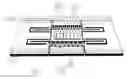
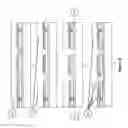
FIG. 1—Top view of the resonator that can be placed on the basis of the channel
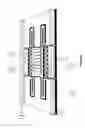
FIG. 2—Perspective view of the resonator that can be placed on the basis of the channel and bio-activation components
FIG. 3—Perspective view of the resonator that can be placed on the basis of the channel and the micro fluidic channel
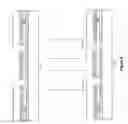
FIG. 4—Microfabrication technique, production steps part 1
FIG. 5—Microfabrication technique, production steps part 2
FIG. 6—Microfabrication technique, production steps part 3
DEFINITION OF THE ELEMENTS (FEATURES/COMPONENTS/PARTS) ON THE FIGURES
Attached are the list of figures prepared for a better explanation of the laterally oscillating gravimetric sensing device embeddable under micro-fluidic channels and fabricated with micro-electro mechanical systems (MEMS) technology, which detects biological cell and analytes by measuring the change of mass attached on its surface. In addition, figures are highlighted with colors, and numbered where needed. Explanation for each numbered part is given below. Yet again, some parts are especially shown on the figures in order to make them clear to understand. U title is used to show the production phases, and step by step latest status is shown instead of numbering.
-
- 1—Proof mass
- 2—Comb Fingers Fixed to Proof Mass
- 3—Folded spring beams
- 4—Channel Floor and Mechanical Ground
- 5—Stationary Electrodes
- 6—Comb Fingers Attached to the Stationary Electrodes
- 7—Gold Film deposited on proof mass
- 8—Immobilized biologic recognition molecules
- 9—Micro fluidic Channel Placed on Resonator structure
- U.1—Silicon Dioxide
- U.2—Silicon
- U.3—Metal
- U.4—Polymer
- U.5—Metallization
- U.6—Metal Shaping through etching
- U.7—Resonator definition through Deep Reactive Ion Etching (DRIE)
- U.8—Conformal polymer coating for insulation
- U.9—Polymer Shaping through dry etching
- U.10—Metal Shaping through Metallization and Etching
- U.11—Polymer Coating
- U.12—Polymer Shaping through Dry etching
- U.13—Release via removing underlying Silicone Dioxide by Dry or Wet etching
- U.14—Polymer Shaping by Polymer Coating and Dry etching
- U.15—Glass top-cap adhesion through Polymer/Polymer Thermal Compression
- U.16—Micro fluidic Adapter Integration
DETAILED-DESCRIPTION OF THE INVENTION
The device and the method developed through this invention are basically comprised of four (4) main groups as:
Resonator that is embeddable under microfluidic channel
Components of the bio-activation layer
Micro fluidic channel
Microfabrication technique
The resonator that can be placed onto the basis of the channel consists of a proof mass (1), the comb fingers fixed to proof mass (2), folded spring beams (3), channel floor and the mechanical ground (4), the stationary electrodes (5) and the comb fingers attached to the stationary electrodes (6). Channel floor and the mechanical ground (4) are attached to the bulk wafer via silicone dioxide, and they do not move. Folded spring beams (3), proof mass (1) and the comb fingers fixed to proof mass (2), are suspended. Parts of the resonator that can be placed onto the basis of the channel (1, 2, 3, 4, 5, and 6) are made of highly- or moderately-conductive single crystal silicon. The polymer coating (U.4) is made of dielectric polymers coated in such way that the resonator components do not touch each other. All components (1, 2, 3, 4, 5, and 6) are also coated with polymer.
The components of the resonator bio-activation are comprised of golden film deposited on the proof mass (7) on top of the polymer coated proof mass (1) and immobilized biological recognition molecules (8) attached onto the film using well known protocols.
The micro fluidic channel placed on the resonator structure (9) is placed on a larger area compared to the resonator placed on the basis of the channel. Walls and top of the channel are made of transparent polymer or Pyrex. As a result, it will be possible to apply optical methods when complementary techniques are needed for the operation of the device. It is even possible to use the device for other applications by integration of optical reading methods and the resonator.
Microfabrication technique, using silicon (U.2), silicone dioxide (U.1) and SOI wafers made of silicon (U.2) respectively, and by means of metallization (U.5), Metal
Shaping through etching (U.6), Resonator definition through Deep Reactive Ion etching (U.7), Conformal Polymer Coating for Insulation (U.8), Polymer Shaping through Dry etching (U.9), Metal Shaping-through Metallization and etching (U.10), Polymer Coating (U.11), Polymer Shaping through Dry etching (U.12), Release via Lifting Silicone Dioxide through Dry or Wet etching (U.13), Polymer Shaping through Polymer Coating and Dry etching (U.14), Glass Top-Cap Adhesion through Polymer/Polymer Thermal Compression (U.15) and Micro fluidic Adapter Integration (U.16) methods respectively, is comprised of the production of laterally oscillating gravimetric sensing device embeddable under micro-fluidic channels and fabricated with micro-electro mechanical systems (MEMS) technology, which detects biological cell and analytes by measuring the change of mass attached on its surface.
Operation of the System
At the outset, the proof mass (1) and the gold film deposited on proof mass (7) are activated for target recognition by means of those protocols fixating the known biological recognition molecules onto the gold. Through this process, the biological agents having the ability to attach themselves to the target cells or analytes are fixed on the gold film surface in a selective manner.
After that, the MEMS resonator placed within the channel is oscillated at resonance: The proof mass (1), the comb fingers fixed to proof mass (2), folded spring beams (3), as well as channel floor and the mechanical ground (4) form an electrically connected node, where a voltage is applied from outside via input electrodes created originally in the production phase. The stationary electrodes (5) and the comb fingers attached to the stationary electrodes (6) are connected to the electronic control circuit operated through closed circuit positive feedback. Within this current status of the system, the resonator oscillates laterally in its natural resonance frequency, and at the output of this circuit, an alternative voltage in the resonator's natural resonance frequency is probed.
Following the initialization of the oscillation, samples to be measured are injected into the micro channels by means of micro fluidic adaptors. Resonators placed on the basis of the micro channel in a straightforward manner do not prevent the flow within the micro channels. Simultaneously, frequency of the alternative voltage at the output of the circuit is probed. When a cell or analyte attach to the surface of the proof mass (1), then the frequency of the mechanical resonance and the frequency of the alternative voltage at the circuit output changes. The change in frequency is proportional to the target mass attached to the surface.
In cell detection applications, the dielectrophoretic forces resulted from the electrical area between the proof mass (1) and the stationary electrodes (5) are directed towards the core of the proof mass (1), and decrease the number of minimum detectable cells by increasing their probability for attachment. In addition, dependence of the proof mass (1) practicing four-faceted lateral oscillation and of the amount of change in frequencies to the cell attachment location is minimized.
The hydrophobic polymer coated between the comb fingers fixed to proof mass (2), the stationary electrodes (5), the proof mass (1), the channel floor and the mechanical ground (4) and the folded spring beams (3) puts off a liquid leakage among these components, decreases the friction coefficient, and maintains the high quality factor. Additionally, this polymer layer prevents a direct contact between conducting biological liquids and the resonator that can be placed on the basis of the channel, and ensures the electromechanical oscillation. Furthermore, this polymer film coated onto the surfaces increases the effective dielectrical constant between the comb fingers fixed to proof mass (2) and has an impact increasing the electromechanical gain.
Table 2 shows the operating frequency, quality factor and noise equivalent mass difference (NEMD) of the devices that are the subject of this invention. Various devices indicated with ‘RCD’ are same devices fabricated of different microfabrication parameters.
The highest and the lowest values are highlighted with bold letters. Table 1 gives a comparison of these values to their similar ones recently published.
| TABLE 2 |
| Operating frequency, quality factor and noise |
| equivalent mass difference (NEMD) of the |
| devices being the subject of this invention |
| Working Frequency | ||||
| Name | (kHz) | Quality Factor | NEMD | |
| RCD1.1 | 799 | 24 | 1.01 | |
| RCD1.2 | 565 | 16 | 2.00 | |
| RCD1.3 | 804 | 28 | 1.18 | |
| RCD1.4 | 586 | 21 | 2.00 | |
| RCD2.1 | 2278 | 68 | 0.77 | |
| RCD2.2 | 795 | 38 | 1.08 | |
| RCD2.3 | 566 | 33 | 1.53 | |
| RCD2.4 | 415 | 30 | 4.03 | |
| RCD2.5 | 284 | 21 | 7.91 | |
| RCD2.6 | 2279 | 61 | 1.29 | |
| RCD2.7 | 794 | 36 | 1.77 | |
| RCD2.8 | 568 | 31 | 2.51 | |
| RCD2.9 | 411 | 34 | 4.76 | |
| RCD2.10 | 296 | 34 | 5.67 | |
| RCD3.1 | 1179 | 60 | 5.73 | |
| RCD3.2 | 830 | 42 | 11.25 | |
| RCD3.4 | 293 | 29 | 11.41 | |
| RCD3.5 | 1609 | 58 | 2.91 | |
| RCD3.6 | 1190 | 86 | 4.82 | |
| RCD3.7 | 846 | 72 | 7.76 | |
| RCD3.8 | 296 | 42 | 67.68 | |
| Average | 876 | 42 | 6.9 | |
REFERENCES
- [1] A. P. Davila, J. Jang, A. K. Gupta et al., “Microresonator mass sensors for detection of Bacillus anthracis Sterne spores in air and water,” Biosens Bioelectron, vol. 22, no. 12, pp. 3028-35, Jun. 15, 2007.
- [2] K. Y. Gfeller, N. Nugaeva, and M. Hegner, “Micromechanical oscillators as rapid biosensor for the detection of active growth of Escherichia coli,” Biosens Bioelectron, vol. 21, no. 3, pp. 528-33, Sep. 15, 2005.
- [3] A. Gupta, D. Akin, and R. Bashir, “Single virus particle mass detection using microresonators with nanoscale thickness,” Applied Physics Letters, vol. 84, no. 11, pp. 1976-1978, 2004.
- [4] M. K. Ghalkesar, V. Barwich, T. Braun et al., “Real-time mass sensing by nanomechanical resonators in fluid.” pp. 1060-1063 vol. 2.
Claims
1- The laterally oscillating gravimetric sensing device embeddable under micro-fluidic channels and fabricated with micro-electro mechanical systems (MEMS) technology, which detects biological cell and analytes by measuring the change of mass attached on its surface, and which is composed of four (4) main groups, namely
a resonator that can be placed onto the basis of the channel
components of the resonator bio-activation
a micro fluidic channel, and
the microfabrication techniques.
2- The laterally oscillating gravimetric sensing device embeddable under micro-fluidic channels and fabricated with micro-electro mechanical systems (MEMS) technology, which detects biological cell and analytes by measuring the change of mass attached on its surface, which is as stated in claim 1 and that is consisted of a proof mass (1), the comb fingers fixed to the proof mass (2), the folded spring beams (3), the channel floor and mechanical ground (4), and stationary electrodes (5).
3- The laterally oscillating gravimetric sensing device embeddable under micro-fluidic channels and fabricated with micro-electro mechanical systems (MEMS) technology, which detects biological cell and analytes by measuring the change of mass attached on its surface, which is as stated in claim 1 and that is accommodating resonator bio-activation components comprised of golden film deposited on proof mass (7) on top of the polymer coated proof mass (1) and immobilized biological recognition molecules (8) attached onto the film using well known methods.
4- The laterally oscillating gravimetric sensing device embeddable under micro-fluidic channels and fabricated with micro-electro mechanical systems (MEMS) technology, which is as stated in claim 1 and that is accommodating micro fluidic channels placed on the resonator structure (9) is placed on a larger area compared to the resonator placed on the basis of the channel, walls and ceiling of which are made of transparent polymer or Pyrex.
5- The laterally oscillating gravimetric sensing device embeddable under micro-fluidic channels and fabricated with micro-electro mechanical systems (MEMS) technology, which is as stated in claim 1 and which is produced by means of Metallization (U.5), Metal Shaping through Etching (U.6), Resonator Identification through Deep Reactive Ion Etching (U.7), Conformal Polymer Coating for Insulation (U.8), Polymer Shaping through Dry Etching (U.9), Metal Shaping through Metallization and Etching (U.10), Polymer Coating (U.11), Polymer Shaping through Dry Etching (U.12), Release via removing underlying Silicone Dioxide by Dry or Wet Etching (U.13), Polymer Shaping by Polymer Coating and Dry Etching (U.14), Glass top-cap Adhesion through Polymer/Polymer Thermal Compression (U.15) and Micro fluidic Adaptor Integration (U.16) methods in that order.
6- The laterally oscillating gravimetric sensing device embeddable under micro-fluidic channels and fabricated with micro-electro mechanical systems (MEMS) technology, which is as stated in any of the above mentioned claims, which makes electromechanical oscillation on a lateral axis that can be placed inside of a micro fluidic channel, and which decreases the number of minimum detectable cells by increasing their probability for attachment through directing the cells towards the core of the proof mass (1) using the dielectrophoretic forces resulted from the electrical area between the proof mass (1) and the stationary electrodes (5).
7- A gravimetric detection device, which is as stated in any of the above mentioned claims, which makes electromechanical oscillation on a lateral axis that can be placed inside of a micro fluidic channel, and which minimizes the dependence of the output frequency shift to the cell attachment location by realizing four-beam lateral oscillation.
8- A gravimetric detection device, is as stated in any of the above mentioned claims, which makes electromechanical oscillation on a lateral axis that can be placed inside of a micro fluidic channel, and which prevents liquid leakage among the comb fingers fixed to proof mass (2), the stationary electrodes (5), the proof mass (1), the channel floor and the mechanical soil (4) and the folded spring beams (3) by means of a coated hydrophobic polymer, which also decreases the friction coefficient and maintains the high quality factor.
9- A gravimetric detection device, is as stated in any of the above mentioned claims, which makes electromechanical oscillation on a lateral axis that can be placed inside of a micro fluidic channel, and which can realize real-time reading with high resolution due to existence of high quality factor within the liquid as a result of resonator lateral oscillation.
10- A gravimetric detection device, is as stated in any of the above mentioned claims, which makes electromechanical oscillation on a lateral axis that can be placed inside of a micro fluidic channel, and which can operate with the electronic closed circuit control and reading circuit owing to its ability to operate in low frequencies since the quality factor is kept high.
11- A gravimetric detection device, is as stated in any of the above mentioned claims which makes electromechanical oscillation on a lateral axis that can be placed inside of a micro fluidic channel, and which is characterized by its walls and ceiling made of transparent polymer or Pyrex walls to be able to apply optical methods for confirming the operation of the device.
Images & Drawings included:

Sources:
- United States Patent and Trademark Office - verify current appl. status at the USPTO↗
Recent applications in this class:
- » 20230243692 2023-08-03
SURFACE ACOUSTIC WAVE SCALE - » 20190162580 2019-05-30
Method for obtaining the absorption position, mass and rigidity of a particle - » 20170097255 2017-04-06
AEROSOL MASS SENSOR AND SENSING METHOD - » 20130074586 2013-03-28
Device for mass detection of particles in a fluid medium, and implementation method - » 20120208027 2012-08-16
Reduced graphene oxide film - » 20120152003 2012-06-21
Method and device for nanogravimetry in fluid media using piezoelectric resonators - » 20120144918 2012-06-14
Longitudinal resonating mode inertial mass sensing systems - » 20120085586 2012-04-12
Component force damping device and platform scale using same - » 20120073387 2012-03-29
Load detection sensor - » 20110178673 2011-07-21
WEIGHT DETECTION DEVICE FOR VEHICLE AND METHOD FOR DETECTING WEIGHT OF VEHICLE COMPONENT