Battery with chlorophyll electrode
US20120148898A1
2012-06-14
13/075,909
2011-03-30
✅ Patent granted
US 8,753,759 B2
2014-06-17
-
-
Zachary Best
Novak Druce Connolly Bove + Quigg LLP
2032-07-02
Abstract:
An exemplary battery is provided in the present invention. The battery includes a current collector, a positive-electrode structure, a separation structure, a negative-electrode structure and a housing. The positive-electrode structure, the separation structure, the negative-electrode structure are encircled in sequence inside of the housing. At least one of the negative-electrode structure and the positive-electrode structure comprises chlorophyll. The battery of the present invention could store hydrogen by the chlorophyll of the positive-electrode structure and/or the negative-electrode structure to generate electricity.
Assignee:
- INNOT BIOENERGY HOLDING CO. 14 George Town, Cayman Islands
Applicant:
Interested in similar patents?
Get notified when new applications in this technology area are published.
Classification:
H01M14/005 » CPC main
Electrochemical current or voltage generators not provided for in groups - ; Manufacture thereof Photoelectrochemical storage cells
H01M4/60 » CPC further
Electrodes; Electrodes composed of, or comprising, active material; Selection of substances as active materials, active masses, active liquids of organic compounds
H01M4/622 » CPC further
Electrodes; Electrodes composed of, or comprising, active material; Selection of inactive substances as ingredients for active masses, e.g. binders, fillers; Binders being polymers
H01M4/625 » CPC further
Electrodes; Electrodes composed of, or comprising, active material; Selection of inactive substances as ingredients for active masses, e.g. binders, fillers; Electric conductive fillers Carbon or graphite
H01M50/4295 » CPC further
Constructional details or processes of manufacture of the non-active parts of electrochemical cells other than fuel cells, e.g. hybrid cells; Separators; Membranes; Diaphragms; Spacing elements inside cells; Separators, membranes or diaphragms characterised by the material; Organic material; Natural polymers Natural cotton, cellulose or wood
H01M50/44 » CPC further
Constructional details or processes of manufacture of the non-active parts of electrochemical cells other than fuel cells, e.g. hybrid cells; Separators; Membranes; Diaphragms; Spacing elements inside cells; Separators, membranes or diaphragms characterised by the material Fibrous material
Y02E60/10 » CPC further
Enabling technologies; Technologies with a potential or indirect contribution to GHG emissions mitigation Energy storage using batteries
Y02E60/10 » CPC further
Enabling technologies; Technologies with a potential or indirect contribution to GHG emissions mitigation Energy storage using batteries
H01M8/16 IPC
Fuel cells; Manufacture thereof Biochemical fuel cells, i.e. cells in which microorganisms function as catalysts
Description
CROSS-REFERENCE TO RELATED APPLICATION
This application claims priority of Chinese Patent Application No. 201010585281.3, filed on Dec. 13, 2010, entitled “Battery” by Chungpin Liao, the disclosure of which is incorporated herein by reference in its entirety.
FIELD OF THE INVENTION
The present invention relates to a battery, and more particularly to a battery using chlorophyll to generate electricity and a manufacturing method thereof.
BACKGROUND OF THE INVENTION
In recent years, portable electronic devices, such as mobile phones, portable cameras, notebook computers, digital cameras, personal digital assistants (PDAs), CD players, are becoming popular owing to their lightweight and small size. Batteries used as a portable power source have also become the focus of the public concern, and have been an essential element of various portable electronic devices.
Although common batteries, such as carbon-zinc batteries, alkaline batteries and secondary batteries, are allegedly environment-benign, they in fact largely contain substantial amounts of mercury and other heavy metals, such as cobalt. Other than that, environmental pollutants are frequently used or released during battery manufacturing process.
Lithium batteries, though widely adopted as the largest energy content among the portable batteries, are unstable in electrochemical reactions. In worst scenarios, explosions can occur due to its thermal runaway as the result of operating at low load or under improper assemblage. Therefore, multiple and complex protection mechanisms should be implemented for their usage, such as the installation of a protection circuit, an exhaust vent, and isolation membranes, etc.
The price of the lithium batteries rises rapidly as a result of the depletion of lithium mineral, which is the main raw material of the positive electrode (such as Li1-xCoO2) and the negative electrode (such as LixC) of lithium batteries. Furthermore, the performance and operating life of the lithium batteries decrease rapidly within a high temperature environment.
Therefore, a unaddressed need for a battery using chlorophyll to generate electricity exists in the art to address the aforementioned deficiencies and inadequacies.
SUMMARY OF THE INVENTION
The present invention provides a battery using chlorophyll to generate electricity and that can avoid the problems encountered with conventional batteries. The advantages of the present invention will be understood more readily after a consideration of the drawings and the detailed description of the preferred embodiments.
BRIEF DESCRIPTION OF THE DRAWINGS
The present invention will become more fully understood from the detailed description given herein below for illustration only, and thus are not limitative of the present invention, and wherein:
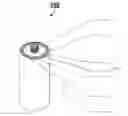
FIG. 1 is a perspective view of a battery according to an exemplary embodiment of the present invention;
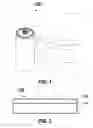
FIG. 2 is a sectional view of a negative-electrode structure according to an exemplary embodiment of the present invention;
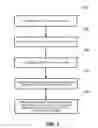
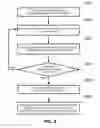
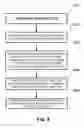
FIG. 3 is a flow chart of a manufacturing method of a battery according to an exemplary embodiment of the present invention;
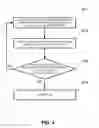
FIG. 4 is a detailed flow chart of the step S1 as shown in FIG. 3;
FIG. 5 is a detailed flow chart of the step S2 as shown in FIG. 3;
FIG. 6 is a detailed flow chart of the step S3 as shown in FIG. 3;
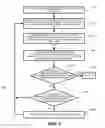
FIG. 7 is a detailed flow chart of the step S4 as shown in FIG. 3; and
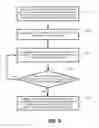
FIG. 8 is a detailed flow chart of the step S5 as shown in FIG. 3.
DETAILED DESCRIPTION OF THE INVENTION
Reference will now be made to the drawings to describe an exemplary embodiment in detail.
FIG. 1 is a perspective view of a battery 100 according to an exemplary embodiment of the present invention. As shown in FIG. 1, the battery 100 of the exemplary embodiment includes a current collector 110, a positive-electrode structure 120, a separation structure 130, a negative-electrode structure 140 and a housing 150. The positive-electrode structure 120, the separation structure 130, the negative-electrode structure 140 and the housing 150 are encircled around the current collector 110 in sequence.
FIG. 2 is a sectional view of the negative-electrode structure 140 in accordance with an exemplary embodiment of the present invention. As shown in FIG. 2, the negative-electrode structure 140 of the exemplary embodiment includes a conductive layer 141 and a negative-electrode layer 142, and the negative-electrode layer 142 is formed on the conductive layer 141.
The conductive layer 141 is made of conductive material. The conductive material can be metal, metallic compound, or conductive polymeric material. The metal can be selected from a group consisting of aluminum and gold. The metallic compound can be selected from a group consisting of manganese protoxide, zinc oxide and magnesium oxide. The conductive polymeric material can be selected from a group consisting of heterocycle or aromatic heterocyclic compound. Preferably, the conductive polymeric material can be selected from a group consisting of polyacetylene, poly (arylene vinylene), polythiophene, polyaniline, polypyrrole and the derivatives thereof.
The negative-electrode layer 142 includes chlorophyll and high polymer solution, and the negative-electrode layer 142 is formed on the conductive layer 141 by a coating method. The chlorophyll is selected from the group consisting of chlorophyll a, chlorophyll b, chlorophyll c1, chlorophyll c2, chlorophyll d, and chlorophyll e. Typically, the chlorophyll, from which the chlorophyll oxidase are removed, can be in powder form or in liquid form.
The high polymer solution is adhesive and configured for adhering and adjusting the physical and chemical characteristics of the conductive layer, such that the negative-electrode layer 142 can properly adhere to the conductive layer 141. In addition, the electric conductivity of the high polymer solution is within a range of 50 ms/cm to 250 ms/cm. The high polymer solution are elements selected from the group consisting of boron, magnesium, aluminum, calcium, manganese and zinc. The high polymer solution is further configured for adjusting the work function of the conductive layer 141, so as to achieve the desired potential difference, such as 1.5V, between the positive-electrode structure and the negative-electrode structure of the battery 100.
The high polymer solution is prepared from compound of metal ions and acid ions, high polymer and solvent in proportion, and each is with a concentration from 0.1 mol/L to 10 mol/L. The high polymer includes high polymer of glucose. The high polymer of glucose can be plant starch, such as potato starch, water chestnut starch, corn starch, sweet potato starch, lotus root starch, mustard powder, and pueraria powder, etc. The compound of metal ions and acid ions can be calcium carbonate. Alternatively, the compound of metal ions and acid ions can be natural phytochemicals, including lignans, oligosaccharides, polysaccharides, flavonoids, iridoids, fatty acids, scopoletin, catechin, beta-sitosterol, damnacanthal, and alkaloids. The solvent can have a polarity and a PH value thereof greater than 3, such as water, seawater, tea, coffee, fruit juice or liquor, etc. The PH value of the high polymer solution is between about 5.5 to about 8. The high polymer solution can further contain vitamin, such as vitamin D.
The negative-electrode structure 140 is made into a membrane to increase the usage rate of the chlorophyll and enlarge the contact area thereof so as to increase the response area of the battery. In addition, it should be understood for a person skilled in the art that, any known method can be used to increase the usage rate of the chlorophyll and enlarge the contact area thereof to increase the response area of the battery, etc. Preferably, in the exemplary embodiment, the length of the negative-electrode structure 140 is about 60 mm, and the width thereof is about 50 mm.
Referring to FIG. 1 again, the following will continue to introduce other structures of the battery 100 of the present invention. The current collector 110 is in a cylinder shape. Preferably, the diameter of the current collector 110 is about 4 mm, and its length is about 47.2 mm.
The positive-electrode structure 120 is made of positive-electrode material in powder form. Preferably, the positive-electrode material in powder form contains chlorophyll in powder form. In addition, the positive-electrode material powder can further contain carbon fiber cloth, carbon powder or nano conductive polymeric powder. The carbon fiber cloth or the carbon powder can be selected from the group consisting of hard charcoal (or called chaoite), soot carbon, glassy carbon, carbon nanotube, activated carbon, diamond, amorphous carbon, grapheme, fullerene, graphite, carbyne, diatomic carbon, tricarbon, atomic carbon, graphitization carbon, thermolabile carbon, coke, or other allotropes of carbon. The material of the conductive polymeric powder can be selected from the group consisting of heterocycle or aromatic heterocyclic compound. Preferably, the material of the conductive polymeric powder can be selected from the group consisting of polyacetylene, poly (arylene vinylene), polythiophene, polyaniline, polypyrrole and the derivatives thereof.
The separation structure 130 has a first separator 131, a second separator 132 and electrolyte material 133 sandwiched between the two separators. The first separator 131 and the second separator 132 are both made of high-fiber material, and the high-fiber material can be paper material, such as cellophane, cotton paper, rice paper or silk paper, etc. Furthermore, the high-fiber material has pores therein, and the diametric length of each pore is preferably between about 0.01 μm to about 1 cm. In addition, in the exemplary embodiment, the first separator 131 and the second separator 132 are both membranes, and the lengths of these two memberance are about 55 mm, the their widths are about 50 mm with their thickness of about 0.2 mm. The electrolyte material 133 can be a solution of organic salt or a solution of organic salt and chlorophyll. The electric conductivity of the solution should be between about 10 ms/cm to about 500 ms/cm. The organic salt can be organic salt without lithium, and selected from the group consisting of sodium iodide, sodium chloride and sodium hydroxide.
The housing 150 can be a paper tube, with its outer diameter being about 14.5 mm, its inner diameter being about 12.5 mm, and its length being about 48.4 mm. The housing 150 is configured for containing the current collector 110, the positive-electrode structure 120, the separation structure 130 and the negative-electrode structure 140.
In the exemplary embodiment, both of the negative-electrode structure 140 and the positive-electrode structure 120 contains the chlorophyll. Therefore, when the battery 100 operates, the chlorophyll of the negative-electrode structure 140 and the chlorophyll of the positive-electrode structure 120 generate electrons or holes as they receive light or touch the electrolyte solution, such that a potential difference occurs between the positive-electrode structure 120 and the negative-electrode structure 140 to supply a continuous current. In other words, the battery 100 of the present invention uses chlorophyll as the energy source to generate electricity. Preferably, the chlorophyll of the negative-electrode structure 140 and the chlorophyll of the positive-electrode structure 120 have different work functions with each other.
Although both of the negative-electrode structure 140 and the positive-electrode structure 120 contain chlorophyll in the exemplary embodiment, it should be understood for a person skilled in the art that, the battery of the present invention can only use the chlorophyll in the negative-electrode structure 140, or only use the chlorophyll in the positive-electrode structure 120, to use chlorophyll as the energy source such that the battery can provide the electrical energy.
FIG. 3 is a flow chart of a manufacturing method for battery according to an exemplary embodiment of the present invention. As shown in FIG. 3, the manufacturing method includes following steps:
-
- Step S1: providing a high polymer solution;
- Step S2: providing a negative-electrode structure;
- Step S3: providing a separation structure;
- Step S4: assembling the negative-electrode structure and the separation structure into a housing; and
- Step S5: inserting a current collector into the housing and filling a positive-electrode material therein to form a positive-electrode structure.
FIG. 4 is a detailed flow chart of the step S1 as shown in FIG. 3. As shown in FIG. 4, the step S1 of providing a high polymer solution includes following steps:
-
- Step S11: slowly adding high polymer powder into solvent with a temperature of 40 Degree Celsius to form a first mixture;
- Step S12: blending the first mixture with a magnet blender at a rate of 500˜700 RPM;
- Step S13: detecting whether the electric conductivity of the first mixture is within a range of 50 ms/cm to 250 ms/cm or not; if a result thereof is no, returning to perform the step S11; and if the result thereof is yes, performing a step S14; and
- Step S14: completing.
In the exemplary embodiment, the solvent can have a polarity and a PH value greater than 3, such as water, seawater, tea, coffee, fruit juice or liquor, etc.
FIG. 5 is a detailed flow chart of the step S2 as shown in FIG. 3. In FIG. 5, the step S2 of providing a negative-electrode structure includes following steps:
-
- Step S21: filtering the chlorophyll in powder form by a filter mesh;
- Step S22: pouring the chlorophyll into the high polymer solution to form a second mixture;
- Step S23: blending the second mixture with a magnet blender at a rate of 500˜700 RPM;
- Step S24: judging whether uniform fluid is achieved or not; if the answer is no, returning to perform the step S22; and if the answe is yes, performing the step S25;
- Step S25: coating the uniform fluid on a conductive layer;
- Step S26: placing the conductive layer into an oven and baking it at a temperature of 100 Degree Celsius, until water evaporates.
FIG. 6 is a detailed flow chart of the step S3 as shown in FIG. 3. In FIG. 6, the step of providing a separation structure includes following steps:
-
- Step S31: trimming the separators;
- Step S32: immersing the trimmed separators into a high polymer solution;
- Step S33: two separators are made by taking out two separators and placing them into an oven and baking them at a temperature of 100 Degree Celsius until water evaporates;
- Step S34: taking out the first of the two separators, and uniformly spraying electrolyte material thereon; and
- Step S35: covering the second of the two separators on the electrolyte material, to complete the whole processes of manufacturing the separation structure.
FIG. 7 is a detailed flow chart of the step S4 as shown in FIG. 3. In FIG. 7, the step S4 of assembling the negative-electrode structure and the separation structure into the housing, includes following steps:
-
- Step S41: attaching the negative-electrode structure into the housing;
- Step S42: closely rolling up the separation structure by a first hollow rod having an inner diameter of 4.5 mm, an outer diameter of 6.36 mm, and a length of 47.2 mm;
- Step S43: turning the first hollow rod with the rolled separation structure into the housing with the negative-electrode structure in clockwise direction;
- Step S44: taking out the first hollow rod in counterclockwise direction to leave the separation structure in the housing, with the negative-electrode structure;
- Step S45: detecting whether the separation structure is attached on the negative-electrode structure in the housing; if the answer is no, performing the step S46; and if the answer is yes, performing the step S47;
- Step S46: pulling out the separation structure and judging whether the separation structure is damaged; if the answer is no, returning to perform the step S42; and if the answer is yes, performing the step S46a;
- Step S46a: replacing the separation structure and returning to perform the step S42; and
- Step S47: completing.
FIG. 8 is a detailed flow chart of the step S5 as shown in FIG. 3. In FIG. 8, the step S5 of inserting the current collector into the housing and filling the positive-electrode material therein to form the positive-electrode structure includes following steps:
-
- Step S51: slowly filling the positive-electrode material in powder form into the housing with the negative-electrode structure and the separation structure;
- Step S52: inserting the current collector into the center of the housing;
- Step S53: tamping by the first hollow rod and a vise and continuously filling the positive-electrode material therein;
- Step S54: detecting whether the amount of the positive-electrode material reaches a needed weight; if the answer is no, returning to perform the step S53; and if the answer is yes, performing the step S55; and
- Step S55: embellishing the positive-electrode structure by a second hollow rod having an inner diameter of 4.5 mm, an outer diameter of 9.94 mm, and a length of 47.2 to form the positive-electrode structure.
The battery of the present invention could store hydrogen by chlorophyll of the positive-electrode structure and/or the negative-electrode structure to generate electricity. Preferably, both of the positive-electrode structure and the negative-electrode structure contain chlorophyll, but they have different work-functions. Namely, during the oxidation-reduction chemical reaction, the chlorophyll molecule would lose a magnesium ion in its porphyrin center to become the pheophytin molecule. Two empty bonding sites of the latter then trap two hydrogen ions to practically store hydrogen and make the running of current smooth. In addition, not only is the manufacturing process of the battery simple and economical, but also natural, non-toxic substances are used. Unlike conventional batteries, the battery of the present invention will not cause environmental pollution even when discarding after use.
It should be noted that the terms “first”, “second”, “third” and other terms in the present invention are only used as textual symbols as the circumstances can require, and thus the practice is not limited to these terms. It should be further noted that these terms can be used interchangeably.
While there has been shown several and alternate embodiments of the present invention, it is to be understood that certain changes can be made as would be known to one skilled in the art without departing from the underlying scope of the present invention as is discussed and set forth above and below including claims. Furthermore, the embodiments described above and claims set forth below are only intended to illustrate the principles of the present invention and are not intended to limit the scope of the present invention to the disclosed elements.
Claims
What is claimed is:1. A battery, comprising:
a. a current collector;
b. a positive-electrode structure, substantially encircling the current collector;
c. a separation structure, substantially encircling the positive-electrode structure;
d. a negative-electrode structure, substantially encircling the separation structure; and
e. a housing enclosing the current collector, the positive-electrode structure, the separation structure and the negative-electrode structure,
wherein at least one of the positive-electrode structure and the negative-electrode structure comprises chlorophyll.
2. The battery of claim 1, wherein the negative-electrode structure comprises a conductive layer and a negative-electrode layer, and the negative-electrode layer is formed on the conductive layer.
3. The battery of claim 2, wherein the conductive layer is made of conductive material, and the conductive material is selected from the group consisting of metal, metallic compound and conductive polymeric material.
4. The battery of claim 3, wherein the metal is selected from the group consisting of aluminum and gold, the metallic compound is selected from the group consisting of manganese protoxide, zinc oxide and magnesium oxide, and the conductive polymeric material is heterocycle or aromatic heterocyclic compound and selected from the group consisting of polyacetylene, poly (arylene vinylene), polythiophene, polyaniline, polypyrrole and their derivatives.
5. The battery of claim 2, wherein the negative-electrode layer comprises chlorophyll and a high polymer solution.
6. The battery of claim 5, wherein the chlorophyll is selected from the group consisting of chlorophyll a, chlorophyll b. chlorophyll c1, chlorophyll c2, chlorophyll d, and chlorophyll e.
7. The battery of claim 5, wherein the chlorophyll is in powder form or in liquid form.
8. The battery of claim 5, wherein the chlorophyll oxidase has been removed from the chlorophyll.
9. The battery of claim 5, wherein the high polymer solution comprises compound of metal ions and acid ions, high polymer and solvent, and each thereof has a concentration of about 0.1 mol/L to about 10 mol/L.
10. The battery of claim 9, wherein the high polymer is high polymer of glucose, and the high polymer of glucose is selected from the group consisting of potato starch, water chestnut starch, corn starch, sweet potato starch, lotus root starch, mustard powder and pueraria powder.
11. The battery of claim 9, wherein the compound of metal ions and acid ions comprise calcium carbonate or natural phytochemicals selected from the group consisting of lignans, oligosaccharides, polysaccharides, flavonoids, iridoids, fatty acids, scopoletin, catechin, beta-sitosterol, damnacanthal and alkaloids.
12. The battery of claim 9, wherein the solvent has a polarity and a PH value greater than 3, and the solvent is selected from the group consisting of water, seawater, tea, coffee, fruit juice and liquor.
13. The battery of claim 5, wherein the PH value of the high polymer solution is within a range of about 5.5 to about 8, and its electric conductivity is within a range of about 50 ms/cm to about 250 ms/cm.
14. The battery of claim 1, wherein the positive-electrode structure is made of positive-electrode material in powder form.
15. The battery of claim 14, wherein the positive-electrode material in powder form comprises the chlorophyll in powder form.
16. The battery of claim 15, wherein the positive-electrode material in powder form further comprises at least one of carbon fiber cloth, carbon powder and conductive polymeric powder, and the carbon fiber cloth and the carbon powder are selected from the group consisting of hard charcoal (or called chaoite), soot carbon, glassy carbon, carbon nanotube, activated carbon, diamond, amorphous carbon, graphene, fullerene, graphite, carbyne, diatomic carbon, tricarbon, atomic carbon, graphitization carbon, Pyrolytic carbon, coke, and other allotropes of carbon.
17. The battery of claim 1, wherein the separation structure comprises a first separator, a second separator and electrolyte material sandwiched therebetween.
18. The battery of claim 17, wherein the first separator and the second separator are made of high-fiber material, and the high-fiber material is paper material selected from the group consisting of cellophane, cotton paper, rice paper and silk paper.
19. The battery of claim 17, wherein the electrolyte material comprises a solution of organic salt or a solution of organic salt and chlorophyll, and its electric conductivity is within a range of about 10 ms/cm to about 500 ms/cm.
20. The battery of claim 18, wherein the organic salt is organic salt without lithium, and the organic salt is selected from the group consisting of sodium iodide, sodium chloride and sodium hydroxide.
Images & Drawings included:
Sources:
- United States Patent and Trademark Office - verify current appl. status at the USPTO↗
Similar patent applications:
Recent applications in this class:
- » 20250055079 2025-02-13
CONDUCTIVE SILVER ALUMINUM PASTE, PREPARATION METHOD, ELECTRODE, AND N-TYPE TOPCON BATTERY - » 20240429494 2024-12-26
PLASMONIC PHOTOELECTRODES FOR PHOTOELECTROCHEMICAL REDOX FLOW BATTERIES - » 20230378572 2023-11-23
PHOTO RECHARGEABLE ELECTROCHEMICAL ENERGY STORAGE DEVICE - » 20230216111 2023-07-06
PHOTOVOLTAIC REDUCTION OF WASTE CATIONS FROM ZINC AIR FUEL CELLS - » 20220123391 2022-04-21
Photoelectrochemical secondary cell and battery - » 20220093997 2022-03-24
ELECTROCHEMICAL DEVICE, BATTERIES, METHOD FOR HARVESTING LIGHT AND STORING ELECTRICAL ENERGY, AND DETECTION METHODS - » 20220037721 2022-02-03
Thermo-electrochemical convertor with integrated energy storage - » 20210194080 2021-06-24
Solar electroosmosis power generation device - » 20210028523 2021-01-28
Photocatalytic power generation apparatus depending on ambient humidity difference - » 20210013567 2021-01-14
Solid-state melanin battery
Recent applications for this Assignee:
- » 20120148919 2012-06-14
Organic negative electrode with chlorophyll and battery using the organic negative electrode - » 20120148915 2012-06-14
POSITIVE ELECTRODE AND BATTERY USING THE SAME - » 20120148905 2012-06-14
Flat-plate battery - » 20120148900 2012-06-14
Separator and method of manufacturing the same and organic battery employing the same - » 20120148891 2012-06-14
Battery with chlorophyll electrode - » 20120148729 2012-06-14
METHOD FOR PRODUCING AN ORGANIC NEGATIVE ELECTRODE - » 20120145969 2012-06-14
Conductive reinforcing material, negative electrode material and negative electrode - » 20120145952 2012-06-14
HIGH POLYMER SOLUTION, NEGATIVE ELECTRODE MATERIAL AND NEGATIVE ELECTRODE - » 20120145922 2012-06-14
CHLOROPHYLL FLUOROMETER AND MEASURING SYSTEM FOR CHLOROPHYLL CONCENTRATION EMPLOYING THE SAME - » 20120144903 2012-06-14
METHOD OF EXTRACTING CHLOROPHYLL AND MEASURING CONSISTENCY OF CHLOROPHYLL