Method of Playing a Casino Game
US20120149459A1
2012-06-14
13/399,062
2012-02-17
Abstract:
A method of playing a casino game is played in conjunction with common casino table games. The game employs two identical dice and a third different colored dice called the “Dragon's Eye”. Wagers are placed on the cumulative numbers of the thrown dice and on the “Dragon's Eye”. A unique casino table into which wager sensors and indicator lights are imbedded, is used to facilitate the measurement and calculation of wagers and game results. Game activity data is inputted into a microprocessor and processed to identify winning wagers. The game is designed to be played at any number of casino tables prior to the play of the primary casino game. Tables are linked electronically to establish a progressive jackpot. This results in players both playing against the dealer and other players to see who wins the bonus, and against other tables to see who hits the interlinked jackpot first.
Inventors:
- Charles S. Zussman 3 🇺🇸 Egg Harbor Township, NJ, United States
- Harrison S. Zussman 3 🇺🇸 Egg Harbor Township, NJ, United States
Interested in similar patents?
Get notified when new applications in this technology area are published.
Classification:
G07F17/3202 » CPC main
Coin-freed apparatus for hiring articles; Coin-freed facilities or services for games, toys, sports, or amusements Hardware aspects of a gaming system, e.g. components, construction, architecture thereof
A63F3/00157 » CPC further
Board games; Raffle games; Types of board games Casino or betting games
G07F17/322 » CPC further
Coin-freed apparatus for hiring articles; Coin-freed facilities or services for games, toys, sports, or amusements; Hardware aspects of a gaming system, e.g. components, construction, architecture thereof; Construction aspects of a gaming system, e.g. housing, seats, ergonomic aspects Casino tables, e.g. tables having integrated screens, chip detection means
G07F17/3279 » CPC further
Coin-freed apparatus for hiring articles; Coin-freed facilities or services for games, toys, sports, or amusements; Game play aspects of gaming systems; Games involving multiple players wherein the players compete, e.g. tournament wherein the competition is one-to-one, e.g. match
A63F9/24 IPC
Games not otherwise provided for Games using electronic circuits not otherwise provided for
Description
RELATED APPLICATION
The herein application claims the benefit of non-provisional utility application Ser. No. 12/592,763 filed on Dec. 2, 2009.
FIELD OF THE INVENTION
The present invention is generally directed to casino wagering games. More particularly, the invention discloses a method of playing a casino table wagering game, determined by the rolling of dice, which can be played prior to engaging in commonly played casino table games.
BACKGROUND OF THE INVENTION
Casino games of chance have specific features which make them attractive, both to the players and the house. Such games must be interesting, fun, easy to learn, understand, and play, and most importantly, present the players with a fair expectation of winning. That is, games of chance should have reasonable odds which only slightly favor the house. Betting games should also be exciting in pitting each player against the other players, as well as the house. In addition, games which have a large progressive jackpot payout create even more player excitement and interest.
Of course, the house has a keen interest in the types of games of chance it offers. There must be an acceptable house advantage and a quick turnaround time between waging games to allow as many games to be played as possible during a given period of time. The house is also interested in attracting a large number of players at each table. In addition, progressive pots are lucrative for the house in that they result in more players and increased wagering. Of course, these objectives must be accomplished with relatively low overhead and, consequently the gaming equipment must be basic, economical to manufacture, and easy to maintain.
SUMMARY INVENTION
It is thus the object of the present invention to provide a method of playing a casino game and/or electronic game, e.g. machine or interact game, which can be played in conjunction with primary common casino table games such as Blackjack, Poker, Pai Gow games, Baccarat, Acey-Deucey, and any game with six player locations. The game of the present invention employs two identical dice and a third different colored dice called the “Dragon's Eye”. Wagers are put down and payments made based on the cumulative numbers of the thrown dice and the numbers shown on the “Dragon's Eye”. Players actually become involved in rolling the dice based on the numbers shown on the dice themselves. A uniquely designed casino table, into which wager sensors are imbedded, is utilized to facilitate the measuring and calculation of wagers. Game activity data is inputted into a microprocessor and processed to identify winning wagers by means of winning player LED light indicators, also incorporated within the casino table. The “Dragon's Eye” dice game is designed to be played at any number of casino tables prior to the play, or being a casino game within itself, of the primary casino game. The results of the various tables can be linked to a central computer and shown on jackpot and progressive display boards.
The wager sensors, winning player LED light indicators, computer and electronic circuitry and controls included in this casino game are intended to make the game operate quickly while validating every transaction. These components make the game more interesting and exciting for the players, while allowing the dealer to focus more closely on the gaming table itself. The system described herein will monitor every transaction, record the information, and store the data locally while simultaneously providing batch uploads to a central storage site. The real-time results are posted on electronic displays and simultaneously posted to display bonus status.
The novel features which are considered as characteristic of the invention are set forth in particular in the appended claims. The invention, itself, however, both as to its design, construction and use, together with additional features and advantages thereof, are best understood upon review of the following detailed description with reference to the accompanying drawings.
BRIEF DESCRIPTION OF THE DRAWINGS
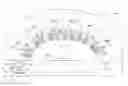
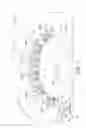
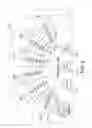
FIG. 1 shows the top of the casino table for the gaming method of the present invention.
FIG. 2 shows a representative player table location.
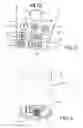
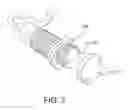
FIG. 3 shows the shaker and dice used in the gaming method of the present invention.
FIG. 4 shows the keypad used in the gaming method of the present invention.
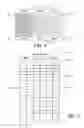
FIG. 5 shows the progressive display which ay be used with the gaming method of the present invention.
FIG. 6 shows the jackpot display board which may be used with the gaming method of the present invention.
FIG. 7 shows a representative wager sensor used in the gaming method of the present invention.
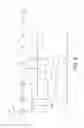
FIG. 8 is a flow chart depicting the steps of the gaming method of the present invention.
DETAILED DESCRIPTION OF THE INVENTION
The gaming method of the present invention, the “Dragon's Eye” dice game, employs casino table 100 on which there are six designated player locations 1-6. As seen more particularly in FIG. 2 with regard to player location 3, each player location comprises a designated area for placing even bets 20, odd bets 22, double dice roll bets 24, triple dice roil bets 26, bonus bets 27, match wagers 28, and bonus board bets 39 for the game. Winning player indicator LED lights 23, 25, 29, 31, 33, 35, and 41 are imbedded within table 100. Player location LED light 37 is located at player location 3. Each of the LED lights operates in conjunction with wage sensors 104 (see FIG. 7), also located within the table. Wager sensor 104 can, for example, be a capacitive proximity sensor which produces an electrostatic field. Such devices have a sensor face 105 and will sense metal and nonmetallic materials like those found in casino chips 107. The electronic circuitry and components which are utilized in the operation of the sensor and illumination of the LED lights is well known and are not, independently and, in and of themselves, unique to the present invention.
Each player location is provided with two cumulative dice numbers, based on the cumulative total sum of three rolled dice. That is, player location 1 is given cumulative dice numbers 10 and 18, player location 2 is given cumulative dice numbers 3 and 11, player location 3 is given cumulative dice numbers 4 and 12, player location 4 is given cumulative dice numbers 5 and 13, player location 5 is given cumulative dice numbers 6 and 14, and player location 6 is given cumulative dice numbers 7 and 15. In the alternative, the house may choose to assign the numbers 1 through 6 at each player location in place of using the cumulative dice numbers above. The house or the dealer is assigned cumulative dice numbers 8, 9, 16 and 17, 8 and 9 being “kill numbers” shown on table 100. The significance of the kill numbers is addressed hereinafter. Table 100 also comprises dealer check tray 30 with keypad 32, for inputting the bonus bets of six players and the rolls of the dice and drop box or money tray 34.
FIG. 3 shows the three dice used in the gaming method: two identical, standard one to six numbered dice of the same color 40 and 42, and the “Dragon's Eye” die 44, also with standard numbering, but of a different color, preferably red. Shaker 46 with base 47 and removeable cover 48 is employed for shaking and rolling the dice.
Keypad 32, shown in detail in FIG. 4, comprises column 60, for inputting the results of the “Dragon's Eye” die 44, and columns 62 and 64 for inputting the results of the same color dice 40 and 42. Start key 66, end key 68, and reset key 70 are also provided.
The gaming method of the present invention is illustrated by means of the flow chart shown in FIG. 8. The game begins with each player located in player locations 1-6, making wagers 102. Again by reference to player location 3 in FIG. 2, bets are placed on match wagers location 28, and, optionally, on locations for even bets 20 or odd bets 22, double dice roll bets 24, triple dice roll bets 26, and bonus bets 27, as described hereinafter. Once the bets are made, wage sensor 104 electronically inputs the bets into microprocessor 106, which stores the wager information, including the player locations of the wagers.
The dealer will shake shaker 46, optimally five times, 108 in FIG. 8, before revealing the shaken dice 110 on dealer locations 8 or 9 on table 100. The dealer inputs the resulting dice numbers by color into keypad 32 and presses start on the keypad to lock out additional wagers 112. This causes the dice results to be inputted into microprocessor 106, where the winning wagers are determined. For example, if the “Dragon's Eye” dice 44 shows 3 and the other two dice 40 and 42 show 4 and 5, the total is 12. LED light 37 is illuminated at player location 3, which has the cumulative dice number 12. This is depicted at 114 in FIG. 8. The house may choose to use player locations 1 through 6 in lieu of the cumulative dice numbers above, in which case the illuminated player location shall correspond to the numeric value of the single (red) die 44. The player at this player location will be the next person to shake and roll the dice during the following round of play.
In conjunction with the illumination of the player location indicator LED light, as reflected at 116 in FIG. 8 the winning table LED lights corresponding to the winning wagers are illuminated, the dealer pays off on the winning wagers 118, and the dealer collects the losing wagers from those player locations which are not lit 120. The round is over and the end key 68 on keyboard 32 is pressed 122.
In the above example, when “Dragon's Eye” die 44 shows a 3, LED light 37 beneath player location 3 lights up. The player in location 3 is paid straight up, i.e. 1 to 1, Because “Dragon's Eye” shows an odd number, all odd bets 22 win and their respective LED lights illuminate, and all even bets 20 lose. These bets are then paid out and/or collected by the dealer, as appropriate. Here, for example, odd bets are paid 1 to 1 and all even bets are collected by the house. Since, in the example, identical dice 40 and 42 show different numbers, all double dice roll bets 24 lose and are collected by the dealer. As the three dice, 40, 42 and 44, are not identical, all triple dice roll bets 26 lose and the dealer collects these bets. The dealer does this for each player at each player locations 1-6.
If the two identical dice 40 and 42 show identical numbers, the player who has taken and rolled the dice will win 4 to 1 if that player has wagered a double. That player will win 30 to 1 if he has wagered on the triple and the three dice come up identical. Commissions to the house in such games as no commission baccarat and Pai Gow will be paid on triple dice rolls. This gives the house a 2.77 advantage. The commission will be taken out by removing all 1 to 1 money bets as even, odd, banker, and player.
Bonus betting is displayed on table 100 at display section 50. If the sum of rolled dice 40, 42, and 44 is a cumulative dice number of 10 or 18, keypad 32 is appropriately inputted and circled location 51 reflecting player location 1, lights up. If the sum is a cumulative dice number of 3 or 11, circled location 52 reflecting player location 2 lights up. If the sum is a cumulative dice number of 4 or 12, circled location 53 reflecting player location 3 lights up. If the sum is a cumulative dice number of 5 or 13, circled location 54 reflecting player location 4 lights up. If the sum is a cumulative dice number of 6 or 14, circled location 55 reflecting player location 5 lights up. If the sum is a cumulative dice number of 7 or 15, circled location 56 reflecting player location 6 lights up. The house may choose to use player locations 1 through 6 in lieu of the cumulative dice numbers above, in which case the illuminated player location 51 through 56 shall correspond to the numeric value of the single (red) die 44. If at least four of locations 51-56 hit before the roll of the three dice shows a cumulative dice number of 8 or 9, the “kill numbers”, there is a bonus payout to those players who have made a bonus wager. If a cumulative dice kill number of 8 or 9 is rolled before four of the locations 51-56 hit, the bonus wagers are lost to the house. Larger bonus will be paid out if five of six or all six locations 51-56 hit. For this optional bonus betting, it is evident that a minimum of four consecutive rolls of the dice are required before any bonus can be paid. That is, four circled locations 51-56 must be lit up before there can be a bonus winner.
As an additional option, provision can be made on table 100 to allow for wagers to be made based on rolls of dice 40, 42, and 44 showing a straight, i.e. 1, 2, 3; 2, 3, 4; 3, 4, 5; and 4, 5, 6. A further variation would employ wagers based on the roll of three different colored dice, e.g. red, white and blue, which would increase the number of straight possibilities. Wagers could also be made based on comparisons of the sum of the two identical dice 40 and 42 to the “Dragon's Eye” dice 44. Other wagering options based on rolls of the three dice are contemplated and the invention is not be considered restricted to that which is particularly disclosed herein.
After the bets have been paid out and the dealer collects the winnings for the house, players will proceed to play the primary games of the table, i.e., Blackjack, Poker, Pai Gow games, etc. After the respective hand is played at each table, the gaming method of the present invention can proceed once again, this time, as described previously, with the player with the lit player location being given the opportunity to shake and roll identical dice 40 and 42 and the “Dragon's Eye” dice 44 to start the next round.
All tables employing the gaming method of the present invention will be linked to progressive display board 124, FIG. 5, and a jackpot bonus board 126, FIG. 6, via the respective table keypads. Progressive display board 124 is provided so that players at each table can continually be apprised of the results of the dice rolls. Jackpot bonus board 126 shows the status of a number of gaming activities, including the actual individual bonus levels of each player, the consecutive double and triple status, and the next shaker. As depicted in FIG. 8, computer 106, having stored the game activity data, inputs the relevant data both to progressive display board 124, which tracks the dice rolls, and to jackpot display board 126, which illuminates bonus levels of the players.
With particular reference to FIG. 5, progressive display board 124 has columns 130, 132, and 134, reflecting player dice rolls. A player's most recent roll, e.g. 3, 4, and 5, is displayed on first row 136 of board 124. Each subsequent dice roll result takes its place on the first row, with each later roll result moving down one row. As shown in FIG. 5, the numbers 6, 2, and 4 were the rolls inputted to board 124 just prior to 3, 4, and 5. As rows move down, the rolled numbers in the bottommost row 138 disappear.
Particular reference is made to FIG. 6, which shows electronic jackpot bonus board 126 which is to be used for the progressive jackpot, based on rolls of dice 40, 42 and “Dragon's Eye” bonus dice 44. Players who place optional dice bets on dice area 28 for match play and bonus board 39 may participate in this jackpot bonus board action. Bonus board 126 has designated player sections 1A, 2A, 3A, 4A, 5A, and 6A, corresponding to player locations 1-6 on table 100. Each section is divided into seven LEVELS, with appropriately colored lights labeled 1-7.
When the cumulative total for the three dice 40, 42, and 44 corresponds to a given player location, a light on the first LEVEL 1 of that location will light up. See, e.g. light 150 in FIG. 6, which lights up in section 3A when the total of the three dice totals either a 4 or a 12. If the total of the three dice totals either a 3 or an 11, light 152 in section 2A will light up. If the dice total a 3 or 11 a second time, light 154 will light up. In illustrative FIG. 6, board 126 shows that the dice have hit the corresponding numbers for sections 1A and 2A (i.e. a 10 and 18, and 3 and 11 respectively) twice, the corresponding numbers for section 3A once, the corresponding numbers for section 4A five times, the corresponding numbers for section 5A three times, and the corresponding numbers for section 6A seven times. The board is reset if one player section, here 6A, reaches the seventh LEVEL.
In addition to the method of play noted above, a single die representation such as die 44 can be used when the numbers 1, 2, 3, 4, 5, or 6 on the roll of single dice 44 hits and corresponds to a given player location. A light on the first LEVEL 1 of that location will light up. See, e.g. light 150 in FIG. 6, which lights up in section 3A when dice 44 hits on 3. If the roll of dice 44 hits 2 once, light 152 in section 2A will light up. If it hits 2 a second time, light 154 will light up. In illustrative FIG. 6, board 126 shows that dice 44 has hit the numbers 1 and 2 twice, the number 3 once, the number 4 five times, the number 5 three times, and the number 6 seven times. The board is reset if one player section, here 6A, reaches the seventh LEVEL.
When the first level light in a given player section comes on, the player in that location is paid straight up, i.e. 1 to 1. If the player section hits a second time, there will be a bonus payout, e.g. $5.00. It is anticipated that, for example, the third LEVEL payout will be $25.00; the fourth LEVEL payout will be $100.00; the fifth LEVEL payout will be $500.00; the sixth LEVEL payout will be $2,500.00; and the seventh LEVEL payout will be $5,000.00.
If upon the roil of dice 40, 42, and 44, there is a triple, that is all dice show the same number, light 156 is lit and those players who have placed a wager on dice area 27 for bonus board action and on triple area 26 will be paid 30 to 1 for the shaker, plus the other players wagering in area 27 will win 25 to 1 for playing along. If a triple is rolled, whatever is shown on die 44 will determine the next shaker for the bonus. Wagers cannot be adjusted at this time. Back to back triple rolls will cause light 158 to be lit and will pay 500 to 1 to the shaker, plus the other players wagering in area 27 will win 50 to 1 for playing along. Again, if a triple is rolled, whatever is shown on die 44 will determine the next shaker for the bonus. Three consecutive triple rolls will cause light 160 to be lit and pay 10,000 to 1, plus the other players wagering in area 27 will win 1000 to 1 for playing along. All odds are examples and can be set by the house as desired.
In the event there is a progressive jackpot, a bonus will be paid on a fourth consecutive triple. Any bonus wagers can be made into a progressive bonus. For instance, three cycles of designated player sections 1A-6A can win a progressive bonus. If a designated player section hits eight times before a kill number (discussed below) is rolled, there also can be a progressive winner.
Most critical to the jackpot and progressive games bonus boards is that all action and payouts must occur before a “kill” number, that is numbers 8 or 9, derived from the cumulative sum of dice 40, 42, and 44, is rolled, and/or doubles on dice 40 and 42. If a kill number comes up, bonus board 300 is reset. The only exception is that the triple bonus does not get reset.
After dice 40, 42, and 44 have been rolled and their sums announced for bonus board location, odd and even wagers will be acted upon based on the seat number of 40, 42, and 44, and/or the result of die 44 as discussed with regard to FIG. 6. Odd wagers will lose their dice bets from area 25, if the seat number of the dice is even, and those who made even bets will win their even bets, area 20. In like manner, those players who wagered even will lose their dice bets from area 20, if the seat number of the dice is odd, and those who made odd bets will win their odd bets. Dice odd and even bets will pay 1 to 1. All even money wagers will lose if, upon rolling the dice, all three dice display the same number (triples).
Similarly, players Who wagered on the occurrences of doubles and triples on areas 26 and 29 showing on the rolled dice will have their bets collected or paid out, as appropriate. Doubles payout 4 to 1 and triples 30 to 1.
While the gaming method of the present invention is not to be considered restrictive to particular odds, contemplated payouts for the various wagers for match bets, doubles upon the roll of the dice, triples upon the roll of the dice and jackpots when triples repeat upon separate rolls of the dice are as follows:
| Payouts on Match Wagers: | ||
| One Die Matches a Player's Location | 1 to 1 | |
| Same Number on the Two Dice and the | 2 to 1 | |
| Number Matches a Player's | ||
| Location | ||
| Same Number on All Three Dice and | 3 to 1 | |
| the Number Matches a Player's | ||
| Location | ||
| Match Wagers Lose when “Dragon's | — | |
| Eye” Dice Does Not Match a | ||
| Player's Location | ||
| Payouts on Doubles: | ||
| Same Number on the Two Identical | 4 to 1 | |
| Color Dice | ||
| Same Number on the Two Identical | 2 to 1 | |
| Color Dice - All Other Player | ||
| Locations | ||
| Payouts on Triples: | ||
| Any Triple Dice Roll (not consecutive) | 30 to 1 | |
| Any Doubles Receive a Payout | 4 to 1 | |
| Payouts on Progressive Jackpots | ||
| First Triple Shaker | 30 to 1 | |
| Non-Shaker | 25 to 1 | |
| Any Second Consecutive Triple Shaker | 500 to 1 | |
| Non-Shaker | 50 to 1 | |
| Any Third Consecutive Triple Shaker | 10,000 to 1 | |
| Non-Shaker | 1,000 to 1 | |
| Any Fourth Consecutive Triple Shaker | 10% of Jackpot | |
| Back to Back Identical Triples | 5% of Jackpot | |
| Any Fifth Consecutive Triple Shaker | 100% of Jackpot | |
| Back to Back to Back Identical Triples | 100% of Jackpot | |
Another jackpot can be established by the number of times a complete rotation hits player locations 1-6, before 8 or 9, the kill numbers, hit. Three rotations can be 10% and four rotations can be the balance of a separate jackpot.
Jackpots can also be established based on how many times the dice roll cycle continues before kill numbers 8 and 9 are hit. This bonus game can also have winning steps based on how many times a player location hits before the kill numbers of 8 and 9 are rolled.
Thus, the casino gaming method of the present invention provides a most interesting, very exciting and attractive game, not only for players, but also for the house. Players are given multiple, favorable options to win from placing simple match bets to jackpot payouts, with the odds still very much favoring the house.
Certain novel features and components of this invention are disclosed in detail in order to make the invention clear in at least one form thereof. However, it is to be clearly understood that the invention as disclosed is not necessarily limited to the exact form and details as disclosed, since it is apparent that various modifications and changes may be made without departing from the spirit of the invention.
Claims
1. A method of playing a casino game for up to six players against a dealer, the method comprising the steps of:
providing a table with designated wagering areas for each player, each wagering area having multiple wager locations, said table having a wager sensor and winning player indicators for each location;
providing an electronic microprocessor for accepting and processing game activity data;
providing first and second standard numbered dice and a third standard numbered dice of a different color than either of the other two dice;
designating to each player a different seating number between one and six on the table;
assigning each seating number on the table with two different cumulative dice numbers;
placing an optional wager based on the occurrence of an odd number or even dice number upon a roll of all three dice on one of the wager locations;
placing an optional wager based on the outcome of the same number appearing on the first and second dice upon a roll of the three dice on a second wager location;
placing an optional wager based on the occurrence of the same number appearing on all three dice upon a roll of the three dice on a third wager location;
determining the amount of each optional wager by utilizing the wager sensors at each location to measure and calculate the wagers;
rolling all three dice;
determining the results of the roll of the three dice, including whether the third dice exhibits an odd or even number, whether the first and second dice show identical numbers, and whether the three dice show identical numbers;
inputting the amounts of all the placed optional wagers and the results of the roll of the three dice as game activity data into the microprocessor;
processing the game activity data inputted into the microprocessor to determine the winning players;
actuating a winning player indicator only for those players wagering on the occurrence of an odd number, when the third die shows an odd number;
actuating a winning player indicator only for those players wagering on the occurrence of an even number, when the third die shows an even number;
actuating a winning player indicator only for those players wagering on the occurrence of the first and second dice showing identical numbers, when the first and second dice show identical numbers;
actuating a winning player indicator only for those players wagering on the occurrence of the three dice showing identical numbers, when the three dice show identical numbers;
after rolling the dice, totaling the numbers on the three dice to determine the cumulative dice number; and
passing the roll of the dice to the player who has the same cumulative dice number as the cumulative total number shown on the three dice or to the player who has the same player location as the rolled number shown on the third dice.
2. The method as in claim 1 comprising the further steps of:
assigning the dealer two different cumulative dice numbers which are different from any of the cumulative dice numbers of the players' seating numbers;
placing an optional wager based on the occurrence of certain cumulative sums of the three dice, upon a roll of the dice; and
after a minimum of four consecutive rolls of the three dice, actuating a winning player indicator only for those players wagering on the occurrence of said certain cumulative sums when the cumulative sum of the three rolled dice is a cumulative dice number which has been assigned to a player seating number.
3. The method as in claim 2 wherein the cumulative dice numbers assigned to player seat numbers are 10 and 18, 3 and 11, 4 and 12, 5 and 13, 6 and 14, and 7 and 15 and the cumulative dice numbers assigned to the dealer are 8 and 9.
4. The method as in claim 1 comprising the further step of proceeding with the play of an alternate, different game, by all wagering players.
5. The method as in claim 1 further comprising repeating the steps of the method as described in claim 1 with a plurality of separate sets of no more than six players per set.
6. The method as in claim 5 comprising the further steps of:
following rolling of the dice, retrieving the wagers of the losing players wagering on the occurrence of the first and second dice showing identical numbers and the three dice showing three identical numbers; and
accumulating said wagers to form a progressive jackpot.
7. The method as in claim 6 comprising the further step of paying out the jackpot to each player in the separate sets of players who, on subsequent rolls of the dice, are successful in wagering on the occurrence of the first and second dice showing identical numbers and the occurrence of the three dice each showing identical dice numbers.
8. The method as in claim 1 comprising the further step of designating the dealer with four different cumulative dice numbers.
9. The method as in claim 4 wherein the alternate, different game is any game played with six player locations.
10. The method as in claim 4 wherein the alternate, different game is no commission Baccarat, whereby when three identical numbers come up upon a roll of the three dice, a commission is paid out giving a 2.77 advantage to the host house.
11. The method as in claim 1 comprising the further steps of
providing a keypad for inputting game activity data into the microprocessor device and, inputting the results of the roil of the three dice into said microprocessor by use of the keypad.
Images & Drawings included:
Sources:
- United States Patent and Trademark Office - verify current appl. status at the USPTO↗
Similar patent applications:
- » 20150332560
Casino game and method for playing casino game - » 20100029381
Casino games and methods of play for a casino gaming machine - » 20160260290
Asynchronous group play method for online casino game - » 20050275166
Method for playing casino poker game - » 20110309580
Method of playing a casino game - » 20190251781
System, devices and methods for playing real casino games using accessories outside a land-based casino - » 20160101346
Casino Card Game Method of Play - » 20110127721
Method of playing a casino game - » 20080185779
Method of Playing a 'Live Casino' Game of Chance, Playing Cards Tableau and Gaming-Cloth - » 20050236771
Covers for casino gaming table playing surfaces and methods of manufacturing and installing the same
Recent applications in this class:
- » 20240029499 2024-01-25
GAME SPACE PERFORMANCE CHARACTERIZATION - » 20230148405 2023-05-11
MEANS FOR CONTROLLING PAYBACK PERCENTAGE OF GAMING DEVICE - » 20210327204 2021-10-21
Electronic gaming device with external lighting functionality - » 20210264717 2021-08-26
Means for controlling payback percentage of gaming device - » 20190392669 2019-12-26
Electronic gaming device with external lighting functionality - » 20180253930 2018-09-06
METHOD AND SYSTEM FOR IMPLEMENTING MYSTERY BONUS IN PLACE OF BASE GAME RESULTS ON GAMING MACHINE - » 20180068517 2018-03-08
ELECTRONIC CHIP TRAY WITH CHIP SENSORS - » 20150126261 2015-05-07
Gaming Machines, Gaming Tables, and Gaming Devices with Attached USB Hubs and Power Outlets - » 20140274309 2014-09-18
Gaming device docking station - » 20140256450 2014-09-11
Intelligent power supply and methods for monitoring a power supply