PROCESS FOR THE PREPARATION OF A CATALYTIC SPECIE USING ELECTRO-DEPOSITION
US20120149548A1
2012-06-14
13/324,429
2011-12-13
Abstract:
Process for the preparation of a catalytic specie consisting essentially of a metallic support, which is coated with a ceramic active phase layer, mainly compound of the general formula (I):
[RhxNiyMglAlm(OH)2]z+(An−z/n) kH2O.
Inventors:
- Pascal Del-Gallo 44 🇫🇷 Dourdan, France
- Giuseppe Fornasari 6 🇮🇹 Bologna, Italy
- Daniel Gary 26 🇫🇷 Montigny le Bretonneux, France
- Francesco Basile 5 🇮🇹 Catanzaro, Italy
- Angelo Vaccari 11 🇮🇹 Bologna, Italy
- Erika Scavetta 4 🇮🇹 Bologna, Italy
- Valentina Rosetti 3 🇮🇹 Modigliana, Italy
- Domenica Tonelli 2 🇮🇹 Bologna, Italy
Assignee:
- L'Air Liquide Societe Anonyme Pour L'Etude Et L'Exploitation Des Procedes Georges Claude 1,444 🇫🇷 Paris, France
Interested in similar patents?
Get notified when new applications in this technology area are published.
Classification:
B01J23/002 » CPC main
Catalysts comprising metals or metal oxides or hydroxides, not provided for in group Mixed oxides other than spinels, e.g. perovskite
B01J23/007 » CPC further
Catalysts comprising metals or metal oxides or hydroxides, not provided for in group Mixed salts
B01J23/464 » CPC further
Catalysts comprising metals or metal oxides or hydroxides, not provided for in group of noble metals of the platinum group metals; Ruthenium, rhodium, osmium or iridium Rhodium
B01J23/755 » CPC further
Catalysts comprising metals or metal oxides or hydroxides, not provided for in group of the iron group metals or copper; Iron group metals Nickel
B01J23/892 » CPC further
Catalysts comprising metals or metal oxides or hydroxides, not provided for in group of the iron group metals or copper combined with noble metals Nickel and noble metals
B01J23/894 » CPC further
Catalysts comprising metals or metal oxides or hydroxides, not provided for in group of the iron group metals or copper combined with noble metals also combined with metals, or metal oxides or hydroxides provided for in groups - with rare earths or actinides
B01J37/08 » CPC further
Processes, in general, for preparing catalysts; Processes, in general, for activation of catalysts Heat treatment
B01J37/349 » CPC further
Processes, in general, for preparing catalysts; Processes, in general, for activation of catalysts; Irradiation by, or application of, electric, magnetic or wave energy, e.g. ultrasonic waves ; Ionic sputtering; Flame or plasma spraying; Particle radiation making use of flames, plasmas or lasers
C01B3/386 » CPC further
Hydrogen; Gaseous mixtures containing hydrogen; Separation of hydrogen from mixtures containing it ; Purification of hydrogen; Production of hydrogen or of gaseous mixtures containing a substantial proportion of hydrogen by reaction of gaseous or liquid organic compounds with gasifying agents, e.g. water, carbon dioxide, air by reaction of hydrocarbons with gasifying agents using catalysts Catalytic partial combustion
C01B2203/0261 » CPC further
Integrated processes for the production of hydrogen or synthesis gas; Processes for making hydrogen or synthesis gas containing a partial oxidation step containing a catalytic partial oxidation step [CPO]
C01B2203/1058 » CPC further
Integrated processes for the production of hydrogen or synthesis gas; Catalysts for performing the hydrogen forming reactions; Composition of the catalyst; Group VIII metal catalysts; Nickel or cobalt catalysts Nickel catalysts
B01J23/83 » CPC further
Catalysts comprising metals or metal oxides or hydroxides, not provided for in group of the iron group metals or copper combined with metals, oxides or hydroxides provided for in groups - with rare earths or actinides
B01J2523/00 » CPC further
Constitutive chemical elements of heterogeneous catalysts
C01B3/40 » CPC further
Hydrogen; Gaseous mixtures containing hydrogen; Separation of hydrogen from mixtures containing it ; Purification of hydrogen; Production of hydrogen or of gaseous mixtures containing a substantial proportion of hydrogen by reaction of gaseous or liquid organic compounds with gasifying agents, e.g. water, carbon dioxide, air by reaction of hydrocarbons with gasifying agents using catalysts characterised by the catalyst
C01B2203/1064 » CPC further
Integrated processes for the production of hydrogen or synthesis gas; Catalysts for performing the hydrogen forming reactions; Composition of the catalyst; Group VIII metal catalysts Platinum group metal catalysts
C01B2203/1082 » CPC further
Integrated processes for the production of hydrogen or synthesis gas; Catalysts for performing the hydrogen forming reactions; Composition of the catalyst Composition of support materials
Y02P20/52 » CPC further
Technologies relating to chemical industry; Improvements relating to the production of bulk chemicals using catalysts, e.g. selective catalysts
Y02P20/52 » CPC further
Technologies relating to chemical industry; Improvements relating to the production of bulk chemicals using catalysts, e.g. selective catalysts
B01J2523/41 » CPC further
Constitutive chemical elements of heterogeneous catalysts of Group IV (IVA or IVB) of the Periodic Table Silicon
B01J2523/3712 » CPC further
Constitutive chemical elements of heterogeneous catalysts of Group III (IIIA or IIIB) of the Periodic Table; Lanthanides Cerium
B01J2523/3706 » CPC further
Constitutive chemical elements of heterogeneous catalysts of Group III (IIIA or IIIB) of the Periodic Table; Lanthanides Lanthanum
B01J2523/842 » CPC further
Constitutive chemical elements of heterogeneous catalysts of Group VIII of the Periodic Table; Metals of the iron group Iron
B01J2523/822 » CPC further
Constitutive chemical elements of heterogeneous catalysts of Group VIII of the Periodic Table; Metals of the platinum group Rhodium
B01J2523/22 » CPC further
Constitutive chemical elements of heterogeneous catalysts of Group II (IIA or IIB) of the Periodic Table Magnesium
B01J2523/31 » CPC further
Constitutive chemical elements of heterogeneous catalysts of Group III (IIIA or IIIB) of the Periodic Table Aluminium
B01J2523/847 » CPC further
Constitutive chemical elements of heterogeneous catalysts of Group VIII of the Periodic Table; Metals of the iron group Nickel
B01J37/34 IPC
Processes, in general, for preparing catalysts; Processes, in general, for activation of catalysts Irradiation by, or application of, electric, magnetic or wave energy, e.g. ultrasonic waves ; Ionic sputtering; Flame or plasma spraying; Particle radiation
B01J23/89 IPC
Catalysts comprising metals or metal oxides or hydroxides, not provided for in group of the iron group metals or copper combined with noble metals
B01J21/02 IPC
Catalysts comprising the elements, oxides, or hydroxides of magnesium, boron, aluminium, carbon, silicon, titanium, zirconium, or hafnium Boron or aluminium; Oxides or hydroxides thereof
Description
CROSS-REFERENCE TO RELATED APPLICATIONS
This application is a continuation of U.S. application Ser. No. 12/160,376, filed Jul. 9, 2008, which is a 371 of International PCT Application No. PCT/EP2007/050223, filed Jan. 10, 2007, which claims priority to EP Application No. EP 06300029.3, filed Jan. 12, 2006, the entire contents of which are incorporated herein by reference.
BACKGROUND
The present invention relates to a new family of catalysts for the partial oxidation (CPO) of hydrocarbons, Steam Methane Reforming (SMR), Steam Naphtha Reforming or dry reforming (DR). The catalytic production of synthesis gas is operated under drastic conditions, mainly temperature conditions, which are very often detrimental for the stability of the catalyst. The catalytic partial oxidation of hydrocarbons (CPO) is for example a strong exothermic reaction and the first part of the catalytic bed can reach a temperature up to 1000° C. On the contrary, the steam methane reforming (SMR) and the dry reforming (DR) being endothermic reactions, it is thus necessary to heat up the catalytic bed close to 1000° C. in order to achieve the maximal conversion of the hydrocarbons species and the heat transfer to the catalytic bed must be done very quickly, generally less than one second and preferably less than 0.1 second, to decrease its contact time with the reacting species, in order to limit the carbon formation.
These reactions thus need use very stable catalysts in terms of metal sintering, support chemical, mechanical resistance and particle dispersion.
Furthermore, the activity of the catalyst activity may affect the thermal profile of the reactor: in this respect, it can be stressed that, the catalytic partial oxidation of hydrocarbons (CPO) must be carefully managed to avoid the formation of hot spots in the reactor, which can light on the homogeneous reaction; the endothermic reactions need a lot of energy which is brought by heating device heating the wall of the reactor. The homogeneity of the reaction could thus be facilitated even improved if the catalytic material leads to a good thermal transfer.
Moreover, active catalysts can improve the efficiency of these systems, if they are deposited on a support having a high thermal conductivity. Special and high-temperature resistant alloys typically offer this property
The catalytic bed must also induce to the smallest pressure drop, a pressure drop being detrimental to the reaction, while having the lowest bulk density mainly for economical reasons. The best compromise in terms of morphology and of geometry would probably be the use of support of a specified metallic foam kind.
Another key point concerns the method of deposition of the active phase on the support. As the specific surface area of a metallic support is null, a direct standard method of deposition such as the impregnation method, is unsuitable.
Several publications disclose the way of manufacturing supported metal catalysts, which are suitable for the oxidative reforming of hydrocarbons.
Japanese patent 5,186,203 discloses a catalytic element for SMR consisting of nickel fine particles which are impregnated on a porous alumina layer itself linked to the inner surface of a metallic reforming tubes.
Ismagilov et al. (Studies in surface Science and Catalysis, Elsevier, Amsterdam, 2000, Vol. 130 C, 2759) disclosed a catalytic heat-exchanging (HEX) tubular reactor to combining both an exothermic combustion and an endothermic steam reforming of methane, which comprises in the combustion part, a perovskite or Platinum supported catalyst on a Nickel-Chromium foam (Ni—Cr foam) material and in the steam reforming part, a Nickel-containing foam catalyst.
U.S. Pat. No. 6,630,078 B2 discloses the use of a metallic material as a catalytically support for the SMR reaction performed at low contact time value.
US Patent Application US 2003/0,185,750 A1 and International Application WO 02/066,371 disclose, that the active phase (Ni, Rh, Pt, Ru . . . ) is deposited on a ceramic spinel (Mg—Al2O3, La—Al2O3, Ce—Al2O3) even supported on a support standard alumina or on special metallic foam. Such a catalyst is used in SMR reactions, which the contact time required for, is shorter than 1 second.
US Patent Application US 2004/0,157,939 A1 discloses a catalytically active metal which is deposited on a silicon carbide support and used in the catalytic partial oxidation of methane to synthesis gas.
International Application WO 2004/087,312 discloses a simple and effective method for coating the surface of a metallic carrier material with a Ni catalyst, that can be used even if the carrier material has a complicated surface geometry.
US Patent Application US 2005/0,084,441 A1 discloses the preparation of C-nanochips, which are suitable and highly conductive supports for metals or metal oxides from the metals from Groups VIII, IB and IIIB of Periodic Table of Elements, and which may be used in catalytic reactions such as oxidation, hydrogenation, reforming or steam reforming.
Japanese Patent 5,007,298 discloses a porous metal catalyst usable for the steam reforming of hydrocarbons, which can be made by forming a catalyst layer comprising a porous ceramic layer carrying a catalyst powder, which is carried on the surface of a porous metal catalyst carrier having a 3-dimensional reticular structure. A composite ceramic powder formed by coating the ceramic powder with the catalyst powder is then fixed and carried on the surface of the skeleton of the porous metal carrier having the 3-dimensional reticular structure.
The deposition of the active phase is carried out by classical methods such as dip coating, successive wash-coats, organometallic vapor deposition, plasma deposition, or chemical vapor deposition, However, the metallic support must previously be coated by a ceramic layer such as MgAl2O4, Al2O3, Al2O3+CeO2, SiC Ca—Al2O3, or La—Al2O3, but the coating must have the lowest thickness as possible, in order to create a minimal surface area which is necessary to fix the active phase. The interest of this ceramic coating on the alloy foam is not only to ensure the catalytic active phase dispersion but also to protect the alloy along the time, under industrial conditions from corrosion, metal dusting or oxidation effects. The quality of this coating directly impacts the performances of the material in terms of stability or of catalytic activity and the catalytically active phase is not in direct contact with the metallic support. The known coating techniques cited above are however not easy to be worked on.
BRIEF DESCRIPTION OF THE DRAWINGS
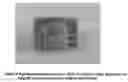
The starting point of the work of the inventors are two papers which reported the bulk synthesis of Hydrotalcite compounds containing Co or Ni as bivalent cations and Al as trivalent cations by cathodic reduction of nitrates (L. Indira and P. V. Kamath, J. Mater. Chem. 4 (1994) 1487; Dixit and P. V. Kamath, J, Power Sources 56 (1995) 97]. On this basis, an extensive study has been performed to find the best experimental conditions to modify different electrodes by one-step electro-synthesis of Ni/Al Hydrotalcite (E. Scavetta, B. Ballarin, M. Giorgetti, I. Carpani, F. Cogo and D. Tonelli, J. New Mater. Electrochem. Systems 7 (2004-43), evidencing the key role of time and potential to control the film thickness. FIG. 1 discloses a plot of the film weight as a function of the deposition potential and time (for a Pt electrode). FIG. 2 is an optical microscope photograph of the HT film obtained on a Pt electrode at E=−0.9V and t=10 s which is a very clean and stable film.
FIG. 3A) discloses a plot of the electrical intensity versus time for two different Pt electrodes during the Ni/Al—NO3 Hydrotalcite compound electrosynthesis at E=−0.9 V.
FIG. 3B) discloses the cyclic voltamogramms (20th cycle) in a decimolar aqueous soda solution (0.1 M NaOH) for two electrodes in Platinum modified with Ni/Al—NO3 Hydrotalcite compound which was electro-synthesized in a potentiostatical way at E=−0.9 V for 10 s; potential scan rate=50 mVs−1. Both figures evidence the high reproductibility of the technique.
These modified electrodes have been already applied in a flow system for the amperometric determination of sugars and alcohols [B. Ballarin, M. Berrettoni, I. Carpani, E. Scavetta and, D. Tonelli, Anal. Chim. Acta 538 (2005) 219]. Mixed oxides bulk electrosynthesis has also been reported, in particular ferroelectric lead zirconate titanate (PZT) [Zhitomirsky, A. Kohn and L. Gal—Or, Mater. Letters 25 (1995) 223], rare-earth chromates Ln2Cr3O12x 7H2O (Ln═La, Pr, Nd) [G. H. Annal Therese and P. Vishnu Kamath, Mater. Res. Bulletin 33 (1998) 1] or Ba5Ru3Na2O14 10H-perovskite related structure [E. Quarez and O. Mentre, Solid State Science 5 (2003) 1105.].
The aim of the present invention is thus to propose a new approach which dramatically reduces the number of process steps, by proposing a direct “active dense ceramic coating” on the alloy foam.
According to a first embodiment, the subject-matter of the present invention, is a process for the preparation of a catalytic specie consisting essentially of a metallic support, which is coated with a ceramic active phase layer, said process essentially consisting in a step (a) of electro-deposition of said ceramic active phase on said metallic support.
In the context of the present invention, the words “ceramic active phase layer” is applied to all ceramic phases in which, in the crystallographic structure, noble metals and/or Ni, Co are present. During time on stream, some part of these metallic elements goes outside the crystallographic structure to the surface.
Examples of such ceramic active phase layer include solid solutions of a mixtures of at least a Magnesium oxide type phase compound and at least a Magnesium silicate type phase compound in which Al, and Rh and/or Ni cations are soluted; or solid solutions of a mixture of at least a perovskite cristallographic structure with nickel and/or rhodium metal.
In the context of the present invention, the word “metallic support” is mainly applied to metallic foams which develop a large specific surface and which are stable at a temperature up to 1000° C. Examples of such supports includes metallic foam of FeCrAlY, NiCrAlY. Such a foam may be in the form of pellets or packed which are used to fill the reactor.
In the context of the present invention, the word “electro-deposition” is mainly applied to the synthesis of the above ceramic phases as well controlled and adherent thin layer by electrochemical reactions and following calcination.
According to a particular embodiment, in the process as defined above, the ceramic active phase layer is a compound of the general formula (I):
[RhxNiyMglAlm(OH)2]z+(An−z/n) kH2O, (I)
wherein An− is mainly a silicate or a polysilicate anion;
0≦x≦0.3;
0≦y≦0.9;
0≦l≦0.9;
0≦m≦0.5;
0≦k≦10;
x+y>0;
0.5≦y+l≦0.9;
x+y+l+m=1; and
z is the total electrical charge of the cationic element.
As example of compounds of the general formula (I), there are those of the formula (I) as defined above wherein:
0≦x≦0.1;
0≦y≦0.3;
0.3≦l≦0.8;
0.1≦m≦0.4;
0≦k≦5;
x+y>0;
0.6≦y+l≦0.8;
x+y+l+m=1.
and more particularly those compounds chosen from:
[Ni0.08Mg0.60Al0.32(OH)2]0.32+ (SiO32−)0.16 kH2O,
[Ni0.08Rh0.0015Mg0.60Al0.3185 (OH)2]0.32+ (siO32−)0.16 kH2O,
[Rh0.005Mg0.71Al0.285 (OH)2]0.32+ (SiO32−)0.16 kH2O,
[Ni0.01Rh0.0002Mg0.67Al0.3198 (OH)2]0.32+ (SiO32−)0.16 kH2O,
[Ni0.02Mg0.63Al0.35 (OH)2]0.35+ (SiO32−)0.175 kH2O,
[Rh0.0004Mg0.65Al0.3496 (OH)2]0.35+ (SiO32−)0.175 kH2O,
[Ni0.02Mg0.78Al0.20 (OH)2]0.35+ (SiO32−)0.175 kH2O, and
[Rh0.0004Mg0.80Al0.1996 (OH)2]0.20+ (SiO32−)0.10 kH2O.
According to another particular embodiment, in the process as defined above, the ceramic active phase layer is a compound of the general formula (II):
[AzA′1-z][B1-x-yNix Rhy]O3-δ (II)
wherein :
A and A′ are different and are selected from the Lanthanide or the Actinide families or from the group IIa of the Mendeleev's periodical table of elements;
B is selected from the transition metal groups of columns IIIb, IVb, Vb, VIb, VIIb, Ib and IIb and group VIIIb of the Mendeleev's periodical table of elements;
0≦x≦0.7,
0≦y≦0.5,
0≦x+y≦0.8,
0≦z≦1 and
δ is the sub stcechiometric value of oxygen to obtain the electric neutrality of the Perovskite compound.
SUMMARY
As example of compounds of the general formula (II), there are those of the formula (II) as defined above, wherein A and A′ are independently chosen from Lanthanum (La), Cerium (Ce), Calcium (Ca) or Strontium (Sr); those of the formula (II) as defined above wherein A is La; or those of the formula (II) as defined above wherein B is chosen from Manganese (Mn), iron (Fe) or cobalt (Co).
According to another particular embodiment, in the process as defined above, the ceramic active phase layer is a compound represented by the formula (IIa):
[LazA′1-z][Fe1-x-yNix Rhy]O3-δ (IIa)
wherein A′, x, y, and z and δ are as hereinabove defined for the formula (II), or a compound represented by the formula (IIb):
[LazCe1-z][Fe1-x-yNix Rhy]O3-δ (IIb)
wherein x, y, and z and δ are as hereinabove defined for the formula (II).
According to another particular embodiment, in the process as defined above, the ceramic active phase layer is a compound represented by the formula (II) wherein 0≦x≦0.5; or wherein, 0≦y≦0.25.
According to another particular embodiment, in the process as defined above, the ceramic active phase layer is a compound chosen from:
La Fe0.7 Ni0.25 Rh0.05 O3-δ
La0.8 Ce0.2 Fe0.7 Ni0.25 Rh0.05 O3-δ
La Fe0.7 Ni0.3 O3-δ
La Fe0.95 Rh0.05 O3-δ
La0.8 Ce0.2 Fe0.7 Ni0.3 O3-δ
The process as defined above, may comprises a calcinatrion step b) of the specie obtained at step a).
According to another embodiment, the subject matter of the present invention is the use of catalytic specie, which is prepared by the process as defined above, as a catalyst oxidation of gaseous hydrocarbons, to produce synthesis gas.
According to a last embodiment, the subject matter of the present invention is a process of production of synthesis gas by oxidating a stream of gaseous hydrocarbons in the presence of the catalytic specie, which is prepared by the process as defined above.
The advantages of process for the preparation of the catalytic specie as defined above, are the direct deposition of the “active ceramic catalyst” on the metallic support, the possibility to control the thickness of the deposited layer, the obtaining of an homogeneous layer when using nominal operating conditions and the simplification of the manufacturing process.
The following description is an illustration of the claimed process without limiting it.
Experimental Report
Introduction
In the present preparations, reagent grade purity chemicals have been employed; the Ni/Al Hydrotalcite compound was electro-synthesized starting from freshly prepared solution of Ni and Al nitrates in doubly distilled water. Two thin copper wires inserted inside the porous pellet performed the electrical contact on a single pellet of metallic foam of FeCrAlY, sold by PORVAIR (USA).
A thin film of Ni/Al Hydrotalcite compound was deposited on the pellet surface by cathodic reduction of an aqueous solution containing 0.225 M of Nickel nitrate (Ni(NO3)2], 0.075 M Aluminum nitrate [Al(NO3)3] and 0.3 M Potassium nitrate [K(NO3)]. The electrochemical reaction was carried out at constant potential in the cathodic chamber of a H-form cell at the potential of −1.2 V versus saturated calomel electrode (SCE) for different deposition times (from 30 to 1000 s).
Results
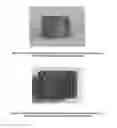
a) A test of electrochemical deposition of a Ni/Al Hydrotalcite on a FeCrAlY foam was made with a time of deposition of 1000 s. The pellets were covered by a green layer, which is typical of the Ni containing hydrotalcite precursor (as shown in FIG. 4), even if the global appearance of the pellet was not homogeneous. This is probably due to the fact that the electrodes have been connected at one side of the foam.
b) The obtained pellets were calcined at 900° C. for 12 h (as shown on FIG. 5), to form ex HT Ni/Al deposited on FeCrAlY pellets and reduced in H2/N2 flow at 750° C.
c) The sample was tested in a CPO laboratory pilot, in order to evaluate its activities.
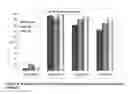
FIG. 6 reports the catalytic activity as methane conversion (CH4 conv.) and selectivity values in hydrogen (sel. H2) and CO (sel. CO) of the ex HT Ni/Al deposited on FeCrAlY (by electrochemical method) in different reaction conditions (Temperatures on the first layer of the monolith: 500° C. for the test at an oven temperature of 500° C. with the mixture CH4/O2/He=2/1/20 v/v; 766° C. for the test at an oven temperature of 750° C. with the mixture CH4/O2/He=2/1/20 v/v; 790° C. for the test at an oven temperature of 750° C. with the mixture CH4/O2/He=2/1/4 v/v and 762 for the test at an oven temperature of 750° C. with the mixture CH4/O2/He=2/1/1 v/v).
The sample is not active at 500° C. and using the CH4/O2/He=2/1/20 v/v mixture (far from thermodynamic conditions), but increasing the oven temperature at 750° C., the activity increases. The activities at 750° C. of different feedings (CH4/O2/He=2/1/20, 2/1/4 and 2/1/1 v/v) were comparable to that of the sample ex-HT Ni0.02Mg0.63Al0.35 (best formulation obtained during the previous CPO study) and to classical catalysts (0.1 wt. % Rh on Al2O3).
d) The performances of the Hydrotalcite supported on alloy foam are compared to:
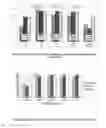
- 1—the best sample (optimized formulation) made by a slurry of ex-HT sil Ni8Rh0.15Mg60Al31.85 (calcined at 900° C.) deposited on beads of α-Al2O3 coated with a spheralite/Disperal and tested previously during the CPO study. The results of performances are reported on FIG. 7.
- 2—a standard catalyst of 0.1% Rh impregnated on a-alumina. The CPO performances are reported on FIG. 8.
The performances of a non optimized hydrotalcite deposited by electrochemical method on a metallic foam are close to those of the best sample of Hydrotalcite deposited on alumina by a standard method, or close to those of a standard commercial catalyst constituted of 0.1% Rh on a-alumina. These performances would certainly be improved by means of an optimized hydrotalcite deposited by electrochemical method on a metallic foam.
It will be understood that many additional changes in the details, materials, steps and arrangement of parts, which have been herein described in order to explain the nature of the invention, may be made by those skilled in the art within the principle and scope of the invention as expressed in the appended claims. Thus, the present invention is not intended to be limited to the specific embodiments in the examples given above.
Claims
What is claimed is:1. A process for the preparation of a catalytic specie, said process comprising electro-deposition of a ceramic active phase layer on a metallic support, the ceramic active phase layer being a compound of the general formula (II):
[AzA′1-z][B1-x-yNix Rhy]O3-67 (II)
in which A and A′ are different and are selected from the Lanthanide or the Actinide families or from the group IIa of the Mendeleev's periodical table of elements; B is selected from the transition metal groups of columns IIIb, IVb, Vb, VIb, VIIb, Ib and IIb and group VIIIb of the Mendeleev's periodical table of elements; 0≦x≦0.7; 0≦y≦0.5; 0≦x+y≦0.8; 0≦z≦1; and δ is the sub stoschiometric value of oxygen to obtain the electric neutrality of the Perovskite compound and the metallic support being selected from metallic foams that are stable at a temperature up to 1000° C.
2. The process of claim 1, wherein the metallic support is selected from the metallic foam FeCrAlY or the metallic foam NiCrAlY.
3. The process of claim 1, wherein the ceramic active phase layer is a compound of the general formula (II) in which A and A′ are each independently selected from La, Ce, Ca and Sr.
4. The process of claim 3, wherein the ceramic active phase layer is a compound of the general formula (II) in which A is La.
5. The process of claim 1, wherein the ceramic active phase layer is a compound of the general formula (II) in which B is selected from Mn, Fe and Co.
6. The process of claim 4, wherein the ceramic active phase layer is a compound of the formula (IIa):
[LazA′1-z][Fe1-x-yNix Rhy]O3-δ (IIa)
in which A′, x, y, and z and δ are as defined for the formula (II);
or a compound of the formula (IIb):
[LazCe1-z][Fe1-x-yNix Rhy]O3-δ (IIb)
in which x, y, and z and 6 are as defined for the formula (II).
7. The process of claim 1, wherein the ceramic active phase layer is a compound of the general formula (II) in which 0≦x≦0.5.
8. The process of 1, wherein the ceramic active phase layer is a compound of the general formula (II) in which 0≦y≦0.25.
9. The process of 7, wherein the ceramic active phase layer is a compound of the general formula (II) in which 0≦y≦0.25.
10. The process of claim 1, wherein the ceramic active phase layer is a compound selected from:
La Fe0.7 Ni0.25 Rh0.05 O3-δ
La0.8 Ce0.2 Fe0.7 Ni0.25 Rh0.05 O3-δ
La Fe0.7 Ni0.3 O3-δ
La Fe0.95 Rh0.05 O3-δ; and
La0.8 Ce0.2 Fe0.7 Ni0.3 O3-δ.
11. A process for the preparation of a catalytic specie, said process comprising the steps of:
(a) electro-deposition of a ceramic active phase layer on a metallic support, the ceramic active phase layer being a compound of the general formula (II):
[AzA′1-z][B1-x-yNix Rhy]O3-δ (II)
in which A and A′ are different and are selected from the Lanthanide or the Actinide families or from the group IIa of the Mendeleev's periodical table of elements; B is selected from the transition metal groups of columns IIIb, IVb, Vb, VIb, VIIb, Ib and IIb and group VIIIb of the Mendeleev's periodical table of elements; 0≦x≦0.7; 0≦y≦0.5; 0≦x+y≦0.8; 0≦z≦1; and δ is the sub stcechiometric value of oxygen to obtain the electric neutrality of the Perovskite compound and the metallic support being selected from metallic foams that are stable at a temperature up to 1000° C.; and
(b) calcinatrion of the product obtained in step (a).
12. The process of claim 11, wherein the metallic support is selected from the metallic foam FeCrAlY or the metallic foam NiCrAlY.
13. The process of claim 11, wherein the ceramic active phase layer is a compound of the general formula (II) in which A and A′ are each independently selected from La, Ce, Ca and Sr.
14. The process of claim 13, wherein the ceramic active phase layer is a compound of the general formula (II) in which A is La.
15. The process of claim 11, wherein the ceramic active phase layer is a compound of the general formula (II) in which B is selected from Mn, Fe and Co.
16. The process of claim 14, wherein the ceramic active phase layer is a compound of the formula (IIa):
[LazA′1-z][Fe1-x-yNix Rhy]O3-δ (IIa)
in which A′, x, y, and z and δ are as defined for the formula (II);
or a compound of the formula (IIb):
[LazCe1-z][Fe1-x-yNix Rhy]O3-δ (IIb)
in which x, y, and z and 6 are as defined for the formula (II).
17. The process of claim 11, wherein the ceramic active phase layer is a compound of the general formula (II) in which 0≦x≦0.5.
18. The process of 11, wherein the ceramic active phase layer is a compound of the general formula (II) in which 0≦y≦0.25.
19. The process of 17, wherein the ceramic active phase layer is a compound of the general formula (II) in which 0≦y≦0.25.
20. The process of claim 11, wherein the ceramic active phase layer is a compound selected from:
La Fe0.7 Ni0.25 Rh0.05 O3-δ
La0.8 Ce0.2 Fe0.7 Ni0.25 Rh0.05 O3-δ
La Fe0.7 Ni0.3 O3-δ
La Fe0.95 Rh0.05; and
La0.8 Ce0.2 Fe0.7 Ni0.3 O3-δ.
21. A process for the catalytic oxidation of gaseous hydrocarbons, said process comprising carrying out the catalytic oxidation utilizing the catalytic specie prepared by the process of claim 1.
22. A process for the catalytic oxidation of gaseous hydrocarbons, said process comprising carrying out the catalytic oxidation utilizing the catalytic specie prepared by the process of claim 11.
23. A process for the production of synthesis gas by oxidating a stream of gaseous hydrocarbons in the presence of a catalytic specie prepared according to the process of claim 1.
24. A process for the production of synthesis gas by oxidating a stream of gaseous hydrocarbons in the presence of a catalytic specie prepared according to the process of claim 11.
Images & Drawings included:


Sources:
- United States Patent and Trademark Office - verify current appl. status at the USPTO↗
Similar patent applications:
Recent applications in this class:
- » 20250170561 2025-05-29
PEROVSKITE CATALYST, AND PREPARATION METHOD AND USE THEREOF IN ELECTROMAGNETIC DEGRADATION OF ORGANIC WASTE - » 20250153145 2025-05-15
CERIUM- AND ZIRCONIUM-BASED MIXED OXIDES - » 20250114769 2025-04-10
CATALYST FOR LIQUID PHASE REFORMING OF BIOMASS DERIVED FROM HYDROTALCITE, METHOD FOR PREPARING THE SAME, AND METHOD FOR PRODUCING HYDROGEN USING THE SAME - » 20250041833 2025-02-06
Aluminium and Zirconium-Based Mixed Oxide - » 20240399341 2024-12-05
ETHYLBENZENE DEHYDROGENATION CATALYST, PREPARATION METHOD THEREFOR, AND USE THEREOF - » 20240390878 2024-11-28
GRAIN BOUNDARY AND SURFACE-DOPED RARE EARTH MANGANESE-ZIRCONIUM COMPOSITE COMPOUND AND PREPARATION METHOD AND USE THEREOF - » 20240299911 2024-09-12
OXIDE-MOLTEN SALT COMPOSITES FOR HIGH-PERFORMANCE THERMAL ENERGY STORAGE - » 20240165589 2024-05-23
Catalyst for aviation fuel production from bio-oil, method for preparation of the same and method for bio-oil upgrading using the same - » 20240123430 2024-04-18
CATALYST MATERIALS WITH TUNABLE ACTIVITY - » 20240123429 2024-04-18
COMPLEX OXIDE AND METHOD FOR PRODUCING THE SAME
Recent applications for this Assignee:
- » 20250166974 2025-05-22
SULFUR-CONTAINING MOLECULES FOR HIGH ASPECT RATIO PLASMA ETCHING PROCESSES - » 20250164074 2025-05-22
TANK FOR STORING LIQUEFIED GAS AND FLUID TRANSFER METHOD - » 20250162866 2025-05-22
METHOD FOR CRACKING AMMONIA - » 20250161976 2025-05-22
NEW LOW-K MATERIALS DERIVED BY HYDROSILYLATION AND METHODS OF USING THEM FOR DEPOSITION - » 20250155175 2025-05-15
REFRIGERATION DEVICE AND METHOD - » 20250154042 2025-05-15
MELTING DEVICE - » 20250149609 2025-05-08
FUEL CELL - » 20250137596 2025-05-01
VALVE FOR PRESSURIZED FLUID AND A CONTAINER OR A SET OF CONTAINERS FOR PRESSURIZED FLUID - » 20250129889 2025-04-24
METHOD AND DEVICE FOR TRANSFERRING CRYOGENIC FLUID - » 20250121315 2025-04-17
FACILITY FOR RECOVERING CO2 FROM A FEED GAS FLOW