Horizontal packaging machine
US20120151874A1
2012-06-21
13/324,641
2011-12-13
✅ Patent granted
US 8,978,349 B2
2015-03-17
-
-
Robert Long
Lesaon Ellis LLP
2033-09-13
Abstract:
Machine that consists in a horizontal sequence: a uncoiling station for a flexible sheet, a station for the formation of the packet in a folded “V”, a sealing station of the packet, an individual cutting station of the packet, a station for the individual transport of the packets to a filling station, and a station for the closing of the packets. The sealing and cutting stations comprise longitudinal guides for the assembly of sealing and cutting means corresponding to a linear displacement means which provides alternate linear movements forwards and backwards in the trajectory of the flexible sheet. With each forward movement, said means moves at the same speed as the flexible sheet, and is placed in an operative position by a driving means.
Assignee:
- EFICIENCIA Y TECNOLOGIA, S.A. 2 🇪🇸 BARBERA DEL VALLES (BARCELONA), Spain
Applicant:
Interested in similar patents?
Get notified when new applications in this technology area are published.
Classification:
B65B43/465 » CPC further
Forming, feeding, opening or setting-up containers or receptacles in association with packaging; Feeding or positioning bags, boxes, or cartons in the distended, opened, or set-up state; Feeding preformed rigid containers, e.g. tins, capsules, glass tubes, glasses, to the packaging position; Locating containers or receptacles at the filling position ; Supporting containers or receptacles during the filling operation using grippers for bags
B65B1/02 » CPC main
Packaging fluent solid material, e.g. powders, granular or loose fibrous material, loose masses of small articles, in individual containers or receptacles, e.g. bags, sacks, boxes, cartons, cans, or jars Machines characterised by the incorporation of means for making the containers or receptacles
B29C65/7882 » CPC further
Joining of preformed parts ; Apparatus therefor; Means for handling the parts to be joined, e.g. for making containers or hollow articles, e.g. means for handling sheets, plates, web-like materials, tubular articles, hollow articles or elements to be joined therewith; Means for discharging the joined articles from the joining apparatus characterised by the feeding movement of the parts to be joined said parts to be joined moving in a closed path, e.g. a rectangular path said parts to be joined moving in a circular path
B65B1/00 IPC
Packaging fluent solid material, e.g. powders, granular or loose fibrous material, loose masses of small articles, in individual containers or receptacles, e.g. bags, sacks, boxes, cartons, cans, or jars
B65B1/00 IPC
Machines, apparatus or methods of general application for packaging articles or materials
B65B51/146 » CPC further
Devices for, or methods of, sealing or securing package folds or closures; Devices for gathering or twisting wrappers, or necks of bags; Applying or generating heat or pressure or combinations thereof by reciprocating or oscillating members Closing bags
B65B61/06 » CPC further
Auxiliary devices, not otherwise provided for, for operating on sheets, blanks, webs, binding material, containers or packages for severing webs, or for separating joined packages by cutting
B29C65/18 » CPC further
Joining of preformed parts ; Apparatus therefor by heating, with or without pressure using heated tools
B65B3/02 » CPC further
Packaging plastic material, semiliquids, liquids or mixed solids and liquids, in individual containers or receptacles, e.g. bags, sacks, boxes, cartons, cans, or jars Machines characterised by the incorporation of means for making the containers or receptacles
B29C66/1122 » CPC further
General aspects of processes or apparatus for joining preformed parts; General aspects dealing with the joint area or with the area to be joined; Particular design of joint configurations particular design of the joint cross-sections; Joint cross-sections comprising a single joint-segment, i.e. one of the parts to be joined comprising a single joint-segment in the joint cross-section; Single lapped joints Single lap to lap joints, i.e. overlap joints
B65B43/12 » CPC further
Forming, feeding, opening or setting-up containers or receptacles in association with packaging Feeding flexible bags or carton blanks in flat or collapsed state; Feeding flat bags connected to form a series or chain
B29C66/431 » CPC further
General aspects of processes or apparatus for joining preformed parts; General aspects of joining substantially flat articles, e.g. plates, sheets or web-like materials; Making flat seams in tubular or hollow articles; Joining single elements to substantially flat surfaces; Joining substantially flat articles ; Making flat seams in tubular or hollow articles; Joining a relatively small portion of the surface of said articles Joining the articles to themselves
B29C66/83543 » CPC further
General aspects of processes or apparatus for joining preformed parts; General aspects of machine operations or constructions and parts thereof characterised by the movement of the joining or pressing tools moving with the parts to be joined; Jaws mounted on rollers, cylinders, drums, bands, belts or chains; Flying jaws flying jaws, e.g. jaws mounted on crank mechanisms or following a hand over hand movement cooperating flying jaws
B29C66/849 » CPC further
General aspects of processes or apparatus for joining preformed parts; General aspects of machine operations or constructions and parts thereof; Specific machine types or machines suitable for specific applications Packaging machines
B29C2793/009 » CPC further
Shaping techniques involving a cutting or machining operation after shaping
B65B43/04 » CPC further
Forming, feeding, opening or setting-up containers or receptacles in association with packaging Forming flat bags from webs
B65B43/60 » CPC further
Forming, feeding, opening or setting-up containers or receptacles in association with packaging; Feeding or positioning bags, boxes, or cartons in the distended, opened, or set-up state; Feeding preformed rigid containers, e.g. tins, capsules, glass tubes, glasses, to the packaging position; Locating containers or receptacles at the filling position ; Supporting containers or receptacles during the filling operation; Means for supporting containers or receptacles during the filling operation rotatable
B65B43/02 IPC
Forming, feeding, opening or setting-up containers or receptacles in association with packaging Forming flat bags from individual sheets or blanks
B65B43/46 IPC
Forming, feeding, opening or setting-up containers or receptacles in association with packaging; Feeding or positioning bags, boxes, or cartons in the distended, opened, or set-up state; Feeding preformed rigid containers, e.g. tins, capsules, glass tubes, glasses, to the packaging position; Locating containers or receptacles at the filling position ; Supporting containers or receptacles during the filling operation using grippers
B65B51/14 IPC
Devices for, or methods of, sealing or securing package folds or closures; Devices for gathering or twisting wrappers, or necks of bags; Applying or generating heat or pressure or combinations thereof by reciprocating or oscillating members
B29C65/00 IPC
Joining of preformed parts ; Apparatus therefor
B29C66/43121 » CPC further
General aspects of processes or apparatus for joining preformed parts; General aspects of joining substantially flat articles, e.g. plates, sheets or web-like materials; Making flat seams in tubular or hollow articles; Joining single elements to substantially flat surfaces; Joining substantially flat articles ; Making flat seams in tubular or hollow articles; Joining a relatively small portion of the surface of said articles; Joining the articles to themselves for making flat seams in tubular or hollow articles, e.g. transversal seams Closing the ends of tubular or hollow single articles, e.g. closing the ends of bags
Description
OBJECT OF THE INVENTION
The present invention relates to a horizontal packaging machine, specifically, a packaging machine for the formation and filling of flexible packets, sachet type or similar, in which a continuous sheet passes through horizontally placed stations in a continuous process.
FIELD OF APPLICATION OF THE INVENTION
The packaging machine of this invention is applicable in the packaging industry, for the packaging of various products in packets of sachet type or similar.
PRECEDENTS OF THE INVENTION
At present, various automatic machines used for the packaging of products in flat packets, sachets or similar, are known.
These machines consist in a horizontal sequence: an uncoling station for a flexible heat-sealable sheet, a station for the formation of the packet by folding the flexible sheet into a “V”, a station to seal the bottom and sides of the packet, a cutting station to separate consecutive packets, a station for the individual transportation of the separated packets to a filling station, and a final closing station for the packets containing the packaged product.
The uncoiling station normally consists of two coils that supply the flexible heat-sealable sheet, in such a way that when one coil ends, the flexible sheet is supplied by the other, such the used coil can be replaced without stopping the machine.
The sealing station for the bottom and sides of the packet consists of a sealing means, essentially comprising two opposing heated plates, placed on either side of the trajectory of the flexible sheet. In turn, the cutting station for the separation of consecutive packets consists of a cutting means, namely, shears with blades on either side of the flexible sheet.
These horizontal packaging machines work with an intermittent forward movement of the flexible heat-sealed sheet, with the sealing, cutting and filling of the packets taking place when the forward movement of the sheet stops. These stations are fitted respectively with heated plates, for the sealing the bottom and sides of the packet, a cutting means to separate the formed packets from the rest of the sheet, and dosage devices to supply the product into the consecutive packets.
This stopping and starting movement does not provide a fast production of packets due to the loss of time entailed by stopping and starting operations, as the flexible sheet is stationary for a considerable part of the work cycle, often greater than 50%. In addition, the depositing of the product inside the packets during the time that the packets remain stationary is especially problematic in the case of certain products, and when there is an elevated quantity of product to place in each packet. In these cases, the stopping time between consecutive forward movements is inevitably increased, which leads to a reduction in production capacity.
DESCRIPTION OF THE INVENTION
The horizontal packaging machine object of this invention presents technical features intended to achieve continuous production, without the typical intermittent stops in the forward movement of the flexible sheet, and as a result, to significantly increase the production of the packaging machine.
The machine is of the type that comprises a horizontal sequence: a uncoiling station for a flexible heat-sealable sheet, a station for the formation of the packet by folding the flexible sheet into a “V”, a station to seal the bottom and sides of the packet with a sealing means consisting of two opposing heated plates placed on either side of the trajectory of the flexible sheet, a cutting station to separate consecutive packets, consisting of a cutting means, namely, shears with blades on either side of the flexible sheet, a station for the individual transportation of the previously separated packets to a filling station, and a final closing station for the packets containing the packaged product.
According to the invention, the sealing and cutting stations comprise longitudinal guides for the assembly of sealing and cutting means corresponding to a linear displacement means which provides alternate linear movements forwards and backwards along the trajectory of the flexible sheet. With each movement, said means moves at the same speed as the flexible sheet, and is placed in an operative position by a driving means to carry out the respective sealing and cutting of consecutive packets.
In turn the filling station consists of dosage devices that trace a continuous circular movement, at a speed that coincides with that of a horizontal carrousel which transports the packets that have been separated at the cutting station; for a considerable part of their trajectory said dosage devices will remain aligned with the openings of the consecutive packets transported by the horizontal carrousel, so that during this coinciding trajectory the product is deposited inside the packets.
The means provided at the sealing and cutting stations allow the different operations of sealing and cutting of the packets to take place while the sheet is in movement, i.e. without the need for an intermittent movement of the sheet. In this way a considerable increase in production is achieved, given that the sealing and cutting of the packets is produced during the continuous forward movement of the sheet.
The displacement means are especially controlled so that they move at the exact speed of the flexible sheet in its forward movement; as such the relative displacement in this cycle of manufacture is nil, thereby avoiding problems of time lag. These displacement means may be of a diverse nature, such as linear servo motors, spindle bearings or others.
The time taken by the sealing and cutting means to return to the point of origin is expected to be lower than the time taken in moving forward, in order to give a margin to the execution of the work cycle.
The driving means of the heated plates of the sealing station, and the shears of the cutting station, consists of a supporting probe aligned to a longitudinal track that moves intersecting the forward movement of the flexible sheet, for the driving of the corresponding station.
These driving means allows for the regulation of the sealing means and the cutting means of the respective stations, independently of the longitudinal displacement of said sealing means and cutting means. In this way said sealing and cutting means can be brought close and moved away precisely and gradually during the forward movement when the relative speed between the flexible sheet and the sealing means and cutting means is at its minimum, preferably nil.
In order to supply the dosage devices of the filling station with the product that will be inserted into the packet during the continuous movement, the filling station comprises fixed dispensers, placed at a given point of the trajectory of the dosage devices and above the area where they pass. The aforementioned fixed dispensers are responsible for supplying the product to the consecutive dosage devices in a single or various steps, and the product is then inserted into the respective packets.
DESCRIPTION OF DRAWINGS
By way of complementing the present description, and with the aim of facilitating understanding of the characteristics of the invention, this descriptive summary is accompanied by a set of drawings which include, but are not limited to, the following features:
FIG. 1 is a schematic front elevation view of the machine
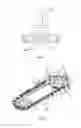
FIG. 2 is a perspective view of the sealing station with the displacement means and the driving means.
FIG. 3 is a cross-section view of the previous figure.
FIG. 4 is a perspective view of the cutting station with the displacement means and the driving means
FIG. 5 is a cross-section view of the previous figure.
FIG. 6 is a front elevation view of the individual transportation station.
FIG. 7 is a cross-section view of an extraction clip from the individual transportation station.
FIG. 8 is a perspective view of the filling station.
PREFERRED EMBODIMENT OF THE INVENTION
As can be seen in the referenced figures the horizontal packaging machine consists of a horizontal sequence of stations through which a flexible heat-sealable sheet (L) passes, for the formation of packets (E). The first station is a uncoiling station (1) with two coils of flexible sheet (L) for continuous supply by one coil when the other is finished. Next is the station for the formation of the packet (2) in a folded “V” from the flexible sheet (L) by means of a folding means (21), in such a way that the flexible sheet (L) remains folded in a “V” moving forwards horizontally and with the opening facing upwards. After the formation station (2) are a sealing station (3) for the sealing of the bottom and sides of the packet (E) and a cutting station (4) for the separation of consecutive packets (E) to be filled at the filling station (5), as the packets (E) are taken from the cutting station (4) to the filling station (5) by means of an individual transportation station (6).
The sealing station (3), represented in FIGS. 2 and 3, consists of a sealing means comprised of heated plates (31) placed on either side of the trajectory of the folded flexible sheet (L). The sealing station (3) comprises longitudinal guides (33) for the assembly of a transportation carriage (34) for the sealing means, which moves by motorized means, in this case a linear servo motor.
The carriage (34) consists of arms upon which a heated plate (31) is fixed, and upon these arms a mobile element and the displacement joints (32) of the other heated plate (31).
The sealing station (3) consists of a driving means for the sealing means, independent of the displacement means; said driving means consists of a probe (35), which in this case supports one of the joints (32) of the mobile element, and a longitudinal track (36) that moves intersecting the forward movement of the flexible sheet (L).
In this case the longitudinal track (36) is supported at each end by two tilting arms on a tilting axis (37) by means which are not represented, such that the perpendicular tilting of the aforementioned longitudinal track (36) pushes the end of the probe (35), where a rolling wheel is placed.
The cutting station (4), represented in FIGS. 5 and 6, consists of a cutting means configured by a set of shears (41) fixed on a joint (42), on both sides of the flexible sheet (L), when the packets (E) have already been formed and the bottom and sides sealed, so that once the individual packets (E) have been cut the opening is facing upwards ready for filling.
This cutting station (4) likewise consists of longitudinal guides (43) for the assembly of the cutting means, specifically a shearing blade (41) fixed upon a moveable carriage (44), while the other corresponding moveable blade of the shears (41) presents a driving means. This driving means consists of a probe (45) that supports the mobile blade of the shears (41), with its end placed upon a longitudinal track (46), with a contact wheel.
The longitudinal track (46) likewise comprises arms at each end that tilt on a tilting axis (47), to drive the aforementioned shears (41) by pushing the longitudinal track (46), thereby allowing its movement along the cutting means.
As has been cited, at the end of the cutting station (4) is the station for the individual transportation (6) of the packets, consisting of a vertical carrousel (61) that carries clips (62) for the extraction of the packets (E) one by one by their upper edge. The speed of extraction of the packets (E) is greater than the speed at which the packets leave the cutting station (4), in order to produce a separation space between the packets (E) before they pass through the filling (5) and closing (7) stations.
These extraction clips (62), represented in FIG. 7, are joined to the vertical carrousel (61) by means of an automatic clutch (63), which allow the automatic opening and closing that is necessary for the autonomous picking, transporting and release of the packet (E).
The filling station (5) is placed in correspondence with a curved section of the trajectory of a horizontal carrousel (8), placed approximately underneath the vertical carrousel (61) of the individual transportation station (6).
The horizontal carrousel (8) consists of clips (81) aligned to hold the packets (E) by their vertical sides. These aligned clips (81) can move towards one another, thereby opening the top of the packet (E) being held, for it to be filled with the product for packaging by dosage devices (51) at the filling station (5) which trace a continuous circular movement, at a speed that coincides with that of the aforementioned horizontal carrousel (8). As such, said dosage devices (51) remain for a considerable part of their trajectory aligned with the openings of consecutive packets (E) that are being transported by the horizontal carrousel (8), thereby allowing a considerable increase in the time available to deposit the product and fill the packets.
At a given point in the trajectory of the dosage devices (51), and above the area through which they pass, are fixed dispensers (52) which supply them, in a single or various steps, with the product that is to be inserted into its respective packets during its continuous displacement.
Once the packets (E) are filled with the product, the aligned clips (81) of the horizontal carrousel move apart, causing the closure of the packets, then the packets are transported by the horizontal carrousel (8) to the closing station (7) in which the upper opening of consecutive packets is sealed.
Although the present invention has been described as an example of a given preferred embodiment, for the record and for relevant purposes, the materials, form, size and provision of the described elements may be modified, whenever this does not suppose an alteration of the essential characteristics of the invention, which are claimed as follows.
Claims
1. A horizontal packaging machine comprising a plurality of stations arranged in a horizontal sequence, the stations including:
a uncoiling station for a flexible heat-sealable sheet (L),
a station for the formation of the packet in a folded “V” from the flexible sheet (L),
a sealing station for the sealing of the bottom and sides of the packet (E), comprising a sealing means of opposing heated plates placed on either side of the trajectory of the folded flexible sheet (L),
a cutting station for the separation of consecutive packets (E) by means of a cutting means in the form of shears with blades on either side of the flexible sheet,
a station for the individual transportation of the previously separated packets (E) to a filling station, and a
final closing station for the packets (E) containing the packaged product,
wherein the sealing and cutting stations comprise longitudinal guides for the assembly of sealing and cutting means conesponding to a linear displacement means which provides alternate linear movements forwards and backwards in the trajectory of the flexible sheet (L); with each movement, the means moves at the same speed as the continuous forward movement of the flexible sheet (L), and is placed in an operative position by a driving means to carry out the respective sealing and cutting of consecutive packets (E); in that the filling station consists of dosage devices that trace a continuous circular movement, at a speed that coincides with that of a horizontal carrousel for the transportation of packets; for a considerable part of their trajectory said dosage devices remain aligned with the openings of the consecutive packets (E) transported by the horizontal carrousel, so that during this coinciding trajectory the product is deposited inside the packets.
2. The machine according to claim 1, wherein the driving means of the heated plates of the sealing station, and the shears of the cutting station, consist of a supporting probe aligned to a longitudinal track that moves intersecting the forward movement of the flexible sheet (L), for the driving of the corresponding station.
3. The machine according to claim 1, wherein the dosage device comprises fixed dispensers, placed at a given point in the trajectory of the dosage devices, and above the area through which they pass, and which supply said dosage devices, in a single or various steps, with the product that is to be inserted into its respective packets.
Images & Drawings included:




Sources:
- United States Patent and Trademark Office - verify current appl. status at the USPTO↗
Similar patent applications:
- » 20160009434
Horizontal Packaging Machine With Metal Detection-Removal Function - » 20230322427
HORIZONTAL PACKAGING MACHINE WITH ADJUSTABLE CUT-SEW GROUP - » 20240025590
Horizontal packaging machine with adjustable cut-sew group - » 20170369265
Splicing method and unit for splicing two packaging films for a horizontal packaging machine - » 20240409254
CONTINUOUS HORIZONTAL PACKAGING MACHINE AND PACKAGE OPENING DEVICE THEREOF - » 20210403186
Horizontal packaging machine - » 20200047446
Flexible package-forming machine for horizontal packaging and method of manufacturing flexible packages - » 20200130316
Flexible package-forming machine for horizontal packaging by means of folding and welding a flexible band and method - » 20170225810
Packaging machine with a horizontal-axis carousel, particularly for packaging rolls of paper or packs of paper serviettes or other solid products of variable size - » 20190375530
Horizontal-type automatic packaging machine
Recent applications in this class:
- » 20250162740 2025-05-22
PHARMACY PACKAGING SYSTEM - » 20240359836 2024-10-31
HIGH SPEED POUCHER - » 20240270417 2024-08-15
METHOD FOR MANUFACTURING A PACKING CONTAINER HAVING AN INLAY, INSERTION DEVICE, AND PACKAGING MACHINE - » 20230331410 2023-10-19
Pharmacy packaging system - » 20230303275 2023-09-28
High speed poucher - » 20230264840 2023-08-24
Machine for forming bags with infusion or extraction products - » 20230211903 2023-07-06
Packaging machine for packaging in bags at least one product - » 20220315254 2022-10-06
High speed poucher - » 20220135260 2022-05-05
A METHOD FOR THE MANUFACTURE OF COMPOSITE CANS AND A COMPOSITE CAN MADE BY THE METHOD - » 20220127024 2022-04-28
Pharmacy packaging system
Recent applications for this Assignee:
- » 20120285626 2012-11-15
Longitudinal continuous welding device for packaging machines