Light signal
US20120153314A1
2012-06-21
13/393,286
2010-07-27
✅ Patent granted
US 8,702,282 B2
2014-04-22
WO; PCT/EP2010/060887; 20100727
WO; WO2011/023480; 20110303
Telly Green
Laurence A. Greenberg | Werner H. Stemer | Ralph E. Locher
2030-11-19
Abstract:
A light signal contains a semiconductor light source and a convex lens system for representing signal aspects, especially on rail-bound traffic routes. In order to eliminate the need for monochrome semiconductor light sources, the semiconductor light source is a white point light source. A signal aspect-specific color filter is provided in the aperture region of the point light source.
Inventors:
- Rolf Eckl 6 🇩🇪 Berlin, Germany
- Norbert Poepplow 4 🇩🇪 Eichwalde, Germany
- Kay Koester 6 🇩🇪 Fredersdorf, Germany
- ZELJKO MARINCIC 4 🇩🇪 BERLIN, Germany
- Joerg Birkholz 2 🇩🇪 Drasdo, Germany
- Uwe Frost 2 🇩🇪 Berlin, Germany
- Kay Marincic 1 🇩🇪 Fredersdorf, Germany
Assignee:
- SIEMENS AKTIENGESELLSCHAFT 12,417 🇩🇪 Munich, Germany
- Siemens Aktiengesellschaft 1,617 🇩🇪 Muenchen, Germany
Applicant:
Interested in similar patents?
Get notified when new applications in this technology area are published.
Classification:
F21V9/08 » CPC main
Elements for modifying spectral properties, polarisation or intensity of the light emitted, e.g. filters for producing coloured light, e.g. monochromatic; for reducing intensity of light
B61L5/1818 » CPC further
Local operating mechanisms for points or track-mounted scotch-blocks ; Visible or audible signals; Local operating mechanisms for visible or audible signals; Visible signals; Light signals; Mechanisms associated therewith, e.g. blinders; Daylight signals using mobile coloured screen
B61L5/1845 » CPC further
Local operating mechanisms for points or track-mounted scotch-blocks ; Visible or audible signals; Local operating mechanisms for visible or audible signals; Visible signals; Light signals; Mechanisms associated therewith, e.g. blinders; Daylight signals Optical systems, lenses
F21S8/086 » CPC further
Lighting devices intended for fixed installation with a standard of high-built type, e.g. street light with lighting device attached sideways of the standard, e.g. for roads and highways
F21S10/007 » CPC further
Lighting devices or systems producing a varying lighting effect using rotating transparent or colored disks, e.g. gobo wheels
F21V9/40 » CPC further
Elements for modifying spectral properties, polarisation or intensity of the light emitted, e.g. filters with provision for controlling spectral properties, e.g. colour, or intensity
F21V14/006 » CPC further
Controlling the distribution of the light emitted by adjustment of elements by means of optical elements, e.g. films, filters or screens, being rolled up around a roller
B61L2207/02 » CPC further
Features of light signals using light-emitting diodes (LEDs)
F21W2111/02 » CPC further
Use or application of lighting devices or systems for signalling, marking or indicating, not provided for in codes – for roads, paths or the like
F21Y2101/00 » CPC further
Point-like light sources
F21Y2115/10 » CPC further
Light-generating elements of semiconductor light sources Light-emitting diodes [LED]
H01L27/15 IPC
Devices consisting of a plurality of semiconductor or other solid-state components formed in or on a common substrate including semiconductor components with at least one potential-jump barrier or surface barrier specially adapted for light emission
H01L33/58 IPC
Semiconductor devices with at least one potential-jump barrier or surface barrier specially adapted for light emission; Processes or apparatus specially adapted for the manufacture or treatment thereof or of parts thereof; Details thereof characterised by the semiconductor body packages Optical field-shaping elements
F21V17/02 IPC
Fastening of component parts of lighting devices, e.g. shades, globes, refractors, reflectors, filters, screens, grids or protective cages with provision for adjustment
Description
The invention relates to a light signal comprising a semiconductor light source and a converging optical unit for representing signal aspects, in particular on rail-bound traffic routes.
The explanations below substantially relate to luminous signs or light signals for representing signal aspects on rail-bound traffic routes, without the claimed inventive subject matter being intended to be restricted to this application.
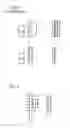
In the case of the four light signals of known design as illustrated schematically in FIG. 1, either an incandescent filament arrangement of an incandescent lamp 1 or a semiconductor light source 2 is used as the light source. The incandescent filament light signal substantially consists of the incandescent lamp 1 and an optical system comprising a full lens 3 or stepped lens 4 and a color filter glass 5 for realizing the customary signal colors, in particular red, green and amber. In the case of the semiconductor light sources 2 illustrated on the right in FIG. 1, for example LEDs—light emitting diodes—, the light is generated by electrical excitation of a semiconductor. Semiconductor light sources 2 have a completely different emission characteristic than incandescent lamps 1, such that generally the complete optical system has to be replaced by an LED-specific lens matrix 6. LEDs 7 already provided with lens optical units are also used for specific structural sizes. Said LEDs 7, and LEDs 7.1 without optical units, have to be embodied as monochrome LEDs having narrow color locus limits, in order to permanently generate the signal-specific light color in a reliable manner. In addition to color locus fidelity, it is also necessary to achieve a minimum axial light intensity. Furthermore, the necessary availability, the stock keeping of a plurality of LED types and the manufacturer dependence thereof are problematic in the case of monochrome LEDs 7, 7.1. Moreover, the LED energization for the same brightness is color-dependent, such that signal transmitters with different driver assemblies are required. Consequently, the safety verifications for signal transmitters are highly complex.
The invention is based on the object of simplifying a light signal of the generic type, wherein, in particular, the type diversity of the required semiconductor light sources is to be reduced.
According to the invention, the object is achieved by virtue of the fact that the semiconductor light source is embodied as a white point light source, wherein a signal-aspect-specific color filter is provided in the aperture region of the point light source.
As a result of the reduction to point light sources of the white light type, monochrome semiconductor light sources become dispensable. Besides the independence of individual manufacturers, this results in a significant cost reduction as a result of component reduction in the driver assemblies. The expected uniform lifetime of the white point light source is also advantageous, whereas monochrome semiconductor light sources have very different lifetimes depending on the required energization for achieving the minimum axial light intensity.
In principle, it should be expected that in the future the achievable luminous efficiency in the case of point light sources, in particular on the basis of HLED for white light, will increase further. This means that even more powerful white HLEDs used in the future can be energized in a reduced fashion for the same light intensity, whereby the lifetime of the HLEDs increases.
In accordance with claim 2, each signal aspect is assigned a point light source comprising a white LED or a white HLED—high-current LED. Depending on the signal aspect, a corresponding color filter is fixedly arranged between the point light source and the converging optical unit.
In the case of light signals designed for a plurality of signal aspects, a component and structural size reduction can be achieved by virtue of the fact that, in accordance with claim 3, the signal aspects are assigned a common point light source comprising a white LED or a white HLED and a common converging optical unit, wherein an automatic changer for positioning signal-aspect-specific color filters in the aperture region of the point light source is provided.
Preferably, in accordance with claim 4, the color filter is embodied as a polycarbonate color filter film. These very cost-effective color films are used very often in the field of photography. Moreover, polycarbonate color filter films exhibit particularly high thermal stability and long-term stability, wherein individual color films or a plurality of color films combined with one another, in the use of the HLED white light source, can generate approximately any desired color locus in the emission. In this case, the filter films to be used are only dependent on the spectral composition of the axial light component and can be very precisely determined and optimized in accordance with the spectral properties of the filter films. In this case, the transmittance of the color filter films is comparable to the transmittance of corresponding color glass sheets used in the case of incandescent lamp light sources.
The invention is explained in greater detail below with reference to illustrations in figures, in which:
FIG. 1 shows light signals of known design,
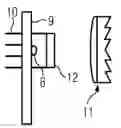
FIG. 2 shows a light signal of a claimed design,
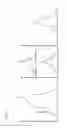
FIG. 3 shows a spectral light distribution for generating a yellow color locus.
In contrast to the four light signals described above and illustrated in FIG. 1, a single white LED—high-current LED—8 is used as a point light source in the case of the light signal according to the invention as illustrated in FIG. 2. Said HLED is arranged on a circuit board 9 with a heat sink 10. In order to realize different signal colors, a color filter film arrangement 12 is provided between the HLED and a converging optical unit 11.
FIG. 3 shows on the left an emission spectrum 13 of the white HLED 8. Said HLED 8 is combined with the color filter film arrangement 12, which consists of two color filter films having the transmission spectra 14 and 15. It is evident that the resultant total spectrum 16 has a high transmittance for the color locus yellow, such that a yellow luminous light signal arises.
Claims
1-4. (canceled)
5. A light signal, comprising:
a semiconductor light source being a white point light source defining an aperture region;
a converging optical unit for defining signal properties; and
at least one signal-aspect-specific color filter disposed in said aperture region of said white point light source.
6. The light signal according to claim 5, wherein said white point light source is one of a plurality of white point light sources each containing a light emitting diode (LED) selected from the group consisting of a white LED and a white, high-current LED, each of the signal properties is assigned one of said white point light sources.
7. The light signal according to claim 5,
wherein said white point light source is a common point light source and the signal properties are assigned said common point light source, said common point light source having a light emitting diode (LED) selected from the group consisting of a white LED and a white, high-current LED;
wherein said converging optical unit is a common converging optical unit assigned to the signal properties; and
further comprising an automatic changer for positioning said signal-aspect-specific color filter into the aperture region of said white point light source.
8. The light signal according to claim 5, wherein said signal-aspect-specific color filter is a polycarbonate color filter film.
9. The light signal according to claim 5, wherein the light signal is configured for used on rail-bound traffic routes.
Images & Drawings included:
Sources:
- United States Patent and Trademark Office - verify current appl. status at the USPTO↗
Similar patent applications:
- » 20060219878
Signal light transmitting apparatus, signal light transmitting system using the same, and signal light transmitting method - » 20080150764
Light signal, in particular maritime emergency light signal, and luminous unit for a light signal - » 20170250773
LIGHT SIGNAL MULTIPLEXER AND LIGHT SIGNAL DEMULTIPLEXER - » 20200311427
Signal light display determination device, signal light display determination method, and non-transitory computer-readable recording medium - » 20120057151
Signal light monitoring apparatus and signal light monitoring method - » 20090034989
LIGHT SIGNAL PROCESSING DEVICE AND LIGHT SIGNAL STORING DEVICE - » 20140016933
Method and device for converting an input light signal into an output light signal - » 20050129382
Signal light noise reduciton apparatus and signal light noise reduction method - » 20060011819
Variable light signal delay apparatus, and variable light signal delay system using the same - » 20210195303
Simulation signal light generation device and simulation signal light generation method
Recent applications in this class:
- » 20250277574 2025-09-04
ELECTRONIC APPARATUS AND METHOD OF MANUFACTURING ELECTRONIC APPARATUS - » 20250137617 2025-05-01
LUMINAIRE OPTICAL DEVICE COLOR COMPENSATION - » 20250043937 2025-02-06
LIGHT STRIP - » 20240328596 2024-10-03
LIGHT-MIXING COVER AND LIGHTING DEVICE - » 20240019105 2024-01-18
LED illuminant based blinder with LED color mixing for modeling of a color decay and LED module therefor - » 20230332759 2023-10-19
Quantum dot display panel, preparation method thereof and display device - » 20230244124 2023-08-03
Night vision preserving case for use in association with an electronic device - » 20220412535 2022-12-29
Light modifying device - » 20220357018 2022-11-10
Luminaire optical device color compensation - » 20220099273 2022-03-31
Light source device and lighting device
Recent applications for this Assignee:
- » 20250262772 2025-08-21
PLACE CONDITIONED PICK FOR ROBOTIC PICK AND PLACE OPERATIONS - » 20250242498 2025-07-31
SYSTEM AND METHOD FOR PICK POSE ESTIMATION FOR ROBOTIC PICKING WITH ARBITRARILY SIZED END EFFECTORS - » 20250216836 2025-07-03
PRIORITIZATION BETWEEN AGENTS IN AGENT-BASED PROCESS AUTOMATION - » 20250168873 2025-05-22
WLAN Communication Method and Devices - » 20250168152 2025-05-22
Communication System, Adapter for a Terminal and Method for Securely Transmitting Time-Critical Data within the Communication System - » 20250166165 2025-05-22
TRAINING SYSTEMS FOR SURFACE ANOMALY DETECTION - » 20250162095 2025-05-22
Method for Operating a Machine Tool, Computer Program Product, Control Unit, Machine Tool, Simulation Program Product and Use of the Control Unit - » 20250147755 2025-05-08
INDUSTRIAL APPLICATION PACKAGE MANAGEMENT - » 20250126041 2025-04-17
METHOD OF CAPTURING PACKETS FROM APPLICATIONS HOSTED ON CONTAINERS - » 20250117920 2025-04-10
SELF-SUPERVISED ANOMALY DETECTION FRAMEWORK FOR VISUAL QUALITY INSPECTION IN MANUFACTRUING