Synchronous motor with permanent magnets
US20120153764A1
2012-06-21
13/327,136
2011-12-15
✅ Patent granted
US 9,219,388 B2
2015-12-22
-
-
Burton Mullins
Frommer Lawrence & Haug LLP
2033-05-14
Abstract:
The present invention relates to synchronous motor comprising a cylindrical rotor (4) provided with permanent magnets (3) located inside a cylindrical stator provided with a winding (U, V, W), characterized in that the rotor is provided with protuberances (41) facing the said winding.
Inventors:
- Giampiero TASSINARIO 5 🇮🇹 Florence, Italy
- Ivan Flotats 3 🇪🇸 Barcelona, Spain
- Francesc Cruellas 3 🇪🇸 Tiana, Spain
Assignee:
- Infranor Holding SA 5 🇨🇭 Yverdon-les-Bains, Switzerland
- Infranor Holding SA 1 🇨🇭 Yverdon-Ies-Bains, Switzerland
Applicant:
Interested in similar patents?
Get notified when new applications in this technology area are published.
Classification:
H02K3/47 » CPC further
Details of windings; Fastening of windings on the stator or rotor structure Air-gap windings, i.e. iron-free windings
H02K1/165 » CPC further
Details of the magnetic circuit characterised by the shape, form or construction; Stationary parts of the magnetic circuit; Stator cores with slots for windings Shape, form or location of the slots
H02K21/14 » CPC further
Synchronous motors having permanent magnets; Synchronous generators having permanent magnets with stationary armatures and rotating magnets with magnets rotating within the armatures
H02K1/274 » CPC further
Details of the magnetic circuit characterised by the shape, form or construction; Rotating parts of the magnetic circuit; Rotor cores with permanent magnets; Inner rotors the magnetisation axis of the magnets being perpendicular to the rotor axis the rotor consisting of two or more circumferentially positioned magnets
H02K1/2706 » CPC further
Details of the magnetic circuit characterised by the shape, form or construction; Rotating parts of the magnetic circuit; Rotor cores with permanent magnets Inner rotors
H02K2201/03 » CPC further
Specific aspects not provided for in the other groups of this subclass relating to the magnetic circuits Machines characterised by aspects of the air-gap between rotor and stator
H02K1/27 IPC
Details of the magnetic circuit characterised by the shape, form or construction; Rotating parts of the magnetic circuit Rotor cores with permanent magnets
H02K1/16 IPC
Details of the magnetic circuit characterised by the shape, form or construction; Stationary parts of the magnetic circuit Stator cores with slots for windings
Description
This application claims priority benefits to European Patent Application Number 10195055.8 filed Dec. 15, 2010, the entire disclosure of which is incorporated herein by reference.
FIELD OF THE INVENTION
The present invention relates to a synchronous motor comprising a cylindrical rotor provided with permanent magnets located inside a cylindrical stator provided with a winding.
BACKGROUND OF THE INVENTION
The positioning of the rotor of such a synchronous motor in relation to the stator is usually controlled by an outside sensor device checking the inductance variation of the motor electrical phases.
SUMMARY OF THE INVENTION
The present invention proposes a synchronous motor in which the geometry of the rotor allows to create a magnetic sensor useful as a position feedback of the rotor and allowing to eliminate the outside sensor device and to decrease the overall length of the motor.
The synchronous motor according to the present invention is characterized by the characterizing portion of claim 1.
So the invention allows to make specific rotor shape that gives positioning of the rotor without a usual sensor control unit.
It is clear that having a stator without any slot, the reluctance of the motor will be depending on the shape the rotor may have.
If the stator is provided with slots, it is important that the dimensions of the slots entrances are minimized to decrease the reluctance variation.
If magnets are placed over the lateral surface of cylindrical rotor, as the relative permeability of rare earth magnets is close to air, no reluctance variation will exist. This has an influence not only in the cogging torque (explained deeply in EP 99810212.3) but also in the values of the inductance of the winding of each phase that will remain constant. Some sensoriess controls are based on the value change of the inductance of the motor as a signal to the electronic drive to inject the current in the phases of the motor. This is quite common in slotted motors but with the slotless design becomes not so obvious.
The invention and other claimed features will be described in detail in relation to the attached drawings
BRIEF DESCRIPTION OF THE DRAWINGS
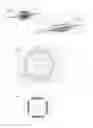
FIG. 1 is a perspective view of a rotor with axial extending protuberances;
FIG. 2 is the rotor of FIG. 1 with three coils each corresponding to a different electrical phase;
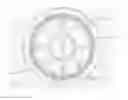
FIG. 3 is a side view of a motor provided with a rotor presenting radial extending protuberances;
FIG. 4 is a side view of another rotor presenting radial extending protuberances;
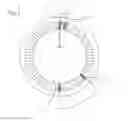
FIG. 5 is a side view of a stator with slots.
DETAILED DESCRIPTION OF THE INVENTION
In FIG. 1 permanent magnets 3 are placed over the lateral surface of a cylindrical rotor 4. The rotor is provided at both ends of its lateral surface with axial extended protuberances 41. The protuberances 41 are located in the area in front of the place where the turns of the coils are fitted (FIG. 2). So the coils will be sensitive to the presence or not of the steel or the iron of the rotor 4 close to them and so, sensitive to the change of the inductance value when rotating the rotor. It is necessary to have the same number of protuberances 41 like the rotor pole pairs, and of course must be placed symmetrical in respect the center of the rotor. Otherwise the influence of the protuberances will be compensated from one side versus the other. These protuberances must have an alternative shape, triangular, sinusoidal . . . . The protuberances are designed so as in a position of the rotor one phase, for example U (FIG. 2), will have the maximum value of inductance, another one, for example phase W, will have the minimum value of inductance and the third, for example phase V, will have an intermediate value of inductance.
Depending on the sensibility of the electronics the dimensions of the protuberances of the rotor may vary. It is also possible the protuberances are made different material from that of the rotor which is glued or fixed by screws. The said material may present a higher permeability like for example μmetal.
The protuberances allow to reduce the length of the motor as the control of the motor does not need the usual external sensor.
If the magnets are placed radially inside the rotor instead of the surface, the undulation of the protuberances must be made in the active part of the lateral surface of the rotor as shown in FIG. 3.
In FIG. 3 they are schematically represented: a stator 1, a winding 2, permanent magnets 3 radially located inside the rotor 4. The lateral surface of the rotor 4 is provided with undulated protuberances 42 axially extended in the active part of the said surface. Active part of the lateral surface means the surface facing the winding 2. Depending of the position of the rotor the value of the inductance will vary for each electrical phase as previously explained.
In FIG. 4 another disposition of the permanent magnets 3 inside a rotor 4 is shown. The undulated protuberances 42 are also axially extended in the active part of lateral surface of the rotor 4.
If the stator is provided with slots as shown in FIG. 5 it is important to minimize the width E of the entrance of the slots allowing to minimize the air gap influence in the motor reluctance.
We propose to limit the influence of air gap or air gaps due to the entrances of the slots so as the reluctance value does not fluctuate more than 5%. Standard measurement of inductance may distinguish 5% fluctuation correctly. We mean that a fluctuation of the inductance equal or less 5% will not interpreted as the presence or absence of rotor protuberance,
In FIG. 5 is shown a first coil C wound inside the slots of two consecutive slots or around a tooth T. The pitch of this coil is P and the width of the entrance is E. Another example is shown in the same FIG. 5 but not for a same motor. We have a coil C1 wound inside two slots which are not consecutives. The pitch of the coil C1 is P1 and the width of each slot is E as previously. They are four slots inside the coil C1.
In order to minimize the air gap or absence of magnetic material at the entrances of the slots according to the following relation:
(n+1)E 0.05 P, P being the pitch between two slots in which a coil is wound, E the width of the entrances of the slots and n the number of slots located inside the coil.
In the first example relating to the coil C, n=0 so E≦0.05 P. In the second example relating to the coil C1, n=4 so the relation is 4E≦0.05 P1.
In all configurations the variation of the rotor material facing the winding allows to vary the value of the inductance more than 5% for each electrical phase and make possible to detect the rotor position without using a special sensor device.
Claims
What is claimed is:1. A synchronous motor comprising a cylindrical rotor provided with permanent magnets located inside a cylindrical stator provided with a winding, wherein the rotor is provided with protuberances facing the said winding.
2. A synchronous motor according to claim 1, wherein the permanent magnets are placed over the lateral surface of the rotor and the two axial ends of the lateral surface of the rotor are provided with axial extending protuberances facing the ends of the said winding.
3. A synchronous motor according to claim 1 wherein the permanent magnets are disposed inside the rotor and that the lateral surface of the rotor is provided with radial undulated protuberances all along its active surface.
4. A synchronous rotor according to claim 1, wherein the stator is a slotless stator.
5. A synchronous rotor according to claim 1, wherein the stator is provided with slots and in that the width E of entrances of the slots are minimized to decrease the reluctance variation according to the follow relation:
(n+1)E≦0.05 P, P being the pitch between two slots in which a coil is wound, E being the width of the entrances of the slots and n the number of the slots located inside the said coil.
6. A synchronous rotor according to claim 2, wherein the stator is provided with slots and in that the width E of entrances of the slots are minimized to decrease the reluctance variation according to the follow relation:
(n+1)E≦0.05 P, P being the pitch between two slots in which a coil is wound, E being the width of the entrances of the slots and n the number of the slots located inside the said coil.
7. A synchronous rotor according to claim 3, wherein the stator is provided with slots and in that the width E of entrances of the slots are minimized to decrease the reluctance variation according to the follow relation:
(n+1)E≦0.05 P, P being the pitch between two slots in which a coil is wound, E being the width of the entrances of the slots and n the number of the slots located inside the said coil.
Images & Drawings included:
Sources:
- United States Patent and Trademark Office - verify current appl. status at the USPTO↗
Similar patent applications:
- » 20150226776
METHOD AND DEVICE FOR MEASURING INDUCTANCE OF PERMANENT MAGNET SYNCHRONOUS MOTOR, AND PERMANENT MAGNET SYNCHRONOUS MOTOR - » 20140049129
ROTOR FOR INTERIOR PERMANENT MAGNET SYNCHRONOUS MOTOR AND INTERIOR PERMANENT MAGNET SYNCHRONOUS MOTOR INCLUDING THE SAME - » 20070126391
Vector controller for a permanent magnet synchronous motor, inverter module, and permanent magnet synchronous motor constant display system - » 20190028009
Permanent-magnet synchronous motor, method for manufacturing permanent-magnet synchronous motor, and air conditioner - » 20110260748
Apparatus and method for diagnosing permanent magnet demagnetization of permanent magnet synchronous motor, and apparatus for driving permanent magnet synchronous motor - » 10342367
Permanent magnet synchronous motor driving system, and method of testing permanent magnet synchronous motor driving system - » 20240171026
OUTER ROTOR OF PERMANENT MAGNET ASSISTED SYNCHRONOUS RELUCTANCE MOTOR AND PERMANENT MAGNET SYNCHRONOUS MOTOR COMPRISING THE SAME - » 20240405702
APPARATUS AND METHOD FOR CONTROLLING PERMANENT MAGNET SYNCHRONOUS MOTOR, AND STORAGE MEDIUM STORING INSTRUCTIONS TO PERFORM METHOD FOR CONTROLLING PERMANENT MAGNET SYNCHRONOUS MOTOR - » 20070205687
Permanent magnet synchronous motor including permanent magnet with tapered outer edges - » 20070205688
Permanent magnet synchronous motor including permanent magnet with tapered outer edges and rotor core with opening
Recent applications in this class:
- » 20250274004 2025-08-28
ROTOR STRUCTURE - » 20250260278 2025-08-14
ROTOR FOR ELECTRIC MOTOR - » 20250246955 2025-07-31
ROTOR - » 20250246954 2025-07-31
Rotor Assembly And Electric Machine Including The Same - » 20250246953 2025-07-31
ELECTRIC MACHINE PERMANENT MAGNET RETENTION - » 20250233468 2025-07-17
ROTATING ELECTRIC MACHINE - » 20250233467 2025-07-17
Rotary Electric Machine - » 20250226707 2025-07-10
LAMINATED CORE FOR A ROTOR OF AN ELECTRIC MOTOR, AND ELECTRIC MOTOR - » 20250211041 2025-06-26
ROTOR OF AN ELECTRIC MACHINE - » 20250202299 2025-06-19
ROTOR AND ROTATING ELECTRIC MACHINE
Recent applications for this Assignee:
- » 20120233847 2012-09-20
Method of terminating the stator winding of an electric motor - » 20120175991 2012-07-12
Method for manufacturing a cylindrical winding for slotless electrical machine - » 20120153762 2012-06-21
Synchronous motor with permanent magnets - » 20060238056 2006-10-26
System for securing permanent magnets