One dimension nano magnetic wires
US20120154082A1
2012-06-21
13/385,476
2012-02-22
Abstract:
A one dimension nano magnetic wire is introduced herein. The one dimension nano magnetic wire is selected from the groups consisting of Fe, Co, Ni, and combinations and an alloy thereof. The one dimension nano magnetic wire is covered with a protection layer.
Inventors:
- Hong-Ming Lin 7 🇹🇼 Taipei City, Taiwan
- Wei-Syuan Lin 5 🇹🇼 Taipei City, Taiwan
- Wei-Jen Liou 5 🇹🇼 Taipei City, Taiwan
- Cheng-Han Chen 6 🇹🇼 Taipei City, Taiwan
- Zih-Jie Jian 2 🇹🇼 Taipei City, Taiwan
- She-Huang Wu 6 🇹🇼 Taipei City, Taiwan
Assignee:
- TATUNG COMPANY 148 🇹🇼 Taipei, Taiwan
- TATUNG UNIVERSITY 55 🇹🇼 Taipei, Taiwan
Interested in similar patents?
Get notified when new applications in this technology area are published.
Classification:
H01F1/0072 » CPC main
Magnets or magnetic bodies characterised by the magnetic materials therefor; Selection of materials for their magnetic properties showing low dimensional magnetism, i.e. spin rearrangements due to a restriction of dimensions, e.g. showing giant magnetoresistivity, one dimensional, i.e. linear or dendritic nanostructures
B82Y25/00 » CPC further
Nanomagnetism, e.g. magnetoimpedance, anisotropic magnetoresistance, giant magnetoresistance or tunneling magnetoresistance
H01F1/0081 » CPC further
Magnets or magnetic bodies characterised by the magnetic materials therefor; Selection of materials for their magnetic properties showing low dimensional magnetism, i.e. spin rearrangements due to a restriction of dimensions, e.g. showing giant magnetoresistivity, one dimensional, i.e. linear or dendritic nanostructures in a non-magnetic matrix, e.g. Fe-nanowires in a nanoporous membrane
C22B23/0461 » CPC further
Obtaining nickel or cobalt by wet processes; Treatment or purification of solutions, e.g. obtained by leaching by chemical methods
Y10S977/762 » CPC further
Nanotechnology; Nanostructure Nanowire or quantum wire, i.e. axially elongated structure having two dimensions of 100 nm or less
Y10S977/896 » CPC further
Nanotechnology; Manufacture, treatment, or detection of nanostructure having step or means utilizing chemical property Chemical synthesis, e.g. chemical bonding or breaking
H01F1/00 IPC
Magnets or magnetic bodies characterised by the magnetic materials therefor; Selection of materials for their magnetic properties
B82Y30/00 IPC
Nanotechnology for materials or surface science, e.g. nanocomposites
Description
CROSS-REFERENCE TO RELATED APPLICATION
This application is a divisional of and claims the priority benefit of U.S. application Ser. No. 12/321,188, filed on Jan. 16, 2009, now pending, which claims the priority benefit of Taiwan application serial no. 97146994, filed on Dec. 3, 2008. The entirety of each of the above-mentioned patent applications is hereby incorporated by reference herein and made a part of this specification.
BACKGROUND OF THE INVENTION
1. Field of the Invention
The present invention relates to a synthesis technique of one dimension nano magnetic wires. More particularly, the present invention relates to one dimension nano magnetic wires having high magnetization and low coercive force.
2. Description of Related Art
Along with the miniaturization requirement for various products, science and technology have been developed from the micron generation to the so-called nano generation. Nano-materials have a variety of types, including metallic nano-materials, semiconductor nano-materials, nano-structured ceramics, and nano-polymer materials, and may have a zero dimensional structure, one dimensional structure, or two dimensional structure. The processing methods and researches of the one dimensional metallic nano-structures are the most challenging, and also the most potential ones.
Currently, the conventional methods of fabricating one dimension nano magnetic wires include the liquid phase nucleation, which requires various surfactant processes to synthesize the one dimension wires. However, this method not only requires selecting from various complex surfactants, its synthesis process also demands steps such as heating and pH adjusting due to the use of surfactants. Moreover, the surface modification (for aqueous solution use) of the one dimension wires from hydrophobic to hydrophilic has to be performed after the synthesis. Thus, the synthesis method is complicated and the process takes longer time, thereby increases the production cost in the future development.
Recently, the one dimension nano magnetic wires have been fabricated by reduction at high temperature and pressure under the gas mixture of hydrogen and inert gases. However, this method needs the synthesis to take place in a helium-containing, high temperature, and high pressure environment. The method consequently increases the risk in working environment and makes it difficult for mass production.
On the other hand, other methods of manufacturing the one dimension nano magnetic wires include using mold. However, said mold has to be firstly fabricated by light etching and other processes, and removed after synthesizing the one dimension nano magnetic wires. Hence, the manufacturing method is complicated and difficult for mass production.
As the above-mentioned methods and the conventional techniques all require more complicated steps to fabricate the one dimension nano magnetic wires, a major challenge in the current process of manufacturing the one dimension nano magnetic wires is to simplify the process while allowing mass production.
SUMMARY OF THE INVENTION
The present invention provides one dimension nano magnetic wires having high magnetization and low coercive force.
A one dimension nano magnetic wire is introduced herein. The one dimension nano magnetic wire is selected from the groups consisting of Fe, Co, Ni, and combinations and an alloy thereof. The one dimension nano magnetic wire is covered with a protection layer.
In a embodiment of the present invention, the one dimension nano magnetic wires are utilized as biomedical, electromagnetic shielding, electronic conducting element, or nano-probing materials.
In a embodiment of the present invention, the protection layer includes biocompatible polymers or saccharides.
In a embodiment of the present invention, the protection layer includes a functional materials such as metals, ceramics, and polymers.
In light of the foregoing, the present invention utilizes an applied magnetic field when performing the liquid phase nucleation so as to obtain the one dimension nano magnetic wires with high magnetization and low coercive force. Therefore, the manufacturing method of the present invention may simplify the process and is suitable for mass production. Moreover, the surface of the one dimension nano magnetic wire is covered with a protection layer by adding the protecting agent in the liquid phase nucleation. Consequently, oxidation of the one dimension nano magnetic wires is prevented such that the wires can be used in biomedical application or other purposes.
In order to make the aforementioned and other features and advantages of the present invention more comprehensible, several embodiments accompanied with figures are described in detail below.
BRIEF DESCRIPTION OF THE DRAWINGS
The accompanying drawings are included to provide a further understanding of the invention, and are incorporated in and constitute a part of this specification. The drawings illustrate embodiments of the invention and, together with the description, serve to explain the principles of the invention.
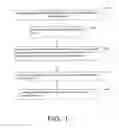
FIG. 1 is a flow diagram of a manufacturing process of one dimension nano magnetic wires according to one embodiment in the present invention.
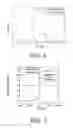
FIG. 2 is an X-ray diffraction diagram of Experiment 1 and Experiment 2 in the present invention.
FIG. 3 is a hysteresis loop diagram of Experiment 1 and Experiment 2 in the present invention.
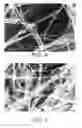
FIG. 4 is a field emission scanning electron microscope (FE-SEM) surface image of one dimension nano magnetic wires in Experiment 1 in the present invention.
FIG. 5 is a field emission scanning electron microscope (FE-SEM) surface image of one dimension nano magnetic wires in Experiment 2 in the present invention.
DESCRIPTION OF EMBODIMENTS
FIG. 1 is a flow diagram of a process of one dimension nano magnetic wires according to one embodiment in the present invention.
Referring to FIG. 1, in order to manufacture the one dimension nano magnetic wires using a liquid phase nucleation method, step 100 is firstly performed to prepare a liquid with a precursor of the one dimension nano magnetic wires. The precursor is, for example, FeCl2.2H2O, FeCl3.6H2O, FeSO4, Fe2(SO4)3, FeCO3, Fe(PO3), Fe(PO3)2, Fe3(PO4)2, Fe(NO3)2, FeSiO3, Fe2SiO4, Fe(CO)5, Co(NO3)2.6H2O, CoCl2.6H2O, CoCO3, CO2(HPO4)2.H2O, CoSO4, NiCl2.6H2O, Ni(NO3)2.6H2O, Ni(CO3).2Ni(OH2).4H2O, Ni(H2PO2)2.6H2O, or NiSO4.
Moreover, to prevent the manufactured one dimension nano magnetic wires from oxidizing, the manufactured one dimension nano magnetic wires can be stored in an oxygen-free environment. On the contrary, the liquid in the step 100 can be added with a protecting agent to form a protection layer on surfaces of the one dimension nano magnetic wires. Hence, it not only avoids the oxidation of the one dimension nano magnetic wires but also prevents the adhesion among the one dimension nano magnetic wires. The aforementioned protecting agent includes, for example, dextran, polyvinyl pyrrolidone (PVP), polyethylene glycol (PEG), chitosan, Au, SiO2, Fe3O4, folic acid, Pt, tannic acid, Cu, Cu2O, CuO, Ag, polymethylmethyacrylate (PMMA), polyvinyl alcohol (PVA), polyvinyl butyral (PVB) or Si. Consequently, the mixing of the precursor and the protecting agent produces the liquid in the present invention.
Moreover, by the selection the protecting agent, the surfaces of the subsequently synthesized one dimension nano magnetic wires will be covered by polymers, saccharides or functional materials (i.e., metals, ceramics, or polymer materials) with biocompatibility, such that the wires may be used as biomedical, electromagnetic shielding, electronic conducting element, and nano-probing materials.
Then, an inert gas is flowed into the liquid continuously in step 110, where the inert gas includes nitrogen, argon, neon, or helium, for example.
Next, in step 120, a reductant is added into the liquid to synthesize the one dimension nano magnetic wires with an applied magnetic field in the inert gas atmosphere under normal atmospheric temperature and pressure. For example, the applied magnetic field is greater than 30 Guess, preferably from 500 Guess to 20,000 Guess. Moreover, the manufactured one dimension nano magnetic wire is selected from the group consisting of iron (Fe), cobalt (Co), nickel (Ni), and composites and an alloy thereof. The reductant depends on the used precursor and includes, for instance, NaBH4, KBH4, LiAlH4, N2H4.H2O, NaH2PO2.H2O, Na2SO4, LiBH4, RbBH4, CsBH4, or Na2S2O3.5H2O.
Next, step 130 can be proceeded to perform a stage of rinsing process on the one dimension nano magnetic wires to prevent the one dimension nano magnetic wires from oxidization or degradation. The aforementioned stage of rinsing process includes, for instance, alternative repetition of alcohol rinsing and de-ionized water rinsing.
Finally, step 140 may be optionally proceeded to bake and collect the rinsed one dimension nano magnetic wires.
The following shows several exemplary experiments to test the effects of the above embodiments in the present invention.
Experiment 1
Firstly, 0.5 ml of 0.5M FeCl3.6H2O, a precursor of one dimension nano magnetic wires, is mixed evenly with 5 ml of de-ionized water. Then, 2 mg of dextran, a protecting agent, is added to the mixture to form a liquid mixed by the precursor of the one dimension nano magnetic wires and the protecting agent.
Next, an inert gas (ex. argon) is flowed into the liquid for approximately half an hour.
Moreover, 3 ml of 0.1M NaBH4, a reductant, is added to the liquid to synthesize the one dimension nano magnetic wires by reduction with an applied magnetic field (500-20,000 Guess) and the argon atmosphere under normal atmospheric temperature and pressure.
Afterward, the one dimension nano magnetic wires are rinsed with a stage of rinsing process (alcohol rinsing→de-ionized rinsing→alcohol rinsing), and the rinsed one dimension nano magnetic wires are dried in a 95° C. oven.
Experiment 2
The same process as Experiment 1 is performed to produce the one dimension nano magnetic wires, where the only difference is the molar concentration of the reductant. In Experiment 2, 3 ml of 0.5M NaBH4 is used.
Table 1 indicates the chemicals used in the two experiments and their dosages.
| TABLE 1 | |||||
| De-ionized | Applied | ||||
| water | dextran | FeCl3•6H2O | magnetic | ||
| (ml) | (mg) | (0.5M) (ml) | NaBH4 | field | |
| Experiment | 5 | 2 | 0.5 | 0.1M | Yes |
| 1 | (3 ml) | ||||
| Experiment | 5 | 2 | 0.5 | 0.5M | Yes |
| 2 | (3 ml) | ||||
Next, the one dimension nano magnetic wires obtained from the above experiments are tested.
An X-ray powder diffraction (XRD) test is performed with the 1C ray from National Synchrontron Radiation Research Center to obtain FIG. 2, which includes the XRD diagram of Experiment 1 and 2. As indicated in FIG. 2, iron is a component of the one dimension nano magnetic wires manufactured with (110) preferred orientation in Experiment 1 and 2.
A test is performed with the Lake Shore 7407 type vibrating sample magnetometer (VSM) to obtain FIG. 3, which includes a hysteresis loop diagram of Experiment 1 and 2. As indicated in FIG. 3, the one dimension nano magnetic wires manufactured in Experiment 1 and 2 have high magnetization, with a value as high as 157 emu/g.
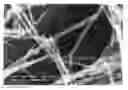
A test is performed with the HITACHI S-4200 type cold field emission field emission scanning electron microscope (FE-SEM) to obtain FIG. 4 and FIG. 5. FIG. 4 is FE-SEM surface image of the one dimension nano magnetic wires in Experiment 1. FIG. 5 is a FE-SEM surface image of one dimension nano magnetic wires in Experiment 2. As observed from FIG. 4 and FIG. 5, the synthesis methods in Experiment 1 and Experiment 2 can indeed fabricate the one dimension nano-wires.
In summary, the present invention produces the one dimension nano magnetic wires having high magnetization and low coercive force by the applied magnetic field in corporation with the liquid phase nucleation method. Hence, the manufacturing method of the present invention not only simplifies the conventional processes, but it is also suitable for mass production. Furthermore, if the protecting agent is added before the liquid phase nucleation, the surfaces of the one dimension nano magnetic wires will be covered with a protection layer that prevents oxidation. Also, when the protection layer is formed by polymers or saccharides with biocompatibility, the one dimension nano magnetic wires of the present invention can be further utilized as biomedical, electromagnetic shielding, electronic conducting element, and nano-probing materials.
Although the present invention has been described with reference to the above embodiments, it will be apparent to one of the ordinary skill in the art that modifications to the described embodiment may be made without departing from the spirit of the invention. Accordingly, the scope of the invention will be defined by the attached claims not by the above detailed descriptions.
Claims
What is claimed is:1. A one dimension nano magnetic wire is selected from the groups consisting of iron (Fe), cobalt (Co), nickel (Ni), and compositions and an alloy thereof, wherein the one dimension nano magnetic wire is covered with a protection layer.
2. The one dimension nano magnetic wire as claimed in claim 1, wherein the one dimension nano magnetic wire is used as a biomedical, an electromagnetic shielding, an electronic conducting element, or a nano-probing material.
3. The one dimension nano magnetic wire as claimed in claim 2, wherein the protection layer comprises biocompatible polymers or saccharides.
4. The one dimension nano magnetic wire as claimed in claim 2, wherein the protection layer comprises a functional material.
5. The one dimension nano magnetic wire as claimed in claim 4, wherein the functional material comprises metals, ceramics or polymer materials.
Images & Drawings included:
Sources:
- United States Patent and Trademark Office - verify current appl. status at the USPTO↗
Similar patent applications:
Recent applications in this class:
- » 20220367090 2022-11-17
Controlling a quantum point junction on the surface of an antiferromagnetic topological insulator - » 20170047150 2017-02-16
Ferromagnetic metal nanowire dispersion and method for manufacturing same - » 20100133462 2010-06-03
One dimension nano magnetic wires and manufacturing method thereof - » 20100032609 2010-02-11
Method of making dendritic magnetic nanostructures - » 20050151536 2005-07-14
Magnetic carbon nanotube
Recent applications for this Assignee:
- » 20200283621 2020-09-10
Biodegradable plastic composition and manufacturing method thereof - » 20200283621 2020-09-10
Biodegradable plastic composition and manufacturing method thereof - » 20190065288 2019-02-28
Gateway, internet of things device control system and method thereof - » 20190065288 2019-02-28
Gateway, internet of things device control system and method thereof - » 20180265962 2018-09-20
Method of fabricating hydrophilic-hydrophobic transformable composite film - » 20180265962 2018-09-20
Method of fabricating hydrophilic-hydrophobic transformable composite film - » 20170063823 2017-03-02
Identity verification method, internet of thins gateway device, and verification gateway device using the same - » 20170063823 2017-03-02
Identity verification method, internet of thins gateway device, and verification gateway device using the same - » 20170063807 2017-03-02
Method for automatically establishing wireless connection, gateway device and client device for internet of things using the same - » 20170063807 2017-03-02
Method for automatically establishing wireless connection, gateway device and client device for internet of things using the same