Process for production of silicon-carbide-coated carbon base material, silicon-carbide-coated carbon base material, sintered (silicon carbide)-carbon complex, ceramic-coated sintered (silicon carbide)-carbon complex, and process for production of sintered (silicon carbide)-carbon complex
US20120156479A1
2012-06-21
13/392,593
2010-09-01
✅ Patent granted
US 9,085,493 B2
2015-07-21
WO; PCT/JP2010/064871; 20100901
WO; WO2011/027756; 20110310
Holly Le
Keating & Bennett, LLP
2031-01-29
Abstract:
Produced is a silicon carbide-coated carbon base material in which a silicon carbide coating is densely and uniformly formed on the surface of a carbon base material, such as graphite. A production process includes the steps of: preparing a carbon base material the surface of which has basal plane sites of an SP2 carbon structure with no dangling bond and edge plane sites of an SP2 carbon structure with a dangling bond; and reacting the surface of the carbon base material with SiO gas in an atmosphere at a temperature of 1400° C. to 1600° C. and a pressure of 1 to 150 Pa to form silicon carbide, whereby the carbon base material coated with silicon carbide is produced.
Inventors:
- Yoshinari MIYAMOTO 8 🇯🇵 Osaka-shi, Japan
- Tetsuro Tojo 10 🇯🇵 Osaka-shi, Japan
- Tetsuro TOJO 27 🇯🇵 Osaka, Japan
- Masaharu Nakamura 2 🇯🇵 Osaka-shi, Japan
- Yoshinari Miyamoto 6 🇯🇵 Osaka, Japan
- Masaharu Nakamura 2 🇯🇵 Osaka, Japan
Assignee:
- TOYO TANSO CO., LTD. 77 🇯🇵 Osaka-shi, Osaka, Japan
- TOYO TANSO CO., LTD. 59 🇯🇵 Osaka, Japan
Applicant:
Interested in similar patents?
Get notified when new applications in this technology area are published.
Classification:
C04B35/522 » CPC further
Shaped ceramic products characterised by their composition ; Ceramics compositions ; Processing powders of inorganic compounds preparatory to the manufacturing of ceramic products based on non-oxide ceramics based on carbon, e.g. graphite Graphite
C04B35/62675 » CPC further
Shaped ceramic products characterised by their composition ; Ceramics compositions ; Processing powders of inorganic compounds preparatory to the manufacturing of ceramic products; Forming processes; Processing powders of inorganic compounds preparatory to the manufacturing of ceramic products; Preparing or treating the powders individually or as batches ; preparing or treating macroscopic reinforcing agents for ceramic products, e.g. fibres; mechanical aspects section; Treating the starting powders individually or as mixtures; Thermal treatment of powders or mixtures thereof other than sintering characterised by the treatment temperature
C01B32/956 » CPC further
Carbon; Compounds thereof; Carbides; Carbides of single elements Silicon carbide
C01B32/97 » CPC further
Carbon; Compounds thereof; Carbides; Carbides of single elements; Silicon carbide; Preparation from compounds containing silicon Preparation from SiO or SiO
C04B35/62897 » CPC further
Shaped ceramic products characterised by their composition ; Ceramics compositions ; Processing powders of inorganic compounds preparatory to the manufacturing of ceramic products; Forming processes; Processing powders of inorganic compounds preparatory to the manufacturing of ceramic products; Preparing or treating the powders individually or as batches ; preparing or treating macroscopic reinforcing agents for ceramic products, e.g. fibres; mechanical aspects section; Coating the powders or the macroscopic reinforcing agents Coatings characterised by their thickness
B82Y30/00 » CPC further
Nanotechnology for materials or surface science, e.g. nanocomposites
C04B41/87 » CPC further
After-treatment of mortars, concrete, artificial stone or ceramics; Treatment of natural stone of only ceramics; Coating or impregnation with inorganic materials Ceramics
C04B35/565 » CPC further
Shaped ceramic products characterised by their composition ; Ceramics compositions ; Processing powders of inorganic compounds preparatory to the manufacturing of ceramic products based on non-oxide ceramics based on carbides or oxycarbides based on silicon carbide
C04B41/4578 » CPC further
After-treatment of mortars, concrete, artificial stone or ceramics; Treatment of natural stone; Coating or impregnating e.g. injection in masonry, partial coating of green or fired ceramics, organic coating compositions for adhering together two concrete elements, Coating or impregnating of green ceramics or unset concrete
C04B41/5059 » CPC further
After-treatment of mortars, concrete, artificial stone or ceramics; Treatment of natural stone; Coating or impregnating e.g. injection in masonry, partial coating of green or fired ceramics, organic coating compositions for adhering together two concrete elements, with inorganic materials non-oxide ceramics; Carbides Silicon carbide
C04B41/4531 » CPC further
After-treatment of mortars, concrete, artificial stone or ceramics; Treatment of natural stone; Coating or impregnating e.g. injection in masonry, partial coating of green or fired ceramics, organic coating compositions for adhering together two concrete elements, characterised by the method of application applied from the gas phase by C.V.D.
C04B41/4529 » CPC further
After-treatment of mortars, concrete, artificial stone or ceramics; Treatment of natural stone; Coating or impregnating e.g. injection in masonry, partial coating of green or fired ceramics, organic coating compositions for adhering together two concrete elements, characterised by the method of application applied from the gas phase
C04B41/455 » CPC further
After-treatment of mortars, concrete, artificial stone or ceramics; Treatment of natural stone; Coating or impregnating e.g. injection in masonry, partial coating of green or fired ceramics, organic coating compositions for adhering together two concrete elements, characterised by the method of application the coating or impregnating process including a chemical conversion or reaction
B32B3/00 IPC
Layered products comprising a layer with external or internal discontinuities or unevennesses, or a layer of non-planar form ; Layered products having particular features of form
B32B9/04 IPC
Layered products comprising a layer of a particular substance not covered by groups - comprising such substance as the main or only constituent of a layer, next to another layer of a
B05D3/02 IPC
Pretreatment of surfaces to which liquids or other fluent materials are to be applied; After-treatment of applied coatings, e.g. intermediate treating of an applied coating preparatory to subsequent applications of liquids or other fluent materials by baking
C04B35/64 IPC
Shaped ceramic products characterised by their composition ; Ceramics compositions ; Processing powders of inorganic compounds preparatory to the manufacturing of ceramic products; Forming processes; Processing powders of inorganic compounds preparatory to the manufacturing of ceramic products Burning or sintering processes
C04B41/009 » CPC main
After-treatment of mortars, concrete, artificial stone or ceramics; Treatment of natural stone characterised by the material treated
C23C14/0635 » CPC further
Coating by vacuum evaporation, by sputtering or by ion implantation of the coating forming material characterised by the coating material Carbides
C04B2111/00405 » CPC further
Mortars, concrete or artificial stone or mixtures to prepare them, characterised by specific function, property or use; Physical properties of the materials not provided for elsewhere in Materials with a gradually increasing or decreasing concentration of ingredients or property from one layer to another
C04B2235/425 » CPC further
Aspects relating to ceramic starting mixtures or sintered ceramic products; Composition of constituents of the starting material or of secondary phases of the final product; Constituents and secondary phases not being of a fibrous nature; Non metallic elements added as constituents or additives, e.g. sulfur, phosphor, selenium or tellurium; Carbon Graphite
C04B2235/5436 » CPC further
Aspects relating to ceramic starting mixtures or sintered ceramic products; Composition of constituents of the starting material or of secondary phases of the final product; Constituents or additives of the starting mixture chosen for their shape or used because of their shape or their physical appearance; Particle size related information expressed by the size of the particles or aggregates thereof micrometer sized, i.e. from 1 to 100 micron
C04B2235/666 » CPC further
Aspects relating to ceramic starting mixtures or sintered ceramic products; Aspects relating to heat treatments of ceramic bodies such as green ceramics or pre-sintered ceramics, e.g. burning, sintering or melting processes; Specific sintering techniques, e.g. centrifugal sintering Applying a current during sintering, e.g. plasma sintering [SPS], electrical resistance heating or pulse electric current sintering [PECS]
C04B2235/72 » CPC further
Aspects relating to ceramic starting mixtures or sintered ceramic products; Aspects relating to sintered or melt-casted ceramic products Products characterised by the absence or the low content of specific components, e.g. alkali metal free alumina ceramics
C04B2235/77 » CPC further
Aspects relating to ceramic starting mixtures or sintered ceramic products; Aspects relating to sintered or melt-casted ceramic products; Physical characteristics Density
C04B2235/781 » CPC further
Aspects relating to ceramic starting mixtures or sintered ceramic products; Aspects relating to sintered or melt-casted ceramic products; Physical characteristics; Grain sizes and shapes, product microstructures, e.g. acicular grains, equiaxed grains, platelet-structures Nanograined materials, i.e. having grain sizes below 100 nm
C04B2235/96 » CPC further
Aspects relating to ceramic starting mixtures or sintered ceramic products; Aspects relating to sintered or melt-casted ceramic products Properties of ceramic products, e.g. mechanical properties such as strength, toughness, wear resistance
Y10T428/265 » CPC further
Stock material or miscellaneous articles; Web or sheet containing structurally defined element or component, the element or component having a specified physical dimension; Coating layer not in excess of 5 mils thick or equivalent; Up to 3 mils 1 mil or less
Y10T428/2991 » CPC further
Stock material or miscellaneous articles; Coated or structually defined flake, particle, cell, strand, strand portion, rod, filament, macroscopic fiber or mass thereof; Particulate matter [e.g., sphere, flake, etc.] Coated
B32B5/16 IPC
Layered products characterised by the non- homogeneity or physical structure, i.e. comprising a fibrous, filamentary, particulate or foam layer; Layered products characterised by having a layer differing constitutionally or physically in different parts characterised by features of a layer formed of particles, e.g. chips, powder or granules
C04B35/575 » CPC further
Shaped ceramic products characterised by their composition ; Ceramics compositions ; Processing powders of inorganic compounds preparatory to the manufacturing of ceramic products based on non-oxide ceramics based on carbides or oxycarbides based on silicon carbide obtained by pressure sintering
C04B35/645 » CPC further
Shaped ceramic products characterised by their composition ; Ceramics compositions ; Processing powders of inorganic compounds preparatory to the manufacturing of ceramic products; Forming processes; Processing powders of inorganic compounds preparatory to the manufacturing of ceramic products; Burning or sintering processes Pressure sintering
C04B41/00 IPC
After-treatment of mortars, concrete, artificial stone or ceramics; Treatment of natural stone
C04B35/52 IPC
Shaped ceramic products characterised by their composition ; Ceramics compositions ; Processing powders of inorganic compounds preparatory to the manufacturing of ceramic products based on non-oxide ceramics based on carbon, e.g. graphite
C04B35/628 IPC
Shaped ceramic products characterised by their composition ; Ceramics compositions ; Processing powders of inorganic compounds preparatory to the manufacturing of ceramic products; Forming processes; Processing powders of inorganic compounds preparatory to the manufacturing of ceramic products; Preparing or treating the powders individually or as batches ; preparing or treating macroscopic reinforcing agents for ceramic products, e.g. fibres; mechanical aspects section Coating the powders or the macroscopic reinforcing agents
C04B41/50 IPC
After-treatment of mortars, concrete, artificial stone or ceramics; Treatment of natural stone; Coating or impregnating e.g. injection in masonry, partial coating of green or fired ceramics, organic coating compositions for adhering together two concrete elements, with inorganic materials
C23C14/06 IPC
Coating by vacuum evaporation, by sputtering or by ion implantation of the coating forming material characterised by the coating material
C04B35/62884 » CPC further
Shaped ceramic products characterised by their composition ; Ceramics compositions ; Processing powders of inorganic compounds preparatory to the manufacturing of ceramic products; Forming processes; Processing powders of inorganic compounds preparatory to the manufacturing of ceramic products; Preparing or treating the powders individually or as batches ; preparing or treating macroscopic reinforcing agents for ceramic products, e.g. fibres; mechanical aspects section; Coating the powders or the macroscopic reinforcing agents by gas phase techniques
C04B41/5025 » CPC further
After-treatment of mortars, concrete, artificial stone or ceramics; Treatment of natural stone; Coating or impregnating e.g. injection in masonry, partial coating of green or fired ceramics, organic coating compositions for adhering together two concrete elements, with inorganic materials with ceramic materials
C04B35/626 IPC
Shaped ceramic products characterised by their composition ; Ceramics compositions ; Processing powders of inorganic compounds preparatory to the manufacturing of ceramic products; Forming processes; Processing powders of inorganic compounds preparatory to the manufacturing of ceramic products Preparing or treating the powders individually or as batches ; preparing or treating macroscopic reinforcing agents for ceramic products, e.g. fibres; mechanical aspects section
Description
TECHNICAL FIELD
This invention relates to a process for production of a silicon carbide-coated carbon base material in which the surface of a carbon base material, such as graphite, is coated with silicon carbide, a silicon carbide-coated carbon base material, a sintered silicon carbide/carbon complex, and a ceramic-coated sintered silicon carbide/carbon complex.
BACKGROUND ART
Carbon materials have low specific gravity and excellent heat resistance, corrosion resistance, slidability, electric conductivity, heat conductivity, and workability, and are therefore conventionally used in a wide variety of fields including semiconductor technology, metallurgy, mechanical technology, electrotechnology, and nuclear technology.
However, carbon materials generally have a problem in that they are poor in oxidation resistance and strength. To solve this problem, it has been considered to combine a carbon material with another material, such as ceramics, to produce a complex.
Patent Literatures 1 to 3 disclose methods for improving the oxidation resistance of a carbon-based material by forming a silicon carbide coating on the surface of the carbon-based material.
Examples of processes of forming a silicon carbide coating which are used in the above disclosures include a chemical vapor deposition process (hereinafter, referred to as a CVD process) for depositing silicon carbide generated by vapor phase reaction and a conversion process (hereinafter, referred to as a CVR process) for forming silicon carbide by reacting carbon with a silicon component using carbon in a base material as a reaction source.
Furthermore, there is proposed, as a complex material composed of silicon carbide and a carbon material, a sintered silicon carbide/carbon complex in which silicon carbide fine powder and graphite particles are mixed and the mixture is sintered with high density by spark plasma sintering (see Patent Literature 4).
A conceivable alternative process for producing such a sintered silicon carbide/carbon complex is the process of sintering graphite particles each coated with a silicon carbide coating.
Patent Literature 5 proposes to coat the surfaces of carbon nanotubes with silicon carbide through a CVD process or a CVR process. Patent Literature 6 proposes to coat the surface of diamond with a silicon carbide coating through a CVD process or a CVR process.
However, upon coating of the surface of a carbon base material, such as graphite, with a silicon carbide coating through the CVD process or the CVR process, there arises a problem in that the surface cannot be uniformly coated.
CITATION LIST
Patent Literature
- Patent Literature 1: JP-A-H07-133173
- Patent Literature 2: JP-A-H09-52777
- Patent Literature 3: JP-A-H06-263568
- Patent Literature 4: JP-A-2004-339048
- Patent Literature 5: JP-A-2005-75720
- Patent Literature 6: JP-A-2001-198834
SUMMARY OF INVENTION
Technical Problem
An object of the present invention is to provide a process for production of a silicon carbide-coated carbon base material which can densely and uniformly coat the surface of a carbon base material, such as graphite, with a silicon carbide coating, a silicon carbide-coated carbon base material which can be produced by the above production process, and a sintered silicon carbide/carbon complex which can be produced using the above silicon carbide-coated carbon base material.
Solution to Problem
A process for production of a silicon carbide-coated carbon base material according to the present invention includes the steps of: preparing a carbon base material the surface of which has basal plane sites of an SP2 carbon structure with no dangling bond and edge plane sites of an SP2 carbon structure with a dangling bond; and reacting the surface of the carbon base material with SiO gas in an atmosphere at a temperature of 1400° C. to 1600° C. and a pressure of 1 to 150 Pa to form silicon carbide, whereby the carbon base material coated with silicon carbide is produced.
The surface of the carbon base material in the present invention has basal plane sites of an SP2 carbon structure with no dangling bond and edge plane sites of an SP2 carbon structure with a dangling bond. The inventors have studied why upon formation of a silicon carbide coating on the surface of a carbon base material, such as graphite, through the CVD or CVR process, the silicon carbide coating cannot be uniformly formed. As a result, they have found that because the graphite surface has edge plane sites of an SP2 carbon structure with a dangling bond and the edge plane sites have high reaction activity, a silicon carbide coating is formed preferentially at the edge plane sites having high reaction activity upon formation of silicon carbide through the CVD or CVR process, so that an uniform coating cannot be formed. The SP2 carbon structure has three bonds. While at the basal plane sites all of the three bonds are involved in chemical bonding, at the edge plane sites one or two of the three bonds are dangling. For this reason, the edge plane sites can be considered to have high reaction activity.
Particularly upon formation of a silicon carbide coating through the CVD process, the silicon carbide coating is likely to be formed preferentially at the edge plane sites, so that a uniform coating cannot be formed. In addition, upon formation of a silicon carbide coating through the CVD process, a porous coating including large deposited particles and having many voids is formed and a dense silicon carbide coating is difficult to uniformly form.
In the present invention, silicon carbide is formed by reacting the surface of the carbon base material with SiO gas in an atmosphere at a temperature of 1400° C. to 1600° C. and a pressure of 1 to 150 Pa. Therefore, the silicon carbide coating in the present invention is formed through a CVR process. When in accordance with the present invention a silicon carbide coating is formed through the CVR process in an atmosphere at a temperature of 1400° C. to 1600° C. and a pressure of 1 to 150 Pa, the silicon carbide coating can be densely and uniformly formed on the surface of the carbon base material having basal plane sites and edge plane sites.
If the temperature is below 1400° C., the reaction for forming silicon carbide will be less likely to progress, so that a silicon carbide coating will be less likely to be formed. On the other hand, if the temperature is above 1600° C., a silicon carbide coating through the CVD process will be likely to be formed, so that a dense and uniform coating will not be able to be formed.
Furthermore, if the pressure is below 1 Pa, the rate of formation of a silicon carbide coating through the CVR process will be decreased, which is unfavorable. On the other hand, if the pressure is above 150 Pa, a silicon carbide coating through the CVD process will be likely to be formed, so that a dense and uniform coating will not be able to be formed.
An example of the carbon base material in the present invention is a graphite base material. Graphite has an SP2 carbon structure and therefore has basal plane sites and edge plane sites on its surface.
The carbon base material in the present invention may be in the form of a block or in the form of particles. Therefore, the carbon base material may be carbon particles. When the carbon base material is carbon particles, the preferred carbon particles for use are those having an average particle size within the range of 50 nm to 500 μm.
In the present invention, the SiO gas can be generated from a source of SiO placed together with the carbon base material. An example of such a source of SiO is SiO particles. In this case, the carbon base material and the source of SiO are placed in, for example, a crucible serving as a reaction container and the crucible is placed in a baking furnace. Thus, the interior of the crucible can be heated and evacuated.
A silicon carbide-coated carbon base material according to the present invention is a carbon base material surface-coated with a layer of silicon carbide by reacting the surface of the carbon base material having basal plane sites of an SP2 carbon structure with no dangling bond and edge plane sites of an SP2 carbon structure with a dangling bond with a silicon component to form silicon carbide, wherein the thickness of the layer of silicon carbide is 20 μm or less.
In the silicon carbide-coated carbon base material according to the present invention, the thickness of the layer of silicon carbide is 20 μm or less. Even if the thickness of the layer of silicon carbide is 20 μm or less, silicon carbide is uniformly and densely formed. Such a silicon carbide-coated carbon base material according to the present invention can be produced by the above production process according to the present invention.
The thickness of the layer of silicon carbide is more preferably within the range of 1 nm to 20 μm and still more preferably within the range of 5 nm to 20 μm.
An example of the carbon base material in the silicon carbide-coated carbon base material according to the present invention is a graphite base material. Furthermore, the carbon base material may be carbon particles like the above. In this case, the average particle size of the carbon particles is preferably within the range of 50 nm to 500 μm.
When the carbon base material is carbon particles, the silicon carbide-coated carbon base material according to the present invention preferably has a weight reduction upon heating in air at 650° C. for an hour of below 5% by weight. Since the layer of silicon carbide is densely and uniformly formed on the particle surface, the weight reduction under the above conditions can be reduced to below 5% by weight.
A sintered silicon carbide/carbon complex according to the present invention is a sintered silicon carbide/carbon complex obtained by sintering carbon base material particles coated with silicon carbide, wherein the relative density of the sintered silicon carbide/carbon complex is 90% to 100% and the total content of Al, Be, B, and Se therein is below 0.1% by weight.
The sintered silicon carbide/carbon complex according to the present invention can be obtained by sintering the above silicon carbide-coated carbon base material according to the present invention. Since the above silicon carbide-coated carbon base material according to the present invention has a dense silicon carbide coating uniformly formed on the surface thereof, the sintering can be performed at a low temperature of 2200° C. or below without the use of any sintering aid. Therefore, the relative density can be 90% to 100%. Furthermore, the total content of Al, Be, B, and Se which are components of a sintering aid can be below 0.1% by weight.
An example of the carbon base material particles used in the sintered silicon carbide/carbon complex according to the present invention is graphite particles. Furthermore, the average particle size of the carbon base material particles is preferably within the range of 50 nm to 500 μm.
Furthermore, the thickness of the layer of silicon carbide on the surface of the carbon base material particle is preferably within the range of 1 nm to 20 μm, more preferably within the range of 200 nm to 10 μm, and still more preferably within the range of 500 nm to 5 μm.
In a ceramic-coated sintered silicon carbide/carbon complex according to the present invention, a ceramic coating layer is formed on at least a portion of the surface of the sintered silicon carbide/carbon complex.
A process for production of a sintered silicon carbide/carbon complex according to the present invention is a process for production of the above sintered silicon carbide/carbon complex according to the present invention, wherein the sintering is performed at a temperature of 2200° C. or below.
As described above, since the silicon carbide-coated carbon base material according to the present invention has a dense silicon carbide coating uniformly formed on the surface thereof, the sintering can be performed even at a low temperature of 2200° C. or below. Examples of the sintering temperature are generally 1600° C. to 2200° C.
In the process for production of a sintered silicon carbide/carbon complex according to the present invention, the sintering can be performed at a temperature of 2200° C. or below without the use of any sintering aid. Since the sintering can be performed without the use of any sintering aid, a dense sintered silicon carbide/carbon complex can be produced which has a high purity and a low total content of Al, Be, B, and Se.
Advantageous Effects of Invention
In the process for production of a silicon carbide-coated carbon base material according to the present invention, a silicon carbide coating can be densely and uniformly formed on the surface of the carbon base material, such as graphite.
In the silicon carbide-coated carbon base material according to the present invention, the thickness of the layer of silicon carbide is 20 μm or less. Therefore, a dense sintered silicon carbide/carbon complex of high relative density can be produced.
The relative density of the sintered silicon carbide/carbon complex according to the present invention is 90% to 100% and the total content of Al, Be, B, and Se therein is below 0.1% by weight. Therefore, a dense sintered silicon carbide/carbon complex containing less impurities can be obtained.
Since in the ceramic-coated sintered silicon carbide/carbon complex according to the present invention, a ceramic coating layer is formed on at least a portion of the surface of a sintered silicon carbide/carbon complex, the ceramic coating layer and silicon carbide contained in the sintered silicon carbide/carbon complex can be easily sintered to achieve a ceramic coating layer having extremely high adhesion.
In the process for production of a sintered silicon carbide/carbon complex according to the present invention, the above sintered silicon carbide/carbon complex according to the present invention can be efficiently produced.
BRIEF DESCRIPTION OF DRAWINGS
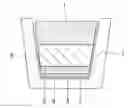
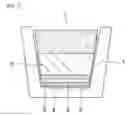
FIG. 1 is a schematic cross-sectional view showing a placement of elements in a crucible in an example according to the present invention.
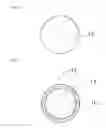
FIG. 2 is a cross-sectional view showing a carbon base material.
FIG. 3 is a cross-sectional view showing a silicon carbide-coated carbon base material.
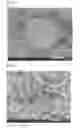
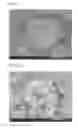
FIG. 4 is a scanning electron micrograph (2500 magnification) showing a silicon carbide-coated graphite particle in the example according to the present invention.
FIG. 5 is a scanning electron micrograph (25000 magnification) showing silicon carbide on the surface of the silicon carbide-coated graphite particle in the example according to the present invention.
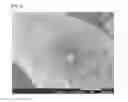
FIG. 6 is a scanning electron micrograph (2500 magnification) showing a silicon carbide-coated graphite particle in a comparative example.
FIG. 7 is a scanning electron micrograph (25000 magnification) showing silicon carbide on the surface of the silicon carbide-coated graphite particle in the comparative example.
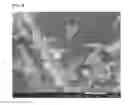
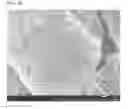
FIG. 8 is a scanning electron micrograph (25000 magnification) showing silicon carbide on the surface of the silicon carbide-coated graphite particle in the example according to the present invention.
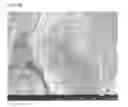
FIG. 9 is a scanning electron micrograph (25000 magnification) showing silicon carbide on the surface of the silicon carbide-coated graphite particle in the comparative example.
FIG. 10 is a scanning electron micrograph (5000 magnification) showing an uncoated graphite particle used in the example according to the present invention.
FIG. 11 is a scanning electron micrograph (2500 magnification) showing a silicon carbide-coated graphite particle in an example according to the present invention.
FIG. 12 is a scanning electron micrograph (2500 magnification) showing a silicon carbide-coated graphite particle in a comparative example.
FIG. 13 is a scanning electron micrograph (5000 magnification) showing a silicon carbide-coated graphite particle in a comparative example.
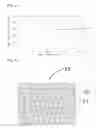
FIG. 14 is a graph showing the rate of weight reduction of the silicon carbide-coated graphite particles in the example according to the present invention plotted against heating temperature.
FIG. 15 is a schematic cross-sectional view showing a sintered silicon carbide/carbon complex according to the present invention.
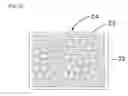
FIG. 16 is a schematic cross-sectional view showing a ceramic-coated sintered silicon carbide/carbon complex according to the present invention.
DESCRIPTION OF EMBODIMENTS
Hereinafter, the present invention will be described with reference to specific examples; however, the present invention is not limited by the following examples.
[Silicon Carbide Coating Treatment]
FIG. 1 is a schematic cross-sectional view showing a placement of elements in a crucible used in a silicon carbide coating treatment. As shown in FIG. 1, a carbon sheet 2 was placed in a graphite crucible 1 and SiO powder 3 was placed as a source of SiO on the carbon sheet 2. A layer of carbon felt 4 was placed on the SiO powder 3 and graphite particles 5 were placed as a carbon base material on the layer of carbon felt 4. A layer of carbon felt 6 was placed on the graphite particles 5 and a carbon sheet 7 was placed on the layer of carbon felt 6.
Although this example employs the graphite crucible 1, an alumina crucible may be employed.
The graphite crucible 1 placed as shown in FIG. 1 was placed in a baking furnace and the baking furnace was evacuated and heated, so that the interior of the graphite crucible 1 was heated to a predetermined temperature and evaluated to a predetermined pressure.
It can be assumed that by evacuating the interior of the graphite crucible 1 to the predetermined pressure and heating it to the predetermined temperature, SiO gas is generated from the SiO powder, and the SiO gas reacts with the surfaces of the graphite particles in the following manner so that the surfaces of the graphite particles are converted into silicon carbide, whereby silicon carbide coatings were formed on the surfaces of the graphite particles by a CVR process.
SiO(g)+C(s)→SiC(s)+CO(g) (1)
SiO(g)+3CO(g)→SiC(s)+2CO2(g) (2)
CO2(g)+C(s)→2CO(g) (3)
Comparison between CVR and CVD Processes
Example 1
Formation of Silicon Carbide Coating through CVR Process
The SiO powder used was SiO powder with an average particle size of 300 μm, and the graphite particles used were graphite particles with an average particle size of 20 μm. Using them, silicon carbide coatings were formed on the surfaces of the graphite particles in the placement state inside the crucible shown in Table 1 to produce silicon carbide-coated graphite particles. The heating temperature was 1500° C. and the heating time was two hours. The pressure was controlled to 20 Pa.
FIG. 4 is a scanning electron micrograph showing a resultant silicon carbide-coated graphite particle. FIG. 5 is a scanning electron micrograph showing a silicon carbide coating on the surface of the resultant silicon carbide-coated graphite particle.
As shown in FIGS. 4 and 5, it can be seen that a dense silicon carbide coating is uniformly formed on the surface of the graphite particle.
The rate of SiC conversion is 55% by weight and the thickness of the silicon carbide (SiC) coating is 1 μm.
FIGS. 2 and 3 are cross-sectional views for illustrating the formation of a silicon carbide coating through a CVR process. FIG. 2 shows a graphite particle 10. When SiO gas is brought into contact with the surface of the graphite particle 10 shown in FIG. 2, carbon on the surface of the graphite particle 10 and SiO gas react in the manner shown in the above Reaction Formulae (1) to (3), so that carbon on the surface is converted into silicon carbide.
FIG. 3 is a view showing the graphite particle on which a silicon carbide coating is formed through the CVR process. As shown in FIG. 3, through the reaction between carbon and SiO gas, a silicon carbide coating 11 is formed on the surface of the graphite particle 10, so that a silicon carbide-coated graphite particle 12 is formed.
FIG. 8 is a scanning electron micrograph (25000 magnification) showing an initial silicon carbide coating formed through the CVR process. As shown in FIG. 8, it can be seen that a silicon carbide coating is densely and uniformly formed.
Comparative Example 1
Formation of Silicon Carbide Coating through CVD Process
Silicon carbide-coated graphite particles were produced in the same manner as in Example 1 except that the temperature was at 1500° C. and the pressure was at 105 kPa.
FIG. 6 is a scanning electron micrograph (2500 magnification) showing a resultant silicon carbide-coated graphite particle. FIG. 7 is a scanning electron micrograph (25000 magnification) showing the surface of the resultant silicon carbide-coated graphite particle.
The silicon carbide coating is formed by the CVD process, and as shown in FIGS. 6 and 7 it is formed of relatively large particles and has many voids.
The rate of SiC conversion is 60% by weight and the thickness of the silicon carbide (SiC) coating is 2 μm.
FIG. 9 is a scanning electron micrograph (25000 magnification) showing an initial silicon carbide coating formed through the CVD process. As shown in FIG. 9, it can be seen that silicon carbide is formed preferentially at edge plane sites of the graphite particle.
[Effects of Heating Temperature]
Effects of the heating temperature were examined by employing different heating temperatures of 1200° C., 1300° C., 1400° C., 1450° C., 1500° C., 1550° C., 1600° C., 1700° C., and 1800° C. The pressure was at 20 Pa. Silicon carbide coatings were formed on the surfaces of graphite particles, the other conditions being the same as in Example 1.
Resultant silicon carbide-coated graphite particles were observed with a scanning electron micrography (SEM) to evaluate the states of silicon carbide coatings on the surfaces of the graphite particles. The evaluation results are shown in Table 1.
| TABLE 1 | |
| Heating Temperature | |
| (° C.) | Property of Silicon Carbide Coating |
| 1200 | Coating not well formed |
| 1300 | Coating not well formed |
| 1400 | Coating densely and uniformly formed |
| 1450 | Coating densely and uniformly formed |
| 1500 | Coating densely and uniformly formed |
| 1550 | Coating densely and uniformly formed |
| 1600 | Coating densely and uniformly formed |
| 1700 | Porous and coarse coating formed |
| 1800 | Porous and coarse coating formed |
As is evident from the results shown in Table 1, when the heating temperature is within the range of 1400° C. to 1600° C., a silicon carbide coating can be densely and uniformly formed. When the heating temperature is below 1400° C., a coating is not well formed. Furthermore, when the heating temperature is above 1600° C., thin film formation through the CVD process becomes dominant, so that a porous and coarse coating is formed.
FIG. 10 is a scanning electron micrograph (5000 magnification) showing a graphite particle before the formation of a silicon carbide coating thereon.
FIG. 11 is a scanning electron micrograph (2500 magnification) showing a silicon carbide-coated graphite particle in which a silicon carbide coating has been formed at a heating temperature of 1500° C.
FIG. 12 is a scanning electron micrograph (2500 magnification) showing a silicon carbide-coated graphite particle in which a silicon carbide coating has been formed at a heating temperature of 1800° C.
FIG. 13 is a scanning electron micrograph (5000 magnification) showing a silicon carbide-coated graphite particle in which a silicon carbide coating has been formed at a heating temperature of 1200° C.
[Effects of Pressure]
Silicon carbide-coated graphite particles were produced by employing a common heating temperature of 1500° C. and different pressures of 20 Pa, 50 Pa, 100 Pa, 150 Pa, and 200 Pa. Table 2 shows evaluation results regarding properties of silicon carbide coatings on the surfaces of the produced silicon carbide graphite particles.
| TABLE 2 | |
| Pressure (Pa) | Property of Silicon Carbide Coating |
| 20 | Coating densely and uniformly formed |
| 50 | Coating densely and uniformly formed |
| 100 | Coating densely and uniformly formed |
| 150 | Coating densely and uniformly formed |
| 200 | Porous and coarse coating formed |
As shown in Table 2, when the pressure is 150 Pa or below, a silicon carbide coating can be densely and uniformly formed.
When the pressure is above 150 Pa, the formation of silicon carbide coatings through the CVD process becomes dominant, so that the silicon carbide coatings are formed as porous and coarse coatings.
[Measurement of Oxidation Onset Temperature]
Thermogravimetry (TG) was conducted on silicon carbide-coated graphite particles of Example 1, silicon carbide-coated graphite particles of Comparative Example 1, and graphite particles uncoated with silicon carbide.
FIG. 14 is a graph plotted between heating temperature and rate of weight reduction. As shown in FIG. 14, the silicon carbide-coated graphite particles of Example 1 according to the present invention exhibited an oxidation onset temperature of 750° C. or above. On the other hand, the silicon carbide-coated graphite particles of Comparative Example 1 exhibited an oxidation onset temperature of 700° C. Furthermore, the oxidation onset temperature of the uncoated graphite particles was approximately 550° C.
It was confirmed that for the silicon carbide-coated graphite particles of Example 1, the rate of weight reduction upon heating in air at 650° C. for an hour was below 5% by weight.
[Production of Sintered Silicon Carbide/Carbon Complex]
A sintered silicon carbide/carbon complex was produced using the silicon carbide-coated graphite particles of Example 1. The sintered silicon carbide/carbon complex was produced by subjecting the silicon carbide-coated graphite particles to pressure sintering with a high-current discharge joining system (“SPS-1050” produced by Sumitomo Coal Mining Co., Ltd.). With the use of this system, the graphite particles were sintered by spark plasma sintering. Spark plasma sintering is a process for sintering powder not only by direct heating through the passage of electric current but also by generation of electric current impulse through the passage of pulsed electric current, whereby powder can be sintered at lower temperatures than normal.
In this case, the sintered complex was produced by heat application at 2000° C. for 20 minutes under a pressure of 40 MPa.
FIG. 15 is a schematic cross-sectional view showing a sintered silicon carbide/carbon complex. As shown in FIG. 15, the sintered silicon carbide/carbon complex 22 has a silicon carbide interfacial layer 21 around graphite particles 20. The silicon carbide interfacial layer 21 is provided continuously in the form of a three-dimensional network in the sintered silicon carbide/carbon complex 22. Since the silicon carbide-coated graphite particles of the present invention have silicon carbide coatings formed densely and uniformly on the surfaces, the production of a sintered complex using the silicon carbide-coated graphite particles results in the formation of a continuous silicon carbide interfacial layer 21 with a uniform thickness around the graphite particles 20.
Furthermore, since dense and uniform silicon carbide coatings are formed on the surfaces of the graphite particles, a sintered complex can be produced at a low temperature of 2200° C. or below without the use of any sintering aid.
The bending strength of the resultant sintered complex was 150 MPa and the bulk density thereof was 2.52 g/cm3. Since the rate of SiC conversion of the silicon carbide-coated graphite particles of Example 1 is 55% by weight, the theoretical density of the sintered complex is 2.62 g/cm3 and the relative density thereof is 96%.
Furthermore, since no sintering aid is used, the total content of Al, Be, B, and Sa is below 0.1% by weight.
When the resultant sintered complex was measured in term of varistor characteristic, an I-V characteristic graph typical for varistor characteristic was obtained.
[Production of Ceramic-Coated Sintered Silicon Carbide/Carbon Complex]
FIG. 16 is a schematic cross-sectional view showing a ceramic-coated sintered silicon carbide/carbon complex of an embodiment according to the present invention.
As shown in FIG. 16, a ceramic-coated sintered silicon carbide/carbon complex 24 of this embodiment is constituted by providing a ceramic coating layer 23 on the surface of a sintered silicon carbide/carbon complex 22. Although in this embodiment the ceramic coating layer 23 is provided on the entire surface of the sintered silicon carbide/carbon complex 22, the ceramic coating layer 23 in the present invention is not necessarily provided on the entire surface of the sintered silicon carbide/carbon complex 22 and only has to be provided on at least a portion of the surface thereof. For example, the ceramic coating layer 23 may be provided only on either one of the top, bottom, and side surfaces of the sintered silicon carbide/carbon complex 22.
The ceramic coating layer 23 can be formed from ceramics including oxides, carbides, and nitrides. The ceramic material forming the ceramic coating layer 23 may be silicon carbide or another type of ceramic material. The composition of the ceramic coating layer 23 may change from the inner portion toward the outer portion. In this case, it is also possible that the inner portion of the ceramic coating layer 23 has a composition close to silicon carbide and the rest thereof has gradually changing compositions from the inner portion toward the outer portion.
An example of a method for forming the ceramic coating layer 23 is a method in which a yet-to-be-fired green compact for a sintered silicon carbide/carbon complex 22 is formed, a layer of ceramic powder for forming the ceramic coating layer 23 is provided on at least a portion of the surface of the green compact, and in this state the sintered silicon carbide/carbon complex 22 and the ceramic coating layer 23 are integrally formed by sintering.
In this case, the ceramic coating layer 23 may be formed of a plurality of layers and have different compositions in the direction of the thickness. Thus, the adhesion between the sintered silicon carbide/carbon complex 22 and the ceramic coating layer 23 can be increased to improve properties, such as the strength as a whole.
Furthermore, the ceramic powder used for forming the ceramic coating layer 23 may be a mixture of silicon carbide powder and one or more other types of powder. Thus, the adhesion between the ceramic coat layer 23 and the sintered silicon carbide/carbon complex 22 can be increased to improve properties, such as strength.
An alternative example of the method for forming the ceramic coating layer 23 is a method in which a sintered silicon carbide/carbon complex 22 is produced, a sintered ceramic sheet or a ceramic single crystal sheet is placed on at least a portion of the surface of the sintered complex, and the sintered ceramic sheet or single crystal sheet is joined to the surface of the sintered silicon carbide/carbon complex 22. Specific example of the method for joining include hot press, spark plasma sintering, and welding heating.
Alternatively, the ceramic coating layer 23 can be formed by using the sintered silicon carbide/carbon complex as a substrate and coating the substrate with ceramics by a normal CVD process or a reactive sputtering process.
REFERENCE SIGNS LIST
-
- 1 . . . Graphite crucible
- 2 . . . Carbon sheet
- 3 . . . SiO powder
- 4 . . . Layer of carbon felt
- 5 . . . Graphite particle
- 6 . . . Layer of carbon felt
- 7 . . . Carbon sheet
- 10 . . . Graphite particle
- 11 . . . Silicon carbide coating
- 12 . . . Silicon carbide-coated graphite particle
- 20 . . . Graphite particle
- 21 . . . Silicon carbide interfacial layer
- 22 . . . Sintered silicon carbide/carbon complex
- 23 . . . Ceramic coating layer
- 24 . . . Ceramic-coated sintered silicon carbide/carbon complex
Claims
1. A process for production of a silicon carbide-coated carbon base material, the process comprising the steps of:
preparing a carbon base material the surface of which has basal plane sites of an SP2 carbon structure with no dangling bond and edge plane sites of an SP2 carbon structure with a dangling bond; and
reacting the surface of the carbon base material with SiO gas in an atmosphere at a temperature of 1400° C. to 1600° C. and a pressure of 1 to 150 Pa to form silicon carbide, whereby the carbon base material coated with silicon carbide is produced.
2. The process for production of a silicon carbide-coated carbon base material according to claim 1, wherein the carbon base material is a graphite base material.
3. The process for production of a silicon carbide-coated carbon base material according to claim 1, wherein the carbon base material is carbon particles.
4. The process for production of a silicon carbide-coated carbon base material according to claim 3, wherein the average particle size of the carbon particles is within the range of 50 nm to 500 μm.
5. The process for production of a silicon carbide-coated carbon base material according to claim 1, wherein the SiO gas is generated from a source of SiO placed together with the carbon base material.
6. The process for production of a silicon carbide-coated carbon base material according to claim 5, wherein the carbon base material and the source of SiO are placed in a reaction container and the reaction container is placed in a baking furnace, so that the interior of the reaction container is heated and evacuated.
7. A silicon carbide-coated carbon base material being a carbon base material surface-coated with a layer of silicon carbide by reacting the surface of the carbon base material having basal plane sites of an SP2 carbon structure with no dangling bond and edge plane sites of an SP2 carbon structure with a dangling bond with a silicon component to form silicon carbide,
wherein the thickness of the layer of silicon carbide is 20 μm or less.
8. The silicon carbide-coated carbon base material according to claim 7, wherein the thickness of the layer of silicon carbide is within the range of 1 nm to 20 μm.
9. The silicon carbide-coated carbon base material according to claim 7, wherein the carbon base material is a graphite base material.
10. The silicon carbide-coated carbon base material according to claim 7, wherein the carbon base material is carbon particles.
11. The silicon carbide-coated carbon base material according to claim 10, wherein the average particle size of the carbon particles is within the range of 50 nm to 500 μm.
12. The silicon carbide-coated carbon base material according to claim 10, wherein a weight reduction thereof upon heating in air at 650° C. for an hour is below 5% by weight.
13. A silicon carbide-coated carbon base material produced by the process according to claim 1.
14. A sintered silicon carbide/carbon complex obtained by sintering carbon base material particles coated with silicon carbide,
wherein the relative density of the sintered silicon carbide/carbon complex is 90% to 100% and the total content of Al, Be, B, and Se therein is below 0.1% by weight.
15. The sintered silicon carbide/carbon complex according to claim 14, wherein the carbon base material particles are graphite particles.
16. The sintered silicon carbide/carbon complex according to claim 14, wherein the average particle size of the carbon base material particles is within the range of 50 nm to 500 μm.
17. The sintered silicon carbide/carbon complex according to claim 14, wherein the thickness of the layer of silicon carbide is within the range of 1 nm to 20 μm.
18. A sintered silicon carbide/carbon complex obtained by sintering the silicon carbide-coated carbon base material according to claim 10.
19. A ceramic-coated sintered silicon carbide/carbon complex in which a ceramic coating layer is formed on at least a portion of the surface of the sintered silicon carbide/carbon complex according to claim 14.
20. A process for production of the sintered silicon carbide/carbon complex according to claim 14,
wherein the sintering is performed at a temperature of 2200° C. or below.
21. The process for production of the sintered silicon carbide-carbon complex according to claim 20, wherein the sintering is performed without the use of any sintering aid.
Images & Drawings included:
Sources:
- United States Patent and Trademark Office - verify current appl. status at the USPTO↗
Recent applications in this class:
- » 20250289768 2025-09-18
CERAMIC THERMAL SPRAY COATING MATERIAL AND METHOD FOR MANUFACTURING OF THE SAME - » 20250074835 2025-03-06
Coating Repair for Ceramic Matrix Composite (CMC) Substrates - » 20240425423 2024-12-26
COMPOSITE COMPONENT WITH ENVIRONMENTAL PROTECTION - » 20240327307 2024-10-03
Coil component and method for manufacturing coil component - » 20240279128 2024-08-22
Methods for Joining Composite Components to Form a Unitary Composite Component - » 20240190778 2024-06-13
Method for Enhancing Mechanical Properties in Sintered Ceramic Bodies Having Applications in Dental Restorations - » 20240190777 2024-06-13
COMPOSITION AND METHOD FOR GENERATING A SHADE GRADIENT IN ZIRCONIA DENTAL RESTORATION - » 20240116827 2024-04-11
SELF-CLEANING CEMENTITIOUS SYSTEM AND METHOD - » 20240034690 2024-02-01
Polychromatic Zirconia Bodies and Methods of Making the Same - » 20230159400 2023-05-25
Coloured fiber cement products and methods for the production thereof
Recent applications for this Assignee:
- » 20250146196 2025-05-08
C/C COMPOSITE AND ION ENGINE GRID - » 20240210114 2024-06-27
HEAT RESISTANT STRUCTURE AND MEMBER FOR HEAT TREATMENT FURNACE - » 20240204210 2024-06-20
CARBON CARRIER FOR FUEL CELL CATALYST AND FUEL CELL CATALYST - » 20230150888 2023-05-18
C/C COMPOSITE AND METHOD FOR PRODUCING SAME, AND HEAT-TREATMENT JIG AND METHOD FOR PRODUCING SAME - » 20220328846 2022-10-13
Supported platinum catalyst, cathode for fuel cell, fuel cell, and method for producing supported platinum catalyst - » 20220127147 2022-04-28
Method of producing porous carbon, and electrode and catalyst carrier containing porous carbon produced by the method - » 20220002905 2022-01-06
METHOD FOR MANUFACTURING DEVICE FABRICATION WAFER - » 20210375663 2021-12-02
SUSCEPTOR - » 20210375613 2021-12-02
SiC WAFER MANUFACTURING METHOD - » 20210301421 2021-09-30
SiC wafer and manufacturing method for SiC wafer