Elevated platform systems including fiber reinforced composite panels
US20120159867A1
2012-06-28
13/408,351
2012-02-29
✅ Patent granted
US 8,393,116 B2
2013-03-12
-
-
Brian Glessner | Omar Hijaz
Dinsmore & Shohl LLP
2032-02-29
Abstract:
An elevated platform system includes a base support structure and a plurality of fiber reinforced polymer composite panels. The base support structure includes pilings secured to a ground surface and attachment cradles coupled to the pilings. The attachment cradles are in electrical continuity with the ground surface. The fiber reinforced polymer composite panels include a panel body portion, fibrous material surrounding the panel body portion, a non-conductive matrix forming at least a portion of an outer-most layer of the fiber reinforced polymer composite panel, and an electrically-conductive layer at least partially embedded in the non-conductive matrix. The fiber reinforced polymer composite panels are coupled to the attachment cradles, such that the electrically-conductive layer of the fiber reinforced polymer composite panel is in electrical continuity with the ground surface.
Inventors:
- Shawn Beamish 7 🇨🇦 Edmonton, Canada
- Scott R. Reeve 3 🇺🇸 Dayton, OH, United States
- Andrew K. Loff 2 🇺🇸 Huber Heights, OH, United States
Assignee:
- Composite Advantage, LLC 2 🇺🇸 Dayton, OH, United States
- CANADIAN MAT SYSTEMS, INC. 1 🇨🇦 Edmonton, Canada
Applicant:
Interested in similar patents?
Get notified when new applications in this technology area are published.
Classification:
E04D13/00 IPC
Special arrangements or devices in connection with roof coverings; Protection against birds ; Roof drainage; Sky-lights
E21B41/00 » CPC main
Equipment or details not covered by groups -
Y10T428/24994 » CPC further
Stock material or miscellaneous articles; Web or sheet containing structurally defined element or component; Noninterengaged fiber-containing paper-free web or sheet which is not of specified porosity Fiber embedded in or on the surface of a polymeric matrix
Y10T428/249948 » CPC further
Stock material or miscellaneous articles; Web or sheet containing structurally defined element or component; Noninterengaged fiber-containing paper-free web or sheet which is not of specified porosity; Fiber embedded in or on the surface of a polymeric matrix Fiber is precoated
Y10T428/24995 » CPC further
Stock material or miscellaneous articles; Web or sheet containing structurally defined element or component; Noninterengaged fiber-containing paper-free web or sheet which is not of specified porosity; Fiber embedded in or on the surface of a polymeric matrix Two or more layers
Y10T428/25 » CPC further
Stock material or miscellaneous articles Web or sheet containing structurally defined element or component and including a second component containing structurally defined particles
Y10T442/109 » CPC further
Fabric [woven, knitted, or nonwoven textile or cloth, etc.]; Scrim [e.g., open net or mesh, gauze, loose or open weave or knit, etc.]; Woven scrim Metal or metal-coated fiber-containing scrim
Y10T442/188 » CPC further
Fabric [woven, knitted, or nonwoven textile or cloth, etc.]; Scrim [e.g., open net or mesh, gauze, loose or open weave or knit, etc.]; Nonwoven scrim Metal or metal-coated fiber-containing scrim
Y10T442/339 » CPC further
Fabric [woven, knitted, or nonwoven textile or cloth, etc.]; Woven fabric [i.e., woven strand or strip material]; Including a free metal or alloy constituent Metal or metal-coated strand
Y10T442/655 » CPC further
Fabric [woven, knitted, or nonwoven textile or cloth, etc.]; Nonwoven fabric [i.e., nonwoven strand or fiber material]; Including a free metal or alloy constituent Metal or metal-coated strand or fiber material
E04H14/00 IPC
Buildings for combinations of different purposes not covered in a single previous group of this subclass, e.g. for double purpose ; Buildings of the drive-in type
E04D13/064 IPC
Special arrangements or devices in connection with roof coverings; Protection against birds ; Roof drainage; Sky-lights; Roof drainage; Drainage fittings in flat roofs, balconies or the like Gutters
B32B27/04 IPC
Layered products comprising synthetic resin as impregnant, bonding, or embedding substance
B32B5/16 IPC
Layered products characterised by the non- homogeneity or physical structure, i.e. comprising a fibrous, filamentary, particulate or foam layer; Layered products characterised by having a layer differing constitutionally or physically in different parts characterised by features of a layer formed of particles, e.g. chips, powder or granules
D03D15/00 IPC
Woven fabrics characterised by the material, structure or properties of the fibres, filaments, yarns, threads or other warp or weft elements used
D03D9/00 IPC
Open-work fabrics
D04H3/00 IPC
Non-woven fabrics formed wholly or mainly of yarns or like filamentary material of substantial length
D04H1/00 IPC
Non-woven fabrics formed wholly or mainly of staple fibres or like relatively short fibres
E04H3/10 IPC
Buildings or groups of buildings for public or similar purposes; Institutions, e.g. infirmaries, prisons for meetings, entertainments, or sports
E04B1/98 IPC
Constructions in general; Structures which are not restricted either to walls, e.g. partitions, or floors or ceilings or roofs; Insulation or other protection; Elements or use of specified material therefor; Protection against other undesired influences or dangers against vibrations or shocks ; against mechanical destruction, e.g. by air-raids
E02D27/00 IPC
Foundations as substructures
E04B1/70 IPC
Constructions in general; Structures which are not restricted either to walls, e.g. partitions, or floors or ceilings or roofs; Insulation or other protection; Elements or use of specified material therefor Drying or keeping dry, e.g. by air vents
E04F15/22 IPC
Flooring Resiliently-mounted floors, e.g. sprung floors
Description
CROSS-REFERENCE TO RELATED APPLICATIONS
This application is a continuation of PCT Application Serial No. PCT/US 11/54192 filed Sep. 30, 2011, titled “Elevated Platform Systems Including Fiber Reinforced Composite Panels” which claims priority to U.S. Provisional Application Ser. No. 61/388,133 filed Sep. 30, 2010, titled “Composite Panels and Drilling Platforms Incorporating Composite Panels.”
BACKGROUND
The present disclosure is generally directed to elevated platform systems including reinforced composite panels and, more particularly, elevated platform systems including static electricity dissipative features.
SUMMARY
Elevated platforms provide a base for oil exploration equipment to be stabilized during drilling operations. The elevated platforms reduce environmental impact to the ground surface surrounding the drilling area by minimizing contact between the oil exploration equipment and the ground surface itself.
The inventors have identified that elevated platform systems that include fiber reinforced polymer composite panels are well suited for oil exploration applications. Fiber reinforced polymer composite panels are generally impervious to the weather and machine traffic that are experienced in such an application. Further, fiber reinforced polymer composite panels may weigh less than a comparable steel-based panel, allowing for fiber reinforced polymer composite panels to be constructed to be larger than the comparable steel-based panel. Further, the reduction in weight due to the use of fiber reinforced polymer composite panels decrease the number of support pylons that are required to be driven into the ground surface, reducing the cost of assembling an elevated platform at a oil exploration site and further reducing the potential for environmental impact.
The inventors have identified that providing an electrical conduction path from the elevated platform to the ground surface may be desirable. Such an electrical conduction path dissipates any static electricity that builds on the surface of the fiber reinforced polymer composite panel, and discharges the static electricity into the ground surface. Accordingly, elevated platform systems capable of discharging static electricity from a fiber reinforced polymer composite panel are desired.
In one embodiment, an elevated platform system includes a base support structure and a plurality of fiber reinforced polymer composite panels. The base support structure includes pilings secured to a ground surface and attachment cradles coupled to the pilings. The attachment cradles are in electrical continuity with the ground surface. The fiber reinforced polymer composite panels include a panel body portion, fibrous material surrounding the panel body portion, a non-conductive matrix forming at least a portion of an outer-most layer of the fiber reinforced polymer composite panel, and an electrically-conductive layer at least partially embedded in the non-conductive matrix. The fiber reinforced polymer composite panels are coupled to the attachment cradles, such that the electrically-conductive layer of the fiber reinforced polymer composite panel is in electrical continuity with the ground surface.
In another embodiment, a fiber reinforced polymer composite panel includes a panel body portion including a deck portion and a plurality of beam portions arranged along a lower deck side. Fibrous material surrounds the panel body portion and a non-conductive matrix forms at least a portion of an outer-most layer of the fiber reinforced polymer composite panel. The fiber reinforced polymer composite panel further includes an electrically-conductive layer at least partially embedded in the non-conductive matrix.
These and additional features provided by the embodiments described herein will be more fully understood in view of the following detailed description, in conjunction with the drawings.
BRIEF DESCRIPTION OF THE DRAWINGS
The embodiments set forth in the drawings are illustrative and exemplary in nature and not intended to limit the subject matter defined by the claims. The following detailed description of the illustrative embodiments can be understood when read in conjunction with the following drawings, where like structure is indicated with like reference numerals and in which:
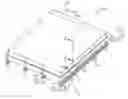
FIG. 1 depicts a perspective side view of an elevated platform system according to one or more embodiments shown and described herein;
FIG. 2 depicts a sectional side view of the elevated platform system of FIG. 1 along line A-A;
FIG. 3 depicts a sectional side view of a fiber reinforced polymer composite panel of an elevated platform system of FIG. 2 along line C-C; and
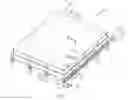
FIG. 4 depicts a sectional side view of the elevated platform system of FIG. 1 along line B-B.
DETAILED DESCRIPTION
Referring to FIG. 1, an elevated platform system incorporating fiber reinforced polymer composite panels is depicted. The elevated platform system includes a base support structure that is secured to a ground surface, and a plurality of fiber reinforced polymer composite panels that are secured to the base support structure. The fiber reinforced polymer composite panels include an electrically-conductive layer that is at least partially embedded in a non-conductive matrix. When the fiber reinforced polymer composite panels are coupled to the base support structure, the electrically-conductive layers of the fiber reinforced polymer composite panels are in electrical continuity with the ground surface. The elevated platform system will be described in more detail herein with specific reference to the appended drawings.
Referring to FIGS. 1 and 2 in detail, the elevated platform system 200 includes a base support structure 210 and a plurality of fiber reinforced polymer composite panels 100 coupled to the base support structure 210. The base support structure 210 includes pilings 216 that are affixed to a ground surface. The pilings 216 are driven a depth into the ground surface such that the pilings 216. The base support structure 210 also includes beams 212 that extend across and are coupled to multiple pilings 216. At locations along the beams 212, attachment cradles 214 are coupled to the beams 212. The attachment cradles 214 allow for the fiber reinforced polymer composite panels 100 to be secured to the pilings 216. As illustrated in FIGS. 1 and 2, the attachment cradles 214 have an upwards facing “U” shape. However, other shapes and attachment methods are contemplated.
The attachment cradles 214 are in electrical continuity with the ground surface 80. In the embodiment illustrated in FIGS. 1 and 2, the attachment cradles 214, the beams 212, and the pilings 216 are all made from electrically-conducting materials, for example steel or aluminum. In another embodiment, the attachment cradles 214 may be electrically coupled with the ground surface 80 by a grounding wire. In this embodiment, the beams 212 and/or the pilings 216 may be made from electrically insulating materials.
The fiber reinforced polymer composite panels 100 are shown in schematic detail in FIGS. 2 and 3. The fiber reinforced polymer composite panels 100 include a panel body portion 132, fibrous material 134 surrounding the panel body portion 132, and a non-conductive matrix 136 forming at least a portion of an outer-most layer of the fiber reinforced polymer composite panel 100. The non-conductive matrix 136 comprises a single or multi-component matrix of single or multi-layer construction. The fiber reinforced polymer composite panels 100 further includes an electrically-conductive layer 135 that is at least partially embedded in the non-conductive matrix 136.
In some embodiments, the electrically-conductive layer 135 includes a metallic mesh, for example, a copper or an aluminum mesh. In other embodiments, the electrically-conductive layer 135 includes a carbon-based veil, or a non-woven carbon fabric. In yet other embodiments, the electrically-conductive layer 135 includes electrically-conductive particles dispersed in the non-conductive matrix 136. Examples of such electrically-conductive particles include iron-alloy filings, carbon powder, and nanocomposite additives.
Embodiments of the fiber reinforced polymer composite panels 100 illustrated in FIGS. 1 and 2 include a deck portion 130 and beam portions 140 extending from the lower deck side 139 of the deck portion 130. The beam portions 140 may provide additional strength to the fiber reinforced polymer composite panels 100 and may increase the loading capable of being supported by the elevated platform system 200. Other embodiments of the fiber reinforced polymer composite panels 100 may include only deck portions 130, without beam portions 140.
In general, the fiber reinforced polymer composite panels 100 may be manufactured using a vacuum resin infusion process. Dry fibrous material 134, for example fiber glass, is sandwiched around a panel body portion 132. The panel body portion 132 can be any suitable internal core material. Upon completion of the dry fibrous material 134 lay-up, a polymeric bag material is seal over the entire dry assembly and a vacuum is pulled. Wet (i.e., uncured) non-conductive matrix 136 material, for example, thermoset resin including, but not limited to, vinyl ester resin, polyester resin, or epoxy resin, is then pushed through the dry material held captive under vacuum in the polymeric bag. Atmospheric pressure encourages wetting of the dry fibrous material 134 by the wet non-conductive matrix 136 material. Once the resin is completely infused into the fibrous material 134, the non-conductive matrix 136 cures and solidifies. Depending on the design of the fiber reinforced polymer composite panels 100, the above-described manufacturing process can be subsequently repeated to attach additional sub-components that form the fiber reinforced polymer composite panels 100.
Fiber reinforced polymer composite panels 100 manufactured according to the above-described method may have significant practical advantages over a steel-based panel. The fiber reinforced polymer composite panels 100 are modular and easily movable due to their light weight (approximately 8-35 pounds per square foot), while being able to maintain a concentrated loading of 20-200 pounds per square inch. The fiber reinforced polymer composite panels 100 can be removed and relocated depending on usage requirements, and the equipment required to move the fiber reinforced polymer composite panels 100 can be relatively light-duty, as the weight of the fiber reinforced polymer composite panels 100 does not necessitate being lifted by heavy-duty equipment. Further, the elevated platform system 200 including the fiber reinforced polymer composite panels 100 can easily be transported using a variety of methods, including being lifted by helicopter, to otherwise inaccessible regions.
In embodiments of the fiber reinforced polymer composite panels 100 having electrically-conductive layers 135 that include a metallic mesh or a carbon-based veil, the electrically-conductive layers 135 are added to the dry fibrous material 134 during the lay-up. As the non-conductive matrix 136 material cures and solidifies, the electrically-conductive layers 135 will be integrated into the fiber reinforced polymer composite panels 100. In embodiments of the fiber reinforced polymer composite panels 100 having electrically-conductive layers 135 that include electrically-conductive particles dispersed in the non-conductive matrix 136, the electrically-conductive particles are mixed with the wet non-conductive matrix 136 material before it is introduced to the fibrous material 134. Portions of the non-conductive matrix 136 may be removed from the fiber reinforced polymer composite panels 100 in order to expose the electrically-conductive layers 135. After the portions of the non-conductive matrix 136 are removed from the fiber reinforced polymer composite panels 100, the electrically-conductive layers 135 will be at least partially embedded in the non-conductive matrix 136.
In some embodiments of the fiber reinforced polymer composite panels 100, a combination of materials forming the electrically-conductive layers 135 may be used. For example, electrically conductive additives may be used to form the electrically-conductive layer 135 along the upper deck side 138 of the fiber reinforced polymer composite panels 100, while metallic mesh or a carbon-based veil are incorporated into the regions of the fiber reinforced polymer composite panels 100 that contact the attachment cradles 214.
Referring to FIG. 3, a wear surface 137 may be incorporated into the non-conductive matrix 136 along an upper deck side 138 of the fiber reinforced polymer composite panels 100. The wear surface 137 may be applied to the upper deck side 138 of the fiber reinforced polymer composite panels 100 in a liquid thermoset resin that is allowed to cure and solidify to form an upper surface of the fiber reinforced polymer composite panels 100. Additionally, electrically-conductive particles may be introduced to the liquid thermoset resin that contains the wear surface 137, allowing static electricity to dissipate along the electrically-conductive layers 135. The wear surface 137 provides a toughened surface over which equipment can be moved without damaging the underlying surfaces of the fiber reinforced polymer composite panels 100.
Further, the fiber reinforced polymer composite panels 100 may include electric heater coils 141 embedded in the non-conductive matrix 136 along the upper deck side 138. Electrical current may be introduced to the electric heater coils 141 to increase the temperature of the upper deck side 138 of the fiber reinforced polymer composite panels 100. The increased temperature of the upper deck side 138 of the fiber reinforced polymer composite panels 100 encourages melting of snow and/or ice.
Referring now to FIG. 4, the fiber reinforced polymer composite panels 100 may include drainage gutter portions 131. As illustrated, the drainage gutter portions 131 are located along the upper deck side 138 of the fiber reinforced polymer composite panels 100. The drainage gutter portions 131 allow for collection of liquids, for example, precipitation or spillage from an oil drilling process. The drainage gutter portions 131 may be interconnected as to direct any collected liquids away from the elevated platform system 200 and towards a liquid collection tank 230, as illustrated in FIG. 1. The liquid collection tank 230 is in fluid communication with the drainage gutter portions 131. Thus, any liquid that collects on the fiber reinforced polymer composite panels 100 of the elevated platform system 200 is collected in the liquid collection tank 230, and not prevented from being introduced to the environment.
Additionally, the elevated platform system 200 further includes a seal member 180 that forms a fluid-tight seal between adjacent fiber reinforced polymer composite panels 100. The seal member 180 may prevent any direct leakage of liquids from the top of the fiber reinforced polymer composite panels 100 to the environment.
As discussed hereinabove in regard to FIG. 3, some embodiments of the fiber reinforced polymer composite panels 100 include electric heater coils 141 along the upper deck side 138. For these embodiments, the fiber reinforced polymer composite panels 100 further include electrical connectors 172 that are in electrical continuity with the electric heater coils 141. The electrical connectors 172 may be located along the fiber reinforced polymer composite panels 100 such that electrical connectors 172 of adjacent fiber reinforced polymer composite panels 100 are in electrical continuity with one another.
The elevated platform system 200 may also include lifting features 150 that improve maneuverability and assembly of the fiber reinforced polymer composite panels 100. The lifting features 150 include lifting inserts 152 that are incorporated into the panel body portion 132 of the fiber reinforced polymer composite panels 100. The lifting features 150 may include eye-bolts 154 that can be secured to the lifting inserts 152. Lifting equipment can be secured to the eye-bolt 154, which allows for extraction of the fiber reinforced polymer composite panels 100 away from the base support structure 210 of the elevated platform system 200.
Referring back to FIG. 1, the elevated platform system 200 further includes a railing system 160 arranged around the periphery of the plurality of fiber reinforced polymer composite panels 100. The railing system 160 includes a plurality of stanchions 162 that are coupled to and extend from the fiber reinforced polymer composite panels 100, and a guard rail 164 that extends between the stanchions 162. The guard rail 164 may take the form of a guy-wire that extends along a side of the plurality of stanchions 162. The railing system 160 may be removed from the elevated platform system 200 on demand to allow for repositioning of equipment along the elevated platform system 200 or to ease snow or other debris removal from the plurality of fiber reinforced polymer composite panels 100.
Referring again to FIG. 2, when the elevated platform system 200 is assembled, the fiber reinforced polymer composite panels 100 are secured to the pilings 216 by coupling the fiber reinforced polymer composite panels 100 to the attachment cradles 214. Vibration damping cushions 220 are placed between the fiber reinforced polymer composite panels 100 and the attachment cradles 214 to provide compliance between the fiber reinforced polymer composite panels 100 and the attachment cradles 214. In some embodiments, the vibration damping cushions 220 are formed from an electrically-insulating material, for example, neoprene.
The fiber reinforced polymer composite panels 100 are positioned relative to the attachment cradles 214 such that the electrically-conductive layer 135 is in electrical continuity with the attachment cradles 214, and therefore the ground surface 80. The fiber reinforced polymer composite panels 100, therefore, do not require attachment of a separate “grounding strap” to place the fiber reinforced polymer composite panels 100 in electrical continuity with the ground surface 80. Instead, because of the attachment scheme provided by the base support structure 210, when the fiber reinforced polymer composite panels 100 are secured to the base support structure 210, the panels themselves are in electrical continuity with the ground surface 80.
This may be beneficial to users of elevated platform systems for oil exploration, as fiber reinforced polymer composite panels 100 are regularly removed and replaced throughout a platform to access different areas of the ground surface 80. Thus, users of the elevated platform system 200 according to the present disclosure do not have to electrically connect the electrically-conductive layer 135 to the ground surface 80 in a separate step, thereby eliminating the possibility that the fiber reinforced polymer composite panel 100 will be electrically isolated from the ground surface 80.
It is noted that the terms “substantially” and “about” may be utilized herein to represent the inherent degree of uncertainty that may be attributed to any quantitative comparison, value, measurement, or other representation. These terms are also utilized herein to represent the degree by which a quantitative representation may vary from a stated reference without resulting in a change in the basic function of the subject matter at issue.
While particular embodiments have been illustrated and described herein, it should be understood that various other changes and modifications may be made without departing from the spirit and scope of the claimed subject matter. Moreover, although various aspects of the claimed subject matter have been described herein, such aspects need not be utilized in combination. It is therefore intended that the appended claims cover all such changes and modifications that are within the scope of the claimed subject matter.
Claims
What is claimed is:1. An elevated platform system comprising a base support structure and a plurality of fiber reinforced polymer composite panels, wherein:
the base support structure comprises pilings secured to a ground surface and attachment cradles coupled to the pilings;
the attachment cradles are in electrical continuity with the ground surface;
the fiber reinforced polymer composite panels comprise a panel body portion, fibrous material surrounding the panel body portion, a non-conductive matrix forming at least a portion of an outer-most layer of the fiber reinforced polymer composite panel, and an electrically-conductive layer at least partially embedded in the non-conductive matrix; and
the fiber reinforced polymer composite panels are coupled to the attachment cradles, such that the electrically-conductive layers of the fiber reinforced polymer composite panels are in electrical continuity with the ground surface.
2. The elevated platform system of claim 1, wherein the non-conductive matrix comprises a single or multi-component matrix of single or multi-layer construction.
3. The elevated platform system of claim 1, wherein the electrically-conductive layer comprises a metallic mesh.
4. The elevated platform system of claim 1, wherein the electrically-conductive layer comprises a carbon-based veil.
5. The elevated platform system of claim 1, wherein the electrically-conductive layer comprises electrically-conductive particles dispersed in the non-conductive matrix.
6. The elevated platform system of claim 1, wherein the fiber reinforced polymer composite panels further comprise a lifting insert incorporated into the panel body portion.
7. The elevated platform system of claim 1, wherein the non-conductive matrix comprises a wear surface located along an upper deck side of the fiber reinforced polymer composite panels.
8. The elevated platform system of claim 1 further comprising a seal member forming a fluid-tight seal between adjacent fiber reinforced polymer composite panels.
9. The elevated platform system of claim 1, wherein the fiber reinforced polymer composite panel further comprises a drainage gutter portion.
10. The elevated platform system of claim 9 further comprising a liquid collection tank in fluid communication with the drainage gutter portions of the fiber reinforced polymer composite panels.
11. The elevated platform system of claim 1 further comprising a railing system comprising a plurality of stanchions coupled to and extending from the fiber reinforced polymer composite panels and a guard rail extending between the stanchions.
12. The elevated platform system of claim 1, wherein the fiber reinforced polymer composite panel further comprises an electric heater coil located along an upper deck side.
13. The elevated platform system of claim 12, wherein:
the fiber reinforced polymer composite panels further comprise an electrical connector in electrical continuity with the electric heater coil; and
the electrical connectors of adjacent fiber reinforced polymer composite panels are in electrical continuity with one another.
14. The elevated platform system of claim 1 further comprising a vibration damping cushion located between the fiber reinforced polymer composite panels and the attachment cradles.
15. The elevated platform system of claim 14, wherein the vibration damping cushion comprises an electrically-insulative material.
16. A fiber reinforced polymer composite panel comprising:
a panel body portion comprising a deck portion and a plurality of beam portions arranged along a lower deck side;
fibrous material surrounding the panel body portion;
a non-conductive matrix forming at least a portion of an outer-most layer of the fiber reinforced polymer composite panel; and
an electrically-conductive layer at least partially embedded in the non-conductive matrix.
17. The fiber reinforced polymer composite panel of claim 16, wherein the non-conductive matrix comprises a wear surface located along an upper deck side of the deck portion.
18. The fiber reinforced polymer composite panel of claim 16, wherein the electrically-conductive layer comprises a metallic mesh.
19. The fiber reinforced polymer composite panel of claim 16, wherein the electrically-conductive layer comprises a carbon-based veil.
20. The fiber reinforced polymer composite panel of claim 16, wherein the electrically-conductive layer comprises electrically-conductive particles dispersed in the non-conductive matrix.
Images & Drawings included:



Sources:
- United States Patent and Trademark Office - verify current appl. status at the USPTO↗
Recent applications in this class:
- » 20250257631 2025-08-14
METHODS EMPLOYING DISTRIBUTED TEMPERATURE SENSING AND DISTRIBUTED ACOUSTIC SENSING FOR GEOTHERMAL WELL PLANNING AND DEVELOPMENT - » 20250146384 2025-05-08
DRILLING RIG WITH ATTACHED LIGHTING SYSTEM AND METHOD - » 20250084734 2025-03-13
NUCLEAR REACTOR INTEGRATED OIL AND GAS PRODUCTION SYSTEMS AND METHODS OF OPERATION - » 20250067149 2025-02-27
MULTIWELL STRUCTURE DRILLING FRAMEWORK - » 20250052133 2025-02-13
Automated System and Process for Vertically Assembling and Disassembling A Wireline Bottom Hole Assembly - » 20250034969 2025-01-30
WELLHEAD CONTAINER FOR A GEOTHERMAL SYSTEM - » 20250027385 2025-01-23
AUTOMATED TOOLS RECOMMENDER SYSTEM FOR WELL COMPLETION - » 20240401438 2024-12-05
MONITORING SYSTEM AND METHOD FOR WELLSITE EQUIPMENT - » 20240401437 2024-12-05
EQUIPMENT, METHOD & COMPUTER PROGRAM PRODUCT - » 20240392653 2024-11-28
AUTONOMOUS CHEMICAL TREATMENT SYSTEM AND METHOD FOR DRILLING AND COMPLETION RIGS
Recent applications for this Assignee:
- » 20170298584 2017-10-19
Heated Platform Systems