Adsorption of volatile organic compounds derived from organic matter
US20120160100A1
2012-06-28
13/381,776
2010-07-02
✅ Patent granted
US 8,900,348 B2
2014-12-02
WO; PCT/GB2010/051095; 20100702
WO; WO2011/001186; 20110106
Frank Lawrence
Young & Thompson
2031-01-03
Abstract:
The present invention relates to the use of palladium doped ZSM-5 to adsorb volatile organic compounds (VOCs) derived from organic matter, wherein the Si:Al ratio of the ZSM-5 is less than 5 or equal to 100:1, and wherein the palladium doped ZSM-5 is used in an environment comprising less than 10 vol % of oxygen.
Inventors:
- Andrew William John SMITH 4 🇬🇧 READING, United Kingdom
- Elizabeth Rowsell 3 🇬🇧 Hampton, United Kingdom
- Stephen Poulston 1 🇬🇧 Ascot, United Kingdom
Assignee:
- JOHNSON MATTHEY PUBLIC LIMITED COMPANY 740 🇬🇧 London, United Kingdom
Applicant:
Interested in similar patents?
Get notified when new applications in this technology area are published.
Classification:
B01J20/02 IPC
Solid sorbent compositions or filter aid compositions; Sorbents for chromatography; Processes for preparing, regenerating or reactivating thereof comprising inorganic material
B01J20/3458 » CPC further
Solid sorbent compositions or filter aid compositions; Sorbents for chromatography; Processes for preparing, regenerating or reactivating thereof; Processes for preparing, regenerating, or reactivating; Regenerating or reactivating using a particular desorbing compound or mixture in the gas phase
A23V2250/116 » CPC further
Food ingredients; Gas Ethylene
A23B7/152 » CPC main
Preservation or chemical ripening of fruit or vegetables; Preserving or ripening with chemicals not covered by groups or in the form of gases, e.g. fumigation; Compositions or apparatus therefor in a controlled atmosphere comprising other gases in addition to CO, N, O or HO ; Elimination of such other gases
A23B7/157 » CPC further
Preservation or chemical ripening of fruit or vegetables; Preserving or ripening with chemicals not covered by groups or in the form of liquids or solids Inorganic compounds
A23L3/3427 » CPC further
Preservation of foods or foodstuffs, in general, e.g. pasteurising, sterilising, specially adapted for foods or foodstuffs by treatment with chemicals in the form of gases, e.g. fumigation; Compositions or apparatus therefor in a controlled atmosphere, e.g. partial vacuum, comprising only CO, N, O or HO in which an absorbent is placed or used
A23L3/3445 » CPC further
Preservation of foods or foodstuffs, in general, e.g. pasteurising, sterilising, specially adapted for foods or foodstuffs by treatment with chemicals in the form of gases, e.g. fumigation; Compositions or apparatus therefor in a controlled atmosphere comprising other gases in addition to CO, N, O or HO
A23V2002/00 » CPC further
Food compositions, function of food ingredients or processes for food or foodstuffs
B01J20/0225 » CPC further
Solid sorbent compositions or filter aid compositions; Sorbents for chromatography; Processes for preparing, regenerating or reactivating thereof comprising inorganic material comprising compounds of metals not provided for in Compounds of Fe, Ru, Os, Co, Rh, Ir, Ni, Pd, Pt
B01J20/186 » CPC further
Solid sorbent compositions or filter aid compositions; Sorbents for chromatography; Processes for preparing, regenerating or reactivating thereof comprising inorganic material comprising silica or silicate; Alumino-silicates; Synthetic zeolitic molecular sieves Chemical treatments in view of modifying the properties of the sieve, e.g. increasing the stability or the activity, also decreasing the activity
B01J20/28014 » CPC further
Solid sorbent compositions or filter aid compositions; Sorbents for chromatography; Processes for preparing, regenerating or reactivating thereof characterised by their form or physical properties characterised by their form
B01J20/3078 » CPC further
Solid sorbent compositions or filter aid compositions; Sorbents for chromatography; Processes for preparing, regenerating or reactivating thereof; Processes for preparing, regenerating, or reactivating Thermal treatment, e.g. calcining or pyrolizing
B01J20/3204 » CPC further
Solid sorbent compositions or filter aid compositions; Sorbents for chromatography; Processes for preparing, regenerating or reactivating thereof; Processes for preparing, regenerating, or reactivating; Impregnating or coating ; Solid sorbent compositions obtained from processes involving impregnating or coating characterised by the carrier, support or substrate used for impregnation or coating Inorganic carriers, supports or substrates
B01J20/3236 » CPC further
Solid sorbent compositions or filter aid compositions; Sorbents for chromatography; Processes for preparing, regenerating or reactivating thereof; Processes for preparing, regenerating, or reactivating; Impregnating or coating ; Solid sorbent compositions obtained from processes involving impregnating or coating characterised by the coating or impregnating layer; Inorganic material layers containing metal, other than zeolites, e.g. oxides, hydroxides, sulphides or salts
B01J20/3408 » CPC further
Solid sorbent compositions or filter aid compositions; Sorbents for chromatography; Processes for preparing, regenerating or reactivating thereof; Processes for preparing, regenerating, or reactivating; Regenerating or reactivating of aluminosilicate molecular sieves
B01J20/3483 » CPC further
Solid sorbent compositions or filter aid compositions; Sorbents for chromatography; Processes for preparing, regenerating or reactivating thereof; Processes for preparing, regenerating, or reactivating; Regenerating or reactivating by thermal treatment not covered by groups - , e.g. by heating or cooling
B01J20/28004 » CPC further
Solid sorbent compositions or filter aid compositions; Sorbents for chromatography; Processes for preparing, regenerating or reactivating thereof characterised by their form or physical properties characterised by their physical properties Sorbent size or size distribution, e.g. particle size
B01J20/2805 » CPC further
Solid sorbent compositions or filter aid compositions; Sorbents for chromatography; Processes for preparing, regenerating or reactivating thereof characterised by their form or physical properties characterised by their form Sorbents inside a permeable or porous casing, e.g. inside a container, bag or membrane
Y10S95/90 » CPC further
Gas separation: processes Solid sorbent
B01J20/18 IPC
Solid sorbent compositions or filter aid compositions; Sorbents for chromatography; Processes for preparing, regenerating or reactivating thereof comprising inorganic material comprising silica or silicate; Alumino-silicates Synthetic zeolitic molecular sieves
A23B7/148 IPC
Preservation or chemical ripening of fruit or vegetables; Preserving or ripening with chemicals not covered by groups or in the form of gases, e.g. fumigation; Compositions or apparatus therefor in a controlled atmosphere, e.g. partial vacuum, comprising only CO, N, O or HO
B01D53/04 » CPC further
Separation of gases or vapours; Recovering vapours of volatile solvents from gases; Chemical or biological purification of waste gases, e.g. engine exhaust gases, smoke, fumes, flue gases, aerosols, by adsorption, e.g. preparative gas chromatography with stationary adsorbents
B01J20/32 » CPC further
Solid sorbent compositions or filter aid compositions; Sorbents for chromatography; Processes for preparing, regenerating or reactivating thereof; Processes for preparing, regenerating, or reactivating Impregnating or coating ; Solid sorbent compositions obtained from processes involving impregnating or coating
B01J20/34 » CPC further
Solid sorbent compositions or filter aid compositions; Sorbents for chromatography; Processes for preparing, regenerating or reactivating thereof; Processes for preparing, regenerating, or reactivating Regenerating or reactivating
B01J20/28 IPC
Solid sorbent compositions or filter aid compositions; Sorbents for chromatography; Processes for preparing, regenerating or reactivating thereof characterised by their form or physical properties
B01J20/30 IPC
Solid sorbent compositions or filter aid compositions; Sorbents for chromatography; Processes for preparing, regenerating or reactivating thereof Processes for preparing, regenerating, or reactivating
Description
CROSS-REFERENCE TO RELATED APPLICATIONS
This application is the U.S. National Phase application of PCT International Application No. PCT/GB2010/051095, filed Jul. 2, 2010, and claims priority of British Patent Application No. 0911478.6, filed Jul. 2, 2009, the disclosures of both of which are incorporated herein by reference in their entireties for all purposes.
FIELD OF THE INVENTION
This invention relates to the adsorption of volatile organic compounds (VOCs) derived from organic matter in an environment which contains low or no oxygen. More particularly, the organic matter can be perishable organic goods, such as food.
BACKGROUND OF THE INVENTION
Controlled atmosphere storage of fresh produce utilizes high levels of CO2 and reduced oxygen to increase the shelf life of the product. Modified atmosphere packaging is used to enhance the lifetime and/or the quality of food by reducing the amount of oxygen (towards zero) in the atmosphere compared to air. Fresh produce tends to be packed under an equilibrium modified atmosphere which uses high levels of CO2 and reduced levels of oxygen and which allows a reduced respiration rate.
VOCs include a range of compounds that are derived from organic matter. One example of a VOC derived from organic matter is ethylene, a plant hormone that causes ripening, whilst another example is trimethylamine, a gas commonly given off by fish as it decomposes.
The removal of VOCs derived from organic matter is of interest for a variety of applications. The adsorption of ethylene can prevent undesired ripening and softening, loss of colour, loss of leaves and sprouting to occur in fruit and vegetables, it is also known to prevent other food and horticultural products from perishing prematurely, and can help eliminate unpleasant smells. Various methods have been used to oxidise or combust VOCs using Pt on Al2O3 or KMnO4. However, although these systems are efficient for the removal of VOCs, they have disadvantages associated with their use. Pt on Al2O3 works by catalytically combusting the ethylene at elevated temperatures, therefore Pt on Al2O3 needs to be used in a heated unit separate from the source of the VOCs (see for example GB 2 163 637 A and U.S. Pat. No. 4,331,693). KMnO4 does not appear to remove VOCs efficiently from humid environments. Since organic matter, such as food, cannot be heated without being altered and inherently exudes moisture such systems are unsuitable for use in removing VOCs derived from organic matter.
Other methods used to remove VOCs are suited for use at lower temperatures; these include the use of high surface area supports, usually in conjunction with a promoter, for the adsorption of VOCs. For example, JP 2-261341 relates to the adsorption of ethylene from refrigerated storage compartments, JP 2-233381 relates to an ethylene adsorption film and JP 2000-004783 relates to a combined ethylene adsorber, deodoriser and anti-bacterial product for use in a refrigerator. Specific support materials are not disclosed in any of these publications, instead activated carbon and metal oxides are stated as being generally suitable for use as supports. GB 2 252 968 A relates to an adsorber comprising a sepiolite in combination with a zeolite, and optionally a metal selected from the platinum group metals, the iron group metals, group I metals, group VII metals and the rare earth metals. The most preferred zeolites for use in the invention described in GB '968, are silicalites because their alumina content is almost zero.
WO2007/052074 relates to the use of palladium doped ZSM-5 to adsorb VOCs derived from organic matter. WO2007/052074, however, does not describe the use of the palladium doped ZSM-5 in an environment comprising low or no gaseous oxygen.
SUMMARY OF THE INVENTION
In accordance with a first aspect of the present invention, there is provided the use of palladium doped ZSM-5 to adsorb VOCs derived from organic matter, wherein the Si:Al ratio of the ZSM-5 is less than or equal to 100:1, and wherein the palladium doped ZSM-5 is used in an environment comprising less than 10 vol % of oxygen. Optionally the Si:Al ratio of the ZSM-5 is from 22:1 to 28:1.
BRIEF DESCRIPTION OF THE DRAWINGS
In order that the invention may be more fully understood the following non-limiting Examples are provided by way of illustration only and with reference to the accompanying drawings in which:
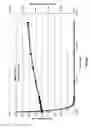
FIG. 1 is a graph showing ethylene adsorption over time by ZSM-5 doped with palladium in an environment comprising about 8.4 vol % oxygen.
DETAILED DESCRIPTION OF THE INVENTION
At least a proportion of the adsorbed VOCs may be converted into secondary compounds after adsorption onto the doped ZSM-5.
In one embodiment the organic matter consists of perishable organic goods, such as items of food and horticultural produce. The items of food may comprise fruit and/or vegetables. The horticultural produce may comprise plants and/or cut flowers.
In another embodiment the organic matter comprises refuse. Such refuse may include kitchen refuse such as waste food, which produces unpleasant odours whilst decomposing.
The organic matter from which the VOCs are derived may be contained within a storage container or package, such that the doped ZSM-5 has a closed or semi-enclosed environment within which to adsorb the VOCs. In the case of perishable organic goods the storage container or package is likely to be the container or package within which the goods are contained, e.g. crates used to store the goods when in transit or the packaging within which the goods are kept when on display prior to purchase. In another embodiment, the doped ZSM-5 is incorporated into, or into part of, the storage container or package itself. In a further embodiment, the doped ZSM-5 is incorporated into a label comprising a substrate for insertion and retention within a storage container or package.
If the perishable organic goods comprise items of food, the doped ZSM-5 may be packaged in a way to prevent direct contact with the food, e.g. behind a gas permeable barrier layer. The gas permeable barrier layer might form part of a sachet or label enclosing powdered doped ZSM-5 or the gas permeable layer could be affixed on top of a layer of ink comprising doped ZSM-5. The ink could be fixed to an internal surface of the storage container or package by printing, casting, roller application, brushing, spraying or like techniques. Additionally as the adsorption capacity of doped ZSM-5 is moderately sensitive to the presence of water, the doped ZSM-5 may be packaged with a water adsorbing material, such as silica gel.
If, however, the source of VOCs is refuse, the storage container or package may be a refuse receptacle.
Commonly the doped ZSM-5 will be particulate and may be loosely packaged, such as within a sachet (see above). Alternatively, the particulate may be associated with another object, such as by being incorporated into a storage container, incorporated into a packaging material (for example, a plastic such as PET), incorporated into an ink (see above) or simply coated onto or in another object, e.g. a ceramic or metal monolith, such as those used as catalyst carriers. Other forms of low pressure-drop substrates, such as those commonly used as catalyst carriers, may also be used. In another embodiment the doped ZSM-5 is in the form of extrudates, pellets, tablets, grains or granules. The ZSM-5 may be doped before or after being formed into such extrudates, pellets, tablets, grains or granules.
Other methods of using the present invention may be used in appropriate circumstances.
One advantage associated with this invention is that the VOCs can be adsorbed at relatively low temperatures, such as in the range of from −10° C. to 50° C., more commonly from 0° C. to 40° C. For example, the temperature range may be from about 0° C. to about 35° C. or about 0° C. to about 30° C. This enables the doped ZSM-5 to be used in the environment within which the organic matter is commonly found, e.g. refrigerators or at ambient temperature, without requiring complex heating and gas recirculation equipment to be used. Nonetheless, where a particular application allows for heating and gas recirculation equipment to be used (e.g. a gas conditioning system) the doped ZSM-5 may also be operated at an elevated temperature, e.g. above 60° C.
In one embodiment the VOCs comprise ethylene. Ethylene is a gaseous hormone released by plants that can cause plants to wilt and fruits to ripen. The removal of VOCs produced by plants can delay these processes enabling food and horticultural produce to be kept in transit and/or in storage for longer without accelerating perishing. Therefore, a particular application of this invention is to industries that produce, ship, export and buy food and horticultural produce. Initial tests have suggested that, unlike prior art methods, the use of an adsorber according to this invention could enable the shelf life of post-climacteric fruit to be extended (Terry L, Ilkenhans T, Poulston S, Rowsell E and Smith A W J, Postharvest Biology and Technology 45 (2007) 214-220). That is, even after the climacteric respiratory rise has been initiated, fruit may be prevented from ripening further (or at least the rate of ripening slowed) using palladium doped ZSM-5 to adsorb ethylene.
In another embodiment the VOCs comprise formaldehyde and/or acetic acid. Formaldehyde and acetic acid are malodorous chemicals that are often found in the home. Formaldehyde may be released from pressed bonded wood products, such as plywood, but is also found in dyes, textiles, plastics, paper products, fertilizer, and cosmetics. Acetic acid may be released from kitchen waste and animal waste. Therefore, one potential application of this invention is to the removal of malodours from the domestic environment.
Another point of interest is that, although there is some loss of activity in the palladium doped ZSM-5 once they have been exposed to water, they are still able to function efficiently when “wet”. As food and horticultural produce are usually stored in humid environments, this feature is also advantageous to the relevant industries.
Methods of manufacturing palladium doped ZSM-5 are known to the skilled chemist, and include the use of a variety of palladium salts, such as Pd(NO3)2, Pd(OAc)2, PdCl2, palladium oxalate, (tetraamine palladium hydrogen carbonate), (tetraamine palladium hydroxide) and (tetraamine palladium acetate). Commonly the ZSM-5 will be calcined after impregnation with at least one palladium salt, however, for some applications this may not be necessary. Samples of palladium doped ZSM-5 that are calcined will comprise at least partially oxidised palladium.
The palladium itself can comprise from 0.1 wt % to 10.0 wt % based on the total weight of the ZSM-5, optionally from 0.5 wt % to 5.0 wt % based on the total weight of the ZSM-5.
The doped ZSM-5 may be conveniently used in a controlled atmosphere or modified atmosphere environment. In one embodiment, the level of oxygen in these environments is present in a range between ≧5 vol % and <10 vol %. For example, the level of oxygen may be about 1 vol %, about 2 vol %, about 3 vol %, about 4 vol %, about 5 vol %, about 6 vol %, about 7 vol %, about 8 vol % or about 9 vol %. In another embodiment, the level of oxygen is substantially 0 vol %. The balance of the gas composition may comprise an inert gas (such as nitrogen), optionally carbon dioxide and/or optionally carbon monoxide.
In one embodiment, the doped ZSM-5 is effective to adsorb the VOCs to a level of less than or equal to 0.10 ppm, optionally to a level of less than or equal to 0.05 ppm. In another embodiment, the doped ZSM-5 is effective to adsorb substantially all of the VOCs i.e. no detectable amount of the VOCs remains.
Another advantage of this invention is that the doped ZSM-5 may be used continuously for VOC removal for an extended period of time, e.g. several days, (the actual time depending upon the environment within which it is used). Furthermore, after use the ZSM-5 may be heated to 250° C. for 30 minutes in air to release the VOCs adsorbed on the ZSM-5 and any secondary compounds present, thus regenerating the palladium doped ZSM-5 for further use. This enables the palladium doped ZSM-5 to be used for extended periods of time, then removed from the source of VOCs, regenerated and re-used. As the regeneration process is neither lengthy nor costly, this means the doped ZSM-5 is a cost effective product for VOC removal. It is worth noting that, by contrast, regeneration of KMnO4 is not possible as the material decomposes on heating to K2O and manganese oxide(s).
In order to identify the time when the doped ZSM-5 has reached its VOC adsorption capacity and therefore needs regenerating, a VOC indicator may be included for use with the doped ZSM-5. Suitable indicators include the palladium based ethylene indicator disclosed in patent application JP 60-202252.
EXAMPLES
Example 1
Preparation of Doped Supports
The doped support, also known as an adsorber, was prepared using the incipient wetness impregnation method. Typically 20 g of the support (e.g. the hydrogen form of the zeolite) was impregnated with the nitrate salt or chloride salt of palladium, and then dried at 110° C. before being calcined in air at 500° C. for 2 hrs.
Example 2
Ethylene Adsorption Measurements
Measurements were carried out in a plug flow reactor at 21° C. with 0.1 g doped support of particle size 250-355 μm with a flow rate of 50 ml/min of gas comprising varying concentrations of O2, 200 ppm C2H4, ˜80% relative humidity and balance nitrogen. The results of this experiment are set out below:
| O2 concentration/vol % | Ethylene adsorption capacity/μl · g−1 | |
| 10 | 3500 | |
| 4 | 3600 | |
| 2 | 3800 | |
| 1 | 3700 | |
| 0 | 6050 | |
Example 3
Ethylene Adsorption Measurements
Measurements were carried out in at 21° C. with 0.1 g doped support of particle size 250-355 μm. A 1 litre jar was partially evacuated and then filled with 500 ppm ethylene in nitrogen, which mixed with the remaining air, such that the initial O2 concentration was 8.4 vol %.
FIG. 1 illustrates that the Pd doped support adsorbed substantially all of the ethylene over a period of about 12 hours.
Claims
1. A method for adsorbing volatile organic compounds (VOCs) derived from organic matter comprising the step of adsorbing the VOCs onto palladium doped ZSM-5, wherein the Si:Al ratio of the ZSM-5 is less than or equal to 100:1, and wherein the palladium doped ZSM-5 is used in an environment comprising less than 10 vol % of oxygen.
2. The method according to claim 1, wherein the Si:Al ratio of the ZSM-5 is from 22:1 to 28:1.
3. The method according to claim 1, wherein the organic matter consists of perishable organic goods.
4. The method according to claim 3, wherein the perishable organic goods comprise items of food.
5. The method according to claim 4, wherein the items of food comprise fruit and/or vegetables.
6. The method according to claim 3, wherein the perishable organic goods comprise horticultural produce.
7. The method according to claim 6, wherein the horticultural produce comprises plants and/or cut flowers.
8. The use according to claim 1, wherein the organic matter comprises refuse.
9. The method according to claim 1, wherein the organic matter is contained in a storage container or package.
10. The method according to claim 9, wherein the palladium doped ZSM-5 is incorporated into, or into part of, the storage container or package.
11. The method according to claim 9, wherein the palladium doped. ZSM-5 is incorporated into a label comprising a substrate for insertion and retention within a storage container or package.
12. The method according to claim 9, wherein the storage container or package is a refuse receptacle.
13. The method according to claim 1, wherein the VOCs are adsorbed at a temperature of from −10° C. to 50° C.
14. The method according to claim 13, wherein the VOCs are adsorbed at a temperature of from 0° C. to about 40° C., preferably 0° C. to 30° C.
15. The method according to claim 1, wherein the VOCs comprise ethylene.
16. The method according to claim 1, wherein the VOCs comprise formaldehyde and/or acetic acid.
17. The method according to claim 1, wherein the palladium comprises from 0.1 wt % to 10.0 wt % based on the total weight of the doped ZSM-5.
18. The method according to claim 17, wherein the palladium comprises from 0.5 wt % to 5.0 wt % based on the total weight of the doped ZSM-5.
19. The method according to claim 1, wherein the environment is a controlled atmosphere or modified atmosphere environment.
20. The method according to claim 1, wherein the oxygen is present in the range between ≧0.5 vol % and <10 vol %.
21. The method according to claim 1, wherein the VOCs are adsorbed to a level of less than or equal to 0.10 ppm.
22. The method according to claim 21, wherein the VOCs are adsorbed to a level of less than or equal to 0.05 ppm.
23. The method according to claim 1, wherein the palladium doped ZSM-5 is heated to 250° C. for 30 minutes in air to release the VOCs adsorbed on the palladium doped ZSM-5 and any secondary compounds present, thus regenerating the palladium doped ZSM-5 for further use.
24. The method according to claim 1, wherein the palladium doped ZSM-5 is used with a VOC indicator.
25. The method according to claim 1, wherein the palladium doped ZSM-5 is in the form of a label, sachet or ink, or coated onto or in a catalyst carrier, or in the form of extrudates, pellets, tablets, grains or granules, or is incorporated into a packaging material.
Images & Drawings included:
Sources:
- United States Patent and Trademark Office - verify current appl. status at the USPTO↗
Similar patent applications:
Recent applications in this class:
- » 20250280843 2025-09-11
METHOD FOR INHIBITING POTATOES FROM GREENING AND USE THEREOF - » 20250107543 2025-04-03
TREATMENT OF AGRICULTURAL, FOOD AND RELATED PRODUCTS FOR ELIMINATING CONTAMINANTS AND ENCHANCING SHELF-LIFE - » 20250072440 2025-03-06
STORAGE METHOD, TRANSPORTATION METHOD, STORAGE APPARATUS, AND TRANSPORTATION APPARATUS - » 20250057172 2025-02-20
Banana Preservation Device - » 20250040558 2025-02-06
ANTIMICROBIAL ACTIVITY OF CHLORITE-ENTRAINED POLYMERS - » 20250017225 2025-01-16
MULTILAYER STRUCTURE FOR ACTIVE PACKAGING, PROCESS AND METHOD OF USING THE SAME - » 20250017224 2025-01-16
CONSUMER APPLICATIONS FOR CYCLOPROPENE-CONTAINING COMPOSITIONS - » 20250000111 2025-01-02
PACKAGE FOR FRUIT OR VEGETABLE AND METHOD FOR KEEPING FRESHNESS OF FRUIT OR VEGETABLE - » 20240358032 2024-10-31
Method for providing an ethylene environment in a crop store and an ethylene environment control system - » 20240298658 2024-09-12
FOOD FRESHNESS MAINTENANCE SYSTEM AND FRESHNESS MAINTENANCE AND TRANSFER DEVICE
Recent applications for this Assignee:
- » 20250154890 2025-05-15
Catalytic wall-flow filter - » 20250067209 2025-02-27
AMMONIA-BURNING COMBUSTION ENGINE - » 20240287923 2024-08-29
Catalytic wall flow filter - » 20240133327 2024-04-25
Exhaust gas joule heater - » 20240109055 2024-04-04
Transition metal incorporated alumina for improved three way catalysts - » 20240091745 2024-03-21
Composite, zoned oxidation catalys for a compression ignition internal combustion engine - » 20240066468 2024-02-29
EXHAUST GAS TREATMENT SYSTEM - » 20240024898 2024-01-25
Apparatus and method for coating substrates with washcoats - » 20240011421 2024-01-11
System comprising vehicular compression ignition engine and an emissions control device comprising an electrically heatable element - » 20230347326 2023-11-02
METHOD OF TREATING EXHAUST GAS AND SYSTEM FOR SAME