Rate-controlled particles
US20120172364A1
2012-07-05
13/420,013
2012-03-14
✅ Patent granted
US 9,028,876 B2
2015-05-12
-
-
Shengjun Wang
Novak Druce Connolly Bove + Quigg LLP
2032-03-16
Abstract:
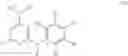
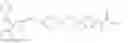
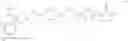
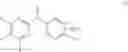
Rate-controlled particles, comprising compounds of the formula
as a solid dispersion.
Inventors:
- Jörg Rosenberg 27 🇩🇪 Ellerstadt, Germany
- Jörg Breitenbach 41 🇩🇪 Mannheim, Germany
- Thomas Hantke 2 🇩🇪 Mannheim, Germany
- Bettina Rehbock 2 🇩🇪 Dannstadt, Germany
Assignee:
- Janssen R&D Ireland 23 🇮🇪 Little Island, Co Cork, Ireland
Applicant:
Interested in similar patents?
Get notified when new applications in this technology area are published.
Classification:
A61P35/00 » CPC further
Antineoplastic agents
A61P43/00 » CPC further
Drugs for specific purposes, not provided for in groups -
C07D251/48 IPC
Heterocyclic compounds containing 1,3,5-triazine rings not condensed with other rings having three double bonds between ring members or between ring members and non-ring members with only hetero atoms directly attached to ring carbon atoms; Nitrogen atoms Two nitrogen atoms
A61P31/12 » CPC further
Antiinfectives, i.e. antibiotics, antiseptics, chemotherapeutics Antivirals
C07D239/48 » CPC main
Heterocyclic compounds containing 1,3-diazine or hydrogenated 1,3-diazine rings not condensed with other rings having three or more double bonds between ring members or between ring members and non-ring members with hetero atoms or with carbon atoms having three bonds to hetero atoms with at the most one bond to halogen, directly attached to ring carbon atoms; Two or more oxygen, sulphur or nitrogen atoms Two nitrogen atoms
A61K9/1635 » CPC further
Medicinal preparations characterised by special physical form; Particulate form, e.g. powders, Processes for size reducing of pure drugs or the resulting products, Pure drug nanoparticles; Agglomerates; Granulates; Microbeadlets ; Microspheres; Pellets; Solid products obtained by spray drying, spray freeze drying, spray congealing,(multiple) emulsion solvent evaporation or extraction; Excipients; Inactive ingredients; Organic macromolecular compounds obtained by reactions only involving carbon-to-carbon unsaturated bonds, e.g. polyvinyl pyrrolidone, poly(meth)acrylates
A61K31/496 » CPC further
Medicinal preparations containing organic active ingredients; Heterocyclic compounds having nitrogen as a ring hetero atom, e.g. guanethidine or rifamycins having six-membered rings with two nitrogen atoms as the only ring heteroatoms, e.g. piperazine Non-condensed piperazines containing further heterocyclic rings, e.g. rifampin, thiothixene
A61K31/505 » CPC further
Medicinal preparations containing organic active ingredients; Heterocyclic compounds having nitrogen as a ring hetero atom, e.g. guanethidine or rifamycins having six-membered rings with two nitrogen atoms as the only ring heteroatoms, e.g. piperazine Pyrimidines; Hydrogenated pyrimidines, e.g. trimethoprim
A61K31/53 » CPC further
Medicinal preparations containing organic active ingredients; Heterocyclic compounds having nitrogen as a ring hetero atom, e.g. guanethidine or rifamycins having six-membered rings with three nitrogens as the only ring hetero atoms, e.g. chlorazanil, melamine
C07D231/12 » CPC further
Heterocyclic compounds containing 1,2-diazole or hydrogenated 1,2-diazole rings not condensed with other rings having two or three double bonds between ring members or between ring members and non-ring members with only hydrogen atoms, hydrocarbon or substituted hydrocarbon radicals, directly attached to ring carbon atoms
C07D233/56 » CPC further
Heterocyclic compounds containing 1,3-diazole or hydrogenated 1,3-diazole rings, not condensed with other rings having two double bonds between ring members or between ring members and non-ring members with only hydrogen atoms or radicals containing only hydrogen and carbon atoms, attached to ring carbon atoms
C07D239/50 » CPC further
Heterocyclic compounds containing 1,3-diazine or hydrogenated 1,3-diazine rings not condensed with other rings having three or more double bonds between ring members or between ring members and non-ring members with hetero atoms or with carbon atoms having three bonds to hetero atoms with at the most one bond to halogen, directly attached to ring carbon atoms; Two or more oxygen, sulphur or nitrogen atoms Three nitrogen atoms
C07D249/08 » CPC further
Heterocyclic compounds containing five-membered rings having three nitrogen atoms as the only ring hetero atoms not condensed with other rings 1,2,4-Triazoles; Hydrogenated 1,2,4-triazoles
C07D251/18 » CPC further
Heterocyclic compounds containing 1,3,5-triazine rings not condensed with other rings having three double bonds between ring members or between ring members and non-ring members with hydrogen or carbon atoms directly attached to at least one ring carbon atom to only one ring carbon atom with nitrogen atoms directly attached to the two other ring carbon atoms, e.g. guanamines
C07D403/12 » CPC further
Heterocyclic compounds containing two or more hetero rings, having nitrogen atoms as the only ring hetero atoms, not provided for by group containing two hetero rings linked by a chain containing hetero atoms as chain links
C07D405/14 » CPC further
Heterocyclic compounds containing both one or more hetero rings having oxygen atoms as the only ring hetero atoms, and one or more rings having nitrogen as the only ring hetero atom containing three or more hetero rings
A61K9/14 IPC
Medicinal preparations characterised by special physical form Particulate form, e.g. powders, Processes for size reducing of pure drugs or the resulting products, Pure drug nanoparticles
A61K9/50 IPC
Medicinal preparations characterised by special physical form; Preparations in capsules, e.g. of gelatin, of chocolate Microcapsules having a gas, liquid or semi-solid filling; Solid microparticles or pellets surrounded by a distinct coating layer, e.g. coated microspheres, coated drug crystals
A61K9/20 IPC
Medicinal preparations characterised by special physical form Pills, tablets, discs, rods
A61K31/50 IPC
Medicinal preparations containing organic active ingredients; Heterocyclic compounds having nitrogen as a ring hetero atom, e.g. guanethidine or rifamycins having six-membered rings with two nitrogen atoms as the only ring heteroatoms, e.g. piperazine Pyridazines; Hydrogenated pyridazines
A61K31/497 IPC
Medicinal preparations containing organic active ingredients; Heterocyclic compounds having nitrogen as a ring hetero atom, e.g. guanethidine or rifamycins having six-membered rings with two nitrogen atoms as the only ring heteroatoms, e.g. piperazine; Non-condensed pyrazines containing further heterocyclic rings
A61K9/16 IPC
Medicinal preparations characterised by special physical form; Particulate form, e.g. powders, Processes for size reducing of pure drugs or the resulting products, Pure drug nanoparticles Agglomerates; Granulates; Microbeadlets ; Microspheres; Pellets; Solid products obtained by spray drying, spray freeze drying, spray congealing,(multiple) emulsion solvent evaporation or extraction
Description
The present invention concerns pharmaceutical compositions in the form of rate-controlled particles, comprising compounds of the formula (I) to (VI)
(I) is an antiviral compound of formula
- a N-oxide, a pharmaceutically acceptable addition salt or a stereochemically isomeric form thereof, wherein
- Y is CR5 or N;
- A is CH, CR4 or N;
- n is 0, 1, 2, 3 or 4;
- Q is —NR1R2 or when Y is CR5 then Q may also be hydrogen;
- R1 and R2 are each independently selected from hydrogen, hydroxy, C1-12alkylcarbonyl, C1-12alkyloxycarbonyl, aryl, amino, mono- or di(C1-12alkyl)-amino, mono- or di(C1-12alkyl)aminocarbonyl wherein each of the aforementioned C1-12alkyl groups may optionally and each individually be substituted with one or two substituents each independently selected from hydroxy, C2-6alkyloxy, hydroxy-C1-6alkyloxy, carboxyl, C1-6alkyloxycarbonyl, cyano, amino, imino, aminocarbonyl, aminocarbonylamino, mono- or di(C1-6alkyl)amino, aryl and Het; or
- R1 and R2 taken together may form pyrrolidinyl, piperidinyl, morpholinyl, azido or mono- or di(C1-12alkyl)aminoC1-4-alkylidene;
- R3 is hydrogen, aryl, C1-6alkylcarbonyl, C1-6alkyloxy-carbonyl, C1-6alkyl substituted with C1-6alkyloxycarbonyl; and
- each R4 independently is hydroxy, halo, C1-6alkyl, C1-6alkyloxy, cyano, aminocarbonyl, nitro, amino, trihalomethyl, trihalo-methyloxy, or when Y is CR5 then R4 may also represent C1-6alkyl substituted with cyano or aminocarbonyl;
- R5 is hydrogen or C1-4alkyl;
- L is —X1—R6 or —X2-Alk-R7 wherein
- R6 and R7 each independently are phenyl or phenyl substituted with one, two, three, four or five substituents each independently selected from halo, hydroxy, C2-6alkyl, C1-6alkyloxy, C1-6alkylcarbonyl, C1-6alkyloxycarbonyl, formyl, cyano, nitro, amino, and trifluoromethyl; or when Y is CR5 then R6 and R7 may also be selected from phenyl substituted with one, two, three, four or five substituents each independently selected from aminocarbonyl, trihalomethyloxy and trihalomethyl; or when Y is N then R6 and R7 may also be selected from indanyl or indolyl, each of said indanyl or indolyl may be substituted with one, two, three, four or five substituents each independently selected from halo, hydroxy, C1-6alkyl, C1-6alkyloxy, C1-6alkylcarbonyl, C1-6alkyloxycarbonyl, formyl, cyano, nitro, amino, and trifluoromethyl;
- X1 and X2 are each independently —NR3—, —NH—NH—, —N═N—, —O—, —S—, —S(═O)— or —S(═O)2—;
- Alk is C1-4alkanediyl; or
- when Y is CR5 then L may also be selected from C1-10alkyl, C3-10alkenyl, C3-10alkynyl, C3-7cycloalkyl, or C1-10alkyl substituted with one or two substituents independently selected from C3-7cycloalkyl, indanyl, indolyl and phenyl, wherein said phenyl, indanyl and indolyl may be substituted with one, two, three, four or where possible five substituents each independently selected from halo, hydroxy, C1-6alkyl, C1-6alkyloxy, cyano, aminocarbonyl, C1-6alkyloxy-carbonyl, formyl, nitro, amino, trihalomethyl, trihalomethyl-oxy and C1-6alkylcarbonyl;
- aryl is phenyl or phenyl substituted with one, two, three, four or five substituents each independently selected from halo, C1-6alkyl, C1-6alkyloxy, cyano, nitro and trifluoromethyl;
- Het is an aliphatic or aromatic heterocyclic radical; said aliphatic heterocyclic radical is selected from pyrrolidinyl, piperidinyl, homopiperidinyl, piperazinyl, morpholinyl, tetrahydrofuranyl and tetrahydrothienyl wherein each of said aliphatic heterocyclic radical may optionally be substituted with an oxo group; and said aromatic heterocyclic radical is selected from pyrrolyl, furanyl, thienyl, pyridyl, pyrimidinyl, pyrazinyl and pyridazinyl wherein each of said aromatic heterocyclic radical may optionally be substituted with hydroxy.
The compounds of formula (I) can be prepared according to the methods described in the patent applications with application number PCT/EP99/02043 and PCT/EP99/02044.
(II) is an antiviral compound of formula
the N-oxides, the pharmaceutically acceptable addition salts, quaternary amines and the stereochemically isomeric forms thereof, wherein
-b1=b2-C(R2a)=b3-b4=represents a bivalent radical of formula
—CH═CH—C(R2a)═CH—CH═ (b-1);
—N═CH—C(R2a)═CH—CH═ (b-2);
—CH═N—C(R2a)═CH—CH═ (b-3);
—N═CH—C(R2a)═N—CH═ (b-4);
—N═CH—C(R2a)═CH—N═ (b-5);
—CH═N—C(R2a)═N—CH═ (b-6);
—N═N—C(R2a)═CH—CH═ (b-7);
- q is 0, 1, 2; or where possible q is 3 or 4;
- R1 is hydrogen, aryl, formyl, C1-6alkylcarbonyl, C1-6alkyl, C1-6alkyloxycarbonyl, C1-6alkyl substituted with formyl, C1-6alkylcarbonyl, C1-6alkyloxycarbonyl;
- R2a is cyano, aminocarbonyl, mono- or di(methyl)aminocarbonyl, C1-6alkyl substituted with cyano, aminocarbonyl or mono- or di(methyl)aminocarbonyl, C2-6alkenyl substituted with cyano, or C2-6alkynyl substituted with cyano;
- each R2 independently is hydroxy, halo, C1-6alkyl optionally substituted with cyano or —C(═O)R6, C3-7cycloalkyl, C2-6alkenyl optionally substituted with one or more halogen atoms or cyano, C2-6alkynyl optionally substituted with one or more halogen atoms or cyano, C1-6alkyloxy, C1-6alkyloxycarbonyl, carboxyl, cyano, nitro, amino, mono- or di(C1-6alkyl)amino, polyhalomethyl, polyhalomethyloxy, polyhalomethylthio, —S(═O)pR6, —NH—S(═O)pR6, —C(═O)R6, —NHC(═O)H, —C(═O)NHNH2, _NHC(═O)R6, —C(═NH)R6 or a radical of formula
wherein each A independently is N, CH or CR6;
-
- B is NH, O, S or NR6;
- p is 1 or 2; and
- R6 is methyl, amino, mono- or dimethylamino or polyhalomethyl;
- L is C1-10 alkyl, C2-10alkenyl, C2-10alkynyl, C3-7cycloalkyl, whereby each of said aliphatic group may be substituted with one or two substituents independently selected from
- C3-7cycloalkyl,
- indolyl or isoindolyl, each optionally substituted with one, two, three or four substituents each independently selected from halo, C1-6alkyl, hydroxy, C1-6alkyloxy, cyano, aminocarbonyl, nitro, amino, polyhalomethyl, poly-halomethyloxy and C1-6alkylcarbonyl,
- phenyl, pyridinyl, pyrimidinyl, pyrazinyl or pyridazinyl, wherein each of said aromatic rings may optionally be substituted with one, two, three, four or five substituents each independently selected from the substituents defined in R2; or
- L is —X—R3 wherein
- R3 is phenyl, pyridinyl, pyrimidinyl, pyrazinyl or pyridazinyl, wherein each of said aromatic rings may optionally be substituted with one, two, three, four or five substituents each independently selected from the substituents defined in R2; and
- X is —NR1—, —NH—NH—, —N═N—, —O—, —C(═O)—, —CHOH—, —S—, —S(═O)— or —S(═O)2—;
- Q represents hydrogen, C1-6alkyl, halo, polyhaloC1-6alkyl or —NR4R5; and
- R4 and R5 are each independently selected from hydrogen, hydroxy, C1-12alkyl, C1-12alkyloxy, C1-12alkylcarbonyl, C1-12alkyloxy-carbonyl, aryl, amino, mono- or di(C1-12alkyl)amino, mono- or di(C1-12alkyl)aminocarbonyl wherein each of the aforementioned C1-12alkyl groups may optionally and each individually be substituted with one or two substituents each independently selected from hydroxy, C1-6 alkyloxy, hydroxyC1-6alkyloxy, carboxyl, C1-6alkyloxycarbonyl, cyano, amino, imino, mono- or di(C1-6alkyl)amino, polyhalomethyl, polyhalomethyloxy, poly-halomethylthio, —S(═O)pR6, —NH—S(═O)pR6, —C(═O)R6, —NHC(═O)H, —C(═O)NHNH2, —NHC(═O)R6, —C(═NH)R6, aryl and Het; or
- R4 and R5 taken together may form pyrrolidinyl, piperidinyl, morpholinyl, azido or mono- or di(C1-12alkyl)aminoC1-4alkylidene;
- Y represents hydroxy, halo, C3-7cycloalkyl, C2-6alkenyl optionally substituted with one or more halogen atoms, C2-6alkynyl optionally substituted with one or more halogen atoms, C1-6alkyl substituted with cyano or —C(═O)R6, C1-6alkyloxy, C1-6alkyloxycarbonyl, carboxyl, cyano, nitro, amino, mono- or di(C1-6alkyl)amino, polyhalomethyl, polyhalomethyloxy, poly-halomethylthio, —S(═O)pR6, —NH—S(═O)pR6, —C(═O)R6, —NHC(═O)H, —C(═O)NHNH2, —NHC(═O)R6, —C(═NH)R6 or aryl;
- aryl is phenyl or phenyl substituted with one, two, three, four or five substituents each independently selected from halo, C1-6alkyl, C3-7cycloalkyl, C1-6alkyloxy, cyano, nitro, poly-haloC1-6alkyl and polyhaloC1-6alkyloxy;
- Het is an aliphatic or aromatic heterocyclic radical; said aliphatic heterocyclic radical is selected from pyrrolidinyl, piperidinyl, homopiperidinyl, piperazinyl, morpholinyl, tetrahydrofuranyl and tetrahydrothienyl wherein each of said aliphatic heterocyclic radical may optionally be substituted with an oxo group; and said aromatic heterocyclic radical is selected from pyrrolyl, furanyl, thienyl, pyridinyl, pyrimidinyl, pyrazinyl and pyridazinyl wherein each of said aromatic heterocyclic radical may optionally be substituted with hydroxy.
The compounds of formula (II) can be prepared according to the methods described in the U.S. patent applications with application No. 60/143,962 and 60/107,792.
(III) is an antiviral compound of formula
a N-oxide, a pharmaceutically acceptable addition salt, a quaternary amine or a stereochemically isomeric form thereof, wherein
-a1=a2-a3=a4- represents a bivalent radical of formula
—CH═CH—CH═CH— (a-1);
—N═CH—CH═CH— (a-2);
—N═CH—N═CH— (a-3);
—N═CH—CH═N— (a-4);
—N═N—CH═CH— (a-5);
- n is 0, 1, 2, 3 or 4; and in case -a1=a2-a3=a4- is (a-1), then n may also be 5;
- R1 is hydrogen, aryl, formyl, C1-6alkylcarbonyl, C1-6alkyloxycarbonyl, C1-6alkyl substituted with formyl, C1-6alkylcarbonyl, C1-6alkyloxycarbonyl; and
- each R2 independently is hydroxy, halo, C1-6alkyl optionally substituted with cyano or —C(═O)R4, C3-7cycloalkyl, C2-6alkenyl optionally substituted with one or more halogen atoms or cyano, C2-6alkynyl optionally substituted with one or more halogen atoms or cyano, C1-6alkyloxy, C1-6alkyloxycarbonyl, carboxyl, cyano, nitro, amino, mono- or di(C1-6alkyl)amino, polyhalomethyl, polyhalomethyloxy, polyhalomethylthio, —S(═O)pR4, —NH—S(═O)pR4, —C(═O)R4, —NHC(═O)H, —C(═O)NHNH2, _NHC(═O)R4, —C(═NH)R4 or a radical of formula
wherein each A independently is N, CH or CR4;
-
- B is NH, O, S or NR4;
- p is 1 or 2; and
- R4 is methyl, amino, mono- or dimethylamino or polyhalomethyl;
- L is C4-10alkyl, C2-10alkenyl, C2-10alkynyl, C3-7cycloalkyl, whereby each of said aliphatic group may be substituted with one or two substituents independently selected from
- C3-7cycloalkyl,
- indolyl or isoindolyl, each optionally substituted with one, two, three or four substituents each independently selected from halo, C1-6alkyl, hydroxy, C1-6alkyloxy, cyano, aminocarbonyl, nitro, amino, polyhalomethyl, poly-halomethyloxy and C1-6alkylcarbonyl,
- phenyl, pyridinyl, pyrimidinyl, pyrazinyl or pyridazinyl, wherein each of said aromatic rings may optionally be substituted with one, two, three, four or five substituents each independently selected from the substituents defined in R2; or
- L is —X—R3 wherein
- R3 is phenyl, pyridinyl, pyrimidinyl, pyrazinyl or pyridazinyl, wherein each of said aromatic rings may optionally be substituted with two, three, four or five substituents each independently selected from the substituents defined in R2; and
- X is —NR1—, —NH—NH—, —N═N—, —O—, —C(═O)—, —CHOH—, —S—, —S(═O)— or —S(═O)2—;
aryl is phenyl or phenyl substituted with one, two, three, four or five substituents each independently selected from halo, C1-6alkyl, C3-7cycloalkyl, C1-6alkyloxy, cyano, nitro, poly-haloC1-6alkyl and polyhaloC1-6alkyloxy.
The compounds of formula (III) can be prepared according to the methods described in the U.S. patent application with application No. 60/107,799.
(IV) is an antiviral compound of formula
the pharmaceutically acceptable acid addition salts and the stereochemically isomeric forms thereof, wherein
- R1 and R2 are each independently selected from hydrogen; hydroxy; amino; C1-6alkyl; C1-6alkyloxy; C1-6alkylcarbonyl; C1-6alkyl-oxycarbonyl; Ar1; mono- or di(C1-6alkyl)amino; mono- or di(C1-6alkyl)aminocarbonyl; dihydro-2(3H)-furanone; C1-6alkyl substituted with one or two substituents each independently selected from amino, imino, aminocarbonyl, aminocarbonyl-amino, hydroxy, hydroxyC1-6alkyloxy, carboxyl, mono- or di(C1-6alkyl)amino, C1-6alkyloxycarbonyl and thienyl; or
- R1 and R2 taken together may form pyrrolidinyl, piperidinyl, morpholinyl, azido or mono- or di(C1-6alkyl)aminoC1-4-alkylidene;
- R3 is hydrogen, Ar1, C1-6alkylcarbonyl, C1-6 alkyl, C1-6alkyloxy-carbonyl, C1-6alkyl substituted with C1-6alkyloxycarbonyl; and
- R4, R5, R6, R7 and R8 are each independently selected from hydrogen, hydroxy, halo, C1-6alkyl, C1-6alkyloxy, cyano, amino-carbonyl, nitro, amino, trihalomethyl or trihalomethyloxy
- L is C1-10alkyl; C3-10alkenyl; C3-10alkynyl; C3-7cycloalkyl; or
- L is C1-10alkyl substituted with one or two substituents independently selected from C3-7cycloalkyl; indolyl or indolyl substituted with one, two, three or four substituents each independently selected from halo, C1-6alkyl, cyano, aminocarbonyl, nitro, amino, trihalomethyl, trihalo-methyloxy, C1-6alkylcarbonyl; phenyl or phenyl substituted with one, two, three, four or five substituents each independently selected from halo, hydroxy, C1-6alkyloxy, cyano, aminocarbonyl, nitro, amino, trihalomethyl, trihalo-methyloxy, C1-6alkylcarbonyl; and,
Ar1 is phenyl, or phenyl substituted with one, two or three substituents each independently selected from halo, C1-6alkyl, cyano, nitro or trifluoromethyl; with the proviso that compounds (a) to (o)
| Co. | ||||||||
| No. | Alk | R1/R2 | R3 | R4 | R5 | R6 | R7 | R8 |
| a | 1-(4-(2-methylpropyl)phenyl)ethyl | H/H | H | CH3 | H | H | H | H |
| b | 1-(4-(2-methylpropyl)phenyl)ethyl | H/H | H | H | H | NO2 | H | H |
| c | 1-(4-(2-methylpropyl)phenyl)ethyl | H/H | C6H5 | H | H | H | H | H |
| d | 1-(4-(2-methylpropyl)phenyl)ethyl | H/H | H | NO2 | H | CH3 | H | H |
| e | 1-(4-(2-methylpropyl)phenyl)ethyl | H/H | H | H | H | NH2 | H | H |
| f | 4-(2-methylpropyl)phenylmethyl | H/H | H | H | CF3 | H | H | H |
| g | 1-(4-(2-methylpropyl)phenyl)ethyl | H/H | H | H | H | Cl | H | H |
| h | 4-(2-methylpropyl)phenylmethyl | H/H | H | H | H | H | H | H |
| i | 3,4-dimethoxyphenylmethyl | H/H | H | H | H | H | H | H |
| j | 2,3-dimethoxyphenylmethyl | H/H | H | H | H | H | H | H |
| k | 3,4-diethoxyphenylmethyl | H/H | H | H | H | H | H | H |
| 1 | 2-(3,5-(1,1-dimethylethyl)-4- | H/H | H | H | H | H | H | H |
| hydroxy-phenyl)ethyl | ||||||||
| m | 2-(3,5-(1,1-dimethylethyl)-4- | H/H | H | H | t-Bu | OH | t-Bu | H |
| hydroxy-phenyl)ethyl | ||||||||
| n | Phenylmethyl | H/H | H | CH3 | H | H | H | H |
| o | Phenylmethyl | H/H | H | H | H | H | H | H |
are not included.
The compounds of formula (IV) can be prepared according to the methods described in EP-A-0834507.
(V) is an antifungal compound of formula
the N-oxide forms, the pharmaceutically acceptable acid addition salts and stereochemically isomeric forms thereof, wherein
- n is zero, 1, 2 or 3;
- X is N or CH;
- each R1 independently is halo, nitro, cyano, amino, hydroxy, C1-4alkyl, C1-4alkyloxy or trifluoromethyl;
- R2 is hydrogen; C3-7alkenyl; C3-7alkynyl, aryl; C3-7cycloalkyl; C1-6alkyl or C1-6alkyl substituted with hydroxy, C1-4alkyloxy, C3-7cycloalkyl or aryl;
- R3 and R4 each independently are hydrogen, C1-6alkyl, C3-7cyclo-alkyl or aryl; or
- R3 and R4 taken together form a bivalent radical —R3—R4— of formula:
-
- wherein R5a, R5b, R5c, R5d each independently are hydrogen, C1-6alkyl or aryl; and
aryl is phenyl or phenyl substituted with one, two or three substituents selected from halo, nitro, cyano, amino, hydroxy, C1-4alkyl, C1-4alkyloxy or trifluoromethyl.
- wherein R5a, R5b, R5c, R5d each independently are hydrogen, C1-6alkyl or aryl; and
The compounds of formula (V) can be prepared according to the methods described in WO 99/02523.
(VI) is an apolipoprotein-B synthesis inhibitor of formula
the N-oxides, the stereochemically isomeric forms thereof, and the pharmaceutically acceptable acid addition salts, wherein A and B taken together form a bivalent radical of formula:
—N═CH— (a),
—CH═N— (b),
—CH2—CH2— (c),
—CH═CH— (d),
—C(═O)—CH2— (e),
—CH2—C(═O)— (f),
in the bivalent radicals of formula (a) and (b) the hydrogen atom may be replaced by C1-6alkyl; in the bivalent radicals of formula (c), (d), (e), (f), one or two hydrogen atoms may be replaced by C1-6alkyl;
- R1 is hydrogen, C1-6alkyl or halo;
- R2 is hydrogen or halo;
- R3 is hydrogen; C1-8alkyl; C3-6cycloalkyl; or C1-8alkyl substituted with hydroxy, oxo, C3-6cycloalkyl or aryl;
- Het is a heterocycle selected from the group consisting of pyridine; pyridine substituted with one or two substituents selected from C1-6alkyl, hydroxy, trihalomethyl, amino, mono- or di(C1-6alkyl)amino or aryl; pyrimidine; pyrimidine substituted with one or two substituents selected from C1-6alkyl, hydroxy, trihalomethyl, amino, mono- or di(C1-6alkyl)-amino or aryl; tetrazole; tetrazole substituted with C1-6alkyl or aryl; triazole; triazole substituted with one or two substituents selected from C1-6alkyl, hydroxy, C1-6alkyloxy, trihalomethyl, amino, mono- or di(C1-6alkyl)-amino; thiadiazole; thiadiazole substituted with one or two substituents selected from C1-6alkyl, hydroxy, trihalomethyl, amino, mono- or di(C1-6alkyl)-amino; oxadiazole substituted with one or two substituents selected from C1-6alkyl, hydroxy, trihalomethyl, amino, mono- or di(C1-6alkyl)amino; imidazole; imidazole substituted with one or two substituents selected from C1-6alkyl, hydroxy, trihalomethyl, amino, mono- or di(C1-6alkyl)amino; thiazole; thiazole substituted with one or two substituents selected from C1-6alkyl, hydroxy, trihalomethyl, amino, mono- or di(C1-6alkyl)amino; oxazole; oxazole substituted with one or two substituents selected from C1-6alkyl, hydroxy, trihalomethyl, amino, mono- or di(C1-6alkyl)amino;
- aryl is phenyl or phenyl substituted with C1-6alkyl or halo.
The heterocyclic radical “Het” is bound to the sulfur atom via a carbon atom.
The compounds of formula (VI) can be prepared according to the methods described in WO 96/13499.
The particles comprise the compounds of formula (I) to (VI) as a solid dispersion in a polymeric matrix, wherein the poly-meric matrix is consisting of a homo- or copolymer of N-vinyl-pyrrolidone. Furthermore, the invention concerns a process for manufacturing of such particles and pharmaceutical dosage forms comprising such particles.
The compounds of formula (I) to (VI) contained in the particles show poor bio-availability.
In order to improve the dissolution characteristics the compounds are dispersed in a polymeric matrix, preferably by using a melt-extrusion process.
EP-A 0 240 904 discloses a method for producing solid pharmaceutical forms by extrusion of polymer melts which contain active substances, using as polymers homo- or copolymers of N-vinyl-pyrrolidone.
EP-B 0 580 860 discloses a method for producing solid dispersions of drug substances in a polymeric matrix using a twin screw extruder.
It is an object of the present invention to provide rate-controlled pharmaceutical forms containing the aforementioned compounds.
We have found that this object is achieved by the particles defined at the outset.
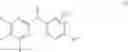
Preferred compounds according to the invention are:
- 4-[[4-[(2,4,6-trimethylphenyl)amino]-2-pyrimidinyl]amino]benzo-nitrile;
- 4-[[2-[(cyanophenyl)amino]-4-pyrimidinyl]amino]-3,5-dimethyl-benzonitrile;
- 4-[[4-amino-5-chloro-6-[(2,4,6-trimethylphenyl)amino]-2-pyrimidinyl]-amino]benzonitrile;
- 4-[[5-chloro-4-[(2,4,6-trimethylphenyl)amino]-2-pyrimidinyl]-amino]benzonitrile;
- 4-[[5-bromo-4-(4-cyano-2,6-dimethylphenoxy)-2-pyrimidinyl]-amino]benzonitrile;
- 4-[[4-amino-5-chloro-6-[(4-cyano-2,6-dimethylphenyl)amino]-2-pyrimidinyl]amino]benzonitrile;
- 4-[[5-bromo-6-[(4-cyano-2,6-dimethylphenyl)amino]-2-pyrimidinyl]-amino]benzonitrile;
- 4-[[4-amino-5-chloro-6-(4-cyano-2,6-dimethylphenyloxy)-2-pyrimidinyl]amino]benzonitrile;
- 4-[[4-amino-5-bromo-6-(4-cyano-2,6-dimethylphenyloxy)-2-pyrimidinyl]amino]benzonitrile;
- 4-[[4-[(2,4,6-trimethylphenyl)amino]-1,3,5-triazin-2-yl]amino]-benzonitrile;
- 4-[[4-amino-6-[(2,6-dichlorophenyl)methyl]-1,3,5-triazin-2-yl]-amino]benzonitrile;
- 4-[[4-[(2,6-dichlorophenyl)methyl]-6-(hydroxyamino)-1,3,5-triazin-2-yl]amino]benzonitrile;
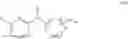
- 1-[4-[4-[4-[[4-(2,4-difluorophenyl)-4-(1H-1,2,4-triazol-1-yl-methyl)-1,3-dioxolan-2-yl]methoxy]phenyl]-1-piperazinyl]phenyl]-3-(1-methylethyl)-2-imidazolidinone;
- (−)-[2S-[2alpha,4alpha(S*)]]-4-[4-[4-[4-[[2-(4-chlorophenyl)-2-[[(4-methyl-4H-1,2,4-triazol-3-yl)thio]methyl]-1,3-dioxolan-4-yl]methoxy]phenyl]-1-piperazinyl]phenyl]-2,4-dihydro-2-(1-methyl-propyl)-3H-1,2,4-triazol-3-one,
a N-oxide, a pharmaceutically acceptable addition salt or a stereochemically isomeric form thereof.
According to the present invention the term “rate-controlled” means that depending on the composition of the matrix the particles can show instant release of the active ingredient or modified release (sustained release).
The compounds according to the invention are homogeneously dispersed in a polymer matrix consisting of a homopolymer of N-vinylpyrrolidone or, preferably, a copolymer of N-vinyl-pyrrolidone. A preferred copolymer is a copolymer of N-vinyl-pyrrolidone and vinyl acetate, especially a copolymer obtained from 60% b.w. of NVP and 40% b.w. of vinylacetate.
The polymers show Fikentscher K values of from 17 to 90, preferably a K value of 30 (for the definition of the K value see “H. Fikentscher, Cellulose-Chemie” (1932), 58-64 and 71-74).
The polymeric matrix component is used in amounts of from 40 to 70, preferably of from 50 to 65% b.w. of the total weight of the particles.
In a preferred embodiment of the invention the polymeric matrix further comprises a surfactant, preferably a surfactant with a HLB-value of 10-18 (HLB: Hydrophilic Lipophilic Balance). Especially preferred surfactants are selected form the group consisting of low molecular weight polyoxyethylene polyoxy-propylene block copolymers with a mean molecular weight of 1000 to 6000 g/mol, and hydrogenated castor oil which can be modified with polyethylene glycol.
The amounts of surfactants used lies in the range of up to 20% b.w., preferably 5 to 15% b.w., of the particles.
In another preferred embodiment the matrix further comprises an organic carboxylic acid in amounts of up to 5% b.w. of the particles.
In another preferred embodiment of the invention the polymeric matrix further comprises hydroxypropyl methyl cellulose in amounts of up to 25% b.w., preferably from 5 to 10% b.w.
The particles of the present invention are prepared as solid dispersions of the active compounds in a polymeric matrix. The term “solid dispersion” is well known in the art and means a dispersion consisting of solid components. Preferably solid dispersions are in the form of solid solutions wherein the active ingredients are molecularly dispersed in the polymeric matrix.
Such solid dispersion is preferably obtained by forming a homogeneous mixture of the components in the form of a melt, extruding said melt and shaping of the extrudate. The melting is effected by the input of thermal and/or mechanic energy. Depending on the composition of the matrix, the melting takes place in the range of from 40° C. to 190° C., preferably 50 to 150° C.
The suitable temperature range depends on the glass transition temperature of the polymer component, the properties of the active ingredients and further additives. The optimal temperature range can be established by a few simple tests.
The mixing of the active substances with the polymer and additional components of the matrix can take place before or after the melting of the polymer. Preferably the process is solvent-free which means that no additional organic solvents or water are added.
The plastification and melting preferably can take place in an extruder, a kneader or a mixing reactor, preferably in an extruder having one or more screws which may rotate in the same direction or opposite directions, especially in a twin screw extruder. The latter can be operated with or without kneading elements, but use of kneading elements is preferred because mixing is better.
The still plastic material is extruded through a die or a breaker plate and then shaped into particles. This may be effected by milling and subsequent sieving the cooled extrudate. The preferred particle size for instant release forms lies in the range of from 0.5 to 1.5 mm.
The particles, optionally together with conventional pharmaceutically acceptable excipients, may be further processed to conventional pharmaceutical dosage forms such as tablets, pastilles, suppositories, or be packed in capsules.
It is possible and particularly advantageous to produce pharmaceutical forms with rate-controlled release and improved dissolution rates of the active ingredients. This was not to be expected in view of the low solubility of the active ingredients in aqueous media.
EXAMPLES
General Method
Powder mixes of the components were melt kneaded at 145° C. for 5 min. After cooling the solidified melts were ground and sieved. The sieve fraction 0.5-1.5 mm was used for the dissolution tests.
The composition of the individual powder mixes is listed in Table 1.
| TABLE 1 | ||||||
| Example No. | 1 | 2 | 3 | 4 | 5 | 6 |
| Active ingredient1) | 30 | 30 | 30 | 30 | 30 | 40 |
| VP-VAC-copolymer2) | 65 | 55 | 55 | 60 | 55 | 47.1 |
| Surfactant3) | 5 | 15 | 5 | 5 | 4.3 | |
| Citric acid | 5 | |||||
| HPMC | 10 | 8.6 | ||||
| Surfactant4) | 15 | |||||
| 1)4-[[4-[2,4,6-trimethylphenyl)amino]-2-pyrimidinyl]amino]-benzonitrile | ||||||
| 2)Kollidon ® VA64, VP/VAC = 60/40, BASF Aktiengesellschaft | ||||||
| 3)PEG-n-hydrogenated Castoroil | ||||||
| 4)polyoxyethylene polyoxypropylene blockcopolymer, mean mol. weight 4000 g/mol |
The dissolution tests were carried out according to USP XXIII, paddle model, pH no change test, 0.1 M HCl, at 37° C., 100 rpm
The results are listed in Table 2.
| TABLE 2 |
| Dissolution Rates of particles according to |
| examples 1-6 |
| Dissolution [%] | Dissolution [%] |
| time | Ex. 1 | Ex. 2 | Ex. 3 | Ex. 4 | time | Ex. 5 | Ex. 6 |
| [min] | (IR) | (IR) | (IR) | (IR) | [min] | (SR) | (SR) |
| 5 | 53 | 65 | 58 | 57 | 1 | ||
| 10 | 73 | 86 | 88 | 82 | 2 | ||
| 15 | 77 | 91 | 95 | 89 | 3 | ||
| 20 | 81 | 91 | 96 | 93 | 4 | ||
| 30 | 87 | 94 | 99 | 94 | 6 | ||
| 60 | 92 | 93 | 96 | 94 | 8 | 96 | 95 |
| 120 | 93 | 94 | 97 | 95 |
| IR: Instant Release | SR: Sustained Release | ||
DSC-Measurements were performed with the formulations according to examples 1 to 6 in open pans (air) at temperatures of from 20→250° C., with a heating rate of 10° C. per minute. There is no indication of crystalline drug substance in the solid dispersions.
Claims
1.-15. (canceled)
16. Rate-controlled release particles, comprising a compound of formula II
an N-oxide, a pharmaceutically acceptable addition salt, a quaternary amine or a stereochemically isomeric form thereof, wherein
-b1=b2-C(R2a)=b3-b4=represents a bivalent radical of formula
—CH═CH—C(R2a)═CH—CH═ (b-1);
—N═CH—C(R2a)═CH—CH═ (b-2);
—CH═N—C(R2a)═CH—CH═ (b-3);
—N═CH—C(R2a)═N—CH═ (b-4);
—N═CH—C(R2a)═CH—N═ (b-5);
—CH═N—C(R2a)═N—CH═ (b-6);
—N═N—C(R2a)═CH—CH═ (b-7);
q is 0, 1, 2; or where possible q is 3 or 4;
R1 is hydrogen, aryl, formyl, C1-6alkylcarbonyl, C1-6alkyl, C1-6alkyloxycarbonyl, C1-6alkyl substituted with formyl, C1-6alkylcarbonyl, C1-6alkyloxycarbonyl;
R2a is cyano, aminocarbonyl, mono- or di(methyl)aminocarbonyl, C1-6alkyl substituted with cyano, aminocarbonyl or mono- or di(methyl)aminocarbonyl, C2-6alkenyl substituted with cyano, or C2-6alkynyl substituted with cyano;
each R2 independently is hydroxy, halo, C1-6alkyl optionally substituted with cyano or —C(═O)R6, C3-7cycloalkyl, C2-6alkenyl optionally substituted with one or more halogen atoms or cyano, C2-6alkynyl optionally substituted with one or more halogen atoms or cyano, C1-6alkyloxy, C1-6alkyloxycarbonyl, carboxyl, cyano, nitro, amino, mono- or di(C1-6alkyl)amino, polyhalomethyl, polyhalomethyloxy, polyhalomethylthio, —S(═O)OR6, —NH—S(═O)pR6, —C(═O)R6, —NHC(═O)H, —C(═O)NHNH2, —NHC(═O)R6, —C(═NH)R6 or a radical of formula
wherein each A independently is N, CH or CR6;
B is NH, O, S or NR6;
p is 1 or 2; and
R6 is methyl, amino, mono- or dimethylamino or polyhalomethyl;
L is C1-10alkyl, C2-10alkenyl, C2-10alkynyl, C3-7cycloalkyl, whereby each of said aliphatic group may be substituted with one or two substituents independently selected from
C3-7cycloalkyl,
indolyl or isoindolyl, each optionally substituted with one, two, three or four substituents each independently selected from halo, C1-6alkyl, hydroxy, C1-6alkyloxy, cyano, aminocarbonyl, nitro, amino, polyhalomethyl, polyhalomethyloxy and C1-6alkylcarbonyl,
phenyl, pyridinyl, pyrimidinyl, pyrazinyl or pyridazinyl, wherein each of said aromatic rings may optionally be substituted with one, two, three, four or five substituents each independently selected from the substituents defined in R2; or
L is —X—R3 wherein
R3 is phenyl, pyridinyl, pyrimidinyl, pyrazinyl or pyridazinyl, wherein each of said aromatic rings may optionally be substituted with one, two, three, four or five substituents each independently selected from the substituents defined in R2; and
X is —NH—, —NH—NH—, —N═N—, —O—, —C(═O)—, —CHOH—, —S—, —S(═O)— or —S(═O)2—;
Q represents hydrogen, C1-6alkyl, halo, polyhaloC1-6alkyl or —NR4R5; and
R4 and R5 are each independently selected from hydrogen, hydroxy, C1-12alkyl, C1-12alkyloxy, C1-12alkylcarbonyl, C1-12alkyloxycarbonyl, aryl, amino, mono- or di(C1-12alkyl)amino, mono- or di(C1-12alkyl)aminocarbonyl
wherein each of the aforementioned C1-12alkyl groups may optionally and each individually be substituted with one or two substituents each independently selected from hydroxy, C1-6alkyloxy, hydroxyc1-6alkyloxy, carboxyl, C1-6alkyloxycarbonyl, cyano, amino, imino, mono- or di(C1-6alkyl)amino, polyhalomethyl, polyhalomethyloxy, polyhalomethylthio, —S(O)pR6, —NH—S(═O)pR6, —C(═O)R6, —NHC(═O)H, —C(═O)NHNH2, —NHC(O)R6, —C(═NH)R6, aryl and Het; or
R4 and R5 taken together may form pyrrolidinyl, piperidinyl, morpholinyl, azido or mono- or di(C1-12alkyl)aminoC1-4-alkylidene;
Y represents hydroxy, halo, C3-7cycloalkyl, C2-6alkenyl optionally substituted with one or more halogen atoms, C2-6alkynyl optionally substituted with one or more halogen atoms, C1-6alkyl substituted with cyano or —C(═O)R6, C1-6alkyloxy, C1-6alkyloxycarbonyl, carboxyl, cyano, nitro, amino, mono- or di(C1-6alkyl)amino, polyhalomethyl, polyhalomethyloxy, polyhalomethylthio, —S(═O)pR6, —NH—S(═O)pR6, —C(═O)R6, —NHC(═O)H, —C(═O)NHNH2, —NHC(═O)R6, —C(NH)R6 or aryl;
aryl is phenyl or phenyl substituted with one, two, three, four or five substituents each independently selected from halo, C1-6alkyl, C3-7cycloalkyl, C1-6alkyloxy, cyano, nitro, polyhaloC1-6alkyl and polyhaloC1-6alkyloxy;
Het is an aliphatic or aromatic heterocyclic radical;
said aliphatic heterocyclic radical is selected from pyrrolidinyl, piperidinyl, homopiperidinyl, piperazinyl, morpholinyl, tetrahydrofuranyl and tetrahydrothienyl wherein each of said aliphatic heterocyclic radical may optionally be substituted with an oxo group; and said aromatic heterocyclic radical is selected from pyrrolyl, furanyl, thienyl, pyridinyl, pyrimidinyl, pyrazinyl and pyridazinyl wherein each of said aromatic heterocyclic radical may optionally be substituted with hydroxy, as a solid dispersion in a polymeric matrix, wherein the polymeric matrix is consisting of a copolymer of N-vinylpyrrolidone with vinyl acetate.
17. Particles according to claim 16, wherein the compound of formula (II) is molecularly dispersed in the polymeric matrix.
18. Particles according to claim 16, further comprising a surfactant.
19. Particles according to claim 18, wherein the surfactant is a PEG-n-hydrogenated castor oil.
20. Particles according to claim 16, wherein the surfactant is a low molecular weight polyoxyethylene polyoxypropylene block copolymer.
21. Particles according to claim 16, further comprising citric acid in amounts of up to 5% b.w.
22. Particles according to claim 16, wherein the copolymer of N-vinylpyrrolidone is used in amounts of from 40 to 70% b.w. of the total weight of the dosage form.
23. Particles according to claim 22, wherein the copolymer of N-vinylpyrrolidone is used in amounts of from 50 to 65% b.w.
24. Particles according to claim 16, wherein the controlled release is an instant release of the drug.
25. Particles according to claim 16, wherein the controlled release is a sustained release.
26. Particles according to claim 25, further comprising hydroxypropyl methyl cellulose in amounts of from 5 to 10% b.w.
27. Particles according to claim 16, obtained by forming a homogeneous mixture of the components in the form of a melt, extruding said mixture and shaping of the extrudate.
28. Particles according to claim 16, comprising a compound selected from the group consisting of
4-[[4-amino-5-chloro-6-[(2,4,6-trimethylphenyl)amino]-2-pyrimidinyl]-amino]benzonitrile;
4-[[5-chloro-4-[(2,4,6-trimethylphenyl)amino]-2-pyrimidinyl]amino]benzonitrile;
4-[[5-bromo-4-(4-cyano-2,6-dimethylphenoxy)-2-pyrimidin]amino]-benzonitrile;
4-[[4-amino-5-chloro-6-[(4-cyano-2,6-dimethylphenyl)amino]-2-pyrimidinyl]amino]benzonitrile;
4-[[5-bromo-6-[(4-cyano-2,6-dimethylphenyl)amino]-2-pyrimidinyl]-amino]benzonitrile;
4-[[4-amino-5-chloro-6-[(4-cyano-2,6-dimethylphenoxy)-2-pyrimidinyl]amino]benzonitrile;
4-[[4-amino-5-bromo-6-(4-cyano-2,6-dimethylphenyloxy)-2-pyrimidinyl]amino]benzonitrile;
a N-oxide, a pharmaceutically acceptable addition salt or a stereochemically isomeric form thereof.
29. Pharmaceutical dosage form, comprising particles according to claim 16.
30. Pharmaceutical dosage forms according to claim 29, further comprising one or more pharmaceutically acceptable excipients.
31. Pharmaceutical dosage forms according to claim 29 comprising particles wherein the compound of formula (II) is molecularly dispersed in the polymeric matrix.
Images & Drawings included:




Sources:
- United States Patent and Trademark Office - verify current appl. status at the USPTO↗
Similar patent applications:
- » 20090148531
RATE-CONTROLLED PARTICLES
Recent applications in this class:
- » 20250188041 2025-06-12
NEW COMPOUNDS AND TREATMENT OF RENAL CELL CARCINOMA - » 20240368089 2024-11-07
AURORA KINASE AND JANUS KINASE INHIBITORS FOR PREVENTION OF GRAFT VERSUS HOST DISEASE - » 20240343694 2024-10-17
PYRIMIDINE DERIVATIVE, METHOD FOR PREPARING SAME, AND PHARMACEUTICAL COMPOSITION FOR PREVENTING OR TREATING CANCER COMPRISING SAME AS ACTIVE INGREDIENT - » 20240270699 2024-08-15
COMPOUNDS HAVING N-ARYLPYRIMIDIN-2-AMINE DERIVATIVES AS THERAPEUTIC AGENTS - » 20240270698 2024-08-15
NOVEL PYRIMIDINE DERIVATIVE AND USE THEREOF - » 20240101520 2024-03-28
PYRIMETHAMINE CRYSTAL FORM - » 20240083855 2024-03-14
JAK2 AND ALK2 INHIBITORS AND METHODS FOR THEIR USE - » 20240076273 2024-03-07
2,4-DIAMINOPYRIMIDINE OXIDE PREPARATION METHOD - » 20230357163 2023-11-09
SOLID STATE FORMS OF GEFAPIXANT AND PROCESS FOR PREPARATION THEREOF - » 20230348399 2023-11-02
NOVEL PYRIMIDINE DERIVATIVE AND USE THEREOF
Recent applications for this Assignee:
- » 20150239892 2015-08-27
Pyrrolo[3,2-]pyrimidine derivatives for the treatment of viral infections and other diseases - » 20140171451 2014-06-19
Antibacterial cyclopenta[c]pyrrole substituted 3,4-dihydro-1H-[1,8]naphthyridinones - » 20140163038 2014-06-12
Antibacterial piperidinyl substituted 3,4-dihydro-1H-[1,8]naphthyridinones - » 20140142070 2014-05-22
DARUNAVIR COMBINATION FORMULATIONS - » 20140073642 2014-03-13
Quinazoline derivatives for the treatment of viral infections and further diseases - » 20130123244 2013-05-16
Hetero-bicyclic derivatives as HCV inhibitors - » 20130035341 2013-02-07
Macrocyclic integrase inhibitors - » 20120295920 2012-11-22
5-amino-4-hydroxypentoyl amides - » 20120238746 2012-09-20
Processes and intermediates for preparing a macrocyclic protease inhibitor of HCV - » 20120136027 2012-05-31
Phenyl ethynyl derivatives as hepatitis C virus inhibitors