Base station almanac assisted positioning
US20120179660A1
2012-07-12
13/310,723
2011-12-03
✅ Patent granted
US 8,669,899 B2
2014-03-11
-
-
Dao Phan
Arnold J. Gum
2031-12-28
Abstract:
A database provides base station almanac information pertaining to more than one network mode of communication. A wireless device accesses this database through a centralized server or network, or via the base station, base station controller or the like, with which it is currently communicating.
Assignee:
- QUALCOMM INCORPORATED 41,536 🇺🇸 San Diego, CA, United States
Applicant:
Interested in similar patents?
Get notified when new applications in this technology area are published.
Classification:
H04W4/023 » CPC main
Services specially adapted for wireless communication networks; Facilities therefor; Services making use of location information using mutual or relative location information between multiple location based services [LBS] targets or of distance thresholds
G01S5/0236 » CPC further
Position-fixing by co-ordinating two or more direction or position line determinations; Position-fixing by co-ordinating two or more distance determinations using radio waves; Details Assistance data, e.g. base station almanac
H04W16/32 » CPC further
Network planning, e.g. coverage or traffic planning tools; Network deployment, e.g. resource partitioning or cells structures; Cell structures Hierarchical cell structures
H04W48/16 » CPC further
Access restriction ; Network selection; Access point selection Discovering, processing access restriction or access information
H04W64/00 » CPC further
Locating users or terminals or network equipment for network management purposes, e.g. mobility management
H04W48/18 » CPC further
Access restriction ; Network selection; Access point selection Selecting a network or a communication service
H04W88/06 » CPC further
Devices specially adapted for wireless communication networks, e.g. terminals, base stations or access point devices; Terminal devices adapted for operation in multiple networks or having at least two operational modes , e.g. multi-mode terminals
G01S19/45 IPC
Satellite radio beacon positioning systems; Determining position, velocity or attitude using signals transmitted by such systems; Determining a navigation solution using signals transmitted by a satellite radio beacon positioning system the satellite radio beacon positioning system transmitting time-stamped messages, e.g. GPS [Global Positioning System], GLONASS [Global Orbiting Navigation Satellite System] or GALILEO; Determining position by combining measurements of signals from the satellite radio beacon positioning system with a supplementary measurement
G01S19/32 IPC
Satellite radio beacon positioning systems; Determining position, velocity or attitude using signals transmitted by such systems; Satellite radio beacon positioning systems transmitting time-stamped messages, e.g. GPS [Global Positioning System], GLONASS [Global Orbiting Navigation Satellite System] or GALILEO; Receivers Multimode operation in a single same satellite system, e.g. GPS L1/L2
G01S19/48 IPC
Satellite radio beacon positioning systems; Determining position, velocity or attitude using signals transmitted by such systems; Determining a navigation solution using signals transmitted by a satellite radio beacon positioning system the satellite radio beacon positioning system transmitting time-stamped messages, e.g. GPS [Global Positioning System], GLONASS [Global Orbiting Navigation Satellite System] or GALILEO; Determining position by combining or switching between position solutions derived from the satellite radio beacon positioning system and position solutions derived from a further system
Description
RELATED APPLICATIONS
This application is a Divisional of U.S. patent application Ser. No. 12/625,343, filed Nov. 24, 2009, entitled “Base Station Almanac Assisted Positioning,” which is a Divisional of U.S. patent application Ser. No. 11/332,116, granted as U.S. Pat. No. 7,821,449, filed Jan. 12, 2006, entitled “Base Station Almanac Assisted Positioning,” which claims the benefit of U.S. Provisional Application No. 60/643,562, filed on Jan. 12, 2005, each of which is hereby incorporated by reference herein in its entirety.
TECHNICAL FIELD
The present method and apparatus relates generally to positioning systems for wireless user equipment, and more specifically to an almanac that contains the base station database for all or select set of base stations of a specific type.
BACKGROUND
Location determination systems allow wireless devices to find their geographic location or be located by remote entities by using satellites (e.g., GLONASS, GPS, Galileo, EGNOS, Globalstar, IRIDIUM) and/or base stations (e.g., cellular telephone base station, a wireless local area network, a wireless wide area network, satellite phone, satellite Internet, or any other device that can be uniquely recognized and communicate with the wireless device). These stations may be coupled to a base station almanac processor by way of a wide area network (WAN), but may also or alternatively use a local area network (LAN). The base station almanac processor accesses a base station database to tailor or customize an almanac according to the estimated location of the wireless device.
The wireless device can communicate with any number of devices to provide location information. The wireless device may be, for example, a cellular telephone that may have any number or combination of communication modes (e.g., GSM, CDMA, TDMA, WCDMA, OFDM, GPRS, EV-DO, WiFi, Bluetooth, WiMAX, 802.xx, UWB, satellite, etc.) to transfer voice and/or data with cellular, satellite, wireless data, and/or mesh networks by way of their base stations. The wireless device could also be a tracking device, a child or parolee monitor, navigational device, wireless pager, wireless computer, PDA, asset tag, etc.
SUMMARY
The method and apparatus disclosed herein provides an almanac that may contain the base station database for all or select set of base stations of a specific type (e.g., CDMA or WiFi or Bluetooth base stations).
BRIEF DESCRIPTION OF THE DRAWINGS
The present disclosure is described in conjunction with the appended FIGURE.
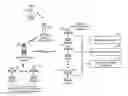
FIG. 1 is a diagram of an embodiment of a wireless communication system.
DESCRIPTION
With the proliferation of multi-mode devices, the base station almanac for one particular mode of operation is not sufficient. If a target device can operate in more than one mode (e.g., CDMA and WiFi) for radio-location and communication purposes the device needs to know the almanac for both types of the base stations to operate properly. One feature of interest is the ability to seamlessly roam between the base stations of the same type or be handed over to a base station of a different type.
Referring to FIG. 1, either a centralized or a localized base station database 160 can be maintained for the base stations of the supported and relevant modes of communication (for example, may not be interested in the OMEGA base stations).
The supported communication modes for each wireless device 130 can be stored in a device capability database 163 that includes information to help in determining an uncertainty factor for each location or distance measurement made by a particular wireless device operating in any number of communication modes.
The almanac processor 162 may be separate from the base stations 150 (as shown), but each base station 150 or a group of base stations 150 could have a base station almanac processor 162 and/or databases in other embodiments. Alternatively, the almanac processor 162 can be integrated into the wireless device 130. The base station database 160 and/or device capability database 163 could also be in the wireless device 130 and updated periodically.
In some embodiments, the base station database 160 may be centrally located (as illustrated in FIG. 1), in others the base station database 160 may be distributed regionally or in portions relevant to each base station 150 or a group of base stations 150 as a local almanac. For example, a first base station 150-1, may store a portion of the base station database for its footprint and all adjacent base station footprints in a first local almanac 164. In another example, the first almanac may not be geographically organized but contain the base stations which are part of a particular service provider network. As the centrally-located base station database 160 is updated, those changes are propagated to the various local almanacs that might use the new information.
A target device 130 having access to the relevant base station almanac will be able to determine the location information given the knowledge of the communication mode and the identification of the base station 150 or a group of base stations 150 in the communication with the target device 130. The location determination can be performed either by the target device 130 or with the target-device assistance. In the target device-assisted mode, the device 130 provides the information sufficient for the location determination by the external entity.
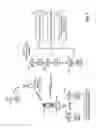
To further improve the search of the base station almanacs for the appropriate information, the data can be organized utilizing the hierarchical coverage scheme. For a particular region, for example, the Bay Area, or area identified by SID/NID, the number of CDMA and GSM switches can be listed. Under each switch a number of GSM and CDMA base station controllers can be listed. For each base station controller a number of base stations are provided, for each base station a number of sectors (typically from 1 to 6). For each sector, the base station almanac can contain the number of know WiFi base stations (access points 110) located within the coverage of the particular sector. The same can be done for other local area base stations such as Bluetooth, UWB, ZigBee, RFID, etc. This classification can be extended to show cross references whereby some of the local area base stations can be within the signal coverage of the other local are base stations providing further granularity to the location information. For example, a number of Bluetooth base stations can be within coverage of a particular WiFi access point 110.
Each “computer”, “base station”, “base station controller”, “server”, or other network infrastructure, “wireless device”, “mobile station”, or “user equipment”, referred to herein includes the necessary “computer-readable” media to perform the functions described herein, or is in communication with the necessary computer-readable media. The term “computer-readable medium” refers to any medium that participates in providing instructions to a processor for execution. The singular “medium” is defined herein to include the plural “media”.
“Computer readable media” may take many forms, including but not limited to, “non-volatile media”, “volatile media”, and “transmission media”. “Non-volatile media” includes, for example, optical or magnetic disks such as used for a storage medium. “Volatile media” includes dynamic memory. Common forms of “computer-readable media” include floppy disks, flexible disks, hard disks, magnetic tape, other magnetic mediums, CD-ROM or other optical medium, RAM, PROM, EPROM, FLASH EPROM, and other memory chips or cartridges, a carrier wave, or any medium from which a computer or processor, as those terms are known to those skilled in the art, can read. Databases, data, and/or records can be recorded or stored on computer readable media. The term “data” as used herein refers to information.
It will be understood as used herein that a processor or microprocessor can, but need not necessarily include, one or more microprocessors, embedded processors, controllers, application specific integrated circuits (ASICs), digital signal processors (DSPs), and the like. The terms processor and microprocessor are intended to describe hardware implementing the functions described rather than specific hardware. As used herein the term “memory” refers to any type of long term, short term, or other memory associated with the computer or other described device, and is not to be limited to any particular type of memory or number of memories, or type of media upon which memory is stored.
Claims
What is claimed is:1. A system comprising:
a base station database containing base station almanac information relevant to at least two network modes of operation of the multimode wireless device;
an almanac processor in communication with the base station database; and
a computer readable medium tangibly embodying instructions, when executed by the almanac processor, for:
accessing the base station database; and
retrieving base station almanac information relevant to a selected communication mode.
2. The system of claim 1, wherein the base station database comprises:
a regional database configured to store almanac information for a group of base stations; and
a centrally located database configured to store base station almanac information from a plurality of regional databases.
3. The system of claim 2, wherein the regional database includes base station almanac information that is geographically organized.
4. The system of claim 2, wherein the regional database is organized according to a particular service provider.
5. The system of claim 1, wherein the base station database is organized according to a hierarchical coverage scheme.
6. A system comprising:
means for containing base station almanac information relevant to at least two network modes of operation of the multimode wireless device in a base station database;
means for communicating between an almanac processor and the base station database;
means for accessing the base station database by the almanac processor; and
means for retrieving base station almanac information, relevant to a selected communication mode, by the almanac processor.
7. The system of claim 6, wherein the base station database comprises:
a regional database configured to store almanac information for a group of base stations; and
a centrally located database configured to store base station almanac information from a plurality of regional databases.
8. The system of claim 7, wherein the regional database includes base station almanac information that is geographically organized.
9. The system of claim 7, wherein the regional database is organized according to a particular service provider.
10. The system of claim 6, wherein the base station database is organized according to a hierarchical coverage scheme.
11. A method of managing a base station database comprising:
accessing the base station database; and
retrieving base station almanac information relevant to a selected communication mode, wherein:
the base station database contains base station almanac information relevant to at least two network modes of operation of the multimode wireless device; and
an almanac processor is in communication with the base station database.
12. The system of claim 11, wherein the base station database comprises:
a regional database configured to store almanac information for a group of base stations; and
a centrally located database configured to store base station almanac information from a plurality of regional databases.
13. The system of claim 12, wherein the regional database includes base station almanac information that is geographically organized.
14. The system of claim 12, wherein the regional database is organized according to a particular service provider.
15. The system of claim 11, wherein the base station database is organized according to a hierarchical coverage scheme.
16. A system comprising:
a base station database containing base station almanac information relevant to at least two network modes of operation of the multimode wireless device;
an almanac processor, in communication with the base station database, for:
accessing the base station database; and
retrieving base station almanac information relevant to a selected communication mode.
17. The system of claim 16, wherein the base station database comprises:
a regional database configured to store almanac information for a group of base stations; and
a centrally located database configured to store base station almanac information from a plurality of regional databases.
18. The system of claim 17, wherein the regional database includes base station almanac information that is geographically organized.
19. The system of claim 17, wherein the regional database is organized according to a particular service provider.
20. The system of claim 16, wherein the base station database is organized according to a hierarchical coverage scheme.
Images & Drawings included:
Sources:
- United States Patent and Trademark Office - verify current appl. status at the USPTO↗
Similar patent applications:
- » 20060227045
Base station almanac assisted positioning - » 20100097996
Base station almanac assisted positioning
Recent applications in this class:
- » 20250294316 2025-09-18
TECHNIQUES FOR SYNCHRONIZING ULTRA-WIDE BAND COMMUNICATIONS - » 20250294315 2025-09-18
INFORMATION PROCESSING METHOD, MOBILE BODY, COMMUNICATION DEVICE, AND COMPUTER PROGRAM - » 20250287182 2025-09-11
Tracking Device Search Party Management - » 20250280263 2025-09-04
SYSTEM FOR AND METHOD OF PROVIDING SERVICE RELATED TO OBJECT - » 20250280262 2025-09-04
HIGHER ACCURACY SECURE PHASE-BASED RANGING AND DIRECTION FINDING - » 20250280261 2025-09-04
METHOD, SYSTEM AND BASE STATION FOR CHARACTERIZING CELLULAR DEVICES - » 20250274719 2025-08-28
METHOD AND SYSTEM FOR WIRELESS RANGING WITH A VEHICLE - » 20250267428 2025-08-21
User Intervention Based on Proximity Between Tracking Devices - » 20250267427 2025-08-21
Proximity Enhanced Location Query - » 20250240601 2025-07-24
ISSUING EMERGENCY ALERT(S) FOR DETECTED LIFE-THREATENING EVENTS INVOLVING POWER SYSTEMS
Recent applications for this Assignee:
- » 20250267371 2025-08-21
ADAPTIVE SYNCHRONIZATION FOR AUTOMATIC EXPOSURE CONTROL (AEC) - » 20250264908 2025-08-21
READ SYNCHRONIZATION DELAY AT SUBORDINATE DEVICE FOR 1 WIRE PROTOCOL - » 20250260602 2025-08-14
SPUR DETECTION, ESTIMATION, AND MITIGATION - » 20250238104 2025-07-24
DEVICES INCLUDING ONE OR MORE HIGH-IMPEDANCE LAYERS BETWEEN A DISPLAY STACK AND AN ULTRASONIC FINGERPRINT SENSOR STACK - » 20250233826 2025-07-17
Prioritizing Data Flows - » 20250233642 2025-07-17
ANTENNA PANEL DISPLACEMENT - » 20250233623 2025-07-17
GEOMETRIC DEEP LEARNING FOR LATTICE REDUCTION - » 20250227008 2025-07-10
ANTENNA ELEMENT CALIBRATION ALGORITHM - » 20250226858 2025-07-10
UPLINK MULTI-USER MULTIPLE-INPUT MULTIPLE-OUTPUT (UL MU-MIMO) PRECODING USING PER-STATION FEEDBACK - » 20250225078 2025-07-10
Systems And Methods For Dynamically Allocating Memory Pages To Enable Memory Footprint Reduction