Process for preparation of phenyl carbamate derivatives
US20120184762A1
2012-07-19
13/338,863
2011-12-28
✅ Patent granted
US 8,859,817 B2
2014-10-14
-
-
Kamal Saeed | Janet L Coppins
Schwegman Lundberg & Woessner, P.A.
2032-03-26
Abstract:
Provided are a process for the preparation of phenyl carbamate derivatives, useful in the treatment of CNS (central nervous system) disorders, an intermediate in the synthesis of the phenyl carbamate derivatives, and a process for preparation of the intermediate.
Assignee:
- Bio-Pharm Solutions Co., Ltd. 4 🇰🇷 Suwon-si, South Korea
- Bio-Pharm Solutions Co., Ltd. 8 🇰🇷 , South Korea
Applicant:
Interested in similar patents?
Get notified when new applications in this technology area are published.
Classification:
A61P21/02 » CPC further
Drugs for disorders of the muscular or neuromuscular system Muscle relaxants, e.g. for tetanus or cramps
C07F7/1804 » CPC further
Compounds containing elements of Groups 4 or 14 of the Periodic System; Silicon compounds; Compounds having one or more C—Si linkages; Compounds having one or more C—Si linkages as well as one or more C—O—Si linkages Compounds having Si-O-C linkages
Y02P20/55 » CPC further
Technologies relating to chemical industry; Improvements relating to the production of bulk chemicals Design of synthesis routes, e.g. reducing the use of auxiliary or protecting groups
Y02P20/55 » CPC further
Technologies relating to chemical industry; Improvements relating to the production of bulk chemicals Design of synthesis routes, e.g. reducing the use of auxiliary or protecting groups
C07C43/315 » CPC further
Ethers; Compounds having groups, groups or groups; Compounds having groups containing oxygen atoms singly bound to carbon atoms not being acetal carbon atoms
C07C25/02 » CPC further
Compounds containing at least one halogen atom bound to a six-membered aromatic ring Monocyclic aromatic halogenated hydrocarbons
C07C271/12 » CPC further
Derivatives of carbamic acids, i.e. compounds containing any of the groups , the nitrogen atom not being part of nitro or nitroso groups; Esters of carbamic acids having oxygen atoms of carbamate groups bound to acyclic carbon atoms with the nitrogen atoms of the carbamate groups bound to hydrogen atoms or to acyclic carbon atoms to hydrogen atoms or to carbon atoms of unsubstituted hydrocarbon radicals
C07C33/46 » CPC further
Unsaturated compounds having hydroxy or O-metal groups bound to acyclic carbon atoms; Halogenated unsaturated alcohols containing only six-membered aromatic rings as cyclic parts
C07C49/255 » CPC further
Ketones; Ketenes; Dimeric ketenes ; Ketonic chelates; Unsaturated compounds containing keto groups bound to acyclic carbon atoms containing ether groups, groups, groups, or groups
C07F7/188 » CPC main
Compounds containing elements of Groups 4 or 14 of the Periodic System; Silicon compounds; Compounds having one or more C—Si linkages; Compounds having one or more C—Si linkages as well as one or more C—O—Si linkages; Compounds having Si-O-C linkages; Preparation; Treatments not provided for in by reactions involving the formation of Si-O linkages
C07C269/06 » CPC further
Preparation of derivatives of carbamic acid, i.e. compounds containing any of the groups , the nitrogen atom not being part of nitro or nitroso groups by reactions not involving the formation of carbamate groups
C07C45/455 » CPC further
Preparation of compounds having >C = O groups bound only to carbon or hydrogen atoms; Preparation of chelates of such compounds by condensation with carboxylic acids or their derivatives
C07C29/10 » CPC further
Preparation of compounds having hydroxy or O-metal groups bound to a carbon atom not belonging to a six-membered aromatic ring by hydrolysis of ethers, including cyclic ethers, e.g. oxiranes
C07B2200/07 » CPC further
Indexing scheme relating to specific properties of organic compounds Optical isomers
C07C29/48 » CPC further
Preparation of compounds having hydroxy or O-metal groups bound to a carbon atom not belonging to a six-membered aromatic ring by oxidation reactions with formation of hydroxy groups
C07C17/263 » CPC further
Preparation of halogenated hydrocarbons by reactions involving an increase in the number of carbon atoms in the skeleton by condensation reactions
C07C269/02 » CPC further
Preparation of derivatives of carbamic acid, i.e. compounds containing any of the groups , the nitrogen atom not being part of nitro or nitroso groups from isocyanates with formation of carbamate groups
C07C41/48 » CPC further
Preparation of ethers; Preparation of compounds having groups, groups or groups Preparation of compounds having groups
C07C213/06 IPC
Preparation of compounds containing amino and hydroxy, amino and etherified hydroxy or amino and esterified hydroxy groups bound to the same carbon skeleton from hydroxy amines by reactions involving the etherification or esterification of hydroxy groups
C07C45/45 IPC
Preparation of compounds having >C = O groups bound only to carbon or hydrogen atoms; Preparation of chelates of such compounds by condensation
C07F7/18 IPC
Compounds containing elements of Groups 4 or 14 of the Periodic System; Silicon compounds; Compounds having one or more C—Si linkages Compounds having one or more C—Si linkages as well as one or more C—O—Si linkages
Description
CROSS-REFERENCE TO RELATED APPLICATION
This application claims priorities to and the benefits of U.S. Provisional Application No. 61/432,228 filed in the United States Patent and Trademark Office on Jan. 13, 2011, and Korean Patent Application No 10˜2011˜0049932 filed in the Korean Intellectual Property Office on May 26, 2011, and the entire contents of which are incorporated herein by reference.
BACKGROUND OF THE INVENTION
(a) Field of the Invention
The present invention relates to a process for the preparation of phenyl carbamate derivatives, useful in the treatment of CNS(central nervous system) disorders. The present invention further relates to a process for preparation of intermediates in the synthesis of the phenyl carbamate derivatives.
(b) Description of the Related Art
CNS(central nervous system) disorders nowadays concern large sections of the population. In particular on account of the increase in elderly people, the numbers of patients are increasing continuously.
Myotony or spasm, which is one of the CNS disorders, is frequently observed as a sequel of cerebrovascular disorders such as stroke or a sequel of head injuries, and is not easy to treat. Myotony or spasm is one of skeletal muscle dysfunction diseases due to an increase of muscle tone, and caused by central nervous system damage due to various causes such as external injury, cerebrovascular accidents, and the like. The muscle tension is caused by various causes, for example, cervicoomobrachial syndrome which is caused by abnormal posture, fatigue, age-related spine deformity, and the like, and causes spasticity or pain in skeletal muscles of the neck, shoulders, arms, waist, and back; spastic paralysis causing the disability of voluntary movement due to muscle hypertonia of hands and feet by disorder of central nervous system such as cerebrovascular disorder; and a combination thereof, thereby resulting in serious hindrances to normal life.
In particular, spastic paralysis is a serious disorder with accompanying symptoms including muscle tension and/or muscular stiffness of hands and feet, difficulty in walking, and the like, thererby causing serious hindrances to normal life. Centrally acting muscle relaxants relieve muscle tension by blocking receptors associated with the stimulation of muscular function or stimulating receptors associated with inhibiting muscular function, or reducing excessively activated reflex function.
Such centrally acting muscle relaxants may include Methocarbaamol, Chlormezanon, Carisoprodol, Eperisone, Phenprobamide, and the like. However, these drugs act on interneuron of the spinal cord, thereby inhibiting monosynaptic and polysynaptic reflexes, and thus, may cause side effects, such as central nervous inhibition, muscle weakness, and the like. Therefore, there is clearly a need for improved medication.
SUMMARY OF THE INVENTION
One embodiment provides a process of preparing a novel organic compound, phenyl carbamate derivatives. More particularly, a process of the preparation of a compound of Chemical Formula 1 is provided:
wherein X is one or more independently selected from halogens, preferably chlorine; n, that means the number of substituent X, is an integer from 1 to 5, in particular, 1 or 2; and R′ is selected from the group consisting of a linear or branched alkyl group having 1˜10 carbon atoms, in particular 1˜4 carbon atoms. In this compound, 2 chiral carbons exist at positions 1 and 2 from phenyl group substituted with X; the compound may exist in the form of an enantiomer, a diastereomer, a mixture of enantiomers, or a mixture of diastereomers, as well as a racemate. Another embodiment provides an intermediate to produce the phenyl carbamate compound of Chemical Formula 1.
DETAILED DESCRIPTION OF THE EMBODIMENTS
Continuing its research work in the field of the treatment of CNS disorders, the present inventors found that substituted phenyl carbamate derivatives of the following Chemical Formula 1 exhibit remarkably excellent treatment activity on CNS disorders, example muscle relaxation, in various screening models and simultaneously has very low toxicity, to complete the invention.
The process is directed to improvement in the manufacture of substituted phenyl carbamate derivatives which would be industrially feasible, facilitate, simple, and cost-effective manufacture of phenyl carbamate derivatives.
A process of the preparation of a compound of Chemical Formula 1 is provided:
wherein X is one or more independently selected from halogens, preferably chlorine; n, that means the number of substituent X, is an integer from 1 to 5, in particular, 1 or 2; and R1 is selected from the group consisting of a linear or branched alkyl group having 1˜10 carbon atoms, in particular 1˜4 carbon atoms.
In this compound, 2 chiral carbons exist at positions 1 and 2 from phenyl group substituted with X; the compound may exist in the form of an enantiomer, a diastereomer, a mixture of enantiomers, or a mixture of diastereomers, as well as a racemate.
The process is able to achieve a remarkably excellent productivity as well as cost-effective manufacture of phenyl carbamate derivatives. The compound of Chemical Formula 1 obtained by the process is suitable as a drug especially in the treatment of in the CNS disorders.
More specifically, the process of the preparation of a compound of Chemical Formula 1 may comprise the step of performing a carbamation of a compound of Chemical Formula 6 by reacting the compound of Chemical Formula 6 with chlorosulfonyl isocyanate, to produce a phenyl carbamate compound of Chemical Formula 1:
The process may further comprise the step of protecting a diol compound of Chemical Formula 5 by introducing a protecting group into the diol compound, to produce a compound of Chemical Formula 6, prior to the carbamation step:
The process may further comprise the step of performing dihydroxylation of a trans olefin compound of Chemical Formula 4, to produce the diol compound of Chemical Formula 5, prior to the protection step:
The process may further comprise the step of producing the trans olefin compound of Chemical Formula 4 by reacting a compound of Chemical Formula 2 and a compound of Chemical Formula 3:
In a concrete embodiment, the process may include the step of:
(1) reacting a compound of Chemical Formula 2 and a compound of Chemical Formula 3 to produce a trans olefin compound of Chemical Formula 4:
(2) performing dihydroxylation of the produced trans olefin compound of Chemical Formula 4, to produce a diol compound of Chemical Formula 5:
(3) protecting the produced diol compound of Chemical Formula 5 by introducing a protecting group into the diol compound, to produce a compound of Chemical Formula 6:
and
(4) performing a carbamation reaction of the compound of Chemical Formula 6 by reacting the compound of Chemical Formula 6 with chlorosulfonyl isocyanate, to produce a phenyl carbamate compound of Chemical Formula 1.
The definitions of the substituents ‘X’, ‘n’, and ‘R1’ are as described above.
Steps (1) and (2) may be illustrated by following Reaction Formula 1:
(Reaction Formula I: Synthesis of Diol-1)
A diol compound, that has an optical activity and can be used in the synthesis of a carbamate compound, may be synthesized by dihydroxylation of a trans-olefin compound. The dihydroxylation may be performed using a sharpless asymmetric dihydroxylation catalyst. The asymmetric dihydroxylation catalyst may be one or more selected from the group consisting of a chiral ligand (e.g., (DHQD)2PHAL, (DHQ)2PHAL, etc.), an osmium catalyst (e.g., OsO4, K2OsO2(OH)4,etc.), K2CO3, K3Fe(CN)6, N-methylmorpholine oxide (NMO), methane sulfone amide (CH3SO2NH2), and the like. For example, the asymmetric dihydroxylation catalyst may be AD-mix-α (K2OsO2(OH)4(cat), K2CO3, K3Fe(CN)6, (DHQ)2PHAL(cat)) and methane sulfone amide (CH3SO2NH2), or OsO4 and N-methylmorpholine oxide (NMO). The dihydroxylation may be performed for 3 to 12 hours (e.g., overnight) at 0 to 5° C.
Another optically active substance of diol may be synthesized using a reduction agent after synthesizing a hydroxy-ketone compound using Haloro-Mandelic acid. The reduction agent may be any conventional reduction agent in synthesis of a diol compound; for example, the reduction agent may be one or more selected from the group consisting of Zn(BH4)2(Zincborohydride), AlH3(Aluminiumhydride), DIBAL (Diisobutylaluminiumhydride), Red-Al(Sodium bis(2-mehtoxyethoxy)aluminium hydride), and the like, but not be limited thereto.
Alternatively, the diol compound of Chemical Formula 5 may be synthesized from a protected alcohol compound of Chemical Formula 8 by deprotection thereof. Therefore, the process may further comprise the step of deprotecting a protected alcohol compound of Chemical Formula 8, to produce the diol compound of Chemical Formula 5, prior to the protection step:
The protected alcohol compound of Chemical Formula 8 may be synthesized from a compound of Chemical Formula 7 by reduction thereof. Therefore, the process may further comprise the step of reducing a compound of Chemical Formula 7, to produce the protected alcohol compound of Chemical Formula 8, prior to the deprotection step:
In a concrete embodiment, the process may include the step of:
(i) reducing a compound of Chemical Formula 7, to produce a protected alcohol compound of Chemical Formula 8:
(ii) deprotecting the protected alcohol compound of Chemical Formula 8, to produce a diol compound of Chemical Formula 5:
(iii) protecting the produced diol compound of Chemical Formula 5 by introducing a protecting group into the diol compound, to produce a compound of Chemical Formula 6:
and
(iv) performing a carbamation reaction of the compound of Chemical Formula 6 by reacting the compound of Chemical Formula 6 with chlorosulfonyl isocyanate, to produce a phenyl carbamate compound of Chemical Formula 1.
Steps (i) and (ii) may be illustrated by following Reaction Formula II:
(Reaction Formula II: Synthesis of Diol-2)
For example, the diol compound of Chemical Formula 5 may be synthesized by the following Reaction Formula II-1:
(Reaction Formula II-1)
The definitions of the substituents ‘X’, ‘n’, and ‘R1’ in Chemical Formula 7 and 8 are as described above.
The protecting group present in Chemical Formula 7 and 8 may be any alcohol-protecting group, for example, one or more selected from the group consisting of Trialkyl Silyl group(e.g., TMS, TES, TIPS, and the like), Ether group[e.g., MOM(Mothoxymethyl ether), MEM(2-Methoxyethoxymethyl ether), and the like], Ester group[e.g., Ac(acetate), Bz(Benzoate), and the like], and the like, but may not be limited thereto.
Step (3) (or step (iii)) and step (4) (or step (iv)) may be illustrated by the following Reaction Formula III:
Reaction Formula III: Carbamation Reaction-1
In order to achieve a high selectivity form of regioisomer of single carbamate of diol having halogen substituent at phenyl ring(Chemical Formula 1), a protecting group may be introduced into the diol compound of Chemical Formula 5, and a carbamation reaction is performed using an isocyanate (—N═C═O) based compound, such as chlorosulfonyl isocyanate (Cl—SO2NCO), to synthesize a single carbamate compound as represented by Chemical Formula 1. The each reaction may be performed under the temperature from −5° C. to 5° C., in particular about 0° C., for 1 to 7 hours.
The protecting group present in Chemical Formula 6 may be any alcohol-protecting group, for example, one or more selected from the group consisting of a trialkyl silyl group, wherein each alkyl is independently selected from linear or branched C1-C4 alkyls, such as a trimethyl silyl group (TMS), triisopropyl silyl (TIPS), t-butyl dimethyl silyl (TBDMS), and the like; t-butyl diphenyl silyl (TBDPS); trialkyl silyl ether group, wherein each alkyl is independently selected from linear or branched C1-C4 alkyls; and the like, but may not be limited thereto.
One concrete embodiment, trimethyl silyl group (TMS) may be employed as a protecting group, to produce a compound of Chemical Formula 6˜1 as follows:
The process is capable of an industrially feasible, facilitate, simple, and cost-effective manufacture of phenyl carbamate derivatives of Chemical Formula 1 that is useful in the treatment of CNS disorders in high yield.
Alternatively, the phenyl carbamate derivative of Chemical Formula 1 may be synthesized from a protected carbamate compound of Chemical Formula 9 by deprotection thereof. Therefore, in another embodiment, the process of preparing a phenyl carbamate derivative of Chemical Formula 1 may comprise the step of deprotecting a protected carbamate compound of Chemical Formula 9:
The protected carbamate compound of Chemical Formula 9 may be synthesized from the produce the protected alcohol compound of Chemical Formula 8 by carbamation thereof. Therefore, the process may further comprise the step of performing a carbamation of a protected alcohol compound of Chemical Formula 8, to produce the protected carbamate compound of Chemical Formula 9, prior to the deperotecting step:
In a concrete embodiment, the process may include the step of:
(a) performing a carbamation of a protected alcohol compound of Chemical Formula 8, to produce a protected carbamate compound of Chemical Formula 9:
and
(b) deprotecting the protected carbamate compound of Chemical Formula 9, to produce a phenyl carbamate compound of Chemical Formula 1.
Steps (a) and (b) may be illustrated by the following Reaction Formula IV:
Reaction Formula IV : Carbamation Reaction-2
As described above, the protected alcohol compound of Chemical Formula 8 may be synthesized from the compound of Chemical Formula 7 by reduction thereof. Therefore, the process may further comprise the step of reducing a compound of Chemical Formula 7, to produce the protected alcohol compound of Chemical Formula 8, prior to the carbamation step:
The definitions of the substituents ‘X’, ‘n’, and ‘R1’ in Chemical Formula 7, 8 and 9 are as described above.
The protecting group present in Chemical Formula 7, 8 and 9 may be any alcohol-protecting group, for example, one or more selected from the group consisting of Trialkyl Silyl group(e.g., TMS, TES, TIPS, and the like), Ether group[e.g., MOM (Mothoxymethyl ether), MEM (2-Methoxyethoxymethyl ether), and the like], Ester group[e.g., Ac (acetate), Bz (Benzoate), and the like], and the like, but may not be limited thereto.
Another embodiment provides a compound of Chemical Formula 6 as an intermediate to produce the phenyl carbamate compound of Chemical Formula 1.
wherein wherein X is one or more independently selected from halogens, preferably chlorine; n, that means the number of substituent X, is an integer from 1 to 5, in particular, 1 or 2; R1 is selected from the group consisting of a linear or branched alkyl group having 1˜10 carbon atoms, in particular 1˜4 carbon atoms; and the protecting group is one or more selected from the group consisting of a trialkyl silyl group, wherein each alkyl is independently selected from linear or branched C1-C4 alkyls, such as a trimethyl silyl group (TMS), triisopropyl silyl (TIPS), t-butyl dimethyl silyl (TBDMS), and the like; t-butyl diphenyl silyl (TBDPS); trialkyl silyl ether group, wherein each alkyl is independently selected from linear or branched C1-C4 alkyls; and the like.
Another embodiment provides a process of the preparation of a compound of Chemical Formula 6, comprising the step of protecting a diol compound of Chemical Formula 5 by introducing a protecting group into the diol compound, to produce the compound of Chemical Formula 6:
wherein wherein X is one or more independently selected from halogens, preferably chlorine; n, that means the number of substituent X, is an integer from 1 to 5, in particular, 1 or 2; R1 is selected from the group consisting of a linear or branched alkyl group having 1˜10 carbon atoms, in particular 1˜4 carbon atoms; and the protecting group is one or more selected from the group consisting of a trialkyl silyl group, wherein each alkyl is independently selected from linear or branched C1-C4 alkyls, such as a trimethyl silyl group (TMS), triisopropyl silyl (TIPS), t-butyl dimethyl silyl (TBDMS), and the like; t-butyl diphenyl silyl (TBDPS); trialkyl silyl ether group, wherein each alkyl is independently selected from linear or branched C1-C4 alkyls; and the like.
Another embodiment provides a compound of Chemical Formula 7, Chemical Formula 8, or Chemical Formula 9, as an intermediate to produce the phenyl carbamate compound of Chemical Formula 1:
Another embodiment provides a process of the preparation of a protected alcohol compound of Chemical Formula 8, comprising the step of reducing a compound of Chemical Formula 7, to produce the protected alcohol compound of Chemical Formula 8.
Still another embodiment provides a process of the preparation of a protected carbamate compound of Chemical Formula 9, comprising the step of performing a carbamation of a protected alcohol compound of Chemical Formula 8, to produce the protected carbamate compound of Chemical Formula 9. The process may further comprise the step of reducing a compound of Chemical Formula 7, to produce the protected alcohol compound of Chemical Formula 8, prior to the carbamation step.
The definitions of the substituents ‘X’, ‘n’, and ‘R1’ in Chemical Formula 7, 8 and 9 are as described above.
The protecting group present in Chemical Formula 7, 8 and 9 may be any alcohol-protecting group, for example, one or more selected from the group consisting of Trialkyl Silyl group (e.g., TMS, TES, TIPS, and the like), Ether group[e.g., MOM (Mothoxymethyl ether), MEM (2-Methoxyethoxymethyl ether), and the like], Ester group[e.g., Ac (acetate), Bz (Benzoate), and the like], and the like, but may not be limited thereto.
EXAMPLE
The present invention is further explained in more detail with reference to the following examples. These examples, however, should not be interpreted as limiting the scope of the present invention in any manner.
Preparation Example 1
Synthesis of 1-(2-chlorophenyl)-trans-1-propene
48 ml of 2-chlorobenzenaldehyde (0.42 mol) and 49.7 ml of 3-pentanone (0.47mol) were dissolved in 600 mL of hexane in flask, and then stirred with raising the temperature. 53.6 ml of Boron trifluoride etherate (BF3OEt2, 0.42 mol) was added to the resultant under reflux conditions. When the reaction was completed, water was added thereto. After layer separation, the obtained organic layer was washed twice with 1M sodium hydroxide solution (1M NaOH), and then the separated organic layer was washed with water. The separated organic layer was dehydrated with anhydrous magnesium sulfate (MgSO4) and concentrated. The concentrated residue was purified by a silica gel column chromatography to produce the title compound (38 g, yield 58%). 1H NMR(400 MHz, CDCl3) δ1.94(d, J=4.8 Hz, 3H), 6.24(m, 1H), 6.78(d, J=14 Hz, 1H), 7.11˜7.51(m, 4H)
Preparation Example 2
Synthesis of 1-(2-chlorophenyl)-trans-1-butene
The substantially same method as described in Preparation Example 1 was conducted, except that 3-heptanone was used instead of 3-pentanone, to obtain the title compound (2.9 g, yield 83%).
1H NMR(400 MHz, CDCl3) δ1.14(d, J=7.6 Hz, 3H), 2.29˜2.33(m, 2H), 6.28(dt, J=16 Hz, 6.4 Hz, 1H), 6.78(d, J=15.6 Hz, 1H), 7.13˜7.54(m, 4H)
Preparation Example 3
Synthesis of 1-(2-chlorophenyl)-3-methyl-trans-1-butene
The substantially same method as described in Preparation Example 1 was conducted, except that 2,6-dimethyl-heptan-4-one was used instead of 3-pentanone, to obtain the title compound (8.0 g, yield 50˜90%).
1H NMR(400 MHz, CDCl3) δ1.14(d, J=6.8 Hz, 6H), 2.25˜2.57(m, 1H), 6.20(dd, J=16 Hz, 7.2 Hz, 1H), 7.64(d, J=16 Hz, 1H), 7.12˜7.54(m, 4H)
Preparation Example 4
Synthesis of 1-(2-chlorophenyl)-trans-1-hexene
The substantially same method as described in Preparation Example 1 was conducted, except that 6-undecanone was used instead of 3-pentanone, to obtain the title compound (10 g, yield 85%).
1H NMR(400 MHz, CDCl3) δ0.96(t, J=7.2 Hz, 3H), 1.33˜1.56(m, 4H), 2.26˜2.32(m, 4H), 6.24(dt, J=15.6 Hz, 7 Hz, 1H), 6.78(d, J=16 Hz, 1H), 7.13˜7.54(m, 4H)
Preparation Example 5
Synthesis of 1-(2,4-dichlorophenyl)-trans-1-propene
The substantially same method as described in Preparation Example 1 was conducted, except that 2,4-dichlorobenzenaldehyde was used instead of 2-chlorobenzenaldehyde, to obtain the title compound (2.4 g, yield 57%).
1H NMR(400 MHz, CDCl3) δ1.95(dd, J=6.8 Hz, 1.6 Hz, 3H), 6.24(m, 1H), 6.72(d, J=15.6 Hz, 1H), 7.18˜7.44(m, 3H)
Preparation Example 6
Synthesis of 1-(2,4-dichlorophenyl)-trans-1-butene
The substantially same method as described in Preparation Example 5 was conducted, except that 3-heptanone was used instead of 3-pentanone, to obtain the title compound (2.1 g, yield 90%).
1H NMR(400 MHz, CDCl3) δ1.14(d, J=7.6 Hz, 3H), 2.20˜2.33(m, 2H), 6.26(dt, J=16 Hz, 6.8 Hz, 1H), 6.70(d, J=15.6 Hz, 1H), 7.18˜7.46(m, 3H)
Preparation Example 7
Synthesis of 1-(2,6-dichlorophenyl)-3-methyl-trans-1-butene
The substantially same method as described in Preparation Example 5 was conducted, except that 2,6-dimethyl-heptan-4-one was used instead of 3-pentanone, to obtain the title compound (0.23 g, yield 10˜40%).
1H NMR(400 MHz, CDCl3) δ1.15(d, J=6.8 Hz, 6H), 2.53˜2.58(m, 1H), 6.19(dd, J=16.4 Hz, 6.8 Hz, 1H), 6.31(d, J=16.4 Hz, 1H), 7.18˜7.46(m, 3H)
Preparation Example 8
Synthesis of 1-(2,4-dichlorophenyl)-trans-1-hexene
The substantially same method as described in Preparation Example 5 was conducted, except that 6-undecanone was used instead of 3-pentanone, to obtain the title compound (3.2 g, yield 40˜80%).
1H NMR(400 MHz, CDCl3) δ0.96(t, J=7.2 Hz, 3H), 1.38˜1.52(m, 4H), 2.25˜2.31(m, 2H), 6.22(dt, J=15.6 Hz, 6.8 Hz, 1H), 6.70(d, J=15.6 Hz, 1H), 7.18˜7.46(m, 3H)
Preparation Example 9
Synthesis of 1-(2,6-dichlorophenyl)-trans-1-propene
The substantially same method as described in Preparation Example 1 was conducted, except that 2,6-dichlorobenzenaldehyde was used instead of 2-chlorobenzenaldehyde, to obtain the title compound (0.4 g, yield 10˜40%).
1H NMR(400 MHz, CDCl3) δ1.98(d, J=8 Hz, 3H), 6.23˜6.31(m, 1H), 6.40(d, J=16 Hz, 1H), 7.05˜7.32(m, 3H)
Preparation Example 10
Synthesis of 1-(2,6-dichlorophenyl)-trans-1-butene
The substantially same method as described in Preparation Example 9 was conducted, except that 3-heptanone was used instead of 3-pentanone, to obtain the title compound (1.2 g, yield 10˜40%).
1H NMR(400 MHz, CDCl3) δ1.17(t, J=7.6 Hz, 3H), 2.30˜2.37(m, 2H), 6.29(dt, J=16.4 Hz, 6 Hz, 1H), 6.37(d, J=16.4 Hz, 1H), 7.05˜7.32(m, 3H)
Preparation Example 11
Synthesis of 1-(2,6-dichlorophenyl)-3-methyl-trans-1-butene
The substantially same method as described in Preparation Example 9 was conducted, except that 2,6-dimethyl-heptan-4-one was used instead of 3-pentanone, to obtain the title compound (0.23 g, yield 10˜40%).
1H NMR(400 MHz, CDCl3) δ1.15(d, J=6.8 Hz, 6H), 2.53˜2.58(m, 1H), 6.19(dd, J=16.4 Hz, 6.8 Hz, 1H), 6.31(d, J=16.4 Hz, 1H), 7.05˜7.32(m, 3H)
Preparation Example 12
Synthesis of 1-(2,6-dichlorophenyl)-trans-1-hexene
The substantially same method as described in Preparation Example 9 was conducted, except that 6-undecanone was used instead of 3-pentanone, to obtain the title compound (0.2 g, yield 10˜40%).
1H NMR(400 MHz, CDCl3) δ0.99(t, J=7.2 Hz, 3H), 1.14˜1.59(m, 4H), 2.30˜2.36(m, 2H), 6.24(dt, J=16 Hz, 6.6 Hz, 1H), 6.38(d, J=16.4 Hz, 1H), 7.05˜7.33(m, 3H)
Preparation Example 13
Synthesis of 1-(2,3-dichlorophenyl)-trans-1-propene
The substantially same method as described in Preparation Example 1 was conducted, except that 2,3-dichlorobenzenaldehyde was used instead of 2-chlorobenzenaldehyde, to obtain the title compound (0.2 g, yield 10˜40%).
1H NMR(400 MHz, CDCl3) δ1.94(d, J=4.8 Hz, 3H), 6.24(m, 1H), 6.78(d, J=14 Hz, 1H), 7.11˜7.51(m, 3H)
Preparation Example 14
Synthesis of 1-(2-chlorophenyl)-(S,S)-1,2-propanediol
1-(2-chlorophenyl)-trans-1-propene (1.5 g, Preparation Example 1) was dissolved in 30 mL of the mixture of t-BuOH/H2O (1:1 (V/V)). At 0° C., AD-mix-α (Aldrich, U.S.A.) (13.7 g) and methane sulfone amide (CH3SO2NH2, 0.76 g, 0.0080 mol) were added thereto and stirred for overnight. When the reaction was completed, the obtained product was washed with an aqueous solution of sodium sulfite (Na2SO3) and ethylacetate (EA). Then, the organic layer was dehydrated with anhydrous magnesium sulfate (MgSO4), filtrated, and concentrated under reduced pressure. The concentrated residue was purified by a silica gel column chromatography to produce the title compound (1.65 g, yield 90%).
1H NMR(400 MHz, CDCl3) δ1.20(d, J=6.4 Hz, 3H), 2.48(d, J=4.0 Hz 1H), 2.92(d, J=4.4 Hz, 1H), 3.93˜3.97(m, 1H), 4.97(t, J=4.8 Hz, 1H), 7.22˜7.51(m, 4H)
13CNMR(100 MHz,CDCl3) δ18.8, 71.5, 74.4, 127.1, 128.1, 128.9, 129.5, 132.6, 138.9
Preparation Example 15
Synthesis of 1-(2-chlorophenyl)-(R,R)-1,2-propanediol
1-(2-chlorophenyl)-trans-1-propene (2.5 g, Preparation Example 1) was dissolved in 50 mL of the mixture of t-BuOH/H2O (1:1(V/V)). At 0° C., AD-mix-α (Aldrich, U.S.A.) (23.5 g) and methane sulfone amide (CH3SO2NH2, 1.27 g, 0.013mol) were added thereto and stirred for overnight. When the reaction was completed, the obtained product was washed with an aqueous solution of sodium sulfite (Na2SO3) and ethylacetate (EA). Then, the organic layer was dehydrated with anhydrous magnesium sulfate (MgSO4), filtrated, and concentrated under reduced pressure. The concentrated residue was purified by a silica gel column chromatography to produce the title compound (2.96 g, yield 90%).
1H NMR(400 MHz, CDCl3) δ1.20(d, J=6.4 Hz, 3H), 2.48(d, J=4.0 Hz, 1H), 2.92(d,
J=4.4 Hz, 1H), 3.93˜3.97(m, 1H), 4.97(t, J=4.8 Hz, 1H), 7.22˜7.51(m, 4H)
Preparation Example 16
Synthesis of the mixture of 1-(2-chlorophenyl)-(S,S)-1,2-propanediol and 1-(2-chlorophenyl)-(R,R)-1,2-propanediol
1-(2-chlorophenyl)-trans-1-propene (6.53 g, Preparation Example 1) was dissolved in 45 mL of the mixture of acetone/t-BuOH/H2O (5:1:1 V/V). At the room temperature, N-methylmorpholine-N-oxide (7.51 g) and 0s04 (0.54 g) were added thereto and stirred for 2˜3 hours. When the reaction was completed, the obtained product was washed with water and methylenechloride (MC). Then, the organic layer was dehydrated with anhydrous magnesium sulfate (MgSO4), filtrated, and concentrated under reduced pressure. The concentrated residue was purified by a silica gel column chromatography to produce the title compound (6.42 g, yield 80%).
1H NMR(400 MHz, CDCl3) δ1.20(d, J=6.4 Hz, 3H), 2.48(d, J=4.0 Hz, 1H), 2.92(d, J=4.4 Hz, 1H), 3.93˜3.97(m, 1H), 4.97(t, J=4.8 Hz, 1H), 7.22˜7.51(m, 4H)
Preparation Example 17
Synthesis of 1-(2-chlorophenyl)-(S,S)-1,2-butanediol
The substantially same method as described in Preparation Example 14 was conducted, except that 1-(2-chlorophenyl)-trans-1-butene (Preparation Example 2) was used instead of 1-(2-chlorophenyl)-trans-1-propene (Preparation Example 1), to obtain the title compound (0.36 g, yield 95%).
1H NMR(400 MHz, CDCl3) δ1.01(t, J=7.4 Hz, 3H), 1.52˜1.65(m, 2H), 2.01(d, J=4.4 Hz, 1H), 2.74(d, J=5.2 Hz, 1H), 3.69˜3.75(m, 1H), 5.05(t, J=5.0 Hz, 1H), 7.23˜7.54(m, 4H)
Preparation Example 18
Synthesis of 1-(2-chlorophenyl)-(R,R)-1,2-butanediol
The substantially same method as described in Preparation Example 15 was conducted, except that 1-(2-chlorophenyl)-trans-1-butene (Preparation Example 2) was used instead of 1-(2-chlorophenyl)-trans-1-propene (Preparation Example 1), to obtain the title compound (0.84 g, yield 60˜95%).
1H NMR(400 MHz, CDCl3) δ1.01(t, J=7.4 Hz, 3H), 1.52˜1.65(m, 2H), 2.01(d, J=4.4 Hz, 1H), 2.74(d, J=5.2 Hz, 1H), 3.69˜3.75(m, 1H), 5.05(t, J=5.0 Hz, 1H), 7.23˜7.54(m, 4H)
Preparation Example 19
Synthesis of the mixture of 1-(2-chlorophenyl)-(S,S)-1,2-butanediol and 1-(2-chlorophenyl)-(R,R)-1,2-butanediol
The substantially same method as described in Preparation Example 16 was conducted, except that 1-(2-chlorophenyl)-trans-1-butene (Preparation Example 2) was used instead of 1-(2-chlorophenyl)-trans-1-propene (Preparation Example 1), to obtain the title compound (5.1 g, yield 60˜90%).
1H NMR (400 MHz, CDCl3) δ1.01(t, J=7.4 Hz, 3H), 1.52˜1.65(m, 2H), 2.01(d, J=4.4 Hz, 1H), 2.74(d, J=5.2 Hz, 1H), 3.69˜3.75(m, 1H), 5.05(t, J=5.0 Hz, 1H), 7.23˜7.54(m, 4H)
Preparation Example 20
Synthesis of 1-(2-chlorophenyl)-3-methyl-(S,S)-1,2-butanediol
The substantially same method as described in Preparation Example 14 was conducted, except that 1-(2-chlorophenyl)-3-methyl-trans-1-butene (Preparation Example 3) was used instead of 1-(2-chlorophenyl)-trans-1-propene (Preparation Example 1), to obtain the title compound (0.96 g, yield 60˜90%).
1H NMR(400 MHz, CDCl3) δ1.07(t, J=7.2 Hz, 6H), 1.83˜1.89(m, 1H), 1.92(d, J=5.6 Hz, 1H), 2.69(d, J=6.4 Hz, 1H), 3.53˜3.56(m, 1H), 5.22˜5.25(m, 1H), 7.23˜7.55(m, 4H)
Preparation Example 21
Synthesis of 1-(2-chlorophenyl)-3-methyl-(R,R)-1,2-butanediol
The substantially same method as described in Preparation Example 15 was conducted, except that 1-(2-chlorophenyl)-3-methyl-trans-1-butene (Preparation Example 3) was used instead of 1-(2-chlorophenyl)-trans-1-propene (Preparation Example 1), to obtain the title compound (4.2 g, yield 60˜90%).
1H NMR(400 MHz, CDCl3) δ1.07(t, J=7.2 Hz, 6H), 1.82˜1.90(m, 1H), 1.93(d, J=5.6 Hz, 1H), 2.79(d, J=6 Hz, 1H), 3.53˜3.57(m, 1H), 5.23˜5.25(m, 1H), 7.23˜7.54(m, 4H)
Preparation Example 22
Synthesis of the mixture of 1-(2-chlorophenyl)-3-methyl-(S,S)-1,2-butanediol and 1-(2-chlorophenyl)-3-methyl-(R,R)-1,2-butanediol
The substantially same method as described in Preparation Example 16 was conducted, except that 1-(2-chlorophenyl)-3-methyl-trans-1-butene (Preparation Example 3) was used instead of 1-(2-chlorophenyl)-trans-1-propene (Preparation Example 1), to obtain the title compound (0.8 g, yield 60˜90%).
1H NMR(400 MHz, CDCl3) δ1.07(t, J=7.2 Hz, 6H), 1.83˜1.90(m, 1H), 1.92(d, J=5.6 Hz, 1H), 2.69(d, J=6.4 Hz, 1H), 3.53˜3.56(m, 1H), 5.22˜5.25(m, 1H), 7.23˜7.55(m, 4H)
Preparation Example 23
Synthesis of 1-(2-chlorophenyl)-(S,S)-1,2-hexanediol
The substantially same method as described in Preparation Example 14 was conducted, except that 1-(2-chlorophenyl)-trans-1-hexene (Preparation Example 4) was used instead of 1-(2-chlorophenyl)-trans-1-propene (Preparation Example 1), to obtain the title compound (0.37 g, yield 90%).
1H NMR(400 MHz, CDCl3) δ0.90(t, J=7.2 Hz, 3H), 1.35˜1.65(m, 6H), 2.08(d, J=4.4 Hz, 1H), 2.71(d, J=5.2 Hz, 1H), 3.78˜3.83(m, 1H), 5.04(t, J=5.0 Hz, 1H), 7.23˜7.53(m, 4H)
Preparation Example 24
Synthesis of 1-(2-chlorophenyl)-(R,R)-1,2-hexanediol
The substantially same method as described in Preparation Example 15 was conducted, except that 1-(2-chlorophenyl)-trans-1-hexene (Preparation Example 4) was used instead of 1-(2-chlorophenyl)-trans-1-propene (Preparation Example 1), to obtain the title compound (4.2 g, yield 60˜90%).
1H NMR(400 MHz, CDCl3) δ0.91(t, J=6.6 Hz, 3H), 1.35˜1.65(m, 6H), 2.08(d, J=4.8 Hz, 1H), 2.70(d, J=5.2 Hz, 1H), 3.80˜3.83(m, 1H), 5.05(t, J=5.0 Hz, 1H), 7.24˜7.56(m, 4H)
Preparation Example 25
Synthesis of the mixture of 1-(2-chlorophenyl)-(S,S)-1,2-hexanediol and 1-(2-chlorophenyl)-(R,R)-1,2-hexanediol
The substantially same method as described in Preparation Example 16 was conducted, except that 1-(2-chlorophenyl)-trans-1-hexene (Preparation Example 4) was used instead of 1-(2-chlorophenyl)-trans-1-propene (Preparation Example 1), to obtain the title compound (7.9 g, yield 60˜90%).
1H NMR(400 MHz, CDCl3) δ0.90(t, J=7.2 Hz, 3H), 1.26˜1.55(m, 6H), 2.08(d, J=4.4 Hz, 1H), 2.71(d, J=5.6 Hz, 1H), 3.78˜3.84(m, 1H), 5.04(t, J=3.2 Hz, 1H), 7.24˜7.55(m, 4H)
Preparation Example 26
Synthesis of 1-(2,4-dichlorophenyl)-(S,S)-1,2-propanediol
The substantially same method as described in Preparation Example 14 was conducted, except that 1-(2,4-ichlorophenyl)-trans-1-propene (Preparation Example 5) was used instead of 1-(2-chlorophenyl)-trans-1-propene (Preparation Example 1), to obtain the title compound (0.33 g, yield 60˜95%).
1H NMR (400 MHz, CDCl3) δ1.22(d, J=6.4 Hz, 3H), 2.10(d, J=4.4 Hz, 1H), 2.71(d, J=4.8 Hz, 1H), 3.90˜3.95(m, 1H), 4.94(t, J=5.0 Hz, 1H), 7.31(dd, J=2.0 Hz, J=8.0 Hz, 1H), 7.40(d, J=2.0 Hz, 1H), 7.49(d, J=8.4 Hz, 1H)
Preparation Example 27
Synthesis of 1-(2,4-dichlorophenyl)-(R,R)-1,2-propanediol
The substantially same method as described in Preparation Example 15 was conducted, except that 1-(2,4-ichlorophenyl)-trans-1-propene (Preparation Example 5) was used instead of 1-(2-chlorophenyl)-trans-1-propene (Preparation Example 1), to obtain the title compound (0.45 g, yield 60˜95%).
1H NMR(400 MHz, CDCl3) δ1.22(d, J=6.4 Hz, 3H), 2.10(d, J=4.4 Hz, 1H), 2.71(d, J=4.8 Hz, 1H), 3.90˜3.95(m, 1H), 4.94(t, J=5.0 Hz, 1H), 7.31˜7.49(m, 3H)
Preparation Example 28
Synthesis of the mixture of 1-(2,4-dichlorophenyl)-(S,S)-1,2-propanediol and 1-(2,4-dichlorophenyl)-(R,R)-1,2-propanediol
The substantially same method as described in Preparation Example 16 was conducted, except that 1-(2,4-ichlorophenyl)-trans-1-propene (Preparation Example 5) was used instead of 1-(2-chlorophenyl)-trans-1-propene (Preparation Example 1), to obtain the title compound (0.45 g, yield 60˜95%).
1H NMR(400 MHz, CDCl3) δ1.22(d, J=6.4 Hz, 3H), 2.10(d, J=4.4 Hz, 1H), 2.71(d, J=4.8 Hz, 1H), 3.90˜3.95(m, 1H), 4.94(t, J=5.0 Hz, 1H), 7.31˜7.49(m, 3H)
Preparation Example 29
Synthesis of 1-(2,4-dichlorophenyl)-(S,S)-1,2-butanediol
The substantially same method as described in Preparation Example 14 was conducted, except that 1-(2,4-dichlorophenyl)-trans-1-butene (Preparation Example 6) was used instead of 1-(2-chlorophenyl)-trans-1-propene (Preparation Example 1), to obtain the title compound (0.32 g, yield 90%).
1H NMR(400 MHz, CDCl3) δ1.02(t, J=7.4 Hz, 3H), 1.54˜1.61(m, 2H), 2.07(d, J4.8 Hz, 1H), 2.74(d, J=4.8 Hz, 1H), 3.65˜3.68(m, 1H), 5.01(t, J=5.0 Hz, 1H), 7.31˜7.49(m, 3H)
Preparation Example 30
Synthesis of 1-(2,4-dichlorophenyl)-(R,R)-1,2-butanediol
The substantially same method as described in Preparation Example 15 was conducted, except that 1-(2,4-dichlorophenyl)-trans-1-butene (Preparation Example 6) was used instead of 1-(2-chlorophenyl)-trans-1-propene (Preparation Example 1), to obtain the title compound (0.43 g, yield 60˜90%).
1H NMR(400 MHz, CDCl3) δ1.02(t, J=7.4 Hz, 3H), 1.54˜1.61(m, 2H), 2.07(d, J=4.8 Hz, 1H), 2.74(d, J=4.8 Hz, 1H), 3.65˜3.68(m, 1H), 5.01(t, J=5.0 Hz, 1H), 7.31˜7.49(m, 3H)
Preparation Example 31
Synthesis of the mixture of 1-(2,4-dichlorophenyl)-(S,S)-1,2-butanediol and 1-(2,4-dichlorophenyl)-(R,R)-1,2-butanediol
The substantially same method as described in Preparation Example 16 was conducted, except that 1-(2,4-dichlorophenyl)-trans-1-butene (Preparation Example 6) was used instead of 1-(2-chlorophenyl)-trans-1-propene (Preparation Example 1), to obtain the title compound (0.33 g, yield 60˜90%).
1H NMR(400 MHz, CDCl3) δ1.02(t, J=7.4 Hz, 3H), 1.54˜1.61(m, 2H), 2.07(d, J=4.8 Hz, 1H), 2.74(d, J=4.8 Hz, 1H), 3.65˜3.68(m, 1H), 5.01(t, J=5.0 Hz, 1H), 77.31˜7.49(m, 3H)
Preparation Example 32
Synthesis of 1-(2,4-dichlorophenyl)-3-methyl-(S,S)-1,2-butanediol
The substantially same method as described in Preparation Example 14 was conducted, except that 1-(2,4-dichlorophenyl)-3-methyl-trans-1-butene (Preparation Example 7) was used instead of 1-(2-chlorophenyl)-trans-1-propene (Preparation Example 1), to obtain the title compound (0.25 g, yield 60˜95%).
1H NMR(400 MHz, CDCl3) δ1.00(d, J=6.8 Hz, 6H), 1.60˜1.65(m, 1H), 2.35(d, J=4.0 Hz, 1H), 3.12(d, J=8.4 Hz, 1H), 4.13˜4.18(m, 1H), 5.36(t, J=7.6 Hz, 1H), 7.17˜7.35(m, 3H)
Preparation Example 33
Synthesis of 1-(2,4-dichlorophenyl)-3-methyl-(R,R)-1,2-butanediol
The substantially same method as described in Preparation Example 15 was conducted, except that 1-(2,4-dichlorophenyl)-3-methyl-trans-1-butene (Preparation Example 7) was used instead of 1-(2-chlorophenyl)-trans-1-propene (Preparation Example 1), to obtain the title compound (0.36 g, yield 60˜95%).
1H NMR(400 MHz, CDCl3) δ1.00(d, J=6.8 Hz, 6H), 1.60˜1.65(m, 1H), 2.35(d, J=4.0 Hz, 1H), 3.12(d, J=8.4 Hz, 1H), 4.13˜4.18(m, 1H), 5.36(t, J=7.6 Hz, 1H), 7.17˜7.35(m, 3H)
Preparation Example 34
Synthesis of the mixture of 1-(2,4-dichlorophenyl)-3-methyl-(S,S)-1,2-butanediol and 1-(2,4-dichlorophenyl)-3-methyl-(R,R)-1,2-butanediol
The substantially same method as described in Preparation Example 16 was conducted, except that 1-(2,4-dichlorophenyl)-3-methyl-trans-1-butene (Preparation Example 7) was used instead of 1-(2-chlorophenyl)-trans-1-propene (Preparation Example 1), to obtain the title compound (0.26 g, yield 60˜95%).
1H NMR(400 MHz, CDCl3) δ1.00(d, J=6.8 Hz, 6H), 1.60˜1.65(m, 1H), 2.35(d, J=4.0 Hz, 1H), 3.12(d, J=8.4 Hz, 1H), 4.13˜4.18(m, 1H), 5.36(t, J=7.6 Hz, 1H), 7.17˜7.35(m, 3H)
Preparation Example 35
Synthesis of 1-(2,4-dichlorophenyl)-(S,S)-1,2-hexanediol
The substantially same method as described in Preparation Example 14 was conducted, except that 1-(2,4-dichlorophenyl)-trans-1-propene (Preparation Example 8) was used instead of 1-(2-chlorophenyl)-trans-1-propene (Preparation Example 1), to obtain the title compound (1.1 g, yield 60˜90%).
1H NMR(400 MHz, CDCl3) δ0.89˜0.93(m, 3H), 1.30˜1.39(m, 2H), 1.49˜1.52(m, 2H), 1.56˜1.62(m, 2H), 2.05(d, J=5.2 Hz, 1H), 2.74(d, J=5.2 Hz, 1H), 3.72˜3.77(m, 1H), 4.98(t, J=4.8 Hz, 1H), 7.28˜7.50(m, 3H)
Preparation Example 36
Synthesis of 1-(2,4-dichlorophenyl)-(R,R)-1,2-hexanediol
The substantially same method as described in Preparation Example 15 was conducted, except that 1-(2,4-dichlorophenyl)-trans-1-propene (Preparation Example 8) was used instead of 1-(2-chlorophenyl)-trans-1-propene (Preparation Example 1), to obtain the title compound (1.2 g, yield 60˜95%).
1H NMR(400 MHz, CDCl3) δ0.89˜0.93(m, 3H), 1.30˜1.39(m, 2H), 1.49˜1.52(m, 2H), 1.56˜1.62(m, 2H), 2.05(d, J=5.2 Hz, 1H), 2.74(d, J=5.2 Hz, 1H), 3.72˜3.77(m, 1H), 4.98(t, J=4.8 Hz, 1H), 7.28˜7.50(m, 3H)
Preparation Example 37
Synthesis of the mixture of 1-(2,4-dichlorophenyl)-(S,S)-1,2-hexanediol and 1-(2,4-dichlorophenyl)-(R,R)-1,2-hexanediol
The substantially same method as described in Preparation Example 16 was conducted, except that 1-(2,4-dichlorophenyl)-trans-1-propene (Preparation Example 8) was used instead of 1-(2-chlorophenyl)-trans-1-propene (Preparation Example 1), to obtain the title compound (0.67 g, yield 60˜95%).
1H NMR(400 MHz, CDCl3) δ0.89˜0.93(m, 3H), 1.30˜1.39(m, 2H), 1.49˜1.52(m, 2H), 1.56˜1.62(m, 2H), 2.05(d, J=5.2 Hz, 1H), 2.74(d, J=5.2 Hz, 1H), 3.72˜3.77(m, 1H), 4.98(t, J=4.8 Hz, 1H), 7.28˜7.50(m, 3H)
Preparation Example 38
Synthesis of 1-(2,6-dichlorophenyl)-(S,S)-1,2-propanediol
The substantially same method as described in Preparation Example 14 was conducted, except that 1-(2,6-dichlorophenyl)-trans-1-propene (Preparation Example 9) was used instead of 1-(2-chlorophenyl)-trans-1-propene (Preparation Example 1), to obtain the title compound (0.9 g, yield 60˜90%).
1H NMR(400 MHz, CDCl3) δ1.10(d, J=6.4 Hz, 3H), 2.72(d, J=2.4 Hz, 1H), 3.10(d, J=8.4 Hz, 1H), 4.47˜4.54(m, 1H), 5.24(t, J=8.8 Hz, 1H), 7.18˜7.36(m, 3H)
Preparation Example 39
Synthesis of 1-(2,6-dichlorophenyl)-(R,R)-1,2-propanediol
The substantially same method as described in Preparation Example 15 was conducted, except that 1-(2,6-dichlorophenyl)-trans-1-propene (Preparation Example 9) was used instead of 1-(2-chlorophenyl)-trans-1-propene (Preparation Example 1), to obtain the title compound (0.84 g, yield 60˜90%).
1H NMR(400 MHz, CDCl3) δ1.10(d, J=6.4 Hz, 3H), 2.72(d, J=2.4 Hz, 1H), 3.10(d, J=8.4 Hz, 1H), 4.47˜4.54(m, 1H), J=8.8 Hz, 1H), 7.18˜7.36(m, 3H)
Preparation Example 40
Synthesis of the mixture of 1-(2,6-dichlorophenyl)-(S,S)-1,2-propanediol and 1-(2,6-dichlorophenyl)-(R,R)-1,2-propanediol
The substantially same method as described in Preparation Example 16 was conducted, except that 1-(2,6-dichlorophenyl)-trans-1-propene (Preparation Example 9) was used instead of 1-(2-chlorophenyl)-trans-1-propene (Preparation Example 1), to obtain the title compound (0.91 g, yield 60˜90%).
1H NMR(400 MHz, CDCl3) δ1.10(d, J=6.4 Hz, 3H), 2.72(d, J=2.4 Hz, 1H), 3.10(d, J=8.4 Hz, 1H), 4.47˜4.54(m, 1H), 5.24(t, J=8.8 Hz, 1H), 7.18˜7.36(m, 3H)
Preparation Example 41
Synthesis of 1-(2,6-dichlorophenyl)-(S,S)-1,2-butanediol
The substantially same method as described in Preparation Example 14 was conducted, except that 1-(2,6-dichlorophenyl)-trans-1-butene (Preparation Example 10) was used instead of 1-(2-chlorophenyl)-trans-1-propene (Preparation Example 1), to obtain the title compound (1.23 g, yield 60˜95%).
1H NMR(400 MHz, CDCl3) δ0.97(t, J=7.6 Hz, 3H), 1.26˜1.53(m, 2H), 2.64(dd, J=0.8 Hz, J=4.0 Hz, 1H), 3.14(d, J=8.4 Hz, 1H), 4.22˜4.26(m, 1H), 5.26(t, J=8.4 Hz, 1H), 7.17˜7.35(m, 3H)
Preparation Example 42
Synthesis of 1-(2,6-dichlorophenyl)-(R,R)-1,2-butanediol
The substantially same method as described in Preparation Example 15 was conducted, except that 1-(2,6-dichlorophenyl)-trans-1-butene (Preparation Example 10) was used instead of 1-(2-chlorophenyl)-trans-1-propene (Preparation Example 1), to obtain the title compound (0.96 g, yield 60˜95%).
1H NMR(400 MHz, CDCl3) δ0.97(t, J=7.6 Hz, 3H), 1.26˜1.53(m, 2H), 2.64(dd, J=0.8 Hz, J=4.0 Hz, 1H), 3.14(d, J=8.4 Hz, 1H), 4.22˜4.26(m, 1H), 5.26(t, J=8.4 Hz, 1H), 7.17˜7.35(m, 3H)
Preparation Example 43
Synthesis of the mixture of 1-(2,6-dichlorophenyl)-(S,S)-1,2-butanediol and 1-(2,6-dichlorophenyl)-(R,R)-1,2-butanediol
The substantially same method as described in Preparation Example 16 was conducted, except that 1-(2,6-dichlorophenyl)-trans-1-butene (Preparation Example 10) was used instead of 1-(2-chlorophenyl)-trans-1-propene (Preparation Example 1), to obtain the title compound (0.86 g, yield 60˜95%).
1H NMR(400 MHz, CDCl3) δ0.97(t, J=7.6 Hz, 3H), 1.26˜1.53(m, 2H), 2.64(dd, J=0.8 Hz, J=4.0 Hz, 1H), 3.14(d, J=8.4 Hz, 1H), 4.22˜4.26(m, 1H), 5.26(t, J=8.4 Hz, 1H), 7.17˜7.35(m, 3H)
Preparation Example 44
Synthesis of 1-(2,6-dichlorophenyl)-3-methyl-(S,S)-1,2-butanediol
The substantially same method as described in Preparation Example 14 was conducted, except that 1-(2,6-dichlorophenyl)-3-methyl-trans-1-butene (Preparation Example 11) was used instead of 1-(2-chlorophenyl)-trans-1-propene (Preparation Example 1), to obtain the title compound (0.25 g, yield 60˜95%).
1H NMR(400 MHz, CDCl3) δ1.00(d, J=6.8 Hz, 6H), 1.60˜1.65(m, 1H), 2.35(d, J=4.0 Hz, 1H), 3.12(d, J=8.4 Hz, 1H), 4.13˜4.18(m, 1H), 5.36(t, J=7.6 Hz, 1H), 7.17˜7.35(m, 3H)
Preparation Example 45
Synthesis of 1-(2,6-dichlorophenyl)-3-methyl-(R,R)-1,2-butanediol
The substantially same method as described in Preparation Example 15 was conducted, except that 1-(2,6-dichlorophenyl)-3-methyl-trans-1-butene (Preparation Example 11) was used instead of 1-(2-chlorophenyl)-trans-1-propene (Preparation Example 1), to obtain the title compound (0.37 g, yield 60˜95%).
1H NMR(400 MHz, CDCl3) δ1.00(d, J=6.8 Hz, 6H), 1.60˜1.65(m, 1H), 2.35(d, J=4.0 Hz, 1H), 3.12(d, J=8.4 Hz, 1H), 4.13˜4.18(m, 1H), 5.36(t, J=7.6 Hz, 1H), 7.17˜7.35(m, 3H)
Preparation Example 46
Synthesis of the mixture of 1-(2,6-dichlorophenyl)-3-methyl-(S,S)-1,2-butanediol and 1-(2,6-dichlorophenyl)-3-methyl-(R,R)-1,2-butanediol
The substantially same method as described in Preparation Example 16 was conducted, except that 1-(2,6-dichlorophenyl)-3-methyl-trans-1-butene (Preparation Example 11) was used instead of 1-(2-chlorophenyl)-trans-1-propene (Preparation Example 1), to obtain the title compound (0.47 g, yield 60˜95%).
1H NMR(400 MHz, CDCl3) δ1.00(d, J=6.8 Hz, 6H), 1.60˜1.65(m, 1H), 2.35(d, J=4.0 Hz, 1H), 3.12(d, J8.4 Hz, 1H), 4.13˜4.18(m, 1H), 5.36(t, J=7.6 Hz, 1H), 7.17˜7.35(m, 3H)
Preparation Example 47
Synthesis of 1-(2,6-dichlorophenyl)-(S,S)-1,2-hexanediol
The substantially same method as described in Preparation Example 14 was conducted, except that 1-(2,6-dichlorophenyl)-trans-1-hexene (Preparation Example 12) was used instead of 1-(2-chlorophenyl)-trans-1-propene (Preparation Example 1), to obtain the title compound (0.36 g, yield 60˜90%).
1H NMR(400 MHz, CDCl3) δ0.85(t, J=6.8 Hz, 3H), 1.20˜1.31(m, 4H), 1.45˜1.53(m, 2H), 2.61˜2.62(m, 1H), 3.12(d, J=8.4 Hz, 1H), 4.28˜4.33(m, 1H), 5.25(t, J=8.4 Hz, 1H), 7.18˜7.35(m, 3H)
Preparation Example 48
Synthesis of 1-(2,6-dichlorophenyl)-(R,R)-1,2-hexanediol
The substantially same method as described in Preparation Example 15 was conducted, except that 1-(2,6-dichlorophenyl)-trans-1-hexene (Preparation Example 12) was used instead of 1-(2-chlorophenyl)-trans-1-propene (Preparation Example 1), to obtain the title compound (0.58 g, yield 60˜90%).
1H NMR(400 MHz, CDCl3) δ0.85(t, J=6.8 Hz, 3H), 1.20˜1.31(m, 4H), 1.45˜1.53(m, 2H), 2.61˜2.62(m, 1H), 3.12(d, J=8.4 Hz, 1H), 4.28˜4.33(m, 1H), 5.25(t, J=8.4 Hz, 1H), 7.18˜7.35(m, 3H)
Preparation Example 49
Synthesis of the mixture of 1-(2,6-dichlorophenyl)-(S,S)-1,2-hexanediol and 1-(2,6-dichlorophenyl)-(R,R)-1,2-hexanediol
The substantially same method as described in Preparation Example 16 was conducted, except that 1-(2,6-dichlorophenyl)-trans-1-hexene (Preparation Example 12) was used instead of 1-(2-chlorophenyl)-trans-1-propene (Preparation Example 1), to obtain the title compound (0.62 g, yield 60˜90%).
1H NMR(400 MHz, CDCl3) δ0.85(t, J=6.8 Hz, 3H), 1.20˜1.31(m, 4H), 1.45˜1.53(m, 2H), 2.61˜2.62(m, 1H), 3.12(d, J=8.4 Hz, 1H), 4.28˜4.33(m, 1H), 5.25(t, J=8.4 Hz, 1H), 7.18˜7.35(m, 3H)
Preparation Example 50
Synthesis of methyl 2-(2-chlorophenyl)-(R)-2-hydroxyacetate
15 g of (R)-2-chloromandelic acid was mixed with methanol (CH3OH, 150 ml) and phosphorus chloride oxide (POCl3, 0.76 ml) in a flask by stirring using a magnetic stirrer at the room temperature for 6 hours. When the reaction was completed, the obtained product was washed with an aqueous solution of sodium sulfite (Na2SO3) and ethylacetate (EA). Then, the organic layer was dehydrated with anhydrous magnesium sulfate (MgSO4), filtrated, and concentrated under reduced pressure. The concentrated residue was purified by a silica gel column chromatography to produce the title compound (15.64 g, yield 95%).
1H NMR(400 MHz, CDCl3) δ 3.59(d, J=5.2, 1H), 3.79(t, J=6.0, 3H), 5.59(d, J=5.2, 1H), 7.28˜7.43(m, 4H)
Preparation Example 51
Synthesis of 2-(2-chlorophenyl)-(R)-2-hydroxy-N-methoxy-N-methylacetamide
N,O-dimethylhydroxylamine hydrochloride (N,O-dimethylhydroxylamine.HCl, 15.2 g) was dissolved in dichloromethane (DCM, 150 ml), and cooled to 0° C. using an ice-bath. Then, 77.7 ml of 2.0M trimethylaluminium in hexane was slowly added thereto in drop-wise manner for 30 minutes. Thereafter, the ice-bath was removed, and the obtained product was stirred at the room temperature for 2 hours. Methyl-2-(2-chlorophenyl)-(R)-2-hydroxyacetate (15.64 g) dissolved in dichloromethane (DCM, 150 ml) was added in drop-wise manner thereto at the room temperature for 30 minutes, and subjected to reflux for 12 hours. When the reaction was completed, the obtained product was cooled to 0° C., and washed by a slow drop-wise addition of hydrochloric acid (HCl, 200 ml). The obtained organic layer was washed with distilled water and brine, dehydrated with anhydrous magnesium sulfate (MgSO4), filtrated, and concentrated under reduced pressure. The concentrated residue was purified by a silica gel column chromatography to produce the title compound (14.68 g, yield 82%).
1H NMR(400 MHz, CDCl3) δ3.23(s, 3H), 3.28(s, 3H), 4.33(d, J=6.0 Hz, 1H), 5.81(d, J=5.6 Hz, 1H), 7.23˜7.42(m, 4H)
Preparation Example 52
Synthesis of 2-(2-chlorophenyl)-N-methoxy-(R)-2-(methoxymethoxy)-N-methylacetamide
2-(2-chlorophenyl)-(R)-2-hydroxy-N-methoxy-N-methylacetamide (14.68 g) obtained in Preparation Example 51 was dissolved in dichloromethane (DCM, 140 ml), and cooled to 0° C. Diisopropylethylamine (55.67 ml) was slowly added thereto in drop-wise manner, and stirred for 10 minutes. Chloro methyl methyl ether (25.25 ml) was slowly added thereto in drop-wise manner for 30 minutes. After 30 minutes, the ice-bath was removed and the obtained product was stirred for 30 at room temperature. When the reaction was completed, the obtained product was cooled to 0° C. And then, to the obtained product, 1M sodium hydroxide solution (1M NaOH, 20 ml) was added in drop-wise manner, and dichloromethane (DMC) was injected. Then the obtained product was washed with water. The obtained organic layer was dehydrated with anhydrous magnesium sulfate (MgSO4), filtrated, and concentrated under reduced pressure. The concentrated residue was purified by a silica gel column chromatography” to produce the title compound (15.57 g, yield 89%).
1H NMR(400 MHz, CDCl3) δ3.19(s, 3H), 3.42(s, 3H), 3.47(s, 3H), 4.75(d, J=6.8, 1H), 4.81(d, J=6.8, 1H), 6.07(s, 1H), 7.27˜7.58(m, 4H)
Preparation Example 53
Synthesis of 1-(2-chlorophenyl)-(R)-1-(methoxymethoxy)propane-2-on
2-(2-chlorophenyl)-N-methoxy-(R)-2-(methoxymethoxy)-N-methylacetamide (15.57 g) obtained in Preparation Example 52 was dissolved in tetrahydrofuran (THF, 150 ml), and cooled to 0° C. 3.0M methyl magnesium bromide (MeMgBr) solution in ether was added thereto in drop-wise manner for 30 minutes, and the obtained product was stirred for 1 hour at 0° C. When the reaction was completed, diethylether (100 ml) was added thereto. The obtained product was washed with 10% (w/v) potassium hydrogen sulfate (KHSO4, 100 ml) and then, washed again with brine. The obtained organic layer was dehydrated with anhydrous magnesium sulfate (MgSO4), filtrated, and concentrated under reduced pressure. The concentrated residue was purified by a silica gel column chromatography to produce the title compound (11.83 g, yield 90%).
1H NMR(400 MHz, CDCl3) δ2.18(s, 3H), 3.39(s, 3H), 4.65(d, J=6.8, 1H), 4.74(d, J=6.8, 1H), 5.63(s, 1H), 7.30˜7.45(m, 4H)
Preparation Example 54
Synthesis of 1-(2-chlorophenyl)-(R)-1-(methoxymethoxy)-(S)-2-propanol
1-(2-chlorophenyl)-(R)-1-(methoxymethoxy)propane-2-on (11.83 g) obtained in Preparation Example 53 was dissolved in toluene (110 ml), and cooled to −40° C. Sodium bis(2-methoxyethoxy)aluminumhydride solution (15.7 ml) in toluene was slowly added thereto for 30 minutes, and then, the obtained product was stirred for 1 hour. When the reaction was completed, the obtained product was washed by slow drop-wise addition of sodium potassium tartrate (100 ml). The obtained organic layer was dehydrated with anhydrous magnesium sulfate (MgSO4), filtrated, and concentrated under reduced pressure. The concentrated residue was purified by a silica gel column chromatography to produce the title compound (10.38 g, yield 87%).
1H NMR(400 MHz, CDCl3) δ1.13(d, J=6.4, 3H), 2.33(d, J=7.2, 1H), 3.44(s, 3H), 4.10˜4.18(m, 1H), 4.61(d, J=6.4, 1H), 4.69(d, J=6.8, 1H), 5.14(d, J=3.6, 1H), 7.22˜7.55(m, 4H)
Preparation Example 55
Synthesis of 1-(2-chlorophenyl)-(R,S)-1,2-propanediol
1-(2-chlorophenyl)-(R)-1-(methoxymethoxy)-(S)-2-propanol(10.38 g) obtained in Preparation Example 54 was dissolved in methanol (CH3OH, 100 ml), and then, cooled to 0° C. 8M hydrochloric acid (HCl, 56.2 ml) was slowly added in drop-wise manner to the obtained product, and then, the obtained product was warmed to the room temperature, and stirred for 15 hours. When the reaction was completed, the obtained product was cooled to 0° C. 5N sodium hydroxide (NaOH, 30 ml) was slowly added thereto, and the obtained product was subjected to vacuum concentration. The obtained product was diluted with ethylacetate. The obtained organic layer was washed with distilled water, dehydrated with anhydrous magnesium sulfate (MgSO4), filtrated, and concentrated under reduced pressure. The concentrated residue was purified by a silica gel column chromatography to produce the title compound (7.05 g, yield 60˜90%).
1H NMR(400 MHz, CDCl3) δ1.07(d, J=6.8, 3H), 2.01(d, J=5.6, 1H), 2.61(s, 1H), 4.21˜4.27(m, 1H), 5.24(d, J=3.6, 1H), 7.22˜7.64(m, 4H)
Preparation Example 56
Synthesis of 1-(2-chlorophenyl)-(S,R)-1,2-propanediol
The substantially same method as described in Preparation Example 50˜55 was conducted, except that (S)-2-chloromandelic acid was used instead of (R)-2-chloromandelic acid, to obtain the title compound (5.04 g, yield 84%).
1H NMR(400 MHz, CDCl3) δ1.07(d, J=6.8, 3H), 2.00(d, J=5.6, 1H), 2.54(d, J=3.6, 1H), 4.22˜4.26(m, 1H), 5.25(t, J=3.2, 1H), 7.22˜7.65(m, 4H)
Preparation Example 57
Synthesis of 1-(2,3-dichlorophenyl)-(S,S)-1,2-propanediol
The substantially same method as described in Preparation Example 14 was conducted, except that 1-(2,3-dichlorophenyl)-trans-1-propene (Preparation Example 13) was used instead of 1-(2-chlorophenyl)-trans-1-propene (Preparation Example 1), to obtain the title compound (0.9 g, yield 60˜90%).
1H NMR(400 MHz, CDCl3) δ1.10(d, J=6.4 Hz, 3H), 2.72(d, J=2.4 Hz, 1H), 3.10(d, J=8.4 Hz, 1H), 4.47˜4.54(m, 1H), 5.24(t, J=8.8 Hz, 1H), 7.18˜ (m, 3H)
Preparation Example 58
Synthesis of 1-(2,3-dichlorophenyl)-(R,R)-1,2-propanediol
The substantially same method as described in Preparation Example 15 was conducted, except that 1-(2,3-dichlorophenyl)-trans-1-propene (Preparation Example 13) was used instead of 1-(2-chlorophenyl)-trans-1-propene (Preparation Example 1), to obtain the title compound (0.84 g, yield 60˜90%).
1H NMR(400 MHz, CDCl3) δ1.10(d, J=6.4 Hz, 3H), 2.72(d, J=2.4 Hz, 1H), 3.10(d, J=8.4 Hz, 1H), 4.47˜4.54(m, 1H), J=8.8 Hz, 1H), 7.18˜ (m, 3H)
Preparation Example 59
Synthesis of the mixture of 1-(2,3-dichlorophenyl)-(S,S)-1,2-propanediol and 1-(2,3-dichlorophenyl)-(R,R)-1,2-propanediol
The substantially same method as described in Preparation Example 16 was conducted, except that 1-(2,3-dichlorophenyl)-trans-1-propene (Preparation Example 13) was used instead of 1-(2-chlorophenyl)-trans-1-propene (Preparation Example 1), to obtain the title compound (0.91 g, yield 60˜90%).
1H NMR(400 MHz, CDCl3) δ1.10(d, J=6.4 Hz, 3H), 2.72(d, J=2.4 Hz, 1H), 3.10(d, J=8.4 Hz, 1H), 4.47˜4.54(m, 1H), 5.24(t, J=8.8 Hz, 1H), 7.18˜(m, 3H)
Preparation Example 60
Synthesis of 1-(2-fluorophenyl)-trans-1-propene
The substantially same method as described in Preparation Example 1 was conducted, except that 2-fluorobenzenaldehyde was used instead of 2-chlorobenzenealdehyde, to obtain the title compound (6.67 g, yield 61%).
1H NMR(400 MHz, CDCl3) δ1.94(d, J=6.8 Hz, 3H), 6.30˜6.38(m, 1H), 6.57(d, J=16 Hz, 1H), 7.00˜7.41(m, 4H)
Preparation Example 61
Synthesis of 1-(2-fluorophenyl)-(S,S)-1,2-propanediol
The substantially same method as described in Preparation Example 14 was conducted, except that 1-(2-fluorophenyl)-trans-1-propene (Preparation Example 60) was used instead of 1-(2-chlorophenyl)-trans-1-propene (Preparation Example 1), to obtain the title compound (6.46 g, yield 78%).
1H NMR(400 MHz, CDCl3) δ1.15(d, J=6.4 Hz, 3H), 2.43(d, J=3.6 Hz, 1H), 2.69(d, J=4.8 Hz, 1H), 3.90˜3.98(m, 1H), 4.78(dd, J=4.4, 7.2 Hz, 1H), 7.04˜7.50(m, 4H)
Preparation Example 62
Synthesis of 1-(2-fluorophenyl)-(R,R)-1,2-propanediol
The substantially same method as described in Preparation Example 15 was conducted, except that 1-(2-fluorophenyl)-trans-1-propene (Preparation Example 60) was used instead of 1-(2-chlorophenyl)-trans-1-propene (Preparation Example 1), to obtain the title compound (3.29 g, yield 79%).
1H NMR(400 MHz, CDCl3) δ1.15(d, J=6.4 Hz, 3H), 2.43(d, J=3.6 Hz, 1H), 2.69(d, J=4.8 Hz, 1H), 3.90˜3.98(m, 1H), 4.78(dd, J=4.4, 7.2 Hz, 1H), 7.04˜7.50(m, 4H)
Preparation Example 63
Synthesis of 2-iodobenzenealdehyde
In a flask, 2-iodobenzyl alcohol (4 g, 17.09mmol) was dissolved in dichloromethane (MC, 85 ml), and then, manganese oxide (MnO2, 14.86 g, 170.92mmol) was added thereto. The obtained reaction product was stirred under the reflux condition. When the reaction was completed, the obtained reaction product was cooled to the room temperature, and then, fiteated and concentrated using celite, to obtain the title compound (3.6 g, yield 91%).
1H NMR(400 MHz, CDCl3)δ7.30˜7.99(m, 4H), 10.10(s, 1H)
Preparation Example 64
Synthesis of 1-(2-iodophenyl)-trans-1-propene
The substantially same method as described in Preparation Example 1 was conducted, except that 2-iodobenzenealdehyde (Preparation Example 63) was used instead of 2-chlorobenzenealdehyde, to obtain the title compound (3.4 g, yield 65%).
1H NMR(400 MHz, CDCl3)δ1.95(dd, J=6.8 Hz, 1.6 Hz, 3H), 6.09˜6.18(m, 1H), 6.60(dd, J=15.66 Hz, 1.8 Hz, 1H), 6.89˜7.84(m, 4H)
Preparation Example 65
Synthesis of 1-(2-iodophenyl)-trans-1-butene
The substantially same method as described in Preparation Example 64 was conducted, except that 3-heptanone was used instead of 3-pentanone, to obtain the title compound (8.5 g, yield 75%).
1H NMR(400 MHz, CDCl3)δ1.46(t, J=7.6 Hz, 3H), 2.26˜2.34(m, 2H), 6.17(dt, J=15.6 Hz, 6.6 Hz 1H), 6.57(d, J=15.6 Hz, 1H), 6.89˜7.85(m, 4H)
Preparation Example 66
Synthesis of 1-(2-iodophenyl)-(S,S)-1,2-propanediol
The substantially same method as described in Preparation Example 14 was conducted, except that 1-(2-iodophenyl)-trans-1-propene (Preparation Example 64) was used instead of 1-(2-chlorophenyl)-trans-1-propene (Preparation Example 1), to obtain the title compound (3.4 g, yield 88%).
1H NMR(400 MHz, CDCl3)δ1.27(d, J=6.4 Hz, 3H), 2.26(br s, 1H), 2.74(br s, 1H), 3.99(t, J=6.0 Hz, 1H), 4.81(d, J=4.0 Hz, 1H), 7.01˜7.87(m, 4H)
Preparation Example 67
Synthesis of 1-(2-iodorophenyl)-(R,R)-1,2-propanediol
The substantially same method as described in Preparation Example 15 was conducted was conducted, except that 1-(2-iodophenyl)-trans-1-propene (Preparation Example 64) was used instead of 1-(2-chlorophenyl)-trans-1-propene (Preparation Example 1), to obtain the title compound (7.4 g, yield 84%).
1H NMR(400 MHz, CDCl3)δ1.26(d, J=6.4 Hz, 3H), 2.35(br s, 1H), 2.85(br d, J=4.0 Hz, 1H), 3.98(t, J=6.2 Hz, 1H), 4.80(dd, J=5.0, 4.4 Hz, 1H), 7.00˜7.87(m, 4H)
Preparation Example 68
Synthesis of 1-(2-iodophenyl)-(S,S)-1,2-butanediol
The substantially same method as described in Preparation Example 14 was conducted was conducted, except that 1-(2-iodophenyl)-trans-1-butene (Preparation Example 65) was used instead of 1-(2-chlorophenyl)-trans-1-propene (Preparation Example 1), to obtain the title compound (9.5 g, yield 84%).
1H NMR(400 MHz, CDCl3)δ1.04(t, J=7.6 Hz, 3H), 1.60˜1.71(m, 2H), 2.07(br s, 1H), 2.74(br s, 1H), 3.71˜3.76(m, 1H), 4.87(d, J=4.8 Hz, 1H), 7.01˜7.87(m, 4H)
Preparation Example 69
Preparation of 1-(2-chlorophenyl)-(S,S)-1,2-(Bis-trimethylsilanyloxy)propane
To a stirred solution of 1-(2-chlorophenyl)-(S,S)-1,2-propanediol (Preparation example 14, 67 g, 0.35mol) in CH2Cl2 (670 ml) was added Et3N (200 mL, 1.43 mol) and TMSCl (113.9 mL, 0.89mol) at 0° C. under N2. The reaction mixture was allowed to stir at 0° C. for 3 hr. The reaction mixture was quenched with H2O (650 mL) at 0° C. The organic layer was separated and collected.
The aqueous layer was extracted with CH2Cl2 (300 mL), dried over MgSO4. Concentration under vacuum provided a crude product. 104.18 g (117.44%).
1H NMR(400 MHz, CDCl3)δ-0.053(s, 9H), 0.044(s, 9H), 1.15(d, J=5.6 Hz, 3H), 3.977˜3.918(m, 1H), 4.973(d, J=6.4 Hz, 1H), 7.207˜7.165(m,1H), 7.321˜7.245(m, 2H), 7.566˜7.543(m, 1H)
Preparation Example 70
Preparation of 1-(2-chlorophenyl)-(R,R)-1,2-(Bis-trimethylsilanyloxy)propane
The substantially same method as described in Preparation Example 69 was conducted, except that 1-(2-chlorophenyl)-(R,R)-1,2-propanediol (Preparation example 15) was used instead of 1-(2-chlorophenyl)-(S,S)-1,2-propanediol (Preparation example 14) to obtain the title compound (8.5 g, yield 90·120%).
1H NMR(400 MHz, CDCl3)δ-0.053(s, 9H), 0.044(s, 9H), 1.15(d, J=5.6 Hz, 3H), 3.977˜3.918(m, 1H), 4.973(d, J=6.4 Hz, 1H), 7.21˜7.54(m,4H)
Preparation Example 71
Preparation of 1-(2-chlorophenyl)-1,2-(Bis-trimethylsilanyloxy)propane
The substantially same method as described in Preparation Example 69 was conducted, except that 1-(2-chlorophenyl)propane-1,2-diol (Preparation example 16) was used instead of 1-(2-chlorophenyl)-(S,S)-1,2-propanediol (Preparation example 14) to obtain the title compound (5.2 g, yield 90˜120%).
1H NMR(400 MHz, CDCl3)δ-0.053(s, 9H), 0.044(s, 9H), 1.15(d, J=5.6 Hz, 3H), 3.977˜3.918(m, 1H), 4.973(d, J6.4 Hz, 1H), 7.21˜7.54(m,4H)
Preparation Example 72
Preparation of 1-(2-chlorophenyl)-(S,R)-1,2-(Bis-trimethylsilanyloxy)propane
The substantially same method as described in Preparation Example 69 was conducted, except that 1-(2-chlorophenyl)-(S,R)-1,2-propanediol (Preparation example 56) was used instead of 1-(2-chlorophenyl)-(S,S)-1,2-propanediol (Preparation example 14) to obtain the title compound (3.4 g, yield 90˜120%).
1H NMR(400 MHz, CDCl3)δ-0.053(s, 9H), 0.044(s, 9H), 1.15(d, J=5.6 Hz, 3H), 3.977˜3.918(m, 1H), 4.973(d, J=6.4 Hz, 1H), 7.21˜7.54(m,4H)
Preparation Example 73
Preparation of 1-(2-chlorophenyl)-(R,S)-1,2-(Bis-trimethylsilanyloxy)propane
The substantially same method as described in Preparation Example 69 was conducted, except that 1-(2-chlorophenyl)-(R,S)-1,2-propanediol (Preparation example 55) was used instead of 1-(2-chlorophenyl)-(S,S)-1,2-propanediol (Preparation example 14) to obtain the title compound (3.2 g, yield 90˜120%).
1H NMR(400 MHz, CDCl3)δ-0.053(s, 9H), 0.044(s, 9H), 1.15(d, J=5.6 Hz, 3H), 3.977˜3.918(m, 1H), 4.973(d, J=6.4 Hz, 1H), 7.21˜7.54(m,4H)
Preparation Example 74
Preparation of 1-(2-chlorophenyl)-(S,S)-1,2-(Bis-trimethylsilanyloxy)butane
The substantially same method as described in Preparation Example 69 was conducted, except that 1-(2-chlorophenyl)-(S,S)-1,2-butanediol (Preparation example 17) was used instead of 1-(2-chlorophenyl)-(S,S)-1,2-propanediol (Preparation example 14) to obtain the title compound (3.6 g, yield 90˜120%).
1H NMR(400 MHz, CDCl3)δ-0.053(s, 9H), 0.044(s, 9H), 1.01(t, J=7.4 Hz, 3H), 1.52˜1.65(m, 2H), 3.69˜3.75(m, 1H), 5.05(t, J=5.0 Hz, 1H), 7.23˜7.54(m,4H)
Preparation Example 75
Preparation of 1-(2-chlorophenyl)-(R,R)-1,2-(Bis-trimethylsilanyloxy)butane
The substantially same method as described in Preparation Example 69 was conducted, except that 1-(2-chlorophenyl)-(R,R)-1,2-butanediol (Preparation example 18) was used instead of 1-(2-chlorophenyl)-(S,S)-1,2-propanediol (Preparation example 14) to obtain the title compound (3.5 g, yield 90˜120%).
1H NMR(400 MHz, CDCl3)δ-0.053(s, 9H), 0.044(s, 9H), 1.01(t, J=7.4 Hz, 3H), 1.52˜1.65(m, 2H), 3.69˜3.75(m, 1H), 5.05(t, J=5.0 Hz, 1H), 7.23˜7.54(m,4H)
Preparation Example 76
Preparation of 1-(2-chlorophenyl)-1,2-(Bis-trimethylsilanyloxy)butane
The substantially same method as described in Preparation Example 69 was conducted, except that 1-(2-chlorophenyl)-1,2-butanediol (Preparation example 19) was used instead of 1-(2-chlorophenyl)-(S,S)-1,2-propanediol (Preparation example 14) to obtain the title compound (3.0 g, yield 90˜120%).
1H NMR(400 MHz, CDCl3)δ-0.053(s, 9H), 0.044(s, 9H), 1.01(t, J=7.4 Hz, 3H), 1.52˜1.65(m, 2H), 3.69˜3.75(m, 1H), 5.05(t, J=5.0 Hz, 1H), 7.23˜7.54(m,4H)
Preparation Example 77
Preparation of 1-(2-chlorophenyl)-3-methyl-(S,S)-1,2-(Bis-trimethylsilanyloxy)-butane
The substantially same method as described in Preparation Example 69 was conducted, except that 1-(2-chlorophenyl)-3-methyl-(S,S)-1,2-butanediol (Preparation example 20) was used instead of 1-(2-chlorophenyl)-(S,S)-1,2-propanediol (Preparation example 14) to obtain the title (2.7 g, yield 90˜120%). 1H NMR(400 MHz, CDCl3)δ-0.053(s, 9H), 0.044(s, 9H), 1.07(t, J=7.2 Hz, 6H), 1.83˜1.89(m, I H), 3.53˜3.56(m, 1H), 5.22˜5.25(m, 1H), 7.23˜7.55(m,4H)
Preparation Example 78
Preparation of 1-(2-chlorophenyl)-3-methyl-(R,R)-1,2-(Bis-trimethylsilanyloxy)-butane
The substantially same method as described in Preparation Example 69 was conducted, except that 1-(2-chlorophenyl)-3-methyl-(R,R)-1,2-butanediol (Preparation example 21) was used instead of 1-(2-chlorophenyl)-(S,S)-1,2-propanediol (Preparation example 14) to obtain the title compound (2.4 g, yield 90˜120%).
1H NMR(400 MHz, CDCl3)δ-0.053(s, 9H), 0.044(s, 9H), 1.07(t, J=7.2 Hz, 6H), 1.83˜1.89(m, 1H), 3.53˜3.56(m, 1H), 5.22˜5.25(m, 1H), 7.23˜7.55(m,4H)
Preparation Example 79
Preparation of 1-(2-chlorophenyl)-3-methyl-1,2-(Bis-trimethylsilanyloxy)-butane
The substantially same method as described in Preparation Example 69 was conducted, except that 1-(2-chlorophenyl)-3-methyl-1,2-butanediol (Preparation example 22) was used instead of 1-(2-chlorophenyl)-(S,S)-1,2-propanediol (Preparation example 14) to obtain the title compound (2.8 g, yield 90˜120%).
1H NMR(400 MHz, CDCl3)δ-0.053(s, 9H), 0.044(s, 9H), 1.07(t, J=7.2 Hz, 6H), 1.83˜1.89(m, 1H), 3.53˜3.56(m, 1H), 5.22˜5.25(m, 1H), 7.23˜7.55(m,4H)
Preparation Example 80
Preparation of 1-(2-chlorophenyl)-(S,S)-1,2-(Bis-trimethylsilanyloxy)-hexane
The substantially same method as described in Preparation Example 69 was conducted, except that 1-(2-chlorophenyl)-(S,S)-1,2-hexanediol (Preparation example 23) was used instead of 1-(2-chlorophenyl)-(S,S)-1,2-propanediol (Preparation example 14) to obtain the title compound (3.1 g, yield 90˜120%).
1H NMR(400 MHz, CDCl3)δ-0.053(s, 9H), 0.044(s, 9H), 0.90(t, J=7.2 Hz, 3H), 1.35˜1.65(m, 6H), 3.78˜3.83(m, 1H), 5.04(t, J=5.0 Hz, 1H), 7.23˜7.53(m,4H)
Preparation Example 81
Preparation of 1-(2-chlorophenyl)-(S,S)-1,2-(Bis-trimethylsilanyloxy)-hexane
The substantially same method as described in Preparation Example 69 was conducted, except that 1-(2-chlorophenyl)-(R,R)-1,2-hexanediol (Preparation example 24) was used instead of 1-(2-chlorophenyl)-(S,S)-1,2-propanediol (Preparation example 14) to obtain the title compound (3.3 g, yield 90˜120%).
1H NMR(400 MHz, CDCl3)δ-0.053(s, 9H), 0.044(s, 9H), 0.90(t, J=7.2 Hz, 3H), 1.35˜1.65(m, 6H), 3.78˜3.83(m, 1H), 5.04(t, J=5.0 Hz, 1H), 7.23˜7.53(m,4H)
Preparation Example 82
Preparation of 1-(2-chlorophenyl)-(S,S)-1,2-(Bis-trimethylsilanyloxy)-hexane
The substantially same method as described in Preparation Example 69 was conducted, except that 1-(2-chlorophenyl)-1,2-hexanediol (Preparation example 25) was used instead of 1-(2-chlorophenyl)-(S,S)-1,2-propanediol (Preparation example 14) to obtain the title compound (3.2 g, yield 90˜120%).
1H NMR(400 MHz, CDCl3)δ-0.053(s, 9H), 0.044(s, 9H), 0.90(t, J=7.2 Hz, 3H), 1.35˜1.65(m, 6H), 3.78˜3.83(m, 1H), 5.04(t, J=5.0 Hz, 1H), 7.23˜7.53(m,4H)
Preparation Example 83
Preparation of 1-(2,4-dichlorophenyl)-(S,S)-1,2-(Bis-trimethylsilanyloxy)-propane
The substantially same method as described in Preparation Example 69 was conducted, except that 1-(2,4-dichlorophenyl)-(S,S)-1,2-propanediol (Preparation example 26) was used instead of 1-(2-chlorophenyl)-(S,S)-1,2-propanediol (Preparation example 14) to obtain the title compound (2.4 g, yield 90120%).
1H NMR(400 MHz, CDCl3)δ-0.053(s, 9H), 0.044(s, 9H), 1.22(d, J=6.4 Hz, 3H), 3.90˜3.95(m, 1H), 4.94(t, J=5.0 Hz, 1H), 7.31(dd, J=2.0 Hz, J=8.0 Hz, 1H), 7.40(d, J=2.0 Hz, 1H), 7.49(d, J=8.4 Hz, 1H)
Preparation Example 84
Preparation of 1-(2,6-dichlorophenyl)-(S,S)-1,2-(Bis-trimethylsilanyloxy)-propane
The substantially same method as described in Preparation Example 69 was conducted, except that 1-(2,6-dichlorophenyl)-(S,S)-1,2-propanediol (Preparation example 38) was used instead of 1-(2-chlorophenyl)-(S,S)-1,2-propanediol (Preparation example 14) to obtain the title compound (3.4 g, yield 90˜120%).
1H NMR(400 MHz, CDCl3)δ-0.053(s, 9H), 0.044(s, 9H), 1.10(d, J=6.4 Hz, 3H), 4.47˜4.54(m, 1H), 5.24(t, J=8.8 Hz, 1H), 7.13˜7.36(m, 3H)
Preparation Example 85
Preparation of 1-(2,3-dichlorophenyl)-(S,S)-1,2-(Bis-trimethylsilanyloxy)-propane
The substantially same method as described in Preparation Example 69 was conducted, except that 1-(2,3-dichlorophenyl)-(S,S)-1,2-propanediol (Preparation example 57) was used instead of 1-(2-chlorophenyl)-(S,S)-1,2-propanediol (Preparation example 14) to obtain the title compound (2.2 g, yield 90˜120%).
1H NMR(400 MHz, CDCl3)δ-0.053(s, 9H), 0.044(s, 9H), 1.10(d, J=6.4 Hz, 3H,), 4.47˜4.54(m, 1H), 5.24(t, J=8.8 Hz, 1H), 7.18˜7.22(m, 3H)
Preparation Example 86
Preparation of 1-(2,4-dichlorophenyl)-(S,S)-1,2-(Bis-trimethylsilanyloxy)-butane
The substantially same method as described in Preparation Example 69 was conducted, except that 1-(2,4-dichlorophenyl)-(S,S)-1,2-butanediol (Preparation example 29) was used instead of 1-(2-chlorophenyl)-(S,S)-1,2-propanediol (Preparation example 14) to obtain the title compound (3.1 g, yield 90˜120%).
1H NMR(400 MHz, CDCl3)δ-0.053(s, 9H), 0.044(s, 9H), 1.02(t, J=7.4 Hz, 3H), 1.54˜1.61(m, 2H), 3.65˜3.68(m, 1H), 5.01(t, J=5.0 Hz, 1H), 7.31˜7.49(m, 3H)
Preparation Example 87
Preparation of 1-(2,6-dichlorophenyl)-(S,S)-1,2-(Bis-trimethylsilanyloxy)-butane
The substantially same method as described in Preparation Example 69 was conducted, except that 1-(2,6-dichlorophenyl)-(S,S)-1,2-butanediol (Preparation example 41) was used instead of 1-(2-chlorophenyl)-(S,S)-1,2-propanediol (Preparation example 14) to obtain the title compound (2.8 g, yield 90˜120%).
1H NMR(400 MHz, CDCl3)δ-0.053(s, 9H), 0.044(s, 9H), 0.97(t, J=7.6 Hz, 3H), 1.26˜1.53(m, 2H), 4.22˜4.26(m, 1H), 5.26(t, J=8.4 Hz, 1H), 7.17˜7.35(m, 3H)
Preparation Example 88
Preparation of 1-(2,4-dichlorophenyl)-3-methyl-(S,S)-1,2-(Bis-trimethylsilanyloxy)-butane
The substantially same method as described in Preparation Example 69 was conducted, except that 1-(2,4-dichlorophenyl)-3-methyl-(S,S)-1,2-butanediol (Preparation example 32) was used instead of 1-(2-chlorophenyl)-(S,S)-1,2-propanediol (Preparation example 14) to obtain the title compound (2.7 g, yield 90˜120%).
1H NMR(400 MHz, CDCl3)δ-0.053(s, 9H), 0.044(s, 9H), 1.00(d, J=6.8 Hz, 6H), 1.60˜1.65(m, 1H), 4.13˜4.18(m, 1H), 5.36(t, J=7.6 Hz, 1H), 7.30˜7.53(m, 3H)
Preparation Example 89
Preparation of 1-(2,6-dichlorophenyl)-3-methyl-(S,S)-1,2-(Bis-trimethylsilanyloxy)-butane
The substantially same method as described in Preparation Example 69 was conducted, except that 1-(2,6-dichlorophenyl)-3-methyl-(S,S)-1,2-butanediol (Preparation example 44) was used instead of 1-(2-chlorophenyl)-(S,S)-1,2-propanediol (Preparation example 14) to obtain the title compound (3.3 g, yield 90˜120%).
1H NMR(400 MHz, CDCl3)δ-0.053(s, 9H), 0.044(s, 9H), 1.00(d, J=6.8 Hz, 6H), 1.60˜1.65(m, 1H), 4.13˜4.18(m, 1H), 5.36(t, J=7.6 Hz, 1H), 7.17˜7.35(m, 3H)
Preparation Example 90
Preparation of 1-(2,4-dichlorophenyl)-(S,S)-1,2-(Bis-trimethylsilanyloxy)-hexane
The substantially same method as described in Preparation Example 69 was conducted, except that 1-(2,4-dichlorophenyl)-(S,S)-1,2-hexanediol (Preparation example 90) was used instead of 1-(2-chlorophenyl)-(S,S)-1,2-propanediol (Preparation example 14) to obtain the title compound (3.6 g, yield 90˜120%).
1H NMR(400 MHz, CDCl3)δ-0.053(s, 9H), 0.044(s, 9H), 0.89˜0.93(m, 3H), 1.30˜1.39(m, 2H), 1.49˜1.52(m, 2H), 1.56˜1.6(m, 2H), 3.72˜3.77(m, 1H), 4.98(t, J=4.8 Hz, 1H), 7.28˜7.50(m, 3H)
Preparation Example 91
Preparation of 1-(2,6-dichlorophenyl)-(S,S)-1,2-(Bis-trimethylsilanyloxy)-hexane
The substantially same method as described in Preparation Example 69 was conducted, except that 1-(2,6-dichlorophenyl)-(S,S)-1,2-hexanediol (Preparation example 47) was used instead of 1-(2-chlorophenyl)-(S,S)-1,2-propanediol (Preparation example 14) to obtain the title compound (2.8 g, yield 90˜120%).
1H NMR(400 MHz, CDCl3)δ-0.053(s, 9H), 0.044(s, 9H), 0.85(t, J=6.7 Hz, 3H), 1.20˜1.31(m, 4H), 1.45˜1.53(m, 2H), 4.28˜4.33(m, 1H), 5.25(t, J=8.4 Hz, 1H), 7.18˜7.35(m, 3H)
Preparation Example 92
Preparation of 1-(2,4-dichlorophenyl)-(R,R)-1,2-(Bis-trimethylsilanyloxy)-propane
The substantially same method as described in Preparation Example 69 was conducted, except that 1-(2,4-dichlorophenyl)-(R,R)-1,2-propanediol (Preparation example 27) was used instead of 1-(2-chlorophenyl)-(S,S)-1,2-propanediol (Preparation example 14) to obtain the title compound (2.2 g, yield 90˜120%).
1H NMR(400 MHz, CDCl3)δ-0.053(s, 9H), 0.044(s, 9H), 1.22(d, J=6.4 Hz, 3H), 3.90˜3.95(m, 1H), 4.94(t, J=5.0 Hz, 1H), 7.31˜7.49(m, 3H)
Preparation Example 93
Preparation of 1-(2,6-dichlorophenyl)-(R,R)-1,2-(Bis-trimethylsilanyloxy)-propane
The substantially same method as described in Preparation Example 69 was conducted, except that 1-(2,6-dichlorophenyl)-(R,R)-1,2-propanediol (Preparation example 39) was used instead of 1-(2-chlorophenyl)-(S,S)-1,2-propanediol (Preparation example 14) to obtain the title compound (2.6 g, yield 90˜120%).
1H NMR(400 MHz, CDCl3)S-0.053(s, 9H), 0.044(s, 9H), 1.10(d, J=6.4 Hz, 3H), 4.47˜4.54(m, 1H), 5.24(t, J=8.8 Hz, 1H), 7.18˜7.36(m, 3H)
Preparation Example 94
Preparation of 1-(2,3-dichlorophenyl)-(R,R)-1,2-(Bis-trimethylsilanyloxy)-propane
The substantially same method as described in Preparation Example 69 was conducted, except that 1-(2,3-dichlorophenyl)-(R,R)-1,2-propanediol (Preparation example 58) was used instead of 1-(2-chlorophenyl)-(S,S)-1,2-propanediol (Preparation examplel 4) to obtain the title compound (2.9 g, yield 90˜120%).
1H NMR(400 MHz, CDCl3)δ-0.053(s, 9H), 0.044(s, 9H), 1.10(d, J=6.4 Hz, 3H), 4.47˜4.54(m, 1H), 5.24(t, J=8.8 Hz, 1H), 7.18˜7.22(m, 3H)
Preparation Example 95
Preparation of 1-(2,4-dichlorophenyl)-(R,R)-1,2-(Bis-trimethylsilanyloxy)-butane
The substantially same method as described in Preparation Example 69 was conducted, except that 1-(2,4-dichlorophenyl)-(R,R)-1,2-butanediol (Preparation example 30) was used instead of 1-(2-chlorophenyl)-(S,S)-1,2-propanediol (Preparation example 14) to obtain the title compound (3.6 g, yield 90˜120%).
1H NMR(400 MHz, CDCl3)δ-0.053(s, 9H), 0.044(s, 9H), 1.02(t, J=7.4 Hz, 3H), 1.54˜1.61(m, 2H), 3.65˜3.68(m, 1H), 5.01(t, J=5.0 Hz, 1H), 7.31˜7.49(m, 3H)
Preparation Example 96
Preparation of 1-(2,6-dichlorophenyl)-(R,R)-1,2-(Bis-trimethylsilanyloxy)-butane
The substantially same method as described in Preparation Example 69 was conducted, except that 1-(2,6-dichlorophenyl)-(R,R)-1,2-butanediol (Preparation example 42) was used instead of 1-(2-chlorophenyl)-(S,S)-1,2-propanediol (Preparation example 14) to obtain the title compound (3.3 g, yield 90˜120%).
1H NMR(400 MHz, CDCl3)δ-0.053(s, 9H), 0.044(s, 9H), 0.97(t, J=7.6 Hz, 3H), 1.26˜1.53(m, 2H), 4.22˜4.26(m, 1H), 5.26(t, J=8.4 Hz, 1H), 7.17˜7.35(m, 3H)
Preparation Example 97
Preparation of 1-(2,4-dichlorophenyl)-3-methyl-(R,R)-1,2-(Bis-trimethylsilanyloxy)-butane
The substantially same method as described in Preparation Example 69 was conducted, except that 1-(2,4-dichlorophenyl)-3-methyl-(R,R)-1,2-butanediol (Preparation example 33) was used instead of 1-(2-chlorophenyl)-(S,S)-1,2-propanediol (Preparation example 14) to obtain the title compound (3.5 g, yield 90˜120%).
1H NMR(400 MHz, CDCl3)δ-0.053(s, 9H), 0.044(s, 9H), 1.00(d, J=6.8 Hz, 6H), 1.60˜1.65(m, 1H), 4.13˜4.18(m, 1H), 5.36(t, J=7.6 Hz, 1H), 7.30˜7.53(m, 3H)
Preparation Example 98
Preparation of 1-(2,6-dichlorophenyl)-3-methyl-(R,R)-1,2-(Bis-trimethylsilanyloxy)-butane
The substantially same method as described in Preparation Example 69 was conducted, except that 1-(2,6-dichlorophenyl)-3-methyl-(R,R)-1,2-butanediol (Preparation example 45) was used instead of 1-(2-chlorophenyl)-(S,S)-1,2-propanediol (Preparation example 14) to obtain the title compound (3.4 g, yield 90˜120%).
1H NMR(400 MHz, CDCl3)δ-0.053(s, 9H), 0.044(s, 9H), 1.00(d, J=6.8 Hz, 6H), 1.60˜1.65(m, 1H), 4.13˜4.18(m, 1H), 5.36(t, J=7.6 Hz, 1H), 7.17˜7.35(m, 3H)
Preparation Example 99
Preparation of 1-(2,4-dichlorophenyl)-(R,R)-1,2-(Bis-trimethylsilanyloxy)-hexane
The substantially same method as described in Preparation Example 69 was conducted, except that 1-(2,4-dichlorophenyl)-(R,R)-1,2-hexanediol (Preparation example 36) was used instead of 1-(2-chlorophenyl)-(S,S)-1,2-propanediol (Preparation example 14) to obtain the title compound (3.6 g, yield 90˜120%).
1H NMR(400 MHz, CDCl3)δ-0.053(s, 9H), 0.044(s, 9H), 0.89˜0.93(m, 3H), 1.30˜1.39(m, 2H), 1.49˜1.52(m, 2H), 1.56˜1.62(m, 2H), 3.72˜3.77(m, 1H), 4.98(t, J=4.8 Hz, 1H), 7.28˜7.50(m, 3H)
Preparation Example 100
Preparation of 1-(2,6-dichlorophenyl)-(R,R)-1,2-(Bis-trimethylsilanyloxy)-hexane
The substantially same method as described in Preparation Example 69 was conducted, except that 1-(2,6-dichlorophenyl)-(R,R)-1,2-hexanediol (Preparation example 48) was used instead of 1-(2-chlorophenyl)-(S,S)-1,2-propanediol (Preparation example 14) to obtain the title compound (3.3 g, yield 90˜120%).
1H NMR(400 MHz, CDCl3)δ-0.053(s, 9H), 0.044(s, 9H), 0.85(t, J=6.7 Hz, 3H), 1.20˜1.31(m, 4H), 1.45˜1.53(m, 2H), 4.28˜4.33(m, 1H), 5.25(t, J=8.4 Hz, 1H), 7.18˜7.35(m, 3H)
Preparation Example 101
Preparation of 1-(2,4-dichlorophenyl)-1,2-(Bis-trimethylsilanyloxy)-propane
The substantially same method as described in Preparation Example 69 was conducted, except that 1-(2,4-dichlorophenyl)-1,2-propanediol (Preparation example 28) was used instead of 1-(2-chlorophenyl)-(S,S)-1,2-propanediol (Preparation example 14) to obtain the title compound (2.6 g, yield 90˜120%).
1H NMR(400 MHz, CDCl3)δ-0.053(s, 9H), 0.044(s, 9H), 1.22(d, J=6.4 Hz, 3H), 3.90˜3.95(m, 1H), 4.94(t, J=5.0 Hz, 1H), 7.31˜7.49(m, 3H)
Preparation Example 102
Preparation of 1-(2,6-dichlorophenyl)-1,2-(Bis-trimethylsilanyloxy)-propane
The substantially same method as described in Preparation Example 69 was conducted, except that 1-(2,6-dichlorophenyl)-1,2-propanediol (Preparation example 40) was used instead of 1-(2-chlorophenyl)-(S,S)-1,2-propanediol (Preparation example 14) to obtain the title compound (3.1 g, yield 90˜120%).
1H NMR(400 MHz, CDCl3)δ-0.053(s, 9H), 0.044(s, 9H), 1.10(d, J=6.4 Hz, 3H), 4.47˜4.54(m, 1H), 5.24(t, J=8.8 Hz, 1H), 7.18˜7.36(m, 3H)
Preparation Example 103
Preparation of 1-(2,3-dichlorophenyl)-1,2-(Bis-trimethylsilanyloxy)-propane
The substantially same method as described in Preparation Example 69 was conducted, except that 1-(2,3-dichlorophenyl)-1,2-propanediol (Preparation example 59) was used instead of 1-(2-chlorophenyl)-(S,S)-1,2-propanediol (Preparation example 14) to obtain the title compound (2.7 g, yield 90120%).
1H NMR(400 MHz, CDCl3)δ-0.053(s, 9H), 0.044(s, 9H), 1.10(d, J=6.4 Hz, 3H), 4.47˜4.54(m, 1H), 5.24(t, J=8.8 Hz, 1H), 7.18˜7.22(m, 3H)
Preparation Example 104
Preparation of 1-(2,4-dichlorophenyl)-1,2-(Bis-trimethylsilanyloxy)-butane
The substantially same method as described in Preparation Example 69 was conducted, except that 1-(2,4-dichlorophenyl)-1,2-butanediol (Preparation example 3l) was used instead of 1-(2-chlorophenyl)-(S,S)-1,2-propanediol (Preparation example 14) to obtain the title compound (2.9 g, yield 90˜120%).
1H NMR(400 MHz, CDCl3)δ-0.053(s, 9H), 0.044(s, 9H), 1.02(t, J=7.4 Hz, 3H), 1.54˜1.61(m, 2H), 3.65˜3.68(m, 1H), 5.01(t, J=5.0 Hz, 1H), 7.31˜7.49(m, 3H)
Preparation Example 105
Preparation of 1-(2,6-dichlorophenyl)-1,2-(Bis-trimethylsilanyloxy)-butane
The substantially same method as described in Preparation Example 69 was conducted, except that 1-(2,6-dichlorophenyl)-1,2-butanediol (Preparation example 43) was used instead of 1-(2-chlorophenyl)-(S,S)-1,2-propanediol (Preparation example 14) to obtain the title compound (3.1 g, yield 90˜120%).
1H NMR(400 MHz, CDCl3)δ-0.053(s, 9H), 0.044(s, 9H), 0.97(t, J=7.6 Hz, 3H), 1.26˜1.53(m, 2H), 4.22˜4.26(m, 1H), 5.26(t, J=8.4 Hz, 1H), 7.17˜7.35(m, 3H)
Preparation Example 106
Preparation of 1-(2,4-dichlorophenyl)-3-methyl-1,2-(Bis-trimethylsilanyloxy)-butane
The substantially same method as described in Preparation Example 69 was conducted, except that 1-(2,4-dichlorophenyl)-3-methyl-1,2-butanediol (Preparation example 34) was used instead of 1-(2-chlorophenyl)-(S,S)-1,2-propanediol (Preparation example 14) to obtain the title compound (2.7 g, yield 90˜420%).
1H NMR(400 MHz, CDCl3)δ-0.053(s, 9H), 0.044(s, 9H), 1.00(d, J=6.8 Hz, 6H), 1.60˜1.65(m, 1H), 4.13˜4.18(m, 1H), 5.36(t, J=7.6 Hz, 1H), 7.30˜7.53(m, 3H)
Preparation Example 107
Preparation of 1-(2,6-dichlorophenyl)-3-methyl-1,2-(Bis-trimethylsilanyloxy)-butane
The substantially same method as described in Preparation Example 69 was conducted, except that 1-(2,6-dichlorophenyl)-3-methyl-1,2-butanediol (Preparation example 46) was used instead of 1-(2-chlorophenyl)-(S,S)-1,2-propanediol (Preparation example 14) to obtain the title compound (2.6 g, yield 90˜120%).
1H NMR(400 MHz, CDCl3)δ-0.053(s, 9H), 0.044(s, 9H), 1.00(d, J=6.8 Hz, 6H), 1.60˜1.65(m, 1H), 4.13˜4.18(m, 1H), 5.36(t, J=7.6 Hz, 1H), 7.17˜7.35(m, 3H)
Preparation Example 108
Preparation of 1-(2,4-dichlorophenyl)-1,2-(Bis-trimethylsilanyloxy)-hexane
The substantially same method as described in Preparation Example 69 was conducted, except that 1-(2,4-dichlorophenyl)-1,2-hexanediol (Preparation example 37) was used instead of 1-(2-chlorophenyl)-(S,S)-1,2-propanediol (Preparation example 14) to obtain the title compound (3.7 g, yield 90˜120%).
1H NMR(400 MHz, CDCl3)δ-0.053(s, 9H), 0.044(s, 9H), 0.89˜0.93(m, 3H), 1.30˜1.39(m, 2H), 1.49˜1.52(m, 2H), 1.56˜1.62(m, 2H), 3.72˜3.77(m, 1H), 4.98(t, J=4.8 Hz, 1H), 7.28˜7.50(m, 3H)
Preparation Example 109
Preparation of 1-(2,6-dichlorophenyl)-1,2-(Bis-trimethylsilanyloxy)-hexane
The substantially same method as described in Preparation Example 69 was conducted, except that 1-(2,6-dichlorophenyl)-1,2-hexanediol (Preparation example 49) was used instead of 1-(2-chlorophenyl)-(S,S)-1,2-propanediol (Preparation example 14) to obtain the title compound (3.2 g, yield 90˜120%).
1H NMR(400 MHz, CDCl3)δ-0.053(s, 9H), 0.044(s, 9H), 0.85(t, J=6.7 Hz, 3H), 1.20˜1.31(m, 4H), 1.45˜1.53(m, 2H), 4.28˜4.33(m, 1H), 5.25(t, J=8.4 Hz, 1H), 7.18˜7.35(m, 3H)
Preparation Example 110
Preparation of 1-(2-fulorophenyl)-(S,S)-1,2-(Bis-trimethylsilanyloxy)-propane
The substantially same method as described in Preparation Example 69 was conducted, except that 1-(2-fulorophenyl)-(S,S)-1,2-propanediol (Preparation example 61) was used instead of 1-(2-chlorophenyl)-(S,S)-1,2-propanediol (Preparation example 14) to obtain the title compound (2.8 g, yield 90˜120%).
1H NMR(400 MHz, CDCl3)δ-0.053(s, 9H), 0.044(s, 9H), 1.15(d, J=6.4 Hz, 3H), 3.90˜3.98(m, 1H), 4.78(dd, J=4.4, 7.2 Hz, 1H), 7.04˜7.50(m, 4H)
Preparation Example 111
Preparation of 1-(2-fulorophenyl)-(R,R)-1,2-(Bis-trimethylsilanyloxy)-propane
The substantially same method as described in Preparation Example 69 was conducted, except that 1-(2-fulorophenyl)-(R,R)-1,2-propanediol (Preparation example 62) was used instead of 1-(2-chlorophenyl)-(S,S)-1,2-propanediol (Preparation example 14) to obtain the title compound (2.5 g, yield 90˜120%).
1H NMR(400 MHz, CDCl3)δ-0.053(s, 9H), 0.044(s, 9H), 1.15(d, J=6.4 Hz, 3H), 3.90˜3.98(m, 1H), 4.78(dd, J=4.4, 7.2 Hz, 1H), 7.04˜7.50(m, 4H)
Preparation Example 112
Preparation of 1-(2-iodophenyl)-(S,S)-1,2-(Bis-trimethylsilanyloxy)-propane
The substantially same method as described in Preparation Example 69 was conducted, except that 1-(2-iodophenyl)-(S,S)-1,2-propanediol (Preparation example 66) was used instead of 1-(2-chlorophenyl)-(S,S)-1,2-propanediol (Preparation example 14) to obtain the title compound (3.1 g, yield 90˜120%).
1H NMR(400 MHz, CDCl3)δ-0.053(s, 9H), 0.044(s, 9H), 1.27(d, J=6.4 Hz, 3H), 3.99(t, J=6.0 Hz, 1H), 4.81(d, J=4.0 Hz, 1H), 7.01˜7.87(m, 4H)
Preparation Example 113
Preparation of 1-(2-iodophenyl)-(R,R)-1,2-(Bis-trimethylsilanyloxy)-propane
The substantially same method as described in Preparation Example 69 was conducted, except that 1-(2-iodophenyl)-(R,R)-1,2-propanediol (Preparation example 67) was used instead of 1-(2-chlorophenyl)-(S,S)-1,2-propanediol (Preparation example 14) to obtain the title compound (2.8 g, yield 90˜120%).
1H NMR(400 MHz, CDCl3)δ-0.053(s, 9H), 0.044(s, 9H), 1.26(d, J=6.4 Hz, 3H), 3.98(t, J=6.2 Hz, 1H), 4.88(d, J=4.4 Hz, 1H), 7.00˜7.87(m, 4H)
Preparation Example 114
Preparation of 1-(2-iodophenyl)-(S,S)-1,2-(Bis-trimethylsilanyloxy)-butane
The substantially same method as described in Preparation Example 69 was conducted, except that 1-(2-iodophenyl)-(S,S)-1,2-butanediol (Preparation example 68) was used instead of 1-(2-chlorophenyl)-(S,S)-1,2-propanediol (Preparation example 14) to obtain the title compound (3.3 g, yield 90˜120%).
1H NMR(400 MHz, CDCl3)δ-0.053(s, 9H), 0.044(s, 9H), 1.04(t, J=7.6 Hz, 3H), 1.60˜1.71(m, 2H), 3.71˜3.76(m, 1H), 4.87(d, J=4.8 Hz, 1H), 7.01˜7.87(m, 4H)
Preparation Example 115
Synthesis of 1-(2-chlorophenyl)-(R)-1-(methoxymethoxy)-propyl-(S)-2-carbamate
1-(2-chlorophenyl)-(S)-1-methoxymethoxy-(S)-2-hydroxypropyl (0.80 g) obtained in Preparation Example 54, tetrahydrofuran (THF, 10 ml), and carbonyldiimidazole (CDI, 0.85 g) were put into a flask and stirred at the room temperature. After approximately 3 hours, ammonia solution (NH4OH, 0.8 ml) was added thereto. When the reaction was completed, the obtained product was washed with 1M HCl solution and ethylacetate (EA). The separated organic layer was dehydrated with anhydrous magnesium sulfate (MgSO4), filtrated, and concentrated under reduced pressure. The concentrated residue was purified by a silica gel column chromatography, to obtain the title compound (0.49 g, yield 30˜60%).
1H NMR(400 MHz, CDCl3)δ1.28(d, J=6.4 Hz, 3H), 3.40(s, 3H), 4.58(dd, J=6.8, J=40.8 Hz 2H), 4.62(br s, 2H), 5.15˜5.20(m, 2H), 7.25˜7.53(m, 4H)
Example 1
Preparation of 1-(2-chlorophenyl)-(S)-1-hydroxypropyl-(S)-2-carbamate(1)
To a stirred solution of crude 1-(2-chlorophenyl)-(S,S)-1,2-(Bis-trimethylsilanyloxy)propane (preparation example 69, 104 g, 0.31 mol) in toluene (670 mL) was added by chlorosulfonyl isocyanate(62.5 mL, 0.71mol) at 0° C. The reaction mixture was stirred for 2 hr.
The reaction mixture was quenched with ice water and then was stirred by additional cold H2O (500 mL) for 2 hr. After separation of organic layer, the aqueous was adjusted pH2˜3 with sat. NaHCO3 (400 mL) and extracted with EtOAc (300 mL x3). The EtOAc layer was washed with sat. NaHCO3 (500 mL) and H2O (500 mL). The organic phase was treated with Charcol for 1.5 hr. The organic phase was filtered with Cellite, dreid over MgSO4. Filterion and concentration under vacuum provided the title compound of white solid (yield 85% (71.1 g), ee=99.9% MP=83˜84° C., [α]D=+57.8(c=0.25, MeOH))
1H NMR(400 MHz, CDCl3) δ1.24(d, J=6.4, 3H), 2.91(d, J=4.8, 1H), 4.68(br s, 2H), 5.06˜5.09(m, 1H), 5.18˜5.21(m, 1H), 7.23˜7.39(m, 3H), 7.55(dd, J=1.6, J=7.8, 1H)
13C NMR(100 MHz, CDCl3) δ16.4, 73.1, 75.0, 127.0, 128.4, 129.1, 129.5, 132.7, 138.0, 156.6
Example 2
Preparation of 1-(2-chlorophenyl)-(R)-1-hydroxypropyl-(R)-2-carbamate(2)
The substantially same method as described in Example 1 was conducted, except that 1-(2-chlorophenyl)-(R,R)-1,2-(Bis-trimethylsilanyloxy)propane (Preparation example 70) was used instead of 1-(2-chlorophenyl)-(S,S)-1,2-(Bis-trimethylsi lanyloxy)propane (Preparation example 69) to obtain the title compound (5.7 g, yield 60˜90%).
1H NMR(400 MHz, CDCl3) δ1.24(d, J=6.4, 3H), 2.91(d, J=4.8, 1H), 4.68(br s, 2H), 5.06˜5.09(m, 1H), 5.18˜5.21(m, 1H), 7.23˜7.39(m, 3H), 7.55(dd, J=1.6, J=7.8, 1H)
Example 3
Preparation of 1-(2-chlorophenyl)-1-hydroxypropyl-2-carbamate(3)
The substantially same method as described in Example 1 was conducted, except that 1-(2-chlorophenyl)-1,2-(Bis-trimethylsilanyloxy)propane (Preparation example 71) was used instead of 1-(2-chlorophenyl)-(S,S)-1,2-(Bis-trimethylsi lanyloxy)propane (Preparation example 69) to obtain the title compound (3.8 g, yield 60˜90%).
1H NMR(400 MHz, CDCl3) δ1.24(d, J=6.4, 3H), 2.91(d, J=4.8, 1H), 4.68(br s, 2H), 5.06˜5.09(m, 1H), 5.18˜5.21(m, 1H), 7.23˜7.39(m, 3H), 7.55(dd, J=1.6, J=7.8, 1H)
Example 4
Preparation of 1-(2-chlorophenyl)-(S)-1-hydroxypropyl-(R)-2-carbamate(4)
The substantially same method as described in Example 1 was conducted, except that 1-(2-chlorophenyl)-(S,R)-1,2-(Bis-trimethylsilanyloxy)propane (Preparation example 72) was used instead of 1-(2-chlorophenyl)-(S,S)-1,2-(Bis-trimethylsilanyloxy)propane (Preparation example 69) to obtain the title compound (2.4 g, yield 60˜90%).
1H NMR(400 MHz, CDCl3) δ1.24(d, J=6.4, 3H), 2.91(d, J=4.8, 1H), 4.68(br s, 2H), 5.06˜5.09(m, 1H), 5.18˜5.21(m, 1H), 7.23˜7.39(m, 3H), 7.55(dd, J=1.6, J=7.8, 1H)
Example 5
Preparation of 1-(2-chlorophenyl)-(R)-1-hydroxypropyl-(S)-2-carbamate(5)
The substantially same method as described in Example 1 was conducted, except that 1-(2-chlorophenyl)-(R,S)-1,2-(Bis-trimethylsilanyloxy)propane (Preparation example 73) was used instead of 1-(2-chlorophenyl)-(S,S)-1,2-(Bis-trimethylsilanyloxy)propane (Preparation example 69) to obtain the title compound (2.3 g, yield 60˜90%).
1H NMR(400 MHz, CDCl3) δ61.24(d, J=6.4, 3H), 2.91(d, J=4.8, 1H), 4.68(br s, 2H), 5.06˜5.09(m, 1H), 5.18˜5.21(m, 1H), 7.23˜7.39(m, 3H), 7.55(dd, J=1.6 Hz, J=7.8 Hz, 1H)
Example 6
Preparation of 1-(2-chlorophenyl)-(S)-1-hydroxybutyl-(S)-2-carbamate(6)
The substantially same method as described in Example 1 was conducted, except that 1-(2-chlorophenyl)-(S,S)-1,2-(Bis-trimethylsilanyloxy)butane (Preparation example 74) was used instead of 1-(2-chlorophenyl)-(S,S)-1,2-(Bis-trimethylsilanyloxy)propane (Preparation example 69) to obtain the title compound (2.6 g, yield 60˜90%).
1H NMR(400 MHz, CDCl3) δ0.96(t, J=7.4 Hz, 3H), 1.57˜1.73(m, 2H), 3.01(d, J=5.6 Hz, 1H), 4.74(br s, 2H), 4.95(dt, J=7.2, 8.8 Hz, 1H), 5.23(t, J=5.6 Hz, 1H), 7.22˜7.54(m, 4H)
Example 7
Synthesis of 1-(2-chlorophenyl)-(R)-1-hydroxybtyl-(R)-2-carbamate(7)
The substantially same method as described in Example 1 was conducted, except that 1-(2-chlorophenyl)-(R,R)-1,2-(Bis-trimethylsilanyloxy)butane (Preparation Example 75) was used instead of 1-(2-chlorophenyl)-(S,S)-1,2-(Bis-trimethylsilanyloxy)propane (Preparation example 69) to obtain the title compound (2.5 g, yield 60˜90%).
1H NMR(400 MHz, CDCl3) δ0.94(t, J=7.4 Hz, 3H), 1.53˜1.73(m, 2H), 2.92(s, 1H), 4.78(br s, 2H), 4.91˜4.96(m, 1H), 5.22(d, J=5.5 Hz, 1H), 7.20˜7.54(m, 4H)
Example 8
Synthesis of 1-(2-chlorophenyl)-1-hydroxybutyl-2-carbamate(8)
The substantially same method as described in Example 1 was conducted, except that 1-(2-chlorophenyl)-1,2-(Bis-trimethylsilanyloxy)butane (Preparation Example 76) was used instead of 1-(2-chlorophenyl)-(S,S)-1,2-(Bis-trimethylsilanyloxy)propane (Preparation example 69) to obtain the title compound (1.9 g, yield 60˜90%).
1H NMR(400 MHz, CDCl3) δ0.97(t, J=7 Hz, 3H), 1.58˜1.74(m, 2H), 2.94(d, J=6 Hz, 1H), 4.69(br s, 2H), 4.94˜4.99(m, 1H), 5.24(t, J=6 Hz, 1H), 7.23˜7.56(m, 4H)
Example 9
Synthesis of 1-(2-chlorophenyl)-(S)-1-hydroxy-3-methyl-butyl-(S)-2-carbamate(9)
The substantially same method as described in Example 1 was conducted, except that 1-(2-chlorophenyl)-3-methyl-(S,S)-1,2-(Bis-trimethylsilanyloxy)butane (Preparation Example 77) was used instead of 1-(2-chlorophenyl)-(S,S)-1,2-(Bis-trimethylsilanyloxy)propane (Preparation example 69) to obtain the title compound (1.7 g, yield 60˜90%).
1H NMR(400 MHz, CDCl3) δ1.01(d, J=6.4 Hz, 3H), 1.09(d, J=6.8 Hz, 3H), 2.06(m, 1H), 2.75(d, J=6.8 Hz, 1H), 4.58(br s, 2H), 4.85˜4.88(m, 1H), 5.34˜5.37(m, 1H), 7.22˜7.33(m, 2H), 7.35˜7.37(m, 1H), 7.51˜7.53(m, 1H)
Example 10
Synthesis of 1-(2-chlorophenyl)-(R)-1-hydroxy-3-methyl-butyl-(R)-2-carbamate(10)
The substantially same method as described in Example 1 was conducted, except that 1-(2-chlorophenyl)-3-methyl-(R,R)-1,2-(Bis-trimethylsilanyloxy)butane (Preparation Example 78) was used instead of 1-(2-chlorophenyl)-(S,S)-1,2-(Bis-trimethylsilanyloxy)propane (Preparation example 69) to obtain the title compound (1.6 g, yield 60˜90%).
1H NMR(400 MHz, CDCl3) δ1.01(d, J=6.8 Hz, 3H), 1.09(d, J=6.8 Hz, 3H), 2.06(m, 1H), 2.73(d, J=6.8 Hz, 1H), 4.57(br s, 2H), 4.85˜4.88(m, 1H), 5.34˜5.37(m, 1H), 7.24˜7.30(m, 2H), 7.35˜7.37(m, 1H), 7.51˜7.53(m, 1H)
Example 11
Synthesis of 1-(2-chlorophenyl)-1-hydroxy-3-methyl-butyl-2-carbamate(11)
The substantially same method as described in Example 1 was conducted, except that 1-(2-chlorophenyl)-3-methyl-1,2-(Bis-trimethylsilanyloxy)butane (Preparation Example 79) was used instead of 1-(2-chlorophenyl)-(S,S)-1,2-(Bis-trimethylsilanyloxy)propane (Preparation example 69) to obtain the title compound (1.7 g, yield 60˜90%).
1H NMR(400 MHz, CDCl3) δ1.00(d, J=6.4 Hz, 3H), 1.09(d, J=6.4 Hz, 3H), 2.08(m, 1H), 2.76(d, J=6.0 Hz, 1H), 4.59(br s, 2H), 4.87(dd, J=7.2 Hz, 4.4 Hz, 1H), 5.36(t, J=4.6, 1H), 7.23˜7.54(m, 4H)
Example 12
Synthesis of 1-(2-chlorophenyl)-(S)-1-hydroxyhexyl-(S)-2-carbamate(12)
The substantially same method as described in Example 1 was conducted, except that 1-(2-chlorophenyl)-(S,S)-1,2-(Bis-trimethylsilanyloxy)hexane (Preparation Example 80) was used instead of 1-(2-chlorophenyl)-(S,S)-1,2-(Bis-trimethylsilanyloxy)propane (Preparation example 69) to obtain the title compound (2.3 g, yield 60˜90%).
1H NMR(400 MHz, CDCl3) δ0.88(t, J=7 Hz, 3H), 1.33˜1.42(m, 4H), 1.53˜1.71(m, 2H), 2.89(d, J=5.6 Hz, 1H) 4.64(br s, 2H), 5.04(dt, J=5.0, 9.0 Hz, 1H), 5.20(t, J=5.6 Hz, 1H), 7.23˜7.55(m, 4H)
Example 13
Synthesis of 1-(2-chlorophenyl)-(R)-1-hydroxyhexyl-(R)-2-carbamate(13)
The substantially same method as described in Example 1 was conducted, except that 1-(2-chlorophenyl)-(R,R)-1,2-(Bis-trimethylsilanyloxy)hexane (Preparation Example 81) was used instead of 1-(2-chlorophenyl)-(S,S)-1,2-(Bis-trimethylsilanyloxy)propane (Preparation example 69) to obtain the title compound (2.2 g, yield 60˜90%).
1H NMR(400 MHz, CDCl3) δ 0.89(dd, J=5 Hz, 3H), 1.28˜1.43(m, 4H), 1.52˜1.58(m, 1H), 1.65˜4.72(m, 1H), 2.90(d, J=6 Hz, 1H), 4.64(br s, 2H), 5.01˜5.06(m, 1H), 5.22(t, J=6 Hz, 1H), 7.22˜7.56(m, 4H)
Example 14
Synthesis of 1-(2-chlorophenyl)-1-hydroxyhexyl-2-carbamate(14)
The substantially same method as described in Example 1 was conducted, except that 1-(2-chlorophenyl)-1,2-(Bis-trimethylsilanyloxy)hexane (Preparation Example 82) was used instead of 1-(2-chlorophenyl)-(S,S)-1,2-(Bis-trimethylsilanyloxy)propane (Preparation example 69) to obtain the title compound (2.1 g, yield 60˜90%).
1H NMR(400 MHz, CDCl3) δ 0.88(dd, J=5 Hz, 3H), 1.31˜1.43(m, 4H), 1.63˜1.70(m, 1H), 1.52˜1.60(m, 1H), 3.06(d, J=6 Hz, 1H), 4.75(br s, 2H), 5.00˜5.05(m, 1H), 5.21(t, J=6 Hz, 1H), 7.22-'7.55(m, 4H)
Example 15
Synthesis of 1-(2,4-dichlorophenyl)-(S)-1-hydroxypropyl-(S)-2-carbamate(15)
The substantially same method as described in Example 1 was conducted, except that 1-(2,4-dichlorophenyl)-(S,S)-1,2-(Bis-trimethylsilanyloxy)propane (Preparation Example 83) was used instead of 1-(2-chlorophenyl)-(S,S)-1,2-(Bis-trimethylsilanyloxy)propane (Preparation example 69) to obtain the title compound (1.8 g, yield 60˜90%).
1H NMR(400 MHz, CDCl3) δ1.22(d, J=6.4 Hz, 3H), 4.16(br t, 1H) 4.96(br t, 3H), 5.07(t, J=4.8 Hz, 1H), 7.23˜7.52(m, 3H)
Example 16
Synthesis of 1-(2,6-dichlorophenyl)-(S)-1-hydroxypropyl-(S)-2-carbamate(16)
The substantially same method as described in Example 1 was conducted, except that 1-(2,6-dichlorophenyl)-(S,S)-1,2-(Bis-trimethylsilanyloxy)propane (Preparation Example 84) was used instead of 1-(2-chlorophenyl)-(S,S)-1,2-(Bis-trimethylsilanyloxy)propane (Preparation example 69) to obtain the title compound (2.6 g, yield 60˜90%)
Example 17
Synthesis of 1-(2,3-dichlorophenyl)-(S)-1-hydroxypropyl-(S)-2-carbamate(17)
The substantially same method as described in Example 1 was conducted, except that 1-(2,3-dichlorophenyl)-(S,S)-1,2-(Bis-trimethylsilanyloxy)propane (Preparation Example 85) was used instead of 1-(2-chlorophenyl)-(S,S)-1,2-(Bis-trimethylsilanyloxy)propane (Preparation example 69) to obtain the title compound (1.4 g, yield 60˜90%)
1H NMR(400 MHz, CDCl3) δ1.15(d, J=6.4 Hz, 3H), 3.66(d, J=9.2 Hz, 1H), 4.73(br s, 2H), 5.43(t, J=9.0 Hz, 1H), 5.62˜5.69(m, 1H), 7.18˜7.22(m, 3H),
Example 18
Synthesis of 1-(2,4-dichlorophenyl)-(S)-1-hydroxybutyl-(S)-2-carbamate(18)
The substantially same method as described in Example 1 was conducted, except that 1-(2,4-dichlorophenyl)-(S,S)-1,2-(Bis-trimethylsilanyloxy)butane (Preparation Example 86) was used instead of 1-(2-chlorophenyl)-(S,S)-1,2-(Bis-trimethylsilanyloxy)propane (Preparation example 69) to obtain the title compound (2.3 g, yield 60˜90%).
1H NMR(400 MHz, CDCl3) δ0.96(t, J=7.4 Hz, 3H), 1.58˜1.74(m, 2H), 2.98(d, J=5.6 Hz, 1H) 4.68(br s, 2H), 5.59(dt, J=5.2, 8.8 Hz, 1H), 5.19(t, J=5.4 Hz, 1H), 7.30˜7.50(m, 3H)
Example 19
Synthesis of 1-(2,6-dichlorophenyl)-(S)-1-hydroxybutyl-(S)-2-carbamate(19)
The substantially same method as described in Example 1 was conducted, except that 1-(2,6-dichlorophenyl)-(S,S)-1,2-(Bis-trimethylsilanyloxy)butane (Preparation Example 87) was used instead of 1-(2-chlorophenyl)-(S,S)-1,2-(Bis-trimethylsilanyloxy)propane (Preparation example 69) to obtain the title compound (1.7 g, yield 60˜90%).
1H NMR(400 MHz, CDCl3) δ0.92(t, J=7.4 Hz, 3H), 1.30˜1.38(m, 1H), 1.57˜1.64(m, 1H), 3.74(d, J=9.2 Hz, 1H), 4.80(br s, 2H), 5.40˜5.50(m, 2H), 7.17˜7.34(m, 3H)
Example 20
Synthesis of 1-(2,4-dichlorophenyl)-(S)-1-hydroxy-3-methyl-butyl-(S)-2-carbamate(20)
The substantially same method as described in Example 1 was conducted, except that 1-(2,4-dichlorophenyl)-3-methyl-(S,S)-1,2-(Bis-trimethylsilanyloxy)butane (Preparation Example 88) was used instead of 1-(2-chlorophenyl)-(S,S)-1,2-(Bis-trimethylsilanyloxy)propane (Preparation example 69) to obtain the title compound (1.9 g, yield 60˜90%).
1H NMR(400 MHz, CDCl3) δ1.00(t, J=7.2 Hz, 6H), 1.73˜1.79(m, 1H), 3.67˜3.69(m, 1H), 4.85(br s, 2H), 5.40˜5.43(m, 1H), 5.49˜5.54(m, 1H), 7.30˜7.50(m, 3H)
Example 21
Synthesis of 1-(2,6-dichlorophenyl)-(S)-1-hydroxy-3-methyl-butyl-(S)-2-carbamate(21)
The substantially same method as described in Example 1 was conducted, except that 1-(2,6-dichlorophenyl)-3-methyl-(S,S)-1,2-(Bis-trimethylsilanyloxy)butane (Preparation Example 89) was used instead of 1-(2-chlorophenyl)-(S,S)-1,2-(Bis-trimethylsilanyloxy)propane (Preparation example 69) to obtain the title compound (2.4 g, yield 60˜90%).
1H NMR(400 MHz, CDCl3) δ1.00(t, J=7.2 Hz, 6H), 1.73˜1.79(m, 1H), 3.67˜3.69(m, 1H), 4.85(br s, 2H), 5.40˜5.43(m, 1H), 5.49˜5.54(m, 1H), 7.16˜7.33(m, 3H)
Example 22
Synthesis of 1-(2,4-dichlorophenyl)-(S)-1-hydroxyhexyl-(S)-2-carbamate(22)
The substantially same method as described in Example 1 was conducted, except that 1-(2,4-dichlorophenyl)-(S,S)-1,2-(Bis-trimethylsilanyloxy)hexane (Preparation Example 90) was used instead of 1-(2-chlorophenyl)-(S,S)-1,2-(Bis-trimethylsilanyloxy)propane (Preparation example 69) to obtain the title compound (2.2 g, yield 60˜90%).
1H NMR(400 MHz, CDCl3) δ0.89(t, J=3.6 Hz, 3H), 1.28˜1.42(m, 4H), 1.52˜1.59(m, 1H), 1.64˜1.71(m, 1H), 2.98(d, J=5.6 Hz, 1H), 4.67(br s, 2H), 4.96˜5.00(m, 1H), 5.17(t, J=5.6 Hz, 1H), 7.30˜7.49(m 3H)
Example 23
Synthesis of 1-(2,6-dichlorophenyl)-(S)-1-hydroxyhexyl-(S)-2-carbamate(23)
The substantially same method as described in Example 1 was conducted, except that 1-(2,6-dichlorophenyl)-(S,S)-1,2-(Bis-trimethylsilanyloxy)hexane (Preparation Example 91) was used instead of 1-(2-chlorophenyl)-(S,S)-1,2-(Bis-trimethylsilanyloxy)propane (Preparation example 69) to obtain the title compound (2.1 g, yield 60˜90%)
1H NMR(400 MHz, CDCl3) δ0.84(t, J=7.0 Hz, 3H), 1.20˜1.35(m, 4H), 1.36˜1.41(m, 1H), 1.59˜1.63(m, 1H), 3.71(d, J=10.0 Hz, 1H), 4.74(br s, 2H), 5.40˜5.44(m, 1H), 5.52˜5.57(m, 1H), 7.17˜7.35(m, 3H)
Example 24
Synthesis of 1-(2,4-dichlorophenyl)-(R)-1-hydroxypropyl-(R)-2-carbamate(24)
The substantially same method as described in Example 1 was conducted, except that 1-(2,4-dichlorophenyl)-(R,R)-1,2-(Bis-trimethylsilanyloxy)propane (Preparation Example 92) was used instead of 1-(2-chlorophenyl)-(S,S)-1,2-(Bis-trimethylsilanyloxy)propane (Preparation example 69) to obtain the title compound (1.2 g, yield 60˜90%),
1H NMR(400 MHz, CDCl3) δ1.22(d, J=6.4 Hz, 3H), 4.16(br t, 1H) 4.96(br t, 3H), 5.07(t, J=4.8 Hz, 1H), 7.23˜7.52(m, 3H)
Example 25
Synthesis of 1-(2,6-dichlorophenyl)-(R)-1-hydroxypropyl-(R)-2-carbamate(25)
The substantially same method as described in Example 1 was conducted, except that 1-(2,6-dichlorophenyl)-(R,R)-1,2-(Bis-trimethylsilanyloxy)propane (Preparation Example 93) was used instead of 1-(2-chlorophenyl)-(S,S)-1,2-(Bis-trimethylsilanyloxy)propane (Preparation example 69) to obtain the title compound (1.7 g, yield 60˜90%),
1H NMR(400 MHz, CDCl3) δ1.15(d, J=6.4 Hz, 3H), 3.66(d, J=9.2 Hz, 1H), 4.73(br s, 2H), 5.43(t, J=9.0 Hz, 1H), 5.62˜5.69(m, 1H), 7.18˜7.22(m, 3H),
Example 26
Synthesis of 1-(2,3-dichlorophenyl)-(R)-1-hydroxypropyl-(R)-2-carbamate(26)
The substantially same method as described in Example 1 was conducted, except that 1-(2,3-dichlorophenyl)-(R,R)-1,2-(Bis-trimethylsilanyloxy)propane (Preparation Example 94) was used instead of 1-(2-chlorophenyl)-(S,S)-1,2-(Bis-trimethylsilanyloxy)propane (Preparation example 69) to obtain the title compound (2.0 g, yield 60˜90%)
1H NMR(400 MHz, CDCl3) δ1.15(d, J=6.4 Hz, 3H), 3.66(d, J=9.2 Hz, 1H), 4.73(br s, 2H), 5.43(t, J=9.0 Hz, 1H), 5.62˜5.69(m, 1H), 7.18˜7.22(m, 3H),
Example 27
Synthesis of 1-(2,4-dichlorophenyl)-(R)-1-hydroxybutyl-(R)-2-carbamate(27)
The substantially same method as described in Example 1 was conducted, except that 1-(2,4-dichlorophenyl)-(R,R)-1,2-(Bis-trimethylsilanyloxy)butane (Preparation Example 95) was used instead of 1-(2-chlorophenyl)-(S,S)-1,2-(Bis-trimethylsilanyloxy)propane (Preparation example 69) to obtain the title compound (2.3 g, yield 60˜90%).
1H NMR(400 MHz, CDCl3) δ0.96(t, J=7.4 Hz, 3H), 1.58˜1.74(m, 2H), 2.98(d, J=5.6 Hz, 1H) 4.68(br s, 2H), 5.59(dt, J=5.2, 8.8 Hz, 1H), 5.19(t, J=5.4 Hz, 1H), 7.30˜7.50(m, 3H)
Example 28
Synthesis of 1-(2,6-dichlorophenyl)-(R)-1-hydroxybutyl-(R)-2-carbamate(28)
The substantially same method as described in Example 1 was conducted, except that 1-(2,6-dichlorophenyl)-(R,R)-1,2-(Bis-trimethylsilanyloxy)butane (Preparation Example 96) was used instead of 1-(2-chlorophenyl)-(S,S)-1,2-(Bis-trimethylsilanyloxy)propane (Preparation example 69) to obtain the title compound (2.5 g, yield 60˜90%).
1H NMR(400 MHz, CDCl3) δ0.92(t, J=7.4 Hz, 3H), 1.30˜1.38(m, 1H), 1.57˜1.64(m, 1H), 3.74(d, J=9.2 Hz, 1H), 4.80(br s, 2H), 5.40˜5.50(m, 2H), 7.17˜7.34(m, 3H)
Example 29
Synthesis of 1-(2,4-dichlorophenyl)-(R)-1-hydroxy-3-methyl-butyl-(R)-2-carbamate(29)
The substantially same method as described in Example 1 was conducted, except that 1-(2,4-dichlorophenyl)-3-methyl-(R,R)-1,2-(Bis-trimethylsilanyloxy)butane (Preparation Example 97) was used instead of 1-(2-chlorophenyl)-(S,S)-1,2-(Bis-trimethylsilanyloxy)propane (Preparation example 69) to obtain the title compound (2.8 g, yield 60˜90%).
1H NMR(400 MHz, CDCl3) δ1.00(t, J=7.2 Hz, 6H), 1.73˜1.79(m, 1H), 3.67˜3.69(m, 1H), 4.85(br s, 2H), 5.40˜5.43(m, 1H), 5.49˜5.54(m, 1H), 7.30˜7.50(m, 3H)
Example 30
Synthesis of 1-(2,6-dichlorophenyl)-(R)-1-hydroxy-3-methyl-butyl-(R)-2-carbamate(30)
The substantially same method as described in Example 1 was conducted, except that 1-(2,6-dichlorophenyl)-3-methyl-(R,R)-1,2-(Bis-trimethylsilanyloxy)butane (Preparation Example 98) was used instead of 1-(2-chlorophenyl)-(S,S)-1,2-(Bis-trimethylsilanyloxy)propane (Preparation example 69) to obtain the title compound (2.6 g, yield 60˜90%).
1H NMR(400 MHz, CDCl3)δ1.00(t, J=7.2 Hz, 6H), 1.73˜1.79(m, 1H), 3.67˜3.69(m, 1H), 4.85(br s, 2H), 5.40˜5.43(m, 1H), 5.49˜5.54(m, 1H), 7.16˜7.33(m, 3H)
Example 31
Synthesis of 1-(2,4-dichlorophenyl)-(R)-1-hydroxyhexyl-(R)-2-carbamate(31)
The substantially same method as described in Example 1 was conducted, except that 1-(2,4-dichlorophenyl)-(R,R)-1,2-(Bis-trimethylsilanyloxy)hexane (Preparation Example 99) was used instead of 1-(2-chlorophenyl)-(S,S)-1,2-(Bis-trimethylsilanyloxy)propane (Preparation example 69) to obtain the title compound (2.5 g, yield 60˜90%).
1H NMR(400 MHz, CDCl3) δ0.89(t, J=3.6 Hz, 3H), 1.28˜1.42(m, 4H), 1.52˜1.59(m, 1H), 1.64˜1.71(m, 1H), 2.98(d, J=5.6 Hz, 1H), 4.67(br s, 2H), 4.96˜5.00(m, 1H), 5.17(t, J=5.6 Hz, 1H), 7.30˜7.49(m, 3H)
Example 32
Synthesis of 1-(2,6-dichlorophenyl)-(R)-1-hydroxyhexyl-(R)-2-carbamate(32)
The substantially same method as described in Example 1 was conducted, except that 1-(2,6-dichlorophenyl)-(R,R)-1,2-(Bis-trimethylsilanyloxy)hexane (Preparation Example 100) was used instead of 1-(2-chlorophenyl)-(S,S)-1,2-(Bis-trimethylsilanyloxy)propane (Preparation example 69) to obtain the title compound (2.4 g, yield 60˜90%).
1H NMR(400 MHz, CDCl3) δ0.84(t, J=7.0 Hz, 3H), 1.20˜1.35(m, 4H), 1.36˜1.41(m, 1H), 1.59˜1.63(m, 1H), 3.71(d, J=10.0 Hz, 1H), 4.74(br s, 2H), 5.40˜5.44(m, 1H), 5.52˜5.57(m, 1H), 7.17˜7.35(m, 3H)
Example 33
Synthesis of 1-(2,4-dichlorophenyl)-1-hydroxypropyl-2-carbamate(33)
The substantially same method as described in Example 1 was conducted, except that 1-(2,4-dichlorophenyl)-1,2-(Bis-trimethylsilanyloxy)propane (Preparation Example 101) was used instead of 1-(2-chlorophenyl)-(S,S)-1,2-(Bis-trimethylsilanyloxy)propane (Preparation example 69) to obtain the title compound (1.7 g, yield 60˜90%).
1H NMR(400 MHz, CDCl3) δ1.22(d, J=6.4 Hz, 3H), 4.16(br t, 1H) 4.96(br t, 3H), 5.07(t, J=4.8 Hz, 1H), 7.23˜7.52(m, 3H)
Example 34
Synthesis of 1-(2,6-dichlorophenyl)-1-hydroxypropyl-2-carbamate(34)
The substantially same method as described in Example 1 was conducted, except that 1-(2,6-dichlorophenyl)-1,2-(Bis-trimethylsilanyloxy)propane (Preparation Example 102) was used instead of 1-(2-chlorophenyl)-(S,S)-1,2-(Bis-trimethylsilanyloxy)propane (Preparation example 69) to obtain the title compound (2.4 g, yield 60˜90%).
1H NMR(400 MHz, CDCl3) δ1.15(d, J=6.4 Hz, 3H), 3.66(d, J=9.2 Hz, 1H), 4.73(br s, 2H), 5.43(t, J=9.0 Hz, 1H), 5.62˜5.69(m, 1H), 7.18˜7.22(m, 3H),
Example 35
Synthesis of 1-(2,3-dichlorophenyl)-1-hydroxypropyl-2-carbamate(35)
The substantially same method as described in Example 1 was conducted, except that 1-(2,3-dichlorophenyl)-1,2-(Bis-trimethylsilanyloxy)propane (Preparation Example 103) was used instead of 1-(2-chlorophenyl)-(S,S)-1,2-(Bis-trimethylsilanyloxy)propane (Preparation example 69) to obtain the title compound (1.6 g, yield 60˜90%).
1H NMR(400 MHz, CDCl3) δ1.15(d, J=6.4 Hz, 3H), 3.66(d, J=9.2 Hz, 1H), 4.73(br s, 2H), 5.43(t, J=9.0 Hz, 1H), 5.62˜5.69(m, 1H), 7.18˜7.22(m, 3H),
Example 36
Synthesis of 1-(2,4-dichlorophenyl)-1-hydroxybutyl-2-carbamate(36)
The substantially same method as described in Example 1 was conducted, except that 1-(2,4-dichlorophenyl)-1,2-(Bis-trimethylsilanyloxy)butane (Preparation Example 104) was used instead of 1-(2-chlorophenyl)-(S,S)-1,2-(Bis-trimethylsilanyloxy)propane (Preparation example 69) to obtain the title compound (1.7 g, yield 60˜90%).
1H NMR(400 MHz, CDCl3) δ0.96(t, J=7.4 Hz, 3H), 1.58˜1.74(m, 2H), 2.98(d, J=5.6 Hz, 1H) 4.68(br s, 2H), 5.59(dt, J=5.2, 8.8 Hz, 1H), 5.19(t, J=5.4 Hz, 1H), 7.30˜7.50(m, 3H)
Example 37
Synthesis of 1-(2,6-dichlorophenyl)-1-hydroxybutyl-2-carbamate(37)
The substantially same method as described in Example 1 was conducted, except that 1-(2,6-dichlorophenyl)-1,2-(Bis-trimethylsilanyloxy)butane (Preparation Example 105) was used instead of 1-(2-chlorophenyl)-(S,S)-1,2-(Bis-trimethylsilanyloxy)propane (Preparation example 69) to obtain the title compound (2.4 g, yield 60˜90%).
1H NMR(400 MHz, CDCl3) δ0.92(t, J=7.4 Hz, 3H), 1.30˜1.38(m, 1H), 1.57˜1.64(m, 1H), 3.74(d, J=9.2 Hz, 1H), 4.80(br s, 2H), 5.40˜5.50(m, 2H), 7.17˜7.34(m, 3H)
Example 38
Synthesis of 1-(2,4-dichlorophenyl)-1-hydroxy-3-methyl-butyl-2-carbamate(38)
The substantially same method as described in Example 1 was conducted, except that 1-(2,4-dichlorophenyl)-3-methyl-1,2-(Bis-trimethylsilanyloxy)butane (Preparation Example 106) was used instead of 1-(2-chlorophenyl)-(S,S)-1,2-(Bis-trimethylsilanyloxy)propane (Preparation example 69) to obtain the title compound (1.9 g, yield 60˜90%).
1H NMR(400 MHz, CDCl3) δ1.00(t, J=7.2 Hz, 6H), 1.73˜1.79(m, 1H), 3.67˜3.69(m, 1H), 4.85(br s, 2H), 5.40˜5.43(m, 1H), 5.49˜5.54(m, 1H), 7.30˜7.50(m, 3H)
Example 39
Synthesis of 1-(2,6-dichlorophenyl)-1-hydroxy-3-methyl-butyl-2-carbamate(39)
The substantially same method as described in Example 1 was conducted, except that 1-(2,6-dichlorophenyl)-3-methyl-1,2-(Bis-trimethylsilanyloxy)butane (Preparation Example 107) was used instead of 1-(2-chlorophenyl)-(S,S)-1,2-(Bis-trimethylsilanyloxy)propane (Preparation example 69) to obtain the title compound (1.7 g, yield 60˜90%).
1H NMR(400 MHz, CDCl3) δ1.00(t, J=7.2 Hz, 6H), 1.73˜1.79(m, 1H), 3.67˜3.69(m, 1H), 4.85(br s, 2H), 5.40˜5.43(m, 1H), 5.49˜5.54(m, 1H), 7.16˜7.33(m, 3H)
Example 40
Synthesis of 1-(2,4-dichlorophenyl)-1-hydroxyhexyl-2-carbamate(40)
The substantially same method as described in Example 1 was conducted, except that 1-(2,4-dichlorophenyl)-1,2-(Bis-trimethylsilanyloxy)hexane (Preparation Example 108) was used instead of 1-(2-chlorophenyl)-(S,S)-1,2-(Bis-trimethylsilanyloxy)propane (Preparation example 69) to obtain the title compound (2.6 g, yield 60˜90%).
1H NMR(400 MHz, CDCl3) δ0.89(t, J=3.6 Hz, 3H), 1.28˜1.42(m, 4H), 1.52˜1.59(m, 1H), 1.64˜1.71(m, 1H), 2.98(d, J=5.6 Hz, 1H), 4.67(br s, 2H), 4.96˜5.00(m, 1H), 5.17(t, J=5.6 Hz, 1H), 7.30˜7.49(m, 3H)
Example 41
Synthesis of 1-(2,6-dichlorophenyl)-1-hydroxyhexyl-2-carbamate(41)
The substantially same method as described in Example 1 was conducted, except that 1-(2,6-dichlorophenyl)-1,2-(Bis-trimethylsilanyloxy)hexane (Preparation Example 109) was used instead of 1-(2-chlorophenyl)-(S,S)-1,2-(Bis-trimethylsilanyloxy)propane (Preparation example 69) to obtain the title compound (2.5 g, yield 60˜90%).
1H NMR(400 MHz, CDCl3) δ0.84(t, J=7.0 Hz, 3H), 1.20˜1.35(m, 4H), 1.36˜1.41(m, 1H), 1.59˜1.63(m, 1H), 3.71(d, J=10.0 Hz, 1H), 4.74(br s, 2H), 5.40˜5.44(m, 1H), 5.52˜5.57(m, 1H), 7.17˜7.35(m, 3H)
Example 42
Synthesis of 1-(2-fluorophenyl)-(S)-1-hydroxypropyl-(S)-2-carbamate(42)
The substantially same method as described in Example 1 was conducted, except that 1-(2-fluorophenyl)-(S,S)-1,2-(Bis-trimethylsilanyloxy)propane (Preparation Example 110) was used instead of 1-(2-chlorophenyl)-(S,S)-1,2-(Bis-trimethylsilanyloxy)propane (Preparation example 69) to obtain the title compound (1.8 g, yield 60˜90%).
1H NMR(400 MHz, CDCl3) δ1.19(d, J=5.2 Hz, 3H), 2.93(d, J=4.4 Hz, 1H), 4.71(br s, 2H), 4.99˜5.06(m, H), 7.04˜7.48(m, 4H)
Example 43
Synthesis of 1-(2-fluorophenyl)-(R)-1-hydroxypropyl-(R)-2-carbamate(43)
The substantially same method as described in Example 1 was conducted, except that 1-(2-fluorophenyl)-(R,R)-1,2-(Bis-trimethylsilanyloxy)propane (Preparation Example 111) was used instead of 1-(2-chlorophenyl)-(S,S)-1,2-(Bis-trimethylsilanyloxy)propane (Preparation example 69) to obtain the title compound (1.6 g, yield 60˜90%).
1H NMR(400 MHz, CDCl3) δ1.19(d, J=5.2 Hz, 3H), 2.93(d, J=4.4 Hz, 1H), 4.71(br s, 2H), 4.99˜5.06(m, H), 7.04˜7.48(m, 4H)
Example 44
Synthesis of 1-(2-iodophenyl)-(S)-1-hydroxypropyl-(S)-2-carbamate(44)
The substantially same method as described in Example 1 was conducted, except that 1-(2-iodophenyl)-(S,S)-1,2-(Bis-trimethylsilanyloxy)propane (Preparation Example 112) was used instead of 1-(2-chlorophenyl)-(S,S)-1,2-(Bis-trimethylsilanyloxy)propane (Preparation example 69) to obtain the title compound (2.2 g, yield 60˜90%).
1H NMR(400 MHz, CDCl3) δ1.27(d, J=6.4 Hz, 3H), 3.09(br s, 1H), 4.83(br s, 2H), 5.00˜5.10(m, 2H), 7.00˜7.76(m, 4H)
Example 45
Synthesis of 1-(2-iodophenyl)-(R)-1-hydroxypropyl-(R)-2-carbamate(45)
The substantially same method as described in Example 1 was conducted, except that 1-(2-iodophenyl)-(R,R)-1,2-(Bis-trimethylsilanyloxy)propane (Preparation Example 113) was used instead of 1-(2-chlorophenyl)-(S,S)-1,2-(Bis-trimethylsilanyloxy)propane (Preparation example 69) to obtain the title compound (1.7 g, yield 60˜90%).
1H NMR(400 MHz, CDCl3) δ1.27(d, J=6.4 Hz, 3H), 2.95(d, J=3.6 Hz, 1H), 4.73(br s, 2H), 5.01˜5.11(m, 2H), 7.01˜7.86(m, 4H)
Example 46
Synthesis of 1-(2-iodophenyl)-(S)-1-hydroxybutyl-(S)-2-carbamate(46)
The substantially same method as described in Example 1 was conducted, except that 1-(2-iodophenyl)-(S,S)-1,2-(Bis-trimethylsilanyloxy)butane (Preparation Example 114) was used instead of 1-(2-chlorophenyl)-(S,S)-1,2-(Bis-trimethylsilanyloxy)propane (Preparation example 69) to obtain the title compound (2.1 g, yield 60˜90%).
1H NMR(400 MHz, CDCl3) δ1.27(d, J=6.4 Hz, 3H), 3.09(br s, 1H), 4.83(br s, 2H), 5.00˜5.10(m, 2H), 7.00˜7.76(m, 4H)
Example 47
Preparation of 1-(2-chlorophenyl)-(R)-1-hydroxypropyl-(S)-2-carbamate(5)
The substantially same method as described in Preparation Example 55 was conducted, except that 1-(2-chlorophenyl)-(R)-1-(methoxymethoxy)-propyl-(S)-2-carbamate (Preparation example 115) was used instead of 1-(2-chlorophenyl)-(R)-1-(methoxymethoxy)-(S)-2-propanol (Preparation example 55) to obtain the title compound (0.38 g, yield 50˜80%).
1H NMR(400 MHz, CDCl3) δ1.24(d, J=6.4, 3H), 2.91(d, J=4.8 Hz, 1H), 4.68(br s, 2H), 5.06˜5.09(m, 1H), 5.18˜5.21(m, 1H), 7.23˜7.39(m, 3H), 7.55(dd, J=1.6 Hz, J=7.8 Hz, 1H)
Compounds 1 to 46 produced in Examples 1 to 46 are summarized in following Tables 1:
| TABLES 1 | |||||
| n | |||||
| No. | X | (position) | 1st Chiral | 2nd Chiral | R1 |
| 1 | Cl | 1(2-) | S | S | Me |
| 2 | Cl | 1(2-) | R | R | Me |
| 3 | Cl | 1(2-) | Rac. | Rac. | Me |
| 4 | Cl | 1(2-) | S | R | Me |
| 5 | Cl | 1(2-) | R | S | Me |
| 6 | Cl | 1(2-) | S | S | Et |
| 7 | Cl | 1(2-) | R | R | Et |
| 8 | Cl | 1(2-) | Rac. | Rac. | Et |
| 9 | Cl | 1(2-) | S | S | Isopropyl |
| 10 | Cl | 1(2-) | R | R | Isopropyl |
| 11 | Cl | 1(2-) | Rac. | Rac. | Isopropyl |
| 12 | Cl | 1(2-) | S | S | butyl |
| 13 | Cl | 1(2-) | R | R | butyl |
| 14 | Cl | 1(2-) | Rac. | Rac. | butyl |
| 15 | Cl | 2(2,4-) | S | S | Me |
| 16 | Cl | 2(2,6-) | S | S | Me |
| 17 | Cl | 2(2,3-) | S | S | Me |
| 18 | Cl | 2(2,4-) | S | S | Et |
| 19 | Cl | 2(2,6-) | S | S | Et |
| 20 | Cl | 2(2,4-) | S | S | Isopropyl |
| 21 | Cl | 2(2,6-) | S | S | Isopropyl |
| 22 | Cl | 2(2,4-) | S | S | butyl |
| 23 | Cl | 2(2,6-) | S | S | butyl |
| 24 | Cl | 2(2,4-) | R | R | Me |
| 25 | Cl | 2(2,6-) | R | R | Me |
| 26 | Cl | 2(2,3-) | R | R | Me |
| 27 | Cl | 2(2,4-) | R | R | Et |
| 28 | Cl | 2(2,6-) | R | R | Et |
| 29 | Cl | 2(2,4-) | R | R | Isopropyl |
| 30 | Cl | 2(2,6-) | R | R | Isopropyl |
| 31 | Cl | 2(2,4-) | R | R | butyl |
| 32 | Cl | 2(2,6-) | R | R | butyl |
| 33 | Cl | 2(2,4-) | Rac. | Rac. | Me |
| 34 | Cl | 2(2,6-) | Rac. | Rac. | Me |
| 35 | Cl | 2(2,3-) | Rac. | Rac. | Me |
| 36 | Cl | 2(2,4-) | Rac. | Rac. | Et |
| 37 | Cl | 2(2,6-) | Rac. | Rac. | Et |
| 38 | Cl | 2(2,4-) | Rac. | Rac. | Isopropyl |
| 39 | Cl | 2(2,6-) | Rac. | Rac. | Isopropyl |
| 40 | Cl | 2(2,4-) | Rac. | Rac. | butyl |
| 41 | Cl | 2(2,6-) | Rac. | Rac. | butyl |
| 42 | F | 1(2-) | S | S | Me |
| 43 | F | 1(2-) | R | R | Me |
| 44 | I | 1(2-) | S | S | Me |
| 45 | I | 1(2-) | R | R | Me |
| 46 | I | 1(2-) | S | S | Et |
Claims
What is claimed is:1. A process of the preparation of a compound of Chemical Formula 1, comprising the step of performing a carbamation of a compound of Chemical Formula 6 by reacting the compound of Chemical Formula 6 with chlorosulfonyl isocyanate, to produce a phenyl carbamate compound of Chemical Formula 1:
wherein X is one or more independently selected from halogens, n is an integer from 1 to 5, and R1 is selected from the group consisting of a linear or branched alkyl group having 1-10 carbon atoms.
2. The process according to claim 1, which further comprises the step of protecting a diol compound of Chemical Formula 5 by introducing a protecting group into the diol compound, to produce the compound of Chemical Formula 6, prior to the carbamation step:
wherein X is one or more independently selected from halogens, n is an integer from 1 to 5, and R1 is selected from the group consisting of a linear or branched alkyl group having 1-10 carbon atoms.
3. The process according to claim 2, which further comprises the step of performing dihydroxylation of a trans olefin compound of Chemical Formula 4, to produce the diol compound of Chemical Formula 5, prior to the protection step:
wherein X is one or more independently selected from halogens, n is an integer from 1 to 5, and R1 is selected from the group consisting of a linear or branched alkyl group having 1-10 carbon atoms.
4. The process according to claim 3, which further comprises the step of producing the trans olefin compound of Chemical Formula 4 by reacting a compound of Chemical Formula 2 and a compound of Chemical Formula 3:
wherein X is one or more independently selected from halogens, n is an integer from 1 to 5, and R1 is selected from the group consisting of a linear or branched alkyl group having 1-10 carbon atoms.
5. The method according to claim 3, wherein the dihydroxylation is performed using an asymmetric dihydroxylation catalyst.
6. The process according to claim 2, which further comprises the step of deprotecting a protected alcohol compound of Chemical Formula 8, to produce the diol compound of Chemical Formula 5, prior to the protection step:
7. The process according to claim 6, which further comprises the step of reducing a compound of Chemical Formula 7, to produce the protected alcohol compound of Chemical Formula 8, prior to the deprotection step:
8. A process of the preparation of a compound of Chemical Formula 1, comprising the step of deprotecting a protected carbamate compound of Chemical Formula 9, to produce a phenyl carbamate compound of Chemical Formula 1:
wherein X is one or more independently selected from halogens, n is an integer from 1 to 5, and R1 is selected from the group consisting of a linear or branched alkyl group having 1-10 carbon atoms.
9. The process according to claim 8, which further comprises the step of performing a carbamation of a protected alcohol compound of Chemical Formula 8, to produce the protected carbamate compound of Chemical Formula 9, prior to the deperotecting step:
10. A compound represented by Chemical Formula 6:
wherein X is one or more independently selected from halogens, n is an integer from 1 to 5, and R′ is selected from the group consisting of a linear or branched alkyl group having 1-10 carbon atoms.
11. A process of the preparation of a compound of Chemical Formula 6, comprising the step of protecting a diol compound of Chemical Formula 5 by introducing a protecting group into the diol compound, to produce the compound of Chemical Formula 6:
wherein X is one or more independently selected from halogens, n is an integer from 1 to 5, and R1 is selected from the group consisting of a linear or branched alkyl group having 1-10 carbon atoms.
12. A compound represented by Chemical Formula 7:
wherein X is one or more independently selected from halogens, n is an integer from 1 to 5, and R1 is selected from the group consisting of a linear or branched alkyl group having 1-10 carbon atoms.
13. A compound represented by Chemical Formula 8:
wherein X is one or more independently selected from halogens, n is an integer from 1 to 5, and R1 is selected from the group consisting of a linear or branched alkyl group having 1-10 carbon atoms.
14. A compound represented by Chemical Formula 9:
wherein X is one or more independently selected from halogens, n is an integer from 1 to 5, and R1 is selected from the group consisting of a linear or branched alkyl group having 1-10 carbon atoms.
Images & Drawings included:
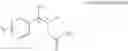
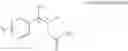
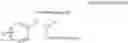
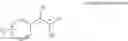
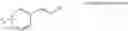
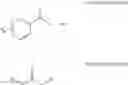
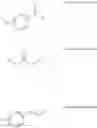
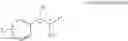


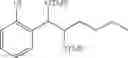

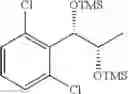


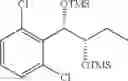




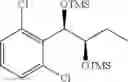


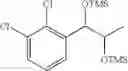


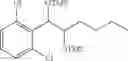


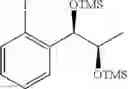


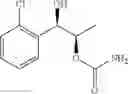

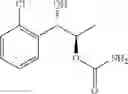

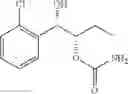


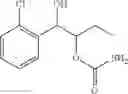
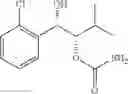

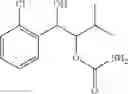
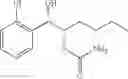


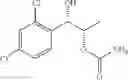


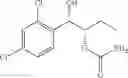
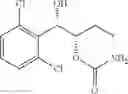


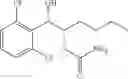
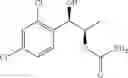


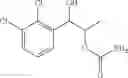


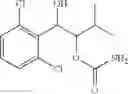


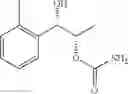


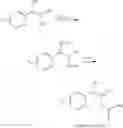

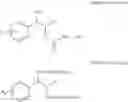
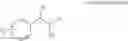


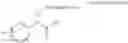
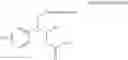


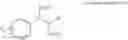

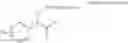


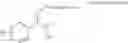
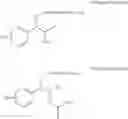
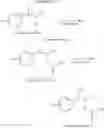

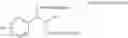

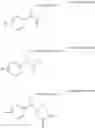
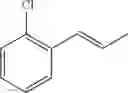
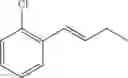

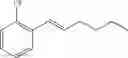
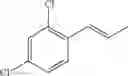
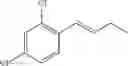
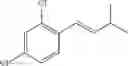

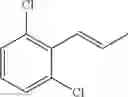


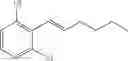
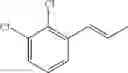

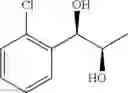
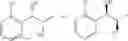
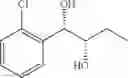
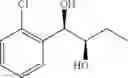
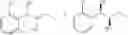
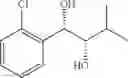
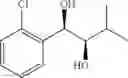

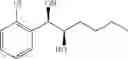
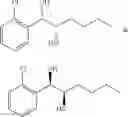

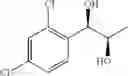
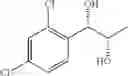
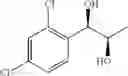


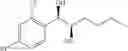
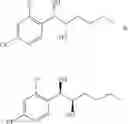

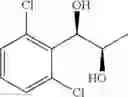
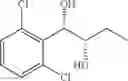
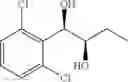
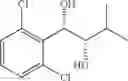

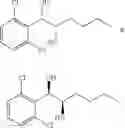

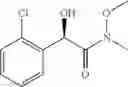
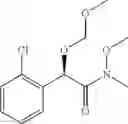

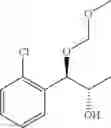
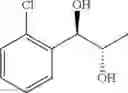
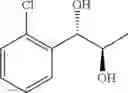
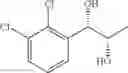
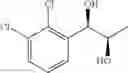

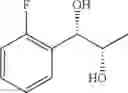
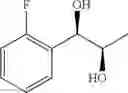
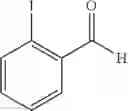
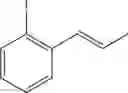
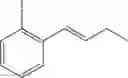

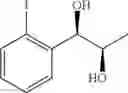
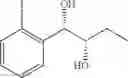
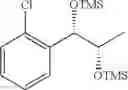
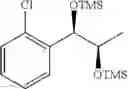
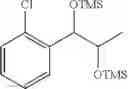
Sources:
- United States Patent and Trademark Office - verify current appl. status at the USPTO↗
Recent applications in this class:
- » 20250270239 2025-08-28
PROCESS FOR THE PREPARATION OF HIGH PURITY NORBORNENE SILYL ETHERS - » 20250101050 2025-03-27
METHOD FOR PRODUCING ORGANOSILICON COMPOUND - » 20240368201 2024-11-07
SILANE HYDROLYZATE AND PROCESSES FOR THE PREPARATION AND USE THEREOF - » 20240352050 2024-10-24
PROCESS FOR MAKING CYANOETHYLTRIMETHOXYSILANE - » 20240309025 2024-09-19
PROCESS FOR THE PREPARATION OF HIGH PURITY NORBORNENE SILYL ETHERS - » 20240217993 2024-07-04
METAL-CONTAINING SILYLOXY COMPOUND, METAL-CONTAINING SILYLOXY GROUP-COATED PARTICLES, METHOD FOR PRODUCING SAME, AND DISPERSION COMPOSITION - » 20230287019 2023-09-14
METHOD OF MANUFACTURING ALKOXYSILANE COMPOUND - » 20230227479 2023-07-20
METHOD OF MANUFACTURING ALKOXYSILANE COMPOUND - » 20220402944 2022-12-22
Functionalized Mesoporous Silica via an Aminosilane Surfactant Ion Exchange Reaction: Controlled Scaffold Design and Nitric Oxide Release - » 20220315611 2022-10-06
PREPARATION OF SILOXANES IN THE PRESENCE OF CATIONIC GERMANIUM(II) COMPOUNDS
Recent applications for this Assignee:
- » 20240076265 2024-03-07
Phenylcarbamate crystalline form and method for manufacturing the same - » 20230286910 2023-09-14
Phenylcarbamate crystalline form and method for manufacturing the same - » 20230101131 2023-03-30
Phenylcarbamate crystalline form and method for manufacturing the same - » 20180230090 2018-08-16
Sulfamate derivative compounds, processes for preparing them and their uses - » 20160023999 2016-01-28
Phenyl alkyl carbamate compounds for use in preventing or treating epilepsy or epilepsy-related syndrome - » 20140051753 2014-02-20
Phenylcarbamate compound and muscle relaxant containing the same - » 20130165509 2013-06-27
Phenyl alkyl carbamate derivative compound and pharmaceutical composition containing the same - » 20130165410 2013-06-27
Phenyl carbamate compounds for use in preventing or treating stroke - » 20130165409 2013-06-27
Phenyl carbamate compounds for use in alleviating or treating pain - » 20130005801 2013-01-03
Phenylcarbamate compound and muscle relaxant containing the same