Spinel ceramics via edge bonding
US20120196105A1
2012-08-02
13/354,143
2012-01-19
✅ Patent granted
US 8,652,281 B2
2014-02-18
-
-
Philip Tucker | Alex Efta
US Naval Research Laboratory | Stephen T. Hunnius
2032-04-15
Abstract:
Disclosed herein is a method for making transparent ceramic spinel windows, domes and other complex shapes via edge bonding.
Inventors:
- Jasbinder S. Sanghera 175 🇺🇸 Ashburn, VA, United States
- Guillermo R. Villalobos 44 🇺🇸 Springfield, VA, United States
- Shyam S. Bayya 57 🇺🇸 Ashburn, VA, United States
- Ishwar D. Aggarwal 50 🇺🇸 Fairfax Station, VA, United States
- Robert E. Miklos 7 🇺🇸 La Plata, MD, United States
- Robert E. Miklos 1 🇺🇸 La Platta, MD, United States
Assignee:
- The United States of America, as represented by the Secretary of the Navy 4,501 🇺🇸 Washington, DC, United States
Applicant:
Interested in similar patents?
Get notified when new applications in this technology area are published.
Classification:
B32B18/00 » CPC main
Layered products essentially comprising ceramics, e.g. refractory products
B32B37/14 » CPC further
Methods or apparatus for laminating, e.g. by curing or by ultrasonic bonding characterised by the properties of the layers
C04B35/645 » CPC further
Shaped ceramic products characterised by their composition ; Ceramics compositions ; Processing powders of inorganic compounds preparatory to the manufacturing of ceramic products; Forming processes; Processing powders of inorganic compounds preparatory to the manufacturing of ceramic products; Burning or sintering processes Pressure sintering
C04B37/001 » CPC further
Joining burned ceramic articles with other burned ceramic articles or other articles by heating directly with other burned ceramic articles
C04B2235/6562 » CPC further
Aspects relating to ceramic starting mixtures or sintered ceramic products; Aspects relating to heat treatments of ceramic bodies such as green ceramics or pre-sintered ceramics, e.g. burning, sintering or melting processes characterised by specific heating conditions during heat treatment Heating rate
C04B2235/6565 » CPC further
Aspects relating to ceramic starting mixtures or sintered ceramic products; Aspects relating to heat treatments of ceramic bodies such as green ceramics or pre-sintered ceramics, e.g. burning, sintering or melting processes characterised by specific heating conditions during heat treatment Cooling rate
C04B2235/6567 » CPC further
Aspects relating to ceramic starting mixtures or sintered ceramic products; Aspects relating to heat treatments of ceramic bodies such as green ceramics or pre-sintered ceramics, e.g. burning, sintering or melting processes characterised by specific heating conditions during heat treatment Treatment time
C04B2235/963 » CPC further
Aspects relating to ceramic starting mixtures or sintered ceramic products; Aspects relating to sintered or melt-casted ceramic products; Properties of ceramic products, e.g. mechanical properties such as strength, toughness, wear resistance Surface properties, e.g. surface roughness
C04B2237/343 » CPC further
Aspects relating to ceramic laminates or to joining of ceramic articles with other articles by heating; Composition of layers of ceramic laminates or of ceramic or metallic articles to be joined by heating, e.g. Si substrates; Ceramic; Oxidic Alumina or aluminates
C04B2237/52 » CPC further
Aspects relating to ceramic laminates or to joining of ceramic articles with other articles by heating; Processing aspects relating to ceramic laminates or to the joining of ceramic articles with other articles by heating Pre-treatment of the joining surfaces, e.g. cleaning, machining
C04B2237/704 » CPC further
Aspects relating to ceramic laminates or to joining of ceramic articles with other articles by heating; Processing aspects relating to ceramic laminates or to the joining of ceramic articles with other articles by heating; Forming laminates or joined articles comprising layers of a specific, unusual thickness of one or more of the ceramic layers or articles
C04B2237/76 » CPC further
Aspects relating to ceramic laminates or to joining of ceramic articles with other articles by heating; Processing aspects relating to ceramic laminates or to the joining of ceramic articles with other articles by heating Forming laminates or joined articles comprising at least one member in the form other than a sheet or disc, e.g. two tubes or a tube and a sheet or disc
Y10T156/1064 » CPC further
Adhesive bonding and miscellaneous chemical manufacture; Methods of surface bonding and/or assembly therefor with cutting, punching, tearing or severing; Prior to assembly Partial cutting [e.g., grooving or incising]
Y10T428/24355 » CPC further
Stock material or miscellaneous articles; Structurally defined web or sheet [e.g., overall dimension, etc.] Continuous and nonuniform or irregular surface on layer or component [e.g., roofing, etc.]
Y10T428/24967 » CPC further
Stock material or miscellaneous articles; Structurally defined web or sheet [e.g., overall dimension, etc.] including components having same physical characteristic in differing degree; Thickness [relative or absolute] Absolute thicknesses specified
B32B7/02 IPC
Layered products characterised by the relation between layers; Layered products characterised by the relative orientation of features between layers, or by the relative values of a measurable parameter between layers, i.e. products comprising layers having different physical, chemical or physicochemical properties; Layered products characterised by the interconnection of layers Physical, chemical or physicochemical properties
B32B38/10 IPC
Ancillary operations in connection with laminating processes Removing layers, or parts of layers, mechanically or chemically
C03B29/00 IPC
Reheating glass products for softening or fusing their surfaces; Fire-polishing; Fusing of margins
B32B37/00 IPC
Methods or apparatus for making layered products; Treatment of the layers or of the layered products
B32B37/00 IPC
Methods or apparatus for laminating, e.g. by curing or by ultrasonic bonding
B29C65/00 IPC
Joining of preformed parts ; Apparatus therefor
C04B37/00 IPC
Joining burned ceramic articles with other burned ceramic articles or other articles by heating
C08J5/00 IPC
Manufacture of articles or shaped materials containing macromolecular substances
Description
This application claims priority to and benefit of U.S. Patent Application No. 61/437,880 filed Jan. 31, 2011 the entirety of which is herein incorporated by reference.
BACKGROUND
This application concerns a method of making transparent ceramic spinel windows, domes and other complex shapes.
BRIEF SUMMARY OF THE INVENTION
Spinel (MgAl2O4) is a rugged, hard and strong ceramic material which transmits from the UV to the infrared (0.2 to about 6 μm). The ceramic is made by densifying powder at elevated temperatures.
Spinel can be achieved by hot pressing powders or by sintering a pre-shaped green body. This leads to closed porosity and/or a density greater than 90%. Subsequent hot isostatic pressing (HIP) eliminates residual porosity to leave a fully dense ceramic.
The sintering process relies on monodisperse nano-powder and proper cold shaping prior to sintering at elevated temperatures. This process has proved very difficult to make transparent spinel ceramic and leads to warping of larger parts or complex shapes due to non-uniform densification.
The hot pressing has been demonstrated by us to be reproducible since the die design dictates the shape of the final ceramic part.
This has been very successful to make flat spinel parts but leads to problems when trying to make complex shapes such as domes, especially hyperhemispherical, and ogives, etc. The unique aspect ratio of domes and especially ogive domes makes it very difficult to hot press without inducing excessive stresses which cause premature mechanical failure during hot pressing.
BRIEF DESCRIPTION OF THE DRAWINGS
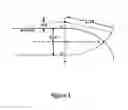
FIG. 1 illustrates a geometric shape of an ogive.
FIG. 2(a) illustrates two spinel ceramic tiles prior to diffusion bonding and (b) illustrates after diffusion bonding.
FIG. 3 illustrates an edge bonded approximately hemispherical spinel ceramic dome.
FIG. 4 illustrates two ogive dome halves and a fully bonded transparent ogive made from spinel ceramic.
DETAILED DESCRIPTION
This disclosure teaches a method of making transparent ceramic spinel windows, domes and other complex shapes.
This disclosure teaches a method that overcomes the current issues and fabricates crack-free high optical quality spinel ceramic parts such as domes and flats larger than can be achieved by hot pressing alone.
This disclosure is based on edge bonding two or more parts together to make a transparent article. The bondline is invisible after the bonding process and the final part has the same properties as the original spinel including optical and mechanical properties.
Spinel (MgAl2O4) is a rugged, hard and strong ceramic material which transmits from the UV to the infrared (0.2 to about 6 μm). The ceramic is made by densifying powder at elevated temperatures. This can be achieved by hot pressing powders or by sintering a pre-shaped green body. This leads to closed porosity and/or a density greater than 90%. Subsequent hot isostatic pressing (HIP) eliminates residual porosity to leave a fully dense ceramic.
The sintering process relies on monodisperse nano-powder and proper cold shaping prior to sintering at elevated temperatures. This process has proved very difficult to make transparent spinel ceramic and leads to warping of larger parts or complex shapes due to non-uniform densification.
The hot pressing has been demonstrated by us to be reproducible since the die design dictates the shape of the final ceramic part. This has been very successful to make flat spinel parts but leads to problems when trying to make complex shapes such as domes, especially hyperhemispherical, and ogives, etc. The unique aspect ratio of domes and especially ogive domes makes it very difficult to hot press without inducing excessive stresses which cause premature mechanical failure during hot pressing.
An ogive dome's size and shape, including sharpness are defined in FIG. 1. The sharpness of an ogive dome is expressed by the ratio of its radius to the diameter of the cylinder; a value of one half being a hemispherical dome, and larger values being progressively more pointed. The more pointed the dome, the more difficult it is to make.
Two or more spinel parts can be polished to a surface roughness of better than 1 nm. This is critical since larger surface roughness leads to trapped voids after the bonding process.
The two or more parts are then brought together and heated to about ⅔ (1000-1200 C.) of the hot pressing temperature (1500 C.) for several hours to effectively bond the parts together.
The joined part can be further polished to the desired finish.
This method is very effective at tiling spinel ceramics together and diffusion bonding to make larger panels. Similarly, a custom, yet simpler die is needed to make a half dome and with much reduced stresses.
After polishing and edge bonding the parts together, only one monolithic part remains with an invisible or almost invisible bondline. This is a successful method to make spinel ogive domes.
EXAMPLES
Example 1
Two spinel 3″×3″×½″ thick transparent tiles were edge polished to <1 nm surface roughness (FIG. 2(a)). The samples were brought together and held under slight load, heated up to 1100 C. at 5 C./min and held for 6 hours, and then cooled slowly to room temperature at 1 C./min. The final part was polished to remove surface debris and artifacts.
FIG. 2(b) shows the final part which exhibits excellent optical transparency from the UV to 5 μm, similar to or same as the parts prior to bonding.
Example 2
A die was designed for the hot press to make half hemispherical domes from spinel ceramic. The two halves were given a high quality polish to provide a surface roughness of <1 nm and edge bonded similar to the process shown in Example 1. The final dome was surface polished and is shown in FIG. 3.
Example 3
This example demonstrates the fabrication of an ogive dome using two halves previously hot pressed in a custom die. The edges are polished to <1 nm surface roughness and then edge bonded together, similar to process used in Example 1. The ogive dimensions will dictate the design of custom dies for use in the hot press to make the halve ogives.
This new edge bonding process has the capability to make complex shapes, such as domes, and especially ogive domes that cannot be made any other way with transparent spinel ceramic. It also enables scale up to larger samples, which could be complex shapes or just flat windows.
Many modifications and variations of the present invention are possible in light of the above teachings. It is therefore to be understood that the claimed invention may be practiced otherwise than as specifically described. Any reference to claim elements in the singular, e.g., using the articles “a,” “an,” “the,” or “said” is not construed as limiting the element to the singular.
Claims
What we claim is:1. A method of making spinel ceramics comprising:
polishing one edge of a first spinel part to a surface roughness of less than 1 nm;
polishing one edge of a second spinel part to a surface roughness of less than 1 nm;
joining the polished edge of the first spinel part to the polished edge of the second spinel part;
heating the first and second spinel parts to about 1000-1200° C.; and
maintaining said heating for about 3-6 hours resulting in bonded spinel parts.
2. The method of claim 1 further including the step of cooling to room temperature.
3. The method of claim 2 wherein said heating is at a rate of about 5° C./min and said cooling is at a rate of about 1° C./min.
4. The method of claim 3 further including the step of polishing the bonded spinel parts.
5. The method of claim 4 wherein said bonded spinel parts is a spinel ogive dome.
6. The method of claim 5 wherein said spinel ogive dome is a monolithic part with an invisible or almost invisible bondline.
7. A method of making a spinel ceramic comprising:
polishing a first edge of a first spinel transparent tile of about 3″×3″×½″ thick wherein said polishing results in <1 nm surface roughness;
polishing a first edge of a second spinel transparent tile of about 3″×3″×½″ thick wherein said polishing results in <1 nm surface roughness;
bonding the polished edges;
applying a load;
heating up to 1100° C. at 5° C./min and held for 6 hours; and
cooling slowly to room temperature at 1° C./min resulting in a spinel ceramic.
8. The method of claim 7 further including polishing multiple edges of additional spinel transparent tiles wherein said polishing results in <1 nm surface roughness and bonding the polished edges to form a monolithic ceramic.
9. The method of claim 8 further including polishing the spinel ceramic to remove surface debris and artifacts.
10. The method of claim 9 wherein the spinel ceramic exhibits optical transparency from the UV to about 5 μm, similar to the first spinel transparent tile and the second spinel transparent tile prior to bonding.
11. A spinel ceramic made from the process of claim 1 wherein said spinel ceramic comprises a monolithic spinel ogive dome with an invisible or nearly invisible bondline wherein said spinel (MgAl2O4) is a rugged, hard and strong ceramic material which transmits from the UV to the infrared in the range of from about 0.2 to about 5 μm.
Images & Drawings included:



Sources:
- United States Patent and Trademark Office - verify current appl. status at the USPTO↗
Similar patent applications:
- » 20140079909
Spinel Ceramics Via Edge Bonding
Recent applications in this class:
- » 20250256489 2025-08-14
Coincident Surface Modifications and Methods of Preparation Thereof - » 20250236097 2025-07-24
PROCESSING APPARATUSES AND METHODS OF USING - » 20250236096 2025-07-24
CERAMIC MATRIX COMPOSITE SANDWICH STRUCTURE AND METHOD OF MANUFACTURE - » 20250214324 2025-07-03
CERAMIC SUBSTRATE AND METHOD FOR MANUFACTURING CERAMIC SUBSTRATE - » 20250187311 2025-06-12
COMPOSITE HEAT DISSIPATION MATERIAL - » 20250018690 2025-01-16
JOINED BODY - » 20240408855 2024-12-12
METHOD TO FABRICATE A MACHINABLE CERAMIC MATRIX COMPOSITE - » 20240359434 2024-10-31
Ceramic matrix composite (CMC) component resistant to edge cracks - » 20240300219 2024-09-12
Ceramic package for quantum computing and method for preparation - » 20240278543 2024-08-22
CERAMIC MATRIX COMPOSITES AND METHOD OF MAKING
Recent applications for this Assignee:
- » 20240409833 2024-12-12
Sustainable turbine and diesel fuels from isoprene and α olefins - » 20240322426 2024-09-26
Phased Array of Electrolytic Fluid Antennas and a Method for Dynamically Beam Steering the Same - » 20240237991 2024-07-18
Simplified field use junctional tourniquets - » 20240119734 2024-04-11
System and method for efficient filtering, clustering, tracking and persistent motion detection for event cameras - » 20240118137 2024-04-11
Gyro stabilized modular laser measurement device - » 20240069125 2024-02-29
Apparatus and methods for virtually linear and temperature-independent sensing of magnetic fields - » 20240044623 2024-02-08
Fragmentation pattern, optimized for drawn cup warheads with a dome and cylindrical wall - » 20240036295 2024-02-01
Digital Adaptive Optics Encoder Module - » 20230190301 2023-06-22
Simplified field use junctional tourniquets - » 20230160661 2023-05-25
Long distance shooting tool for target identification, communication, and ballistic data