Process for producing aldehydes or ketones by oxidizing alcohols with oxygen
US20120220792A1
2012-08-30
13/497,960
2010-07-30
✅ Patent granted
US 8,748,669 B2
2014-06-10
WO; PCT/CN2010/075608; 20100730
WO; WO2012/012952; 20120202
Sikarl Witherspoon
Birch, Stewart, Kolasch & Birch, LLP
2030-12-18
Abstract:
Provided is a process for producing aldehydes or ketones by oxidizing alcohols with oxygen, which comprises oxidizing alcohols to aldehydes or ketones in an organic solvent at room temperature with oxygen or air as an oxidant, wherein ferric nitrate (Fe(NO3)3.9H2O), 2,2,6,6-tetramethylpiperidine N-oxyl (TEMPO) and an inorganic chloride are used as catalysts, the reaction time is 1-24 hours, and the molar ratio of said alcohols, 2,2,6,6-tetramethylpiperidine N-oxyl and the inorganic chloride is 100:1˜10:1˜10:1˜10. The present process has the advantages of high yield, mild reaction conditions, simple operation, convenient separation and purification, recoverable solvents, substrates used therefor being various and no pollution, and therefore it is adaptable to industrialization.
Inventors:
- Yu Liu 69 🇨🇳 Shanghai, China
- Bo Chen 53 🇨🇳 Shanghai, China
- Juntao Ye 2 🇨🇳 Shanghai, China
- Baoqiang Wan 2 🇨🇳 Shanghai, China
- Shengming Ma 9 🇨🇳 Shanghai, China
- Jinxian Liu 1 🇨🇳 Shanghai, China
- Jinqiang Kuang 1 🇨🇳 Shanghai, China
- Yuli Wang 2 🇨🇳 Shanghai, China
- Qiong Yu 1 🇨🇳 Shanghai, China
- Weiming Yuan 1 🇨🇳 Shanghai, China
- Suhua Li 1 🇨🇳 Shanghai, China
- Jiajia Cheng 2 🇨🇳 Shanghai, China
- Shichao Yu 1 🇨🇳 Shanghai, China
Assignee:
- Shanghai Institute of Organic Chemistry, Chinese Academy of Sciences 38 🇨🇳 Shanghai, China
- EAST CHINA NORMAL UNIVERSITY 68 🇨🇳 Shanghai, China
Applicant:
Interested in similar patents?
Get notified when new applications in this technology area are published.
Classification:
C07C45/38 » CPC main
Preparation of compounds having >C = O groups bound only to carbon or hydrogen atoms; Preparation of chelates of such compounds by oxidation with molecular oxygen of >C—O—functional groups to >C=O groups being a primary hydroxyl group
B01J31/006 » CPC further
Catalysts comprising hydrides, coordination complexes or organic compounds comprising organic radicals, e.g. TEMPO
B01J31/28 » CPC further
Catalysts comprising hydrides, coordination complexes or organic compounds containing in addition, inorganic metal compounds not provided for in groups - of the platinum group metals, iron group metals or copper
C07F7/1804 » CPC further
Compounds containing elements of Groups 4 or 14 of the Periodic System; Silicon compounds; Compounds having one or more C—Si linkages; Compounds having one or more C—Si linkages as well as one or more C—O—Si linkages Compounds having Si-O-C linkages
B01J2231/763 » CPC further
Catalytic reactions performed with catalysts classified in; Oxidation reactions, e.g. epoxidation, (di)hydroxylation, dehydrogenation and analogues; Dehydrogenation of -CH-XH (X= O, NH/N, S) to -C=X or -CX triple bond species
B01J2531/842 » CPC further
Additional information regarding catalytic systems classified in; Complexes comprising metals of Group VIII as the central metal; Metals of the iron group Iron
C07C2601/14 » CPC further
Systems containing only non-condensed rings with a six-membered ring The ring being saturated
C07C2601/16 » CPC further
Systems containing only non-condensed rings with a six-membered ring the ring being unsaturated
C07C47/232 » CPC further
Compounds having —CHO groups; Unsaturated compounds having —CHO groups bound to acyclic carbon atoms containing six-membered aromatic rings, e.g. phenylacetaldehyde having unsaturation outside the aromatic rings
C07C47/21 » CPC further
Compounds having —CHO groups; Unsaturated compounds having —CHO groups bound to acyclic carbon atoms with only carbon-to-carbon double bonds as unsaturation
C07C49/203 » CPC further
Ketones; Ketenes; Dimeric ketenes ; Ketonic chelates; Unsaturated compounds containing keto groups bound to acyclic carbon atoms with only carbon-to-carbon double bonds as unsaturation
C07C49/217 » CPC further
Ketones; Ketenes; Dimeric ketenes ; Ketonic chelates; Unsaturated compounds containing keto groups bound to acyclic carbon atoms containing six-membered aromatic rings having unsaturation outside the aromatic rings
C07C49/235 » CPC further
Ketones; Ketenes; Dimeric ketenes ; Ketonic chelates; Unsaturated compounds containing keto groups bound to acyclic carbon atoms containing halogen containing six-membered aromatic rings having unsaturation outside the aromatic rings
C07C49/207 » CPC further
Ketones; Ketenes; Dimeric ketenes ; Ketonic chelates; Unsaturated compounds containing keto groups bound to acyclic carbon atoms with only carbon-to-carbon triple bonds as unsaturation
C07C49/794 » CPC further
Ketones; Ketenes; Dimeric ketenes ; Ketonic chelates; Ketones containing a keto group bound to a six-membered aromatic ring having unsaturation outside an aromatic ring
C07C49/807 » CPC further
Ketones; Ketenes; Dimeric ketenes ; Ketonic chelates; Ketones containing a keto group bound to a six-membered aromatic ring containing halogen all halogen atoms bound to the ring
C07C49/80 » CPC further
Ketones; Ketenes; Dimeric ketenes ; Ketonic chelates; Ketones containing a keto group bound to a six-membered aromatic ring containing halogen
C07C49/84 » CPC further
Ketones; Ketenes; Dimeric ketenes ; Ketonic chelates; Ketones containing a keto group bound to a six-membered aromatic ring containing ether groups, groups, groups, or groups
C07C47/222 » CPC further
Compounds having —CHO groups; Unsaturated compounds having —CHO groups bound to acyclic carbon atoms with only carbon-to-carbon triple bonds as unsaturation
C07C47/277 » CPC further
Compounds having —CHO groups; Unsaturated compounds having —CHO groups bound to acyclic carbon atoms containing ether groups, groups, groups, or groups
C07C49/683 » CPC further
Ketones; Ketenes; Dimeric ketenes ; Ketonic chelates; Unsaturated compounds containing a keto groups being part of a ring containing six-membered aromatic rings having unsaturation outside the aromatic rings
C07C47/55 » CPC further
Compounds having —CHO groups; Compounds having —CHO groups bound to carbon atoms of six—membered aromatic rings containing halogen
C07C47/575 » CPC further
Compounds having —CHO groups; Compounds having —CHO groups bound to carbon atoms of six—membered aromatic rings containing ether groups, groups, groups, or groups
C07C49/78 » CPC further
Ketones; Ketenes; Dimeric ketenes ; Ketonic chelates; Ketones containing a keto group bound to a six-membered aromatic ring Acetophenone
C07C47/02 » CPC further
Compounds having —CHO groups Saturated compounds having —CHO groups bound to acyclic carbon atoms or to hydrogen
C07C49/04 » CPC further
Ketones; Ketenes; Dimeric ketenes ; Ketonic chelates Saturated compounds containing keto groups bound to acyclic carbon atoms
C07C49/403 » CPC further
Ketones; Ketenes; Dimeric ketenes ; Ketonic chelates; Saturated compounds containing a keto group being part of a ring of a six-membered ring
C07C205/44 » CPC further
Compounds containing nitro groups bound to a carbon skeleton the carbon skeleton being further substituted by —CHO groups
C07F7/18 IPC
Compounds containing elements of Groups 4 or 14 of the Periodic System; Silicon compounds; Compounds having one or more C—Si linkages Compounds having one or more C—Si linkages as well as one or more C—O—Si linkages
C07F7/08 IPC
Compounds containing elements of Groups 4 or 14 of the Periodic System; Silicon compounds Compounds having one or more C—Si linkages
C07C201/12 » CPC further
Preparation of esters of nitric or nitrous acid or of compounds containing nitro or nitroso groups bound to a carbon skeleton; Preparation of nitro compounds by reactions not involving the formation of nitro groups
C07C45/39 » CPC further
Preparation of compounds having >C = O groups bound only to carbon or hydrogen atoms; Preparation of chelates of such compounds by oxidation with molecular oxygen of >C—O—functional groups to >C=O groups being a secondary hydroxyl group
Description
FIELD OF THE TECHNOLOGY
The present invention relates to a process for producing aldehydes or ketones by aerobic oxidation of alcohols with a ferrous catalyst.
BACKGROUND OF THE TECHNOLOGY
Aldehydes and ketones are known as important raw materials in fine chemical industry, and are widely applied in industrial chemical production as well as in academic research laboratories. Oxidation is a type of basic and crucial chemical transformation. In industry, aldehydes and ketones are prepared mainly by oxidation. Hence it is promising to develop an economic, mild, eco-friendly and efficient catalytic oxidation method. Traditionally, aldehydes and ketones are prepared by oxidation of corresponding alcohols using at least stoichiometric amount of oxidants. Although this protocol enables the preparation of aldehydes and ketones, however, the use of oxidant such as chromium oxide, manganese oxide and ruthenium oxide etc., would yield almost the same amount of oxidant-derived waste, which causes a serious burden to the environment. Therefore such method is not suitable for large-scale industrial production (Chromium Oxidations in Organic Chemistry; Springer: Berlin, 1984; Regen, S. L.; Koteel, C. J. Am. Chem. Soc. 1977, 99, 3837-3838; Griffith, W. P. Chem. Soc. Rev. 1992, 21, 179-185). Thus much attention has been paid to methods for preparing aldehydes and ketones by catalytic oxidation of corresponding primary or secondary alcohols using oxygen as oxidant with transition metals such as Pd, Ru, Mo—Co, Co, Pt, Os—Cu, Os, Ni, Cu, Fe etc. (Blackburn, T. F.; Schwartz, J. J. Chem. Soc. Chem. Commun. 1977, 157-158; Piera, J.; Backvall, J.-E. Angew. Chem. Int. Ed. 2008, 47, 3506; Sheldon, R. A.; Arends, I. W. C. E.; Brink, G.-J. T.; Dijksman, A. Acc. Chem. Res. 2002, 35, 774; Mallat, T.; Baiker, A. Chem. Rev. 2004, 104, 3037). TEMPO, as a stable oxygen free radical, plays an important role in synergetic catalytic oxidation with Fe or Cu of primary or secondary alcohols to prepare the corresponding aldehydes or ketones.
The present invention overcomes a series of defects of existing technologies such as the use of heavy metals as catalyst, rigorous reaction conditions, time-consuming, limited scope of substrates, high reaction temperature and reaction pressure etc., and thereby provides an efficient method for preparing aldehydes or ketones by aerobic oxidation under atmospheric pressure. In said method, ferric nitrate, TEMPO, and inorganic chlorides are used as co-catalyst, oxygen is used as oxidant, and thereby brings advantages including the reducing chemical wastes, pollutions, cost, and various resources for starting materials, as well as mild reaction conditions and high efficiency. The method according to the present invention is suitable for large-scale industrial production and is eco-friendly.
SUMMARY OF INVENTION
The present invention provides a method for preparing aldehydes and ketones by a catalytic aerobic oxidation of alcohols under mild reaction conditions and meanwhile possesses such advantages as high efficiency, low cost and being eco-friendly.
The method for preparing aldehydes or ketones by aerobic oxidation of alcohols according to the present invention comprises a step of oxidizing alcohol to aldehyde or ketone at room temperature in an organic solvent for about 1 to about 24 hours using oxygen or air as oxidant, and using ferric nitrate, 2.2.6.6-tetramethylpiperidinyloxy(TEMPO) and inorganic chlorides as catalysts, wherein a molar ratio of said alcohol to said 2.2.6.6-tetramethylpiperidinyloxy, to said ferric nitrate, and to said inorganic chlorides is about 100:1˜10:1˜10:1˜10.
Suitable alcohols according to the present invention include R1R2CHOH and C5-C8 cyclic alcohols. In said molecular formula of R1R2CHOH, R1 represents hydrogen; C1-16 alkyl; an alkenyl substituted with groups R3 and/or R4; allenyl substituted with groups R5 and/or R6; alkynyl substituted with group R7, aryl, trifluoromethylphenyl, nitrophenyl, halophenyl or C1-C4 alkoxyphenyl; and R2 represents hydrogen, C1-16 alkyl, aryl, trifluoromethylphenyl, halophenyl or methoxyphenyl, in which R3 represents C1-C6 alkyl or aryl; R4 represents hydrogen, C1-C6 alkyl or aryl; R5 represents hydrogen, C1-C9 alkyl, arylphenyl or benzyl; R6 represents hydrogen, C4-C9 alkyl, aryl or benzyl; and R7 represents hydrogen, C1-C12 alkyl, trimethylsilyl, aryl, halophenyl, nitrophenyl or methoxyphenyl. The said aryl is phenyl, halophenyl, alkoxyphenyl or naphthyl.
The C5-C8 cyclic alcohols according to the present invention is cyclopentanol, cyclohexanol, cycloheptanol or cyclooctanol.
Suitable organic solvents according to the present invention include benzene, toluene, dichloromethane, 1,2-dichloroethane, 1,1-dichloroethane, 1,2-dichloropropane, 1,3-dichloropropane, nitromethane, ethylene glycol dimethyl ether, tetrahydrofuran, acetonitrile or ethyl acetate or any combinations thereof.
Suitable inorganic chlorides according to the present invention include sodium chloride, potassium chloride, lithium chloride, rubidium chloride or cesium chloride, and preferably is sodium chloride.
The molar ratio of said alcohol to said 2.2.6.6-tetramethylpiperidinyloxy, to said ferric nitrate, and to said inorganic chlorides according to the present invention is preferably about 100:5:10:10.
The present invention discloses a method f or preparing aldehydes or ketones by oxidation of alcohols in an organic solvent at room temperature using oxygen as oxidant and Fe(NO3)3.9H2O, TEMPO (2,2,6,6-tetramethylpiperidinyloxy) and inorganic chloride (NaCl) as catalysts. The method of the present invention selectively oxidizes an alcohol with functional groups such as carbon-carbon single bond, carbon-carbon double bond or a carbon-carbon triple bond etc. with oxygen in the air or pure oxygen under atmospheric pressure and produces corresponding aldehyde and ketone of a primary alcohol or a secondary alcohol by oxidation. The advantages of the method according to the present invention include high yield, mild reaction conditions, simple operation, convenient separation and purification of products, recyclable solvents, various resources for starting materials, being eco-friendly, and no pollution etc. The present invention is suitable for application in industrial production.
One advantage of the present invention is that the substrates are available from various resources. The present invention uses Fe(NO3)3.9H2O, TEMPO and inorganic chloride as co-catalyst, which can catalytic oxidize not only normal alcohols, benzylic alcohols, enols, cyclic alcohols etc., but also alcohols bearing much complicated structure such as propargylic alcohol and allenol etc. The method according to the present invention has advantages of mild reaction conditions, simple operations, convenient separation and purification of products, and the solvents being recoverable. Besides, the method according to the present invention has high yield and catalyst efficiency. For instance, an effective reaction can be initiated even if the content of catalysts is as low as 1 mol %. The method of the present invention overcomes a series of defects of existing technologies such as use of heavy metals as catalyst, rigorous reaction conditions, the reaction as being time-consuming, and limited catalyst substrates. The method of the present invention is not only suitable for small-scale synthesis in laboratories, but also for large scale industrial production.
The method according to the present invention uses oxygen or air, which is low-cost, and abundant in amount, replacing the chemical oxidants in conventional oxidation systems. The reaction can be conducted at room temperature under atmospheric pressure and neutral conditions, and the operations are convenient and controllable. For example, the reaction goes on well at room temperature under atmospheric pressure. Because of the use of oxygen as oxidant in the process according to the present invention, byproduct of the reaction is water, which will not result in any pollution to the environment, if treated properly, thus it is a green chemosynthesis. The present invention with simple working and high yield, effectively lowers the cost of production.
EMBODIMENTS OF THE INVENTION
Detailed description will be described now for better understating of the present invention, but not for limiting the contents of the present invention.
Example 1
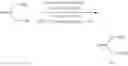
Preparation of 2-benzylbuta-2,3-dienal
wherein, atm stands for atmospheric pressure, rt stands for room temperature.
Fe(NO3)3.9H2O (20.3 mg, 0.05 mmol), 1,2-dichloroethane (DCE, 4 mL), 2,2,6,6-tetramethylpiperidinyloxy (TEMPO, 15.6 mg, 0.10 mmol) and NaCl (5.8 mg, 0.10 mmol) were added to a 10 mL-three-necked flask and were stirred for 5 mins at room temperature under oxygen atmosphere. 2-benzylbuta-2,3-dienol (160.6 mg, 1.0 mmol) was dissolved in DCE (1 mL) and then added to the reaction solution dropwise, and the reaction was monitored by TLC till it was complete. Then the reaction solution was diluted with ether (30 mL), dried over anhydrous MgSO4, filtered by a short pad of silica gel, and then concentrated to yield the crude products. Further purification by column chromatography on silica gel (petroleum ether:ethyl acetate=20:1) afforded the target product 2-benzylbuta-2,3-dienal (114.5 mg, 72%). 1H NMR (300 MHz, CDCl3) δ 9.61 (s, 1H), 7.31-7.15 (m, 5H), 5.28 (t, J=2.4 Hz, 2H), 3.52 (t, J=2.6 Hz, 2H); 13C NMR (75.4 MHz, CDCl3) δ 222.50, 191.41, 138.52, 128.84, 128.35, 126.41, 110.62, 80.83, 30.84; IR (neat) 2827, 2728, 1955, 1928, 1677, 1602, 1495, 1454, 1426, 1227, 1144, 1071, 1030 cm−1; MS (EI) m/z 158 (M+, 5.25), 129 (100); HRMS: calcd. for C11H10O (M+): 158.0732. found: 158.07333.
Example 2
Preparation of 2,3-tridecadienal
Example 2 was conducted in the same manner as example 1 except that the raw material was 2,3-tridecadienol and the reaction continues for 5 hours. The resulting product was 2,3-tridecadienal, and the yield was 80%. 1H NMR (300 MHz, CDCl3) δ 9.44 (d, J=7.2 Hz, 1H), 5.84-5.71 (m, 2H), 2.25-2.10 (m, 2H), 1.55-1.42 (m, 2H), 1.42-1.20 (m, 12H), 0.84 (t, J=6.6 Hz, 3H); 13C NMR (75.4 MHz, CDCl3) δ 218.94, 192.00, 98.47, 96.19, 31.73, 29.38, 29.17, 29.15, 28.82, 28.71, 27.36, 22.53, 13.94; MS (EI) m/z 194 (M+, 0.79), 81 (100); IR (neat) 2924, 2854, 1943, 1690, 1465, 1107, 1081 cm−1; HRMS: calcd. for C13H22O (M+): 194.1671. found: 194.1671.
Example 3
Preparation of trideca-1,2-dien-4-one
Example 3 was conducted in the same manner as example 1 except that the raw material was trideca-1,2-dien-4-ol (196.2 mg, 1.0 mmol) and the reaction continues for 10.5 hours. The resulting product was trideca-1,2-dien-4-one (161.7 mg, 84%). 1H NMR (300 MHz, CDCl3) δ 5.74 (t, J=6.5 Hz, 1H), 5.20 (d, J=6.3 Hz, 2H), 2.57 (t, J=7.4 Hz, 2H), 1.63-1.50 (m, 2H), 1.35-1.17 (m, 12H), 0.85 (t, J=6.3 Hz, 3H); 13C NMR (75.4 MHz, CDCl3) δ 216.57, 200.88, 96.62, 79.16, 39.19, 31.81, 29.37, 29.33, 29.19, 29.14, 24.53, 22.59, 14.00; IR (neat) 2955, 2854, 1961, 1934, 1681, 1465, 1410, 1365, 1157, 1105, 1068 cm−1; MS (EI) m/z 194 (M+, 1.37), 41 (100); HRMS calcd. for: C13H22O (M+): 194.1671. found: 194.1673.
Example 4
Preparation of 2-hexyl-1-phenylbuta-2,3-dien-1-one
Example 4 was conducted in the same manner as example 1 except that the raw material was 2-hexyl-1-phenylbuta-2,3-dien-1-ol (229.4 mg, 1.0 mmol) and the reaction continues for 23 hours. The resulting product was 2-hexyl-1-phenylbuta-2,3-dien-1-one (123.1 mg, 54%). 1H NMR (300 MHz, CDCl3) δ 7.76 (d, J=7.8 Hz, 2H), 7.49 (t, J=7.1 Hz, 1H), 7.38 (t, J=7.7 Hz, 2H), 5.04 (t, J=2.7 Hz, 2H), 2.45-2.35 (m, 2H), 1.58-1.25 (m, 8H), 0.90 (t, J=6.5 Hz, 3H); 13C NMR (75.4 MHz, CDCl3) δ 216.95, 194.78, 138.34, 131.85, 128.97, 127.73, 106.88, 79.26, 31.56, 28.85, 27.83, 27.80, 22.53, 13.98; IR (neat) 3059, 2955, 2856, 1932, 1650, 1598, 1579, 1447, 1315, 1269, 1177, 1072 cm−1; MS (EI) m/z 228 (M+, 1.69), 105 (100); HRMS: calcd. for C16H20O (M+): 228.1514. found: 228.1512.
Example 5
Preparation of 1-(4-chlorophenyl)buta-2,3-dien-1-one
Example 5 was conducted in the same manner as example 1 except that the raw material was 1-(4-chlorophenyl)buta-2,3-dien-1-ol (180.1 mg, 1.0 mmol) and the reaction continues for 4 hours. The resulting product was 1-(4-chlorophenyl)buta-2,3-dien-1-one (unstable upon evaporation, NMR yield 84%). 1H NMR (300 MHz, CDCl3) δ 7.83 (d, J=8.1 Hz, 2H), 7.41 (d, J=7.8 Hz, 2H), 6.38 (t, J=6.5 Hz, 1H), 5.26 (d, J=6.3 Hz, 2H); 13C NMR (75.4 MHz, CDCl3) δ 216.38, 188.88, 138.41, 134.99, 129.38, 127.95, 92.46, 78.76; IR (neat): 1961, 1931, 1652, 1588, 1277, 1212, 1091 cm−1; MS (EI) m/z 180 (M(37Cl)+, 2.53), 178 (M(35Cl)+, 10.29), 139 (100); HRMS: calcd. for C10H735ClO (M+): 178.0185. found: 178.0185.
Example 6
Preparation of 3-hexylocta-1,2-dien-4-one
Example 6 was conducted in the same manner as example 1 except that the raw material was 3-hexylocta-1,2-dien-4-ol (211.3 mg, 1.0 mmol) and the reaction continues for 4 hours. The resulting product was 3-hexylocta-1,2-dien-4-one (156.1 mg, 75%). 1H NMR (300 MHz, CDCl3) δ 5.16 (t, J=2.9 Hz, 2H), 2.64 (t, J=7.7 Hz, 2H), 2.20-2.10 (m, 2H), 1.61-1.49 (m, 2H), 1.42-1.21 (m, 10H), 0.93-0.82 (m, 6H); 13C NMR (75.4 MHz, CDCl3) δ 216.25, 201.38, 108.62, 79.35, 38.94, 31.61, 28.88, 27.82, 27.21, 26.27, 22.58, 22.37, 14.02, 13.82; IR (neat): 2957, 2928, 2858, 1934, 1677, 1464, 1410, 1379, 1349, 1259, 1175, 1086, 1020 cm−1; MS (EI) m/z 208 (M+, 0.48), 85 (100); HRMS: calcd. for C14H24O (M+): 208.1827. found: 208.1826.
Example 7
Preparation of non-2-ynal
Example 7 was conducted in the same manner as example 1 except that the raw material was non-2-ynol (140.1 mg, 1.0 mmol) and the reaction continues for 3 hours. The resulting product was non-2-ynal (119.9 mg, 87%). 1H NMR (300 MHz, CDCl3) δ 9.18 (s, 1H), 2.41 (t, J=7.1 Hz, 2H), 1.66-1.50 (m, 2H), 1.48-1.24 (m, 6H), 0.90 (t, J=6.6 Hz, 3H); 13C NMR (75.4 MHz, CDCl3) δ 176.86, 99.20, 81.61, 31.07, 28.39, 27.41, 22.34, 19.00, 13.86; IR (neat) 2930, 2859, 2237, 2200, 1716, 1670, 1458, 1380, 1278, 1225, 1137 cm−1; MS (EI) m/z 138 (M+, 0.40), 137 (M+-H, 1.57), 41 (100).
Example 8
Preparation of 3-phenylpropynal
Example 8 was conducted in the same manner as example 1 except that the raw material was 3-phenylpropynol (132.0 mg, 1.0 mmol) and the reaction continues for 2.3 hours. The resulting product was 3-phenylpropynal (111.9 mg, 86%). 1H NMR (300 MHz, CDCl3) δ 9.41 (s, 1H), 7.59 (d, J=7.8 Hz, 2H), 7.48 (t, J=6.9 Hz, 1H), 7.39 (t, J=6.9 Hz, 2H); 13C NMR (75.4 MHz, CDCl3) δ 176.61, 133.16, 131.19, 128.65, 119.34, 94.96, 88.35; IR (neat) 2854, 2738, 2240, 2185, 1654, 1489, 1443, 1387, 1260, 1070 cm−1; MS (EI) m/z 130 (M+, 64.02), 102 (100).
Example 9
Preparation of 3-(4-nitrophenyl)propynal
Example 9 was conducted in the same manner as example 1 except that the raw material was 3-(4-nitrophenyl)prop-2-yn-1-ol (177.5 mg, 1.0 mmol) and the reaction continues for 1.7 hours. The resulting product was 3-(4-nitrophenyl)propynal (125.5 mg, 72%). 1H NMR (300 MHz, CDCl3) δ 9.43 (s, 1H), 8.24 (d, J=8.4 Hz, 2H), 7.75 (d, J=8.7 Hz, 2H); 13C NMR (75.4 MHz, CDCl3) δ 176.03, 148.70, 133.78, 125.87, 123.71, 90.67, 90.49; IR (neat) 2924, 2854, 2195, 1655, 1592, 1511, 1342, 1103 cm−1.
Example 10
Preaparation of 3-(4-methoxyphenyl)propynal
Example 10 was conducted in the same manner as example 1 except that the raw material was 3-(4-methoxyphenyl)prop-2-yn-1-ol (161.9 mg, 1.0 mmol) and the reaction continues for 3.5 hours. The resulting product was 3-(4-methoxyphenyl)propynal (110.8 mg, 69%). 1H NMR (300 MHz, CDCl3) δ 9.38 (s, 1H), 7.54 (d, J=8.7 Hz, 2H), 6.90 (d, J=8.7 Hz, 2H), 3.83 (s, 3H); 13C NMR (75.4 MHz, CDCl3) δ 176.32, 161.78, 135.03, 114.14, 110.67, 96.15, 88.37, 55.07; IR (neat) 2178, 1643, 1598, 1507, 1303, 1254, 1175, 1022 cm−1; MS (EI) m/z (%) 160 (M+, 100).
Example 11
Preparation of 1-(4-trifluoromethylphenyl)hept-2-yn-1-one
Example 11 was conducted in the same manner as example 1 except that the raw material was 1-(4-trifluoromethylphenyl)hept-2-yn-1-ol (256.3 mg, 1.0 mmol) and the reaction continues for 3 hours. The resulting product was 1-(4-trifluoromethylphenyl)hept-2-yn-1-one (201.0 mg, 79%). 1H NMR (300 MHz, CDCl3) δ 8.24 (d, J=8.1 Hz, 2H), 7.74 (d, J=8.1 Hz, 2H), 2.54 (t, J=6.9 Hz, 2H), 1.75-1.61 (m, 2H), 1.58-1.44 (m, 2H), 0.98 (t, J=7.4 Hz, 3H); 13C NMR (75.4 MHz, CDCl3) δ 176.78, 139.45, 134.91 (q, J=32.3 Hz), 129.70, 125.60-125.40 (m), 123.54 (q, J=272.6 Hz), 98.27, 79.38, 29.70, 22.02, 18.85, 13.37; IR (neat) 2962, 2936, 2875, 2239, 2201, 1650, 1583, 1509, 1466, 1411, 1322, 1261, 1170, 1128, 1108, 1064, 1016 cm−1; MS (EI) m/z 254 (M+, 3.14), 173 (100); HRMS: calcd. for C14H13OF3 (M+): 254.0918. found: 254.0919.
Example 12
Preparation of 1-phenylhept-1-yn-3-one
Example 12 was conducted in the same manner as example 1 except that the raw material was 1-phenylhept-1-yn-3-ol (187.8 mg, 1.0 mmol) and the reaction continues for 2.5 hours. The resulting product was 1-phenylhept-1-yn-3-one (161.3 mg, 87%). 1H NMR (300 MHz, CDCl3) δ 7.56 (d, J=7.5 Hz, 2H), 7.47-7.30 (m, 3H), 2.66 (t, J=7.4 Hz, 2H), 1.78-1.64 (m, 2H), 1.46-1.31 (m, 2H), 0.95 (t, J=7.4 Hz, 3H); 13C NMR (75.4 MHz, CDCl3) δ 188.01, 132.87, 130.50, 128.50, 119.97, 90.37, 87.77, 45.14, 26.14, 22.05, 13.70; IR (neat) 3063, 2958, 2872, 2201, 1666, 1489, 1443, 1272, 1158, 1125, 1067 cm−1; MS (EI) m/z 186 (M+, 1.67), 129 (100).
Example 13
Preparation of 1-(tert-butyldimethylsilyloxy)undec-2-yn-4-one
Example 13 was conducted in the same manner as example 1 except that the raw material was 1-(tert-butyldimethylsilyloxy)undec-2-yn-4-ol (21-97.5 mg, 1.0 mmol) and the reaction continues for 3.5 hours. The resulting product was 1-(tert-butyldimethylsilyloxy)undec-2-yn-4-one (267.1 mg, 90%). 1H NMR (300 MHz, CDCl3) δ 4.46 (s, 2H), 2.54 (t, J=7.4 Hz, 2H), 1.74-1.62 (m, 2H), 1.38-1.22 (m, 8H), 0.96-0.86 (m, 12H), 0.13 (s, 6H); 13C NMR (75.4 MHz, CDCl3) δ 187.71, 90.19, 83.88, 51.50, 45.33, 31.59, 28.95, 28.90, 25.70, 23.97, 22.55, 18.22, 14.0, −5.23; IR (neat) 2929, 2857, 2216, 1679, 1464, 1364, 1255, 1153, 1098 cm−1; MS (EI) m/z 296 (M+, 0.15), 239 (M+-But, 67.49), 75 (100); HRMS: calcd. for C17H32O2Si (M+): 296.2172. found: 296.2174.
Example 14
Preparation of 1-phenyl-3-(trimethylsilyl)propynone
Example 14 was conducted in the same manner as example 1 except that the raw material was 1-phenyl-3-(trimethylsilyl)propynol (204.9 mg, 1.0 mmol) and the reaction continues for 1.5 hours. The resulting product was 1-phenyl-3-(trimethylsilyl)propynone (191.0 mg, 94%). 1H NMR (300 MHz, CDCl3) δ 8.14 (d, J=8.1 Hz, 2H), 7.61 (t, J=7.4 Hz, 1H), 7.48 (t, J=7.7 Hz, 2 H), 0.32 (s, 9H); 13C NMR (75.4 MHz, CDCl3) δ 177.64, 136.48, 134.11, 129.60, 128.54, 100.84, 100.49, −0.73; IR (neat) 2153, 1643, 1598, 1579, 1450, 1312, 1243, 1173, 1035, 1016 cm−1; MS (EI) m/z 202 (M+, 16.37), 187 (100).
Example 15
Preparation of 1-(4-methoxyphenyl)hept-2-yn-1-one
Example 15 was conducted in the same manner as example 1 except that the raw material was 1-(4-methoxyphenyl)hept-2-yn-1-ol (218.7 mg, 1.0 mmol) and the reaction continues for 3 hours. The resulting product was 1-(4-methoxyphenyl)hept-2-yn-1-one (195.0 mg, 90%). 1H NMR (300 MHz, CDCl3) δ 8.10 (d, J=8.4 Hz, 2H), 6.94 (d, J=8.7 Hz, 2H), 3.87 (s, 3H), 2.48 (t, J=6.9 Hz, 2H), 1.71-1.58 (m, 2H), 1.57-1.42 (m, 2H), 0.96 (t, J=7.2 Hz, 3 H); 13C NMR (75.4 MHz, CDCl3) δ 176.74, 164.12, 131.70, 130.23, 113.57, 95.69, 79.50, 55.38, 29.76, 21.91, 18.71, 13.35; IR (neat) 2958, 2934, 2872, 2238, 2199, 1635, 1594, 1573, 1508, 1460, 1421, 1316, 1251, 1164, 1113, 1026 cm−1; MS (EI) m/z 216 (M+, 63.27), 135 (100).
Example 16
Preparation of undec-6-yn-5-one
Example 16 was conducted in the same manner as example 1 except that the raw material was undec-6-yn-5-ol (168.4 mg, 1.0 mmol) and the reaction continues for 4 hours. The resulting product was undec-6-yn-5-one (151.8 mg, 91%). 1H NMR (300 MHz, CDCl3) δ 2.52 (t, J=7.4 Hz, 2H), 2.37 (t, J=6.9 Hz, 2H), 1.71-1.60 (m, 4H), 1.60-1.28 (m, 4H), 0.97-0.89 (m, 6H); 13C NMR (75.4 MHz, CDCl3) δ 188.43, 94.10, 80.87, 45.20, 29.71, 26.19, 22.08, 21.89, 18.57, 13.72, 13.40; IR (neat) 2959, 2933, 2873, 2213, 1672, 1465, 1243, 1168 cm−1; MS (EI) m/z 165 (M+-H, 0.07), 151 (M+-CH3, 4.57), 109 (M+-Bu-n, 100).
Example 17
Preparation of dodec-1-yn-3-one
Example 17 was conducted in the same manner as example 1 except that the raw material was dodec-1-yn-3-ol (182.2 mg, 1.0 mmol) and the reaction continues for 5 hours. The resulting product was dodec-1-yn-3-one (156.5 mg, 87%). 1H NMR (300 MHz, CDCl3) δ 3.20 (s, 1H), 2.58 (t, J=7.4 Hz, 2H), 1.75-1.60 (m, 2H), 1.37-1.20 (m, 12H), 0.88 (t, J=6.3 Hz, 3H); 13C NMR (75.4 MHz, CDCl3) δ 187.51, 81.49, 78.18, 45.44, 31.82, 29.33, 29.26, 29.20, 28.87, 23.77, 22.63, 14.04; IR (neat): 2925, 2855, 2093, 1681, 1465, 1404, 1377, 1205, 1132, 1089, 1051 cm−1; MS (EI) m/z 180 (M+, 0.22), 179 (M+-H, 0.85), 53 (100).
Example 18
Preparation of trans-3,7-dimethyl-2,6-octadienal
Example 18 was conducted in the same manner as example 1 except that the raw material was trans-3,7-dimethyl-2,6-octadienol (154.7 mg, 1.0 mmol) and the reaction continues for 8 hours. The resulting product was trans-3,7-dimethyl-2,6-octadienal (141.3 mg, 93%). 1H NMR (300 MHz, CDCl3) δ 9.98 (d, J=7.5 Hz, 1H), 5.87 (d, J=7.2 Hz, 1H), 5.07 (s, 1H), 2.30-2.10 (m, 7H), 1.68 (s, 3H), 1.61 (s, 3H); 13C NMR (75.4 MHz, CDCl3) δ 191.18, 163.70, 132.82, 127.34, 122.52, 40.52, 25.67, 25.54, 17.60, 17.47; IR (neat) 2968, 2917, 2856, 1671, 1632, 1611, 1442, 1379, 1193, 1120, 1044 cm−1; MS (EI) m/z (%) 152 (M+, 2.55), 69 (100).
Example 19
Preparation of trans-4-methyl-1-phenypent-1-en-3-one
Example 19 was conducted in the same manner as example 1 except that the raw material was trans-4-methyl-1-phenypent-1-en-3-ol (176.6 mg, 1.0 mmol) and the reaction continues for 4 hours. The resulting product was trans-4-methyl-1-phenypent-1-en-3-one (102.8 mg, 59%). 1H NMR (300 MHz, CDCl3) δ 7.61 (d, J=16.2 Hz, 1H), 7.57-7.52 (m, 2H), 7.41-7.34 (m, 3H), 6.82 (d, J=7.8 Hz, 1H), 2.93 (hept, J=6.9 Hz, 1H), 1.19 (s, 3H), 1.17 (s, 3 H); 13C NMR (75.4 MHz, CDCl3) δ 203.62, 142.27, 134.59, 130.21, 128.79, 128.16, 124.36, 39.14, 18.37; IR (neat) 3028, 1687, 1662, 1610, 1576, 1495, 1465, 1449, 1383, 1348, 1301, 1201, 1147, 1120, 1087, 1054 cm−1; MS (EI) m/z 159 (M+-CH3, 7.13), 41 (100).
Example 20
Preparation of 2-phenylcyclohex-2-enone
Example 20 was conducted in the same manner as example 1 except that the raw material was 2-phenylcyclohex-2-enol (175.0 mg, 1.0 mmol) and the reaction continues for 4 hours. The resulting product was 2-phenylcyclohex-2-enone (149.2 mg, 86%). 1H NMR (300 MHz, CDCl3) δ 7.34-7.20 (m, 5H), 6.95 (t, J=4.1 Hz, 1H), 2.56-2.40 (m, 4H), 2.08-1.96 (m, 2 H); 13C NMR (75.4 MHz, CDCl3) δ 197.47, 147.75, 139.92, 136.32, 128.31, 127.61, 127.16, 38.73, 26.22, 22.57; IR (neat) 2948, 2930, 1661, 1553, 1491, 1443, 1427, 1357, 1315, 1279, 1261, 1208, 1155, 1119, 1071, 1032 cm−1; MS (EI) m/z 172 (M+, 59.46), 115 (100).
Example 21
Preparation of p-chlorobenzaldehyde
Example 21 was conducted in the same manner as example 1 except that the raw material was p-chlorobenzyl alcohol (142.3 mg, 1.0 mmol) and the reaction continues for 3 hours. The resulting product was p-chlorobenzaldehyde (122.2 mg, 87%). 1H NMR (300 MHz, CDCl3) δ 9.98 (s, 1H), 7.82 (d, J=7.5 Hz, 2H), 7.51 (d, J=7.8 Hz, 2H); 13C NMR (75.4 MHz, CDCl3) δ 190.75, 140.91, 134.72, 130.85, 129.42; IR (neat): 2856, 1699, 1588, 1575, 1485, 1385, 1295, 1264, 1205, 1165, 1092, 1012 cm−1; MS (EI) m/z 142 (M+(37Cl), 10.04), 140 (M+(35Cl), 35.62), 41 (100).
Example 22
Preparation of p-methoxybenzaldehyde
Example 19 was conducted in the same manner as example 1 except that the raw material was p-methoxybenzyl alcohol (137.8 mg, 1.0 mmol) and the reaction continues for 3 hours. The resulting product was p-methoxybenzaldehyde (122.4 mg, 90%). 1H NMR (300 MHz, CDCl3) δ 9.87 (s, 1H), 7.82 (d, J=8.4 Hz, 2H), 6.99 (d, J=8.4 Hz, 2H), 3.87 (s, 3H); 13C NMR (75.4 MHz, CDCl3) δ 190.24, 164.13, 131.45, 129.49, 113.84, 55.09; IR (neat) 2840, 2739, 1680, 1595, 1576, 1510, 1460, 1426, 1393, 1314, 1255, 1214, 1182, 1157, 1108, 1021 cm−1; MS (EI) m/z 136 (M+, 69.21), 135 (100).
Example 23
Preparation of p-nitrobenzaldehyde
Example 23 was conducted in the same manner as example 1 except that the raw material was p-nitrobenzyl alcohol (153.1 mg, 1.0 mmol) and the reaction continues for 2.5 hours. The resulting product was p-nitrobenzaldehyde (141.6 mg, 94%). 1H NMR (300 MHz, CDCl3) δ 10.16 (s, 1
H), 8.39 (d, J=8.4 Hz, 2H), 8.07 (d, J=8.4 Hz, 2H); 13C NMR (75.4 MHz, CDCl3) δ 190.23, 140.07, 130.45, 124.28; IR (neat) 2852, 1707, 1606, 1539, 1382, 1346, 1325, 1287, 1198, 1105, 1008 cm−1; MS (EI) m/z 151 (M+, 73.95), 51 (100).
Example 24
Preparation of Acetophenone
Example 24 was conducted in the same manner as example 1 except that the raw material was 1-phenyl ethanol (121.4 mg, 1.0 mmol) and the reaction continues for 3 hours. The resulting product was acetophenone (106.9 mg, 89%). 1H NMR (300 MHz, CDCl3) δ 7.96 (d, J=7.8 Hz, 2H), 7.56 (t, J=7.4 Hz, 1H), 7.46 (t, J=7.7 Hz, 2H), 2.60 (s, 3H); 13C NMR (75.4 MHz, CDCl3) 198.09, 137.15, 133.05, 128.54, 128.27, 26.53; IR (neat) 1681, 1598, 1582, 1448, 1358, 1263, 1180, 1078, 1024 cm−1; MS (EI) m/z 120 (M+, 33.35), 77 (100).
Example 25
Preparation of Hexadecanal
Example 25 was conducted in the same manner as example 1 except that the raw material was hexadecanol (242.7 mg, 1.0 mmol) and the reaction continues for 11 hours. The resulting product was hexadecanal (168.5 mg, 70%). 1H NMR (300 MHz, CDCl3) δ 9.76 (s, 1H), 2.41 (t, J=7.4 Hz, 2H), 1.68-1.56 (m, 2H), 1.36-1.18 (m, 24H), 0.88 (t, J=6.2 Hz, 3H); 13C NMR (75.4 MHz, CDCl3) δ 202.82, 43.89, 31.91, 29.64, 29.56, 29.40, 29.33, 29.16, 22.66, 22.08, 14.06; IR (neat) 2912, 2849, 1729, 1704, 1470, 1411, 1392, 1373 cm−1; MS (EI) m/z 240 (M+, 2.20), 57 (100).
Example 26
Preparation of tridecan-2-one
Example 23 was conducted in the same manner as example 1 except that the raw material was tridecan-2-ol (201.1 mg, 1.0 mmol) and the reaction continues for 7 hours. The resulting product was tridecan-2-one (186.4 mg, 94%). 1H NMR (300 MHz, CDCl3) δ 2.31 (t, J=7.4 Hz, 2H), 2.02 (s, 3H), 1.53-1.42 (m, 2H), 1.27-1.10 (m, 16H), 0.78 (t, J=6.3 Hz, 3H); 13C NMR (75.4 MHz, CDCl3) δ 208.60, 43.52, 31.71, 29.47, 29.42, 29.29, 29.22, 29.14, 28.99, 23.66, 22.47, 13.84; IR (neat) 2923, 2853, 1717, 1465, 1411, 1358, 1260, 1226, 1162 cm−1; MS (EI) m/z 198 (M+, 2.18), 43 (100).
Example 27
Preparation of Cyclohexanone
Fe(NO3)3.9H2O (2.0681 g, 5.0 mmol), TEMPO (781.3 mg, 5.0 mmol), NaCl (299.0 mg, 5.0 mmol), and DCE(50 mL) were added to a 100 mL-three-necked flask, and were stirred for 5 mins at room temperature under oxygen atmosphere. Cyclohexanol (10.0718 g, 100.0 mmol) was then added dropwise to the reaction solution. The reaction was exothermic, and the reaction temperature was kept below 50° C. The reaction was monitored by TLC till it was complete. The resulting mixture was purified by distillation under reduced pressure (20 mmHg, 68-71° C.) to afford the product cyclohexanone (8.33 g, 85%). 1H NMR (300 MHz, CDCl3) δ 2.33 (t, J=6.6 Hz, 4H), 1.90-1.80 (m, 4H), 1.77-1.63 (m, 2H); 13C NMR (75.4 MHz, CDCl3) δ 212.13, 41.64, 26.73, 25.22.
Example 28
Preparation of Acetophenone
Fe(NO3)3.9H2O (16.1607 g, 40.0 mmol), TEMPO (6.2510 g, 40.0 mmol), NaCl (2.3377 g, 40.0 mmol) and DCE(400 mL) were added to a 2 L-three-necked flask, and were stirred for 10 mins at room temperature under oxygen atmosphere. 1-Phenyl ethanol (488.64 g, 4.0 mol) was then added dropwise to the reaction solution. The reaction was exothermic, and the reaction temperature was kept below 50° C. The reaction was monitored by TLC till it was complete. The reaction solvent DCE was recovered after distillation under atmospheric pressure (350 mL, recovery of 88%) and acetophenone was obtained after further distillation under reduced pressure (b.p. 98˜100° C./20 mmHg, 436.6414 g, 91%).
Examples 29-34
Fe(NO3)3.9H2O (0.05 mmol), 1,2-dichloroethane (DCE, 4 mL), TEMPO(0.05 mmol) and additive (0.05 mmol) were added to a 10 mL-three-necked flask and were stirred for 5 mins at room temperature under oxygen atmosphere. 3-Hexylocta-1,2-dien-4-ol (0.5 mmol) was dissolved in DCE (1 mL) and then was added dropwise to the reaction solution. The reaction was monitored by TLC till it was complete. The resulting reaction solution was diluted with ether (30 mL), dried over anhydrous MgSO4, filtered by a short pad of silica gel and condentrated under reduced pressure, and then trimethylbenzene (46 uL) was added, and conversion and yield were analyzed by nuclear magnetic resonance spectra (1H NMR, 300 MHz).
| Reaction | Conversion | Yield | ||
| Example | Additive | time (h) | (%, NMR) | (%, NMR) |
| 29 | Nil | 48 | 75 | 43 |
| 30 | LiCl•H2O | 10 | 95 | 74 |
| 31 | NaCl | 4 | 100 | 72 |
| 32 | KCl | 4.5 | 100 | 81 |
| 33 | RbCl | 3 | 100 | 74 |
| 34 | CsCl | 3 | 100 | 73 |
Claims
1. A process for producing aldehydes or ketones by aerobic oxidation of alcohol comprising a step of oxidizing alcohol to aldehyde or ketone at room temperature in an organic solvent for about 1 to 24 hours using oxygen or air as oxidant, and ferric nitrate, 2.2.6.6-tetramethylpiperidinyloxy and inorganic chlorides as catalysts, wherein a molar ratio of said alcohol to said 2.2.6.6-tetramethylpiperidinyloxy, to said ferric nitrate, and to said inorganic chlorides is 100:1˜10:1˜10:1˜10.
2. The process for producing aldehydes or ketones by aerobic oxidation of alcohol of claim 1, wherein said alcohol is R1R2CHOH or C5-C8 cyclic alcohols,
wherein, R1 represents hydrogen; C1-16 alkyl; an alkenyl substituted with groups R3 and/or R4; allenyl substituted with groups R5 and/or R6; alkynyl, aryl, trifluoromethylphenyl, nitrophenyl, halophenyl or C1-C4 alkoxyphenyl substituted with R7; and R2 represents hydrogen, C1-16 alkyl, aryl, trifluoromethylphenyl, halophenyl or methoxyphenzyl, and
wherein, R3 represents C1-C16 alkyl or aryl; R4 represents hydrogen, C1-C6 alkyl or aryl; R5 represents hydrogen, C1-C9 alkyl, arylphenyl or benzyl; R6 represents hydrogen, C4-C9 alkyl, aryl or benzyl; and R7 represents hydrogen, C1-C12 alkyl, trimethylsilyl, aryl, halophenyl, nitrophenyl or methoxyphenyl.
3. The process for producing aldehydes or ketones by aerobic oxidation of alcohol of claim 2, wherein said aryl is phenyl, halophenyl, alkoxyphenyl or naphthyl.
4. The process for producing aldehydes or ketones by aerobic oxidation of alcohol of claim 1, said C5-C8 cyclic alcohols is cyclopentanol, cyclohexanol, cycloheptanol or cyclooctanol.
5. The process for producing aldehydes or ketones by aerobic oxidation of alcohol of claim 1, wherein said organic solvent is benzene, toluene, dichloromethane, 1,2-dichloroethane, 1,1-dichloroethane, 1,2-dichloropropane, 1,3-dichloropropane, nitromethane, ethylene glycol dimethyl ether, tetrahydrofuran, acetonitrile, ethyl acetate or any combinations thereof.
6. The process for producing aldehydes or ketones by aerobic oxidation of alcohol of claim 1, wherein said inorganic chlorides is sodium chloride, potassium chloride, lithium chloride, rubidium chloride or cesium chloride.
Images & Drawings included:


Sources:
- United States Patent and Trademark Office - verify current appl. status at the USPTO↗
Recent applications in this class:
- » 20250019333 2025-01-16
PROCESS FOR PREPARING ISOPRENAL AND/OR PRENAL - » 20240254067 2024-08-01
NOVEL METHOD FOR CONTINUOUS PHEROMONE PRODUCTION - » 20240228417 2024-07-11
PRODUCTION OF ACROLEIN OR ACRYLIC ACID FROM ISO-PROPANOL WITH HIGH YEILD AND LOW COST - » 20240132433 2024-04-25
PRODUCTION OF ACROLEIN OR ACRYLIC ACID FROM ISO-PROPANOL WITH HIGH YEILD AND LOW COST - » 20230271910 2023-08-31
PROCESS FOR FORMALDEHYDE MANUFACTURE - » 20230009838 2023-01-12
PROCESSES FOR ALDEHYDE SYNTHESIS - » 20220274905 2022-09-01
PRODUCTION OF ACROLEIN OR ACRYLIC ACID FROM ALLYL ALCOHOL WITH HIGH YIELD AND LOW IMPURITY - » 20200392060 2020-12-17
Process for the preparation of alpha, beta unsaturated aldehydes by oxidation of alcohols in the presence of a liquid phase - » 20190177260 2019-06-13
Process for the preparation of alpha, beta unsaturated aldehydes by oxidation of alcohols in the presence of a liquid phase - » 20180148399 2018-05-31
Process for aldehyde manufacture
Recent applications for this Assignee:
- » 20250250586 2025-08-07
Base Editing System for Achieving A-To-C and/or A-To-T Base Mutations and Use Thereof - » 20250231265 2025-07-17
METHOD FOR SELECTIVELY DETECTING MULTIPLE GROUPS AND/OR MOLECULES SIMULTANEOUSLY BY PREPARING MULTIPLE NUCLEAR SPIN SINGLET AND/OR SINGLET ORDERS - » 20250179111 2025-06-05
METHOD FOR SYNTHESIZING HIGH-PURITY PLANT-DERIVED CHOLESTEROL - » 20250145658 2025-05-08
SYNTHESIS METHOD FOR HIGH-PURITY CHOLESTEROL - » 20240425434 2024-12-26
PREPARATION METHOD FOR 1,3-DISUBSTITUTED ALLENE COMPOUND AT ROOM TEMPERATURE BASED ON METAL CARBENE CATALYTIC SYSTEM - » 20240310285 2024-09-19
OPTICAL-FIBER RAMAN PHOTOMETER, CONSTRUCTION METHOD THEREFOR AND APPLICATION THEREOF - » 20240175118 2024-05-30
PULSED LASER DEPOSITION METHOD - » 20240133862 2024-04-25
Multi-dimensional data acquisition and analysis system for placenta tissue - » 20240132492 2024-04-25
PYRIDOPYRIMIDINE-BASED COMPOUND AND APPLICATION THEREOF - » 20240026524 2024-01-25
Processing method and apparatus for ultrafast laser deposition of multilayer film including diamond-like carbon film, anti-reflection film and anti-fingerprint film