Gear-driven clutching and resetting device of door lock
US20120223534A1
2012-09-06
13/508,408
2009-12-31
✅ Patent granted
US 9,238,927 B2
2016-01-19
WO; PCT/CN2009/076311; 20091231
WO; WO2011/054163; 20110512
Kristina Fulton | Christine M Mills
Jacobson Holman, PLLC.
2032-06-15
Abstract:
A gear-driven clutching and resetting device of a door lock comprising a clutch 1, a rotary ring 2, a reset block 3, a reset spring 4, a reset block 5, and a locating pin 6. The clutch 1 is assembled inside the rotary ring 2, both of them rotate around the same center shaft. The reset spring 4 is fitted inside the reset block 5 which is in turn fitted inside the reset block 3, all three rotating around the same center shaft. A projection 61 of the locating pin 6 is fitted inside the groove 51 of the reset block 5, and has a limiting role on the reset block 5 when rotating. The gear 31 of the reset block 3 engages with the gear 11 of the clutch 1, thus realizing the transmission function between the reset block 3 and the clutch 1.
Applicant:
Interested in similar patents?
Get notified when new applications in this technology area are published.
Classification:
E05B15/00 IPC
Other details of locks; Parts for engagement by bolts of fastening devices
E05B47/0692 » CPC main
Operating or controlling locks or other fastening devices by electric or magnetic means; Controlling mechanically-operated bolts by electro-magnetically-operated detents by disconnecting the handle radially with a rectilinearly moveable coupling element
E05C19/00 IPC
Other devices specially designed for securing wings, e.g. with suction cups
E05B13/005 » CPC further
Devices preventing the key or the handle or both from being used Disconnecting the handle
E05B63/04 » CPC further
Locks or fastenings with special structural characteristics for alternative use on the right-hand or left-hand side of wings
E05B1/0007 » CPC further
Knobs or handles for wings; Knobs, handles, or press buttons for locks or latches on wings Knobs
E05B2001/0076 » CPC further
Knobs or handles for wings; Knobs, handles, or press buttons for locks or latches on wings The handle having at least two operating positions, e.g. the bolt can be retracted by moving the handle either upwards or downwards
Y10T292/1052 » CPC further
Closure fasteners; Bolts; Swinging; Spring projected Operating means
E05B47/06 IPC
Operating or controlling locks or other fastening devices by electric or magnetic means Controlling mechanically-operated bolts by electro-magnetically-operated detents
E05B13/00 IPC
Devices preventing the key or the handle or both from being used
E05B1/00 IPC
Knobs or handles for wings; Knobs, handles, or press buttons for locks or latches on wings
E05B1/00 IPC
Parts of locks or the like mountable on or in wings
Description
BACKGROUND OF THE INVENTION
The utility practical model is related to a gear-driven clutching and resetting device on a door lock, especially an all-gear-driven clutching and resetting device.
At present, there are a variety of clutching and resetting devices in the market.
The purpose of the utility practical model is to provide an all-gear-driven device that realizes clutching and resetting operations ingenious with mechanicals and geometric principles.
To achieve the above purpose, the technical scheme for the utility practical model is as follows:
A clutching and resetting device of a door lock that comprises a clutch, a rotary ring, a first reset block, a reset spring, a second reset block and a locating pin. The clutch is assembled inside the rotary ring, both of which rotate around the same center shaft. The reset spring is inside the second reset block, whereas the second reset block is inside the first reset block, with all three of them rotating around the same center shaft. The projection of the locating pin is fitted inside a groove in the reset block, so that the projection has a limiting role on the second reset block when the second reset block is rotating. The gear of the first reset block connects with the gear of the clutch, thus realizing the transmission function between the first reset block and the clutch.
The clutching and resetting device using the above gear has a simple structure, with a more flexible transmission function and enhanced reliability.
DESCRIPTION OF FIGURES
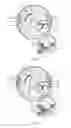
FIG. 1 and FIG. 2 Cross-section of reset block for inserting and withdrawing executive pin for right-hand opening
FIG. 3 Cross-section for locking of right-hand-knob by counterclockwise rotation
FIG. 4 Cross-section for unlocking of right-hand-knob by clockwise rotation
FIG. 5 Cross-section for locking by clockwise rotation
FIG. 6 and FIG. 7 Cross-section of reset block for inserting and withdrawing executive pin for left-hand-knob
FIG. 8 Cross-section for locking of left-hand-knob by clockwise rotation
FIG. 9 Cross-section for unlocking of left-hand-knob by counterclockwise rotation
FIG. 10 Cross-section of conversion from right-hand-knob to left-hand opening
DETAILED DESCRIPTION OF THE INVENTION
The utility practical model is further described as follows with reference to the figures:
A clutching and resetting device of a door lock that comprises a clutch 1, a rotary ring 2, a reset block 3, a reset spring 4, a reset block 5, and a locating pin 6. The clutch 1 is assembled inside the rotary ring 2, both of them rotate around the same center shaft. The reset spring 4 is fitted inside the reset block 5 whereas the reset block 5 is fitted inside the reset block 3, all three of them rotating around the same center shaft. The projection 61 of a locating pin 6 is installed inside a groove 51 of the reset block 5, so that the projection 61 has a limiting role on the reset block 5 when the reset block 5 is rotating.
In the above clutching and resetting device on a door lock, the gear 31 of the reset block 3 connects with the gear 11 of the clutch 1, thus realizing the transmission function between the reset block 3 and the clutch 1.
As shown in FIG. 1 and FIG. 2, a projection 12 and a pin 13 which can be stretched left and right and fitted inside the rotary ring 2 are on the clutch 1. A rib 121 and a rib 122 touch the projection 12, a rib 131 and a rib 132 touch the pin 13; and a rib 21 and a rib 22 are on the rotary ring 2.
As shown in FIG. 3, when the rotary ring 2 rotates counterclockwise in a limiting trip with an angle less than 90 degrees, regardless of whether the pin 13 retracts or is outside the clutch 1, the rib 21 pushes against the rib 121, the rotary ring 2 drives the clutch 1 to rotate together counterclockwise, thus it plays a role of back lock. Meanwhile, the gear 31 on the reset block 3 engages with the gear 11 of the clutch 1, thus realizing running between the reset block 3 and the clutch 1. When the clutch 1 rotates counterclockwise, it drives the reset block 3 clockwise, and when the reset block 3 rotates clockwise, it imposes a clockwise circumferential force on the rib 42 of the reset spring 4 to force them to rotate clockwise together. At the same time the pin 6 is fitted inside the groove 51 of the reset block 2 through the projection 61, thus realize a locating function for the reset block 2. Therefore, the reset block 2 does not rotate clockwise together with the reset spring 4 and the rib 52 of the reset block 2 pushes against the rib 41 of the reset spring 4, thus compressing the reset spring 4 in the circumferential direction to generate a counterclockwise circumferential restoring force; promptly after finishing the back locking of both the rotary ring 2 and the clutch 1. The rotary ring 2 resets, the counterclockwise circumferential restoring force of the reset spring 4 acts in reverse on the reset block 3 to make the reset block 3 rotate counterclockwise, and then the clutch 1 is reset back to the original position by the gear drive of the gear 31 and the gear 11.
As shown in FIG. 4, when the rotary ring 2 rotates clockwise in a limiting stroke at an angle less than 90 degrees, and the pin 13 extends out of clutch 1, the rib 22 pushes against the rib 131, and the rotary ring 2 drives the clutch 1 to rotate together clockwise, thus it plays a role of unlock. Meanwhile, the reset block 3 engages with the clutch 1 through the gear drive of the gear 31 and the gear 11. Therefore, the clutch 1 drives the reset block 3 to rotate counterclockwise when it rotates clockwise. When the reset block 3 rotates clockwise, it imposes a counterclockwise circumferential force on the rib 41 of the reset spring 4 which forces the rib 41 of the reset spring 4 to rotate together counterclockwise. At the same time the pin 6 is fitted inside the groove 51 of the reset block 5 through the projection 61, thus realizing the locating function for the reset block 5. Therefore, the reset block 5 does not rotate counterclockwise together with the reset spring 4 and the rib 53 of the reset block 5 pushes against the rib 42 of the reset spring 4, thus compressing the reset spring 4 towards the circumferential direction, and generates a clockwise circumferential restoring force; after finishing the locking action of both the rotary ring 2 and the clutch 1. The rotary ring 2 resets, the clockwise circumferential restoring force generating from the reset spring 4 acts in reverse on the reset block 3 to make the reset block 3 rotate clockwise, and then the clutch 1 is reset back to the original position through the gear drive of the gear 31 and the gear 11.
As shown in FIG. 5, when the rotary ring 2 rotates clockwise in a limiting stroke with an angle less than 90 degrees, the executive pin 13 retracts into the clutch 1, the rib 22 does not push against the rib 131, and now the rotary ring 2 cannot drive the clutch 1 to rotate together clockwise, so that the door cannot be unlocked and remains in the locked state.
As shown in FIG. 6, FIG. 7, FIG. 8 and FIG. 9, the principles for a Left-Open-Door-Knob and a Right-Open-Door-Knob are the same but the results are opposite, i.e., unlocking by rotating counterclockwise and back locking by rotating clockwise.
As the Right-Open-Door-Knob shown in FIG. 10, when the locating pin 6 is subjected to an externally acting force and causes the projection 61 to separate from the groove 51, the reset block 5 will not be fixed into position, so that the reset block 5 can rotate circumferentially. When the pin 13 of the clutch 1 retracts into the clutch 1, the rib 131 does not push against the rib 22; when the clutch rotates by 180° counterclockwise, rib 122 pushes against rib 22, and the Right-Open-Door-Knob is changed into Left-Open-Door-Knob. The gear drive of the gear 31 and the gear 11, the clutch 1 drives the reset block 5 to rotate clockwise and drives the reset block 3 to rotate together with the reset spring 4 when rotating counterclockwise. Since the number of teeth for the gear 31 is twice that of the gear 11, according to the principle of the gear drive, the clutch 1 drives the reset block 5 and reset block 3 to rotate 360° clockwise together with the reset spring 4 to return to the original position when rotating 180° counterclockwise. After the outside acting force on the locating pin 6 is removed, the locating pin 6 is fitted inside the groove 51 of the reset block 5 through the projection 61, thus realizing the positioning function for the reset block 5 by fixing the projection 61 (as shown in FIG. 6).
When the Left-Open-Door-Knob is changed into the Right-Open-Door-Knob, the principle is the same as that in the above description, i.e., the Left-Open-Door-Knob can be changed into the Right-Open-Door-Knob when the clutch 1 rotates 180° clockwise.
Claims
1. A gear-driven clutching and resetting device of a door lock comprising a clutch, a rotary ring, a first reset block, a reset spring, a second reset block, and a locating pin, whereas the clutch is assembled inside the rotary ring, both of which rotate around the same center shaft; the reset spring is fitted inside the second reset block, whereas the second reset block is fitted inside the first reset block; the three of them rotate around the same center shaft; a projection of the locating pin is fitted inside the groove of the second reset block, so that the projection has a limiting function on the second reset block when the second reset block is rotating.
2. The gear-driven clutching and resetting device of a door lock, as claimed in claim 1, wherein a gear of the first reset block engages with a gear of the clutch, thus realizing the transmission function between the first reset block and the clutch.
Images & Drawings included:



Sources:
- United States Patent and Trademark Office - verify current appl. status at the USPTO↗
Recent applications in this class:
- » 20250163727 2025-05-22
MODULAR CLUTCHING MECHANISM - » 20240200363 2024-06-20
Modular clutching mechanism - » 20230125284 2023-04-27
LOCK - » 20200370338 2020-11-26
Modular clutching mechanism - » 20200032551 2020-01-30
Modular clutching mechanism - » 20190309541 2019-10-10
Electronic deadbolt lock - » 20180128017 2018-05-10
Electronic deadbolt lock - » 20170356219 2017-12-14
Lock - » 20120090363 2012-04-19
Device for actuating a closing mechanism of a lock - » 20110291428 2011-12-01
Low energy clutch for electronic door lock