COATED WATERPROOF FABRIC
US20120238166A1
2012-09-20
13/421,903
2012-03-16
Abstract:
A coated waterproof fabric including a warp-knitted base fabric formed of first and second yarn types at least one of which is a UV-stabilized high density synthetic yarn, and a low density polymer coating applied to the warp-knitted base fabric through an extrusion process. A method for manufacturing a coated waterproof fabric.
Assignee:
- GALE PACIFIC USA, INC. 1 🇺🇸 Altamonte Springs, FL, United States
Interested in similar patents?
Get notified when new applications in this technology area are published.
Classification:
D04B21/16 » CPC main
Warp knitting processes for the production of fabrics or articles not dependent on the use of particular machines; Fabrics or articles defined by such processes; Fabrics characterised by the incorporation by knitting, in one or more thread, fleece, or fabric layers, of reinforcing, binding, or decorative threads; Fabrics incorporating small auxiliary elements, e.g. for decorative purposes incorporating synthetic threads
B32B5/026 » CPC further
Layered products characterised by the non- homogeneity or physical structure, i.e. comprising a fibrous, filamentary, particulate or foam layer; Layered products characterised by having a layer differing constitutionally or physically in different parts characterised by structural features of a layer Knitted fabric
B32B5/08 » CPC further
Layered products characterised by the non- homogeneity or physical structure, i.e. comprising a fibrous, filamentary, particulate or foam layer; Layered products characterised by having a layer differing constitutionally or physically in different parts characterised by structural features of a layer the fibres or filaments of a layer being of different substances, e.g. conjugate fibres, mixture of different fibres
B32B27/12 » CPC further
Layered products comprising synthetic resin next to a fibrous or filamentary layer
B32B27/32 » CPC further
Layered products comprising synthetic resin comprising polyolefins
D06N3/0009 » CPC further
Artificial leather, oilcloth or other material obtained by covering fibrous webs with macromolecular material, e.g. resins, rubber or derivatives thereof characterised by the substrate using knitted fabrics
D06N3/0038 » CPC further
Artificial leather, oilcloth or other material obtained by covering fibrous webs with macromolecular material, e.g. resins, rubber or derivatives thereof characterised by the substrate using fibres of specified chemical or physical nature, e.g. natural silk Polyolefin fibres
D06N3/045 » CPC further
Artificial leather, oilcloth or other material obtained by covering fibrous webs with macromolecular material, e.g. resins, rubber or derivatives thereof with macromolecular compounds obtained by reactions only involving carbon-to-carbon unsaturated bonds with polyolefin or polystyrene (co-)polymers
B32B2037/243 » CPC further
Methods or apparatus for laminating, e.g. by curing or by ultrasonic bonding characterised by the properties of the layers with at least one layer not being coherent before laminating, e.g. made up from granular material sprinkled onto a substrate Coating
B32B2262/0253 » CPC further
Composition or structural features of fibres which form a fibrous or filamentary layer or are present as additives; Synthetic macromolecular fibres Polyolefin fibres
B32B2305/186 » CPC further
Condition, form or state of the layers or laminate; Fibres of continuous length; Fabrics, textiles Knitted fabrics
B32B2307/406 » CPC further
Properties of the layers or laminate having particular optical properties Bright, glossy, shiny surface
B32B2307/71 » CPC further
Properties of the layers or laminate; Other properties Resistive to light or to UV
B32B2307/7265 » CPC further
Properties of the layers or laminate; Other properties; Permeability to liquids, absorption Non-permeable
D06N2201/12 » CPC further
Chemical constitution of the fibres, threads or yarns Fibres being in the form of a tape, strip or ribbon
D06N2209/0838 » CPC further
Properties of the materials having optical properties Bright, glossy, shiny surface
D06N2209/128 » CPC further
Properties of the materials; Permeability or impermeability properties; Permeability to liquids, absorption Non-permeable
D06N2209/1678 » CPC further
Properties of the materials having other properties Resistive to light or to UV
D06N2211/12 » CPC further
Specially adapted uses Decorative or sun protection articles
D06N2211/125 » CPC further
Specially adapted uses; Decorative or sun protection articles Awnings, sunblinds
D06N2213/02 » CPC further
Others characteristics All layers being of the same kind of material, e.g. all layers being of polyolefins, all layers being of polyesters
D10B2401/22 » CPC further
Physical properties protective against sunlight or UV radiation
D10B2403/0112 » CPC further
Details of fabric structure established in the fabric forming process; Surface features; Dissimilar front and back faces One smooth surface, e.g. laminated or coated
D10B2505/18 » CPC further
Industrial Outdoor fabrics, e.g. tents, tarpaulins
Y10T442/2213 » CPC further
Fabric [woven, knitted, or nonwoven textile or cloth, etc.]; Coated or impregnated woven, knit, or nonwoven fabric which is not [a] associated with another preformed layer or fiber layer or, [b] with respect to woven and knit, characterized, respectively, by a particular or differential weave or knit, wherein the coating or impregnation is neither a foamed material nor a free metal or alloy layer Coating or impregnation is specified as weather proof, water vapor resistant, or moisture resistant
B32B5/02 IPC
Layered products characterised by the non- homogeneity or physical structure, i.e. comprising a fibrous, filamentary, particulate or foam layer; Layered products characterised by having a layer differing constitutionally or physically in different parts characterised by structural features of a layer
B05D3/12 IPC
Pretreatment of surfaces to which liquids or other fluent materials are to be applied; After-treatment of applied coatings, e.g. intermediate treating of an applied coating preparatory to subsequent applications of liquids or other fluent materials by mechanical means
B05D1/00 IPC
Processes for applying liquids or other fluent materials
Description
CROSS-REFERENCE TO RELATED APPLICATION
This application claims priority to U.S. Provisional Application No. 61/454,123 filed Mar. 18, 2011, the contents of which are incorporated by reference herein.
TECHNICAL FIELD AND BACKGROUND OF THE INVENTION
1. Field of the Invention
The present invention relates generally to the field of coated waterproof fabrics, and more particularly, to a coated waterproof fabric including a warp-knitted base fabric including first and second yarn types at least one of which includes a UV-stabilized high density synthetic yarn, and a low density polymer coating applied to the knitted base through an extrusion process.
2. Background of the Invention
Waterproof fabrics have a wide variety of uses in both heavy-duty commercial and industrial applications, and in lighter weights, in residential-type end user applications. Some of the uses of waterproof fabrics include tarps, tents and coverings for many different types of shelters. To waterproof a fabric, one conventional technique involves laminating a base fabric with a plastic or resin film. This technique can cause both short term and long term problems, as an improperly-applied laminate may leak from the beginning of its use and become progressively delaminated during use as a result of being folded or stretched. Laminates may further deteriorate over time as a result of UV exposure. Thus, the waterproof characteristics of the fabric may be substantially degraded long before the base fabric has reached the end of its useful life.
Accordingly, it would be desirable to provide a coated waterproof fabric that overcomes the short and long term disadvantages of laminated fabrics. Such a fabric should provide enhanced wear and UV resistance both initially and throughout the life of the fabric.
BRIEF SUMMARY OF THE INVENTION
In one aspect, a coated waterproof fabric is provided herein.
In another aspect, a coated waterproof fabric is provided herein for outdoor use in articles such as tarps, tents, awnings, like structures and other articles.
In yet another aspect, a method of waterproofing a fabric is provided herein.
To achieve the foregoing and other aspects and advantages, in one embodiment a coated waterproof fabric is provided herein including a warp-knitted base fabric formed of first and second yarn types, at least one of the first and second yarns including a UV-stabilized high density synthetic yarn, and wherein a low density polymer coating is applied to the knitted base through an extrusion process.
The at least one of the fist and second yarns may include high density polyethylene. The polymer coating may include polyethylene.
The first and second yarns may be monofilament and tape yarns, respectively.
The yarns may be high density polyethylene with an active UV loading of between about 0.4 and 1 percent.
The base fabric may have a weight of between about 200 and 380 g/m2. The base fabric may be knitted with a lock stitch pattern with a 3 bar, 6 gauge knit construction.
According to another embodiment of the invention, the coating may be applied to the knitted base fabric according to a method including the steps of applying the coating in the form of a viscous liquid and subsequently applying a gloss roller to the fabric and the applied coating. The step of applying the gloss roller may further include the step of applying a chilled roller to solidify the coating on the fabric with a gloss finish with enhanced adhesion between the coating and the fabric. The coating may be extruded onto the fabric.
The coating may have a thickness of about 100 microns.
According to further embodiments of the invention, the coating may include a material applied to the knitted-base fabric according to a method selected from the group consisting of applying a high-solids viscous liquid, blowing the coating onto the fabric, and casting a film onto the fabric.
Additional features, aspects and advantages of the invention will be set forth in the detailed description which follows, and in part will be readily apparent to those skilled in the art from that description or recognized by practicing the invention as described herein. It is to be understood that both the foregoing general description and the following detailed description present various embodiments of the invention, and are intended to provide an overview or framework for understanding the nature and character of the invention as it is claimed. The accompanying drawings are included to provide a further understanding of the invention, and are incorporated in and constitute a part of this specification.
BRIEF DESCRIPTION OF THE DRAWINGS
Some of the aspects of the invention have been set forth above. Other features, aspects and advantages of the present invention are better understood when the following detailed description of the invention is read with reference to the accompanying drawings, in which:
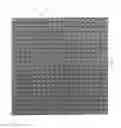
FIG. 1 is a photograph of one face of a coated waterproof fabric according to an embodiment of the invention;
FIG. 2 is a photograph of another face of a coated waterproof fabric according to an embodiment of the invention; and
FIG. 3 is a stitch diagram of the fabric according to an embodiment of the invention.
DETAILED DESCRIPTION OF THE INVENTION
The present invention will now be described more fully hereinafter with reference to the accompanying drawings in which exemplary embodiments of the invention are shown. However, the invention may be embodied in many different forms and should not be construed as limited to the representative embodiments set forth herein. The exemplary embodiments are provided so that this disclosure will be both thorough and complete, and will fully convey the scope of the invention and enable one of ordinary skill in the art to make, use and practice the invention. Like reference numbers refer to like elements throughout the various drawings.
Provided herein are embodiments of coated waterproof fabrics and methods for manufacturing the same. Such coated waterproof fabrics are particularly well suited for use in tarps, tents and shelter coverings, although their use in envisioned in other applications in requiring waterproof fabrics.
Referring now specifically to the drawings, a coated waterproof fabric according to the present invention is shown generally in FIGS. 1 and 2 at reference numeral 10. According to a preferred embodiment of the invention, the base fabric 10 is a 340 g/m2 warp-knitted fabric including both monofilament and tape yarns. Warp knitting is used in the broad sense herein to refer to the family of knitting methods in which the yarn “zigzags” along the length of the fabric, i.e., following adjacent columns (“wales”) of knitting. Such constructions are run-resistant and have a high degree of dimensional stability compared to many woven fabrics and weft knitted fabrics, and thus are ideal for applications requiring durable fabrics.
In a preferred embodiment, the fabric yarns are high density polyethylene (HDPE) yarns that are UV-stabilized (preferably HALS) with active UV loading of between about 0.4 and 1 percent. Other embodiments of the base fabric may preferably range between about 200 and 380 g/m2, although there is no theoretical limit on the possible weights, which may be determined based on the end use. The fabric may be knitted with a lock stitch pattern, 3 bar and 6 gauge knit construction. An exemplary stitch pattern is shown graphically in FIG. 3.
The lock stitch provides dimensional re-enforcement and tensile strength to the fabric structure. An exemplary width of the fabric may be about 2.80 m, but may vary from about 1.5 m to 3.2 m. As with the weight, there is no theoretical limit to the width.
The fabric is coated with an extrusion coating to render the fabric waterproof. One preferred embodiment of the coating is a UV-stabilized low density polyethylene (LDPE) coating applied to the knitted base fabric through an extrusion coating process. Other coating materials may be used. Extrusion coating may include using a high-solids viscous liquid, blown or cast film process to coat an additional layer onto the preformed knitted fabric. Typical UV active levels in the coating (preferably HALS) can vary from about 0.4 to 1.0 percent active loading. Typical coating thickness may be about 100 microns, though the coating thickness can preferably range from about 60 to 150 microns, or an even greater range depending upon the application. The coating is preferably applied at a high temperature up to about 300 degrees C., which has been determined to be optimal for maximum adhesion properties.
Subsequent to the application of the UV-stabilized low density polyethylene (LDPE) coating, a gloss chilled roller may then be used to form an even, high quality surface finish. In general, using a gloss chill roller improves gloss, provides a high level of coating adhesion, increases impact strength and tends to lower orientation shrinkage. A preferred finished width is about 2.70 m, but may vary from about 1.5 m to 3.20 m, or more.
The resulting preferred fabric is suitable as a component of, for example, small scale architectural structures requiring a waterproof membrane. The high levels of coating adhesion allow for hot wedge and hot air welding. The high UV loading allows for a minimum of 5 year outdoor exposure. Other fabric weights and densities may be suitable for heavy-duty industrial and commercial applications.
An improved coated waterproof fabric is described above. Various details of the invention may be changed without departing from the scope of the invention. Furthermore, the foregoing description of the preferred embodiment of the invention and best mode for practicing the invention are provided for the purpose of illustration only and not for the purpose of limitation, the invention being defined by the claims.
Claims
What is claimed is:1. A coated waterproof fabric, comprising:
(a) a warp-knitted base fabric formed of first and second yarn types;
(b) at least one of the first and second yarn types comprising a UV-stabilized high density synthetic yarn; and
(c) a low density polymer coating applied to the warp-knitted base fabric through an extrusion process.
2. The coated waterproof fabric according to claim 1, wherein the at least one of the first and second yarn types is a high density polyethylene yarn.
3. The coated waterproof fabric according to claim 1, wherein the low density polymer coating comprises polyethylene.
4. The coated waterproof fabric according to claim 1, wherein the first yarn type is a monofilament yarn and the second yarn type is a tape yarn.
5. The coated waterproof fabric according to claim 1, wherein the first and second yarn types are high density polyethylene with an active UV loading of between about 0.4 and 1 percent.
6. The coated waterproof fabric according to claim 1, wherein the warp-knitted base fabric has a weight between about 200 and 380 g/m2.
7. The coated waterproof fabric according to claim 1, wherein the warp-knitted base fabric is knitted with a lock stitch pattern with a 3 bar, 6 gauge knit construction.
8. The coated waterproof fabric according to claim 1, wherein the low density polymer coating is applied according to a method comprising the steps of applying the low density polymer coating in the form of a viscous liquid and subsequently applying a gloss roller to the fabric and the applied low density polymer coating.
9. The coated waterproof fabric according to claim 8, wherein the step of applying a gloss roller includes the step of applying a chilled roller to solidify the low density polymer coating on the fabric with a gloss finish with enhanced adhesion between the low density polymer coating and the fabric.
10. The coated waterproof fabric according to claim 1, wherein the low density polymer coating has a thickness of about 100 microns.
11. The coated waterproof fabric according to claim 1, wherein the low density polymer coating is applied according to a method selected from the group consisting of applying a high-solids viscous liquid, blow coating onto the warp-knitted base fabric, and casting a film onto the warp-knitted base fabric.
12. A method of waterproofing a fabric, comprising:
(a) providing a warp-knitted base fabric formed of first and second yarn types, at least one of the first and second yarn types comprising a UV-stabilized high density synthetic yarn;
(b) applying a low density polymer coating to the warp-knitted base fabric through an extrusion process comprising applying the low density polymer coating in the form of a viscous liquid; and
(c) applying a gloss roller to the fabric and the applied low density polymer coating.
13. The method of waterproofing a fabric according to claim 12, wherein the step of applying a gloss roller includes the step of applying a chill roller to solidify the low density polymer coating on the fabric with a gloss finish with enhanced adhesion between the low density polymer coating and the fabric.
14. The method of waterproofing a fabric according to claim 12, wherein the extrusion process is selected from the group consisting of applying a high-solids viscous liquid, blow coating onto the warp-knitted base fabric, and casting a film onto the warp-knitted base fabric.
Images & Drawings included:



Sources:
- United States Patent and Trademark Office - verify current appl. status at the USPTO↗
Similar patent applications:
Recent applications in this class:
- » 20240384450 2024-11-21
FREE CUT WARP-KNITTED FABRIC AND USE THEREOF - » 20240044056 2024-02-08
Wet-activated cooling fabric - » 20230019403 2023-01-19
Cloth for mattress and method for manufacturing the same - » 20220325451 2022-10-13
FABRIC AND ARTICLES HAVING FIRE-RESISTANCE, CUT-RESISTANCE, AND ELASTIC RECOVERY AND PROCESSES FOR MAKING SAME - » 20220064830 2022-03-03
THREE-DIMENSIONAL INTERLAYER COMPOSITE CARPET - » 20210277554 2021-09-09
Wet-activated cooling fabric - » 20210140079 2021-05-13
Knitted garments having colored regions and textured elements and methods of forming the same - » 20210071329 2021-03-11
GARMENT WITH KNITTED SILICONE YARNS AND MANNER OF MAKING SAME - » 20200362490 2020-11-19
Knitted fabric - » 20200270783 2020-08-27
Knitted fabric