Adjustable pendulum golf putting trainer
US20120244955A1
2012-09-27
13/065,451
2011-03-23
✅ Patent granted
US 8,439,767 B2
2013-05-14
-
-
Nini Legesse
2031-03-23
Abstract:
Two devices, an adjustable pendulum golf putting trainer device and a golf ball target device are useful to teach individuals to emulate the natural swing of a pendulum with their putter. The devices are used when practicing and playing competitive putting games. The pendulum golf putting device is vertically adjustable in three ways, adjusting the vertical support for the pendulum, adjusting the telescoping pendulum to reach the back side of the putter head and moving the pendulum toward and away from the individual. The ball capturing device is independent of the golf putting trainer device and is made of soft wood (cedar or pine). It is independently positioned and provides three different sized targets with separated ball catch areas that earn 1, 2, or 3 points for successful putts. The pendulum putting trainer can be used inside or outside in areas as small as 4×4 square feet or as large as a family room, basement, garage, gymnasium or back yard provided the areas have an acceptable putting surface. The pendulum putting trainer can be adjusted to teach individuals of all sizes to putt with the motion and tempo of a pendulum. By using multiple ball capturing devices, various mini-putting indoor or outdoor games can be arranged since no mechanical, electronic or electrical power connections are required to use the device. Incrementally described training routines are designed to teach individuals to use their natural sense of sight, sound and touch as they are learning the pendulum putting stroke. No attachments constrain the putter or the individual's arms during the putting stroke which is the case with many other putting trainers.
Applicant:
Interested in similar patents?
Get notified when new applications in this technology area are published.
Classification:
A63B57/40 » CPC main
Golfing accessories Golf cups or holes
A63B69/36213 » CPC further
Training appliances or apparatus for special sports for golf; Contacting or non-contacting mechanical means for guiding the swing; Mechanical guides guiding the club head end during the complete swing, e.g. rails with arm or rod fixed on the club and rotating around a fixed supporting point
A63B69/3676 » CPC further
Training appliances or apparatus for special sports for golf for putting
A63B57/357 » CPC further
Golfing accessories; Markers for golf cups or holes, e.g. flags
A63B63/00 » CPC further
Targets or goals for ball games
A63B2071/0655 » CPC further
Games or sports accessories not covered in groups -; Indicating or scoring devices for games or players, or for other sports activities; Displays, user interfaces and indicating devices, specially adapted for sport equipment, e.g. display mounted on treadmills Tactile feedback
A63B2225/093 » CPC further
Miscellaneous features of sport apparatus, devices or equipment; Adjustable dimensions Height
A63B69/36 IPC
Training appliances or apparatus for special sports for golf
Description
BACKGROUND
The adjustable pendulum golf putting trainer (FIG. 1) helps young and old individuals learn to enjoy the putting game and to improve their putting skill. Young and old individuals can quickly learn and perfect a putting style that replicates the swing of a pendulum. Individuals using established putting styles differing from the natural pendulum swing can also use the adjustable pendulum golf putting trainer (FIG. 1) to improve putting performance.
Most individuals that play golf have an understanding of “the yips”, a sudden, premature, uncontrolled, fast putter and body movement that throws the putter head toward the static golf ball. The yips are eliminated after completing and applying the training routines designed to be used with the adjustable pendulum golfing putting trainer (FIG. 1).
The adjustable pendulum golf putting trainer (FIG. 1), enables separating the mechanics of a putting swing into several pieces that can be individually practiced and perfected without the need to putt a ball. For example, practicing the tempo and travel path for a putter can be accomplished by emulating with a putter the motion of a pendulum as it oscillates back and forth until it decelerates to rest. None of the referenced prior art listed in Table 1 use the approach of separating putting into several physical segments and then using a device to enable putting training routines tailored to each of the physical segments.
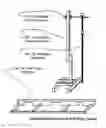
FIG. 1B, FIG. 1C, and FIG. 1D show details of three dependent elements, the adjustable pendulum (FIG. 1B), the adjustable pendulum holder (FIG. 1D) and the pendulum support structure (FIG. 1C). The three target ball catch (FIG. 1A) is an independent element of the adjustable pendulum golf putting trainer (FIG. 1). The three target ball catch (FIG. 1A) can be used for putting practice and putting games with or without the other elements of the adjustable pendulum golf putting trainer (FIG. 1). The three target ball catch (FIG. 1A) enables games that can be played by individuals or competitive groups inside or outside. The games can be played almost anywhere such as at home, at school or in public locations for family gatherings, fundraisers or mild senior exercising. The adjustable pendulum golf putting trainer (FIG. 1) has adjustments to accommodate differing body sizes and putting postures. The key benefit of the adjustable pendulum golf putting trainer (FIG. 1) is that it enables real time corrective feedback by using sight, sound and feel to recognize whether or not the natural pendulum swing of the putter is present. Additional putting training benefits are repeatable body setup, correct body alignment, targeted swing direction, smooth swing tempo and proper ball travel distance. Training and gaming activities do not require attaching the putter to any other object as is done by many of the listed prior art. The individual may use their own putter whether they are right or left handed.
Game scoring is easy and can be done as the game progresses or can be done at the end of each game. The three target ball catch (FIG. 1A) has three different sized cutouts, 4¼, 3¼ and 2¼ inches wide all 1.75 inches high. The cutouts have a highlighting boarder and center identifier to enable the individual to visualize the target. Handicapping a game can be done by changing the putting distance to the ball catch, selecting alternate target sizes or allowing certain individuals to use the pendulum golfing putting trainer during the game. By identifying each player's golf balls, individual's scores can be totaled as 0, 1, 2, or 3 points for each ball depending upon the ball's final location after only one putting stroke per ball. A nine-ball, eighteen-ball or any other ball quantity game may be agreed upon for group games. For example, a perfect nine-ball game is worth 27 points, a perfect twelve-ball game is worth 36 points.
BACKGROUND
Prior Art
Twenty five prior art are listed with comments in table 1. Some of the prior art shows various mechanical restraining, attaching or confining devices to control the putter or the individual's arms during the putting stroke. Some of the prior art uses electronic sensing, aiming, measuring or counting devices to provide visual or electronically displayed feedback information about the putting event. Most of the prior art devices provide performance feedback after the completion of the putting stroke rather than giving real time feedback for the conditions leading up to and including the ball-putter impact. Conditions leading to the putting event are setting body posture, squaring the lineup, measuring the putter travel in the backswing, preventing premature head and body movement, measuring tempo of the aft part of the swing. None of the listed “prior art” focus on establishing head location and body posture, using a touch monitor to teach prevention of head and chest movement or providing real time sight, sound, and feel feedback during the back half of the putting stroke.
Prior art does not describe, as this embodiment does, an overall putting training process that integrates the mind's target image with the human body's sensors (feel, sight and sound) and with the natural putting stroke of a freely swinging pendulum. It should be noted that this embodiment does not incorporate training to help individuals read putting green shape, slope, grain, speed or other conditions encountered on a natural putting green. However, as noted later, no changes are needed to utilize the adjustable pendulum golf putting trainer (FIG. 1) on a typical grass putting green.
SUMMARY
The purpose for the adjustable pendulum golf putting trainer (FIG. 1) is to teach individuals of all ages and skill levels to learn to use the pendulum putting stroke and to continue to improve putting performance by following the “how to” lessons that are part of this embodiment. The “how to” lessons to be taught while using the adjustable pendulum golf putting trainer (FIG. 1) are as follows:
1) How to understand and appreciate the importance of proper body posture and positioning of the feet.
-
- (i.e., positioning feet properly relative to the ball, keeping the eye over the ball, and bending the back appropriately)
2) How to develop swing tempo to be used for ball distance control
-
- (i.e., practice keeping the individual's fore and aft rotation of the putter, hands, arms and shoulders in synchronism with the path of a freely swinging pendulum that is manually put into motion from various heights)
3) How to achieve and maintain correct putting direction alignment
-
- (i.e., squaring the putter face with the target line and then maintaining that alignment throughout the individual's pendulum-emulating arc stroke)
4) How to eliminate all head and body movement except for the shoulder section that rotates around the proper swing rotation point.
-
- (i.e., aligning the head, eyes and center of the upper chest using reference points that give full awareness of any unwanted movement until after the sound of the ball-putter impact)
5) How to manage the putter head's aft travel distance and height off the ground to predict ball travel distance.
-
- (i.e., pause the putter at a chosen back swing high point then duplicate with the putter the gravitational acceleration and velocity of the pendulum at ball-putter impact. Repeat the process from differing high points and observe the ball travel distance for various high points.)
6) How to develop the ability to utilize mental target imagery.
-
- (i.e., focus on the yellow outline and center marking of the target ball catch opening to acquire a mind's image and then retain that mind's image until after the individual hears the feedback sound of the putter-ball impact which also signals that the head, the eyes and the center of the upper chest may move from their initial location.)
Training routines are described later that demonstrate how to incrementally practice parts of the putting swing using the adjustable pendulum golf putting trainer (FIG. 1) and then to transition an individual from practicing to real life golf putting competition.
DRAWINGS AND PART REFERENCES
Perspective drawings showing the main elements of the putting trainer are listed in Table 2 as FIGS. 1, 1A, 1B, 1C and 1D. The part reference numbers for parts associated with each individual main element are listed below their associated main element. Figures and tables are located in the appendix.
FIG. 1A, FIG. 1B, FIG. 1C, and FIG. 1D show details of the four main elements of the embodiment—the three target ball catch (FIG. 1A), the adjustable pendulum (FIG. 1B), the pendulum support structure (FIG. 1C), and the adjustable pendulum holder (FIG. 1D). Reference numbers 1 thru 28 refer to the individual unique parts needed to build the embodiment. Identical parts—screws, bolts with their nuts and washers and wood pieces—use identical reference numbers.
DETAILED DESCRIPTION
Four Main Elements
FIG. 1 is a perspective view of the four main elements that embody the patent application showing how they relate to each other by using a human character, a putter, golf balls, and a putting surface.
Element 1 Description
The three target ball catch (FIG. 1A) shows the game part of the adjustable pendulum golf putting trainer (FIG. 1). A successful putt is trapped in one of the three catch areas not allowing the ball to enter adjacent catch areas and not allowing the ball to scatter out of the general area selected for playing the putting game. Unsuccessful putts that hit the wood outside of the cutouts on the front of the triple target (1) generally stay nearby because of the dampening effect of the soft wooden material. The sound of the ball hitting pine wood combined with the ball's stopping distance from the pine wood give feedback for judging a ball's likely travel distance.
The three target ball catch (FIG. 1A), is placed on a putting surface at an optional distance from the other three elements of the embodiment, FIG. 1B, FIG. 1C and FIG. 1D. After putting a quantity of balls, the three target ball catch (FIG. 1A) can be used to drag (i.e., rake) the putted balls back to the starting point for another putting sequence. As alternatives, the three target ball catch (FIG. 1A) can be picked up and placed on the opposite end of the designated putting surface without relocating the ball supply, or additional three target ball catch's (FIG. 1A) can be placed at other locations on the designated putting area to provide multi-hole putting games.
Element 1 Assembly
The three target ball catch (FIG. 1A) is assembled into a single unit by attaching the triple target (1) to four of the ball catch separators (2) using eight wood screws (4). The ball catch stopper (3) is then fastened to the ball catch separators (2) using eight wood screws (4).
Element 2 Description
The adjustable pendulum (FIG. 1B) shows the adjustable pendulum element of the adjustable pendulum golf putting trainer (FIG. 1). The adjustable pendulum (FIG. 1B) is used to train children and adults to duplicate the natural motion of a swinging pendulum. The individual may use any putter model with the adjustable pendulum (FIG. 1B). The adjustable pendulum's (FIG. 1B) mounting height and vertical length can be adjusted to accommodate an individual's height. The adjustable pendulum (FIG. 1B) can also be slid toward and away from an individual's head and chest to accommodate differing training routines.
Element 2 Assembly
The following items are press-fit into the upper pendulum section (7); the nylar threaded accessory mount (10) with its screwed-on head position sensor accessory (9); and the press fit pendulum rotation sleeve (6). The putter head contact (12) and the twist-lock mechanism (11) are press-fit into the lower pendulum telescoping section (8). The adjustable pendulum (FIG. 1B) is assembled into a single unit by sliding the upper pendulum section (7) into the lower pendulum telescoping section (8) and locking them together with the twist-lock mechanism (11).
Element 3 Description
The pendulum support structure (FIG. 1C) is the weight-supporting structure for the adjustable pendulum (FIG. 1B) and the adjustable pendulum holder (FIG. 1D). The pendulum support structure (FIG. 1C) provides a stable platform to align, support and counter balance the adjustable pendulum (FIG. 1B) while static and in motion. The slot in the upper support (17) enables an individual to vary the adjustable pendulum holder's (FIG. 1D) height. The pendulum arc simulator (16) provides a path for the putter head to follow that simulates the arc path of the bottom of the pendulum.
Element 3 Assembly
The pendulum support structure (FIG. 1C) is assembled by joining the upper support (17) and the lower support (13) with two wood screws (18). Two upper braces (19) and the lower support (13) are joined using one carriage bolt (14) and the lower front brace (22) is joined to the lower support (13) using one carriage bolt (14). Two upper braces (19) are now joined with the lower aft brace (20) and lower front brace (22) using four wood screws (18). The pendulum arc simulator (16) is attached to the lower front brace (22) using four finishing nails (15) while keeping the pendulum arc simulator (16) and lower front brace (22) bottoms flush. Leveling screws (21), 2 each, are located on the bottom of the lower aft brace (20) and the lower front brace (22).
Element 4 Description
The adjustable pendulum holder (FIG. 1D) is used to mount the adjustable pendulum (FIG. 1B) to the pendulum support structure (FIG. 1C). As previously described, the slot in the upper support (17) enables adjusting the pendulum holder (FIG. 1D) height to suit a particular individual. Selection of an individual's height location must enable the individual to touch their chest to the coil spring end cap (24) and their nose to the head position sensor accessory (9). An individual slides the adjustable pendulum (FIG. 1B) toward or away from the pendulum's upper support (17) to align their eyes with plane of the swinging pendulum. After eye alignment is completed, the pendulum location clip lock (28) is snapped in place against the threads of the carriage bolt to keep it from moving.
To give a more compatible location for a particular individual, the carriage rod (26) that holds the adjustable pendulum (FIG. 1B) is moved vertically by loosening the wing nuts; sliding the carriage rod up or down; and tightening the wing nuts at the new location. After the new carriage rod (26) location is set, the adjustable pendulum's (FIG. 1B) length is adjusted using the twist-lock mechanism (11). Final adjustments are described with FIG. 1D.
Element 4 Assembly
The adjustable pendulum holder (FIG. 1D) is assembled by rotating the coil spring (25) onto the threads at the end of the carriage rod (26) and then pressing the coil spring end cap (24) onto the coil spring (25). The first wing nut (27) and washer (23) are located approximately 2 inches from the left end of the carriage rod (26). The second wing nut (27) and washer (23) are temporarily located near the left end of the carriage rod (26). The pendulum location clip lock (28) is temporarily snapped onto the carriage rod (26).
Element 2, 3 and 4 Assembly
Pendulum support structure (FIG. 1C) and adjustable pendulum (FIG. 1B) are assembled by inserting the carriage rod (26) of the adjustable pendulum holder (FIG. 1D) through the press fit pendulum rotation sleeve (6) of the adjustable pendulum (FIG. 1B) and the slot in the upper support (17). The second wing nut (27) and washer (23) are tightened on to the carriage rod (26) at a height selected for individual comfort. Final adjustments of the pendulum's extension length, mounting height and distance away from the upper support (17) are made to accommodate each individual's posture so the eyes are over the line of the ball, the nose contacts the head position sensor accessory (9) and the chest touches the coil spring end cap (24). The pendulum location clip lock (28) is relocated into the slot in the press fit pendulum rotation sleeve (6).
DETAILED DESCRIPTION
Training Routines
Six training routines have been designed to separate and practice critical elements of a putting stroke. The training routines defined below give putting instructions of how to incrementally practice putter-body synchronization, arc path tracking, tempo, timing, direction, distance and putting to a image. The six training routines are:
1) Synchronizing Putting Swing to Pendulum
-
- Push the pendulum into motion using your hand, then place your putter adjacent to the pendulum and practice swinging the putter until you can synchronize your putting motion exactly with the pendulum as it slowly comes to rest. Practice with the putter several times making 10 to 50 strokes synchronizing with the motion of the decelerating pendulum. While practicing, keep the putter head within ¼ to ½ inch of the pendulum's moving bottom tip.
2) Developing Putter Head Pendulum Arc Path
-
- Adjust the pendulum and putter as follows:
- a) Release the pendulum location locking clip (28) and slide the adjustable pendulum (FIG. 1B) toward the pendulum support structure (FIG. 1C) until the pendulum's bottom is about one and one half inches away from the lower front brace (22).
- b) Place putter head in front of the pendulum with the putter's bottom touching the top side of the pendulum arc simulator (16) and the putter's outer tip touching the lower front brace (22).
- c) Make slight adjustments of the pendulum as necessary so the back center of the putter can swing the pendulum aft without jamming.
- d) Push the pendulum aft with the putter head about eight inches as the putter head follows the path provided by the pendulum arc simulator (16) and pause for two seconds. After the 2 seconds, let the down and forward motion of the pendulum pace the putter on the forward stroke. Pause again for two seconds at the end of the forward stroke and observe the putter position. The putter should stay about ⅛ inch from the pendulum arc simulator (16) and the lower front brace (22) without touching during repeated pauses and strokes. Keep the putter and pendulum synchronized throughout the fore and aft putting motion while varying the stroke length from several inches up to approximately 30 inches. This training routine is difficult and will require a great deal of practice and patience before the individual becomes comfortable with the tempo and accuracy of the stroke.
3) Observing Ball-Putter Impact Sound and Ball Direction
-
- This training routine focuses on the swing plane and swing arc. To set up for this training routine, release the location retention clip and move the pendulum toward the vertical support until it hangs over the center line of the putter head while the putter's outer tip is not touching either the pendulum arc simulator (16) or the lower front brace (22). The pendulum's length is now adjusted to accommodate the particular putter design being used by the individual so the rear of the putter head can freely push the pendulum's bottom tip aft and then stay in touch and synchronized with the pendulum's bottom tip without jamming as the putter controls the entire stroke of the pendulum. A ball is now placed about one half inch in front of the center of the putter head. Balls are now putted toward the three target ball catch (FIG. 1A) until a consistent direction is accomplished. An opening in the three target ball catch (FIG. 1A) is then moved in alignment with the observed direction. Training should continue until the results show improvement and understanding of the pendulum-emulating putting swing. Practice putting 50 to 100 balls before moving on to the next training routine. Be sure that the shoulders rotate with the pendulum staying perpendicular to the pendulum and that the wrists maintain a constant angle with the arms and the wrists maintain at a constant distance from the lower pendulum telescoping section (8) as the pendulum and writs rotate.
4) Correlating Sight, Sound and Touch Feedback
-
- This training routine focuses on using the senses of sight, sound and touch to provide real time feedback to learn to avoid moving the head and the body except for the rotation of the shoulder area until after ball-putter impact. The training routine uses the eyes to watch and select the length of the putting stroke to control ball travel distance. This routine changes the pendulum setup so the ball, the putter and the pendulum tip are now far enough away from the pendulum arc simulator (16) and the lower front brace (22) so there can be no contact with the pendulum arc simulator (16) and the lower front brace (22) during the putting stroke. The pendulum's length should also be readjusted for the particular putter head design to avoid jamming during the putting stroke. These additional items should be accomplished in the setup: the nose should touch the head position sensor accessory (9), the chest should touch the coil spring end cap (24) and the feet should be placed shoulder width apart, perpendicular to and at the same distance from the lower front brace (22). The individual must keep their head and the center of their upper chest still until after the sound of the ball-putter impact is heard. The critical lesson learned with this training routine is the awareness of the motion of the head position sensor accessory (9) as it moves away from the touch of the nose and then moves back to touch the nose at exactly the sound of ball-putter impact, while the coil spring end cap (24) is remaining still and in continuous contact with the chest at the center point of shoulder rotation. Also, the individual is made to recognize that the putter continues to follow the pendulum tip's direction and arc as the putter and pendulum move aft and forward, pausing at each end and then being in contact with each other at the sound of ball-putter impact. And lastly, the individual is made to watch the length of the putting arc relative to the ball distance traveled by pausing at the end of the back swing and seeing the relative location of the pendulum and putter to both the aft and forward ends of the lower front brace (22) during the putting stroke.
5) Using Target Mental Image
-
- This training routine embodies all of the previous training routines with the addition of establishing and maintaining a mental image of the real target in their mind during the back half of the putting stroke. The individual trains themselves to capture a target image on their last look at the target. The target's yellow center marking is retained as a mind's image on the target while the eyes focus on the ball and the putter until after the sound of ball-putter impact is heard. This practice routine is a mind-controlling practice of putting to an imagined target until it becomes easy and repeatable.
6) Repeating Pendulum Putting
-
- This final training routine embodies the prior training concepts but without any contact of the putter with the pendulum as golf balls are putted. The golf ball location, body posture, head and eye position and body alignment are established adjacent to the adjustable pendulum (FIG. 1B) so the pendulum swing path does not interfere with the newly acquired putting stroke. The pendulum is put into motion by using the individual's hand. The individual selects a putter start location somewhere on the pendulum's swing path that represents a putting distance and then holds the putter static in this location until the pendulum backward swing decelerates to match the static putter location.
The individual then emulates the pendulum's arc motion with the putter to strike the ball. The individual must remember to use the mental target image and the ball-impact sound before any movement of the head and the shoulder rotation point on the chest is allowed.
CONCLUSION
The adjustable pendulum golf putting trainer (FIG. 1) enables individuals of all ages to learn to improve their putting skill while enjoying the social aspects of the putting game. This embodiment is an assembly of simple materials and parts that are readily available at any large home building supply store. This embodiment is accomplished without the use any electronic counting, sensing or aiming devices, and uses no lighting or electric power source. As a result, it can be easily setup and stored. It can be used in many different locations. The putting game can be used in an area as small as 4×4 ft or as large as a gymnasium provided the ball rolling surface is acceptable. The end result from using the adjustable pendulum golfing putting trainer (FIG. 1) should be improved putting skills for every individual who has used the training routines that are enabled by the adjustable pendulum golf putting trainer (FIG. 1). The putting training routines previously described are listed below:
1) Synchronizing Swing to Pendulum
2) Developing Putter Head Pendulum Arc
3) Observing Ball-Putter Impact Sound and Ball Direction
4) Correlating Sight, Sound and Touch Feedback
5) Using Target Mental Image
6) Repeating Pendulum Putting
Ramifications
Further ramifications for the embodiment are as follows:
1. Chipping Trainer
-
- The same embodiment can be used as a chipping trainer if the individual uses the same stroke for chipping as for putting which is recommended by some golf professionals. However, some slight body position setup changes may be required to account for the differing angular relationship of the golf club heads and shafts as well as differing shaft lengths.
2. Game
-
- Several three target ball catches (FIG. 1A) can be arranged to create putting and chipping games similar to croquet and shuffle board. In the putting game, balls passing through the triple target and closest to, but not hitting, the ball catch stopper are winners.
3. Non-Pendulum Stroke
-
- Although this putting trainer is shown for learning to square the putter head and move it like a pendulum, a slightly off square putting motion can be incorporated by changing the geometry of the pendulum arc simulator (16).
4. Natural Putting Green
-
- This trainer embodiment can be used without any modifications to teach putting on a natural putting green so the reading of putting green shape, slope, grain, speed or other conditions affecting a natural putting green become part of the training routines.
5. Adding Accessories
-
- a) Change the putter head contact (12) to make it into a variable weight accessory to change the weight of the pendulum thereby enabling individuals to vary the pendulum's tempo to one that is more compatible with their natural tempo.
- b) Replace the 3 to 6 ft adjustable pendulum (FIG. 1B) used for this embodiment with an optional 2 to 4 ft adjustable pendulum to make the embodiment more compatible with individuals of shorter height.
- c) Add a shoulder rotation guide on the pendulum's nylar threaded accessory mount (10) to enable a new training routine for separately teaching shoulder rotation that emulates the pendulum's arc path.
6. Iron and Driver Trainer
-
- The pendulum support structure (FIG. 1C) and the adjustable pendulum holder (FIG. 1D) can be used without the adjustable pendulum (FIG. 1B) to provide a training routine for hitting full shots using any club. The coil spring end cap would remain in contact with the chest during the back swing to help detect any chest movement occurring until after ball-club impact sound. A slightly longer carriage rod may be required so the clubs clear the pendulum support structure (FIG. 1C) when using a full swing.
Novelty and Unobvious
Reference Arc Path
The reference arc path provided by the pendulum and support structure provide real time visibility for the putter head to trace a pendulum-shaped arc path without connecting to any other mechanisms.
Teaching Routines
Emulating the freely singing pendulum's natural motion with a freely swinging putter as the pendulum's travel decelerates to zero to teach putting with an arc motion, putting for distance control, putting for swing tempo and putting for synchronization of the hands, arms and shoulders with the pendulum's motion. The freely swinging putter motion teaches the individual to eliminate any jerkiness in the putting stroke and to emulate the natural downward acceleration and resulting velocity that is provided by the effects of gravity.
Real Time Feedback
Touching of the nose with the pendulum tip and the chest with the spring cap at start of the putting stroke and assuring the pendulum tip moves forward from the nose and returns to touch nose at the moment of putter-ball impact gives real time sound and feel feedback to easily discern whether the individual is allowing premature motion of the head or chest area.
Design Details
The dimensions for parts fabrication are shown in FIG. 2 (3 parts). The pendulum is purchased and modified as shown in FIG. 2. The other materials are purchased in bulk and cut to the dimensions shown in FIG. 2. Fasteners are purchased in bulk. FIG. 2 is located in the appendix.
APPENDIX
FIGS. 1, 1A, 1B, 1C, 1D, and 2 and Tables 1 and 2 are included in the appendix.
| TABLE 1 |
| Prior Art |
| Item | PAT. NO. | Title | Comment |
| 1 | 7,331,875 | Attachable sensor for putting stroke | Attaches to the putter shaft |
| path and plane detection | |||
| 2 | 7,160,201 | Golf putting trainer | Holds the putter head |
| 3 | 7,134,966 | Golf putt training device and method | Uses projected light line & spot |
| 4 | 6,997,817 | Putter alignment tool for use in | Uses guide walls to confine putter |
| establishing a correct line of putting | |||
| motion | |||
| 5 | 6,702,690 | Golf putting trainer device | Uses light beams on matt |
| 6 | 6,540,620 | Golf putter training device | Uses guide walls, sensors & |
| incorporating processor and counter | electronics | ||
| mechanism | |||
| 7 | D470,906 | Golf putting trainer | Uses guide walls |
| 8 | 6,146,283 | Golf putting training device | Uses electronic simulated stimp, |
| distance | |||
| 9 | 6,036,608 | Golf putting and chipping training | Putt travels in adjustable slot to light |
| apparatus | target | ||
| 10 | 5,904,624 | Golf putter trainer | Gadget connect to putter and fore |
| arms | |||
| 11 | 5,882,267 | Golf putting trainer | Adjustable sides guide putter |
| 12 | 5,658,204 | Putting training device having | Holds putter in sloped plane with |
| adjustable stroke | distance stops | ||
| 13 | 5,645,492 | Selectable target putting trainer | Adjustable hole size for putting |
| target | |||
| 14 | 5,586,945 | Golf putting trainer | Uses taut string & adjustable rails to |
| guide the putter | |||
| 15 | 5,527,041 | Golf putting trainer | Uses base with light to project line to |
| target | |||
| 16 | 5,431,403 | Golf putting practice device with | Simulator to develop 3 foot putts |
| perfect putting surface | |||
| 17 | 5,421,578 | Golf putting and chipping trainer and | Desk accessory with removable |
| desk accessory device | gadgets | ||
| 18 | 5,409,231 | Golf putting trainer | Elongated surface with ball on |
| gauged stop | |||
| 19 | 5,390,926 | Practice putting green | Practice green simulator |
| 20 | 5,203,567 | Golf putting trainer | Arms touching device to position |
| arms & shoulder | |||
| 21 | 5,129,653 | Golf putting trainer | Practice surface shape that returns |
| ball | |||
| 22 | 5,069,455 | Golf putting trainer | Variable height with simulated |
| surface materials | |||
| 23 | 4,919,433 | Golf putting trainer | Wrist motion pendulum fore arm |
| restrained | |||
| 24 | 4,700,949 | Golf putting trainer | Trolley, rails and hinge plates |
| 25 | 4,634,131 | Golf putting trainer | Putter shaft on guide to follow rail |
| TABLE 2 |
| Figures and Part Reference Numbers |
| FIG. 1 Adjustable Pendulum Golf Putting Trainer | |
| FIG. 1A Three Target Ball Catch | |
| 1—Triple Target | |
| 2—Ball Catch Separator | |
| 3—Ball Catch Stopper | |
| 4—Wood Screw | |
| FIG. 1B Adjustable Pendulum | |
| 5—Optional Shoulder Rotation Guide Accessory | |
| 6—Press Fit Pendulum Rotation Sleeve | |
| 7—Upper Pendulum Section | |
| 8—Lower Pendulum Telescoping Section | |
| 9—Head Position Sensor Accessory | |
| 10—Nylar Threaded Accessory Mount | |
| 11—Twist-Lock Mechanism | |
| 12—Putter Head Contact | |
| FIG. 1C Pendulum Support Structure | |
| 13—Lower Support | |
| 14—Carriage Bolt | |
| 15—Finishing Nail | |
| 16—Pendulum Arc Simulator | |
| 17—Upper Support | |
| 18—Wood Screw | |
| 19—Upper Brace | |
| 20—Lower Aft Brace | |
| 21—Leveling Screw | |
| 22—Lower Front Brace | |
| FIG. 1D Adjustable Pendulum Holder | |
| 23—Washer | |
| 24—Coil Spring End Cap | |
| 25—Coil Spring | |
| 26—Carriage Rod | |
| 27—Wing Nut | |
| 28—Pendulum Location Clip Lock | |
| FIG. 2 (3 parts) Adjustable Pendulum Golf Putting Trainer Design | |
Claims
1. I claim an adjustable pendulum golf putting trainer comprising a support structure, a telescoping pendulum and a pendulum holder whereby any individual can raise and lower the support structure, shorten and lengthen the pendulum and slide the pendulum toward or away from the individual to accommodate differing bodies sizes and putter designs and then train themselves to emulate a swinging pendulum with their putting stroke.
2. I claim an independent golf ball target and ball catcher with three highlighted and different sized openings that enable putting training and putting games whereby one or more individuals can putt on a flat surface as small 4×4 square feet or as large as a family room, basement, garage, gymnasium or back yard.
3. I claim a segmented swing training routine enabled by the adjustable pendulum golf putting trainer whereby an individual can synchronize their putting arc path and swing tempo to a swinging pendulum as they use their sense of sight, sound and touch to correlate their putter and body position relative to a pendulum's position, motion and direction.
Images & Drawings included:


Sources:
- United States Patent and Trademark Office - verify current appl. status at the USPTO↗
Recent applications in this class:
- » 20250135305 2025-05-01
SUPPORTING AND FASTENING SYSTEM FOR A PORTABLE DEVICE FOR PLAYING GOLF - » 20250090913 2025-03-20
GOLF PUTTING GREEN CUP COVER - » 20240207705 2024-06-27
GOLF CAMERA ASSEMBLIES - » 20230226419 2023-07-20
Method and device for making a hole in a golf green - » 20230143848 2023-05-11
Adjustable Height Golf Cup - » 20230072775 2023-03-09
ACCESSORY INTENDED FOR RECEIVING A GOLF BALL EQUIPPED WITH AT LEAST ONE SENSOR AND DEVICE FOR MANAGING A GOLF COURSE PROVIDED WITH AT LEAST ONE SUCH ACCESSORY - » 20230070143 2023-03-09
SYSTEMS AND METHODS FOR ENLARGING A GOLF HOLE - » 20220401804 2022-12-22
Putting practice device - » 20220323839 2022-10-13
Golf cup lighting fixture - » 20220273996 2022-09-01
Golf cup construction for use with artificial turf