CEMENT GRINDING AID
US20120270972A1
2012-10-25
13/542,576
2012-07-05
Abstract:
An aqueous polymer composition is disclosed which is used in the form of a cement grinding aid and makes it possible to effectively reduce the grinding time and to obtain cements exhibiting excellent characteristics. A cement grinding aid containing a combination of polymer A and known grinding aids is also disclosed.
Inventors:
- Dieter Honert 12 🇩🇪 Dielheim, Germany
- Beat Marazzani 13 🇨🇭 Oberengstringen, Switzerland
- Urs MAEDER 4 🇨🇭 Frauenfeld, Switzerland
Assignee:
- SIKA TECHNOLOGY AG 1,037 🇨🇭 Baar, Switzerland
Interested in similar patents?
Get notified when new applications in this technology area are published.
Classification:
C04B24/2647 » CPC further
Use of organic materials as active ingredients for mortars, concrete or artificial stone, e.g. plasticisers; Macromolecular compounds obtained by reactions only involving carbon-to-carbon unsaturated bonds; Polyacrylates; Polymethacrylates containing polyether side chains
C04B24/2658 » CPC further
Use of organic materials as active ingredients for mortars, concrete or artificial stone, e.g. plasticisers; Macromolecular compounds obtained by reactions only involving carbon-to-carbon unsaturated bonds; Nitrogen containing polymers, e.g. polyacrylamides, polyacrylonitriles containing polyether side chains
C04B24/2694 » CPC further
Use of organic materials as active ingredients for mortars, concrete or artificial stone, e.g. plasticisers; Macromolecular compounds obtained by reactions only involving carbon-to-carbon unsaturated bonds; Copolymers containing at least three different monomers containing polyether side chains
C04B2103/52 » CPC further
Function or property of ingredients for mortars, concrete or artificial stone Grinding aids; Additives added during grinding
Y02P40/10 » CPC further
Technologies relating to the processing of minerals Production of cement, e.g. improving or optimising the production methods; Cement grinding
Y02P40/10 » CPC further
Technologies relating to the processing of minerals Production of cement, e.g. improving or optimising the production methods; Cement grinding
C04B24/121 » CPC further
Use of organic materials as active ingredients for mortars, concrete or artificial stone, e.g. plasticisers; Nitrogen containing compounds organic derivatives of hydrazine Amines, polyamines
C04B40/0039 » CPC main
Processes, in general, for influencing or modifying the properties of mortars, concrete or artificial stone compositions, e.g. their setting or hardening ability; Aspects relating to the mixing step of the mortar preparation Premixtures of ingredients
C04B24/122 » CPC further
Use of organic materials as active ingredients for mortars, concrete or artificial stone, e.g. plasticisers; Nitrogen containing compounds organic derivatives of hydrazine Hydroxy amines
C04B24/2641 » CPC further
Use of organic materials as active ingredients for mortars, concrete or artificial stone, e.g. plasticisers; Macromolecular compounds obtained by reactions only involving carbon-to-carbon unsaturated bonds Polyacrylates; Polymethacrylates
C08L33/06 IPC
Compositions of homopolymers or copolymers of compounds having one or more unsaturated aliphatic radicals, each having only one carbon-to-carbon double bond, and only one being terminated by only one carboxyl radical, or of salts, anhydrides, esters, amides, imides or nitriles thereof; Compositions of derivatives of such polymers; Homopolymers or copolymers of esters of esters containing only carbon, hydrogen and oxygen, which oxygen atoms are present only as part of the carboxyl radical
C08L33/26 IPC
Compositions of homopolymers or copolymers of compounds having one or more unsaturated aliphatic radicals, each having only one carbon-to-carbon double bond, and only one being terminated by only one carboxyl radical, or of salts, anhydrides, esters, amides, imides or nitriles thereof; Compositions of derivatives of such polymers; Homopolymers or copolymers of amides or imides Homopolymers or copolymers of acrylamide or methacrylamide
C08K5/19 IPC
Use of organic ingredients; Nitrogen-containing compounds; Amines; Quaternary ammonium compounds Quaternary ammonium compounds
C08K5/053 IPC
Use of organic ingredients; Oxygen-containing compounds; Alcohols; Metal alcoholates Polyhydroxylic alcohols
C04B24/26 IPC
Use of organic materials as active ingredients for mortars, concrete or artificial stone, e.g. plasticisers; Macromolecular compounds obtained by reactions only involving carbon-to-carbon unsaturated bonds
C08K5/17 IPC
Use of organic ingredients; Nitrogen-containing compounds Amines; Quaternary ammonium compounds
Description
This is a Division of application Ser. No. 12/469,618 filed May 20, 2009, which in turn is a Continuation of application Ser. No. 11/630,136, filed Feb. 4, 2008, which was the National Stage of International Application No. PCT/EP2005/052883, filed Jun. 21, 2005. The disclosure of the prior applications is hereby incorporated by reference herein in its entirety.
TECHNICAL FIELD
The invention relates to the field of cement grinding aids.
STATE OF THE ART
The production of cement is a very complex process. Cement is known to be very sensitive toward water, irrespective of whether it is present in the liquid or gaseous state, since cement sets hydraulically, i.e. it hardens under the influence of water within a short time to give a very stable solid body. A central step in cement production is the grinding of the clinker. Since clinkers are very hard, the comminution is very demanding. For the properties of the cement, it is important that it is present as a fine powder. The fineness of the cement is therefore an important quality feature. In order to facilitate the comminution to powder form, so-called cement grinding aids are used. This greatly reduces the grinding times and energy costs. Such cement grinding aids are typically selected from the class comprising glycols such as alkylene glycols, amines or amino alcohols.
For example, U.S. Pat. No. 5,084,103 describes trialkanolamines, such as triisopropanolamine (TIPA) or N,N-bis(2-hydroxyethyl)-N-(2-hydroxypropyl)amine and tris(2-hydroxybutyl)amine as grinding aids for clinkers.
In addition, water-soluble polycarboxylates are known from WO 97/10308 or EP 0 100 947 A1 as grinding aids for the production of aqueous suspensions of minerals such as lime or pigments, especially for use in papermaking. US 2002/0091177 A1 describes the use of polymers composed of ethylenically unsaturated monomers as a grinding aid for producing aqueous suspensions of ground mineral fillers. This document further discloses that a cement which is mixed with such an aqueous suspension leads to improved early strength. However, none of these documents discloses a cement grinding aid.
The use of so-called concrete plasticizers has been known for some time. For example, EP 1 138 697 B1 or EP 1 061 089 B1 discloses that (meth)acrylate polymers with ester and optionally amide side chains are suitable as concrete plasticizers. In this case, this concrete plasticizer is added to the cement as an additive or added to the cement before the grinding, and leads to high plastification, for example reduction in the water demand, of the concrete or mortar produced therefrom.
DESCRIPTION OF THE INVENTION
It has now been found that, surprisingly, aqueous compositions comprising at least one polymer A of the formula (I) can also be used as cement grinding aids, especially in combination with amino alcohols. It has further been found that, surprisingly, the combination of the polymers A with the customary cement grinding aids can remedy or greatly reduce the disadvantages of the known grinding aids without the advantageous effects of the polymer A being lost.
Ways of Performing the Invention
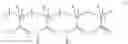
The present invention relates to the use of aqueous compositions as cement grinding aids. The aqueous composition comprises at least one polymer A of the formula (I).
In this formula, M are each independently H+, alkali metal ion, alkaline earth metal ion, di- or trivalent metal ion, ammonium ion or organic ammonium groups. The term “each independently” means here and hereinafter in each case that a substituent may have different available definitions in the same molecule. For example, the polymer A of the formula (I) can simultaneously have carboxylic acid groups and sodium carboxylate groups, which means that H+ and Na+ each independently mean for R1 in this case.
It is clear to the person skilled in the art firstly that the group is a carboxylate to which the ion M is bonded, and that secondly, in the case of polyvalent ions M, the charge has to be balanced by counterions.
Moreover, the substituents R are each independently hydrogen or methyl. This means that the polymer A is a substituted poly(acrylate), poly(methacrylate) or a poly((meth)acrylate).
In addition, the substituents R1 and R2 are each independently C1- to C20-alkyl, cycloalkyl, alkylaryl or —[AO]N—R4. In this formula, A is a C2- to C4-alkylene group and R4 is a C1- to C20-alkyl, cyclohexyl or alkylaryl group, while n is from 2 to 250, in particular from 8 to 200, more preferably from 11 to 150.
In addition, the substituents R3 are each independently —NH2, —NR5R6, —OR7NR8R9. In these substituents, R5 and R6 are each independently H or a C1- to C20-alkyl, cycloalkyl or alkylaryl or aryl group, or a hydroxyalkyl group or an acetoxyethyl (CH3—CO—O—CH2—CH2—) or a hydroxyisopropyl (HO—CH(CH3)—CH2—) or an acetoxyisopropyl group (CH3—CO—O—CH(CH3)—CH2—), or R5 and R6 together form a ring, of which the nitrogen is part, to form a morpholine or imidazoline ring. Moreover, the substituents R8 and R9 here are each independently a to C20-alkyl, cycloalkyl, alkylaryl, aryl or a hydroxyalkyl group, and R7 is a C2—C4-alkylene group.
Finally, the indices a, b, c and d are molar ratios of these structural elements in the polymer A of the formula (I). These structural elements are in a ratio relative to one another of
a/b/c/d=(0.1-0.9)/(0.1-0.9)/(0-0.8)/(0-0.3), in particular a/b/c/d=(0.1-0.9)/(0.1-0.9)/(0-0.5)/(0-0.1), preferably a/b/c/d=(0.1-0.9)/(0.1-0.9)/(0-0.3)/(0-0.06), while the sum of a+b+c+d=1. The sum of c+d is preferably greater than 0.
The polymer A can be prepared by free-radical polymerization of the particular monomers
or by a so-called polymer-analogous reaction of a polycarboxylic acid of the formula (III)
In the polymer-analogous reaction, the polycarboxylic acid is esterified or amidated with the corresponding alcohols, amines. Details of the polymer-analogous reaction are disclosed, for example, in EP 1 138 697 B1 on page 7 line 20 to page 8 line 50, and in its examples, or in EP 1 061 089 B1 on page 4 line 54 to page 5 line 38 and in its examples. In a variation thereof, as described in EP 1 348 729 A1 on page 3 to page 5 and in its examples, the polymer A can be prepared in the solid state of matter.
It has been found that a particularly preferred embodiment of the polymer is that in which c+d>0, in particular d>0. A particularly advantageous R3 radical has been found in particular to be —NH—CH2—CH2—OH. Such polymers A have a chemically bonded ethanolamine, which constitutes an extremely efficient corrosion inhibitor. The chemical attachment of the corrosion inhibitor greatly reduces the odor in comparison to where it is merely admixed. Moreover, it has been found that such polymers A also have significantly greater plastification properties.
The aqueous composition is prepared by adding water in the preparation of the polymer A of the formula (I) or by subsequent mixing of polymer A of the formula (I) with water.
Typically, the proportion of the polymer A of the formula (I) is from 10 to 90% by weight, in particular from 25 to 50% by weight, based on the weight of the aqueous composition.
Depending on the type of polymer A of the formula (I), a dispersion or a solution is formed. Preference is given to a solution.
The aqueous composition may comprise further constituents. Examples thereof are solvents or additives as are customary in concrete technology, especially surfactants, heat and light stabilizers, dyes, defoamers, accelerants, retardants, corrosion inhibitors, air pore formers.
In one embodiment of the invention, the aqueous composition used as the cement grinding aid—referred to hereinafter as CA—apart from at least one polymer A of the formula (I), does not comprise any further grinding aids.
In a preferred embodiment of the invention, the aqueous composition used as a cement grinding aid—referred to hereinafter as CAGA—in addition to at least one polymer A of the formula (I) as has been described above, comprises at least one further grinding aid. This further grinding aid is selected in particular from the group comprising glycols, organic amines and ammonium salts of organic amines with carboxylic acids.
Suitable glycols are in particular alkylene glycols, in particular of the formula OH—(CH2—CH2—O)n—CH2CH2—OH where n=0-20, in particular 0, 1, 2 or 3.
Suitable organic amines are especially alkanolamines, in particular trialkanolamines, preferably triisopropanolamine (TIPA) or triethanolamine (TEA).
The aqueous composition is added to the clinker before the grinding and then ground to give the cement. In principle, the aqueous composition can also be added during the grinding process. However, preference is given to addition before the grinding. The addition can be effected before, during or after the addition of gypsum and if appropriate other grinding additives, for example lime, blast furnace slag, fly ash or pozzolana. The aqueous composition may also be used for the production of blend cements. To this end, individual cements which are each prepared separately by grinding with the aqueous composition can be mixed, or a mixture of a plurality of cement clinkers is ground with the aqueous composition in order to obtain a blend cement.
It will be appreciated that it is possible—even if this is not preferred—instead of an aqueous composition CAGA, also to combine and to use an aqueous composition CA together with a grinding aid, which means that this aqueous composition is used separately from the further grinding aid in the grinding.
The aqueous composition is preferably added to the clinker such that the polymer A of the formula (I) is 0.001-1.5% by weight, in particular between 0.005 and 0.2% by weight, preferably between 0.005 and 0.1% by weight, based on the clinker to be ground.
It has therefore been found, inter alia, that even significantly smaller concentrations of the polymer A in relation to the cement can be used effectively as cement grinding aids than they are known to be added to the cement as a plasticizing additive, i.e. typically 0.2 to 1.5% polymer A.
The grinding process is effected typically in a cement grinder. However, it is also possible in principle to use other grinders as known in the cement industry. Depending on the grinding time, the cement has different fineness. The fineness of cement is typically reported in cm2/g according to Blaine. On the other hand, the particle size distribution is also relevant to practice for the fineness. Such particle size analyses are typically determined by laser granulometry or air jet sieves.
The use of the inventive aqueous composition allows the grinding time to achieve the desired fineness to be reduced. The energy costs reduced as a result make the use of these coment grinding aids economically very interesting.
It has been found that the aqueous compositions are very suitable as cement grinding aids. It is possible to use them to produce a wide variety of different cements from clinker, especially those cements CEM-I (Portland cement), CEM II and CEM III (blast furnace cement) classified according to DIN EN 197-1. Preference is given to CEM-I.
The addition of the aqueous compositions reduced, for example, the grinding time up to achievement of a particular Blaine fineness. The use of the inventive aqueous composition thus allows the grinding time to achieve the desired fineness to be reduced. The energy costs reduced as a result make the use of these cement grinding aids economically very interesting.
It has also been found that, when aqueous compositions CA are used, only a small amount of, if any, air enters the hydraulically setting compositions, especially mortars, formulated with the cement, whereas it is present to a particularly high degree in the case of use of alkanolamines as a grinding aid.
Moreover, it has been found that the increase in the water demand found in the case of alkanolamines does not occur in the case of aqueous compositions CA, or this is even reduced in comparison to the cement entirely without grinding aid.
It has also been found that, surprisingly, a combination of polymer A of the formula (I) with a further grinding aid in an aqueous composition CAGA affords a cement grinding aid which combines the advantages of the polymer A and of the grinding aid, or rather reduces or even remedies their disadvantages.
For example, it has been found that an aqueous composition CAGA comprising polymer A and alkanolamine is an excellent grinding aid, but that the cement thus produced—compared with a cement with only alkanolamine as a grinding aid—also has a greatly reduced water demand and that excellent early strengths can be achieved.
Furthermore, it has been found, for example, that an aqueous composition CAGA comprising polymer A and an alkylene glycol constitutes an excellent grinding aid and the cement thus produced has excellent hardening properties.
A particular advantageous aqueous composition CAGA has been found to be one comprising polymer A and an alkanolamine and also an alkylene glycol. Such compositions have been found to be extremely efficient grinding aids. The cements thus produced have a large extent of spreading and especially an excellent early strength.
The cement ground in this way, like any other ground cement, finds wide use in concrete, mortars, casting materials, injections or renders.
When relatively large amounts of polymer A are added to the cement before the grinding of the clinker, the plasticizer properties known from polymers A are evident after they have been blended with water. It is thus possible in a further preferred embodiment of the invention to add sufficient polymer A optionally with a further grinding aid, in the form of an aqueous composition, to the clinker actually before the grinding, as are typically added to the cement as an additive in order to achieve a desired plastification in contact with water. Typically, this amount is from 0.2 to 1.5% by weight of polymer A in relation to the cement. Thus, in this embodiment, no subsequent admixing of a plasticizer is necessary and a working step is therefore saved for the user of the cement. Such a cement therefore constitutes a “ready-to-use” product which can be produced in large amounts.
EXAMPLES
Polymers A Used
| TABLE 1 |
| Abbreviations used. |
| Abbreviation | Meaning | Mw* |
| PEG500 | Polyethylene glycol without | 500 g/mol |
| terminal OH groups | ||
| PEG1000 | Polyethylene glycol without | 1000 g/mol |
| terminal OH groups | ||
| PEG1100 | Polyethylene glycol without | 1100 g/mol |
| terminal OH groups | ||
| PEG2000 | Polyethylene glycol without | 2000 g/mol |
| terminal OH groups | ||
| PEG3000 | Polyethylene glycol without | 3000 g/mol |
| terminal OH groups | ||
| PPG600 | Polypropylene glycol without | 600 g/mol |
| terminal OH groups | ||
| PPG800 | Polypropylene glycol without | 800 g/mol |
| terminal OH groups | ||
| EO-PO(50/50)2000 | Block copolymer formed from | 2000 g/mol |
| ethylene oxide and propylene | ||
| oxide in a ratio of 50:50 | ||
| without terminal OH groups | ||
| *MW = mean molecular weight |
The polymers A specified in Table 2 were prepared by means of polymer-analogous reaction from the particular poly(meth)acrylic acids with the corresponding alcohols and/or amines in a known manner. The polymers A-1 to A-12 are present in partly NaOH-neutralized form (M=H30 , Na+).
The polymers A are used as cement grinding aids as aqueous solutions. The content of the polymer is 30% by weight (A-4), 35% by weight (A-2) or 40% by weight (A-1, A-3, A-5 to A-12). These aqueous solutions are referred to as A-1L, A-2L, A-3L, A-4L, A-5L, A-6L, A-7L, A-8L, A-9L, A-10L, A-11 and A-12L. The concentrations specified for A in the tables which follow are each based on the content of polymer A.
| TABLE 2 |
| Polymers A correspond to the formula (I) where M = H+, Na+ |
| R = | R1 = | R2 = | R3 = | a/b/c/d = | Mw | |
| A-1 | H | -PEG1000-OCH3 | 65: | -EO/PO(50/50)2000-OCH3 | 0.640/0.358/0.002/0.000 | 72 000 |
| -PEG3000-OCH3 | 35† |
| A-2 | CH3 | -PEG1000-OCH3 | 0.750/0.250/0.000/0.000 | 24 000 | ||
| A-3 | H | -PEG1000-OCH3 | -EO/PO(50/50)2000-OCH3 | 0.610/0.385/0.005/0.000 | 35 000 | |
| A-4 | CH3 | -PEG1000-OCH3 | -EO/PO(50/50)2000-OCH3 | 0.650/0.348/0.002/0.000 | 32 000 | |
| A-5 | H | -PEG1100-OCH3 | 0.750/0.250/0.000/0.000 | 25 000 | ||
| A-6 | H | -PEG1000-OCH3 | -PEG500-OCH3 | 0.670/0.320/0.010/0.000 | 16 000 |
| A-7 | H | -PEG1000-OCH3: | 65: | -EO/PO(50/50)2000-OCH3 | —O—CH2—CH2—N(CH3)2 | 0.640/0.348/0.002/0.010 | 53 000 |
| -PEG3000-OCH3 | 35† |
| A-8 | H | -PEG1100-OCH3 | -PPG600-O-n-butyl | —O—CH2—CH2—N(n-butyl)2 | 0.600/0.340/0.050/0.010 | 52 000 |
| A-9 | CH3 | -PEG1100-OCH3: | 60: | -PPG800-O-n-butyl | —O—CH2—CH2—N(CH3)2 | 0.740/0.230/0.020/0.010 | 35 000 |
| -PEG3000-OCH3 | 40† | ||||||
| A-10 | CH3 | -PEG1000-OCH3 | 80: | —N(CH2—CH2—OH)2 | 0.650/0.348/0.00/0.002 | 48 000 | |
| -PEG3000-OCH3 | 20† |
| A-11 | CH3 | -PEG1000-OCH3 | -EO/PO(50/50)2000-OCH3 | —NH—(CH2—CH2—OH) | 0.59/0.359/0.001/0.050 | 32 000 |
| A-12 | Structural | -PEG2000-OCH3 | -PEG500-OCH3 | 0.850/0.148.0.020/0.000 | 25 000 | ||
| e.* | |||||||
| H | a | ||||||
| CH3 | b, c | ||||||
| *Structural e. = structural element | |||||||
| †molar ratio |
Further Cement Grinding Aids
| TABLE 3 |
| Further cement grinding aids |
| TEA | Triethanolamine | |
| TIPA | Triisopropanolamine | |
| DEG | Diethylene glycol | |
Clinkers Used
| TABLE 4 |
| Clinkers used |
| K-1 | Standard clinker for CEM I | |
| HeidelbergCement, Leimen works, Germany | ||
| K-2 | Clinker for CEM II/B-M(S-LL) | |
| HeidelbergCement, Lengfurt works, Germany | ||
| K-3 | Clinker for CEM I | |
| Buzzi Unicem S.p.A., Robilante works, Italy | ||
Grinding of the Clinker Without Sulfate Carrier
The clinker was initially crushed to a particle size of approx. 4 mm. The concentration of different polymers A specified in Table 5, based on the clinker, were added to the clinker (400 g) and, without addition of gypsum, ground in a laboratory ball mill from Fritsch without external heating at a rotational speed of 400 revolutions per minute.
Grinding of the clinker with sulfate carrier
20-25 kg of a mixture of the particular clinker and a sulfate carrier for the cement optimized in each case were mixed and blended with the particular grinding aid, or without grinding aid, in the dosage specified in Tables 6 to 10, and ground in a heatable ball mill from Siebtechnik at a temperature of from 100 to 120° C. In addition to the grinding time and the sieve residue, further typical cement properties were determined with the ground cement.
Test Methods
-
- grinding time4500: the time was determined until the mixture had attained a Blaine fineness of 4500 cm2/g after grinding in the ball mill.
- fineness: the fineness was determined according to Blaine by means of a Blaine machine from Wasag Chemie.
- sieve residue: cement which had been ground to a Blaine fineness of 4500 cm2/g was used to determine the sieve residue of the fraction of particles having a particle size of greater than 32 micrometers by means of an air-jet sieve from Alpine Hosokawa.
- sieve residue4000: cement which had been ground to a Blaine fineness of 4000 cm2/g was used to determine the sieve residue of the fraction of particles having a particle size of greater than 32 micrometers by means of an air-jet sieve from Alpine Hosokawa.
- water demand: the water demand for so-called “standard stiffness” was determined to EN 196 on cement lime.
- flow table spread: the flow table spread was determined to EN196 on a standard mortar (water/cement=0.5).
- air content: the air content was determined according to EN 196.
- compressive strength: the compressive strength of the hardened prisms was determined to EN 196.
The results of the inventive examples and comparative examples shown hereinafter all derive in each case from a test series performed in immediate succession, all of which are compiled in the same table.
Comparison of Different Polymers A as Cement Grinding Aids
Clinker: K-3 without sulfate carrier
| TABLE 5 |
| Ground clinkers without sulfate carrier. |
| Designation |
| Ref. | |||||
| 1-1 | 1-1 | 2-1 | 3-1 | 4-1 | |
| Grinding aid | — | A-1 | A-2 | A-3 | A-4 |
| Concentration | 0.02 | 0.0175 | 0.02 | 0.015 | |
| [% by wt] | |||||
| Blaine | |||||
| fineness | |||||
| [cm2/g] | |||||
| Grinding time | 1760 | 2130 | 2180 | 2350 | 2180 |
| 10 min. | |||||
| Δref | 21% | 24% | 34% | 24% | |
| Grinding time | 2560 | 3010 | 3110 | 3230 | 3110 |
| 15 min. | |||||
| Δref | 18% | 21% | 26% | 21% | |
| Grinding time | 3200 | 3780 | 3790 | 3960 | 3760 |
| 20 min. | |||||
| Δref | 18% | 18% | 24% | 18% | |
| *based on clinker. |
Comparison of Different Polyers A in Comparison to Alkanolamines
Clinker: K-1 with sulfate carrier
| TABLE 6 |
| Polymers A as grinding aids. |
| Designation |
| Ref. | Ref. | Ref. | |||
| 1-2 | 2-2 | 3-2 | 2-2 | 3-2 | |
| Grinding aid | — | TEA | TIPA | A-2 | A-4 |
| Concentration | 0.024 | 0.0255 | 0.0105 | 0.009 | |
| [% by wt] | |||||
| Blaine | |||||
| fineness | |||||
| [cm2/g] | |||||
| Grinding time | 2180 | 2270 | 2280 | 2180 | 2110 |
| 30 min. | |||||
| Δref | 4% | 5% | 0% | −3% | |
| Grinding time | 3380 | 3530 | 3640 | 3530 | 3450 |
| 60 min. | |||||
| Δref | 4% | 8% | 4% | 2% | |
| Grinding time | 4170 | 4340 | 4380 | 4310 | 4230 |
| 90 min. | |||||
| Δref | 4% | 5% | 3% | 1% | |
| Grinding time | 4450 | 4550 | 4450 | 4510 | 4590 |
| 300 min. | |||||
| Δref | 2% | 0% | 1% | 3% | |
| Water demand | 26.1 | 28.4 | 28.7 | 26.8 | 27.6 |
| [%] | |||||
| Δref | 9% | 10% | 3% | 6% | |
| *based on clinker. |
Comparison of Grinding Aids
Clinker: K-1 with sulfate carrier
| TABLE 7 |
| Polymers A as grinding aids. |
| Designation |
| Ref. | Ref. | Ref. | ||||
| 1-3 | 2-3 | 3-3 | 1-3 | 2-3 | 3-3 | |
| Grinding aid | — | TEA | TIPA | A-1 | A-2 | A-3 |
| Concentration | 0.08 | 0.08 | 0.08 | 0.07 | 0.08 | |
| [% by wt] | ||||||
| Water demand | 26.7 | 29.7 | 29.8 | 26.4 | 24.8 | 25.6 |
| [%] | ||||||
| Δref | +11% | +12% | −1% | −7% | −4% | |
| Flow table | 16.4 | 16.4 | 16 | 18.4 | 19.8 | 18.5 |
| spread [cm] | ||||||
| Δref | −0% | −2% | +12% | +21% | +13% | |
| Air content [%] | 3.0 | 3.4 | 3.6 | 3.0 | 3.1 | 3.2 |
| Δref | +13% | +20% | 0% | +3% | +7% | |
| Grinding | 100 | 85 | 85 | 87 | 92 | 90 |
| time4500 [min] | ||||||
| Δref | −15% | −15% | −13% | −8% | −10% | |
| *based on clinker. |
Polymers A/Alkanolamine Mixtures as Grinding Aids (CAGA)
Clinker: K-1 with sulfate carrier
| TABLE 8 |
| Polymer A/alkanolamine mixtures as grinding aids. |
| Grinding aid |
| A-1/TEA | A-1/TIPA |
| Designation | Ref. 1-4 | 5-4a | 5-4b | 5-4c | 5-4d | 6-4a | 6-4b | 6-4c | 6-4d |
| A-1 [% by wt.] | — | 0.08 | 0.0536 | 0.0264 | 0.008 | 0.0536 | 0.0264 | ||
| TEA [% by wt.] | — | 0.0264 | 0.0536 | 0.08 | |||||
| TIPA [% by wt.] | — | 0.0264 | 0.0536 | 0.08 | |||||
| A-1/trialkanolamine | 3/0 | 2/1 | 1/2 | 0/3 | 3/0 | 2/1 | 1/2 | 0/3 | |
| Water demand [%] | 26.7 | 26.4 | 28.0 | 28.4 | 29.7 | 26.4 | 28.0 | 28.2 | 29.8 |
| Δref | −1% | 5% | 6% | 11% | −1% | 5% | 6% | 12% | |
| Flow table spread [cm] | 16.4 | 18.4 | 16.8 | 16.9 | 16.4 | 18.4 | 17.2 | 17.1 | 16 |
| Δref | 12% | 2% | 3% | 0% | 12% | 5% | 4% | −2% | |
| Air pore content [%] | 3 | 3 | 3.3 | 3.3 | 3.4 | 3 | 3.6 | 3.5 | 3.6 |
| Δref | 0% | 10% | 10% | 13% | 0% | 20% | 17% | 20% | |
| Grinding time4500 [min] | 100 | 87 | 84 | 85 | 85 | 87 | 86 | 87 | 85 |
| Δref | −13% | −16% | −15% | −15% | −13% | −14% | −13% | −15% | |
| Sieve residue >32 μm [%] | 20.83 | 20.28 | 15.14 | 10.87 | 10.74 | 20.28 | 13.53 | 12.16 | 9.3 |
| Δref | −3% | −27% | −48% | −48% | −3% | −35% | −42% | −55% | |
| Compressive strength [N/mm2] | |||||||||
| After 24 h | 16.1 | 14 | 17 | 19.7 | 18.7 | 14 | 17.8 | 18.9 | 18.4 |
| Δref | −13% | 6% | 22% | 16% | −13% | 11% | 17% | 14% | |
| After 2 d | 27 | 23.1 | 26.1 | 30.3 | 30.1 | 23.1 | 27.7 | 32.2 | |
| Δref | −14% | −3% | 12% | 11% | −14% | 3% | 19% | ||
| After 7 d | 38.2 | 32.3 | 36.9 | 39.6 | 39 | 32.3 | 39.7 | 38.9 | 39 |
| Δref | −15% | −3% | 4% | 2% | −15% | 4% | 2% | 2% | |
| *based on clinker. |
Polymers A/Alkanolamine Mixtures as Grinding Aids (CAGA)
Clinker: K-2 with sulfate carrier
| TABLE 9 |
| Polymer A/alkanolamine mixtures as grinding aids. |
| Designation |
| Ref. | |||||
| 1-5 | Ref. 4-5 | 1-5 | 7-5 | 8-6 | |
| Grinding aid | — | DEG/TEA | A-1 | A-1/TEA | A-1/TIPA |
| DEG | 0.07 | ||||
| [% by wt.] | |||||
| TEA | 0.002 | 0.0085 | |||
| [% by wt.] | |||||
| TIPA | 0.0085 | ||||
| [% by wt.] | |||||
| A-1 | 0.032 | 0.024 | 0.024 | ||
| [% by wt.] | |||||
| Water | 25.2 | 26.2 | 24.4 | 26 | 25.1 |
| demand [%] | |||||
| Δref | 4% | −3% | 3% | 0% | |
| Flow table | 19.3 | 18 | 20 | 19.5 | 19.8 |
| spread [cm] | |||||
| Δref | −7% | 4% | 1% | 3% | |
| Air | 2.8 | 2.9 | 2.7 | 2.8 | 2.8 |
| content [%] | |||||
| Δref | 4% | −4% | 0% | 0% | |
| Compressive | |||||
| strength | |||||
| [N/mm2] | |||||
| after 2 d | 24.8 | 25.1 | 22.1 | 24.5 | 25 |
| Δref | 1% | −11% | −1% | 1% | |
| after 28 d | 53.2 | 53.1 | 53.7 | 52.6 | 54.2 |
| Δref | 0% | 1% | −1% | 2% | |
| *based on clinker. |
Polymers A/Alkanolamine/Alkylene Glycol Mixtures as Grinding Aids (CAGA)
Clinker: K-1 with sulfate carrier
| TABLE 10 |
| Polymers A/alkanolamine/alkylene glycol mixtures as grinding aids. |
| Ref. 1-6 | 11-1 | 11-2 | 11-3 | 11-4 | 11-5 | 11-6 | |
| Grinding aid | — | A-11 | A-11/DEG | A-11/TIPA | A-11-DEG/TIPA | A-11/TEA | A-11/DEG/TEA |
| A-11 [% by wt.] | 0.08 | 0.04 | 0.04 | 0.04 | 0.04 | 0.04 | |
| DEG [% by wt.] | 0.04 | 0.02 | 0.02 | ||||
| TIPA [% by wt.] | 0.04 | 0.02 | |||||
| TEA [% by wt.] | 0.04 | 0.02 | |||||
| Water demand [%] | 26.7 | 26.4 | 27.1 | 28.2 | 27.9 | 28.2 | 27.8 |
| Δref | −1% | 1% | 6% | 4% | 6% | 4% | |
| Flow table spread [cm] | 16.8 | 19.3 | 18.7 | 18.0 | 18.4 | 18.4 | 18.9 |
| Δref | 15% | 11% | 7% | 10% | 10% | 13% | |
| Air content [%] | 3.1 | 3.2 | 3.3 | 3.4 | 3.2 | 3.1 | 3.1 |
| Δref | 3% | 6% | 10% | 3% | 0% | 0% | |
| Sieve residue4000 >32 μm [%] | 30.80 | 24.90 | 24.62 | 20.04 | 23.25 | 19.74 | 17.07 |
| Δref | −19% | −20% | −35% | −25% | −36% | −45% | |
| Compressive strength [N/mm2] | |||||||
| after 24 h | 11.0 | 9.6 | 9.8 | 11.0 | 11.6 | 13.4 | 13.5 |
| Δref | −13% | −11% | 0% | 5% | 22% | 23% | |
| after 2 d | 19.8 | 18.9 | 18.7 | 21.1 | 21.9 | 21.9 | 23.1 |
| Δref | −5% | −6% | 7% | 11% | 11% | 17% | |
| after 7 d | 28.4 | 28.3 | 30.3 | 31.8 | 33.4 | 32.4 | 32.5 |
| Δref | 0% | 7% | 12% | 18% | 14% | 14% | |
| after 28 d | 42.5 | 41.7 | 43.3 | 43.9 | 45.5 | 46.2 | 47.6 |
| Δref | −2% | 2% | 3% | 7% | 9% | 12% | |
| *based on clinker. |
Claims
1. A cement grinding agent comprised of an aqueous composition comprising at least one polymer A of the formula (I)
where
M=each independently H+, alkali metal ion, alkaline earth metal ion, di- or trivalent metal ion, ammonium ion or organic ammonium group,
R=each R, independently of the others, is hydrogen or methyl,
R1 and R2=each independently C1- to C20-alkyl, cycloalkyl, alkylaryl or —[AO]n—R4,
where A=C2- to C4-alkylene, R4=C1- to C20-alkyl, cyclohexyl or alkylaryl;
and n=2-250,
R3=—NR5R6, or —OR7NR8R9,
where R5 is H or a hydroxyalkyl group and R6 is a hydroxyalkyl group,
where R7 is a C2—C4-alkylene group,
and R8 and R9 are each independently a C1- to C20-alkyl, cycloalkyl, alkylaryl, aryl or a hydroxyalkyl group,
and where a, b, c and d are molar ratios and
a/b/c/d=(0.1-0.9)/(0.1-0.9)/(0-0.8)/0-0.3),
and a+b+c+d=1
wherein d is greater than 0.
2. The cement grinding agent according to claim 1, wherein n=8-200.
3. The cement grinding agent according to claim 1, wherein a/b/c/d=(0.1-0.9)/(0.1-0.9)/(0-0.5)/(0-0.1).
4. The cement grinding agent according to claim 1, wherein the proportion of the polymer A of the formula (I) is from 10 to 90% by weight based on the weight of the aqueous composition.
5. The cement grinding agent according to claim 1, wherein the aqueous composition is a dispersion.
6. The cement grinding agent according to claim 1, wherein the aqueous composition is a solution.
7. The cement grinding agent according to claim 1, wherein the aqueous composition comprises a further grinding aid or in that the aqueous composition is combined together with a further grinding aid.
8. The cement grinding agent according to claim 7, wherein the further grinding aid is selected from the group consisting of glycols, organic amines and ammonium salts of organic amines with carboxylic acids.
9. The cement grinding agent according to claim 8, wherein the organic amine is a trialkanolamine.
10. The cement grinding agent according to claim 1, wherein the aqueous composition is added to a clinker such that the polymer A of the formula (I) is 0.001-1.5% by weight based on the clinker to be ground.
11. A cement grinding agent comprised of an aqueous composition comprising at least one polymer A of the formula (I)
where
M=each independently H+, alkali metal ion, alkaline earth metal ion, di- or trivalent metal ion, ammonium ion or organic ammonium group,
R=each R, independently of the others, is hydrogen or methyl,
R1 and R2=each independently C1 to C20 -alkyl, cylcoalkyl, alkylaryl or —[AO]n—R4,
where A=C2- to C4-alkylene, R4=C1- to C20-alkyl, cyclohexyl or alkylaryl;
and n=2-250,
R3=NH2, —NR5R6, or —OR7NR8R9,
where R5 and R6 are each independently H or C4 to C20 -alkyl, cycloalkyl or alkyaryl or aryl group;
or is a hydroxyl group,
or an acetoxyethyl, (CH3—CO—O—CH2—CH2—) or a hydroxyisopropyl (HO—CH)CH3)—CH2—) or an acetoxyisopropyl group (CH3-CO—O—CH(CH3)—CH2—),
or R5 or R6 together form a ring, of which the nitrogen is part, to form a morpholine or imidazoline ring,
where R7 is a C2-C4-alkylene group,
and R8 and R9 are each independently a C1- to C20-alkyl, cycloalkyl, alkylaryl, aryl or a hydroxyalkyl group,
and where a, b, c and d are molar ratios and
a/b/c/d=(0.1-0.9)/(0.1-0.9)/(0-0.8)/0-0.3),
and a+b+c+d=1,
wherein the aqueous composition further comprises at least one grinding aid selected from the group consisting of glycols, organic amines and ammonium salts of organic amines with carboxylic acids.
12. The cement grinding agent according to claim 11, wherein R1 and R2 are each independently represented by —[AO]n—R4 and n=8-200.
13. The cement grinding agent according to claim 11, wherein a/b/c/d=(0.1-0.9)/(0.1-0.9)/(0-0.5)/(0-0.1).
14. The cement grinding agent according to claim 13, wherein c+d>0.
15. The cement grinding agent according to claim 11, wherein a proportion of the polymer A of the formula (I) is from 10 to 90% by weight based on the weight of the aqueous composition.
16. The cement grinding agent according to claim 11, wherein the aqueous composition is a dispersion.
17. The cement grinding agent according to claim 11, wherein the aqueous composition is a solution.
18. The cement grinding agent according to claim 11, wherein the grinding aid is an organic amine of trialkanolamine.
19. The cement grinding agent according to claim 11, wherein the aqueous composition is added to the clinker such that the polymer A of the formula (I) is 0.001-1.5% by weight based on the clinker to be ground.
Images & Drawings included:


Sources:
- United States Patent and Trademark Office - verify current appl. status at the USPTO↗
Similar patent applications:
- » 20080227890
Cement Grinding Aid - » 20090227709
CEMENT GRINDING AID - » 20150336848
CEMENT GRINDING AID COMPOSITION - » 20180141863
Cement grinding aids prepared with waste antifreeze - » 20240051883
GRINDING AID FOR CEMENT AND PREPARATION METHOD THEREFOR - » 20090266271
Method of brake fluid disposal and grinding aid for cement material - » 20150284291
Grinding aid for cement clinker based on polycarboxylate ethers and/or lignosulfonates - » 20240208862
POLYACRYLIC ACID GRINDING AID FOR ENHANCED CEMENT POWDER FLOWABILITY
Recent applications in this class:
- » 20250171370 2025-05-29
ADDITIVE OR SEALING COMPOSITION FOR CEMENTITOUS COMPOSITIONS, CEMENTITIOUS COMPOSITION, METHODS OF MANUFACTURING THE SAME, AND METHODS OF PREPARING A CEMENTITIOUS STRUCTURE AND TREATING A SURFACE THEREOF - » 20250074833 2025-03-06
Liquid Salt Composition and Methods of Making and Using Same - » 20240351957 2024-10-24
ADMIXTURE TO CONTROL THE HEAT FLOW FROM MINERAL BINDER COMPOSITIONS, MINERAL BINDER COMPOSITIONS, AND PRODUCTION METHOD THEREOF - » 20240351956 2024-10-24
SET CONTROL COMPOSITION FOR CEMENTITIOUS SYSTEMS - » 20240308925 2024-09-19
VISCOSITY REDUCTION IN ALUMINUM SULFATE SUSPENSIONS USING ALKALI METAL COMPOUNDS - » 20240208874 2024-06-27
AQUEOUS ADMIXTURE FOR INORGANIC BINDER COMPOSITION - » 20240051883 2024-02-15
GRINDING AID FOR CEMENT AND PREPARATION METHOD THEREFOR - » 20240034689 2024-02-01
SET CONTROL COMPOSITION FOR CEMENTITIOUS SYSTEMS - » 20240018058 2024-01-18
Dispersant for premixed fluidized solidified soil, preparation method and application thereof - » 20230250031 2023-08-10
MULTIFUNCTIONAL CEMENT ADDITIVES AND METHODS OF USING SAME
Recent applications for this Assignee:
- » 20250171353 2025-05-29
PROCESS FOR PRODUCING CALCINED MINERAL BINDER MATERIAL WITH REDUCED CARBON FOOTPRINT - » 20250163307 2025-05-22
MOISTURE CURABLE POLYURETHANE HOT-MELT ADHESIVE HAVING IMPROVED INITIAL STRENGTH - » 20250163305 2025-05-22
(METH)ACRYLATE-BASED ADHESIVE FOR CORNER ANGLE BONDING - » 20250163268 2025-05-22
APPLICATION OF TUNG OIL IN POLYURETHANE COMPOSITION - » 20250162953 2025-05-22
USE OF ADHESIVES, SEALANTS, OR COATINGS ON GREEN CONCRETE AND OTHER HIGHLY ALKALINE SUBSTRATES - » 20250162195 2025-05-22
METHODS AND MATERIALS FOR PRINTING 3-DIMENSIONAL STRUCTURES WITH LOW DENSITY AND HIGH COMPRESSIVE STRENGTH - » 20250162194 2025-05-22
METHOD FOR PRODUCING A LAMINATE FROM WOOD AND A CURABLE COMPOSITION - » 20250153394 2025-05-15
ONLINE RHEOLOGY DETERMINATION IN ADDITIVE MANUFACTURING PROCESSES - » 20250145527 2025-05-08
PROCESSES FOR THE PRODUCTION OF POLYCARBOXYLATE ETHER COPOLYMERS IN THE SOLID STATE, POLYCARBOXYLATE ETHER COPOLYMERS IN THE SOLID STATE PRODUCED THEREBY, AND MINERAL BINDER COMPOSITIONS COMPRISING THE SAME - » 20250136847 2025-05-01
MOISTURE-CURING WINDSCREEN ADHESIVE BASED ON POLYURETHANE