FILM CAPABLE OF EMITTING FAR-INFRARED RAYS
US20120288670A1
2012-11-15
13/170,746
2011-06-28
Abstract:
A film capable of emitting far infrared rays is composed of a surface layer and a carbonic layer coating the surface layer. The carbonic layer includes carbon of at least 60 wt %. When the film is applied to the human skin, the temperature of the skin can be heightened and the blood circulation can be enhanced, so the absorbability of the active ingredients in the film by the human skin can be enhanced. Beside, the film can resist ultraviolet rays to prevent the skin from ultraviolet injury.
Inventors:
- Jui-Hsiang LIN 7 🇹🇼 Taichung City, Taiwan
- Yen-Ju SU 6 🇹🇼 Taichung City, Taiwan
- Tse-Hao Ke 1 🇹🇼 Taipei City, Taiwan
Assignee:
- BIO-MEDICAL CARBON TECHNOLOGY CO., LTD. 4 🇹🇼 Taichung City, Taiwan
Interested in similar patents?
Get notified when new applications in this technology area are published.
Classification:
B32B9/047 » CPC main
Layered products comprising a layer of a particular substance not covered by groups - comprising such substance as the main or only constituent of a layer, next to another layer of a made of fibres or filaments
B32B5/26 » CPC further
Layered products characterised by the non- homogeneity or physical structure, i.e. comprising a fibrous, filamentary, particulate or foam layer; Layered products characterised by having a layer differing constitutionally or physically in different parts characterised by the presence of two or more layers which are next to each other and are fibrous, filamentary, formed of particles or foamed one layer being a fibrous or filamentary layer another layer also being fibrous or filamentary
B32B7/12 » CPC further
Layered products characterised by the relation between layers; Layered products characterised by the relative orientation of features between layers, or by the relative values of a measurable parameter between layers, i.e. products comprising layers having different physical, chemical or physicochemical properties; Layered products characterised by the interconnection of layers; Interconnection of layers using interposed adhesives or interposed materials with bonding properties
B32B9/007 » CPC further
Layered products comprising a layer of a particular substance not covered by groups - comprising one layer of ceramic material, e.g. porcelain, ceramic tile comprising carbon, e.g. graphite, composite carbon
B32B9/02 » CPC further
Layered products comprising a layer of a particular substance not covered by groups - comprising animal or vegetable substances, e.g. cork, bamboo, starch
C09J7/29 » CPC further
Adhesives in the form of films or foils characterised by their carriers Laminated material
C09J9/00 » CPC further
Adhesives characterised by their physical nature or the effects produced, e.g. glue sticks
B32B2262/0284 » CPC further
Composition or structural features of fibres which form a fibrous or filamentary layer or are present as additives; Synthetic macromolecular fibres; Polyester fibres Polyethylene terephthalate [PET] or polybutylene terephthalate [PBT]
B32B2262/062 » CPC further
Composition or structural features of fibres which form a fibrous or filamentary layer or are present as additives; Vegetal fibres Cellulose fibres, e.g. cotton
B32B2262/106 » CPC further
Composition or structural features of fibres which form a fibrous or filamentary layer or are present as additives; Inorganic fibres Carbon fibres, e.g. graphite fibres
C08K3/041 » CPC further
Use of inorganic substances as compounding ingredients; Elements; Carbon Carbon nanotubes
C08K3/08 » CPC further
Use of inorganic substances as compounding ingredients; Elements Metals
C09J2301/302 » CPC further
Additional features of adhesives in the form of films or foils characterized by the chemical, physicochemical or physical properties of the adhesive or the carrier the adhesive being pressure-sensitive, i.e. tacky at temperatures inferior to 30°C
C09J2301/41 » CPC further
Additional features of adhesives in the form of films or foils characterized by the presence of essential components additives as essential feature of the carrier layer
C09J2400/263 » CPC further
Presence of inorganic and organic materials; Presence of organic materials; Presence of textile or fabric in the substrate
C09J2400/283 » CPC further
Presence of inorganic and organic materials; Presence of organic materials; Presence of paper in the substrate
C09J2433/00 » CPC further
Presence of (meth)acrylic polymer
C09J2469/00 » CPC further
Presence of polycarbonate
C09J2483/00 » CPC further
Presence of polysiloxane
C09J2489/006 » CPC further
Presence of protein in the substrate
Y10T428/24331 » CPC further
Stock material or miscellaneous articles; Structurally defined web or sheet [e.g., overall dimension, etc.] including aperture; Composite web or sheet including nonapertured component
Y10T428/249921 » CPC further
Stock material or miscellaneous articles Web or sheet containing structurally defined element or component
Y10T428/2848 » CPC further
Stock material or miscellaneous articles; Web or sheet containing structurally defined element or component and having an adhesive outermost layer Three or more layers
Y10T428/30 » CPC further
Stock material or miscellaneous articles Self-sustaining carbon mass or layer with impregnant or other layer
Y10T442/20 » CPC further
Fabric [woven, knitted, or nonwoven textile or cloth, etc.] Coated or impregnated woven, knit, or nonwoven fabric which is not [a] associated with another preformed layer or fiber layer or, [b] with respect to woven and knit, characterized, respectively, by a particular or differential weave or knit, wherein the coating or impregnation is neither a foamed material nor a free metal or alloy layer
B32B5/02 IPC
Layered products characterised by the non- homogeneity or physical structure, i.e. comprising a fibrous, filamentary, particulate or foam layer; Layered products characterised by having a layer differing constitutionally or physically in different parts characterised by structural features of a layer
C09D1/00 » CPC further
Coating compositions, e.g. paints, varnishes or lacquers, based on inorganic substances
B32B3/10 IPC
Layered products comprising a layer with external or internal discontinuities or unevennesses, or a layer of non-planar form ; Layered products having particular features of form characterised by a discontinuous layer, i.e. formed of separate pieces of material
B32B9/04 IPC
Layered products comprising a layer of a particular substance not covered by groups - comprising such substance as the main or only constituent of a layer, next to another layer of a
Description
BACKGROUND OF THE INVENTION
1. Field of the Invention
The present invention relates generally to a film, and more particularly, to a film capable of emitting far-infrared rays.
2. Description of the Related Art
In the process of the beauty/body care, it is usually to apply a film soaked in the functional liquid of moisturization, whitening, wrinkle removal, and speck fading for forcing various active ingredients in the functional liquid to penetrate into skin cells for the purpose of skin care and skin improvement to keep the skin in good shape. However, the skin though keeps touching the film full of the functional liquid, but the active ingredients that the skin can absorb are very limited, so the skin care is not effective.
SUMMARY OF THE INVENTION
The primary objective of the present invention is to provide a film, which can emit far-infrared rays to heighten the temperature of human skin, enhance the absorbability of the active ingredients in the film by the human skin, and function as ultraviolet resistance.
The secondary objective of the present invention is to provide a film, which can emit far-infrared rays and be antibacterial.
The foregoing objectives of the present invention are attained by the film composed of a surface layer and a carbonic layer coating the surface layer. The carbonic layer includes carbon of at least 60 wt %, preferably at least 80 wt %. When the film of the present invention is applied to the human skin, the temperature of the skin can be heightened and the blood circulation can be enhanced, so the absorbability of the active ingredients in the film by the human skin can be enhanced. Beside, the film of the present invention can resist ultraviolet rays to prevent the skin from ultraviolet injury.
BRIEF DESCRIPTION OF THE DRAWINGS
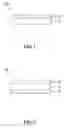
FIG. 1 is a schematic view of a first preferred embodiment of the present invention.
FIG. 2 is a schematic view of a second preferred embodiment of the present invention.
FIG. 3 is a schematic view of a third preferred embodiment of the present invention.
FIG. 4 is a schematic view of a fourth preferred embodiment of the present invention.
FIG. 5 is an infrared thermographic view showing the temperature distribution before the testee is put on the film of the present invention.
FIG. 6 is an infrared thermographic view showing the temperature distribution of the testee who is put on the film of Example 1.
FIG. 7 is an infrared thermographic view showing the temperature distribution of the testee who is put on the film of Comparative Example 1.
DETAILED DESCRIPTION OF PREFERRED EMBODIMENTS
Referring to FIG. 1, a film 10 capable emitting infrared rays in accordance with a first preferred embodiment of the present invention is composed of a surface layer 20 and a carbonic layer 30. The detailed descriptions and operations of these elements as well as their interrelations are recited in the respective paragraphs as follows.
The surface layer 20 is made of natural fiber, artificial fiber, polymer, natural leather, artificial leather, or a composition thereof.
The carbonic layer 30 coats a bottom side of the surface layer 20 and contains carbon of at least 60 wt % and artificial fiber of at most 40 wt %. Preferably, the carbonic layer 30 contains carbon of at least 80 wt % and artificial fiber of at most 20 wt %. The aforesaid carbon can be bamboo charcoal powders, carbon fibers, carbon nanotubes, activated carbon powders, activated carbon grains, activated carbon fibers, or a composition thereof. The carbonic layer 30 can be fabric, nonwoven, paper having vents, or membrane having no vents.
In addition, the carbonic layer 30 of the film 10 in this embodiment further contains metal of at most 2 wt % in the shape of metallic particles or membrane. The metal can be at least one of silver, gold, palladium, copper, zinc, aluminum, and chromium. Therefore, the film 10 can additionally be antibacterial.
In actual production, the film 10 can be added with various functional ingredients, such as hyaluronic acid, collagen, fruit acid, ginkgo extraction, aloe extract, liquorice extraction, tunicin, multi-vitamin, natural moisturizing factor, and algal extraction. When the film 10 is put on the human skin, the carbon in the carbonic layer 30 can emit far infrared rays to heighten the temperature of the skin, enhance the blood circulation, and further increase the absorbability of the functional ingredients for the skin. Besides, the carbon in the carbonic layer 30 can further resist ultraviolet rays to effectively prevent the human skin from the ultraviolet injury. Moreover, the film 10 can be made, as per the actual requirement, into facial mask, brow mask, eye mask, neck mask, chest mask, hand mask, foot mask, scar-removal patch, or wound dressing. The film 10 of the present invention can also be applied to glove, socks, mask, wrist protector, elbow protector, or knee protector.
Referring to FIG. 2, the film 10 capable of emitting infrared rays in accordance with a second preferred embodiments of the present invention includes a surface layer 20, a carbonic layer 30, and a bottom layer 40 coating the carbonic layer 30. Referring to FIG. 3, the film 10 capable of emitting infrared rays in accordance with a third preferred embodiments of the present invention includes a surface layer 20, a carbonic layer 30, and a pressure-sensitive adhesive layer 50 coating the carbonic layer 30. Referring to FIG. 4, the film 10 capable of emitting infrared rays in accordance with a fourth preferred embodiments of the present invention includes a surface layer 20, a carbonic layer 30, a bottom layer 40 coating the carbonic layer 30, and a pressure-sensitive adhesive layer 50 coating the bottom layer 40. The bottom layer 40 can be made of natural fiber, artificial fiber, polymer (e.g. polyethylene, polyvinyl chloride, polyethylene terephthalate, Teflon, etc.), natural leather, artificial leather, or the composition thereof. The pressure-sensitive adhesive layer 50 can made of silica gel, acrylic glue, polycarbonate adhesive, or the mixture thereof.
When the film 10 of the second embodiment is applied, the bottom layer 40 touches the human skin. When the films 10 of the third and fourth embodiment are applied, the pressure-sensitive adhesive layer 50 touches the human skin.
The following experimental examples are listed below to specify but not to limit the scope of the present invention. Every change and modification done by the person of ordinary skill in the art can make under the spirit of the present invention fall within the scope of the present invention.
Example 1
The surface layer 20 is made of PET nonwoven. The carbonic layer 30 is made of fabric of 100% activated carbon fiber, wherein the specific surface area is 1100 m2/g and the moisture content is 19%. The bottom layer 40 is made of porous PE membrane. The surface layer 20, the carbonic layer 30, and the bottom layer 40 are combined with each other by a medical-grade acrylic adhesive to produce the film 10 of the Example 1.
Example 2
The surface layer 20 is made of cotton cloth. The carbonic layer 30 is formed of felt made of 100% carbon fiber with thickness of 0.2 mm, weight of 70 g/m2, specific surface area of 86 m2/g, and moisture content of 0.50%. The pressure-sensitive adhesive layer 50 is formed of silane plastic coated to the carbonic layer 30. The surface layer 20 and the carbonic layer 30 are combined with each other by a medical-grade acrylic adhesive to produce the film 10 of Example 2.
Example 3
The surface layer 20 is made of cotton cloth. The carbonic layer 30 is formed of cloth made of 100% carbon fiber with specific surface area of 75 m2/g, thickness of 0.35 mm, and weight of 85 g/m2. Besides, the carbonic layer 30 contains nanoscale silver granules of 0.2 wt %. All of the layers are combined with each other by a medical-grade acrylic adhesive to produce the film 10 of Example 3.
Example 4
The surface layer 20 is made of cotton nonwoven. The carbonic layer 30 is formed of nonwoven of mixture of 60 wt % activated carbon fiber and PET fiber with thickness of 0.25 mm, weight of 50 g/m2, and specific surface area of 250 m2/g. All of the layers are combined with each other by a medical-grade acrylic adhesive to produce the film 10 of the Example 4.
Example 5
The surface layer 20 is made of cotton nonwoven. The carbonic layer 30 is made of nonwoven of mixture of 80 wt % activated carbon fiber and PET fiber with thickness of 0.25 mm, weight of 50 g/m2, and specific surface area of 400 m2/g. All of the layers are combined with each other by a medical-grade acrylic adhesive to produce the film 10 of the Example 5.
Comparative Example 1
The surface layer 20 is made of cotton nonwoven. The carbonic layer 30 is made of nonwoven of mixture of 25 wt % activated carbon fiber and PET fiber with thickness of 0.05 mm, weight of 20 g/m2, and specific surface area of 100 m2/g. All of the surface and carbonic layers 20 and 30 are combined with each other by a medical-grade acrylic adhesive to produce the film 10 of the Comparative Example 1.
Comparative Example 2
The surface layer 20 is made of cotton nonwoven. The carbonic layer 30 is made of nonwoven of mixture of 50 wt % activated carbon fiber and PET fiber with thickness of 0.25 mm, weight of 50 g/m2, and specific surface area of 200 m2/g. All of the surface and carbonic layers 20 and 30 are combined with each other by a medical-grade acrylic adhesive to produce the film 10 of the Comparative Example 2.
Comparative Example 3
The surface layer 20 is made of cotton nonwoven. The carbonic layer 30 is made of nonwoven of mixture of 50 wt % activated carbon fiber and PET fiber with thickness of 0.25 mm, weight of 50 g/m2, and specific surface area of 200 m2/g. The pressure-sensitive adhesive layer 50 is formed by that silane plastic is directly coated onto the carbonic layer 30. All of the surface and carbonic layers 20 and 30 are combined with each other by a medical-grade acrylic adhesive to produce the film 10 of the Comparative Example 3.
Method of Test
[Far-Infrared Test]
First, test the human face, on which the film has not been put, by a thermal infrared-ray digital camera (Model No. SAT-HY6800) to get an average temperature T1. Next, put the films 10 of the examples and the comparative examples onto the human face for 60 minutes separately and then test the human face by the aforesaid thermal infrared-ray digital camera to get an average temperature T2 for each of the examples and the comparative examples. T2 minus T1 is equal to an incremental value of the average temperature of the human face for each of the examples and the comparative examples as listed in the following Table 1.
| TABLE 1 | ||
| Average Temperature | ||
| Item | of Face (° C.) | |
| Example 1 | +1.04 | |
| Example 2 | +1.50 | |
| Example 3 | +1.56 | |
| Example 4 | +0.47 | |
| Example 5 | +0.80 | |
| Comparative | +0.21 | |
| Example 1 | ||
| Comparative | +0.25 | |
| Example 2 | ||
| Comparative | +0.26 | |
| Example 3 | ||
[Ultraviolet Resistance Test]
Detect the ultraviolet transmittance and the ultraviolet protection factor (UPF) of the films of the examples and comparative examples by AATCC Test Method 183-2004 and then the detective results are shown in the following Table 2. The ultraviolet transmittance can be indicated by the UVA mean and the UVB mean. As the UVA or UVB mean is lower, the amount of ultraviolet transmittance is less. As the UPF is higher, the ultraviolet resistance is more effective.
| TABLE 2 | ||
| Ultraviolet | ||
| Ultraviolet Transmittance (%) | Protection Factor |
| Item | UVA Mean | UVB Mean | (UPF) |
| Example 1 | 0.50 | 0.40 | 230 |
| Example 2 | 0.51 | 0.42 | 220 |
| Example 3 | 0.48 | 0.40 | 235 |
| Example 4 | 10.30 | 10.04 | 15 |
| Example 5 | 3.50 | 3.61 | 29 |
| Comparative | 80.05 | 79.95 | 2 |
| Example 1 | |||
| Comparative | 40.05 | 40.35 | 5 |
| Example 2 | |||
| Comparative | 41.30 | 41.5 | 8 |
| Example 3 | |||
As clearly indicated in the Table 1, after the testee is put on the films of the Examples 1-5 for 60 minutes, the average temperature of the testee's face is obviously heightened; after the testee is put on the films of the Comparative Examples 1-3 for 60 minutes, the average temperature of the testee's face is not obviously changed. Thus, it is demonstrated that the film of the present invention can indeed emit far infrared rays to effectively heighten the temperature where the film is put on to further promote blood circulation. As illustrated in Example 1 and the Comparative Example 1, before the test, when the testee's face has not been put on the film, the temperature distribution detected by the thermal infrared-ray digital camera is shown in FIG. 5; meanwhile, the average temperature of the testee's face is 32.07° C. After the testee's face is put on the films of the Example 1 and the Comparative Example 1 for 60 minutes separately, the temperature distributions detected are shown in FIG. 6-7 to illustrate that the testee's brow, nose, and mouth, who put on the film of the Example 1, are apparently red; meanwhile, the average temperature of the testee's face is 33.11° C., rising for 1.04° C. and the face of the testee put on the film of the Comparative Example 1 does not show any obvious change. Thus, the film of the Example 1 can indeed heighten the average temperature of the testee's face to promote the blood circulation where the film is put on.
In addition, as indicated in the Table 2, the ultraviolet transmittance of the films of the Comparative Examples 1-3 reach 40-80% but the UPF of the same is only 2-8. However, the ultraviolet transmittance of the films of the Examples 1-5 is 0.4-10% only but the UPF of the same reaches 15-235. Thus, it is sufficient to demonstrate that the film of the present invention is very effective in ultraviolet resistance.
In conclusion, when the film of the present invention is applied to the human skin, it can heighten temperature of the skin and promote blood circulation to enhance the absorbability of the active ingredients in the film by the human skin. Besides, the film of the present invention can resist ultraviolet rays to prevent the skin from injury resulting from the ultraviolet rays. Moreover, the film can additionally have antibacterial metal to become antibacterial.
Although the present invention has been described with respect to specific preferred embodiments thereof, it is in no way limited to the specifics of the illustrated structures but changes and modifications may be made within the scope of the appended claims.
Claims
What is claimed is:1. A film capable of emitting far-infrared rays, comprising:
a surface layer; and
a carbonic layer coating the surface layer and having carbon of at least 60 wt %.
2. The film as defined in claim 1, wherein the carbonic layer is made of at least one material selected from a group consisting of bamboo charcoal powders, carbon fibers, carbon nanotubes, activated carbon powders, activated carbon grains, and activated carbon fibers.
3. The film as defined in claim 1, wherein the carbonic layer is a fabric, nonwoven, a paper having vents, or a membrane having none of any vents.
4. The film as defined in claim 1, wherein the carbonic layer further comprises artificial fiber of at most 40 wt %.
5. The film as defined in claim 1, wherein the carbonic layer further comprises metal of at most 2 wt % in the shape of metallic particles or membrane, the metal being selected from a group consisting of silver, gold, palladium, copper, zinc, aluminum, and chromium.
6. The film as defined in claim 1, wherein the carbonic layer comprises carbon of at least 80 wt %.
7. The film as defined in claim 1, wherein the surface layer is made of natural fiber, artificial fiber, polymer, natural leather, artificial leather, or a composition thereof.
8. The film as defined in claim 1 further comprising a bottom layer coating the carbonic layer, wherein the bottom layer is made of natural fiber, artificial fiber, polymer, natural leather, artificial leather, or a composition thereof.
9. The film as defined in claim 8 further comprising a pressure-sensitive adhesive layer coating the bottom layer, wherein the pressure-sensitive adhesive layer is made of silica gel, acrylic glue, polycarbonate adhesive, or the mixture thereof.
10. The film as defined in claim 1 further comprising a pressure-sensitive adhesive layer coating the carbonic layer, wherein the pressure-sensitive adhesive layer is made of silica gel, acrylic glue, polycarbonate adhesive, or the mixture thereof.
Images & Drawings included:



Sources:
- United States Patent and Trademark Office - verify current appl. status at the USPTO↗
Recent applications in this class:
- » 20240066836 2024-02-29
HIGHLY THERMALLY CONDUCTIVE HYBRID CARBON FIBER COMPOSITES AND METHODS FOR MAKING AND USING THE SAME - » 20230373189 2023-11-23
Biodegradable Cork Fabric - » 20230264453 2023-08-24
COMPOSITE MATERIAL - » 20230023169 2023-01-26
LAMINATE - » 20220288890 2022-09-15
Memory ironing-free foldable composite material suitable for apparels, manufacturing method thereof and application thereof - » 20220266571 2022-08-25
Thermal protection close-outs - » 20210221099 2021-07-22
RE-MOLDABLE HOLSTER - » 20200009832 2020-01-09
Multilayer composite material and method for manufacturing - » 20190118512 2019-04-25
Carbon nanotube sheet structure and laminate - » 20180099483 2018-04-12
Package comprising a sealed contact area including a nonwoven having a bonded surface with an embossed impression pattern
Recent applications for this Assignee:
- » 20150065936 2015-03-05
Wound dressing - » 20150061171 2015-03-05
METHOD OF MANUFACTURING WOUND DRESSING - » 20150032069 2015-01-29
Wound dressing