Isocyanurate vinyl ester anchoring adhesive composition
US20120296038A1
2012-11-22
13/110,504
2011-05-18
✅ Patent granted
US 9,074,114 B2
2015-07-07
-
-
Karuna P Reddy
Pauley Petersen & Erickson
2031-11-25
Abstract:
An anchoring adhesive includes effective amounts of an isocyanurate compound and a vinyl ester compound that react and cure to form a composition having high compressive strength, high tensile strength and low shrinkage. The anchoring adhesive can be used to firmly bond anchor pins to boreholes in concrete, steel, wood, and other substrates.
Assignee:
- Illinois Tool Works Inc. 5,396 🇺🇸 Glenview, IL, United States
Applicant:
Interested in similar patents?
Get notified when new applications in this technology area are published.
Classification:
B32B37/12 » CPC further
Methods or apparatus for laminating, e.g. by curing or by ultrasonic bonding characterised by using adhesives
C04B2111/00637 » CPC further
Mortars, concrete or artificial stone or mixtures to prepare them, characterised by specific function, property or use; Uses not provided for elsewhere in as glue or binder for uniting building or structural materials
C04B40/0666 » CPC further
Processes, in general, for influencing or modifying the properties of mortars, concrete or artificial stone compositions, e.g. their setting or hardening ability; Inhibiting the setting, e.g. mortars of the deferred action type containing water in breakable containers ; Inhibiting the action of active ingredients Chemical plugs based on hydraulic hardening materials
C08F222/1025 » CPC further
Copolymers of compounds having one or more unsaturated aliphatic radicals, each having only one carbon-to-carbon double bond, and at least one being terminated by a carboxyl radical and containing at least one other carboxyl radical in the molecule; Salts, anhydrides, esters, amides, imides, or nitriles thereof; Esters of polyhydric alcohols or polyhydric phenols of dialcohols, e.g. ethylene glycol di(meth)acrylate or 1,4-butanediol dimethacrylate of aromatic dialcohols
C09J139/04 IPC
Adhesives based on homopolymers or copolymers of compounds having one or more unsaturated aliphatic radicals, each having only one carbon-to-carbon double bond, and at least one being terminated by a single or double bond to nitrogen or by a heterocyclic ring containing nitrogen; Adhesives based on derivatives of such polymers Homopolymers or copolymers of monomers containing heterocyclic rings having nitrogen as ring member
C09J135/02 IPC
Adhesives based on homopolymers or copolymers of compounds having one or more unsaturated aliphatic radicals, each having only one carbon-to-carbon double bond, and at least one being terminated by a carboxyl radical, and containing at least another carboxyl radical in the molecule, or of salts, anhydrides, esters, amides, imides or nitriles thereof; Adhesives based on derivatives of such polymers Homopolymers or copolymers of esters
C09J11/00 IPC
Features of adhesives not provided for in group , e.g. additives
C08F4/34 IPC
Polymerisation catalysts; Oxygen or compounds releasing free oxygen; Organic compounds Per-compounds with one peroxy-radical
C09J179/04 IPC
Adhesives based on macromolecular compounds obtained by reactions forming in the main chain of the macromolecule a linkage containing nitrogen, with or without oxygen, or carbon only, not provided for in groups - Polycondensates having nitrogen-containing heterocyclic rings in the main chain; Polyhydrazides; Polyamide acids or similar polyimide precursors
C09J167/07 IPC
Adhesives based on polyesters obtained by reactions forming a carboxylic ester link in the main chain ; Adhesives based on derivatives of such polymers; Unsaturated polyesters having carbon-to-carbon unsaturation having terminal carbon-to-carbon unsaturated bonds
C09J177/12 » CPC main
Adhesives based on polyamides obtained by reactions forming a carboxylic amide link in the main chain ; Adhesives based on derivatives of such polymers Polyester-amides
C09J131/04 » CPC further
Adhesives based on homopolymers or copolymers of compounds having one or more unsaturated aliphatic radicals, each having only one carbon-to-carbon double bond, and at least one being terminated by an acyloxy radical of a saturated carboxylic acid, of carbonic acid, or of a haloformic acid ; Adhesives based on derivatives of such polymers; Homopolymers or copolymers of esters of monocarboxylic acids Homopolymers or copolymers of vinyl acetate
C09J129/12 » CPC further
Adhesives based on homopolymers or copolymers of compounds having one or more unsaturated aliphatic radicals, each having only one carbon-to-carbon double bond, and at least one being terminated by an alcohol, ether, aldehydo, ketonic, acetal, or ketal radical; Adhesives based on hydrolysed polymers of esters of unsaturated alcohols with saturated carboxylic acids; Adhesives based on derivatives of such polymers Homopolymers or copolymers of unsaturated ketones
C04B26/16 » CPC main
Compositions of mortars, concrete or artificial stone, containing only organic binders, e.g. polymer or resin concrete; Macromolecular compounds obtained otherwise than by reactions only involving carbon-to-carbon unsaturated bonds Polyurethanes
C04B2111/00715 » CPC further
Mortars, concrete or artificial stone or mixtures to prepare them, characterised by specific function, property or use; Uses not provided for elsewhere in for fixing bolts or the like
C09J4/00 » CPC further
Adhesives based on organic non-macromolecular compounds having at least one polymerisable carbon-to-carbon unsaturated bond ; adhesives, based on monomers of macromolecular compounds of groups -
F16B13/145 » CPC further
Dowels or other devices fastened in walls or the like by inserting them in holes made therein for that purpose; Non-metallic plugs or sleeves ; Use of liquid, loose solid or kneadable material therefor; Fixing plugs in holes by the use of settable material using frangible cartridges or capsules containing the setting components characterised by the composition of the setting agents contained in the frangible cartridges or capsules
C08F222/1006 » CPC further
Copolymers of compounds having one or more unsaturated aliphatic radicals, each having only one carbon-to-carbon double bond, and at least one being terminated by a carboxyl radical and containing at least one other carboxyl radical in the molecule; Salts, anhydrides, esters, amides, imides, or nitriles thereof; Esters of polyhydric alcohols or polyhydric phenols
C04B40/06 IPC
Processes, in general, for influencing or modifying the properties of mortars, concrete or artificial stone compositions, e.g. their setting or hardening ability Inhibiting the setting, e.g. mortars of the deferred action type containing water in breakable containers ; Inhibiting the action of active ingredients
F16B13/14 IPC
Dowels or other devices fastened in walls or the like by inserting them in holes made therein for that purpose Non-metallic plugs or sleeves ; Use of liquid, loose solid or kneadable material therefor
C08F222/10 IPC
Copolymers of compounds having one or more unsaturated aliphatic radicals, each having only one carbon-to-carbon double bond, and at least one being terminated by a carboxyl radical and containing at least one other carboxyl radical in the molecule; Salts, anhydrides, esters, amides, imides, or nitriles thereof Esters
Description
FIELD OF THE INVENTION
This invention is directed to an anchoring adhesive composition used to maintain anchor pins in boreholes, which has excellent compressive strength and tensile strength, and minimal shrinkage during curing.
BACKGROUND OF THE INVENTION
Anchoring adhesives are used to maintain anchor pins in boreholes that are upside down and vertical, or horizontal, or oriented at any angle. The anchoring adhesives and anchor pins are useful in industrial or commercial construction applications such as bridges, airports, highways, skyscrapers, stadiums and tunnels. In a typical application, a borehole is drilled into a substrate member formed of concrete, steel, wood, or a combination thereof, or another material. Then, the interior of the borehole is cleaned and scrubbed to remove dust and dirt particles. Then, the borehole is filled with a measured amount of anchoring adhesive. Then, a driving tool is used to drive an anchor pin into the borehole.
A typical anchor pin is elongated and made of steel. The anchor pin may be threaded or non-threaded and may have a flat or pointed end. The driving tool may be a hammer, or may be a power tool that employs hammering and/or rotational motion.
Some anchoring adhesives and methods of applying them are disclosed in U.S. Pat. No. 6,291,555, issued to Surjan et al.; U.S. Pat. No. 6,402,434, issued to Surjan et al.; U.S. Pat. No. 6,403,678, issued to Surjan et al.; U.S. Pat. No. 6,416,256, issued to Surjan et al.; U.S. Pat. No. 6,420,458, issued to Surjan et al.; U.S. Pat. No. 7,226,650, issued to Liu et al.; and U.S. Pat. No. 7,368,170, issued to Liu et al. These patents are incorporated herein by reference in their entireties.
Additional anchoring adhesives and methods of applying them are disclosed in U.S. Pat. No. 7,411,010, issued to Kish et al.; U.S. Pat. No. 7,163,971, issued to Rancich et al.; U.S. Pat. No. 6,822,017, issued to Kish et al.; U.S. Pat. No. 6,228,207, issued to Rancich et al. and U.S. Pat. No. 5,965,635, issued to Rancich et al. These patents are incorporated herein by reference in their entireties.
Due to the heavy duty nature of most anchor pin applications, it is important that the anchoring adhesive maintain a strong adhesive bond between the anchor pin and the borehole under a wide variety of conditions. Properties of anchoring adhesive that are considered important in end use applications include high compressive strength, high tensile strength, and low shrinkage during curing. There is a need or desire for anchoring adhesives that demonstrate improvements in these and other properties.
SUMMARY OF THE INVENTION
This present invention is directed to an anchoring adhesive that exhibits high compressive strength, high tensile strength, and low thermal shrinkage, when used to bind an anchor pin to a borehole. The anchoring adhesive includes a first part A and a second part B in a weight ratio of about 1:4 to about 40:1. The first part A includes an isocyanurate compound and a vinyl ester compound. The second part B includes a free radical initiator.
The first part A and second part B are initially separate from each other and may be present in separate capsules inside an anchoring adhesive cartridge, slug or package. During use, the cartridge, slug or package of anchoring adhesive can be placed in a borehole or immediately above a borehole. When a tool is used to drive an anchor pin into the borehole, the driving force ruptures the capsules, if present, and causes the first part A and second part B to mix together and chemically react in the interstitial spaces between the anchor pin and the interior of the borehole.
Upon mixing of the first part A and the second part B, the isocyanurate compound reacts with the vinyl ester compound to create a polymer that is believed to include uniquely shaped crosslinks which both strengthen the polymer and resist elevated temperature creep. The chemical reaction advantageously occurs quickly, with minimal set time, at ambient temperature. The anchoring adhesive provides excellent adhesion between various substrate materials that can be used for the anchor pin and the borehole.
With the foregoing in mind, it is a feature and advantage of the invention to provide an anchoring adhesive that exhibits excellent strength properties and low shrinkage during curing. These and other features and advantages of the invention will become further apparent from the following detailed description of the preferred embodiments. The detailed description is considered to be merely illustrative rather than limiting, the scope of the invention being defined by the appended claims and equivalents thereof.
BRIEF DESCRIPTION OF THE DRAWINGS
FIG. 1 is a perspective view of a dog-bone shaped test specimen used in the tensile testing of anchoring adhesive compositions described below.
FIG. 2 is a front view of the dog-bone shaped test specimen of FIG. 1.
FIG. 3 is a side view of the dog-bone shaped test specimen of FIG. 1.
DETAILED DESCRIPTION OF THE PREFERRED EMBODIMENTS
The present invention is an anchoring adhesive including a first part A and a second part B. The first part A and second part B are present in weight ratios of about 1:4 to about 40:1, suitably about 1:3 to about 30:1, or about 1:2 to about 20:1, or about 1:1 to about 10:1.
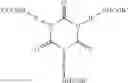
The first part A includes and isocyanurate compound and a vinyl ester compound. The isocyanurate compound may be selected from compounds having the following chemical formula:
Wherein each R and R′ is allyl, alkyl or aryl.
Suitably, the isocyanurate compound can be sleeted from isocyanurate acrylates, isocyanurate diacrylates, isocyanurate triacrylates, and combinations thereof. The isocyanurate compound can be a monomer or a polymer, and is suitably a monomer. One particularly suitable isocyanurate compound is tris(2-hydroxy ethyl)isocyanurate triacrylate. This isocyanurate compound is a monomer, and is available from Sartomer USA, LLC under the trade name SR368. The structure of isocyanurate, as exemplified by the following structure of tris(2-hydroxy ethyl)isocyanurate triacrylate, lends itself to forming unique crosslinks with vinyl ester that strengthen the polymer lattice and resist elevated temperature creep:
The vinyl ester compound can be a monomer or a polymer, and is suitably a polymer. The vinyl ester compound can be selected from polymers having the following chemical formula:
R4—OR3—O—Ar—R—Ar—OnR3—O—R4
wherein
-
- Ar is a substituted or unsubstituted aromatic radical with a valence of at least two,
- R is independently a substituted or unsubstituted divalent radical derived from alkyl or arylalkyl,
- R3 is a hydroxy substituted divalent radical derived from an alkyl radical,
- R4 is independently a vinyl carboxy radical or a epoxy radical, provided that the ratio of n to the number of vinyl carboxy R4 groups is, on average for the composition, from about 0.4 to about 2.0, and
- n is from 1 to 5.
A particularly suitable vinyl ester compound is available from Reichhold Chemical Co. under the tradename Norpol Dion Ver 9165. This product contains 64.5% by weight of a vinyl ester having the following chemical formula, and 35.5% by weight vinyl toluene.
where n is from 1 to about 5 and wherein the ratio of n to the terminal vinyl units is, on average for the composition, from about 0.4 to about 2.0.
The first part A may include about 1-30% by weight of the isocyanurate compound, suitably about 1-20% by weight, or about 2-10% by weight. The first part A may include about 3-50% by weight of the vinyl ester compound, suitably about 5-40% by weight, or about 8-30% by weight. As noted above, the first part A may also include an additional monomer. Suitable monomers include without limitation a vinyl monomer, an acrylate, diacrylate or triacrylate monomer, and combinations thereof. The additional monomer may constitute zero to about 40% by weight of the first part A, suitably about 1-30% by weight, or about 2-20% by weight. When present, the additional monomer may also participate in the chemical (crosslinking) reaction between the isocyanurate compound and the vinyl ester compound.
The first part A may also include about 20-70% by combined weight of one or more fillers, suitably about 30-70% by weight, or about 30-60% by weight. Suitable fillers include without limitation glass fibers, silicon dioxide (silica), titanium dioxide, quartz sand, other sands, and combinations thereof. The first part A may also include about 0.01-10% by combined weight of one or more thixotropic agents, suitably about 0.05-5% by weight, or about 0.1-4% by weight. Suitable thixotropic agents include without limitation formed silica, polycarboxylic acid amides, urea compounds, and combinations thereof. Thixotropic agents cause the anchoring adhesive to become more fluid (less viscous) as its components are mixed together.
The first part A may also include minor amounts of catalysts, chain extenders, flame retardants, fragrances and the like. While a catalyst may be included in the first part A, this catalyst is typically not a free radical initiator of the type that is typically included in the second part B. Exemplary catalysts and chain extenders useful in the first part A include without limitation diethylol-p-toluidine, n-dodecyl mercaptan, and the like.
The second part B may include about 5-80% by weight of a free radical initiator, suitably about 10-50% by weight, or about 15-40% by weight. Suitable free radical initiators include without limitation peroxide compounds, tertiary amine compounds, aldehyde amine compounds, organic sulfonyl chlorides, and combinations thereof. One suitable free radical initiator is available from Arkema Inc. under the trade name AFR40. This product is a mixture of 40% by weight dibenzoyl peroxide, 40% by weight dibutyl phthalate, and 20% by weight water.
The second part B may also include about 20-80% by weight of a thickening agent, suitably about 20-65% by weight, or about 20-50% by weight. Suitable thickening agents include without limitation monosilica, organic and inorganic clays, and other very fine, inert particulate materials.
The second part B may also include a liquid carrier in an amount of zero to about 50% by weight, suitably about 10-45% by weight or about 15-40% by weight. Suitable liquid carriers include water and organic solvents such as alcohols, ethers and ketones. Additionally, the second part B may include suitable amounts of pigments, fillers and the like.
The first part A and second part B may be present in separate first and second capsules and may be combined in a single cartridge, slug or package of anchoring adhesive. The first and second capsules can be formed of glass, plastic or a membrane material. One of the first and second capsules can be smaller than the other of the first and second capsules and contained within the other of the first and second capsules. Suitably, the first part A is contained within a first, larger capsule and the second part B is contained within a second, smaller capsule, and the second capsule is contained within the first capsule.
The cartridge, slug or package of anchoring adhesive may contain the first and second capsules and may have a narrow, elongated shape which fits easily into the borehole. When a tool is used to drive an anchor pin into the borehole, the first and second capsules rupture and the first and second parts A and B mix together, resulting in chemical reaction, crosslinking and adhesion between the anchor pin and the inner surfaces of the borehole. The anchoring adhesion of the invention forms a strong adhesive bond and exhibits high tensile and compressive strengths and minimal shrinkage.
EXAMPLES
Several experimental anchoring adhesives were formulated using the ingredients listed in Table 1.
| TABLE 1 |
| Anchoring Adhesive Ingredients |
| Trade Name | Supplier | Chemical Name | Purpose |
| C2208 | ITW -Red Head | 70% Methyl Methacrylate/30% Polymethylmethacrylate | Monomer/Resin |
| SR350 | Sartomer | TRIMETHYLOLPROPANE TRIMETHACRYLATE | Monomer |
| SR540 | Sartomer | ETHOXYLATED (4) BISPHENOL A DIMETHACRYLATE | Monomer |
| SR368 | Sartomer | TRIS (2-HYDROXY ETHYL) ISOCYANURATE | Monomer |
| TRIACRYLATE | |||
| SR833S | Sartomer | TRICYCLODECANE DIMETHANOL DIACRYLATE | Monomer |
| PRO12128 | Sartomer | 30% SR368/70% SR833S (proprietary composition) | Monomers |
| DION 9165 | Reichhold | 64.5% DEGBPA Vinyl Ester/35.5% Vinyl Toluene | Resin/Monomer |
| Ethylene Glycol | Various | Ethylene Glycol | Monomer |
| Pulcra 5710 | Pulcra Chemical Company | diethylol-p-toluidine | Catalyst |
| NDM | Arkema | n-DODECYL MERCAPTAN | Chain Extender |
| Fragrance 16332 | Atlanta Fragrance Company | unknown | Fragrance |
| Aerosil R 202 | Evonik | Hydrophobically modified fumed silica | Thixotropic Agent |
| Aerosil R974 | Evonik | Hydrophillically modified fumed silica | Thixotropic Agent |
| BYK-R605 | BYK | Solution of polyhydroxycarboxylic acid amides | Thixotropic Agent |
| BYK-E401 | BYK | Solution of a modified urea | Thixotropic Agent |
| TS720 | Cabot Corp | Hydrophobically modified fumed silica | Thixotropic Agent |
| Micral 9400 | J. M. Huber Corporation | Aluminum trihydrate | Flame Retardant |
| Microglass M9132 | Fibertec, Inc. | Milled glass fiber (15 μm diameter × ~150 μm Length) | Reinforcing Filler |
| Sand 100/140 | AGSCO | Quartz Sand (100-140 mesh) | Reinforcing Filler |
| Silcosil 63 | US Silica | Crystalline silica (<63 μm) | Reinforcing Filler |
| TiPure R900 | DuPont | Titanium Dioxide | Pigment |
| AFR 40 | Arkema | 40% Dibenzoyl Peroxide/40% Dibutyl Pthalate/20% Water | Free Radical Initiator |
| Tamsil 8 | TAM | microsilica | Thickening Agent |
| Tixogel VZ | Southern Clay Products | organoclay | Thickening Agent |
| VC 80000 | American Colors, Inc | Black Iron Oxide Paste | Pigment |
The foregoing ingredients were formulated into anchoring adhesive compositions, with control compositions A7 from Illinois Tool Works Inc. and HY-150 from HiltiAltengesellschaft, and experimental compositions A7+−1, A7+−2, A7+−3, . . . , through A7+−95. Physical properties of Compressive Strength, Tensile Strength, Tensile Modules and Shrinkage were measured for many of the anchoring adhesive compositions, using the test procedures described below. The following Table 2 describes the anchoring adhesive compositions and sets forth the test results.
As shown below, the anchoring adhesives formulated using the isocyanurate compound (represented by ingredient PRO 12128) in combination with the vinyl ester compound (represented by ingredient DION 9165) generally had higher compression strengths and higher tensile strengths than the anchoring adhesives that omitted one or both of these ingredients, and also exhibited excellent (low) shrinkage values.
| TABLE 2 |
| Anchoring Adhesive Compositions And Test Results |
| Controls | Crosslinker-Fiber | Catalysis |
| A7 | HY-150 | A7 + -1 | A7 + -2 | A7 + -3 | A7 + -4 | A7 + -5 | A7 + -6 | A7 + -7 | A7 + -8 | |
| Resin Side (Part A) |
| C2208 | 39.88% | 36.26% | 30.70% | 33.25% | 36.26% | 30.70% | 40.20% | 39.88% | 39.88% | |
| SR350 | ||||||||||
| SR540 | 4.53% | 11.51% | 8.31% | 4.53% | 11.51% | |||||
| PRO12128 | ||||||||||
| SR833S | ||||||||||
| DION 9165 | ||||||||||
| Ethylene Glycol | ||||||||||
| HET | 0.50% | 0.45% | 0.38% | 0.42% | 0.45% | 0.38% | 0.10% | 0.10% | 0.90% | |
| NDM | 0.50% | 0.45% | 0.38% | 0.42% | 0.45% | 0.38% | 0.10% | 0.90% | 0.10% | |
| F16332 | 0.30% | 0.27% | 0.23% | 0.25% | 0.27% | 0.23% | 0.30% | 0.30% | 0.30% | |
| R202 | 3.99% | 3.63% | 3.07% | 3.33% | 3.63% | 3.07% | 4.02% | 3.99% | 3.99% | |
| R974 | ||||||||||
| BYK-605 | ||||||||||
| BYK-E401 | ||||||||||
| TS720 | ||||||||||
| M9400 | 4.99% | 4.53% | 3.84% | 4.16% | 4.53% | 3.84% | 5.03% | 4.98% | 4.98% | |
| Glass Fibers | 12.47% | 12.47% | 31.17% | 49.86% | 49.88% | |||||
| Sand 100/140 | 49.85% | 37.40% | 37.41% | 18.70% | 50.25% | 49.85% | 49.85% | |||
| Silicosil 63 | ||||||||||
| R900 |
| Activator Side (Part B) |
| AFR40 | 48.72 | 48.72 | 48.72 | 48.72 | 48.72 | 48.72 | 48.72 | 48.72 | 48.72 | |
| Tamsil 8 | ||||||||||
| Tixogel VZ | 1.98 | 1.98 | 1.98 | 1.98 | 1.98 | 1.98 | 1.98 | 1.98 | 1.98 | |
| Sand 100/140 | 48.95 | 48.95 | 48.95 | 48.95 | 48.95 | 48.95 | 48.95 | 48.95 | 48.95 | |
| VC 80000 | 0.36 | 0.36 | 0.36 | 0.36 | 0.36 | 0.36 | 0.36 | 0.36 | 0.36 |
| Physical Properties |
| Compressive Strength, psi | 1,643 | 9,400 | 6,494 | 10,000 | 9,411 | 6,386 | 10,815 | 5,073 | |
| Tensile Strength, psi | 1,615 | 577 | 2,112 | 1,874 | 2,608 | 2,924 | 3,467 | 1,744 | |
| Tensile Modulus, ksi | 1,025 | 187 | 1,036 | 984 | 1,197 | 1,501 | 1,511 | 803 | |
| Shrinkage | |||||||||
| Catalysis | Microsilica-Isocyanurate | Original | Sand/Microsilica/Glass Fiber DOE |
| A7 + -9 | A7 + -10 | A7 + -11 | A7 + -12 | A7 + -13 | A7 + -14 | A7 + -15 | A7 + -16 | A7 + -17 | A7 + -18 | |
| Resin Side (Part A) |
| C2208 | 39.56% | 0.48% | 0.54% | 0.52% | 39.88% | 39.88% | 39.88% | 39.88% | 39.88% | 39.88% |
| SR350 | ||||||||||
| SR540 | 13.60% | 13.07% | ||||||||
| PRO12128 | 4.09% | 7.86% | ||||||||
| SR833S | ||||||||||
| DION 9165 | ||||||||||
| Ethylene Glycol | ||||||||||
| HET | 0.89% | 0.01% | 0.01% | 0.01% | 0.50% | 0.50% | 0.50% | 0.50% | 0.50% | 0.50% |
| NDM | 0.89% | 0.01% | 0.01% | 0.01% | 0.50% | 0.50% | 0.50% | 0.50% | 0.50% | 0.50% |
| F16332 | 0.30% | 0.00% | 0.00% | 0.00% | 0.30% | 0.30% | 0.30% | 0.30% | 0.30% | 0.30% |
| R202 | 3.96% | 0.05% | 0.05% | 0.05% | 3.99% | 3.99% | 3.99% | 3.99% | 3.99% | 3.99% |
| R974 | ||||||||||
| BYK-605 | ||||||||||
| BYK-E401 | ||||||||||
| TS720 | ||||||||||
| M9400 | 4.95% | 0.06% | 0.07% | 0.07% | 4.99% | 4.99% | 4.99% | 4.99% | 4.99% | 4.99% |
| Glass Fibers | 72.28% | 51.02% | 49.01% | 24.93% | 8.31% | 24.93% | ||||
| Sand 100/140 | 49.45% | 30.61% | 29.40% | 49.85% | 49.85% | 8.31% | 49.85% | |||
| Silicosil 63 | 27.11% | 24.93% | 33.23% | 24.93% | ||||||
| R900 |
| Activator Side (Part B) |
| AFR40 | 48.72 | 48.72 | 48.72 | 48.72 | 49.5 | 48.72 | 48.72 | 48.72 | 48.72 | 48.72 |
| Tamsil 8 | 29.7 | |||||||||
| Tixogel VZ | 1.98 | 1.98 | 1.98 | 1.98 | 19.8 | 1.98 | 1.98 | 1.98 | 1.98 | 1.98 |
| Sand 100/140 | 48.95 | 48.95 | 48.95 | 48.95 | 48.95 | 48.95 | 48.95 | 48.95 | 48.95 | |
| VC 80000 | 0.36 | 0.36 | 0.36 | 0.36 | 0.99 | 0.36 | 0.36 | 0.36 | 0.36 | 0.36 |
| Physical Properties |
| Compressive Strength, psi | 12,013 | 11,042 | 9,241 | 1,284 | 2,965 | 3,325 | 2,991 | 2,847 | 3,290 |
| Tensile Strength, psi | 2,805 | 2,690 | 2,515 | 1,367 | 1,359 | 2,025 | 1,495 | 837 | 2,202 |
| Tensile Modulus, ksi | 1,300 | 1,144 | 1,191 | 1,022 | 954 | 1,267 | 1,106 | 836 | 1,645 |
| Shrinkage | |||||||||
| Sand/Microsilica/Glass Fiber DOE |
| A7 + -19 | A7 + -20 | A7 + -21 | A7 + -22 | A7 + -23 | A7 + -24 | A7 + -25 | A7 + -26 | A7 + -27 | A7 + -28 | |
| Resin Side (Part A) |
| C2208 | 39.88% | 39.88% | 39.88% | 39.88% | 39.88% | 39.88% | 39.88% | 39.88% | 39.88% | 39.88% |
| SR350 | ||||||||||
| SR540 | ||||||||||
| PRO12128 | ||||||||||
| SR833S | ||||||||||
| DION 9165 | ||||||||||
| Ethylene Glycol | ||||||||||
| HET | 0.50% | 0.50% | 0.50% | 0.50% | 0.50% | 0.50% | 0.50% | 0.50% | 0.50% | 0.50% |
| NDM | 0.50% | 0.50% | 0.50% | 0.50% | 0.50% | 0.50% | 0.50% | 0.50% | 0.50% | 0.50% |
| F16332 | 0.30% | 0.30% | 0.30% | 0.30% | 0.30% | 0.30% | 0.30% | 0.30% | 0.30% | 0.30% |
| R202 | 3.99% | 3.99% | 3.99% | 3.99% | 3.99% | 3.99% | 3.99% | 3.99% | 3.99% | 3.99% |
| R974 | ||||||||||
| BYK-605 | ||||||||||
| BYK-E401 | ||||||||||
| TS720 | ||||||||||
| M9400 | 4.99% | 4.99% | 4.99% | 4.99% | 4.99% | 4.99% | 4.99% | 4.99% | 4.99% | 4.99% |
| Glass Fibers | 49.85% | 8.31% | 20.77% | 33.23% | 49.85% | 16.62% | 24.93% | |||
| Sand 100/140 | 33.23% | 20.77% | 8.31% | 16.62% | 24.93% | 24.93% | ||||
| Silicosil 63 | 49.85% | 49.85% | 8.31% | 8.31% | 8.31% | 16.62% | 24.93% | |||
| R900 |
| Activator Side (Part B) |
| AFR40 | 48.72 | 48.72 | 48.72 | 48.72 | 48.72 | 48.72 | 48.72 | 48.72 | 48.72 | 48.72 |
| Tamsil 8 | ||||||||||
| Tixogel VZ | 1.98 | 1.98 | 1.98 | 1.98 | 1.98 | 1.98 | 1.98 | 1.98 | 1.98 | 1.98 |
| Sand 100/140 | 48.95 | 48.95 | 48.95 | 48.95 | 48.95 | 48.95 | 48.95 | 48.95 | 48.95 | 48.95 |
| VC 80000 | 0.36 | 0.36 | 0.36 | 0.36 | 0.36 | 0.36 | 0.36 | 0.36 | 0.36 | 0.36 |
| Physical Properties |
| Compressive Strength, psi | 2,967 | 2,438 | 3,226 | 2,888 | 2,622 | 1,903 | 3,253 | 2,848 | 3,006 | |
| Tensile Strength, psi | 1,323 | 1,073 | 1,532 | 2,458 | 1,981 | 1,108 | 712 | 1,532 | 1,111 | 1,786 |
| Tensile Modulus, ksi | 1,100 | 1,010 | 1,039 | 1,346 | 1,116 | 1,021 | 937 | 1,114 | 1,231 | 1,010 |
| Shrinkage | ||||||||||
| Sand/Microsilica/Glass Fiber DOE | High Potential Monomer Screening |
| A7 + -29 | A7 + -30 | A7 + -31 | A7 + -32 | A7 + -33 | A7 + -34 | A7 + -35 | A7 + -36 | A7 + -37 | A7 + -38 | |
| Resin Side (Part A) |
| C2208 | 39.88% | 39.88% | 39.88% | 39.88% | ||||||
| SR350 | 6.61% | 10.17% | 20.35% | |||||||
| SR540 | 4.07% | 10.17% | 30.52% | 10.17% | ||||||
| PRO12128 | 4.07% | 30.52% | 20.35% | |||||||
| SR833S | 19.33% | 30.52% | 20.35% | 20.35% | ||||||
| DION 9165 | 6.61% | |||||||||
| Ethylene Glycol | ||||||||||
| HET | 0.50% | 0.50% | 0.50% | 0.50% | 0.25% | 0.25% | 0.25% | 0.25% | 0.25% | 0.25% |
| NDM | 0.50% | 0.50% | 0.50% | 0.50% | 0.25% | 0.25% | 0.25% | 0.25% | 0.25% | 0.25% |
| F16332 | 0.30% | 0.30% | 0.30% | 0.30% | 0.31% | 0.31% | 0.31% | 0.31% | 0.31% | 0.31% |
| R202 | 3.99% | 3.99% | 3.99% | 3.99% | 2.34% | 2.34% | 2.34% | 2.34% | 2.34% | 2.34% |
| R974 | ||||||||||
| BYK-605 | ||||||||||
| BYK-E401 | ||||||||||
| TS720 | ||||||||||
| M9400 | 4.99% | 4.99% | 4.99% | 4.99% | 5.09% | 5.09% | 5.09% | 5.09% | 5.09% | 5.09% |
| Glass Fibers | 9.97% | 9.97% | 9.97% | 12.82% | 12.82% | 12.82% | 12.82% | 12.82% | 12.82% | |
| Sand 100/140 | 24.93% | 4.99% | 7.48% | |||||||
| Silicosil 63 | 24.93% | 39.88% | 34.90% | 32.40% | 38.25% | 38.25% | 38.25% | 38.25% | 38.25% | 38.25% |
| R900 |
| Activator Side (Part B) |
| AFR40 | 48.72 | 48.72 | 48.72 | 48.72 | 48.72 | 48.72 | 48.72 | 48.72 | 48.72 | 48.72 |
| Tamsil 8 | ||||||||||
| Tixogel VZ | 1.98 | 1.98 | 1.98 | 1.98 | 1.98 | 1.98 | 1.98 | 1.98 | 1.98 | 1.98 |
| Sand 100/140 | 48.95 | 48.95 | 48.95 | 48.95 | 48.95 | 48.95 | 48.95 | 48.95 | 48.95 | 48.95 |
| VC 80000 | 0.36 | 0.36 | 0.36 | 0.36 | 0.36 | 0.36 | 0.36 | 0.36 | 0.36 | 0.36 |
| Physical Properties |
| Compressive Strength, psi | 3,159 | 13,617 | 12,838 | 10,567 | 9,812 | 12,303 | 11,051 | |
| Tensile Strength, psi | 2,344 | 1,501 | 2,528 | 1,860 | 2,772 | 2,385 | 2,888 | |
| Tensile Modulus, ksi | 1,270 | 1,171 | 1,153 | 1,167 | 1,074 | 1,251 | 954 | |
| Shrinkage | 1.57% | 1.82% | 1.44% | 1.34% | 2.03% | 1.40% | ||
| High Potential Monomer Screening |
| A7 + -39 | A7 + -40 | A7 + -41 | A7 + -42 | A7 + -43 | A7 + -44 | A7 + -45 | A7 + -46 | A7 + -47 | A7 + -48 | |
| Resin Side (Part A) |
| C2208 | ||||||||||
| SR350 | 4.07% | 30.52% | 20.35% | 19.33% | 4.07% | |||||
| SR540 | 30.52% | 19.33% | 10.17% | 30.52% | 30.52% | 6.61% | 20.35% | 4.07% | ||
| PRO12128 | 6.61% | 20.35% | 10.17% | 4.07% | 19.33% | |||||
| SR833S | 10.17% | 4.07% | 10.17% | 4.07% | 6.61% | |||||
| DION 9165 | 6.61% | 20.35% | 20.35% | 6.61% | 20.35% | 6.61% | ||||
| Ethylene Glycol | ||||||||||
| HET | 0.25% | 0.25% | 0.25% | 0.25% | 0.25% | 0.25% | 0.25% | 0.25% | 0.25% | 0.25% |
| NDM | 0.25% | 0.25% | 0.25% | 0.25% | 0.25% | 0.25% | 0.25% | 0.25% | 0.25% | 0.25% |
| F16332 | 0.31% | 0.31% | 0.31% | 0.31% | 0.31% | 0.31% | 0.31% | 0.31% | 0.31% | 0.31% |
| R202 | 2.34% | 2.34% | 2.34% | 2.34% | 2.34% | 2.34% | 2.34% | 2.34% | 2.34% | 2.34% |
| R974 | ||||||||||
| BYK-605 | ||||||||||
| BYK-E401 | ||||||||||
| TS720 | ||||||||||
| M9400 | 5.09% | 5.09% | 5.09% | 5.09% | 5.09% | 5.09% | 5.09% | 5.09% | 5.09% | 5.09% |
| Glass Fibers | 12.82% | 12.82% | 12.82% | 12.82% | 12.82% | 12.82% | 12.82% | 12.82% | 12.82% | 12.82% |
| Sand 100/140 | ||||||||||
| Silicosil 63 | 38.25% | 38.25% | 38.25% | 38.25% | 38.25% | 38.25% | 38.25% | 38.25% | 38.25% | 38.25% |
| R900 |
| Activator Side (Part B) |
| AFR40 | 48.72 | 48.72 | 48.72 | 48.72 | 48.72 | 48.72 | 48.72 | 48.72 | 48.72 | 48.72 |
| Tamsil 8 | ||||||||||
| Tixogel VZ | 1.98 | 1.98 | 1.98 | 1.98 | 1.98 | 1.98 | 1.98 | 1.98 | 1.98 | 1.98 |
| Sand 100/140 | 48.95 | 48.95 | 48.95 | 48.95 | 48.95 | 48.95 | 48.95 | 48.95 | 48.95 | 48.95 |
| VC 80000 | 0.36 | 0.36 | 0.36 | 0.36 | 0.36 | 0.36 | 0.36 | 0.36 | 0.36 | 0.36 |
| Physical Properties |
| Compressive Strength, psi | 10,352 | 11,735 | 10,469 | 9,773 | 13,881 | 12,235 | 10,530 | 12,643 | 11,751 | 11,719 |
| Tensile Strength, psi | 1,662 | 2,375 | 2,241 | 1,592 | 2,438 | 2,270 | 2,237 | 1,900 | 2,512 | 2,192 |
| Tensile Modulus, ksi | 800 | 848 | 1,204 | 1,102 | 1,147 | 886 | 780 | 991 | 891 | 1,102 |
| Shrinkage | 1.46% | 1.15% | 1.10% | 2.30% | 1.55% | 1.60% | 1.23% | 1.44% | 1.28% | 1.51% |
| Filler | ||
| High Potential Monomer Screening | Loading |
| A7 + -49 | A7 + -50 | A7 + -51 | A7 + -52 | A7 + -53 | A7 + -54 | A7 + -55 | A7 + -56 | A7 + -57 | A7 + -58 | |
| Resin Side (Part A) |
| C2208 | ||||||||||
| SR350 | 10.17% | 10.17% | 20.35% | 6.61% | 10.17% | 10.17% | ||||
| SR540 | 30.52% | 10.17% | 6.61% | 23.83% | 15.26% | 30.52% | ||||
| PRO12128 | 10.17% | 20.35% | 4.07% | 25.43% | 10.16% | |||||
| SR833S | 10.17% | 4.07% | 20.35% | 16.86% | ||||||
| DION 9165 | 19.33% | 20.35% | 30.52% | 30.49% | ||||||
| Ethylene Glycol | ||||||||||
| HET | 0.25% | 0.25% | 0.25% | 0.25% | 0.25% | 0.25% | 0.25% | 0.25% | 0.25% | 0.51% |
| NDM | 0.25% | 0.25% | 0.25% | 0.25% | 0.25% | 0.25% | 0.25% | 0.25% | 0.25% | 0.51% |
| F16332 | 0.31% | 0.31% | 0.31% | 0.31% | 0.31% | 0.31% | 0.31% | 0.31% | 0.31% | 0.30% |
| R202 | 2.34% | 2.34% | 2.34% | 2.34% | 2.34% | 2.34% | 2.34% | 2.34% | 2.34% | 2.44% |
| R974 | ||||||||||
| BYK-605 | ||||||||||
| BYK-E401 | ||||||||||
| TS720 | ||||||||||
| M9400 | 5.09% | 5.09% | 5.09% | 5.09% | 5.09% | 5.09% | 5.09% | 5.09% | 5.09% | 5.08% |
| Glass Fibers | 12.82% | 12.82% | 12.82% | 12.82% | 12.82% | 12.82% | 12.82% | 12.82% | 12.82% | 10.10% |
| Sand 100/140 | ||||||||||
| Silicosil 63 | 38.25% | 38.25% | 38.25% | 38.25% | 38.25% | 38.25% | 38.25% | 38.25% | 38.25% | 40.41% |
| R900 |
| Activator Side (Part B) |
| AFR40 | 48.72 | 48.72 | 48.72 | 48.72 | 48.72 | 48.72 | 48.72 | 48.72 | 48.72 | 48.72 |
| Tamsil 8 | ||||||||||
| Tixogel VZ | 1.98 | 1.98 | 1.98 | 1.98 | 1.98 | 1.98 | 1.98 | 1.98 | 1.98 | 1.98 |
| Sand 100/140 | 48.95 | 48.95 | 48.95 | 48.95 | 48.95 | 48.95 | 48.95 | 48.95 | 48.95 | 48.95 |
| VC 80000 | 0.36 | 0.36 | 0.36 | 0.36 | 0.36 | 0.36 | 0.36 | 0.36 | 0.36 | 0.36 |
| Physical Properties |
| Compressive Strength, psi | 10,251 | 12,343 | 13,137 | 12,516 | 13,698 | 11,655 | 10,095 | 14,668 | 12,084 | 11,657 |
| Tensile Strength, psi | 1,896 | 2,449 | 2,160 | 2,244 | 3,033 | 2,471 | 2,717 | 2,738 | 1,814 | 2,828 |
| Tensile Modulus, ksi | 771 | 776 | 1,198 | 1,214 | 1,117 | 824 | 851 | 874 | 727 | 971 |
| Shrinkage | 1.51% | 1.57% | 0.00% | 1.17% | 1.51% | 1.45% | 1.37% | 1.48% | 1.57% | 1.69% |
| Filler Loading | % Filler/% Monomer/% Glass DOE |
| A7 + -59 | A7 + -60 | A7 + -61 | A7 + -62 | A7 + -63 | A7 + -64 | A7 + -65 | A7 + -67 | A7 + -68 | A7 + -69 | |
| Resin Side (Part A) |
| C2208 | ||||||||||
| SR350 | ||||||||||
| SR540 | ||||||||||
| PRO12128 | 8.86% | 6.73% | 6.47% | 8.26% | 3.73% | 7.10% | 3.32% | 4.10% | 4.10% | 10.20% |
| SR833S | ||||||||||
| DION 9165 | 26.59% | 20.18% | 30.61% | 24.70% | 33.34% | 33.60% | 29.64% | 36.60% | 36.60% | 30.50% |
| Ethylene Glycol | ||||||||||
| HET | 0.44% | 0.34% | 0.46% | 0.40% | 0.46% | 0.50% | 0.40% | 0.50% | 0.50% | 0.50% |
| NDM | 0.44% | 0.34% | 0.46% | 0.40% | 0.46% | 0.50% | 0.40% | 0.50% | 0.50% | 0.50% |
| F16332 | 0.27% | 0.20% | 0.27% | 0.24% | 0.27% | 0.30% | 0.24% | 0.30% | 0.30% | 0.30% |
| R202 | 2.13% | 1.61% | 2.19% | 1.94% | 2.19% | 2.40% | 1.94% | 2.40% | 2.40% | 2.40% |
| R974 | ||||||||||
| BYK-605 | ||||||||||
| BYK-E401 | ||||||||||
| TS720 | ||||||||||
| M9400 | 4.43% | 3.36% | 4.55% | 4.05% | 4.55% | 5.00% | 4.05% | 5.00% | 5.00% | 5.00% |
| Glass Fibers | 11.37% | 13.45% | 5.43% | 5.10% | 10.10% | |||||
| Sand 100/140 | ||||||||||
| Silicosil 63 | 45.47% | 53.80% | 49.57% | 60.00% | 55.00% | 50.60% | 60.00% | 45.50% | 40.50% | 50.60% |
| R900 |
| Activator Side (Part B) |
| AFR40 | 48.72 | 48.72 | 48.72 | 48.72 | 48.72 | 48.72 | 48.72 | 48.72 | 48.72 | 48.72 |
| Tamsil 8 | ||||||||||
| Tixogel VZ | 1.98 | 1.98 | 1.98 | 1.98 | 1.98 | 1.98 | 1.98 | 1.98 | 1.98 | 1.98 |
| Sand 100/140 | 48.95 | 48.95 | 48.95 | 48.95 | 48.95 | 48.95 | 48.95 | 48.95 | 48.95 | 48.95 |
| VC 80000 | 0.36 | 0.36 | 0.36 | 0.36 | 0.36 | 0.36 | 0.36 | 0.36 | 0.36 | 0.36 |
| Physical Properties |
| Compressive Strength, psi | 14,059 | 9,584 | 14,670 | 13,598 | 14,670 | 9,562 | 11,657 | 14,670 | 10,908 | 14,670 |
| Tensile Strength, psi | 2,495 | 2,323 | 2,498 | 1,777 | 2,117 | 1,893 | 2,828 | 2,672 | 2,505 | 2,455 |
| Tensile Modulus, ksi | 1,228 | 1,484 | ||||||||
| Shrinkage | 1.37% | 1.26% | 1.57% | 1.36% | 1.43% | 1.30% | 1.34% | 1.43% | 1.34% | 1.59% |
| % Filler/% Monomer/% Glass DOE | ptimizatio | Color and Pumpability Match |
| A7 + -70 | A7 + -71 | A7 + -72 | A7 + -73 | A7 + -74 | A7 + -75 | A7 + -76 | A7 + -77 | A7 + -78 | A7 + -79 | |
| Resin Side (Part A) |
| C2208 | ||||||||||
| SR350 | ||||||||||
| SR540 | ||||||||||
| PRO12128 | 3.32% | 4.10% | 8.26% | 3.32% | 8.26% | 8.26% | 4.76% | 4.80% | 4.69% | 4.58% |
| SR833S | ||||||||||
| DION 9165 | 29.64% | 36.60% | 24.70% | 29.64% | 24.70% | 24.70% | 33.22% | 33.49% | 32.70% | 31.95% |
| Ethylene Glycol | 1.97% | 3.85% | ||||||||
| HET | 0.40% | 0.50% | 0.40% | 0.40% | 0.40% | 0.40% | 0.47% | |||
| NDM | 0.40% | 0.50% | 0.40% | 0.40% | 0.40% | 0.40% | 0.47% | 0.47% | 0.46% | 0.45% |
| F16332 | 0.24% | 0.30% | 0.24% | 0.24% | 0.24% | 0.24% | 0.28% | 0.47% | 0.46% | 0.45% |
| R202 | 1.94% | 2.40% | 1.94% | 1.94% | 1.94% | 1.94% | 2.00% | 0.28% | 0.28% | 0.27% |
| R974 | 1.21% | 1.57% | 1.92% | |||||||
| BYK-605 | 4.71% | 4.60% | 4.49% | |||||||
| BYK-E401 | ||||||||||
| TS720 | ||||||||||
| M9400 | 4.05% | 5.00% | 4.05% | 4.05% | 4.05% | 4.05% | 4.67% | |||
| Glass Fibers | 11.98% | 11.98% | 11.98% | 11.98% | 5.35% | 5.39% | 5.27% | 5.14% | ||
| Sand 100/140 | ||||||||||
| Silicosil 63 | 48.02% | 50.60% | 48.02% | 48.02% | 48.02% | 60.00% | 48.77% | 49.17% | 48.01% | 46.90% |
| R900 |
| Activator Side (Part B) |
| AFR40 | 48.72 | 48.72 | 48.72 | 48.72 | 48.72 | 48.72 | 48.72 | 48.72 | 48.72 | 48.72 |
| Tamsil 8 | ||||||||||
| Tixogel VZ | 1.98 | 1.98 | 1.98 | 1.98 | 1.98 | 1.98 | 1.98 | 1.98 | 1.98 | 1.98 |
| Sand 100/140 | 48.95 | 48.95 | 48.95 | 48.95 | 48.95 | 48.95 | 48.95 | 48.95 | 48.95 | 48.95 |
| VC 80000 | 0.36 | 0.36 | 0.36 | 0.36 | 0.36 | 0.36 | 0.36 | 0.36 | 0.36 | 0.36 |
| Physical Properties |
| Compressive Strength, psi | 14,670 | 13,549 | 11,946 | 14,670 | 12,519 | 14,090 | ||
| Tensile Strength, psi | 2,502 | 1,978 | 2,031 | 2,496 | 2,401 | 2,047 | ||
| Tensile Modulus, ksi | ||||||||
| Shrinkage | 1.29% | 1.36% | 1.06% | 1.11% | 1.24% | 1.30% | 1.36% | |
| BYK E401 | |||
| Color and Pumpability Match | R974/BYK605 5-Point Study | Ladder |
| A7 + -80 | A7 + -81 | A7 + -82 | A7 + -83 | A7 + -84 | A7 + -85 | A7 + -86 | A7 + -87 | A7 + -88 | A7 + -89 | |
| Resin Side (Part A) |
| C2208 | ||||||||||
| SR350 | ||||||||||
| SR540 | ||||||||||
| PRO12128 | 4.61% | 4.77% | 4.77% | 4.75% | 4.75% | 4.75% | 4.75% | 4.75% | 4.75% | 4.75% |
| SR833S | ||||||||||
| DION 9165 | 32.19% | 33.26% | 33.29% | 33.19% | 33.19% | 33.19% | 33.19% | 33.19% | 33.19% | 33.19% |
| Ethylene Glycol | 3.88% | |||||||||
| HET | 0.47% | 0.47% | 0.47% | 0.47% | 0.47% | 0.47% | 0.47% | |||
| NDM | 0.46% | 0.47% | 0.47% | 0.47% | 0.47% | 0.47% | 0.47% | 0.47% | 0.47% | 0.47% |
| F16332 | 0.46% | 0.47% | 0.47% | 0.29% | 0.29% | 0.29% | 0.29% | 0.29% | 0.29% | 0.29% |
| R202 | 0.27% | 0.28% | 0.28% | 1.86% | ||||||
| R974 | 1.16% | 1.60% | 1.60% | 1.00% | 1.00% | 2.00% | 3.00% | 3.00% | ||
| BYK-605 | 4.53% | 4.68% | 4.68% | 0.20% | 0.50% | 0.70% | 0.60% | 1.50% | ||
| BYK-E401 | 0.10% | |||||||||
| TS720 | ||||||||||
| M9400 | 4.67% | 4.67% | 4.67% | 4.67% | 4.67% | 4.67% | 4.67% | |||
| Glass Fibers | 5.18% | 5.36% | 5.36% | 5.35% | 5.35% | 5.35% | 5.35% | 5.35% | 5.35% | 5.35% |
| Sand 100/140 | ||||||||||
| Silicosil 63 | 47.26% | 48.83% | 48.87% | 48.74% | 48.74% | 48.74% | 48.74% | 48.74% | 48.74% | 48.74% |
| R900 | 0.29% | 0.21% | 0.21% | 0.21% | 0.21% | 0.21% | 0.21% | 0.21% | 0.21% |
| Activator Side (Part B) |
| AFR40 | 48.72 | 48.72 | 48.72 | 48.72 | 48.72 | 48.72 | 48.72 | 48.72 | 48.72 | 48.72 |
| Tamsil 8 | ||||||||||
| Tixogel VZ | 1.98 | 1.98 | 1.98 | 1.98 | 1.98 | 1.98 | 1.98 | 1.98 | 1.98 | 1.98 |
| Sand 100/140 | 48.95 | 48.95 | 48.95 | 48.95 | 48.95 | 48.95 | 48.95 | 48.95 | 48.95 | 48.95 |
| VC 80000 | 0.36 | 0.36 | 0.36 | 0.36 | 0.36 | 0.36 | 0.36 | 0.36 | 0.36 | 0.36 |
| Physical Properties |
| Compressive Strength, psi |
| Tensile Strength, psi |
| Tensile Modulus, ksi |
| Shrinkage |
| BYK E401 Ladder | TS720 Ladder | Final |
| A7 + -90 | A7 + -91 | A7 + -92 | A7 + -93 | A7 + -94 | A7 + -95 | |
| Resin Side (Part A) |
| C2208 | |||||||
| SR350 | |||||||
| SR540 | |||||||
| PRO12128 | 4.75% | 4.75% | 4.75% | 4.75% | 4.75% | 4.75% | |
| SR833S | |||||||
| DION 9165 | 33.19% | 33.19% | 33.19% | 33.19% | 33.19% | 33.15% | |
| Ethylene Glycol | |||||||
| HET | 0.47% | 0.47% | 0.47% | 0.47% | 0.47% | 0.47% | |
| NDM | 0.47% | 0.47% | 0.47% | 0.47% | 0.47% | 0.47% | |
| F16332 | 0.29% | 0.29% | 0.29% | 0.29% | 0.29% | 0.28% | |
| R202 | |||||||
| R974 | 1.09% | ||||||
| BYK-605 | 0.20% | ||||||
| BYK-E401 | 0.50% | 1.00% | |||||
| TS720 | 1.00% | 2.00% | 3.00% | ||||
| M9400 | 4.67% | 4.67% | 4.67% | 4.67% | 4.67% | 4.95% | |
| Glass Fibers | 5.35% | 5.35% | 5.35% | 5.35% | 5.35% | 4.95% | |
| Sand 100/140 | |||||||
| Silicosil 63 | 48.74% | 48.74% | 48.74% | 48.74% | 48.74% | 49.48% | |
| R900 | 0.21% | 0.21% | 0.21% | 0.21% | 0.21% | 0.21% |
| Activator Side (Part B) |
| AFR40 | 48.72 | 48.72 | 48.72 | 48.72 | 48.72 | 48.72 | |
| Tamsil 8 | |||||||
| Tixogel VZ | 1.98 | 1.98 | 1.98 | 1.98 | 1.98 | 1.98 | |
| Sand 100/140 | 48.95 | 48.95 | 48.95 | 48.95 | 48.95 | 48.95 | |
| VC 80000 | 0.36 | 0.36 | 0.36 | 0.36 | 0.36 | 0.36 |
| Physical Properties |
| Compressive Strength, psi | |
| Tensile Strength, psi | |
| Tensile Modulus, ksi | |
| Shrinkage | |
| indicates data missing or illegible when filed |
Test Procedures Used for Examples
Compression Testing
Anchoring adhesive ingredients were mixed and molded into cylindrical samples having a 1.25 inch diameter and 1-inch length, to approximately simulate the size and shape of anchoring adhesive typically formed in a borehole. The samples were cured for at least 24 hours at ambient conditions, and were placed in a universal flat plate testing machine. The samples were compressed at a rate of 0.1 inch per minute while the force and deflection were measured until the sample failed or the deflection reached 0.4 inch. The maximum compressive force was recorded.
Tensile Testing
Dog-bone shaped samples were molded according to the shape illustrated in FIGS. 1-3, and were cured at ambient conditions for at least 24 hours. The dimensions A-K indicated in the drawings were as follows:
| A | 0.25 in. |
| B | 0.35 in. |
| C | 0.25 in. |
| D | 184.6° |
| E | 1.00 in. |
| F | 1.25 in. |
| G | 2.00 in. |
| H | 1.25 in. |
| I | 1.00 in. |
| J | 0.25 in. |
| K | 7.00 in. |
| L | 0.25 in. |
The test samples were placed in the groups of a large Instron 5586 tensile tester with a 2000-lb load cell adapter and pulled at a speed of 0.2 in. per minute. The force and deflection were measured until the sample failed. The maximum tensile force was recorded.
Shrinkage Testing
The same molded samples used for compression testing were used to measure shrinkage. After the sampled were cured for 24 hours, the diameters of their bases were measured and compared to the mold diameter. The shrinkage was calculated according to the equation:
Shrinkage = ( 1 - sample diameter mold diameter ) × 100 %
While the embodiments of the invention described herein are presently preferred, various modifications and improvements can be made without departing from the spirit and scope of the invention. The scope of the invention is defined by the appended claims, and all changes that fall within the meaning and range of equivalents are intended to be embraced therein.
Claims
I claim:1. An anchoring adhesive, comprising:
a first part A and a second part B present in a weight ratio of about 1:4 to about 40:1;
the first part A comprising an isocyanurate compound and a vinyl ester compound;
the second part B comprising a free radical initiator.
2. The anchoring adhesive of claim 1, wherein the isocyanurate compound is selected from the group consisting of compounds having the following chemical formula:
Wherein each R and R′ is allyl, alkyl or aryl.
3. The anchoring adhesive of claim 1, wherein the isocyanurate compound is selected from the group consisting of isocyanurate acrylates, isocyanute diacrylate, isocyanurate triacrylates, and combinations thereof.
4. The anchoring adhesive of claim 3, wherein the isocyanurate compound comprises tris(2-hydroxy ethyl)isocyanurate triacrylate.
5. The anchoring adhesive of claim 1, wherein the isocyanurate compound is a monomer and the vinyl ester compound is a polymer.
6. The anchoring adhesive of claim 1, wherein the vinyl ester compound is selected from the group consisting of compounds having the following chemical formula:
R4—OR3—O—Ar—R—Ar—OnR3—O—R4
wherein
Ar is a substituted or unsubstituted aromatic radical with a valence of at least two,
R is independently a substituted or unsubstituted divalent radical derived from alkyl or arylalkyl,
R3 is a hydroxy substituted divalent radical derived from an alkyl radical,
R4 is independently a vinyl carboxy radical or a epoxy radical, provided that the ratio of n to the number of vinyl carboxy R4 groups is, on average for the composition, from about 0.4 to about 2.0, and
n is from 1 to 5.
7. The anchoring adhesive of claim 1, wherein the vinyl ester compound is selected from the group consisting of compounds having the following chemical formula:
wherein n is from 1 to about 5 and wherein the ratio of n to the terminal vinyl units is, on average for the composition, from about 0.4 to about 2.0.
8. The anchoring adhesive of claim 1, wherein the first part A comprises about 1-30% by weight of the isocyanurate compound, about 3-50% by weight of the vinyl ester compound, zero to about 40% by weight of one or more additional monomers, and about 20-70% by weight of one or more fillers.
9. The anchoring adhesive of claim 8, wherein the first part A comprises about 1-10% by weight of an isocyanurate triacrylate, about 2-20% by weight of an additional acrylate monomer, about 8-30% by weight of the vinyl ester compound, about 2-20% by weight of an additional vinyl monomer, and about 30-70% by weight of one or more fillers.
10. The anchoring adhesive of claim 1, wherein the second part B comprises about 5-80% by weight of the free radical initator, about 20-80% by weight of a thickening agent, and zero to about 50% by weight of a liquid carrier.
11. The anchoring adhesive of claim 1, wherein the free radical initator is selected from the group consisting of peroxide compounds, tertiary amine compounds, aldehyde amine compounds, organic sulfonyl chlorides, and combinations thereof.
12. An anchoring adhesive comprising:
a first part A and a second part B in a ratio of about 1:3 to about 30:1;
the first part A comprising an isocyanurate compound and a vinyl ester compound;
the second part B comprising a free radical initiator;
wherein the isocyanurate compound is selected from the group consisting of compounds having the following chemical formula:
wherein each R and R′ is allyl, alkyl or aryl;
and the vinyl ester compound is selected from the group consisting of compounds having the following chemical formula:
R4—OR3—O—Ar—R—Ar—OnR3—O—R4
wherein
Ar is a substituted or unsubstituted aromatic radical with a valence of at least two,
R is independently a substituted or unsubstituted divalent radical derived from alkyl or arylalkyl,
R3 is a hydroxy substituted divalent radical derived from an alkyl radical,
R4 is independently a vinyl carboxy radical or a epoxy radical, provided that the ratio of n to the number of vinyl carboxy R4 groups is, on average for the composition, from about 0.4 to about 2.0, and
n is from 1 to 5.
13. The anchoring adhesive of claim 12, wherein the first part A comprises about 1-30% by weight of the isocryanurate compound, about 3-50% by weight of the vinyl ester compound, zero to about 40% by weight of one or more additional monomers, and about 20-70% by weight of one or more fillers.
14. The anchoring adhesive of claim 12, wherein the first part A comprises about 2-10% by weight of an isocyanurate triacrylate, about 2-20% by weight of an additional acrylate monomer, about 8-30% by weight of the vinyl ester compound, about 2-20% by weight of an additional vinyl monomer, and about 30-70% by weight of one or more fillers.
15. The anchoring adhesive of claim 12, wherein the second part B comprises about 5-80% by weight of the free radical initiator, about 20-80% by weight of a thickening agent, and zero to about 50% by weight of a liquid carrier.
16. The anchoring adhesive of claim 12, wherein the second part B comprises about 10-50% by weight of the free radical initiator, about 20-50% by weight of a thickening agent, and about 15-40% by weight of a liquid carrier.
17. The anchoring adhesive of claim 12, wherein the first part A is contained in a first capsule and the second part B is contained in a second capsule.
18. The anchoring adhesive of claim 17, wherein one of the first and second capsules is smaller than the other of the first and second capsules and is contained within the other of the first and second capsules.
19. The anchoring adhesive of claim 12, wherein the free radical initiator is selected from the group consisting of peroxide compounds, tertiary amine compounds, aldehyde amine compounds, organic sulfonyl chlorides, and combinations thereof.
20. An anchoring adhesive, comprising:
a first part A and a second part B present in a weight ratio of about 1:2 to about 20:1;
the first part A comprising an isocyanurate compound selected from the group consisting of isocyanurate acrylates, isocyanurate diacrylates, isocyanurate triacrylates, and combinations thereof, and a vinyl ester compound;
the second part B comprising a free radical initiator selected from the group consisting of peroxide compounds, tertiary amine compounds, aldehyde amine compounds, organic sulfonyl chlorides, and combinations thereof.
Images & Drawings included:






Sources:
- United States Patent and Trademark Office - verify current appl. status at the USPTO↗
Similar patent applications:
Recent applications in this class:
- » 20240174569 2024-05-30
ISOCYANATE-AMINE-BASED CHEMICAL ANCHOR WITH IMPROVED STORAGE STABILITY, AND USE THEREOF - » 20230339813 2023-10-26
POLYURETHANE BASED POLYMER CONCRETES AND GROUTING MORTARS OF CONTROLLED DENSITY - » 20230032709 2023-02-02
COMPOSITE BUILDING MATERIAL - » 20220371959 2022-11-24
ADMIXTURE COMPOSITION FOR THE PRODUCTION OF LIGHTWEIGHT CONCRETE CONTAINING POLYSTYRENE BEADS, PROCESS FOR THE PREPARATION OF THE COMPOSITION AND ITS APPLICATION - » 20220306534 2022-09-29
Self-healing composite of thermoset polymer and programmed super contraction fibers - » 20220274875 2022-09-01
ARTIFICIAL STONE - » 20220220032 2022-07-14
Polyurethane-based polymer concretes and grouting mortars - » 20210309573 2021-10-07
Chemical resistant polymer concrete and methods of use thereof - » 20200399177 2020-12-24
BUILDING PRODUCTS HAVING SMOOTH SURFACE TOPOGRAPHY - » 20200247716 2020-08-06
Self-healing composite of thermoset polymer and programmed super contraction fibers
Recent applications for this Assignee:
- » 20250292708 2025-09-18
HYBRID HEAT TRANSFER LABEL ASSEMBLIES - » 20250289021 2025-09-18
NOZZLE ARRANGEMENT FOR APPLYING FLUIDS, SYSTEM HAVING SUCH A NOZZLE ARRANGEMENT, AND METHOD FOR APPLYING FLUIDS - » 20250288181 2025-09-18
DOOR LOCK DEVICE AND ELECTRICAL APPLIANCE - » 20250282967 2025-09-11
RESIN FORMULATION CONTAINING DYE AND USE THEREOF AS A HIGH PURITY MARKER PEN - » 20250252872 2025-08-07
HYBRID HEAT TRANSFER LABEL ASSEMBLIES - » 20250250041 2025-08-07
CONTAINER CARRIER - » 20250242944 2025-07-31
A GROUND SUPPORT EQUIPMENT - » 20250230340 2025-07-17
FILM FORMING FORMULATION AND COMPOSITION THEREOF - » 20250218006 2025-07-03
AUTOMATED PRODUCT TRACKING - » 20250204744 2025-06-26
DOOR LOCK DEVICE, ELECTRICAL APPLIANCE AND CONTROL METHOD