Composite Guardrail Posts and Composite Floor I-Joist
US20120298943A1
2012-11-29
13/225,518
2011-09-05
Abstract:
The first product is Composite Guardrail Post (CGP). CGP is designed overcome all these drawbacks by substituting standard timber posts with metal jacket composite posts. The second product is Composite Floor Joist (CFI). The current invention (CFI) is similar to TJI in concept, but uses all composite material for both flanges and webs. Also, the connections between flange and web are much stronger, enabling the development of composite actions to the fullest extent.
Interested in similar patents?
Get notified when new applications in this technology area are published.
Classification:
E04B1/30 » CPC main
Constructions in general; Structures which are not restricted either to walls, e.g. partitions, or floors or ceilings or roofs; Structures comprising elongated load-supporting parts, e.g. columns, girders, skeletons the supporting parts being composed of two or more materials; Composite steel and concrete constructions
E04C3/292 » CPC further
Structural elongated elements designed for load-supporting; Joists; Girders, trusses, or trusslike structures, e.g. prefabricated; Lintels; Transoms; Braces built-up from parts of different material, i.e. composite structures the materials being wood and metal
E04C3/46 » CPC further
Structural elongated elements designed for load-supporting; Arched girders or portal frames of materials not covered by groups - ; of a combination of two or more materials
E04H12/04 » CPC further
Towers; Masts or poles; Chimney stacks; Water-towers; Methods of erecting such structures; Structures made of specified materials of wood
E04H12/08 » CPC further
Towers; Masts or poles; Chimney stacks; Water-towers; Methods of erecting such structures; Structures made of specified materials of metal
E04B1/2608 » CPC further
Constructions in general; Structures which are not restricted either to walls, e.g. partitions, or floors or ceilings or roofs; Structures comprising elongated load-supporting parts, e.g. columns, girders, skeletons the supporting parts consisting of wood; Connections specially adapted therefor Connectors made from folded sheet metal
E04B2001/2684 » CPC further
Constructions in general; Structures which are not restricted either to walls, e.g. partitions, or floors or ceilings or roofs; Structures comprising elongated load-supporting parts, e.g. columns, girders, skeletons the supporting parts consisting of wood; Connections specially adapted therefor; Connection to foundations with metal connectors
E01F15/04 IPC
Safety arrangements for slowing, redirecting or stopping errant vehicles, e.g. guard posts or bollards; Arrangements for reducing damage to roadside structures due to vehicular impact; Continuous barriers extending along roads or between traffic lanes essentially made of longitudinal beams or rigid strips supported above ground at spaced points
Description
BACKGROUND OF THE INVENTION
1. Field of the Invention
The invention relates generally to construction members, and more specifically, to composite guardrails posts and composite floor i-joist.
2. Background of the Invention
Traditionally, highway guardrail posts are constructed using pressure treated timbers of standard sizes. This traditional construction has several drawbacks. For example, shorter durability, lower capacity, and negative environmental impact.
Currently, the following types of floor joists are often used in light-framed structures in the United States: (1) Joists made directly used saw lumbers; (2) Joists made using engineered wood product. For examples, Parallel Strand Lumber (PSL), Laminated Veneer Lumber (LVL), Laminated Strand Lumber (LSL), Glulams, etc.; (3) Metal stud joists of various cross section shapes; (4) Truss Joist 1-beams (TJI), which uses sawn lumbers as top and bottom flanges, and plywood as web plate. The flanges and web plate are stapled together. TJI is actually quite popular, especially in new constructions. While there were a few other composite floor joists invented during the past. For example, U.S. Pat. No. 6,516,584 by Armin Rudd in 2003 and U.S. Pat. No. 4,281,497 by Pekka Luotonen in 1981, these products had never prevailed in the market for some reasons.
SUMMARY OF THE INVENTION
The first product is Composite Guardrail Post (CGP). CGP is designed overcome all these drawbacks by substituting standard timber posts with metal jacket composite posts. Not only will it last longer and look better, but also be very cost effective. The reasons are as the followings: (1) while traditional method required high quality timber and need to be treated using chemicals for erosion resistance, the new system can use recycled material which is cheaper and more environmentally friendly; (2) Since the composite mechanism can significantly increase the strength and ductility of the system, the required spacing of the posts can be increased, the result of which is less material (i.e. posts) be used for the same length of road way. (3) Because all holes and parts are pre-manufactured, field installation will be simple and fast, the results of which is higher product quality at less labor cost.
The second product is Composite Floor Hoist (CFI). The current invention (CFI) is similar to TJI in concept, but uses all composite material for both flanges and webs. Also, the connections between flange and web are much stronger, enabling the development of composite actions to the fullest extent. For the joist of the same cross sectional dimensions, CFI is expected to span much longer than TJI. Additionally, it will also have better fire and erosion resistance. When proper calking is applied, CFI can also be used at exterior as deck joists to substitute joists made of pressure treated saw lumbers.
BRIEF DESCRIPTION OF THE FIGURES
FIG. 1: typical light duty single-sided highway guardrail system using composite posts and conventional steel guardrails.
FIG. 2: light duty single-sided highway guardrail system using composite posts and jacket plate composite guardrails.
FIG. 3: typical heavy duty double-sided highway guardrail system using composite posts and conventional steel guardrails.
FIG. 4: heavy duty double-sided highway guardrail system using composite posts and jacket plate composite guardrails.
FIG. 5: heavy duty double-sided highway guardrail system using composite posts and jacket plate composite guardrails.
FIGS. 6 and 7: metal jacket composite guardrail post component views—light duty single-sided guardrail post.
FIGS. 8 and 9: metal jacket composite guardrail post assembly—heavy duty double-sided guardrail.
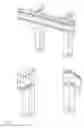
FIG. 10: typical composite floor joist overall view.
FIGS. 11 and 12: composite floor joist component views.
DETAILED DESCRIPTION
The first product is Composite Guardrail Post (CGP). Traditionally, highway guardrail posts are constructed using pressure treated timbers of standard sizes. This traditional construction has several drawbacks. For example, shorter durability, lower capacity, and negative environmental impact. CGP is designed overcome all these drawbacks by substituting standard timber posts with metal jacket composite posts. Not only will it last longer and look better, but also be very cost effective. The reasons are as the followings: (1) while traditional method required high quality timber and need to be treated using chemicals for erosion resistance, the new system can use recycled material which is cheaper and more environmental friendly; (2) Since the composite mechanism can significantly increase the strength and ductility of the system, the required spacing of the posts can be increased, the result of which is less material (i.e. posts) be used for the same length of road way. (3) Because all holes and parts are pre-manufactured, field installation will be simple and fast, the results of which is higher product quality at less labor cost.
The second product is Composite Floor Joist (CFI). Currently, the following types of floor joists are often used in light-framed structures in the United States: (1) Joists made directly used saw lumbers; (2) Joists made using engineered wood product. For examples, Parallel Strand Lumber (PSL), Laminated Veneer Lumber (LVL), Laminated Strand Lumber (LSL), Glulams, etc.; (3) Metal stud joists of various cross section shapes; (4) Truss Joist 1-beams (TJI), which uses sawn lumbers as top and bottom flanges, and plywood as web plate. The flanges and web plate are stapled together. TJI is actually quite popular, especially in new constructions. While there were a few other composite floor joists invented during the past. For example, U.S. Pat. No. 6,516,584 by Armin Rudd in 2003 and U.S. Pat. No. 4,281,497 by Pekka Luotonen in 1981, these products had never prevailed in the market for some reasons. The current invention (CFI) is similar to TJI in concept, but uses all composite material for both flanges and webs. Also, the connections between flange and web are much stronger, enabling the development of composite actions to the fullest extent. For the joist of the same cross sectional dimensions, CFI is expected to span much longer than TJI. Additionally, it will also have better fire and erosion resistance. When proper calking is applied, CFI can also be used at exterior as deck joists to substitute joists made of pressure treated saw lumbers.
Claims
I claim:1-4. (canceled)
5. A composite guard rail post, comprising:
a metal jacket composite post comprising a wooden post with a metal jacket; and
a guard rail attach to the metal jacket composite post.
Images & Drawings included:



Sources:
- United States Patent and Trademark Office - verify current appl. status at the USPTO↗
Recent applications in this class:
- » 20250059755 2025-02-20
LOAD BEARING ARCH - » 20250052052 2025-02-13
Structural Assembly - » 20240279917 2024-08-22
Composite Stiffener - » 20240167266 2024-05-23
Structural Member Assemblies, Beams, And Support Structures Comprising Same - » 20240084579 2024-03-14
COMPOSITE FRAME HAVING END-EMBEDDED GIRDER JOINT STRUCTURE - » 20240018771 2024-01-18
BUILDING SYSTEM - » 20230137437 2023-05-04
Column Insulated Beam System and Method of Use - » 20220228360 2022-07-21
Structural member assemblies, beams, and support structures comprising same - » 20220220720 2022-07-14
Beam-column joint structure - » 20210230859 2021-07-29
Steel reinforced concrete column