Automatic address transportation system
US20120304885A1
2012-12-06
13/153,430
2011-06-05
✅ Patent granted
US 8,677,906 B2
2014-03-25
-
-
Zachary Kuhfuss
Mendelsohn, Drucker & Dunleavy, P.C. | Craig M. Brown
2032-01-31
Abstract:
This invention is based on using rail road system for automatic address transportation of people and cargo. This invention allows usage of existing rail roads, many miles of which are not used or partially used. This invention including design of vehicle that will be using for automatic address transportation. This allows excluding the most complicated part of rail roads—switches, and transform rail road from active to passive system.
Applicant:
Interested in similar patents?
Get notified when new applications in this technology area are published.
Classification:
B61B13/00 » CPC main
Other railway systems; Combinations of systems
B61B13/00 » CPC main
Other railway systems
B60L13/003 » CPC further
Electric propulsion for monorail vehicles, suspension vehicles or rack railways; Magnetic suspension or levitation for vehicles Crossings; Points
B60L50/52 » CPC further
Electric propulsion with power supplied within the vehicle using propulsion power supplied by batteries or fuel cells characterised by DC-motors
B60L2200/26 » CPC further
Type of vehicles Rail vehicles
B60L2220/12 » CPC further
Electrical machine types; Structures or applications thereof; Electrical machine types Induction machines
B60L2260/32 » CPC further
Operating Modes; Drive modes; Transition between modes Auto pilot mode
B60L2270/142 » CPC further
Problem solutions or means not otherwise provided for; Emission reduction of noise acoustic
Y02T10/70 » CPC further
Road transport of goods or passengers; Other road transportation technologies with climate change mitigation effect Energy storage systems for electromobility, e.g. batteries
Y02T10/70 » CPC further
Road transport of goods or passengers; Other road transportation technologies with climate change mitigation effect Energy storage systems for electromobility, e.g. batteries
E01B7/00 IPC
Switches; Crossings
Description
BACKGROUND OF INVENTION
The present invention relates to point-to-point transportation, personal rapid transit, rail road system, automatic warehouse system.
Some recent systems realized in Skyweb Express—point-to-point transportation Taxi 2000 in the USA, personal rapid transit ULTraPRT and Vectus in the United Kingdom.
Advantages of that systems including: on-demand service, non-stop travel to your destination, faster trips, less congestion, small vehicles operated without drivers, low energy use, green transportation solution.
The issue of those systems is the great initial cost of the infrastructure network
SUMMARY OF INVENTION
This invention is based on using net of existing rail road system for automatic address transportation people and cargo. This invention reduces the costs of construction of new track network and time for starting the project.
This invention including design of vehicle that will be using for automatic address transportation. Vehicle can passed switches no matter in what direction it is. It allows for usage of rail road system for both—trains and AAT (for example: night—for trains and cargo, and day—for AAT).
This invention allows excluding the most complicated part of rail roads—switches, and transform rail road from active to passive system.
Advantages of AAT system not inherent in the specified transportation systems above:
the presence of rail road network which allows to reduce costs on construction track network and reduce time for start up the project
the presence of technology, tools
the presence of steering mechanism which allows to increase maximum speed and decrease noise
simplicity of this innovation allows it to be used in automatic warehouse systems
AAT system uses small vehicles which can be moved by linear induction motor and can be equipped with regular electric motor with battery. The battery can be used for passing segments of track that is not otherwise powered, or in an event when supplied power is lost—in order to finish the trip. Each vehicle is controlled by local computer, which in turn is controlled by central computer which receives information from the field. Control system described in detail in Patent No US007302319B2 and realized in the specified transportation systems above, therefore it will not be described in this application.
BRIEF DESCRIPTION OF DRAWINGS
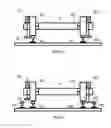
FIG. 1a shows design of vehicle on track without switches
FIG. 1b and 1c shows vehicle passing the switch
FIG. 2 show vehicle wheels with rising rims
FIG. 3 show structure of steering mechanism
DETAILED DESCRIPTION
Design of the Vehicle see FIG. 1
Body (2) has attached wheels (3) by which vehicle stands on the rail road (1). To prevent the vehicle from falling of track, it is a supported by wheels (5) and the lifting mechanism (4). Support wheels are in lower position, which allows the vehicle to operate on rail road without switches.
In order to pass the RR switches, RR must be equipped with auxiliary rails 6L & 6R, which are needed only along switch—FIG. 1b and 1c. On FIG. 1b vehicle is showed in position to make a right turn. Left support wheel, 5L, is lifted and auxiliary rail 6R prevents the vehicle from shifting down to the right side. In order to make a left turn, right support wheel, 5R, is in upper position and auxiliary rail 6L prevents the vehicle from shifting down to the left side.
The above described vehicle can make all turns only when reaches an auxiliary rail 6 FIG .1c. If only one support rail is present, for example left or right road merger, vehicle can make turn along side on which auxiliary rail installed. When vehicle is leaving ramification zone, support wheels must be in lower position.
Instead of support wheels, wheels (8) can be made with rising rims 7, which hold vehicle on the rails 1 FIG. 2. Rims are attached to axle (10) by hoist (9). Wheels (8) spin on axle (10).
When vehicle is moving on rail road without ramification, rim located in central position. To pass ramification zone or RR switch, hoist lifts rim over the rail in upper position as shown on FIG. 2 by dashed line.
To increase max speed and decrease noise vehicle can be equipped with steering mechanism (SM) FIG. 3. It purpose is hold vehicle in the middle of the RR, therefore support wheels or rims do not touch the rails. Support wheels or rims are only for emergency (slippery road, strong wind). SM consists of set of sensors (11) and actuators (12). Sensors define location of vehicle relative to the rail and create commands for actuators in order to correct deviation from the middle.
Claims
What is claimed is:1. Automatic Address Transportation system used existing network of rail roads for moving people and cargo.
2. Design of vehicle that will be using regular rail road and passed switches in any direction or allows excluding switches, and transform rail road from active to passive system.
Images & Drawings included:



Sources:
- United States Patent and Trademark Office - verify current appl. status at the USPTO↗
Recent applications in this class:
- » 20250289481 2025-09-18
AUTOMATED STORAGE AND RETRIEVAL SYSTEM AND A METHOD OF TRANSPORTING STORAGE CONTAINERS BETWEEN AN AUTOMATED STORAGE AND RETRIEVAL GRID AND A SECOND LOCATION - » 20250289480 2025-09-18
RAIL CONVEYOR SYSTEMS - » 20250256744 2025-08-14
DELIVERY SYSTEM WITH AN ACCESS POINT AND A METHOD OF ACCESSING AN ACCESS POINT OF THE DELIVERY SYSTEM - » 20250196897 2025-06-19
CONTAINER ACCESSING STATION WITH LIFTING DEVICE - » 20250178647 2025-06-05
AUTOMATED STORAGE SYSTEM - » 20250162619 2025-05-22
SAFETY DEVICE FOR A REMOTELY OPERATED VEHICLE, A SYSTEM AND A METHOD OF IMPROVING THE OPERATIONAL SAFETY OF A GRID SYSTEM - » 20250136154 2025-05-01
MODULAR CONTAINER ACCESSING STATION - » 20240391506 2024-11-28
METHOD OF OPERATING AN AUTOMATED STORAGE AND RETRIEVAL SYSTEM - » 20240246578 2024-07-25
METHOD AND SYSTEM FOR CONTROLLING THE OPERATION OF CONTAINER HANDLING VEHICLES AND DRONES SERVING AN AUTOMATED STORAGE AND RETRIEVAL SYSTEM - » 20240227871 2024-07-11
METHOD FOR HANDLING MALFUNCTIONING VEHICLES ON A RAIL SYSTEM AND A STORAGE AND RETRIEVAL SYSTEM USING SUCH A METHOD