Symbol error detection method
US20120317455A1
2012-12-13
13/486,066
2012-06-01
✅ Patent granted
US 8,555,138 B2
2013-10-08
-
-
Christine Tu
Dennis L. Cook, Esq.
2032-07-05
Abstract:
The invention disclosed in this application describes an error detection method that can be used to identify an OFDM symbol that is interfered with. The method is based on computing a symbol by symbol path error metric from error correction code and by comparing the statistics of each individual symbol to the mean and the variance of the metric computed from the whole data packet.
Assignee:
- XG TECHNOLOGY, INC. 59 🇺🇸 SARASOTA, FL, United States
Applicant:
Interested in similar patents?
Get notified when new applications in this technology area are published.
Classification:
H03M13/00 IPC
Coding, decoding or code conversion, for error detection or error correction; Coding theory basic assumptions; Coding bounds; Error probability evaluation methods; Channel models; Simulation or testing of codes
H03M13/31 » CPC main
Coding, decoding or code conversion, for error detection or error correction; Coding theory basic assumptions; Coding bounds; Error probability evaluation methods; Channel models; Simulation or testing of codes combining coding for error detection or correction and efficient use of the spectrum
H03M13/3738 » CPC further
Coding, decoding or code conversion, for error detection or error correction; Coding theory basic assumptions; Coding bounds; Error probability evaluation methods; Channel models; Simulation or testing of codes; Decoding methods or techniques, not specific to the particular type of coding provided for in groups - with judging correct decoding
H03M13/41 » CPC further
Coding, decoding or code conversion, for error detection or error correction; Coding theory basic assumptions; Coding bounds; Error probability evaluation methods; Channel models; Simulation or testing of codes; Decoding methods or techniques, not specific to the particular type of coding provided for in groups - ; Sequence estimation, i.e. using statistical methods for the reconstruction of the original codes using the Viterbi algorithm or Viterbi processors
H04L1/0047 » CPC further
Arrangements for detecting or preventing errors in the information received by using forward error control; Arrangements at the receiver end Decoding adapted to other signal detection operation
H04L1/0054 » CPC further
Arrangements for detecting or preventing errors in the information received by using forward error control; Arrangements at the receiver end Maximum-likelihood or sequential decoding, e.g. Viterbi, Fano, ZJ algorithms
H04L1/0059 » CPC further
Arrangements for detecting or preventing errors in the information received by using forward error control; Systems characterized by the type of code used Convolutional codes
H04L5/0007 » CPC further
Arrangements affording multiple use of the transmission path; Arrangements for dividing the transmission path; Two-dimensional division; Time-frequency the frequencies being orthogonal, e.g. OFDM(A), DMT
H04L27/2647 » CPC further
Modulated-carrier systems; Systems using multi-frequency codes; Multicarrier modulation systems Arrangements specific to the receiver only
H03M13/03 IPC
Coding, decoding or code conversion, for error detection or error correction; Coding theory basic assumptions; Coding bounds; Error probability evaluation methods; Channel models; Simulation or testing of codes Error detection or forward error correction by redundancy in data representation, i.e. code words containing more digits than the source words
H04J11/00 IPC
Orthogonal multiplex systems, e.g. using WALSH codes
Description
CROSS-REFERENCE TO RELATED APPLICATION
The present application claims the benefit of previously filed co-pending Provisional Patent Application, Ser. No. 61/494,505.
FIELD OF THE INVENTION
This invention describes an error detection method that can be used to identify an OFDM symbol that is interfered with. More specifically the method is based on computing a symbol by symbol path error metric from the error correction code and by comparing the statistics of each individual symbol to the mean and the variance of the metric computed from the whole data packet.
BACKGROUND OF THE INVENTION
Classical cognitive radios change frequency channels when the radio detects that the interference level or other parameters associated with operation can be improved by moving to another frequency. Modern signal processing and multiple antenna technologies, however, allow expanded cognitive operation where receiver algorithms and transmit waveforms can be instantly and dynamically adjusted for operation in a particular environment.
Radio spectrum is a limited resource. A large amount of spectrum is required to deliver services that are associated with modern wireless personal communications. Typical examples are smart phone Internet applications, wireless streaming audio, and video, to mention a few. These services consume large amounts of spectral resources causing both financial and spectrum policy issues.
Typically these services are provided using licensed spectrum. The financial burden from licensing can be defined as a cost of billions of dollars, even for a relatively small amount of spectrum, when compared to freely available unlicensed spectrum. The licensing, however, is required to make sure that current 1G to 4G radio technologies have the coordinated access they require to deliver quality of service that is adequate for an end user application.
Currently in United States there are several hundred MHz of unlicensed spectrum that can be used for delivering wireless services to consumers, however, traditional radio technologies typically suffer from interference from uncoordinated access from other unlicensed users. A novel radio technology is required that can deliver service while being highly resistant to interference while also creating as little interference as possible to other users in the unlicensed band.
Cyclic Redundancy Check (CRC) is used to indicate if a transmitted data packet has bit errors in it. This is computed for a complete data packet that typically consists of many OFDM symbols. However, improved interference mitigation algorithms can be used if the receiver can determine, with high probability, that a specific OFDM symbol has bit errors in it caused by interference.
The method described in this invention can be used to compute an indication of the probability of an OFDM symbol to contain bit errors when decoded, allowing localization of the error burst in the time domain.
BRIEF SUMMARY OF THE INVENTION
The invention disclosed in this application describes an error detection method that can be used to identify an OFDM symbol that is interfered with. The method is based on computing a symbol by symbol path error metric from the error correction code and by comparing the statistics of each individual symbol to the mean and the variance of the metric computed from the whole data packet.
The method described in this invention can be used to compute an indication of the probability of an OFDM symbol to contain bit errors when decoded, allowing localization of the error burst in the time domain.
Therefore the objects of this invention include the following:
-
- A method to compute the probability of an OFDM symbol to contain one or more bit errors by computing a cumulative symbol by symbol path metric. The cumulative path metric is computed by summing surviving branch metrics from all states in a MLSE (Maximum Likelihood Sequence Estimator) decoder. One implementation of this type of decoder is based on a well known Viterbi algorithm.
- A method where the symbol path metric is compared to the mean and the standard deviation of the metric computed from a larger number of symbols from the same data packet. The larger number may be all OFDM symbols contained in a data packet, where packet is defined as all bits that are convolution encoded and protected with a CRC, i.e. where a decision can be made if decoded data has bit error or errors for a number of bits produced from one or more OFDM symbols.
- A method as described above where the effect of punctured bits are removed by not adding the branch metric to the cumulative symbol metric after a punctured bit is added to the input bit steam and is processed with the algorithm.
For a fuller understanding of the nature and objects of the invention, reference should be made to the following detailed description taken in connection with the accompanying drawing.
DESCRIPTION OF THE DRAWINGS
For a fuller understanding of the nature and objects of the invention, reference should be made to the accompanying drawing, in which:
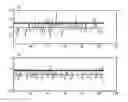
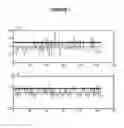
FIG. 1 is a diagram showing a OFDM symbol path metric for two redundant packets sent at different times.
DETAILED DESCRIPTION OF THE INVENTION
The goal behind the invention is to identify OFDM symbols that, by a very high probability, will contain bit errors when decoded. A receiver that mitigates burst interferers can use redundancy, i.e. receive multiple copies of the same signal to mitigate burst interferers. There are many methods to implement redundancy and one form is to increase the modulation rate by a factor of two and send two copies separated by some time delta. The receiver for this method can decode redundant data packets and choose the one that is correct. In reality, however, the interference is often in short bursts, thus randomly interfering with individual OFDM symbols. In this type of interference long duration (in time) data packets often have one or more OFDM symbols interfered with and cannot be decoded unless a very low coding rate, or an impractically long time domain interleaver, is used.
The algorithm disclosed in this application computes cumulative path metrics similar to a Viterbi decoding algorithm but instead of maintaining a cumulative path metric for the whole data packet that is convolution encoded the algorithm computes a cumulative path metric for each OFDM symbol that the bit that is decoded is produced from.
In the disclosed preferred embodiment of the algorithm a ½ rate convolution code is used. Each input bit into the encoder produces two output bits. In the decoder the maximum likelihood sequence estimator (Viterbi algorithm) takes two bits at a time and computes two metrics for all the states, one metric if the transmitted bit was 0 and one if the transmitted bit was 1. The soft bit input values are estimates of a bit being 0 or 1. Typically these values are small integers representing the Euclidean distance from an optimal constellation point. At each state the cumulative path metric for the whole data packet is used to make a decision of the survivor path, however, a cumulative OFDM symbol path metric, (NOT a cumulative whole packet path metric) is computed for each OFDM symbol that produced the bit. After the whole packet is processed with the algorithm, each symbol cumulative path metric is associated with it.
The method calculates an estimate of the OFDM symbol being interfered with based on the mean and the variance of the cumulative per symbol path metrics. Each symbol path metric is compared to the whole data packet OFDM metric distribution and if larger than whole packet mean+alpha*standard deviation then the symbol is deemed to most probably contain an error. Typically the coefficient alpha is in the range of 1 to 2. A larger value indicating a higher deviation is required for classifying a symbol as containing an error. FIG. 1 shows an OFDM symbol path metric for two redundant packets sent at different times, separated by a small time interval. Each packet contains more than 100 OFDM symbols as indicated on the horizontal axis. The path metric is on the vertical axis. The thick line shows a threshold computed from the mean and the standard deviation with alpha=2. The symbols that have a metric that exceed the threshold are marked as potentially containing bit errors.
The output of the algorithm is an estimate of the OFDM symbols that have a high likelihood to contain one or more bit errors (caused by burst interferers) if CRC after Viterbi decoding fails.
Since certain changes may be made in the above described system and method for a symbol error detection without departing from the scope of the invention herein involved, it is intended that all matter contained in the description thereof or shown in the accompanying FIGURE shall be interpreted as illustrative and not in a limiting sense.
Claims
What is claimed is:1. A method to compute the probability of an OFDM symbol containing one or more bit errors in a whole data packet containing OFDM symbols by computing a cumulative OFDM symbol by symbol path metric comprising:
first computing a cumulative OFDM symbol path metric from error correction code for each OFDM symbol that produces a bit in a whole data packet;
then computing a cumulative whole data packet path metric from error correction code for all OFDM symbols that produce a bit in a whole data packet;
then comparing said each cumulative OFDM symbol path metric to a threshold computed by adding said cumulative whole packet path metric's mean to a predetermined constant times the standard deviation of said cumulative whole packet path's metric; and,
wherein said OFDM symbols having a cumulative OFDM symbol path metric higher than said threshold are determined to have a high probability of having been interfered with and containing bit errors.
Images & Drawings included:
Sources:
- United States Patent and Trademark Office - verify current appl. status at the USPTO↗
Similar patent applications:
- » 20070274419
Apparatus and method of detecting error symbol, and disk drive apparatus using the same - » 20050286661
Symbol timing error detector that uses a channel profile of a digital receiver and a method of detecting a symbol timing error - » 20170237521
Apparatus and methods for symbol timing error detection, tracking and correction - » 20110280349
Apparatus and methods for symbol timing error detection, tracking and correction - » 20140050288
Apparatus and methods for symbol timing error detection, tracking and correction - » 20150319026
Apparatus and methods for symbol timing error detection, tracking and correction - » 20160323133
Apparatus and methods for symbol timing error detection, tracking and correction - » 20070061685
Method, system, and apparatus for adjacent-symbol error correction and detection code - » 20050022091
Method, system, and apparatus for adjacent-symbol error correction and detection code - » 20070061675
Method, system, and apparatus for adjacent-symbol error correction and detection code
Recent applications in this class:
- » 20240322844 2024-09-26
ERROR RATE MEASUREMENT APPARATUS AND ERROR RATE MEASUREMENT METHOD - » 20220385309 2022-12-01
Concatenated error correcting codes - » 20210091793 2021-03-25
Method and apparatus for generating an LDPC code with a required error floor - » 20190238161 2019-08-01
Methods, computer programs, devices, and encoders for signal error correction - » 20180131395 2018-05-10
Method for controlling a check node of a NB-LDPC decoder and corresponding check node - » 20170288706 2017-10-05
Method and apparatus for shortening and puncturing non-binary code - » 20120084625 2012-04-05
Apparatus and method for decoding LDPC codes in a communications system - » 20100246359 2010-09-30
Joint DC minimization and bit detection - » 20080109701 2008-05-08
Turbo interference suppression in communication systems - » 20060156171 2006-07-13
Combining spectral shaping with turbo coding in a channel coding system
Recent applications for this Assignee:
- » 20170064654 2017-03-02
Interference-tolerant multi-band synchronizer - » 20150045026 2015-02-12
System for automatic registration of expeditionary telecommunications deployments - » 20140177445 2014-06-26
Hybrid ARQ system with a snapshot feedback mechanism for interference prone wireless networks - » 20140161061 2014-06-12
HYBRID ARQ SYSTEM USING A SLIDING PURGE WINDOW FOR WIRELESS NETWORKS - » 20140139398 2014-05-22
MIMO antenna design used in fading environments - » 20140126554 2014-05-08
Method to enable rapid scanning by cognitive radios - » 20130114768 2013-05-09
Interference mitigation method for single or MIMO receiver devices - » 20130102341 2013-04-25
COGNITIVE TRANSMISSION CONTROL SYSTEM - » 20130089011 2013-04-11
Cognitive mobile time division duplex Ad-Hoc network - » 20130021914 2013-01-24
Measurement coordination for dynamic spectrum access measurements in a time division duplex system