GALVANIZED STEEL SHEET
US20120321908A1
2012-12-20
13/511,229
2010-11-19
Abstract:
A galvanized steel sheet has an organic inorganic complex coating on the surface thereof which contains an organic resin and a crystalline layered substance and has an average film thickness of 0.10 to 2.0 μm. The organic inorganic complex coating contains the crystalline layered substance in a solid content of not less than 0.5 parts by weight with respect to 100 parts by weight of the solid content of the organic resin.
Inventors:
- Tatsuya Miyoshi 4 🇯🇵 Hiroshima, Japan
- Katsuya Hoshino 1 🇯🇵 Hiroshima, Japan
- Takahiro Kubota 1 🇯🇵 Chiba, Japan
- Masahiko Tada 3 🇯🇵 Chiba, Japan
Assignee:
- JFE STEEL CORPORATION 2,023 🇯🇵 Tokyo, Japan
Interested in similar patents?
Get notified when new applications in this technology area are published.
Classification:
C22C38/00 » CPC main
Ferrous alloys, e.g. steel alloys
B32B15/013 » CPC further
Layered products comprising a layer of metal all layers being exclusively metallic one layer being formed of an iron alloy or steel, another layer being formed of a metal other than iron or aluminium
C23C2/26 » CPC further
Hot-dipping or immersion processes for applying the coating material in the molten state without affecting the shape; Apparatus therefor After-treatment
C23C28/00 » CPC further
Coating for obtaining at least two superposed coatings either by methods not provided for in a single one of groups - or by combinations of methods provided for in subclasses and or
C23C30/00 » CPC further
Coating with metallic material characterised only by the composition of the metallic material, i.e. not characterised by the coating process
B32B2605/00 » CPC further
Vehicles
Y10T428/12569 » CPC further
Stock material or miscellaneous articles; All metal or with adjacent metals; Composite; i.e., plural, adjacent, spatially distinct metal components [e.g., layers, joint, etc.] with additional, spatially distinct nonmetal component; Organic component Synthetic resin
B32B15/08 IPC
Layered products comprising a layer of metal comprising metal as the main or only constituent of a layer, next to another layer of a of synthetic resin
B32B15/082 IPC
Layered products comprising a layer of metal comprising metal as the main or only constituent of a layer, next to another layer of a of synthetic resin comprising vinyl resins; comprising acrylic resins
B32B15/09 IPC
Layered products comprising a layer of metal comprising metal as the main or only constituent of a layer, next to another layer of a of synthetic resin comprising polyesters
B32B15/095 IPC
Layered products comprising a layer of metal comprising metal as the main or only constituent of a layer, next to another layer of a of synthetic resin comprising polyurethanes
B32B15/18 IPC
Layered products comprising a layer of metal comprising iron or steel
B32B15/092 IPC
Layered products comprising a layer of metal comprising metal as the main or only constituent of a layer, next to another layer of a of synthetic resin comprising epoxy resins
Description
RELATED APPLICATIONS
This is a §371 of International Application No. PCT/JP2010/071190, with an inter-national filing date of Nov. 19, 2010, which is based on Japanese Patent Application No. 2009-268765, filed Nov. 26, 2009, the subject matter of which is incorporated by reference.
TECHNICAL FIELD
This disclosure relates to galvanized steel sheets that exhibit a low sliding friction during press forming and have excellent press-formability.
BACKGROUND
Galvanized steel sheets are used in various fields such as for automobile bodies. For galvanized steel sheets to be used in such an application, they are subjected to press forming. However, galvanized steel sheets are poor in press-formability compared to cold rolled steel sheets. This drawback arises from the fact that surface-treated steel sheets exhibit a higher sliding friction with respect to a press mold compared to cold rolled steel sheets.
That is, a high sliding friction is generated between a mold and a bead to prevent the surface-treated steel sheet from sliding smoothly into the press mold, often resulting in a fracture of the steel sheet. In particular, galvanized steel sheets coated with pure zinc exhibit a higher sliding friction due to the zinc coating having become attached to a mold (a phenomenon known as “galling”). As a result, cracks are generated in the middle of continuous press forming, thus severely adversely affecting the productivity of automobiles. Further, the recent tight restrictions on CO2 emissions have led to a trend in which the use rate of high-strength steel sheets has been increased for the purpose of automobile body weight reduction. When high-strength steel sheets are used, an increased contact pressure is encountered during press-forming and the attachment of a coating to a mold becomes a more serious problem.
A widely used method of improving press-formability of galvanized steel sheets is to apply a lubricant oil having a high viscosity. Because of the high viscosity of such a lubricant oil, however, paint defects occur during a painting step due to insufficient degreasing. Further, other problems are encountered such as a destabilized press performance caused by a lubricant being exhausted during pressing. Thus, there has been a strong demand for galvanized steel sheets themselves to be improved in terms of press-formability.
To solve these problems, Japanese Unexamined Patent Application Publication Nos. 53-60332 and 2-190483 disclose techniques in which the surface of a galvanized steel sheet is subjected to an electrolytic treatment, a dip treatment, a coating oxidation treatment or a heat treatment to form a zinc-based oxide film, thereby improving weldability and processability.
Japanese Unexamined Patent Application Publication No. 4-88196 discloses a technique in which a galvanized steel sheet is dipped into an aqueous solution containing sodium phosphate at 5 to 60 g/L and having a pH of 2 to 6, or is subjected to an electrolytic treatment or coated with the above aqueous solution to form an oxide film based on phosphorus oxide on the surface of the galvanized steel sheet, thereby improving press-formability and chemical conversion treatment properties.
Japanese Unexamined Patent Application Publication No. 3-191093 discloses a technique in which the surface of a galvanized steel sheet is subjected to an electrolytic treatment, a dip treatment, a coating oxidation treatment or a heat treatment to form nickel oxide, thereby improving press-formability and chemical conversion treatment properties.
The above conventional techniques are effective with respect to galvanized steel sheets with relatively low strength which are frequently used for automotive exterior panels. However, galvanized steel sheets with high strength which undergo an increased contact pressure during press forming cannot be necessarily improved in terms of press-formability.
It would therefore be helpful to provide galvanized steel sheets that exhibit excellent press-formability even when the galvanized steel sheets are hardly formable materials such as high-strength galvanized steel sheets exerting an increased contact pressure during press forming.
Conventional films achieve a decrease in frictional resistance by intermediating between the zinc coating and a mold. However, an increased amount of film is worn away under high contact pressure conditions which are encountered in the press forming of high-strength steel sheets. Thus, sufficient effects cannot be obtained after the slide distance has exceeded a certain level.
SUMMARY
We discovered that a film of a crystalline layered substance which is formed so as to coat the surface of a galvanized steel sheet is effective to markedly improve sliding properties.
We thus provide:
-
- [1] A galvanized steel sheet which has an organic inorganic complex coating containing an organic resin and a crystalline layered substance on the surface, the organic inorganic complex coating having an average film thickness of 0.10 to 2.0 μm and containing the crystalline layered substance in a solid content of not less than 0.5 parts by weight with respect to 100 parts by weight of the solid content of the organic resin.
- [2] The galvanized steel sheet described in [1], wherein the crystalline layered substance is a layered double hydroxide represented by [M2+1-XM3+X(OH)2][An-]x/n.zH2O wherein M2+ is one, or two or more selected from Mg2+, Ca2+, Fe2+, Ni2+, Zn2+, Pb2+ and Sn2+, M3+ is one, or two or more selected from Al3+, Fe3+, Cr3+, ¾Zr4+ and Mo3+, and An- is one, or two or more selected from OH−, F−, CO32−, Cl−, Br−, (C2O4)2−, I−, (NO3)−, (SO4)2−, (BrO3)−, (IO3)−, (V10O28)6−, (Si2O5)2−, (ClO4)−, (CH3COO)−, [C6H4(CO2)2]2−, (C6H5COO)−, [C8H16(CO2)2]2−, n(C8H17SO4)−, n(C12H25SO4)−, n(C18H37SO4)− and SiO44−.
- [3] The galvanized steel sheet described in [1], wherein the crystalline layered substance is a layered double hydroxide represented by [M2+1-XM3+X(OH)2][An-]x/n.zH2O wherein M2+ is one or two or more selected from Mg2+, Ca2+, Fe2+, Ni2+ and Zn2+, M3+ is one, or two or more selected from Al3+, Fe3+ and Cr3+ and An- is one, or two or more selected from OH−, CO32−, Cl− and (SO4)2−.
- [4] The galvanized steel sheet described in any of [1] to [3], wherein the organic resin is one, or two or more selected from epoxy resins, modified epoxy resins, polyhydroxy polyether resins, polyalkylene glycol-modified epoxy resins, urethane-modified epoxy resins, resins obtained by further modifying these resins, polyester resins, urethane resins, silicon resins and acrylic resins.
Our galvanized steel sheets exhibit a low sliding friction at a portion of the steel sheet that is at risk of being fractured during press forming, even in the case where such a portion undergoes a high contact pressure during press forming, and which shows excellent press-formability even at a portion of the steel sheet that undergoes a high contact pressure and is expected to cause the attachment of coating onto a mold.
BRIEF DESCRIPTION OF THE DRAWINGS
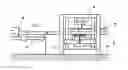
FIG. 1 is a schematic front view of a dynamic friction coefficient measuring apparatus.
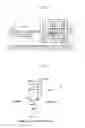
FIG. 2 is a schematic perspective view illustrating a shape and a size of the bead in FIG. 1 (bead shape 1).
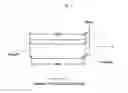
FIG. 3 is a schematic perspective view illustrating a shape and a size of the bead in FIG. 1 (bead shape 2).
REFERENCE SIGNS LIST
- 1 FRICTION COEFFICIENT MEASUREMENT SAMPLE
- 2 SAMPLE TABLE
- 3 SLIDE TABLE
- 4 ROLLERS
- 5 SLIDE TABLE SUPPORT
- 6 BEAD
- 7 FIRST LOAD CELL
- 8 SECOND LOAD CELL
- 9 RAIL
- N PRESSURE LOAD
- F SLIDING FRICTIONAL FORCE
DETAILED DESCRIPTION
The term “galvanized steel sheet” is used as a collective term for steel sheets which have been coated with zinc by any of various processes such as hot dip coating, electrolytic coating, deposition coating and spray coating. The term “galvanized steel sheet” includes hot dip galvanized steel sheets which have not been subjected to any alloying treatment as well as galvannealed steel sheets which have been subjected to an alloying treatment.
Conventional films achieve a decrease in frictional resistance by intermediating between a zinc coating and a mold. However, an increased amount of film is worn away under contact pressure conditions which are encountered in the press forming of high-strength steel sheets. Thus, sufficient effects cannot be obtained after the slide distance has exceeded a certain level.
We found that sliding properties are markedly improved by coating the surface of a galvanized steel sheet with a crystalline layered substance. Further, we found that a crystalline layered substance can adhere to the surface firmly by being formed into a complex together with an organic resin. Thus, the surface of a galvanized steel sheet has an organic inorganic complex coating containing an organic resin and a crystalline layered substance.
The mechanism by which the crystalline layered substance contained in the organic inorganic complex coating produces lubricating effects is not clear, but can be explained as follows. During sliding, the adhesive force acting between a mold and a coating generates a shear stress on the surface of the coating. The crystalline layered substance intermediating between the coating and the mold is slip-deformed to absorb the shearing deforming stress generated on the surface. Even after the crystalline layered substance has been worn away from the surface layer of the galvanized steel sheet, it becomes attached to the mold and effectively works to reduce the frictional resistance. Thus, sufficient effects can be obtained even under high contact pressure conditions simulating the press forming of high-strength steel sheets.
Further, the configuration in which the organic inorganic complex coating contains an organic resin allows the crystalline layered substance to cover the surface of the steel sheet in a uniform thickness.
For the reasons described hereinabove, the galvanized steel sheet has an organic inorganic complex coating which contains an organic resin and a crystalline layered substance on the surface of the steel sheet. This configuration is the most important requirement for our steel sheets.
The organic inorganic complex coating which contains an organic resin and a crystalline layered substance (hereinafter, sometimes simply referred to as “organic inorganic complex coating”) has an average film thickness of 0.10 μm to 2.0 μm as measured from a cross section obtained by SEM. If the average film thickness is less than 0.10 μm, it is difficult to form such a coating on the surface of a steel sheet uniformly. If the average film thickness is in excess of 2.0 μm, there is a risk that spot weldability which is an important property for the production of automobiles may be lowered.
The thickness of the organic inorganic complex coating may be measured from a result obtained by ultralow-accelerating-voltage SEM with respect to an FIB-processed cross section. The identification of crystal structure for determining whether the crystalline layered substance is crystalline may be performed by thin-film X-ray diffractometry.
The crystalline layered substance is contained in a solid content of not less than 0.5 parts by weight with respect to 100 parts by weight of the solid content of the organic resin. Any content that is less than 0.5 parts by weight is not sufficiently high for the crystalline layered substance to exhibit desirable effects when in contact with a mold during sliding.
The term “crystalline layered substance” means a crystal in which unit crystal lattices formed of plate-shaped covalent crystals are stacked on top of one another with a relatively weak bond such as intermolecular force, hydrogen bond or electrostatic energy. Among such substances, a layered double hydroxide that has a structure represented by [M2+1-XM3+X(OH)2][An-]x/n.zH2O is a preferred crystalline layered substance because negatively charged anions bond to plate-shaped, positively charged divalent and trivalent metal hydroxides through electrostatic energy to neutralize electrical charge while these ions are stacked on top of one another to form a layered crystalline structure.
Such a layered double hydroxide represented by [M2+1-XM3+X(OH)2][An-]x/n.zH2O may be identified by X-ray diffractometry. It is known that a substance which can be represented by the above formula is a layered crystal.
M2+ is preferably one, or two or more selected from Mg2+, Ca2+, Fe2+, Ni2+ and Zn2+, Pb2+ and Sn2+. In particular, Mg2+, Ca2+, Fe2+, Ni2+ and Zn2+ have been confirmed to occur naturally or synthetically in layered double hydroxides, and are more preferable because such layered double hydroxide species give stable layered double hydroxides.
M3+ is preferably one, or two or more selected from Al3+, Fe3+, Cr3+, ¾Zr4+ and Mo3+. In particular, Al3+, Fe3+ and Cr3+ have been confirmed to occur naturally or synthetically in layered double hydroxides, and are more preferable because such layered double hydroxide species give stable layered double hydroxides.
An- is preferably one, or two or more selected from OH−, F−, CO32−, Cl−, Br−, (C2O4)2−, I−, (NO3)−, (SO4)2−, (BrO3)−, (IO3)−, (V10O28)6−, (Si2O5)2−, (ClO4)−, (CH3COO)−, [C6H4(CO2)2]2−, (C6H5COO)−, [C8H16(CO2)2]2−, n(C8H17SO4)−, n(C12H25SO4)−, n(C18H37SO4)− and SiO44−. These anions have been confirmed to form layered double hydroxides by being incorporated between layers of layered double hydroxide species. In particular, OH−, CO32−, Cl− and (SO4)2− may be used as interlayer anions more suitably because they can be incorporated between layers of layered double hydroxide species more easily compared to other kinds of anions and thus films can be formed on the surface of galvanized steel sheets in a short time.
Next, there will be described a method for forming the organic inorganic complex coating on the surface of a galvanized steel sheet.
First, a method of forming the crystalline layered substance is described. An exemplary method is illustrated in which a layered double hydroxide that is one kind of crystalline layered substance is prepared in the form of powder. For example, such a double hydroxide is formed by dropping an anion-containing solution into a cation-containing aqueous solution. An aqueous solution containing one or more kinds of inorganic anions or organic anions (An-) is dropped into an aqueous solution containing one or more kinds of divalent cations (M2+) and one or more kinds of trivalent cations (M3+). In this process, the pH of the reaction suspension liquid is adjusted to be 10±0.1 by dropping a 2.0 M NaOH solution.
In the reaction suspension liquid, the divalent cations and the trivalent cations form hydroxides and are present in the form of colloids. These hydroxides are precipitated as layered double hydroxides when one or more specific anions selected from OH−, F−, CO32−, Cl−, Br−, (C2O4)2−, I−, (NO3)−, (SO4)2−, (BrO3)−, (IO3)−, (V10O28)6−, (Si2O5)2−, (ClO4)−, (CH3COO)−, [C6H4(CO2)2]2−, (C6H5COO)−, [C8H16(CO2)2]2−, n(C8H17SO4)−, n(C12H25SO4)−, n(C18H37SO4)− and SiO44− and SiO44− are dropped into the liquid. Next, the precipitate is separated using a centrifugal separation apparatus and dried to give a powdery layered double hydroxide.
The obtained powdery substance may be identified as being a layered compound by X-ray diffractometry.
Next, the obtained powdery layered double hydroxide and an organic resin are appropriately mixed with each other and stirred to give a coating composition. The stirring may be carried out using, for example, a coating disperser (a sand grinder). The stirring time may be selected appropriately. The stirring time is preferably 30 minutes or more to make sure that the powdery layered double hydroxide is sufficiently dispersed in the organic solvent.
One or two or more kinds of organic resins may be appropriately selected from epoxy resins, modified epoxy resins, polyhydroxy polyether resins, polyalkylene glycol-modified epoxy resins, urethane-modified epoxy resins, resins obtained by further modifying these resins, polyester resins, urethane resins, silicon resins and acrylic resins. In particular, a preferred resin from the viewpoint of corrosion resistance is an epoxy-based resin whose molecular weight has been optimized to achieve improved processability or which has been partially modified with a urethane, a polyester or an amine.
Further, one, or two or more kinds of additives may be added as required, with examples including organic color pigments (such as condensed polycyclic organic pigments and phthalocyanine organic pigments), color dyes (such as water-soluble azo metal dyes), inorganic pigments (such as titanium oxide), conductive pigments (for example, powders of metals such as zinc, aluminum and nickel, as well as iron phosphide and antimony-doped tin oxide), coupling agents (such as titanium coupling agents) and melamine-cyanuric acid adducts.
Next, the coating composition is applied to the surface of a steel sheet and baked. The coating composition may be applied to the surface of a steel sheet by any means without limitation. A roll coater is suitably used.
The thermal drying (baking) treatment may be carried out using a dryer, a hot air furnace, a high frequency induction heating furnace, an infrared furnace or the like. From the viewpoint of corrosion resistance, a high frequency induction heating furnace is particularly preferable. The thermal treatment is desirably carried out at a reached sheet temperature in the range of 50 to 350° C., and preferably 80° C. to 250° C. If the heating temperature is below 50° C., a large amount of solvent remains in the film, thus resulting in insufficient corrosion resistance. Heating at a temperature exceeding 350° C. is not economical and can cause defects in the film, possibly resulting in a decrease in corrosion resistance.
By the method described hereinabove, a galvanized steel sheet may be obtained which has the organic inorganic complex coating containing the organic resin and the crystalline layered substance on the surface.
In the production of hot dip galvanized steel sheets or galvannealed steel sheets, it is necessary that Al be added to the plating bath. However, elements other than Al which may be added are not particularly limited. That is, the advantageous effects are not deteriorated even when the plating bath or the coating contains Al and other elements such as Pb, Sb, Si, Sn, Mg, Mn, Ni, Ti and Li.
Further, the advantageous effects are not deteriorated even when elements such as N, Pb, Na, Mn, Ba, Sr and Si are incorporated into the organic inorganic complex coating as a result of the contamination of treatment liquids used for the film production with such impurities.
EXAMPLES
Our steel sheets and methods will be described in greater detail by presenting examples below.
Layered double hydroxides were prepared by dropping an aqueous solution containing at least one kind of inorganic anion or organic anion (An-) (Composition of aqueous solution 2 in Table 1) to an aqueous solution shown in Table 1 which contained at least one kind of divalent cation (M2+) and at least one kind of trivalent cation (M3+) (Composition of aqueous solution 1 in Table 1). In this process, the pH of the reaction suspension liquid was adjusted to be 10±0.1 by dropping a 2.0 M NaOH solution. Next, each of the obtained precipitates was filtered and dried to give a powdery layered double hydroxide. The obtained powdery substances were identified as being layered double hydroxides by X-ray diffractometry.
| TABLE 1 | |||
| Composition of crystalline | |||
| layered substance | |||
| Composition of | Composition of | (layered double hydroxide) | |
| No | aqueous solution 1 | aqueous solution 2 | (Identification result) |
| 1 | Magnesium nitrate | Sodium carbonate | ICDD card reference code: 01-089-0460 |
| hexahydrate 113 g/L | decahydrate 31 g/L | [Mg0.667Al0.333(OH)2][CO32−]0.167•0.5H2O | |
| Aluminum nitrate | Magnesium Aluminum Hydroxide | ||
| nonahydrate 83 g/L | Carbonate Hydrate | ||
| 2 | Zinc nitrate | Sodium carbonate | ICDD card reference code: 00-048-1021 |
| heptahydrate 131 g/L | decahydrate 31 g/L | [Zn0.71Al0.29(OH)2][CO32−]0.145•H2O | |
| Aluminum nitrate | Zinc Aluminum Carbonate Hydroxide | ||
| nonahydrate 83 g/L | Hydrate | ||
| 3 | Iron (II) sulfate | Sodium carbonate | ICDD card reference code: 00-050-1380 |
| heptahydrate 122 g/L | decahydrate 31 g/L | [Fe0.67Fe0.33(OH)2][CO32−]0.145•0.33H2O | |
| Iron (III) nitrate | Iron Carbonate Hydroxide Hydrate | ||
| nonahydrate 89 g/L | |||
| 4 | Nickel nitrate | Sodium sulfate | ICDD card reference code: 00-042-0573 |
| hexahydrate 128 g/L | decahydrate 31 g/L | [Ni0.75Fe0.25(OH)2][SO42−]0.125•0.5H2O | |
| Iron (III) nitrate | Iron Nickel Sulfate Hydroxide Hydrate | ||
| nonahydrate 89 g/L | |||
| 5 | Magnesium nitrate | Sodium | ICDD card reference code: 00-038-0478 |
| hexahydrate 113 g/L | hydroxide 5 g/L | [Mg0.75Al0.25(OH)2][OH−]0.25•0.5H2O | |
| Aluminum nitrate | Magnesium Aluminum Hydroxide | ||
| nonahydrate 83 g/L | Hydrate | ||
| 6 | Magnesium nitrate | Sodium | ICDD card reference code: 00-020-0500 |
| hexahydrate 113 g/L | chloride 6 g/L | [Mg0.75Fe0.25(OH)2][Cl−]0.25•0.5H2O | |
| Iron (III) nitrate 89 g/L | Magnesium Iron Oxide Chloride | ||
| Hydroxide Hydrate | |||
| 7 | Calcium nitrate | Sodium | ICDD card reference code: 00-035-0105 |
| tetrahydrate 104 g/L | chloride 6 g/L | [Ca0.67Al0.33(OH)2][Cl−]0.33•0.67H2O | |
| Aluminum nitrate | Calcium Aluminum Hydroxide Chloride | ||
| nonahydrate 83 g/L | Hydrate | ||
| 8 | Magnesium nitrate | Sodium carbonate | ICDD card reference code: 00-045-1475 |
| hexahydrate 113 g/L | decahydrate 31 g/L | [Mg0.67Cr0.33(OH)2][CO32−]0.157•0.5H2O | |
| Chromium (III) nitrate | Magnesium Chromium Carbonate | ||
| nonahydrate 88 g/L | Hydroxide Hydrate | ||
| 9 | Iron (II) sulfate | Sodium carbonate | ICDD card reference code: 00-051-1527 |
| heptahydrate 122 g/L | decahydrate 31 g/L | [Fe0.67Al0.33(OH)2][CO32−]0.157•0.5H2O | |
| Aluminum nitrate | Iron Aluminum Oxide Carbonate | ||
| nonahydrate 83 g/L | Hydroxide Hydrate | ||
| 10 | Nickel nitrate | Sodium carbonate | ICDD card reference code: 00-015-0087 |
| hexahydrate 128 g/L | decahydrate 31 g/L | [Ni0.67Al0.33(OH)2][CO32−,OH−]0.157•0.5H2O | |
| Aluminum nitrate | Nickel Aluminum Oxide Carbonate | ||
| nonahydrate 83 g/L | Hydroxide Hydrate | ||
According to the formulations described in Table 3, the layered double hydroxides prepared by the above process were appropriately mixed together with any of organic resin compositions shown in Table 2, and each mixture was stirred using a coating disperser (a sand grinder) for 45 minutes to give a coating composition for forming an organic inorganic complex coating on the surface of a galvanized steel sheet.
| TABLE 2 | ||
| No. | Type | Base resins |
| 1 | Thermosetting resins | Amine-modified epoxy resin/blocked |
| isocyanate curing agent | ||
| 2 | Urethane-modified epoxy resin/blocked | |
| isocyanate curing agent | ||
| 3 | Epichlorohydrin epoxy resin/blocked | |
| isocyanate curing agent | ||
| 4 | Polyester urethane resin/melamine | |
| curing agent | ||
| 5 | Water-dispersible resins | Ionomer of ethylene-acrylic |
| acid copolymer | ||
| 6 | Ethylene-acryl copolymer (emulsion | |
| polymerization) | ||
| 7 | Styrene-acryl copolymer | |
| 8 | Polyurethane resin | |
Cold rolled steel sheets having a sheet thickness of 0.7 mm were provided as base steel sheets. A galvannealed coating was formed on each steel sheet by a common method, and the coated steel sheet was temper rolled. Separately, a hot dip zinc coating or an electrolytic zinc coating was formed on similar steel sheets by a common method.
The surface of each of the various coated steel sheets obtained as described above was degreased with an alkali, washed with water and dried. Thereafter, any of the coating compositions was applied to the surface of the steel sheet with a roll coater and was baked (thermally dried) at a baking temperature shown in Table 3 (140° C.). The thickness of the organic inorganic complex coating was adjusted by controlling the solid content (the content of residues after heating) of the coating composition or application conditions (such as roll force or rotational speed).
The organic inorganic complex coatings formed on the surface of the galvannealed steel sheets, the hot dip galvanized steel sheets and the electrolytically galvanized steel sheets were analyzed to measure the average film thickness as well as to identify the layered double hydroxides. To evaluate press-formability, sliding properties were evaluated by measuring the friction coefficient and evaluating galling properties. The methods used for the measurements and the identification are described below.
1) Measurement of Average Film Thickness of Organic Inorganic Complex Coating
The coating was sputtered at an angle of 45° using FIB and the cross section was observed by ultralow-accelerating-voltage SEM. The values of film thickness measured at 10 sites were averaged to determine the film thickness of the coating.
2) Identification of Layered Double Hydroxide
The presence of crystalline layered double hydroxide was confirmed by X-ray diffractometry. The peaks which were obtained by X-ray diffractometry using Cu—Kα radiation were verified against ICDD cards and the layered double hydroxide was identified. The cards which agreed with the obtained data are described below.
i) Magnesium Aluminum Hydroxide Carbonate Hydrate
ICDD card reference code: 01-089-0460
[Mg0.667Al0.333(OH)2][CO32−]0.167.0.5H2O
ii) Zinc Aluminum Carbonate Hydroxide Hydrate
ICDD card reference code: 00-048-1021
[Zn0.71Al0.29(OH)2][CO32−]0.145.H2O
iii) Iron Carbonate Hydroxide Hydrate
ICDD card reference code: 00-050-1380
[Fe0.67Fe0.33(OH)2][CO32−]0.145.0.33H2O
iv) Iron Nickel Sulfate Hydroxide Hydrate
ICDD card reference code: 00-042-0573
[Ni0.75Fe0.25(OH)2][SO42−]0.125.0.5H2O
v) Magnesium Aluminum Hydroxide Hydrate
ICDD card reference code: 00-038-0478
[Mg0.75Al0.25(OH)2][OH−]0.25.0.5H2O
vi) Magnesium Iron Oxide Chloride Hydroxide Hydrate
ICDD card reference code: 00-020-0500
[Mg0.75Fe0.25(OH)2][Cl−]0.25.0.5H2O
vii) Calcium Aluminum Hydroxide Chloride Hydrate
ICDD card reference code: 00-035-0105
[Ca0.67Al0.33(OH)2][Cl−]0.33.0.67H2O
viii) Magnesium Chromium Carbonate Hydroxide Hydrate
ICDD card reference code: 00-045-1475
[Mg0.67Cr0.33(OH)2][CO32−]0.157.0.5H2O
ix) Iron Aluminum Oxide Carbonate Hydroxide Hydrate
ICDD card reference code: 00-051-1527
[Fe0.67Al0.33(OH)2][CO32−]0.157.0.5H2O
x) Nickel Aluminum Oxide Carbonate Hydroxide Hydrate
ICDD card reference code: 00-015-0087
[Ni0.67Al0.33(OH)2][CO32−,OH−]0.157.0.5H2O
3) Measurement of Friction Coefficient
To evaluate press-formability (in particular, formability at a portion of steel sheet which was in contact with an object when the steel sheet would be drawn or slid), the dynamic friction coefficient of each test material was measured in the following manner. FIG. 1 is a sche-matic front view illustrating a friction coefficient measuring apparatus. As illustrated in the fig-ure, a friction coefficient measurement sample 1 collected from the test material was fixed on a sample table 2. The sample table 2 was fixed on the upper surface of a horizontally movable slide table 3. Under the lower surface of the slide table 3, a vertically movable slide table sup-port 5 was provided which had rollers 4 in contact with the lower surface of the slide table 3. The slide table support 5 was fitted with a first load cell 7 capable of measuring pressure load N applied by a bead 6 to the friction coefficient measurement sample 1 as a result of the elevation of the slide table support. At one end of the slide table 3, a second load cell 8 was provided which was capable of measuring sliding frictional force F caused when the slide table 3 was moved in the horizontal direction while applying the pressure/force. Prior to the testing, the sur-face of the friction coefficient measurement sample 1 was coated with a lubricant oil which was press washing oil PRETON R352L manufactured by Sugimura Chemical Industrial Co., Ltd.
FIG. 2 is a schematic perspective view illustrating the shape and the size of one of the used beads (hereinafter, bead shape 1). The friction coefficient measurement sample 1 was caused to slide while the lower surface of the bead 6 was pressed against the surface of the sample. The bead 6 shown in FIG. 2 was 10 mm in width and 12 mm in length in the sample sliding direction. The lower edges of the bead in the sliding direction each had a curved surface with a curvature of 4.5 mmR. The lower surface of the bead against which the sample was to be pressed was a flat surface 10 mm in width and 3 mm in length in the sliding direction.
FIG. 3 is a schematic perspective view illustrating the shape and the size of one of the used beads (hereinafter, bead shape 2). The friction coefficient measurement sample 1 was caused to slide while the lower surface of the bead 6 was pressed against the surface of the sample. The bead 6 shown in FIG. 3 was 10 mm in width and 69 mm in length in the sample sliding direction. The lower edges of the bead in the sliding direction each had a curved surface with a curvature of 4.5 mmR. The lower surface of the bead against which the sample was to be pressed was a flat surface 10 mm in width and 60 mm in length in the sliding direction.
The measurement of friction coefficient was carried out under any of 3 conditions in which the temperature was room temperature (25° C.) and the pressure load N was 400, 1200 or 1600 kgf so that the contact pressure would be a value expected in the press forming of high-strength steel sheets. Further, the pulling rate (the velocity of horizontal movement of the slide table 3) for the sample was 100 cm/min or 20 cm/min. The pressure load N and the sliding frictional force F were measured under any of these conditions. The friction coefficient μ between the test material and the bead was calculated from the equation: μ=F/N. The bead shape, the pressure load conditions and the pulling rate were used in the following combinations.
Condition 1: bead shape 1, pressure load 400 kgf and pulling rate 100 cm/min
Condition 2: bead shape 1, pressure load 1200 kgf and pulling rate 100 cm/min
Condition 3: bead shape 1, pressure load 1600 kgf and pulling rate 100 cm/min
Condition 4: bead shape 2, pressure load 400 kgf and pulling rate 20 cm/min
4) Evaluation of Galling Properties
Galvanized steel sheets coated with pure zinc increase the sliding friction due to the coating having become attached to a mold after the coated portion has undergone a long sliding distance. Thus, galling tendency is an important property in addition to the dynamic friction coefficient. Using the friction coefficient measuring apparatus illustrated in FIG. 1, a sliding test was repeatedly carried out 50 times. The number of repetition which caused an increase in friction coefficient of 0.01 or more was determined. Galling properties were evaluated assuming that galling would be caused at the obtained number of repetition. When there was no increase in friction coefficient even after the sliding test was repeated 50 times, the number of repetition was determined to be at least 50 times. Similarly to 3) Measurement of friction coefficient, the test was carried out under any of the above-described conditions 1 to 3 so that the contact pressure would be a value expected in the press forming of high-strength steel sheets.
The results obtained by these tests as well as the test conditions are described in Table 3.
| TABLE 3 | ||
| Surface coating layer |
| Coated | Organic | Crystalline | Average |
| steel | resin | layered substance | film | Baking | Friction coefficient | Mold scoring properties |
| Cat- | sheet | Kind | Amount | Kind | Amount | thickness | Temp. | Cond. | Cond. | Cond. | Cond. | Cond. | Cond. | Cond. | |
| egory | No | type | *2 | *3 | *1 | *3 | (μm) | (° C.) | 1 | 2 | 3 | 4 | 1 | 2 | 3 |
| Comp. | 1 | Hot dip | 1 | 100 | — | — | 1.0 | 140 | 0.127 | 0.049 | 0.047 | 0.280 | 5 | 3 | 2 |
| Ex. | galva- | ||||||||||||||
| Ex. | 2 | nized | 1 | 100 | 1 | 20 | 1.0 | 140 | 0.062 | 0.025 | 0.017 | 0.142 | at | 32 | 22 |
| steel | least 50 | ||||||||||||||
| Ex. | 3 | sheet(GI) | 1 | 100 | 2 | 20 | 1.0 | 140 | 0.060 | 0.024 | 0.017 | 0.142 | at | 33 | 23 |
| least 50 | |||||||||||||||
| Ex. | 4 | 1 | 100 | 3 | 20 | 1.0 | 140 | 0.061 | 0.026 | 0.016 | 0.143 | at | 30 | 20 | |
| least 50 | |||||||||||||||
| Ex. | 5 | 1 | 100 | 4 | 20 | 1.0 | 140 | 0.059 | 0.024 | 0.016 | 0.142 | at | 31 | 21 | |
| least 50 | |||||||||||||||
| Ex. | 6 | 1 | 100 | 5 | 20 | 1.0 | 140 | 0.058 | 0.024 | 0.016 | 0.143 | at | 33 | 20 | |
| least 50 | |||||||||||||||
| Ex. | 7 | 1 | 100 | 6 | 20 | 1.0 | 140 | 0.060 | 0.024 | 0.017 | 0.140 | at | 35 | 20 | |
| least 50 | |||||||||||||||
| Ex. | 8 | 1 | 100 | 7 | 20 | 1.0 | 140 | 0.061 | 0.025 | 0.017 | 0.142 | at | 29 | 23 | |
| least 50 | |||||||||||||||
| Ex. | 9 | 1 | 100 | 8 | 20 | 1.0 | 140 | 0.059 | 0.025 | 0.018 | 0.142 | at | 28 | 23 | |
| least 50 | |||||||||||||||
| Ex. | 10 | 1 | 100 | 9 | 20 | 1.0 | 140 | 0.060 | 0.025 | 0.018 | 0.143 | at | 31 | 25 | |
| least 50 | |||||||||||||||
| Ex. | 11 | 1 | 100 | 10 | 20 | 1.0 | 140 | 0.060 | 0.026 | 0.017 | 0.140 | at | 30 | 22 | |
| least 50 | |||||||||||||||
| Ex. | 12 | 2 | 100 | 1 | 20 | 1.0 | 140 | 0.060 | 0.025 | 0.017 | 0.141 | at | 32 | 22 | |
| least 50 | |||||||||||||||
| Ex. | 13 | 3 | 100 | 1 | 20 | 1.0 | 140 | 0.062 | 0.024 | 0.016 | 0.141 | at | 33 | 22 | |
| least 50 | |||||||||||||||
| Ex. | 14 | 4 | 100 | 1 | 20 | 1.0 | 140 | 0.061 | 0.025 | 0.017 | 0.140 | at | 35 | 23 | |
| least 50 | |||||||||||||||
| Ex. | 15 | 5 | 100 | 1 | 20 | 1.0 | 140 | 0.059 | 0.025 | 0.018 | 0.140 | at | 33 | 26 | |
| least 50 | |||||||||||||||
| Ex. | 16 | 6 | 100 | 1 | 20 | 1.0 | 140 | 0.060 | 0.025 | 0.016 | 0.140 | at | 32 | 25 | |
| least 50 | |||||||||||||||
| Ex. | 17 | 7 | 100 | 1 | 20 | 1.0 | 140 | 0.061 | 0.025 | 0.016 | 0.140 | at | 29 | 22 | |
| least 50 | |||||||||||||||
| Ex. | 18 | 8 | 100 | 1 | 20 | 1.0 | 140 | 0.060 | 0.026 | 0.016 | 0.142 | at | 28 | 24 | |
| least 50 | |||||||||||||||
| Ex. | 19 | 1 | 100 | 1 | 0.5 | 1.0 | 140 | 0.071 | 0.030 | 0.025 | 0.162 | 39 | 20 | 10 | |
| Ex. | 20 | 1 | 100 | 1 | 1 | 1.0 | 140 | 0.068 | 0.029 | 0.022 | 0.155 | 41 | 21 | 12 | |
| Ex. | 21 | 1 | 100 | 1 | 10 | 1.0 | 140 | 0.065 | 0.027 | 0.020 | 0.150 | 45 | 25 | 16 | |
| Ex. | 22 | 1 | 100 | 1 | 100 | 1.0 | 140 | 0.055 | 0.020 | 0.013 | 0.134 | at | at | at | |
| least 50 | least 50 | least 50 | |||||||||||||
| Ex. | 23 | 1 | 100 | 1 | 120 | 1.0 | 140 | 0.050 | 0.019 | 0.012 | 0.129 | at | at | at | |
| least 50 | least 50 | least 50 | |||||||||||||
| Ex. | 24 | 1 | 100 | 1 | 20 | 0.1 | 140 | 0.072 | 0.030 | 0.025 | 0.162 | 39 | 20 | 10 | |
| Ex. | 25 | 1 | 100 | 1 | 20 | 0.5 | 140 | 0.068 | 0.029 | 0.022 | 0.155 | 41 | 21 | 12 | |
| Ex. | 26 | 1 | 100 | 1 | 20 | 1.5 | 140 | 0.056 | 0.020 | 0.013 | 0.134 | at | at | 42 | |
| least 50 | least 50 | ||||||||||||||
| Ex. | 27 | 1 | 100 | 1 | 20 | 2.0 | 140 | 0.052 | 0.019 | 0.012 | 0.129 | at | at | at | |
| least 50 | least 50 | least 50 | |||||||||||||
| Comp. | 28 | Galvan- | 1 | 100 | — | — | 1.0 | 140 | 0.176 | 0.118 | 0.111 | 0.213 | — | — | — |
| Ex. | nealed | ||||||||||||||
| Ex. | 29 | steel | 1 | 100 | 1 | 20 | 1.0 | 140 | 0.064 | 0.026 | 0.019 | 0.142 | — | — | — |
| Ex. | 30 | sheet | 1 | 100 | 2 | 20 | 1.0 | 140 | 0.062 | 0.025 | 0.019 | 0.143 | — | — | — |
| Ex. | 31 | (GA) | 1 | 100 | 3 | 20 | 1.0 | 140 | 0.061 | 0.025 | 0.018 | 0.143 | — | — | — |
| Ex. | 32 | 1 | 100 | 4 | 20 | 1.0 | 140 | 0.060 | 0.025 | 0.017 | 0.143 | — | — | — | |
| Ex. | 33 | 1 | 100 | 5 | 20 | 1.0 | 140 | 0.060 | 0.026 | 0.019 | 0.143 | — | — | — | |
| Ex. | 34 | 1 | 100 | 6 | 20 | 1.0 | 140 | 0.062 | 0.026 | 0.017 | 0.142 | — | — | — | |
| Ex. | 35 | 1 | 100 | 7 | 20 | 1.0 | 140 | 0.063 | 0.026 | 0.017 | 0.140 | — | — | — | |
| Ex. | 36 | 1 | 100 | 8 | 20 | 1.0 | 140 | 0.062 | 0.024 | 0.016 | 0.140 | — | — | — | |
| Ex. | 37 | 1 | 100 | 9 | 20 | 1.0 | 140 | 0.060 | 0.024 | 0.017 | 0.143 | — | — | — | |
| Ex. | 38 | 1 | 100 | 10 | 20 | 1.0 | 140 | 0.062 | 0.024 | 0.017 | 0.143 | — | — | — | |
| Comp. | 39 | Electro- | 1 | 100 | — | — | 1.0 | 140 | 0.112 | 0.042 | 0.041 | 0.248 | 3 | 2 | 1 |
| Ex. | lyrically | ||||||||||||||
| Ex. | 40 | galva- | 1 | 100 | 1 | 20 | 1.0 | 140 | 0.062 | 0.025 | 0.018 | 0.143 | at | 32 | 22 |
| nized | least 50 | ||||||||||||||
| Ex. | 41 | steel | 1 | 100 | 2 | 20 | 1.0 | 140 | 0.060 | 0.024 | 0.018 | 0.143 | at | 33 | 23 |
| sheet | least 50 | ||||||||||||||
| Ex. | 42 | (EG) | 1 | 100 | 3 | 20 | 1.0 | 140 | 0.063 | 0.024 | 0.018 | 0.142 | at | 30 | 20 |
| least 50 | |||||||||||||||
| Ex. | 43 | 1 | 100 | 4 | 20 | 1.0 | 140 | 0.062 | 0.026 | 0.019 | 0.140 | at | 31 | 21 | |
| least 50 | |||||||||||||||
| Ex. | 44 | 1 | 100 | 5 | 20 | 1.0 | 140 | 0.061 | 0.025 | 0.017 | 0.142 | at | 33 | 20 | |
| least 50 | |||||||||||||||
| Ex. | 45 | 1 | 100 | 6 | 20 | 1.0 | 140 | 0.062 | 0.025 | 0.017 | 0.141 | at | 35 | 20 | |
| least 50 | |||||||||||||||
| Ex. | 46 | 1 | 100 | 7 | 20 | 1.0 | 140 | 0.062 | 0.024 | 0.017 | 0.142 | at | 29 | 23 | |
| least 50 | |||||||||||||||
| Ex. | 47 | 1 | 100 | 8 | 20 | 1.0 | 140 | 0.063 | 0.024 | 0.018 | 0.143 | at | 28 | 23 | |
| least 50 | |||||||||||||||
| Ex. | 48 | 1 | 100 | 9 | 20 | 1.0 | 140 | 0.061 | 0.024 | 0.019 | 0.141 | at | 31 | 25 | |
| least 50 | |||||||||||||||
| Ex. | 49 | 1 | 100 | 10 | 20 | 1.0 | 140 | 0.061 | 0.024 | 0.018 | 0.141 | at | 30 | 22 | |
| least 50 | |||||||||||||||
| *1: No. of crystalline layered substance described in Table 1 | |||||||||||||||
| *2: No. of organic resin described in Table 2 | |||||||||||||||
| *3: parts by weight (solid content) wt % |
The test results described in Table 3 show the following.
Sample No. 1 using a hot dip galvanized steel sheet (GI) was a comparative example without any crystalline layered substance being contained. The friction coefficient was high and the galling properties were poor. Samples Nos. 2 to 27 were our examples containing the organic resin and the crystalline layered substance. In comparison with the results of Comparative Example No. 1, the friction coefficient was low and the galling properties were good.
Sample No. 28 using a galvannealed steel sheet (GA) was a comparative example without any crystalline layered substance being contained. The friction coefficient was high. Samples Nos. 29 to 38 were our examples containing the organic resin and the crystalline layered substance. In comparison with the results of Comparative Example No. 28, the friction coefficient was low.
Sample No. 39 using an electrolytically galvanized steel sheet (EG) was a comparative example without any crystalline layered substance being contained. The friction coefficient was high and the galling properties were poor. Samples Nos. 40 to 49 were our examples containing the organic resin and the crystalline layered substance. In comparison with the results of Comparative Example No. 39, the friction coefficient was low and the galling properties were good.
INDUSTRIAL APPLICABILITY
Our galvanized steel sheets are excellent in press-formability and can be used in various fields, in particular for automobile bodies which are necessarily manufactured from hardly formable materials.
Claims
1. A galvanized steel sheet comprising an organic inorganic complex coating containing an organic resin and a crystalline layered substance on the surface, the organic inorganic complex coating having an average film thickness of 0.10 to 2.0 μm and containing the crystalline layered substance in a solid content of not less than 0.5 parts by weight with respect to 100 parts by weight of the solid content of the organic resin.
2. The galvanized steel sheet according to claim 1, wherein the crystalline layered substance is a layered double hydroxide represented by [M2+1-XM3+X(OH)2][An-]x/n.zH2O wherein M2+ is one, or two or more selected from the group consisting of Mg2+, Ca2+, Fe2+, Ni2+, Zn2+, Pb2+ and Sn2+, M3+ is one, or two or more selected from the group consisting of Al3+, Fe3+, Cr3+, ¾Zr4+ and Mo3+, and An- is one, or two or more selected from the group consisting of OH−, F−, CO32−, Cl−, Br−, (C2O4)2−, I−, (NO3)−, (SO4)2−, (BrO3)−, (IO3)−, (V10O28)6−, (Si2O5)2−, (ClO4)−, (CH3COO)−, [C6H4(CO2)2]2−, (C6H5COO)−, [C8H16(CO2)2]2−, n(C8H17SO4)−, n(C12H25SO4)−, n(C18H37SO4)− and SiO44−.
3. The galvanized steel sheet according to claim 1, wherein the crystalline layered substance is a layered double hydroxide represented by [M2+1-XM3+X(OH)2][An-]x/n.zH2O wherein M2+ is one, or two or more selected from the group consisting of Mg2+, Ca2+, Fe2+, Ni2+ and Zn2+, M3+ is one, or two or more selected from the group consisting of Al3+, Fe3+ and Cr3+, and An- is one, or two or more selected from the group consisting of OH−, CO32−, Cl− and (SO4)2−.
4. The galvanized steel sheet according to claim 1, wherein the organic resin is one, or two or more selected from the group consisting of epoxy resins, modified epoxy resins, polyhydroxy polyether resins, polyalkylene glycol-modified epoxy resins, urethane-modified epoxy resins, modified resins obtained by further modifying the resins, polyester resins, urethane resins, silicon resins and acrylic resins.
5. The galvanized steel sheet according to claim 2, wherein the organic resin is one, or two or more selected from the group consisting of epoxy resins, modified epoxy resins, polyhydroxy polyether resins, polyalkylene glycol-modified epoxy resins, urethane-modified epoxy resins, modified resins obtained by further modifying the resins, polyester resins, urethane resins, silicon resins and acrylic resins.
6. The galvanized steel sheet according to claim 3, wherein the organic resin is one, or two or more selected from the group consisting of epoxy resins, modified epoxy resins, polyhydroxy polyether resins, polyalkylene glycol-modified epoxy resins, urethane-modified epoxy resins, modified resins obtained by further modifying the resins, polyester resins, urethane resins, silicon resins and acrylic resins.
Images & Drawings included:
Sources:
- United States Patent and Trademark Office - verify current appl. status at the USPTO↗
Similar patent applications:
- » 20180209006
Steel sheet, hot-dip galvanized steel sheet, galvanized steel sheet, and manufacturing methods therefor - » 20110281118
Surface treatment agent for galvanized steel sheets, galvanized steel sheets and production methods thereof - » 20210062319
Pass roll for hot-dip galvanized steel sheet manufacturing facility, hot-dip galvanized steel sheet manufacturing facility, and hot-dip galvanized steel sheet manufacturing method - » 20200291527
Solution composition containing trivalent chromium for surface treatment of steel sheet, galvanized steel sheet surface—treated with same, and method for manufacturing galvanized - » 20160130711
Hot-rolled steel sheet, cold-rolled steel sheet, galvanized steel sheet, and methods of manufacturing the same - » 20130153091
Hot-rolled steel sheet, cold-rolled steel sheet, galvanized steel sheet, and methods of manufacturing the same - » 20230295764
HIGH-STRENGTH STEEL SHEET, ELECTROGALVANIZED STEEL SHEET, HOT-DIP GALVANIZED STEEL SHEET, ALLOYED HOT-DIP GALVANIZED STEEL SHEET, AND MANUFACTURING METHODS OF THESE - » 20230357874
HIGH-STRENGTH COLD-ROLLED STEEL SHEET, HOT-DIPPED GALVANIZED STEEL SHEET, ALLOYED HOT-DIPPED GALVANIZED STEEL SHEET, AND METHODS FOR PRODUCING OF THESE - » 20190017156
High-strength steel sheet, high-strength galvanized steel sheet, method for manufacturing high-strength steel sheet, and method for manufacturing high-strength galvanized steel sheet - » 20200407818
High-strength steel sheet, high-strength galvanized steel sheet, method for producing high-strength steel sheet, and method for producing high-strength galvanized steel sheet
Recent applications in this class:
- » 20240183010 2024-06-06
WIREDRAWN PRODUCT AND METHOD FOR MANUFACTURING WIREDRAWN PRODUCT - » 20230050487 2023-02-16
PANEL - » 20220275487 2022-09-01
GRAIN-ORIENTED ELECTRICAL STEEL SHEET - » 20200354821 2020-11-12
Oriented electrical steel sheet and method for producing same - » 20160160326 2016-06-09
Method and device for partially hardening semifinished products - » 20160130689 2016-05-12
Austenitic steel matrix-nanoparticle composite and producing method thereof - » 20160102390 2016-04-14
Carbon Dioxide Entrained Steel - » 20150247222 2015-09-03
Surface-treated component manufacturing method and apparatus - » 20150017476 2015-01-15
BASE METAL FOR HIGH-TOUGHNESS CLAD PLATE HAVING EXCELLENT TOUGHNESS AT WELDED JOINT AND METHOD OF MANUFACTURING THE CLAD PLATE - » 20140345753 2014-11-27
SYSTEM AND METHOD FOR HOT-FORMING BLANKS
Recent applications for this Assignee:
- » 20250172342 2025-05-29
MOLTEN IRON TEMPERATURE PREDICTION METHOD FOR BLAST FURNACE, LEARNING METHOD OF MOLTEN IRON TEMPERATURE PREDICTION MODEL FOR BLAST FURNACE, OPERATION METHOD FOR BLAST FURNACE, MOLTEN IRON TEMPERATURE PREDICTION DEVICE FOR BLAST FURNACE, MOLTEN IRON TEMPERATURE PREDICTION SYSTEM, AND TERMINAL DEVICE - » 20250154618 2025-05-15
METHOD OF MANUFACTURING A GRAIN-ORIENTED ELECTRICAL STEEL SHEET - » 20250153554 2025-05-15
AUTOMOTIVE BODY SIDE STRUCTURE - » 20250146977 2025-05-08
HALBACH ARRAY MAGNET, ELECTROMAGNETIC ULTRASONIC SENSOR, DEFECT MEASUREMENT APPARATUS, DEFECT MEASUREMENT METHOD, METAL MATERIAL MANUFACTURING METHOD, METAL MATERIAL QUALITY CONTROL METHOD, METAL MATERIAL MANUFACTURING FACILITY, SOLIDIFICATION POSITION MEASUREMENT APPARATUS, SOLIDIFICATION POSITION MEASUREMENT METHOD, AND CASTING FACILITY - » 20250146093 2025-05-08
NON-ORIENTED ELECTRICAL STEEL SHEET AND METHOD FOR PRODUCING THE SAME - » 20250144702 2025-05-08
STEEL CONTINUOUS CASTING METHOD - » 20250137084 2025-05-01
HIGH-STRENGTH STEEL SHEET AND METHOD FOR MANUFACTURING SAME - » 20250137080 2025-05-01
METHOD FOR MANUFACTURING CARBONACEOUS MATERIAL-CONTAINING AGGLOMERATE ORE, AND METHOD FOR MANUFACTURING MOLTEN PIG IRON - » 20250129445 2025-04-24
QUENCHING APPARATUS, CONTINUOUS ANNEALING FACILITY, QUENCHING METHOD, METHOD FOR MANUFACTURING STEEL SHEET, AND METHOD FOR MANUFACTURING COATED STEEL SHEET - » 20250129443 2025-04-24
QUENCHING APPARATUS, CONTINUOUS ANNEALING FACILITY, QUENCHING METHOD, METHOD FOR MANUFACTURING STEEL SHEET, AND METHOD FOR MANUFACTURING COATED STEEL SHEET