System and method for picking and placement of chip dies
US20130004269A1
2013-01-03
13/520,674
2011-01-06
✅ Patent granted
US 8,925,186 B2
2015-01-06
WO; PCT/NL2011/050010; 20110106
WO; WO2011/084058; 20110714
Minh Trinh
Hoffmann & Baron, LLP
2031-07-04
Abstract:
According to an aspect of the invention, there is provided a chip die 2 manipulator apparatus arranged for picking and placing of a chip die 2 in a chip manufacturing process, wherein an imaging system 11 comprising an arc form convex spherical mirror 13 arranged at a second off-axis position B and centered relative to the centre position 5; a folding mirror 4 arranged in a light path between the convex spherical mirror 13 and the centre position 5 for folding the light path to a third off-axis position C; and an arc form concave spherical mirror 15 arranged at the third off-axis position C having a curvature to image from at least one of the centre position 5 and the component 2 on the image detection system 9. The imaging system 11 corrects for the angled image detection of the centre position 5.
Inventors:
- Erwin John Van Zwet 21 🇳🇱 Pijnacker, Netherlands
- Léon Van Dooren 5 🇳🇱 Delft, Netherlands
- Adrianus Johannes Petrus Maria Vermeer 13 🇳🇱 Geldrop, Netherlands
- Kees Moddemeijer 2 🇳🇱 Leiden, Netherlands
Assignee:
- Nederlandse Organisatie voor toegepast- natuurwetenschappelijk Onderzoek TNO 468 🇳🇱 Delft, Netherlands
Applicant:
Interested in similar patents?
Get notified when new applications in this technology area are published.
Classification:
Y10T29/53087 » CPC further
Metal working; Means to assemble or disassemble with signal, scale, illuminator, or optical viewer
Y10T29/53091 » CPC further
Metal working; Means to assemble or disassemble with signal, scale, illuminator, or optical viewer for work-holder for assembly or disassembly
Y10T29/53174 » CPC further
Metal working; Means to assemble or disassemble; Means to assemble electrical device Means to fasten electrical component to wiring board, base, or substrate
Y10T29/53178 » CPC further
Metal working; Means to assemble or disassemble; Means to assemble electrical device; Means to fasten electrical component to wiring board, base, or substrate Chip component
B25J19/04 IPC
Accessories fitted to manipulators, e.g. for monitoring, for viewing; Safety devices combined with or specially adapted for use in connection with manipulators; Sensing devices Viewing devices
B25J11/00 IPC
Manipulators not otherwise provided for
B25J9/1697 » CPC main
Programme-controlled manipulators; Programme controls characterised by use of sensors other than normal servo-feedback from position, speed or acceleration sensors, perception control, multi-sensor controlled systems, sensor fusion Vision controlled systems
B25J9/16 IPC
Programme-controlled manipulators Programme controls
G05B2219/40609 » CPC further
Program-control systems; Nc systems; Robotics, robotics mapping to robotics vision Camera to monitor end effector as well as object to be handled
G05B2219/45029 » CPC further
Program-control systems; Nc systems; Nc applications Mount and solder parts on board
H01L21/681 » CPC further
Processes or apparatus adapted for the manufacture or treatment of semiconductor or solid state devices or of parts thereof; Apparatus specially adapted for handling semiconductor or electric solid state devices during manufacture or treatment thereof; Apparatus specially adapted for handling wafers during manufacture or treatment of semiconductor or electric solid state devices or components ; Apparatus not specifically provided for elsewhere for positioning, orientation or alignment using optical controlling means
B23P19/00 IPC
Machines for simply fitting together or separating metal parts or objects, or metal and non-metal parts, whether or not involving some deformation ; Tools or devices therefor so far as not provided for in other classes
G05B19/401 » CPC further
Programme-control systems electric; Numerical control [NC], i.e. automatically operating machines, in particular machine tools, e.g. in a manufacturing environment, so as to execute positioning, movement or co-ordinated operations by means of programme data in numerical form characterised by control arrangements for measuring, e.g. calibration and initialisation, measuring workpiece for machining purposes
H01L21/68 IPC
Processes or apparatus adapted for the manufacture or treatment of semiconductor or solid state devices or of parts thereof; Apparatus specially adapted for handling semiconductor or electric solid state devices during manufacture or treatment thereof; Apparatus specially adapted for handling wafers during manufacture or treatment of semiconductor or electric solid state devices or components ; Apparatus not specifically provided for elsewhere for positioning, orientation or alignment
Description
FIELD OF THE INVENTION
The invention relates to a manipulator apparatus arranged for picking and placing of a component in a component assembly process.
BACKGROUND OF THE INVENTION
An example of component placement is in the field of die placement. In current die-bond equipment that is designed for fast (order die/second) and accurate (order 10 micron) placement of dies on a substrate the accuracy depends on a lot of machine parameters. The strategy for reaching an accurate placement is generally as follows:
-
- 1. A bond head consists of a camera looking downward (to view the substrate) and a pick-up tool.
- 2. Pick a die from a donor substrate (e.g. wafer).
- 3. Move the die to an upward looking camera to measure the orientation of the die with respect to the pick-up tool, and correct any misalignment.
- 4. Move the bond head to the placement position on the substrate. Use the image of the camera to get position information of the bond head.
- 5. Move the bond head to position the die above the placement position.
- 6. Place the die.
Step 5 is required as the tool and the camera can not be in the same position on the bond head. So after measuring the placement position, a step is required during and after which no verification of the position is possible. This ‘blind’ step is about 5 to 10 cm long, based on the size of the camera unit and the tool. The accuracy of this blind step depends on the accuracy of the bearings and metrology and requires a complex calibration scheme. So in practice the overall placement accuracy may still be too low. A need arises to further reduce the placement error.
SUMMARY OF THE INVENTION
According to an aspect of the invention, there is provided a manipulator apparatus arranged for picking and placing of a component in a component assembly process, comprising: a Z-stroke arranged for component placement along a Z-axis relative to a placement position on a substrate; an actuation system arranged for aligning the component relative to the placement position; a pickup head arranged on the Z-stroke to pick up a component and place it on the placement position; and an alignment system coupled to the actuation system; wherein the alignment system comprises: an image detection system arranged on a first off-axis position (A, in FIG. 2) arranged for receiving light from the component. The alignment system further comprises an imaging system comprising an arc form concave spherical mirror arranged at a second off-axis position (B); a folding mirror arranged in a light path for folding the light to a third off-axis position (C); and an arc form convex spherical mirror arranged at the third off-axis position (C) having a curvature to image the component on the image detection system. The imaging system corrects for the angled image detection. As a result the complete field of view of the component will be in focus on the image detection system.
The optics used for imaging the component can also be used for illumination of the component by replacing the camera with a light source, or coupling in the light with a beam splitter.
BRIEF DESCRIPTION OF THE DRAWINGS
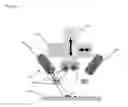
FIG. 1 shows a schematic of the image detection system in the machine setup;
FIG. 2 shows a detailed view of an embodiment of the imaging system referenced in FIG. 1; and
FIG. 3 shows an embodiment according to another aspect.
DETAILED DESCRIPTION OF EMBODIMENTS
Turning to FIG. 1, a chip die manipulator apparatus 1, in the art known as ‘bond head’ with an optical system for providing collocated vision of the die 2 and the substrate 6, and placement at the same location is proposed.
With this system, the placement position 5 can be measured with the die 2 already at the required placement position. With an optical system that is capable of looking underneath the die, the above mentioned blind step 5 can be eliminated. It is more or less an ‘aim and shoot’ principle, wherein, after the detection, no additional XY movement with the actuator 3 is necessary. The only movement left is for the actual placement using the Z-stroke 4. This movement can be done on mechanical repeatability. Therefore, the placement accuracy does no longer depend on the accuracy of the mechanics. It is noted that CN1738526 discloses a fixed camera arrangement that, via a semi-transparent mirror, simultaneously images a die and a placement position on the substrate under an angle. However, the angled camera position involves depth of focus requirements that cannot be solved easily. In addition, the disclosed simultaneous camera registration in the said publication of the die and placement position still induces placement errors that are considered too high.
Accordingly, machine accuracy can be eliminated from the placement accuracy so that the system can be scaled towards higher accuracy by choosing a more accurate vision sensor. In addition, the calibration effort is reduced compared to non collocated measurement systems. FIG. 1 shows one configuration of a co-axial vision system. The image detection system 9 is positioned under an angle with the tool. By using a semi transparent mirror 10 or beam splitter cube one camera can be used to look at both the top of the substrate 6 and the bottom of the die. To reduce cross talk between the two views, a shutter can be added to switch between the substrate and the die view. However, it is also possible to use separate alignment systems to image the placement position 5 and the die 2. In addition, a second camera 90 can be added to increase the accuracy of the rotation measurement around the vertical Z-axis, when the die size is much larger than the field of view of the camera. Accordingly, there is disclosed a manipulator apparatus 1 arranged for picking and placing of a component in a component assembly process, comprising: a Z-stroke 4 arranged for placement along a Z-axis relative to a placement position 5 on a substrate 6; an actuation system 3 arranged for aligning the component 2 relative to the placement position 5; a pickup head 7 arranged on the Z-stroke 4 to pick up a component 2 and place it on the placement position 5; and an alignment system 8 coupled to the actuation system 3; wherein the alignment system 8 comprises: an image detection system 9 arranged on a first off-axis position A and receiving light from the placement position 5. The actuation system can in principle use any coordinate reference and is generally designed for motion in a plane normal to the Z-axis. One example is an XY actuator, controlling XY and R(XYZ) motion in a frame of reference where a linear Z-stroke defines a Z-direction.
The setup enables alignment of the die with the substrate 6, without the need for further motion in the substrate 6 plane during the place action. The only required motion in the placement of the die on the substrate 6 is the Z-movement. This Z-movement can be calibrated, for example by performing a dummy placement above a transparent substrate 6. Such a transparent substrate 6, with reference markers, allows the verification of the actual placement by using a camera underneath. The transparent substrate can be placed at a dedicated position in the machine, allowing to do the verification measurement in between the regular die placements. Based on this calibration the exact location above the real substrate 6 can be calculated. By using a second Z-stroke, the Z-position of the placing action can be changed on the local height of the substrate 6 with the second Z actuator, without changing the mechanical Z-position of the placement stroke of the Z-actuator 4. In addition, any of these Z-actuators can be used for focusing the image on the image detector.
FIG. 2 gives a further detail of the alignment system 8 referenced in FIG. 1. The system 8 includes an imaging system 11 involving a Schwarzschild magnifying objective that is modified to image an object plane under an angle. According to an aspect of the invention, the imaging system 11 comprises an arc form concave spherical mirror 13 arranged at a second off-axis position B and a folding mirror 14 for folding the light path to a third off-axis position C; and an arc form convex spherical mirror 15 arranged at the third off-axis position C having a curvature to image the centre position 5 on the image detection system 9.
The inspection under an angle results in a shift of the image as function of the focus distance. Therefore repeatability of the focusing distance is important. Focusing repeatability can be accomplished in several ways:
-
- 1. Focusing on image contrast, requiring a small focal depth (high NA)
- 2. Triangulation by projecting one or more (laser) spots, lines or other patterns on the die and substrate.
- 3. Triangulation by looking with two or more cameras to the same area on the die and substrate
- 4. Pupil masking
- 5. Interferometric techniques
- 6. Confocal techniques
As mentioned before, a second camera 90 can be used to increase the rotation accuracy in case the size of the die is larger than the field of view of the camera. In practice however only one camera can be placed with high repeatability at the same focus distance. The fluctuation in the focus distance of a second camera 90 leads to an increased measurement error in one direction. This still allows the accurate position measurement perpendicular to this direction. The two cameras together will result in the measurement of three parameters, just enough to measure the lateral position and the rotation around the vertical axis.
While in principle, the arc form may extend completely around the Z-axis, a compact design of the chip die 2 manipulator apparatus 1 is obtained by an arc form of a semi-circular segment.
FIG. 3 shows an embodiment having a second folding mirror 17 to compactify the design. In addition, a semi-transparent mirror 10 is arranged in a light path between the image detection system 9 and the placement position 5, so that the placement position 5 and the component 2 are imaged substantially coinciding in the image detection system 9. Conveniently, the component 2 is brought into focus by Z-actuation of the Z-stroke 4. In addition, to further enhance the performance of the system, the die and the substrate location are imaged preferably separately. To this end, in the light path to the centre position 5 a shutter 16 may be provided and in the light path to the die a shutter 16 may be provided.
In use, the operation of the manipulator apparatus may be as follows:
-
- 1. Pick a die from a donor substrate (e.g. wafer).
- 2. If no calibration is required, continue with step 11
- 3. Bring the die into focus with the Z stroke that will be used on reproducibility only
- 4. Measure the position and orientation of the die with the image detection system.
- 5. Move the die to the calibration substrate
- 6. Bring the substrate into focus with the other Z stroke
- 7. Measure the position and orientation of the calibration substrate with the image detection system
- 8. Place the die on the calibration substrate with the Z stroke that will be used on reproducibility only.
- 9. Measure with the camera under the calibration substrate the result of the placement and calculate the required correction values for future placements.
- 10. Lift up the die from the calibration substrate
- 11. Measure the position and orientation of the die with the image detection system.
- 12. Move the die to the placement position on the substrate
- 13. Bring the substrate into focus with the other Z stroke
- 14. Measure the position and orientation of the substrate with the image detection system
- 15. If necessary adjust the position or orientation of the die by means of the X, Y and rotation actuators
- 16. Place the die on the substrate with the Z stroke that will be used on reproducibility only.
While the invention has been illustrated and described in detail in the drawings and foregoing description, such illustration and description are to be considered illustrative or exemplary and not restrictive; the invention is not limited to the disclosed embodiments. In particular, while the embodiments disclosed show a folding mirror having no optical power, embodiments comprising a folding mirror having an optical power are deemed to fall within the scope of the present invention. In addition, the components in the disclosed examples are dies in a die placement process, other placement systems which require high accuracy, such as surface mounted devices, MEMS devices etc. can be placed without departing from the scope of the invention. Other variations to the disclosed embodiments can be understood and by those skilled in the art in practicing the claimed invention, from a study of the drawings, the disclosure, and the appended claims. In the claims, the word “comprising” does not exclude other elements or steps, and the indefinite article “a” or “an” does not exclude a plurality. A single unit may fulfill the functions of several items recited in the claims. The mere fact that certain measures are recited in mutually different dependent claims does not indicate that a combination of these measured cannot be used to advantage. Any reference signs in the claims should not be construed as limiting the scope.
Claims
1. A manipulator apparatus (1) arranged for picking and placing of a component in a component assembly process, comprising:
a Z-stroke (4) arranged for component placement along a Z-axis relative to a placement position (5) on a substrate (6);
an actuation system (3) arranged for aligning the component (2) relative to the placement position (5);
a pickup head (7) arranged on the Z-stroke (4) to pick up a component (2) and place it on the placement position (5); and
an alignment system (8) coupled to the actuation system (3); wherein
the alignment system (8) comprises:
an image detection system (9) arranged on a first off-axis position (A) and arranged for receiving light from the placement position (5) and the component (2); and
an imaging system (11) comprising an arc form concave spherical mirror (13) arranged at a second off-axis position (B) and centered relative to the placement position (5); a folding mirror (14) arranged in a light path between the concave spherical mirror (13) and the placement position (5) for folding the light path to a third off-axis position (C); and an arc form convex spherical mirror (15) arranged at the third off-axis position (C) having a curvature to image the placement position (5) and the component (2) on the image detection system (9).
2. A component (2) manipulator apparatus according to claim 1, wherein the arc form is semi-circular.
3. A component (2) manipulator apparatus according to claim 1, further comprising a semi-transparent mirror or beamsplitter cube (10), arranged in a light path between the image detection system (9) and the placement position (5), so that the placement position (5) and the component (2) are imaged substantially coinciding in the image detection system (9).
4. A component (2) manipulator apparatus according to claim 1, wherein in the light path to the centre position (5) a shutter (16) is provided.
5. A component (2) manipulator apparatus according to claim 1, wherein in the light path to the die a shutter (16) is provided.
Images & Drawings included:



Sources:
- United States Patent and Trademark Office - verify current appl. status at the USPTO↗
Similar patent applications:
Recent applications in this class:
- » 20250276450 2025-09-04
METHOD AND SYSTEM FOR PROGRAMMING AN INDUSTRIAL ROBOT - » 20250269537 2025-08-28
EMBODIED INTELLIGENCE-BASED METHOD, APPARATUS, DEVICE AND MEDIUM FOR INDUSTRIAL PART SORTING PROCESSING - » 20250262773 2025-08-21
ITEM MANIPULATION SYSTEM AND METHODS - » 20250262772 2025-08-21
PLACE CONDITIONED PICK FOR ROBOTIC PICK AND PLACE OPERATIONS - » 20250262771 2025-08-21
SENSOR, CONTROL METHOD FOR SENSOR, PROGRAM, AND SAFETY MONITORING SYSTEM - » 20250262770 2025-08-21
HANDLING APPARATUS, HANDLING METHOD, AND RECORDING MEDIUM - » 20250256404 2025-08-14
CONTROL DEVICE, ROBOT SYSTEM, OBJECT PRESENCE/ABSENCE DETERMINATION METHOD, AND PROGRAM - » 20250249596 2025-08-07
TRAINING OF ARTIFICIAL INTELLIGENCE MODEL - » 20250249595 2025-08-07
MACHINE HANDLING OF NON-RIGID MATERIALS - » 20250249594 2025-08-07
UNIVERSAL MANIPULATION INTERFACE
Recent applications for this Assignee:
- » 20170099515 2017-04-06
Fingerprint-based inter-destination media synchronization - » 20160365973 2016-12-15
Secure Distribution of Watermarked Content - » 20160030516 2016-02-04
PREVENTION, THERAPY AND PROGNOSIS/MONITORING IN SEPSIS AND SEPTIC SHOCK - » 20160010954 2016-01-14
Protective armour element - » 20150373621 2015-12-24
Method and telecommunications infrastructure enabling localized time controlled access for a device - » 20150323561 2015-11-12
High throughput microscopy device - » 20150293145 2015-10-15
Calibration of a mechanical property of SPM cantilevers - » 20150274849 2015-10-01
Resistant starch - » 20150226622 2015-08-13
Pressure sensing assembly - » 20150201654 2015-07-23
Hydrothermally modified starch