EXHAUST GAS PURIFICATION CATALYST
US20130065754A1
2013-03-14
13/636,079
2010-03-24
Abstract:
The present invention provides an exhaust gas purification catalyst which has a structure which prevents competitive adsorption of HC, CO, and NOx and enables effective utilization of an NOx storage reduction type catalyst. The exhaust gas purification catalyst of the present invention is characterized by having an NOx storage reduction type catalyst layer which contains at least one type of NOx storage material which is selected from an alkali metal or an alkali earth metal and Pt and/or Rh on a substrate and having an oxidation catalyst layer which carries Pt and/or Pd on the NOx storage reduction type catalyst layer.
Inventors:
- Yusuke Shinmyo 1 🇯🇵 Toyota-shi, Japan
- Nobuyuki Takagi 18 🇯🇵 Toyota-shi, Japan
- Hiroyuki Matsubara 2 🇯🇵 Toyota-shi, Japan
- Hiroto Imai 1 🇯🇵 Toyota-shi, Japan
- Masaya Kamada 5 🇯🇵 Toyota-shi, Japan
Assignee:
- TOYOTA JIDOSHA KABUSHIKI KAISHA 2,577 🇯🇵 Toyota-shi, Aichi, Japan
Interested in similar patents?
Get notified when new applications in this technology area are published.
Classification:
B01J35/04 » CPC main
Catalysts, in general, characterised by their form or physical properties; Solids Foraminous structures, sieves, grids, honeycombs
B01D53/945 » CPC further
Separation of gases or vapours; Recovering vapours of volatile solvents from gases; Chemical or biological purification of waste gases, e.g. engine exhaust gases, smoke, fumes, flue gases, aerosols,; Chemical or biological purification of waste gases of engine exhaust gases by catalytic processes; Simultaneously removing carbon monoxide, hydrocarbons or nitrogen oxides making use of three-way catalysts [TWC] or four-way-catalysts [FWC] characterised by a specific catalyst
B01J23/42 » CPC further
Catalysts comprising metals or metal oxides or hydroxides, not provided for in group of noble metals of the platinum group metals Platinum
B01J23/44 » CPC further
Catalysts comprising metals or metal oxides or hydroxides, not provided for in group of noble metals of the platinum group metals Palladium
B01J23/63 » CPC further
Catalysts comprising metals or metal oxides or hydroxides, not provided for in group of noble metals combined with metals, oxides or hydroxides provided for in groups - ; Platinum group metals with rare earths or actinides
B01J35/0006 » CPC further
Catalysts, in general, characterised by their form or physical properties Catalysts containing parts with different compositions
B01J37/0244 » CPC further
Processes, in general, for preparing catalysts; Processes, in general, for activation of catalysts; Impregnation, coating or precipitation; Multiple impregnation or coating Coatings comprising several layers
F01N3/0814 » CPC further
Exhaust or silencing apparatus having means for purifying, rendering innocuous, or otherwise treating exhaust for rendering innocuous by using absorbents or adsorbents combined with catalytic converters, e.g. NOx absorption/storage reduction catalysts
F01N3/0842 » CPC further
Exhaust or silencing apparatus having means for purifying, rendering innocuous, or otherwise treating exhaust for rendering innocuous by using absorbents or adsorbents characterised by the absorbed or adsorbed substances Nitrogen oxides
F01N3/106 » CPC further
Exhaust or silencing apparatus having means for purifying, rendering innocuous, or otherwise treating exhaust for rendering innocuous by thermal or catalytic conversion of noxious components of exhaust; General auxiliary catalysts, e.g. upstream or downstream of the main catalyst Auxiliary oxidation catalysts
B01D2255/1021 » CPC further
Catalysts; Noble metals or compounds thereof; Platinum group metals Platinum
B01D2255/1023 » CPC further
Catalysts; Noble metals or compounds thereof; Platinum group metals Palladium
B01D2255/1025 » CPC further
Catalysts; Noble metals or compounds thereof; Platinum group metals Rhodium
B01D2255/202 » CPC further
Catalysts; Metals or compounds thereof Alkali metals
B01D2255/204 » CPC further
Catalysts; Metals or compounds thereof Alkaline earth metals
B01D2255/9022 » CPC further
Catalysts; Physical characteristics of catalysts; Multilayered catalyst Two layers
B01D2255/91 » CPC further
Catalysts; Physical characteristics of catalysts NOx-storage component incorporated in the catalyst
F01N2510/0682 » CPC further
Surface coverings for exhaust purification, e.g. catalytic reaction characterised by the distribution of the catalytic coatings having a discontinuous, uneven or partially overlapping coating of catalytic material, e.g. higher amount of material upstream than downstream or
F01N2510/0684 » CPC further
Surface coverings for exhaust purification, e.g. catalytic reaction characterised by the distribution of the catalytic coatings having more than one coating layer, e.g. multi-layered coatings
Y02T10/12 » CPC further
Road transport of goods or passengers; Internal combustion engine [ICE] based vehicles Improving ICE efficiencies
Y02T10/12 » CPC further
Road transport of goods or passengers; Internal combustion engine [ICE] based vehicles Improving ICE efficiencies
B01J23/58 » CPC further
Catalysts comprising metals or metal oxides or hydroxides, not provided for in group of noble metals combined with metals, oxides or hydroxides provided for in groups - ; Platinum group metals with alkali- or alkaline earth metals
Description
TECHNICAL FIELD
The present invention relates to an exhaust gas purification catalyst, more particularly relates to an exhaust gas purification catalyst which is provided with an NOx storage reduction type catalyst layer.
BACKGROUND ART
In the past, in three-way catalysts, NOx storage reduction type catalysts have suffered from competitive adsorption of HC, CO, and NOx, so it has been difficult to secure sufficient purification performance.
To solve this, Japanese Patent Publication No. 2009-101252 A1 etc. report NOx storage reduction type catalysts which have two-layer coated structures, but both the upper and lower layers contain an NOx storage material (or NOx holding substance), so the problems that competitive adsorption of HC, CO, and NOx occurs, the active points of the NOx storage reduction reaction end up decreasing, and an NOx storage reduction type catalyst cannot be effectively formed went unresolved.
SUMMARY OF INVENTION
The present invention has as its object the provision of an exhaust gas purification catalyst which has a structure which prevents competitive adsorption of HC, CO, and NOx and enables effective utilization of an NOx storage reduction type catalyst.
To achieve the above object, the exhaust gas purification catalyst of the present invention is characterized by:
having an NOx storage reduction type catalyst layer which contains at least one type of NOx storage material which is selected from an alkali metal or an alkali earth metal and Pt and/or Rh on a substrate and
having an oxidation catalyst layer which carries Pt and/or Pd on the NOx storage reduction type catalyst layer.
In a preferred embodiment, seen in the direction of flow of exhaust gas, the oxidation catalyst layer has a length of 25 to 60% of the length of the NOx storage reduction type catalyst layer.
In a preferred embodiment, the oxidation catalyst layer has a thickness of 20 to 40 μm.
BRIEF DESCRIPTION OF DRAWINGS
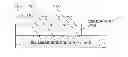
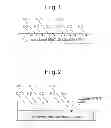
FIG. 1 schematically show HC, CO, and NOx which suffer from competitive adsorption at an NOx storage reduction type catalyst layer in a conventional exhaust gas purification catalyst.
FIG. 2 schematically shows an exhaust gas purification catalyst of the present invention in a state where HC and CO are selectively oxidized at the upper layer oxidation catalyst layer and NOx is selectively stored and reduced at the lower layer NOx storage reduction type catalyst layer.
FIG. 3A is a schematic view which shows an image of composition of catalysts of invention examples and comparative examples for laboratory evaluation use and FIG. 3B is a schematic view which shows an image of composition of catalysts of invention examples for actual evaluation use.
FIG. 4 is a graph which shows a test cycle for laboratory evaluation.
FIG. 5 is a graph which shows an NOx storage characteristic in the laboratory for catalysts of invention examples and comparative examples.
FIG. 6 is a graph which shows NOx storage characteristics in an actual machine for catalysts of invention examples.
DESCRIPTION OF EMBODIMENTS
In a conventional two-layer coat structure, both the upper and lower layers are NOx storage reduction type catalyst layers, so, as shown in FIG. 1, competitive adsorption of HC, CO, and NOx ends up occurring, the active points of NOx storage reduction reactions are reduced, and the NOx storage reduction type catalyst layer can be effectively utilized. That is, even if the NOx storage reduction type catalyst has a sufficient NOx storage capacity, the NOx storage speed at the stage of the start of storage is slow and, with mode emission, sufficient performance could not be exhibited. Further, as a measure, even if arranging an oxidation catalyst upstream of the NOx storage reduction type catalyst, when compared with the same capacity, again the NOx storage speed was slow.
As opposed to this, as a characterizing feature of the present invention, as shown in FIG. 2, first, HC and CO are substantially removed at the upper layer oxidation catalyst layer, so the active points of the lower layer NOx storage reduction type catalyst layer can be effectively utilized for the NOx storage reduction reaction.
The present invention can provide an oxidation catalyst layer on an NOx storage reduction type catalyst layer so as to enable effective utilization of the lower layer NOx storage reduction type catalyst layer. That is, the upper layer oxidation catalyst layer through which the exhaust gas first passes selectively oxidizes the HC (hydrocarbons) and CO (carbon monoxide) which inhibit the reaction of the NOx storage reduction type catalyst. Therefore, in the lower layer NOx storage reduction type catalyst layer, competitive adsorption of HC, CO, and NOx substantially does not occur. Storage and reduction of NOx which passes through the upper layer oxidation catalyst layer selectively occurs.
In the exhaust gas purification catalyst of the present invention, by selectively causing action of the upper layer oxidation catalyst layer and the lower layer NOx storage reduction type catalyst layer, it is possible to avoid competitive adsorption of the HC and CO which should be removed by oxidation and NOx which should be removed by reduction, secure sufficient reaction sites, and enable maximum utilization of the inherent functions of the NOx storage reduction type catalyst.
In one preferable embodiment, as shown in FIG. 2, the oxidation catalyst layer is arranged along the direction of flow of the exhaust gas from the upstream side end of the NOx storage reduction type catalyst layer so as to cover 25 to 60% of the length of the NOx storage reduction type catalyst layer. In this range, the NOx storage speed of the NOx storage reduction type catalyst layer becomes the greatest.
Further, in one preferable embodiment, the thickness of the oxidation catalyst layer is 20 to 40 μm. In this range, the NOx storage rate of the NOx storage reduction type catalyst layer becomes maximum.
After the lower layer NOx storage reduction type catalyst layer is formed, the upper layer oxidation catalyst layer is overcoated on it to form a catalyst of a vertical two-layer coat structure.
The oxidation catalyst layer which is overcoated on the upper layer is raised in oxidation performance by being provided with Pt and/or Pd which has excellent catalyst ability as an oxidation catalyst.
The oxidation catalyst layer does not have Rh inhibiting the catalyst activity in lean combustion gas added to it, while does not have an NOx storage material which affects the previous metal activity added to it either.
The NOx storage reduction type catalyst layer includes Pt and/or Rh and an NOx storage material. In particular, Rh and the NOx storage material are also added to only the lower layer NOx storage reduction type catalyst layer.
EXAMPLES
Three types of exhaust gas purification catalysts which have the coat specifications which are shown in Table 1 on cordierite substrates were prepared. Below, DOC indicates an oxidation catalyst layer, while NSR indicates a NOx storage reduction type catalyst layer.
| TABLE 1 | |
| Name | Coat specifications |
| [1] DOC | Coat: Al2O3 = 150 *Unit: g/liter |
| (Comp. ex.) | Precious metal: Pt/Pd = 1.2/0.6 *Unit: g/liter |
| Oxidation catalyst | NOx storage reduction | |
| layer (upper layer) | type catalyst layer | |
| (lower layer) | ||
| [2] NSR | None | Coat: CeO2•Al2O3 = 120, |
| (Comp. ex.) | ZrO2•TiO2 = 100 | |
| ZrO2•CaO = 50 *Unit: | ||
| g/liter | ||
| Precious metal: | ||
| Pt/Rh = 2.0/0.45 | ||
| *Unit: g/liter | ||
| Storage material: | ||
| Ba/Li/K = 0.1/0.2/0.1 | ||
| *Unit: mol/liter | ||
| [3] | Coat: Al2O3 | Same as above |
| Overcoat | *Coat amount differs | |
| NSR | by length | |
| (Inv. ex.) | Precious metal: | |
| Pt/Pd = 1.2/0.6 | ||
| *Unit: g/liter | ||
| Coat ratio: 27, 55, | ||
| 82% | ||
| Coat thickness: | ||
| 30 ± 10 μm | ||
Each invention example was prepared by forming an NOx storage reduction type catalyst layer (NSR) on a substrate, then coating an oxidation catalyst layer (DOC) on the same.
The catalyst size was, for laboratory use, a volume of 35 cc (total length 50 mm) and for actual use, a volume of 14 liters (total length 110 mm).
Each catalyst was tested for simple durability in an electric furnace at 700° C.×27 hours.
Three types of catalysts of the coat specifications of Table 1 were used for tests under the following conditions. The images of composition are shown in FIG. 3.
<Configuration of Test Catalysts>
(A) Configurations for Laboratory Evaluation Use (Three Types)
[1] DOC+[2]NSR: Tandem Configuration (Comparative Example)
-
- Size: DOC volume 10 cc, length 14 mm (upstream side)
- NSR volume 25 cc, length 36 mm (downstream side)
- (Total length 50 mm)
- NSR volume 25 cc, length 36 mm (downstream side)
- Size: DOC volume 10 cc, length 14 mm (upstream side)
[2] NSR: Alone (Comparative Example)
-
- Size: Volume 35 cc, length (total length) 50 mm
[3] Overcoat of DOC on NSR (Invention Example)
-
- Size: Volume 35 cc, length (total length) 50 mm
- Overcoat ratio: 27%=10 cc (14 mm(*))
- 55%=20 cc (28 mm(*))
- 82%=30 cc (42 mm(*))
- (*) Length from upstream side end of NSR
(B) Configuration for Actual Evaluation Use (One Type)
[3] Overcoat of DOC on NSR (Invention Example)
-
- Size: volume 14 liter, length 110 mm
- Overcoat ratio: 55%=7.7 liter (60 mm (*))
- (*) Length from upstream side end of NSR
The test conditions were as follows:
<Test Conditions>
(A) Laboratory NOx Storage Test
Test gas conditions: Shown in Table 2.
| TABLE 2 | ||||||
| Total flow | ||||||
| CO2 | O2 | NO | C3H6 | H2O | rate | |
| Lean | 10% | 10% | 100 ppm | 300 | 10% | 20 liter/min |
| atmosphere | ppmC | (N2 balance) | ||||
| Rich | 10% | 1% | 100 ppm | 10000 | 10% | 20 liter/min |
| atmosphere | ppmC | (N2 balance) | ||||
Test cycle: Shown in FIG. 4.
That is, the catalyst was raised from the initial temperature of 50° C. to 600° C. by 40° C./min. At 600° C., rich spike NOx reduction (rich/lean=5 sec/5 sec) was performed, then the catalyst was immediately cooled in an argon atmosphere down to 350° C. where NOx storage was performed in a lean atmosphere.
(B) Actual NOx Storage Test
Evaluation engine: Diesel engine (exhaust amount: 2.2 liters)
Engine conditions: Shown in Table 3.
| TABLE 3 | ||||
| Catalyst | ||||
| entry | Inflowing | Inflowing | ||
| Speed | temperature | Ga | NOx | THC |
| 2000 rpm | 370° C. | 35 g/sec | 100 ppm | 135 ppmC |
Evaluation pattern: PM regeneration→saturated NOx storage amount measurement
<Test Results>
(A) Verification of Overcoat Ratio
FIG. 5 shows all together the results of the laboratory NOx storage test.
According to the present invention, by overcoating DOC on the NSR, the NOx storage speed is remarkably improved compared with the conventional NSR alone and DOC/NSR in tandem.
Further, the NOx storage speed becomes the highest in the range of 25 to 60% of the NSR length of the lower layer of the overcoat ratio.
(B) Verification of Coat Thickness
FIG. 6 shows all together the results of the actual NOx storage test. The overcoat ratio was 55% (fixed), while the overcoat amount was changed in the range of 24 to 72 g/liter.
When the overcoat amount was near 30 g/liter, the NOx storage speed was the highest. The optimum overcoat amount is in the range of 25 to 35 g/liter centered about 30 g/liter. If converting this to the overcoat thickness with respect to an overcoat ratio of 55%, the optimum overcoat thickness is 20 to 40 μm or so.
INDUSTRIAL APPLICABILITY
According to the present invention, there is provided an exhaust gas purification catalyst which has a structure which prevents competitive adsorption of HC, CO, and NOx and enables effective utilization of an NOx storage reduction type catalyst.
Claims
1. An exhaust gas purification catalyst characterized by
having an NOx storage reduction type catalyst layer which contains at least one type of NOx storage material which is selected from an alkali metal or an alkali earth metal and Pt and/or Rh on a substrate and
having an oxidation catalyst layer which carries Pt and/or Pd on said NOx storage reduction type catalyst layer.
2. An exhaust gas purification catalyst as set forth in claim 1, wherein said oxidation catalyst layer covers 25 to 60% of the length of said NOx storage reduction type catalyst layer from an upstream side end of said NOx storage reduction type catalyst layer along the direction of flow of the exhaust gas.
3. An exhaust gas purification catalyst as set forth in claim 1 or 2, wherein said oxidation catalyst layer has a thickness of 20 to 40 μm.
Images & Drawings included:


Sources:
- United States Patent and Trademark Office - verify current appl. status at the USPTO↗
Similar patent applications:
- » 20150217275
Exhaust gas purification catalyst, exhaust gas purification monolith catalyst, and method for producing exhaust gas purification catalyst - » 20210245147
Porous structure for exhaust gas purification catalyst, exhaust gas purification catalyst using porous structure, and exhaust gas purification method - » 20210299638
Exhaust gas purification catalyst, exhaust gas purification method, and production method for exhaust gas purification catalyst - » 20150056106
EXHAUST GAS PURIFICATION CATALYST, EXHAUST GAS PURIFICATION DEVICE AND FILTER, AND PRODUCTION METHOD FOR SAID CATALYST - » 20170248049
EXHAUST GAS PURIFICATION CATALYST, EXHAUST GAS PURIFICATION DEVICE AND FILTER, AND PRODUCTION METHOD FOR SAID CATALYST - » 20100008832
Exhaust gas purification catalyst, exhaust gas purification system, and exhaust gas purification method - » 20110274603
EXHAUST GAS PURIFICATION CATALYST, EXHAUST GAS PURIFICATION APPARATUS USING THE SAME AND EXHAUST GAS PURIFICATION METHOD - » 20110113754
Exhaust gas purification catalyst, exhaust gas purification apparatus using the same and exhaust gas purification method - » 20160082419
CARRIER FOR EXHAUST GAS PURIFICATION CATALYST, CATALYST FOR EXHAUST GAS PURIFICATION, AND CATALYST STRUCTURE FOR EXHAUST GAS PURIFICATION - » 20140243191
Exhaust gas purification catalyst, and exhaust gas purification catalyst structure
Recent applications in this class:
- » 20130045137 2013-02-21
Honeycomb structure - » 20130043237 2013-02-21
Honeycomb structure - » 20130028805 2013-01-31
EXHAUST GAS PURIFICATION DEVICE - » 20130025247 2013-01-31
Exhaust gas purification filter, and method of manufacturing exhaust gas purification filter
Recent applications for this Assignee:
- » 20250155914 2025-05-15
PEDAL ASSEMBLY - » 20250155377 2025-05-15
INSPECTION APPARATUS AND INSPECTION METHOD - » 20250145044 2025-05-08
NONCONTACT POWER SUPPLY SYSTEM, SERVER, AND NONCONTACT POWER SUPPLY METHOD - » 20250122818 2025-04-17
VEHICLE - » 20250118846 2025-04-10
BATTERY PACK - » 20250100395 2025-03-27
VEHICLE AND POWER SUPPLY FOR MOVING BODY - » 20250083698 2025-03-13
AUTONOMOUS DRIVING SYSTEM - » 20250078588 2025-03-06
AUTONOMOUS DRIVING SYSTEM - » 20250074459 2025-03-06
AUTONOMOUS DRIVING SYSTEM - » 20250074458 2025-03-06
AUTOMATED DRIVING SYSTEM AND CONTROL METHOD FOR AUTOMATED DRIVING SYSTEM