Article, more particularly hose, more particularly again charge-air hose, with an embedded reinforcement based on a polyoxadiazole
US20130068337A1
2013-03-21
13/675,815
2012-11-13
✅ Patent granted
US 9,040,133 B2
2015-05-26
-
-
Michael C Miggins
Walter Ottesen, P.A.
2032-11-23
Abstract:
An article composed of a polymeric material, especially a material having elastic properties, which has been provided with an embedded reinforcement made wholly or partly of a textile material. In a first reinforcement variant, the textile material is polyoxadiazole (POD), a POD derivative or a POD copolymer, or, in a second reinforcement variant, the textile material is a combination of POD, a POD derivative or a POD copolymer, and at least one further textile material, or, in a third reinforcement variant, the textile material comprises a material combination of POD, a POD derivative or a POD copolymer and at least one further material which is not part of any textile group. The article is particularly a hose and more particularly a charge-air hose having an inner layer and an outer layer of a polymeric material and an embedded reinforcement, for example in the form of a POD knit.
Inventors:
- Horst Schubert 1 🇩🇪 Woelpinghausen, Germany
- Ulrich Brettschneider 2 🇩🇪 Osterode, Germany
- ContiTech Schlauch GmbH 2 🇩🇪 Hannover, Germany
Assignee:
- ContiTech Schlauch GmbH 1 🇺🇸 Hannover, United States
- CONTITECH SCHLAUCH GMBH 13 🇩🇪 Hannover, Germany
Applicant:
Interested in similar patents?
Get notified when new applications in this technology area are published.
Classification:
Y10T428/1362 » CPC further
Stock material or miscellaneous articles; Hollow or container type article [e.g., tube, vase, etc.]; Polymer or resin containing [i.e., natural or synthetic] Textile, fabric, cloth, or pile containing [e.g., web, net, woven, knitted, mesh, nonwoven, matted, etc.]
Y10T428/1366 » CPC further
Stock material or miscellaneous articles; Hollow or container type article [e.g., tube, vase, etc.]; Polymer or resin containing [i.e., natural or synthetic]; Textile, fabric, cloth, or pile containing [e.g., web, net, woven, knitted, mesh, nonwoven, matted, etc.] Textile, fabric, cloth, or pile is sandwiched between two distinct layers of material unlike the textile, fabric, cloth, or pile layer
C08J5/046 » CPC further
Manufacture of articles or shaped materials containing macromolecular substances; Reinforcing macromolecular compounds with loose or coherent fibrous material with synthetic macromolecular fibrous material
C08J5/047 » CPC further
Manufacture of articles or shaped materials containing macromolecular substances; Reinforcing macromolecular compounds with loose or coherent fibrous material with mixed fibrous material
F02M35/10091 » CPC further
Combustion-air cleaners, air intakes, intake silencers, or induction systems specially adapted for, or arranged on, internal-combustion engines; Air intakes; Induction systems characterised by details of intake ducts: shapes; connections; arrangements
F02M35/10157 » CPC further
Combustion-air cleaners, air intakes, intake silencers, or induction systems specially adapted for, or arranged on, internal-combustion engines; Air intakes; Induction systems characterised by the engine type Supercharged engines
F02M35/10334 » CPC further
Combustion-air cleaners, air intakes, intake silencers, or induction systems specially adapted for, or arranged on, internal-combustion engines; Air intakes; Induction systems; Materials for intake systems Foams; Fabrics; Porous media; Laminates; Ceramics; Coatings
F16L11/082 » CPC further
Hoses, i.e. flexible pipes made of rubber or flexible plastics with reinforcements embedded in the wall comprising one or more layers of a helically wound cord or wire two layers
F16L11/085 » CPC further
Hoses, i.e. flexible pipes made of rubber or flexible plastics with reinforcements embedded in the wall comprising one or more braided layers
B29D22/00 IPC
Producing hollow articles
B29D23/00 IPC
Producing tubular articles
B32B1/08 IPC
Layered products having a general shape other than plane Tubular products
B29C70/08 IPC
Shaping composites, i.e. plastics material comprising reinforcements, fillers or preformed parts, e.g. inserts comprising reinforcements only, e.g. self-reinforcing plastics; Fibrous reinforcements only comprising combinations of different forms of fibrous reinforcements incorporated in matrix material, forming one or more layers, and with or without non-reinforced layers
F16L11/02 » CPC main
Hoses, i.e. flexible pipes made of fibres or threads, e.g. of textile which may or may not be impregnated, or provided with an impermeable layer, e.g. fire-hoses
C08J5/04 IPC
Manufacture of articles or shaped materials containing macromolecular substances Reinforcing macromolecular compounds with loose or coherent fibrous material
F02B33/44 » CPC further
Engines characterised by provision of pumps for charging or scavenging Passages conducting the charge from the pump to the engine inlet, e.g. reservoirs
F16L11/08 » CPC further
Hoses, i.e. flexible pipes made of rubber or flexible plastics with reinforcements embedded in the wall
D03D1/00 » CPC further
Woven fabrics designed to make specified articles
D03D1/00 » CPC further
Woven fabrics; Methods of weaving other than those characterised by the operation of a particular loom
D03D19/00 » CPC further
Gauze or leno-woven fabrics
D04C1/02 » CPC further
Braid or lace, e.g. pillow-lace; Processes for the manufacture thereof made from particular materials
D04H13/00 » CPC further
Other non-woven fabrics
F02M35/10 IPC
Combustion-air cleaners, air intakes, intake silencers, or induction systems specially adapted for, or arranged on, internal-combustion engines Air intakes; Induction systems
C08K7/02 » CPC further
Use of ingredients characterised by shape Fibres or whiskers
D04B21/00 » CPC further
Warp knitting; Machines therefor
D04B21/00 » CPC further
Warp knitting processes for the production of fabrics or articles not dependent on the use of particular machines; Fabrics or articles defined by such processes
Description
CROSS REFERENCE TO RELATED APPLICATIONS
This application is a continuation application of international patent application PCT/EP 2011/058019, filed May 18, 2011, designating the United States and claiming priority from German application 10 2010 017 679.6, filed Jul. 1, 2010, and the entire content of both applications is incorporated herein by reference.
FIELD OF THE INVENTION
The invention relates to an item made of a polymeric material which has embedded reinforcement, entirely or to some extent consisting of a textile material.
BACKGROUND OF THE INVENTION
Items of this type based on composite materials are by way of example hose-shaped structures, in particular hoses and air spring bellows, drive belts, conveyor belts, and flexible containers. Among this group of items, particular mention may be made of hoses, where these consist of an internal layer and external layer and of embedded single- or multiple-ply reinforcement, and also optionally of further layers, for example of a diffusion-barrier layer. In this connection, reference is made in particular to the following patent literature: DE 42 32 946 C2, DE 10 2004 051 073 A1, DE 10 2008 014 988 A1, EP 0 567 115 B1, U.S. Pat. No. 6,009,911, EP 0 895 015 B1, EP 1 396 670 E1, EP 1 941 150 B1 and United States patent application publication 2009/0236004 A1.
In practical applications, items of the generic type use various types of reinforcement that reliably withstand the respective demands in relation to pressure and/or temperature and/or dynamic stresses and/or solvents, over the necessary service life. Materials that may be mentioned in relation to textile reinforcement are by way of example polyamides, aramids, and polyesters. The reinforcement bonded into the polymer matrix, for example into an as yet unvulcanized rubber mixture, for producing items based on elastomers or thermoplastic elastomers, or into a molten plastic, for producing thermoplastic items, is achieved in a very wide variety of forms, for example in the form of fibers, yarns, cords, and filaments, or else in the form of sheet-like structures which in turn by way of example can be knitted fabrics, non-wovens, woven fabrics, and braided fabrics. Finally, the reinforcement is bonded into the material by way of the vulcanization process or another hardening process.
The hoses in particular are utilized in a wide range of applications involving different requirements, and the decision to use any particular reinforcement here is always taken after assessment of suitability and costs.
Particularly stringent requirements are placed upon hoses used in the air-intake region of supercharged internal combustion engines (EP 1 396 670 B1), and therefore on the reinforcement in these hoses. Further details of the prior art relevant here are given hereinafter.
Supercharged engines are constantly increasing in popularity in the market because this technology can achieve significant improvement not only in fuel economy but also in exhaust-gas quality in accordance with EU Standard. The technical principle can be described in its simplest form as follows: the air needed for the combustion process is compressed by way of a supercharger in order to increase the absolute content of oxygen, which makes up only about 21% of atmospheric air. The compressed air is then cooled by way of a charge-air cooler and then forced into the combustion chamber. The mounting of the charge-air cooler is located on the vehicle body, separate from the engine, and the charge-air hoses that connect the charge-air cooler to the system therefore have to withstand high pressure and thermal stresses. Under running conditions, furthermore the substantial relative movements of engine and vehicle body also subject them to permanent dynamic stress due to a wide variety of spatial deflections in all possible directions. Processes that occur in the actual charge-air system are not only compression and transport of air but also deposition of fuel residues and lubricant admixtures within the piping, and the polymer material has to withstand these over the service life of an automobile.
In principle, the materials to be used can be varied as required by the usage conditions, but specifically for reinforcement hitherto only a restricted selection has been available, for high temperatures in conjunction with high pressure. Applications of this type generally use yarns/twisted yarns based on meta-aramid.
SUMMARY OF THE INVENTION
The invention is now based on the object of providing an item of the generic type, in particular a hose, and in particular in turn a charge-air hose, which withstands high dynamic stresses at high temperatures and pressures and also has a long lifetime.
The object is achieved in that
-
- in the case of a first reinforcement variant, the textile material consists of polyoxadiazole (POD) and/or of a POD derivative and/or of a POD copolymer, or
- in the case of a second reinforcement variant, the textile material is a textile material combination comprising POD and/or a POD derivative and/or a POD copolymer, and also at least one further textile material which does not derive from the abovementioned POD group, or
- in the case of a third reinforcement variant, the textile material comprises a material combination comprising POD and/or a POD derivative and/or a POD copolymer, and also at least one further material which does not derive from a textile group.
These three POD-based reinforcement variants are described in more detail hereinafter with reference to preferred embodiments.
First Reinforcement Variant
For the purposes of this reinforcement variant, only POD, or only a POD derivative, for example a sulfonated POD, or only a POD copolymer, or a combination within the abovementioned POD group, is used. Particular importance here is attached to the exclusive use of POD.
In relation to details of the POD material, in particular relating to chemistry, reference is made in particular to the following patent literature: U.S. Pat. No. 7,528,217 B2, RU 2213814 C2 and RU 2213815 C2.
Second Reinforcement Variant
In the case of this reinforcement variant, the textile material is a material combination (hybrid) consisting of POD and/or of a POD derivative and/or of a POD copolymer, and also of at least one further textile material which does not derive from the abovementioned POD group. Particular importance here is attached to hybrid formation from POD with at least one other textile material.
The further textile material which does not derive from the POD group can be a synthetic or natural polymer. In particular, the following types of material are used:
-
- polyamide (PA), for example, PA6, PA6.6, PA11, PA12, PA6.10, PA6.12, copolyamides
- polyester (PES)
- aramid, for example, meta-aramid (m-aramid), para-aramid
- (p aramid)
- rayon
- polyethylene. terephthalate (PET)
- cotton
- staple viscose
- polyvinyl alcohol (PVAL)
- polyvinyl acetal (PVA)
- polyether ether ketone (PEEK)
- polyethylene 2,6-naphthalate (PEN)
- polyphenylene
- polyphenylene oxide (PPO)
- polyphenylene sulfide (PPS)
- polyphenylene ether.
Combinations of the abovementioned types of material are also possible. Examples of hybrids of this type can be:
POD/PA
POD/m-aramid
POD/PPS
POD/PA/PPS.
The quantitative proportion of POD and/or of the POD derivative and/or of the POD copolymer within a textile hybrid system is from 50 to 90% by weight, in particular from 55 to 80% by weight.
Third Reinforcement Variant
In the case of this reinforcement variant, the textile material comprises a material combination (hybrid) consisting of a POD and/or of a POD derivative and/or of a POD copolymer, and also of at least one further material which does not derive from a textile group.
The further material which does not derive from any textile group can in particular be:
metal fibers
carbon fibers
glass fibers
basalt fibers.
Combinations of the abovementioned types of material are also possible. An example of a hybrid of this type can be:
POD fibers/carbon fibers.
With respect to the quantitative proportion of POD and/or of the POD derivative and/or of the POD copolymer within a hybrid system of this type, reference is made to the second reinforcement variant.
The following advantageous design possibilities are also applicable in respect of the reinforcement material in the case of the first and/or second and/or third reinforcement variant:
-
- The reinforcement can have been prepared so as to promote adhesion, for example by means of a coating process using resorcinol-formaldehyde latex (RFL).
- The reinforcement material is present in a filamental form. In respect of the filamental form, the following variants may in particular be mentioned:
- monofil
- filament yarn spun from a polymer
- stretch-broken yarn produced from filament yarn, stressed to breakage point, filaments break at different lengths
- cord thread
- twisted thread
- staple fibers produced from filament yarns, uniformly chopped to defined length, then mechanically spun (for example, from 30 to 150 mm)
- short chopped fibers produced from filament yarns or stretch-broken yarns in lengths (for example, from 1 to 15 mm)
- pulp mostly in the form of fiber bundles or fiber tow (thick filament yarns).
When a twisted or other yarn is present the linear density (twist) is in particular from 1000 to 12 000 dtex.
-
- The reinforcement material takes the form of a sheet-like structure, where in particular the following variants may be mentioned:
- woven fabric
- woven cord fabric
- ribbon
- knitted fabric
- laid scrim
- braided fabric
- nonwoven
- felt
- parallelized filaments.
The polymeric material of the item in particular possesses resilient properties, and in this connection the following two polymer variants are in particular used:
Polymer Variant A
The polymeric material is an elastomeric material based on a vulcanized rubber mixture which comprises an unblended rubber component or a rubber-component blend and conventional mixture ingredients. Particular rubber components that may be mentioned are:
ethylene-propylene copolymer (EPM)
ethylene-propylene-diene copolymer (EPDM)
nitrile rubber (NBR)
(partially) hydrogenated nitrile rubber (HNBR)
fluoro rubber (FKM)
chloroprene rubber (CR)
natural rubber (NR)
styrene-butadiene rubber (SBR)
isoprene rubber (IR)
butyl rubber (IIR)
bromobutyl rubber (BIIR)
chlorobutyl rubber (CIIR)
butadiene rubber (BR)
chlorinated polyethylene (CM)
chlorosulfonated polyethylene (CSM)
polyepichlorohydrin (ECO)
ethylene-vinyl acetate rubber (EVA)
acrylate rubber (ACM)
ethylene-acrylate rubber (AEM)
silicone rubber (MQ, VMQ, PVMQ, FVMQ; DE 10 2006 058 470 A1)
fluorinated methylsilicone rubber (MFQ)
perfluorinated propylene rubber (FFPM)
perfluorocarbon rubber (FFKM)
polyurethane (PU).
It is also possible to use a blend, in particular in conjunction with one of the abovementioned types of rubber, an example being an NR/BR blend.
Particular importance is attached to: EPM, EPDM, CR, NR, NBR, HNBR, CM, CSM, FKM, ACM, AEM, or silicone rubber.
The conventional mixture ingredients comprise at least one crosslinking agent or a crosslinking agent system (crosslinking agent and accelerator). Further mixture ingredients are mostly also a filler and/or a processing aid and/or a plasticizer and/or an antioxidant, and also optionally further additional materials (for example, color pigments). In this connection, reference is made to the general art of rubber mixture technology.
Polymer Variant B
The polymeric material is a thermoplastic vulcanisate (thermoplastic elastomer, abbreviated to TPE) comprising at least one thermoplastic component, at least one rubber component, which has been at least partially crosslinked, and also conventional mixture ingredients.
The preferred thermoplastic components are:
-
- polyolefin, in particular polyethylene (PE) or polypropylene (PP)
- polystyrene
- polyamide (PA), for example PA6 or PA6.6 polyester (PES).
Particular rubber components that may be mentioned are EPM, EPDM, SBR, CR, NR, NBR, FKM, ACM, or AEM, which in particular have not been blended with any further rubber component.
In respect of the conventional mixture ingredients, reference is made to the mixture technology relating to polymer variant A, in particular to the teaching in U.S. Pat. No. 6,774,162.
The two polymer variants A and B are particularly important for hoses.
The novel reinforcement in the three reinforcement variants described in more detail is used in particular for the following items:
Hoses
In hoses, the reinforcement typically has been embedded completely in a polymeric material, in particular in the case of polymer variant A or B, and specifically with formation of an internal and external layer, and also optionally of one or more intermediate layer(s). The reinforcement in particular takes a filamental form, for example the form of cord threads or twisted threads. These threads run in the longitudinal direction of the hose mostly at a certain angle, for example 54 degrees, and specifically with formation of a crosslaid arrangement. The drawn-loop-knitted structure described in more detail in the context of the charge-air hoses is also important.
In some hoses, for example in chemicals hoses, it is possible to use not only the reinforcement as in the case of one of the three reinforcement variants but also a helical reinforcement made of steel and running mostly in the region of an additional intermediate layer (DE 10 2008 014 988 A1, United States patent application publication 2009/0236004 A1).
It is also possible to use an additional inliner in the form of a foil, for example a PA foil or PTFE foil (DE 10 2008 014 988 A1).
Hoses have a wide range of applications. Examples that may be mentioned here are water hose, high-pressure supply hose, compressed-air hose, compressor hose, autogenous hose, universal fuel gas hose, nitrogen hose, propane gas hose, coolant hose, fire-extinguisher hose, fuel hose, chemical-industry hose, pharmaceutical-industry hose, food-industry hose, steam hose, concrete- and mortar-transportation hose, dredge hose, floating hose, and vehicle hose.
A particular vehicle hose that may be mentioned is the charge-air hose.
Air Spring Bellows and Compensators
Air spring bellows and compensators use not only the crosslaid concept, as can be found in hoses, but also an axial arrangement of reinforcing filaments, specifically in axial bellows in vibration-control technology for cars, and also in torsion compensators. The reinforcement is mostly completely embedded in a polymeric material, in particular as in the case of polymer variant A, and specifically likewise with formation of an internal and external layer, and also optionally of one or more intermediate layer(s).
Drive Belts
Drive belts, and mention may be made here of flat belts, V-belts, V-ribbed belts, and toothed belts, use tension-member systems which are filamental in the running direction and in particular take the form of cord threads, these being completely embedded in a polymeric material, in particular as in the case of polymer variant A, and specifically with formation of a belt backing as outer ply and of a substructure with a force-transmission zone. The force-transmission zone here mostly has an additional textile covering (woven fabric, knitted fabric) for abrasion protection from abrasion. The textile covering is embedded to form a surface. The textile covering can also have a surface coating made of a polymeric material (for example, PTFE) for oil-resistance.
Drive belts can use the reinforcement as in one of the three reinforcement variants not only for the tension-member system but also for the textile covering. However, because of the comprehensive and successful development work carried out hitherto in the field of drive belts there is no need for the textile covers to make use of the novel design.
Conveyor Belts
In textile conveyor belts, warp threads and weft threads form a woven fabric completely embedded in a polymeric material, in particular as in the case of polymer variant A, and specifically with formation of an outer lamina on the load-bearing side and on the running side.
Multilayer Webs
In multilayer webs, for example for drinking-water containers, protective apparel, and connector bellows in vehicles, warp threads and weft threads form a woven fabric. This woven fabric can be completely embedded in a polymeric material, in particular as in the case of polymer variant A or B. Some applications, for example protective apparel, also use single-side embedding to form a surface.
The novel reinforcement as in the case of the first, second, or third reinforcement variant is in particular used in hoses, and in turn in particular in charge-air hoses.
Comparative experiments based on a charge-air hose will now be used to illustrate the importance of the novel reinforcement, and specifically with a more detailed study of the first reinforcement variant. The relevant experimental results are contained in the two Tables 1 and 2 below, and specifically in relation to:
-
- comparison of reinforcement made of POD yarns and m-aramid yarns, using the following test criteria: elongation, loop strength, elongation at break, and maximum operating temperature (Table 1), and also
- comparison of residual strength in % of reinforcement made of POD yarns and m-aramid yarns after atmospheric aging with 24 h under controlled conditions of temperature and humidity (Table 2).
The reinforcement embedded between the internal layer and external layer here in each case took the form of drawn-loop-knitted fabric.
| TABLE 1 | |||
| Test criteria | Unit | POD | m-Aramid |
| Extension under tensile load of 45 N | % | 1 | 1.1 |
| Loop strength | % | 88 | 75 |
| Elongation at break | % | 8.9 | 28.5 |
| Maximum operating temperature | ° C. | 260 | 250 |
When POD yarns are compared with m-aramid yarns under identical conditions, they feature somewhat lower extension, markedly higher loop strength, particularly markedly lower elongation at break, and also significantly higher heat resistance.
| TABLE 2 | ||||
| Material | Exposure time | 200° C. | 250° C. | |
| POD | after 100 h | 99 | 105 | |
| after 500 h | 100 | 100 | ||
| after 1000 h | 103 | 94 | ||
| m-Aramid | after 100 h | 101 | 99 | |
| after 500 h | 100 | 91 | ||
| after 1000 h | 94 | 84 | ||
Even at 250° C., POD yarns have higher residual strength than m-aramid yarns.
Further experiments moreover gave the following results:
-
- POD yarns also exhibit, in the region of initial extension, a modulus of elasticity which is low for the functional requirement and which ensures that in the anisotropic composite made of polymer plies, in particular elastomer plies, and drawn-loop-knitted insert, the elongations of all of the composite materials approximate to one another, thus inhibiting the occurrence, which is otherwise usual, of excessive interior stresses and resultant cracking.
- When POD yarns are compared with m-aramid yarns, they are markedly thinner at identical strength, and unlike m-aramid yarns they can be knitted successfully in the high dtex range.
- POD yarns exhibit significantly better adhesion to the polymer matrix and achieve by way of example about 8% higher separation load than m-aramid yarns under identical conditions in contact with silicone rubber.
- POD yarns are also markedly less expensive than m aramid yarns, by virtue of a relatively simple production process.
In summary, the following substantial advantages can be determined in respect of the use of POD yarns in hoses, in particular in charge-air hoses:
-
- They exhibit very good properties in relation to suitability.
- They feature excellent processing properties.
—They have marked cost advantages over m-aramid yarns.
-
- When the abovementioned advantages are incorporated in trials, the lifetime of the hoses, in particular charge-air hoses, is about 30% higher.
BRIEF DESCRIPTION OF THE DRAWINGS
The invention will now be described with reference to the drawings wherein:
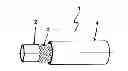
FIG. 1 shows a hose with embedded textile reinforcement; and,
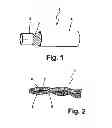
FIG. 2 shows a twisted thread.
DESCRIPTION OF THE PREFERRED EMBODIMENTS OF THE INVENTION
In the case of FIG. 1, the hose 1 includes an internal layer 2 and external layer 4, in each case made of a polymeric material with resilient properties, for example as in the case of polymer variant A. There is textile reinforcement 3 embedded between the internal layer and external layer.
In charge-air hoses, the textile reinforcement made of POD takes the form of a drawn-loop-knitted insert embedded between the internal layer 2 and external layer 4 made of a vulcanized rubber mixture which, as required by temperature and other requirements, is based on CR, HNBR, FKM, AEM, ACM, or silicone rubber. The hose can if necessary have further internal and external layers of a very wide variety of polymer materials, in addition to the drawn-loop-knitted ply and the contiguous elastomer plies.
A charge-air hose is produced by the conventional process in which the individual plies are extruded in succession on an extrusion line in conjunction with a knitting machine, and the knitted insert is introduced at the intended position between the as yet unvulcanized rubber plies.
The vulcanization process is then carried out under the required conditions relating to temperature and time. The materials used in the process can be treated with adhesion promoters in order to improve bonding between the individual layers.
FIG. 2 shows a twisted thread 5, formed from a first thread 6 made of a first textile material 7 and a second thread 8 made of a second textile material 9. Two embodiments of this twisted structure are presented below.
-
- The first textile material 7 and the second textile material 9 consist in each case of POD. The twisted thread 5 therefore consists of POD.
- The first textile material 7 consists of POD and the second textile material 9 consists of PA, for example of PA6.6. The twisted thread 5 here therefore takes the form of twisted hybrid yarn, formed from the first thread 6 made of POD and the second thread 8 made of PA.
It is understood that the foregoing description is that of the preferred embodiments of the invention and that various changes and modifications may be made thereto without departing from the spirit and scope of the invention as defined in the appended claims.
KEY
Part of Description
- 1 Hose
- 2 Internal layer (lining)
- 3 Reinforcement
- 4 External layer (sheathing, outer layer)
- 5 Twisted thread
- 6 First thread
- 7 First textile material
- 8 Second thread
- 9 Second textile material
Claims
What is claimed is:1. An item made of a polymeric material having an embedded reinforcement, comprising or consisting of a textile material, wherein
in the case of a first reinforcement variant, the textile material is selected from a POD group consisting of polyoxadiazole (POD), a POD derivative, and a POD copolymer, or a combination thereof, or
in the case of a second reinforcement variant, the textile material is a textile material combination comprising a member of the POD group consisting of POD, a POD derivative, and a POD copolymer, or a combination thereof, and also of at least one further textile material which does not derive from the POD group, or
in the case of a third reinforcement variant, the textile material comprises a material combination comprising a member of the POD group consisting of POD, a POD derivative, and a POD copolymer, or a combination thereof, and also of at least one further material which does not derive from a textile group.
2. The item as claimed in claim 1, wherein, in the first reinforcement variant, the textile material consists of POD.
3. The item as claimed in claim 1, wherein, in the second reinforcement variant, the textile material is a textile material combination consisting of POD, and also of at least one further textile material which does not derive from the POD group.
4. The item as claimed in claim 1, wherein, in the third reinforcement variant, the textile material comprises a material combination consisting of POD, and also of at least one further material which does not derive from a textile group.
5. The item as claimed in claim 1, wherein, in the second reinforcement variant, the further textile material which does not derive from the POD group is selected from the group consisting of polyamide (PA), polyester (PES), aramid, rayon, polyethylene terephthalate (PET), cotton, staple viscose, polyvinyl alcohol (PVAL), polyvinyl acetal (PVA), polyether ether ketone (PEEK), polyethylene 2,6 naphthalate (PEN), polyphenylene, polyphenylene oxide (PPO), polyphenylene sulfide (PPS), and polyphenylene ether, or a combination thereof.
6. The item as claimed in claim 1, wherein, in the third reinforcement variant, the further material which does not derive from the textile group is selected from the group consisting of metal fibers, carbon fibers, glass fibers, and basalt fibers, or a combination thereof.
7. The item as claimed in claim 1, wherein, in the second or third reinforcement variant, the quantitative proportion of POD, the POD derivative, the POD copolymer or the combination thereof is from 50 to 90% by weight.
8. The item as claimed in claim 1, wherein the embedded reinforcement has been prepared so as to promote adhesion.
9. The item as claimed in claim 1, wherein the embedded reinforcement is present in a filamental form.
10. The item as claimed in claim 9, wherein the filamental form is a monofil, a filament yarn, a stretch-broken yarn, a cord thread, or a twisted thread, or has been formed from staple fibers, from short chopped fibers, or from a pulp.
11. The item as claimed in claim 10, wherein when a twisted or other yarn is present the linear density is from 1000 to 12 000 dtex.
12. The item as claimed in claim 1, wherein the embedded reinforcement takes the form of a sheet-like structure.
13. The item as claimed in claim 12, wherein the sheet-like structure is a woven fabric, woven cord fabric, a ribbon, a knitted fabric, a laid scrim, a braided fabric, a nonwoven, or a felt, or has been formed from parallelized filaments.
14. The item as claimed in claim 1, wherein the item is a hose, an air spring bellows, a compensator, a drive belt, a conveyor belt, or a multilayer web.
15. The item as claimed in claim 14, being a hose intended for pressure and/or dynamic and/or thermal stress.
16. The item as claimed in claim 15, wherein the item is a charge-air hose.
Images & Drawings included:
Sources:
- United States Patent and Trademark Office - verify current appl. status at the USPTO↗
Recent applications in this class:
- » 20250102085 2025-03-27
AIR HOSE - » 20250012383 2025-01-09
TUBULAR LINER, METHOD OF FABRICATION AND USE THEREOF - » 20230026224 2023-01-26
Steam hose with internal liner for chemical cleaning - » 20220290783 2022-09-15
FIRE HOSE WITH REFLECTIVE MARKER - » 20220003339 2022-01-06
Expandable and retractable hose reinforced with hemp - » 20210095795 2021-04-01
Retractable hose based on a dual-material textile - » 20200224800 2020-07-16
Armour for flexible pipe comprising a one-way composite profile section and a reinforcing strip - » 20200072394 2020-03-05
Progressive flex geometry for distribution of dynamic forces within a hose bellows - » 20180051832 2018-02-22
Foldable duct comprising laminated foil on inside and outside - » 20180017191 2018-01-18
Unbalanced Hybrid Cords and Methods for Making on Cable Cording Machines
Recent applications for this Assignee:
- » 20220333725 2022-10-20
HOSE SYSTEM HAVING MEANS FOR DETECTING THE TEMPERATURE INSIDE THE HOSE - » 20210080035 2021-03-18
Barrier layer for hoses - » 20200400252 2020-12-24
Multilayered flexible hose - » 20200080668 2020-03-12
Flexible air conditioning barrier or veneer suction hose - » 20200079001 2020-03-12
Increased rubber-to-nylon adhesion by ozone treatment - » 20170314708 2017-11-02
Conveying Hose - » 20150176739 2015-06-25
Quick connection arrangement for detachably connecting a medium line to a connecting piece - » 20150145243 2015-05-28
Quick connection arrangement for detachably connecting a medium line to a connecting piece - » 20150144219 2015-05-28
Transfer hose, in particular for use at high temperatures - » 20130279892 2013-10-24
Heatable connection apparatus including media-conducting, electrically heatable hoses