Receiving unit in a wireless communication network and method for generating an automatic repeat request feedback message
US20130070686A1
2013-03-21
12/995,716
2008-06-05
✅ Patent granted
US 9,698,943 B2
2017-07-04
WO; PCT/EP2008/056984; 20080605
WO; WO2009/146745; 20091210
Gregory Sefcheck | Jael Ulysse
Harrington & Smith
2030-01-01
Abstract:
The invention relates to a receiving unit in a wireless communication network comprising a processing unit being configured to generate Automatic Repeat request (ARQ) feed-back messages for acknowledgement or negative acknowledgement of received data units in a wireless communication channel. In order to avoid signalling overhead, it is proposed that said processing unit is further configured to delay the generation of Automatic Repeat request (ARQ) feedback messages until the processing unit has recognized irregularities in the data transmission or until the number (C) of delayed Automatic Repeat request (ARQ) feedback messages has reached a threshold value.
Assignee:
- Nokia Solutions and Networks Oy 2,409 🇫🇮 Espoo, Finland
Applicant:
Interested in similar patents?
Get notified when new applications in this technology area are published.
Classification:
H04W72/04 IPC
Local resource management, e.g. wireless traffic scheduling or selection or allocation of wireless resources Wireless resource allocation
H04W84/12 IPC
Network topologies; Hierarchically pre-organised networks, e.g. paging networks, cellular networks, WLAN [Wireless Local Area Network] or WLL [Wireless Local Loop]; Small scale networks; Flat hierarchical networks WLAN [Wireless Local Area Networks]
H04L1/1825 » CPC main
Arrangements for detecting or preventing errors in the information received by using return channel in which the return channel carries supervisory signals, e.g. repetition request signals; Automatic repetition systems, e.g. van Duuren system ; ARQ protocols Adaptation of specific ARQ protocol parameters according to transmission conditions
H04L1/1854 » CPC further
Arrangements for detecting or preventing errors in the information received by using return channel in which the return channel carries supervisory signals, e.g. repetition request signals; Automatic repetition systems, e.g. van Duuren system ; ARQ protocols; Arrangements specific to the receiver end Scheduling and prioritising arrangements
H04L1/1664 » CPC further
Arrangements for detecting or preventing errors in the information received by using return channel in which the return channel carries supervisory signals, e.g. repetition request signals; Details of the supervisory signal the supervisory signal being transmitted together with payload signals; piggybacking
H04L1/1812 » CPC further
Arrangements for detecting or preventing errors in the information received by using return channel in which the return channel carries supervisory signals, e.g. repetition request signals; Automatic repetition systems, e.g. van Duuren system ; ARQ protocols Hybrid protocols
H04W4/00 IPC
Services specially adapted for wireless communication networks; Facilities therefor
H04L1/18 IPC
Arrangements for detecting or preventing errors in the information received by using return channel in which the return channel carries supervisory signals, e.g. repetition request signals Automatic repetition systems, e.g. van Duuren system ; ARQ protocols
H04L1/16 IPC
Arrangements for detecting or preventing errors in the information received by using return channel in which the return channel carries supervisory signals, e.g. repetition request signals
Description
1. FIELD OF THE INVENTION
The invention relates to receiving units in a wireless communication network and to a method for generating automatic repeat request (ARQ) feedback messages for acknowledgement or negative acknowledgement (ACK/NACK) of received data units in a wireless communication channel.
2. BACKGROUND OF THE INVENTION
In packet-based wireless communication networks, automatic repeat request (ARQ) methods are employed to perform error control. These methods employ acknowledgement and time-outs to achieve reliable data transmission. An acknowledgment message sent by the receiving unit to the transmitting unit indicates that the data frame or packet has been correctly received. If the sender does not receive an acknowledgment message before a predetermined time-out, it retransmits the frame or packet until it receives an acknowledgment or exceeds a predefined number of retransmissions. In WiMAX systems according to the IEEE specification 802.16 (“IEEE Standard for Local and Metropolitan Area Networks—Part 16: Air Interface of Fixed Broadband Wireless Access Systems”), ARQ is defined in a MAC layer, which improves the system performance by retransmitting MAC ARQ blocks that have been lost or garbled. ARQ may be enabled on a per-connection basis.
According to the above mentioned standards, the perconnection ARQ shall be specified and negotiated during connection creation. The ARQ feedback information can be sent as a standalone MAC management message on the appropriate basic management connection or it can be piggybacked on an existing connection. The ARQ feedback cannot be fragmented. The frequency of ARQ feedback is not specified in the standard and is left for implementation.
If the ARQ feedback is sent as an independent MAC management message, this message has to be of type 33. In order to give an efficient feedback to expedite the ARQ process, previous attempts have assumed that the ARQ receiving unit would send a feedback message after every frame. However, a high feedback frequency leads to an increased radio resource occupation. Especially when the ARQ direction is downlink, which is the usual scenario in current mobile networks, the feedback message has to be sent in a standalone MAC message with bandwidth request contention unless there is a way to piggyback the feedback information. On the other hand, if the feedback frequency is too low, the ARQ transmitter may be blocked because of the lack of feedback in time.
3. SUMMARY OF THE INVENTION
The invention tries to provide a receiving unit and a method for generating ARQ feedback messages being capable for suitably selecting and adapting the feedback frequency of the ARQ scheme. The invention seeks to provide an adaptive feedback method and a device implementing such a method, which is suitable for reducing the transmission overhead without deteriorating the ARQ performance.
The invention starts from a receiving unit in a wireless communication network comprising a processing unit being configured to generate automatic repeat request (ARQ) feedback messages for acknowledgment or negative acknowledgment of received data units in a wireless communication channel.
According to a first aspect of the invention, it is proposed that the processing unit is further configured to delay the generation of automatic repeat request (ARQ) feedback messages until the processing unit has recognized the irregularities in the data transmission or until the number of delayed automatic repeat request feedback messages has reached a predetermined threshold value. Accordingly, the processing unit generates the ARQ feedback messages only if the necessity to do so is apparent. The result is a variable ARQ feedback frequency, which is adapted to the circumstances, in particular to the channel quality.
If the channel quality is poor, many irregularities will be detected, such that many feedback messages will be generated. On the other hand, if no irregularities occur, only a minimum number of feedback messages determined by the threshold value will be generated, such that the time-out will not be exceeded in the transmitting unit and that an unnecessary retransmission may be avoided.
Moreover, it is proposed that the processing unit is configured to store a variable pointing at the highest numbered ARQ block for which an ARQ feedback message has been sent out. Due to this variable, the processing unit can always keep track on which data packets have already been acknowledged in a very simple way, even if the feedback frequencies are varying.
Moreover, it is proposed that the irregularities recognized by the processing unit include missing or erroneous data blocks in a receiving block sequence. This may result in a retransmission with minimum delay, while the transmission overhead may be reduced.
The retransmission delay may be even further reduced, if the processing unit is further configured to read a connection identification (CID) from a downlink MAP and recognizes an irregularity, if the MAC PDUs corresponding to the connection identification (CID) are not correctly received. This applies in particular to the case of downlink traffic and the receiver may give a fast response to the error before receiving the latter correct PDU and detecting the missing gap.
If the processing unit is further configured to generate and send out an automatic repeat request feedback message upon successfully detecting a piggyback opportunity in a reverse channel, the signalling overhead relating to a bandwidth request contention for a standalone MAC message may be avoided. Here and in the following, the expression “piggyback” refers to the inclusion of the feedback message into the data field of a further message. In a particularly favourable embodiment of the invention, the processing unit is configured to piggyback an automatic repeat request feedback message with a TCP ACK message in a reverse channel, which is always generated, if the cannel is TCP-based.
The merits of the invention are particularly apparent, if the invention is applied to WiMAX systems.
According to a further aspect of the invention, a method for generating an automatic repeat request (ARQ) feedback message for acknowledgment (ACK) or negative acknowledgment (NACK) of received data units in a wireless communication channel is proposed. The method is executed by a receiving unit in a wireless communication network.
One of the central aspects of the method is that the generation of automatic repeat request feedback messages is delayed until a processing unit of the receiving units has recognized irregularities in the data transmission or until the number of delayed automatic repeat request feedback messages has reached a threshold value.
Further characterizing features of the method according to the invention correspond to the characteristic features of the above described receiving unit the reader may refer to.
Further characterizing features of the invention and advantages thereof will be come apparent from the below description of the further embodiments of the invention. The drawings and the description thereof relate to a specific combination of the characterizing features of the invention. The invention is not limited to this combination and the skilled person will easily be able to find other combinations and sub-combinations of the characteristic features described below without departing from the general idea of the invention.
4. BRIEF DESCRIPTION OF THE DRAWINGS
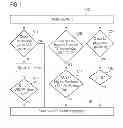
FIG. 1 shows a flowchart of a method for generating ARQ feedback messages implemented in a receiving unit in a wireless communication network.
FIG. 2 shows a wireless communication network with a schematic representation of the ARQ feedback method.
5. DETAILED DESCRIPTION OF ONE EMBODIMENT OF THE INVENTION
FIG. 1 shows a flowchart illustrating a method for generating an automatic repeat request (ARQ) feedback message for acknowledgement or negative acknowledgement of received data units in a wireless communication channel. The method is implemented in a processing unit 18 of a receiving unit 12 in the wireless communication network.
As shown in FIG. 1, there are multiple possible events triggering the step S10 in which an automatic repeat request (ARQ) feedback message is generated. FIG. 2 gives an overview of the wireless communication network including the receiving unit 12 with its processing unit 18 and a sending/transmitting unit 10 connected with a core network 11.
The processing unit 18 keeps track of the number of continuously received correct blocks from a forward data channel 14 using a counter C which is initiated in a step S12. The ACK feedbacks of the correctly received blocks are buffered in a memory of the receiving unit 12.
In a step S14, which is initiated when a new MAC protocol data unit (MPDU) is received, the processing unit 18 checks if a missing gap in an ARQ sequence is detected in the receiving window. If this is the case, the processing unit assesses the detection of an irregularity and immediately jumps to a step S10 in order to send out an ARQ feedback message including the negative acknowledgement. If no missing gap is detected in the ARQ sequence, the counter C is updated in a step S16 and the processing unit 18 checks in a step S18 if the counter exceeds a predetermined threshold. The threshold value is determined as a product of a factor a with a value between 0 and 1 (preferably 0,5) and the ARQ window size. If the counter exceeds this threshold value, the process jumps to step S10 and sends out an ARQ feedback message immediately.
In a step S20, which is only executed when the ARQ data transmission is downlink, the processing unit 18 of the receiving unit 12 reads the transport connection identification (CID) in the downlink MAP and compares it with the corresponding MAC PDUs it has received in the downlink communication channel 14. If the processing unit 18 identifies a discrepancy between the transport CID and the downlink MAP (it assesses an irregularity in the data transmission and checks in a step S22 if the variable ARQ_RX_Highest_Feedback, which points to the highest numbered ARQ block whose feedback has been sent out, falls short of the variable ARQ_RX_Window_Start-1, wherein the variable ARQ_RX_Window_Start is specified in the IEEE 802.16 standard which is included by reference in this regard. This variable always points to the lowest numbered ARQ block that has not been received or has been received with errors. If this is the case, this means that the detected discrepancy can be resolved only with a retransmission of the corresponding data units and the process jumps to step S10 in order to immediately send out an ARQ feedback message.
In a step S24, the processing unit 18 checks for piggyback opportunities in the reverse channel. In particular, the processing unit 18 checks whether a TCP ACK message 16 (cf. FIG. 2) will be sent out and piggybacks the ARQ feedback message to the TPC ACK message 16 if it is found in a step S26 that a number C>0 of ARQ feedback messages are delayed.
The result of the procedure illustrated in FIG. 1 is a highly adaptive feedback frequency of the ARQ scheme. If regularities are detected in steps S14 or S20, ARQ feedback messages are send more or less immediately and the detection of piggyback opportunities in step S20 enables an highly effective use of resources.
The method according to the invention is illustrated in the above in the example of a Wimax system in which the feedback frequency is not specified nor standardized and the piggyback mechanism can be supported. In general, the concept of the invention can be applied to telecommunication systems in which the ARQ feedback frequency is not specified, in which there is no special channel for the ARQ feedback and in which the piggyback mechanism for the ARQ feedback by data PDU is supported.
It is emphasized that the method according to the invention can be implemented without modifying the proceedings at the transmitting unit 10 and without modifying the format of the ACK/NACK messages for the ARQ feedback. These messages can correspond to the standard specification IEEE 802.16 or IEEE 802.16 (versions 2004 and 2005).
Claims
1. Receiving unit in a wireless communication network comprising a processing unit being configured to generate Automatic Repeat request (ARQ) feedback messages for acknowledgement or negative acknowledgement of received data units in a wireless communication channel, said processing unit is further configured to delay the generation of Automatic Repeat request (ARQ) feedback messages until the processing unit has recognized irregularities in the data transmission or until the number (C) of delayed Automatic Repeat request (ARQ) feedback messages has reached a threshold value.
2. Receiving unit according to claim 1, where said processing unit is configured to store a variable pointing at the highest numbered ARQ block for which an ARQ feedback message has been sent out.
3. Receiving unit according to claim 1, where said irregularities recognized by the processing unit include missing or erroneous data blocks in a receiving block sequence.
4. Receiving unit according to claim 1, the processing unit is further configured to read a connection identification (CID) from a downlink MAP and recognizes an irregularity if the MAC PDUs corresponding the connection identification are not correctly received.
5. Receiving unit according to claim 1, the processing unit is further configured to generate and send out an Automatic Repeat request (ARQ) feedback message upon successfully detecting a piggyback opportunity in a reverse channel.
6. Receiving unit according to claim 1, the processing unit is further configured to piggyback an Automatic Repeat request (ARQ) feedback message with a TCP ACK message in a reverse channel.
7. Receiving unit according to claim 1, where the wireless communication channel is a Wimax channel.
8. A method comprising:
generating an Automatic Repeat request (ARQ) feedback message for acknowledgement or negative acknowledgement of received data units in a wireless communication channel by a receiving unit in a wireless communication network, where the generation of Automatic Repeat request (ARQ) feedback messages is delayed until a processing unit of the receiving unit has recognized irregularities in the data transmission or until the number (C) of delayed Automatic Repeat request (ARQ) feedback messages has reached a threshold value.
9. Method according to claim 8, further including the step of storing a variable pointing at the highest numbered ARQ block for which an ARQ feedback message has been sent out.
10. Method according to claim 8, further comprising the steps of reading a connection identification (CID) from a downlink MAP and recognizing an irregularity if the MAC PDUs corresponding the connection identification are not correctly received.
11. Method according to claim 8, further comprising the steps detecting a piggyback opportunity in a reverse channel and of generating and sending out an Automatic Repeat request (ARQ) feedback message upon successfully detecting said piggyback opportunity.
12. Method according to claim 8, further comprising the steps of piggy backing an Automatic Repeat request (ARQ) feedback message with a TCP ACK message in a reverse channel.
Images & Drawings included:


Sources:
- United States Patent and Trademark Office - verify current appl. status at the USPTO↗
Recent applications in this class:
- » 20250274227 2025-08-28
Re-transmission of a transmitted concatenation packet by a sending device, especially a base station device or a terminal device of a telecommunication network - » 20250253982 2025-08-07
SYSTEMS, METHODS, AND DEVICES FOR ARBITRATED AUTOMATIC REPEAT REQUEST (ARQ) - » 20250202628 2025-06-19
TECHNIQUES FOR DETERMINING A FEEDBACK IDENTIFIER IN AN INACTIVE COMMUNICATION PERIOD - » 20250158751 2025-05-15
SIDELINK RESOURCE SENSING USING FEEDBACK CHANNELS - » 20250150212 2025-05-08
SIDELINK OPERATION IN UNLICENSED SPECTRUM - » 20240348376 2024-10-17
SYSTEMS AND METHODS FOR ESTIMATING A PACKET DELAY MEASUREMENT - » 20240340114 2024-10-10
DETECTING ABSENCE OF HYBRID AUTOMATIC REPEAT REQUEST FEEDBACK - » 20240340113 2024-10-10
TRANSMISSION OF HYBRID AUTOMATIC REPEAT REQUEST FEEDBACK - » 20240333436 2024-10-03
ADAPTIVE REPETITION IN WIRELESS COMMUNICATION SYSTEMS - » 20240297743 2024-09-05
RADIO NETWORK NODE, USER EQUIPMENT AND METHODS FOR MULTI-LEVEL ACK/NACK FEEDBACK
Recent applications for this Assignee:
- » 20250294462 2025-09-18
DISTORTION REDUCING PRECODING - » 20250279947 2025-09-04
NETWORK- AND COMPUTE-AWARE SERVICE CONTACT POINT SELECTION - » 20250279875 2025-09-04
PHASE ESTIMATION FOR CLOCK-AND-DATA RECOVERY INITIALISATION IN AN OPTICAL RECEIVER OF A PASSIVE OPTICAL NETWORK - » 20250274393 2025-08-28
RESOURCE SHARING AMONG NETWORK GATEWAYS IN SOFTWARE-DEFINED NETWORKS - » 20250274376 2025-08-28
MULTI-THREADED SIMULATOR FOR PERFORMANCE BENCHMARKING IN SOFTWARE-DEFINED NETWORKS - » 20250267381 2025-08-21
METHOD AND APPARATUS FOR WAKING UP AN ONU - » 20250267125 2025-08-21
EFFICIENT, RESOURCE-AWARE SECURITY OPERATIONS IN SOFTWARE-DEFINED NETWORKS - » 20250261169 2025-08-14
COMMUNICATION DEVICE, METHOD, APPARATUS, AND COMPUTER READABLE STORAGE MEDIUM - » 20250260647 2025-08-14
CACHE-ASSISTED SERVICE CONTACT INSTANCE SELECTION FOR COMPUTING-AWARE TRAFFIC STEERING NETWORKS - » 20250254594 2025-08-07
Mobile Terminal Handover Decision Optimizations