Motor driven compressor
US20130108485A1
2013-05-02
13/652,841
2012-10-16
✅ Patent granted
US 9,879,666 B2
2018-01-30
-
-
Devon Kramer | Lilya Pekarskaya
Sughrue Mion, PLLC
2033-12-04
Abstract:
A motor-driven compressor includes a compression mechanism compressing refrigerant gas, an electric motor driving the compression mechanism, a housing made of a thermally conductive material and accommodating the compression mechanism and the electric motor and an inverter assembly controlling rotation of the electric motor. The inverter assembly includes an elastic member made of a thermally conductive material and disposed in contact with the housing, a circuit board supported directly by the elastic member, an electronic part mounted on the circuit board and a base member made of a thermally conductive material, fixed to the housing and having a closed end. The base member fixes the electronic part. The base member and the housing cooperate to form an accommodation space that accommodates the elastic member, the circuit board and the electronic part. The closed end of the base member and the elastic member forms therebetween a space.
Inventors:
- Yusuke KINOSHITA 21 🇯🇵 Aichi-ken, Japan
- KABUSHIKI KAISHA TOYOTA JIDOSHOKKI 17 🇯🇵 Kariya-shi, Japan
- Ken SUITOU 22 🇯🇵 Aichi-ken, Japan
- Tsuyoshi YAMAGUCHI 9 🇯🇵 Aichi-ken, Japan
Assignee:
- KABUSHIKI KAISHA TOYOTA JIDOSHOKKI 1,014 🇯🇵 Kariya-shi, Japan
- KABUSHIKI KAISHA TOYOTA JIDOSHOKKI 1 🇯🇵 Aich-ken, Japan
Applicant:
Interested in similar patents?
Get notified when new applications in this technology area are published.
Classification:
F04B39/121 » CPC main
Component parts, details, or accessories, of pumps or pumping systems specially adapted for elastic fluids, not otherwise provided for in, or of interest apart from, groups -; Casings; Cylinders; Cylinder heads; Fluid connections Casings
F04C23/008 » CPC further
Combinations of two or more pumps, each being of rotary-piston or oscillating-piston type, specially adapted for elastic fluids; Pumping installations specially adapted for elastic fluids; Multi-stage pumps specially adapted for elastic fluids Hermetic pumps
F04C18/0215 » CPC further
Rotary-piston pumps specially adapted for elastic fluids of arcuate-engagement type, i.e. with circular translatory movement of co-operating members, each member having the same number of teeth or tooth-equivalents both members having co-operating elements in spiral form where only one member is moving
H02K11/33 » CPC further
Structural association of dynamo-electric machines with electric components or with devices for shielding, monitoring or protection; Structural association with control circuits or drive circuits Drive circuits, e.g. power electronics
F04C2240/803 » CPC further
Components; Other components Electric connectors or cables; Fittings therefor
F04C2240/808 » CPC further
Components; Other components Electronic circuits (e.g. inverters) installed inside the machine
F04B27/14 » CPC further
Multi-cylinder pumps specially adapted for elastic fluids and characterised by number or arrangement of cylinders having cylinders coaxial with, or parallel or inclined to, main shaft axis Control
F04B35/04 IPC
Piston pumps specially adapted for elastic fluids and characterised by the driving means to their working members, or by combination with, or adaptation to, specific driving engines or motors, not otherwise provided for the means being electric
H02K9/22 » CPC further
Arrangements for cooling or ventilating by solid heat conducting material embedded in, or arranged in contact with, the stator or rotor, e.g. heat bridges
F04B39/06 » CPC further
Component parts, details, or accessories, of pumps or pumping systems specially adapted for elastic fluids, not otherwise provided for in, or of interest apart from, groups - Cooling; Heating; Prevention of freezing
H02K5/225 » CPC further
Casings; Enclosures; Supports; Casings or enclosures characterised by the shape, form or construction thereof; Auxiliary parts of casings not covered by groups -, e.g. shaped to form connection boxes or terminal boxes Terminal boxes or connection arrangements
H02K5/18 » CPC further
Casings; Enclosures; Supports; Casings or enclosures characterised by the shape, form or construction thereof with ribs or fins for improving heat transfer
F04C2270/12 » CPC further
Control; Monitoring or safety arrangements Vibration
F04B39/12 IPC
Component parts, details, or accessories, of pumps or pumping systems specially adapted for elastic fluids, not otherwise provided for in, or of interest apart from, groups - Casings; Cylinders; Cylinder heads; Fluid connections
F04C23/00 IPC
Combinations of two or more pumps, each being of rotary-piston or oscillating-piston type, specially adapted for elastic fluids; Pumping installations specially adapted for elastic fluids; Multi-stage pumps specially adapted for elastic fluids
F04C18/02 IPC
Rotary-piston pumps specially adapted for elastic fluids of arcuate-engagement type, i.e. with circular translatory movement of co-operating members, each member having the same number of teeth or tooth-equivalents
H02K29/08 IPC
Motors or generators having non-mechanical commutating devices, e.g. discharge tubes or semiconductor devices with position sensing devices using magnetic effect devices, e.g. Hall-plates, magneto-resistors
F04C29/04 » CPC further
Component parts, details or accessories of pumps or pumping installations, not provided for in groups - Heating; Cooling ; Heat insulation
H02K5/22 IPC
Casings; Enclosures; Supports; Casings or enclosures characterised by the shape, form or construction thereof Auxiliary parts of casings not covered by groups -, e.g. shaped to form connection boxes or terminal boxes
Description
BACKGROUND OF THE INVENTION
The present invention relates to a motor-driven compressor that includes an inverter assembly.
Generally, a motor-driven compressor includes a compression mechanism compressing refrigerant gas, an electric motor driving the compression mechanism and an inverter assembly controlling the rotation of the electric motor. The inverter assembly has therein a circuit board on which electronic parts forming an inverter circuit are mounted.
During the operation of the motor-driven compressor, the electronic parts mounted on the circuit board of the inverter assembly generate heat and the operation of the compression mechanism causes the circuit board to be vibrated. For protecting the electronic parts on the circuit board from such heat and vibration, the inverter assembly is disposed on the outer surface of a compressor housing that is adjacent to a passage through which low-temperature and low-pressure refrigerant gas just introduced into the compressor housing flows and, additionally, thermally conductive and elastic resin is provided in the inverter assembly. In operation of the motor-driven compressor, the heat generated by the electronic parts is transferred through the resin to the housing and released therefrom. The vibration caused by the compression mechanism is absorbed by the resin.
Japanese Patent Application Publication 2004-251161 discloses a motor-driven compressor whose inverter assembly is mounted on the outer surface of the compressor housing adjacent to a passage of low-temperature and low-pressure refrigerant gas. Furthermore, a support member made of resin is interposed between the closed end of the inverter assembly and a circuit board in the inverter assembly and additionally a thermally conductive and elastic rubber sheet is interposed between electric parts mounted on the circuit board and the outer surface of the compressor housing. During the operation of the motor-driven compressor, the heat generated by the electric parts is transferred through the thermally conductive and elastic rubber sheet to the outer surface of the compressor housing and released therefrom and the vibration caused by the compression mechanism is absorbed by the thermally conductive and elastic rubber sheet.
In a conventional case where resin is provided in the entire interior of the inverter assembly of the compressor, a large amount of resin need be used and an air hole be formed through housing of the inverter assembly for preventing pressure change in the inverter assembly occurring due to temperature increase, with the result that material and the manufacturing costs of the inverter assembly increase. In the case of the inverter assembly of the motor-driven compressor according to the above Publication which uses the support member made of resin and the thermally conductive and elastic rubber sheet, the heat generated by the electronic parts can be released to the compressor housing through the rubber sheet, but the heat transferred from the electronic parts to the circuit board can not be released to the compressor housing, so that high radiation efficiency can not be achieved.
The present invention is directed to providing a motor-driven compressor with an inverter assembly that is less costly than heretofore and offers high radiation performance and vibration resistance.
SUMMARY OF THE INVENTION
A motor-driven compressor includes a compression mechanism compressing refrigerant gas, an electric motor driving the compression mechanism, a housing made of a thermally conductive material and accommodating the compression mechanism and the electric motor and an inverter assembly controlling rotation of the electric motor. The inverter assembly includes an elastic member made of a thermally conductive material and disposed in contact with the housing, a circuit board supported directly by the elastic member, an electronic part mounted on the circuit board and a base member made of a thermally conductive material, fixed to the housing and having a closed end. The base member fixes the electronic part. The base member and the housing cooperate to form an accommodation space that accommodates the elastic member, the circuit board and the electronic part. The closed end of the base member and the elastic member forms therebetween a space.
Other aspects and advantages of the invention will become apparent from the following description, taken in conjunction with the accompanying drawings, illustrating by way of example the principles of the invention.
BRIEF DESCRIPTION OF THE DRAWINGS
The features of the present invention that are believed to be novel are set forth with particularity in the appended claims. The invention together with objects and advantages thereof, may best be understood by reference to the following description of the presently preferred embodiments together with the accompanying drawings in which:
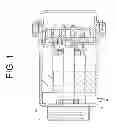
FIG. 1 is a longitudinal sectional view of a motor-driven compressor according to a preferred embodiment of the present invention;
FIG. 2 is a schematic sectional view showing the internal structure of an inverter assembly of the motor-driven compressor of FIG. 1; and
FIG. 3 is a schematic sectional view showing the internal structure of an inverter assembly of a motor-driven compressor according to alternative embodiment of the present invention.
DETAILED DESCRIPTION OF THE PREFERRED EMBODIMENTS
The following will describe the embodiments of the motor-driven compressor according to the present invention with reference to the accompanying drawings. As shown in FIG. 1, the motor-driven compressor is generally designated by numeral 1 and includes a housing 2, a compression mechanism 3 compressing refrigerant gas, an electric motor 4 driving the compression mechanism 3 and an inverter assembly 5 controlling the electric motor 4. The compression mechanism 3 and the electric motor 4 are accommodated in the housing 2 and the inverter assembly 5 is fixedly mounted to outer surface 2A of the housing 2. The housing 2 is made of a thermally conductive material such as an aluminum alloy and has formed therethrough an inlet 6. A rear housing that has formed therethrough an outlet 7 is joined to the housing 2.
Referring to FIG. 1, low-temperature and low-pressure refrigerant gas drawn in through the inlet 6 flows through the electric motor 4 and into the compression mechanism 3 to be compressed therein. The refrigerant gas thus compressed is increased in temperature and pressure and discharged through the outlet 7. The inverter assembly 5 is fixed to the outer surface 2A of the housing 2 that is adjacent to a passage of low-temperature and low-pressure refrigerant gas in the housing 2.
As shown in FIG. 2, the inverter assembly 5 includes a base member 8 made of a thermally conductive material such as an aluminum alloy. The base member 8 includes a closed end 8A remote from the housing 2, a peripheral wall 8B and an opened end 8C adjacent to the housing 2. With the opened end 8C of the base member 8 fixed to the outer surface 2A of the housing 2, the closed end 8A, the peripheral wall 8B, the opened end 8C and the outer surface 2A of the housing 2 cooperate to define an accommodation space 9.
The inverter assembly 5 further includes a circuit board 12 disposed in the accommodation space 9. The circuit board 12 has electronic parts 10, 11 mounted on the first surface 12A of the circuit board 12 that faces the closed end 8A of the base member 8. The electronic parts 10, 11 of the circuit board 12 are fixed to the closed end 8A of the base member 8 through thermally conductive glue 14. As shown in FIG. 2, a space 13 is formed between the first surface 12A of the circuit board 12 and the closed end 8A of the base member 8.
An elastic member 15 made of a thermally conductive gel material, e.g. silicon, is provided between the second surface 12B of the circuit board 12 that faces the outer surface 2A of the housing 2 and the outer surface 2A of the housing 2. In other words, the elastic member 15 is in direct contact with the circuit board 12 and the housing 2. In the assembling of the inverter assembly 5, the elastic member 15 that is fluid in its initial state is poured into between the second surface 12B of the circuit board 12 that faces the outer surface 2A of the housing 2 and the outer surface 2A of the housing 2 and allowed to be cured into an elastic gel state over time, with the result that the circuit board 12 is supported directly by the elastic member 15.
The following will describe the operation of the inverter assembly 5 of the motor-driven compressor 1. During the operation of the motor-driven compressor 1, the heat generated by the electronic parts 10, 11 and the circuit board 12 is transferred from the second surface 12B of the circuit board 12 to the outer surface 2A of the housing 2 through the elastic member 15. As described earlier, the inverter assembly 5 is fixed to the outer surface 2A of the housing 2 that is adjacent to a passage through which low-temperature and low-pressure refrigerant gas flows, so that the heat generated by the electronic parts 10, 11 and the circuit board 12 is released from the outer surface 2A of the housing 2. The heat of the electronic parts 10, 11 is also transferred to the outer surface 2A of the housing 2 through the glue 14 that is made of a thermally conductive material, the closed end 8A and the peripheral wall 8B of the base member 8 and released from the outer surface 2A of the housing 2. Additionally, the vibration caused by the compression mechanism 3 is absorbed by the elastic member 15.
In the inverter assembly 5 of the motor-driven compressor 1 according to the above embodiment, the thermally conductive elastic member 15 is provided in the space between the second surface 12B of the circuit board 12 and the outer surface 2A of the housing 2. The heat generated by the electronic parts 10, 11 and the circuit board 12 is transferred through the thermally conductive elastic member 15 to the outer surface 2A of the housing 2 and released therefrom and the vibration caused by the compression mechanism 3 is absorbed by the elastic member 15. Thus, the inverter assembly 5 has high radiation performance and vibration resistance.
Additionally, the elastic member 15 is provided between the second surface 12B of the circuit board 12 and the outer surface 2A of the housing 2, but the space 13 is formed between the first surface 12A of the circuit board 12 and the closed end 8A of the base member 8. This structure of the inverter assembly 5 reduces the amount of the elastic member 15 for use and dispenses with an air hole allowing communication between the accommodation space 9 and the outside air for reducing the pressure change inside the inverter assembly 5, thereby reducing the cost of the inverter assembly 50.
Furthermore, the base member 8 is made of a thermally conductive material such as an aluminum alloy and the electronic parts 10, 11 mounted on the first surface 12A of the circuit board 12 are fixed to the closed end 8A of the base member 8 through the thermally conductive glue 14. Therefore, the heat generated by the electronic parts 10, 11 is also transferred through the glue 14, the closed end 8A and the peripheral wall 8B to the outer surface 2A of the housing 2 and released therefrom, so that radiation performance of the inverter assembly 50 is improved further.
A layer of gel, such as “α-gel” (registered mark) that is in a gel in its original state may serve as the thermally conductive elastic member 15. The use of “α-gel” as the elastic member 15 dispenses with the curing process that is required in a case where the conductive and elastic member 15 is made of a material such as silicon that is fluid in its initial state and cured into an elastic gel state over time.
The following will describe an alternative embodiment of the inverter assembly with reference to FIG. 3. The inverter assembly is generally designated by numeral 205. The inverter assembly 205 includes the electronic parts 10, 11, the circuit board 12 and the thermally conductive elastic member 215. The first surface 12A of the circuit board 12 remote from the housing 2 and the side surface 12C of the circuit board 12 are completely covered with the elastic member 215. In other words, the circuit board 12 is completely embedded in the elastic material 215. The space 213 is formed between the surface of the elastic member 215 and the closed end 8A of the base member 8. In this case, the heat generated by the electronic parts 10, 11 and the circuit board 12 is transferred to the outer surface 2A of the housing 2 through the thermally conductive elastic member 215 more efficiently than in the previous embodiment, so that the radiation performance of the inverter assembly 205 is further improved. Additionally, the circuit board 12 is completely covered with the elastic member 215, so that the vibration resistance of the inverter assembly 205 is also improved over the inverter assembly 5 according to the previous embodiment.
In the above embodiments, the thermally conductive glue 14 may be provided by an adhesive sheet that is made of a thermally conductive material.
Claims
What is claimed is:1. A motor-driven compressor comprising:
a compression mechanism compressing refrigerant gas;
an electric motor driving the compression mechanism;
a housing made of a thermally conductive material and accommodating the compression mechanism and the electric motor; and
an inverter assembly controlling rotation of the electric motor, wherein the inverter assembly includes:
an elastic member made of a thermally conductive material and disposed in contact with the housing;
a circuit board supported directly by the elastic member;
an electronic part mounted on one surface of the circuit board whose opposite surface faces the housing; and
a base member made of a thermally conductive material, fixed to the housing and having a closed end, the base member fixing the electronic part, wherein the base member and the housing cooperate to form an accommodation space that accommodates the elastic member, the circuit board and the electronic part, wherein the closed end of the base member and the elastic member forms therebetween a space.
2. The motor-driven compressor according to claim 1, wherein the inverter assembly further includes glue made of a thermally conductive material or an adhesive sheet made of a thermally conductive material, wherein the electronic part is fixed to the base member through the glue or the adhesive sheet.
3. The motor-driven compressor according to claim 1, wherein the elastic member is made of a gel material.
4. The motor-driven compressor according to claim 1, wherein the elastic member is made of a layer of gel.
5. The motor-driven compressor according to claim 1, wherein the circuit board is completely covered with the elastic member.
Images & Drawings included:



Sources:
- United States Patent and Trademark Office - verify current appl. status at the USPTO↗
Similar patent applications:
- » 20230296113
Motor-driven compressor, housing structure for motor-driven compressor, and method of installing soundproof cover on motor-driven compressor - » 20130078123
Electric motor for a motor-driven compressor and said motor-driven compressor - » 20230307985
Motor-driven compressor and housing for motor-driven compressor - » 20200343783
Motor-driven compressor and method of assembling motor-driven compressor - » 20120230849
Motor-driven compressor and mounting method for motor-driven compressor - » 20230107796
Motor-driven compressor and method for manufacturing motor-driven compressor - » 20120237372
MOTOR-DRIVEN COMPRESSOR AND WIRING METHOD FOR MOTOR-DRIVEN COMPRESSOR - » 20190285069
In-vehicle motor-driven compressor and method for controlling in-vehicle motor-driven compressor - » 20160215790
Compressor diffuser and shroud for a motor driven compressor - » 20160215791
Compressor diffuser and shroud for a motor driven compressor
Recent applications in this class:
- » 20130251550 2013-09-26
Compressor baseplate with stiffening ribs for increased oil volume and rail mounting without spacers - » 20130224052 2013-08-29
Method of manufacturing a housing - » 20130108486 2013-05-02
MOTOR-DRIVEN COMPRESSOR - » 20130057120 2013-03-07
Hermetic electric compressor - » 20130049550 2013-02-28
Inverter-integrated electric compressor - » 20130048102 2013-02-28
Gasket and motor-driven compressor - » 20130028730 2013-01-31
COMPRESSOR
Recent applications for this Assignee:
- » 20250285802 2025-09-11
TRANSFORMER MODULE - » 20250282589 2025-09-11
FORKLIFT TRUCK - » 20250276883 2025-09-04
INDUSTRIAL VEHICLE - » 20250274019 2025-08-28
ELECTRIC MOTOR AND MOTOR-DRIVEN COMPRESSOR - » 20250274017 2025-08-28
ELECTRIC COMPRESSOR - » 20250264106 2025-08-21
ELECTRIC COMPRESSOR - » 20250260290 2025-08-14
ELECTRIC COMPRESSOR - » 20250237223 2025-07-24
MOTOR-DRIVEN COMPRESSOR - » 20250223147 2025-07-10
CARGO HANDLING CONTROL DEVICE OF FORKLIFT TRUCK - » 20250223144 2025-07-10
CARGO HANDLING CONTROL DEVICE OF FORKLIFT TRUCK