Double-lens ski goggles
US20130128217A1
2013-05-23
13/812,775
2011-05-25
✅ Patent granted
US 9,618,775 B2
2017-04-11
WO; PCT/EP2011/058541; 20110525
WO; WO2012/013387; 20120202
Huy K Mai | Daniele Manikeu
Tutunjian & Bitetto, P.C.
2031-05-25
Abstract:
Ski goggles of the type including a frame of flexible material for supporting an optical system including two mutually facing lenses connected together by a seal gasket which with said lenses forms an air chamber, the gasket being provided with at least one hole which connects the air chamber to the outside and houses a material which is permeable to air but not to water, wherein the gasket forms a cylindrical seat which is filled with said material and communicates with the outside via at least a channel.
Assignee:
- ANOMALY ACTION SPORTS S.R.L. 2 🇮🇹 Mestre (Venezia), Italy
- ANOMALY ACTION SPORTS S.R.L. 2 🇮🇹 Mestre (Venice), Italy
Applicant:
Interested in similar patents?
Get notified when new applications in this technology area are published.
Classification:
G02C11/08 » CPC main
Non-optical adjuncts; Attachment thereof Anti-misting means, e.g. ventilating, heating ; Wipers
A61F9/028 » CPC further
Methods or devices for treatment of the eyes; Devices for putting-in contact lenses; Devices to correct squinting; Apparatus to guide the blind; Protective devices for the eyes, carried on the body or in the hand; Goggles Ventilation means
A61F9/025 » CPC further
Methods or devices for treatment of the eyes; Devices for putting-in contact lenses; Devices to correct squinting; Apparatus to guide the blind; Protective devices for the eyes, carried on the body or in the hand; Goggles Special attachment of screens, e.g. hinged, removable; Roll-up protective layers
A61F9/02 IPC
Methods or devices for treatment of the eyes; Devices for putting-in contact lenses; Devices to correct squinting; Apparatus to guide the blind; Protective devices for the eyes, carried on the body or in the hand Goggles
A61F9/027 » CPC further
Methods or devices for treatment of the eyes; Devices for putting-in contact lenses; Devices to correct squinting; Apparatus to guide the blind; Protective devices for the eyes, carried on the body or in the hand; Goggles Straps; Buckles; Attachment of headbands
Description
TECHNICAL FIELD
The present invention relates to double-lens ski goggles.
DESCRIPTION OF RELATED ART
Ski goggles are known consisting of a flexible rubber frame which adapts to the skier's face and supports a coloured or non-coloured lens.
If used in very cold climates, the lenses tend to mist up as a result of the skier's body or breath temperature during use, especially when the skier is resting.
To prevent the lenses from misting up, it is known to:
-
- subject the lens inner surface to anti-misting chemical treatment, or
- provide the optical system with an inner and an outer lens which face each other and are joined together at their perimetral edge by a gasket, to form therebetween an inner space which serves as a heat insulating layer.
These anti-misting treatments present advantages and disadvantages.
The chemical treatment produces an anti-misting effect when the lens has a surface temperature of about 0° C. or higher, but is not satisfactorily effective in an environment in which the surface temperature falls to 0° or lower because the mist forms water droplets which freeze on the lens surface. Moreover, this treatment has little effect at any lens temperature, seeing the low insulating power of plastic having a thickness of just a fraction of a millimetre.
If the optical system comprises two flat lenses (or curved to follow the face profile) and an internal heat insulating space, the lenses are more effective in thermally insulating the goggles, so that the lenses mist up only in more severe circumstances, such as intense perspiration or very cold temperatures.
However these lenses have the drawback that the pressure variation within the internal space between the two lenses, due to atmospheric pressure or temperature change during a descent, deforms the lenses and distorts the visual field. For example, when a lens system is used with the internal space well sealed, a pressure difference arises between the inside and outside of the lenses which subjects the lenses to an overall compressive deformation and distorts the visual field.
To obviate this drawback it has been proposed to perforate one of the two lenses (the inner) and to apply to the hole a diaphragm which is permeable to air but not to water.
However this solution has certain drawbacks, and in particular:
-
- laborious machining with cost increase,
- possible damage to the goggles diaphragm during cleaning,
- a certain discomfort for the skier due to the presence of the hole with the diaphragm within the visual field,
- lens distortion due to the hole made to insert the diaphragm.
SUMMARY OF THE INVENTION
All these drawbacks are eliminated according to the invention by ski goggles as described herein.
BRIEF DESCRIPTION OF THE DRAWINGS
The present invention is further clarified hereinafter with reference to the accompanying drawings, in which:
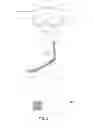
FIG. 1 shows a front view of a pair of ski goggles according to the invention,
FIG. 2 is a detailed plan view showing the two superposed lenses joined by the gasket,
FIG. 3 is a section therethrough on the line of FIG. 2,
FIG. 4 is a section therethrough on the line IV-IV of FIG. 2,
FIG. 5 shows a section through a variant taken on the line IV-IV of FIG. 2,
FIG. 6 is a plan view of two superposed lenses using a different system, and
FIG. 7 is a section therethrough on the line VII-VII of FIG. 6.
DETAILED DESCRIPTION OF PREFERRED EMBODIMENTS
As can be seen from the figures, the double-lens goggles according to the invention comprise a masking element 2, an elastic strap 4 connected to the masking element 2, and a lens system 6 removably secured to the masking element 2.
The masking element 2, which is made of soft material such as polyurethane rubber, comprises a perimetral seat for inserting the lens system.
The lens system comprises an inner lens 8 and an outer lens 10, which are of transparent plastic and can be flat or curved, with a specific internal space 12 formed between the two lenses. The internal space serves as a heat insulating layer.
The two lenses are connected together by a neoprene gasket 14 (FIG. 2) which at certain points, preferably on the low part of the masking element, presents a seat into which a membrane 16 is inserted having the characteristic of allowing air to pass but not water (FIG. 4).
This type of membrane consists of a microporous filter permeable to air but not to water, such as a GORE-TEX® fabric.
In a variant, a complete gasket portion 14 is replaced by a layer of membrane 16 (FIG. 5).
In the embodiment shown in FIG. 6, the gasket 14 forms a ring 18 defining a cylindrical chamber filled with the membrane 16 of the aforedescribed type.
To enable air to pass through the membrane occupying this chamber, the gasket joining the lenses 8 and 10 can be provided with a cut 20.
Claims
1. Ski goggles of the type comprising a frame of flexible material for supporting an optical system consisting of two mutually facing lenses connected together by a seal gasket which with said lenses forms an air chamber, the gasket being provided with at least one hole which connects the air chamber to the outside and houses a material which is permeable to air but not to water, wherein the gasket forms a cylindrical seat which is filled with said material and communicates with the outside via at least a channel
2. Ski goggles as claimed in claim 1, wherein said material comprises a membrane of GORE-TEX®.
Images & Drawings included:


Sources:
- United States Patent and Trademark Office - verify current appl. status at the USPTO↗
Recent applications in this class:
- » 20250004307 2025-01-02
ANTI-FOG GOGGLE WITH DETACHABLE OUTER LENS ELEMENT - » 20240280840 2024-08-22
ANTI-CONDENSATION PROTECTIVE EYEWEAR - » 20240241394 2024-07-18
Anti-Condensation Eyewear - » 20220342236 2022-10-27
Safety Eyewear with Heated Lenses - » 20220214567 2022-07-07
Goggle with anti-fog lens - » 20220082869 2022-03-17
Eyewear having multidirectional venting - » 20220082868 2022-03-17
EYEWEAR AND SYSTEMS FOR IMPROVEMENT OF WEARER COMFORT - » 20220075212 2022-03-10
Anti-Fog Medical Face Mask and A Device for Preventing Formation of Fog on Eyewear while Wearing Face Cover - » 20220026746 2022-01-27
EYEWEAR VENTILATION APPARATUS - » 20210382328 2021-12-09
Transparent Body
Recent applications for this Assignee:
- » 20160150835 2016-06-02
Composite element for protection devices of parts of the human body - » 20160150835 2016-06-02
Composite element for protection devices of parts of the human body