System and Method for Spectral Personalization of Sound
US20130136282A1
2013-05-30
13/489,281
2012-06-05
Abstract:
The present invention features systems for enhancing audio signals to correct across a spectrum of frequencies according to a model of the spectral characteristics of hearing loss. The methods of the present invention estimate hearing loss using a linear function of the critical band center frequency. The systems of the present invention compute a user-determined degree of correction to sounds at varying frequencies, allowing a listener to hear sounds, across varying frequencies, as the listener wishes to hear them without needing to raise the volume of the sounds to potentially damaging levels. Systems may be incorporated into apparatuses including but not limited to personal communications devices, virtual audio ports/channels and media players.
Interested in similar patents?
Get notified when new applications in this technology area are published.
Classification:
H03G9/005 » CPC main
Combinations of two or more types of control, e.g. gain control and tone control of digital or coded signals
H03G3/32 » CPC further
Gain control in amplifiers or frequency changers without distortion of the input signal; Automatic control in amplifiers having semiconductor devices the control being dependent upon ambient noise level or sound level
H03G9/025 » CPC further
Combinations of two or more types of control, e.g. gain control and tone control in untuned amplifiers frequency-dependent volume compression or expansion, e.g. multiple-band systems
H03G3/20 IPC
Gain control in amplifiers or frequency changers without distortion of the input signal Automatic control
H04R25/00 IPC
Deaf-aid sets, i.e. electro-acoustic or electro-mechanical hearing aids; Electric tinnitus maskers providing an auditory perception
Description
CROSS REFERENCE
The present non-provisional patent application claims benefit to the earlier priority date of provisional patent application Ser. No. 61/564,945, filed Nov. 30, 2011, and application Ser. No. 61/564,942, filed Nov. 30, 2011, the disclosures of which are incorporated in their entirety herein by reference.
BACKGROUND OF THE INVENTION
The present invention relates to systems, apparatuses, methods, and computer-readable media in the field of audio processing for the correction of hearing loss and for personalization of sound. The present invention may include but is not limited to mobile phones (and the like), headsets (and the like), virtual audio ports (and the like) and music players (and the like).
Hearing loss is a common result of aging for most humans which can also be produced by excessive exposure to loud noises. Most humans begin to lose awareness of high frequency noises in their twenties. Hearing loss starts in the higher frequency register and gradually progresses to lower registers. Thus individuals at many age ranges may feel the need to personalize the spectrum composition of sound to tune it to their personal preferences and profiles of hearing registers.
Iso-loudness contours are most often displayed in terms of decibel (“dB”) intensity versus log frequency. The log frequency axis provides excessive emphasis on the lower frequencies and less emphasis on high frequencies where audiological damage most often occurs in sensioneural hearing loss.
It can be observed that everyone is “impaired” at higher frequencies unless the volume of sounds at those frequencies are very loud. Most of the spice of music is found in the high frequency region—sibilant speech, breathiness, cymbals, etc. Further, nearly everyone enjoys music more when it is played loudly. That gives that the opportunity to hear this musical spice. By using the present invention, users can gain a sense of enjoyment without needing to raise the volume of music and sounds to potentially damaging levels.
When offered the opportunity to listen through the corrective systems of the present invention, based on the hearing equations discussed herein, people with very normal hearing uniformly prefer some degree of modulation of an audio signal at varying frequencies.
Since hearing loss progresses exponentially from higher to lower frequencies for all individuals, but the amount of hearing loss varies from one person to another, the linear function will hold for most people, but the slope of the line will vary from one individual to another.
In some prior art systems, an individualized audiogram is used to measure hearing loss for a particular individual. The sound can then be spectrally corrected using this stored audiogram pattern to reproduce a spectral correct sound in the individual's perception. This method is disadvantageous since it requires a significant number of parameters to be stored and these parameters are cumbersome and difficult to obtain and adjust accurately, even when performed by a medical professional.
SUMMARY OF THE INVENTION
The present invention features systems for enhancing audio signals to adjust sound across a spectrum of frequencies according to a model of the spectral characteristics of hearing loss, using a single tunable input. The methods of the present invention estimate threshold elevations which can correspond to hearing loss and also personalized sound, from a function of critical band and a single user input parameter, where a changein the user input parameter relates monotonically to a change in the slope with respect to frequency of the estimated hearing loss pattern. The systems of the present invention compute a user-determined degree of correction to sounds at varying frequencies, allowing a listener to hear sounds, across varying frequencies, as the listener wishes to hear them without needing to raise the volume of the sounds to potentially damaging levels. Systems may be incorporated into apparatuses including but not limited to mobile phones, headsets, virtual audio ports and media players.
Allowing a user to control the slope of the correction pattern through a user adjustable setting allows the user to tune audio corrections, across a frequency spectrum, to his or her taste through a single adjustment.
Any feature or combination of features described herein are included within the scope of the present invention provided that the features included in any such combination are not mutually inconsistent as will be apparent from the context, this specification, and the knowledge of one of ordinary skill in the art. Additional advantages and aspects of the present invention are apparent in the following detailed description.
GLOSSARY OF TERMS
The following information regarding terms is non-limiting and exemplary in nature for the purpose of understanding the spirit of the invention
-
- 1. Amplifier: This component can be any amplifier or related device capable of applying gains to an audio signal.
- 2. Audio Codec: Audio Encoder/Decoder converts an audio signal to and from its encoded format either for storing in a file or transmission over a network
- 3. A/D Converter: Converts audio signals from analog to digital format. In some embodiments, the term A/D Converter is used interchangeably with a means for converting an audio signal from analog to digital form. Analog-to-digital and digital-to-analog converters can be assumed to exist at interface points between analog elements and digital elements of any embodiment. Said means may be electronic, non-electronic or only partially electronic. Said converters, also commonly referred to as Analog to Digital Converters or ADCS, are well known within the art and would be understood by one skilled in the same. Said converters could include but are not limited to direct-conversion ADCs, successive approximation ADCs, a ramp-compare ADC, Wilkinson ADCs, integrating ADCs, Delta-encoded ADCs, pipeline ADCs, time interleaved ADCs, or ADCs with intermediate FM Stage
- 4. Audio Device: As used herein, an audio device is any audio device capable of extracting, storing or receiving an audio signal. In some embodiments, the term audio device is used interchangeably with a “means for extracting and/or identifying an audio signal of interest and/or ambient noise signal.” Said means may be, for example, a microphone, receiver, or storage media containing a signal of interest in an audio file and code for reading the signal from an audio file.
- 5. Audiogram: One form of defining a person's hearing loss which plots thresholds of hearing relative to a standardized curve that represents ‘normal’ hearing, in dB(HL). An audiogram can be obtained using a behavioral hearing test called Audiometry. The “Tone” test involves presenting different tones at a specific frequency (pitch) and intensity (loudness) and determining thresholds of hearing for each tone where the thresholds correspond to how loud the tone must be presented in order for the person to perceive the tone sound.
- 6. Audio Jack: An input by which an audio signal can be received. i.e. from a microphone.
- 7. Background signal: The background signal, as used herein, refers to a portion of the second audio signal or the ambient noise signal at the same frequency component as that of the source signal. The source signal and the background signal are paired.
- 8. Calibration equation: Calibration comprises configuring a microprocessor to calculate and interpret a baseline relationship between dBFS and dBPSL such that a zero point in dBSPL can be computed. It is represented by:
- PdbSPL(F)=PdBFS(F)+(PdBSPL0(F)−PdBFS0(F)) wherein PdBSPL0 is nominally a value between 65 and 83, and wherein PdBFS0 is nominally a value between −20 and −12;
- where P=Phons amplitude of a source signal of interest
- F=Frequency
- dBSPL=decibels according to sound pressure
- dBFS=decibels relative to full scale
- 9. Bark frequency: The bark scale is a psychoacoustic scale for subjective measurements of loudness. The scale is broken down into critical bands of hearing. Critical bands are known frequency bandwidths that correspond to limitations of the human ear to perceive sounds with frequency differences smaller than the critical bandwidths.
- 10. D/A Converter: Converts audio signals from digital to analog format. In some embodiments, the term D/A Converter is used interchangeably with a means for converting an audio signal from digital to analog form. Analog-to-digital and digital-to-analog converters can be assumed to exist at interface points between analog elements and digital elements of any embodiment. A D/A converter, or DAC, is capable of converting a digital, usually binary signal code to an analog signal (current voltage or electric charge). DACs may include but are not limited to pulse width modulators, oversampling or interpolating DACs, binary weighted DACs, R-2R Ladder DACs, Successive approximation or cyclic DACs, thermometer coded DACs, and hybrid DACs.
- 11. Digital Signal Processor (“DSP”) Chip: A specialized microprocessor with an architecture for the fast operational needs of digital signal processing.
- 12. FFT Co-Processor: A specialized microprocessor designed for the purpose of rapidly computing Fourier transforms using a algorithm for computing Fourier transforms commonly known as the ‘Fast Fourier Transform’ (FFT).
- 13. Field Programmable Gate Array (“FPGA”): a reprogrammable electronic chip.
- 14. Filter banks: An array of band-pass filters that separate an input signal into multiple components, or as used herein, frequency components, each frequency component carrying a single frequency subband of the original signal.
- 15. FIR Filter: A filter with an impulse response (or response to any finite length input) of finite duration, because it settles to zero in finite time. This is in contrast to infinite impulse response (IIR) filters, which have internal feedback and may continue to respond indefinitely (usually decaying). FIR filters can be discrete-time or continuous-time, and digital or analog.
- 16. Fourier transforms: A mathematical operation that computes the frequency content of an audio signal, taking a given audio signal as input and outputting magnitudes and phases across the frequency spectrum.
- 17. Frequency Analysis Model: This model can use a variety of known methods to divide the audio signal of interest into a plurality of frequency components. Such methods may include, but are not limited to methods such as filter banks, Fourier transforms, wavelet transforms or other signal processing techniques. In some embodiments, the term Frequency Analysis Model is used interchangeably with a “means for dividing an audio signal into a plurality of frequency components. Said means may be, for example, a digital filter bank, analog filter bank, FFT Co-processor, or code for computing a Fourier transform analysis to an audio signal on computer-readable media.
- 18. Frequency component and Frequency Component Spectrum: A frequency component, as used herein, identifies a portion of the frequency range of an audio signal. A frequency component may comprise a particular, individual frequency, frequency channels, or frequency bands. A frequency component spectrum is a plurality of frequency components.
- 19. Frequency Synthesis Module: A module which the present invention can use to reconstitute the various frequency components of a particular audio signal of interest. The frequency synthesis Module may perform summation of the various frequency components of the signal of interest, or may perform an inverse Fourier transform, or other transform, after said frequency components have been adjusted, to create a new signal or waveform, depending on whether the Frequency analysis module was a filter bank or a fourier transform, or other transform. “Sound Systems: Design and Optimization: Modern Techniques and Tools for Sound System Design and Alignment”, McCarthy, Bob (2010) (Focal Press) Second Edition. In some embodiments, the term Frequency Synthesis Module is used interchangeably with a “means for reconstituting an audio signal”. Said means may be, for example, a summer block, a frequency synthesis module, an FFT-Co processor, an inverse FFT transform, or code for implementing an inverse FFT transform on computer-readable media.
- 20. Gain Block component—This component applies the gains to each corresponding frequency component or band. In some embodiments, the term gain block component is used interchangeably with a “means for applying gains to a audio signal.” Said means may be, for example, an amplifier, or gain block component.
- 21. Infinite Impulse Response (“IIR”) Filter: A signal processing filter with an impulse response function that is non-zero over an infinite length of time. May be implemented as either digital or analog IIR filters. IIR filters use fewer computing resources because they use fewer taps.
- 22. Input Device: An device configured to enable a user to set a parameter b of a personalized sound adjustment model. In some embodiments, the term input device is used interchangeably with “a means for enabling a user to set a parameter b of a personalized sound adjustment model”. Said means may be, for example, a physical input device such as a user adjustable input, a knob, a slider, or any combination thereof. Said means may alternatively be an electronic means or a combination of physical hardware and electronics such as graphical user interface. Said means may further be a touch screen configured to accept a user's choice of parameter b. Additional means would be recognized and understood by one skilled in the relevant art.
- 23. Inverse Fourier Transform: A mathematical operation which computes a time domain signal corresponding to a given frequency spectrum.
- 24. kHz frequency to critical band center frequency converter: The critical bands of hearing are natural bands in the audio frequency spectrum in the human ear. These bands are characterized by the masking of tones by other tones in the same critical band. There are several experimentally derived frequency scales that attempt to approximate the critical bands including the Bark scale—a psychoacoustic model proposed by Eberhard Zwicker in 1961, and named after Heinrich Barkhausen who proposed the first subjective measurements of loudness. One example of the equation for converting from kHz to critical band frequency is the conversion to Bark frequency:
C B R ( F kHz ) = 26.81 1 + 1.960 F kHz - 0.53
-
- In some embodiments, the term kHz frequency to critical band center frequency converter is used interchangeably with a “means for converting a frequency component or series of frequency components to critical band frequency. Said mean may be, for example, a summer.
- 25. Linear slope equation: This equation is part of the Personalized sound adjustment model, and is a novel mathematical equation, and one potential embodiment by which threshold elevations are generated for vTuning. In some embodiments, the term Linear Slope equation is used interchangeably with a “means for estimating threshold elevations specific to a particular person.” Said means may be, for example, the Linear Slope equation, an audiogram, or a pattern library.
- 26. Lookup Table: A tabular list of parameters indexed by some given variable, such as signal power. Used by the model to select a parameter or set of parameters depending on the current real-time value of a variable. In some embodiments, the term Lookup Table is used interchangeably with a “means for determining threshold elevations by using a lookup table.” Said means may be, for example, computer-readable media code for retrieving a threshold elevation value from a memory device using a user adjustable parameter b and frequency as indexes.
- 27. Microphone: The microphone can be any microphone or the like capable of receiving an audio signal.
- 28. Parallel Compression: applying a linear gain to a signal which amplifies softer sounds and subsequently adding this amplified sound back in to the original signal. Also known as New York compression. In some embodiments, the term parallel compression is used interchangeably with a “means for computing and/or applying corrective gains to an audio signal where said gains correspond to threshold elevations, using a combination of parallel compression and known psychoacoustic models” or a “means for using parallel compression to approximate a desired non-linear dynamic range compression curve.” Said means can for example, be any known psychoacoustic model such as the model disclosed herein. Said means may for example, be a model where a compression curve defines the output loudness in decibels versus the input loudness in decibels of a signal of interest, wherein the compression is implemented by applying a gain G to the signal of interest according to the following equation:
G=g0+(P−T)*(1/R−1)
-
-
- where G is the gain in dB to be applied to a frequency component of the signal of interest, P is the sound intensity of the frequency component in dB, g0 is the makeup gain in dB, T is the threshold in dB, and R is the compression ratio of linear compression,
- whereupon the linearly compressed signal is added together with the original signal of interest, producing a parallel compressed output signal, where the overall amplitude of the input versus the output signal defines a parallel compression curve, where g0, T, and R are thus parameters that vary the shape of the parallel compression curve, and P is the input loudness of the signal of interest. In some embodiments, the term parallel compression is used interchangeably with a “means for applying parallel compression to a signal of interest.” Said means may be, for example, a parallel compression chip or combining a compressed signal with an original signal. In some embodiments, parallel compression may be a “means for applying linear compression to a signal.” Said means may for example be an amplifier. In some embodiments, the term parallel compression is used interchangeably with a “means for controlling the shape of a parallel compression curve.” Said means may be, for example threshold elevations, makeup gains, and compression ratios. In some embodiments, the term parallel compression is used interchangeably with a “means for finding the parameters which best fit a parallel compression curve against a psychoacoustic model”. Said means may be, for example, linear regression, least squares fit, and function approximation. In some embodiments, the term parallel compression is used interchangeably with a “means for storing parameters”. Said means may be, for example, use of a lookup table, flash memory, hard disk, and long-term memory. In some embodiments, the term parallel compression is used interchangeably with a “means for retrieving the parameters to be applied to a parallel compression module.” Said means may be, for example, a lookup table, polynomials, and a parameter estimation module.
- 29. Parameter: The parameter is a single mathematical value that when input to the Personalized Sound adjustment, may generate a spectrum of threshold elevations.
- 30. Pattern Library: A numerical library composed of points and values which measure threshold elevations. In some embodiments, the term Pattern Library is used interchangeably with a “means for creating a pattern library for storing threshold elevations.” Said means may be, for example, obtaining sample threshold elevation patterns for varying frequency for various typical users (users indexed by b) or computer-readable media code for storing a set of patterns in memory indexed by a user adjustable parameter b and a frequency.
- 31. Personalized sound adjustment model: A novel mathematical model which enhances sound through a process of non-linear compression. Bark frequency is one of several types of measures of the natural bandwidth of human hearing referred to as critical bandwidth. Critical bands are defined by the distances in frequency in which masking of tones occurs in human ear, roughly correspond to linear position on the cochlea. Thus, the present invention utilizes an equation that, using a single parameter, chosen by a user, generates a spectrum of threshold elevations that generally fall along a straight line when plotted on models using dBHL against Bark frequency where said threshold elevations can be used to adjust a sound signal for persons with hearing loss or persons who simply wish to enhance the audio signal to their preference.
- In some embodiments, the term personalized sound adjustment model is used interchangeably with “a means for executing a personalized sound adjustment model”. Said means may be computing the model on a microprocessor, a digital signal processor, or using code for executing the model on computer-readable media. In some embodiments, the term personalized sound adjustment model is used interchangeably with a “means for determining threshold elevations from ambient noise.” Said means may be, for example, dividing an ambient noise signal into frequency components, estimating the ambient noise power of a frequency component, and determining threshold elevations corresponding to a frequency component.
- 32. Power Estimation Model/Block: estimating the power value of an audio signal. In some embodiments, the term Power Estimation Block/Model is used interchangeably with a “means for estimating a power value of an audio signal.” Audio power estimation can be conducted using a variety of known techniques which would be understood by one skilled in the art. For example, some use a Minimum Statistics approach which is based on tracking minima of a short term power estimate of the audio signal in bands, over time. If a Fourier transform of the signal is used the power estimate is the square of the magnitude of the frequency component.
- 33. Psychoacoustic model: Any appropriate psychoacoustic models can be used by the present invention to compute gains needed to amplify sound to overcome the effects of ambient noise on sound perception or gains needed to account for preferred threshold elevations computed for users' of normal hearing. One example of a known psychoacoustic model is as follows:
-
P SIG α + P NOISE α - P THRQ α α P SIG
-
- where G is the gain ratio, PSIG is the signal intensity at a frequency in units of power, PNOISE is the signal intensity of the background noise, PTHRQ is the absolute threshold of hearing, and α=0.2 is a constant. In some embodiments, the term psychoacoustic model is used interchangeably with a “means for generating or computing corrective gains corresponding to predetermined threshold elevations”. Said means may be, for example, additional known psychoacoustic models, perceptual models, computational models, and models utilizing parallel compression fit against known psychoacoustic models.
- 34. RF Transceiver: Radio Frequency Transmitter/Receiver—this device interfaces directly with the antenna and can modulate an audio signal with its radio carrier frequency for transmission as well as demodulate a received radio frequency signal
- 35. Source signal: The Source signal, as used herein refers to a portion of the first audio signal or the audio signal of interest at a given frequency component.
- 36. Speaker: The speaker can be any speaker or the like capable of receiving and projecting a sound signal adjusted or corrected by the present invention.
- 37. Storage media: A computer readable media used for storing data, such as a hard disk, RAM, or flash memory
- 38. Summer block: Summation occurs when two or more audio signals are combined together to create a new wave form. Summation is the combining of two audio signals at the same frequency—not to be confused with mixing, which involves the combining of audio signals at different frequencies. Electrical summation occurs inside an electrical circuit. In some embodiments, the term summer block is used interchangeably with a “means for combining an audio signal with another audio signal”. Said means may be, for example, a summer.
- 39. Threshold elevation: Threshold elevations correlate to the minimum sound pressures required to perceive sounds at various frequencies.
BRIEF DESCRIPTION OF THE DRAWINGS
FIG. 1 is a drawing of a possible embodiment for the systems architecture of the present invention.
FIG. 2 is a drawing of a possible embodiment for the systems architecture of the present invention, using analog circuitry for pre and post processing of the signal.
FIG. 3 is a drawing of a possible embodiment for the systems architecture of the present invention, using a digital filter bank for the Frequency Analysis Module.
FIG. 4 Illustrates multiple possible methods for estimating hearing loss to be used to compute hearing loss corrections.
FIG. 5 is a drawing of a possible process flow for the present invention using a series implementation.
FIG. 6 is a drawing of a possible process flow for the present invention using a parallel implementation.
FIG. 7 is a drawing of a possible process flow for the present invention using complete Fourier transforms of the audio device instead of filter banks.
FIG. 8 is a drawing of one alternate embodiment of the apparatus for the present invention where the present invention is effective for generating a spectrum of personalized threshold elevations.
FIG. 9 is a drawing of a second alternate embodiment of the apparatus for the present invention dealing with ambient noise.
FIG. 10 is a drawing of a third alternate embodiment on computer-readable medium.
DESCRIPTION OF PREFERRED EMBODIMENTS APPARATUS
As shown in FIG. 1, a possible embodiment of the present invention comprises an audio device, an amplifier, a speaker and a microprocessor where a number of software applications are executed by a microprocessor. As shown, said software applications can comprise a series of converters and computational applications for calculating and generating the complex mathematical values that help to enable the invention along with the physical components which can be configured to communicate and operate with the same.
As shown in FIG. 1, in some embodiments, a process flow for the present invention comprises the following steps:
-
- 1. The audio device 02 extracts the audio signal x(t),
- 2. which is then processed by the frequency analysis module 04, decomposing the signal into a plurality of frequency components,
- 3. whereupon, for each component center frequency f in kHz, the equivalent critical band center frequency F is computed 05; where one example of the equation for converting from kHz to critical band frequency is the conversion to Bark frequency:
C B R ( F kHz ) = 26.81 1 + 1.960 F kHz - 0.53
-
- whereupon the signal is fed through the personalized sound adjustment model 06. Said personalized sound adjustment model can, in some embodiments, comprise the Linear Slope equation 05 which generates, for each frequency, a value for each threshold elevation of each frequency component, X0 representing the threshold elevation, using the user adjustable input b 03; where the Linear Slope equation is
X0=[F−Y)]×b
-
- where the b is the dBHL/critical band ratio, a setting adjustable by the user 03, where Y is a value selected from a range of 2-3 Bark, and where F is the current critical band center frequency,
- 4. whereupon the microprocessor 01 calculates, for each frequency component, a correction gain ΔX for the source signal corresponding to the threshold elevation computed for that same frequency component, using the psychoacoustic model 07, which takes X0 and X as inputs;
- 5. whereupon the microprocessor 01 applies the corrective gain to each channel of the source signal 08;
- 6. whereupon the corrected signal is reconstituted by the frequency synthesis module 09, producing xout(t);
- 7. whereupon, as shown in FIG. 5, the audio signal can be transmitted to the Amplifier 10;
- 8. whereupon, as shown in FIG. 5, the Amplifier 10 outputs the audio signal, now containing the corrective gain at the frequency, to the Speaker 11 where the Speaker 11 outputs the corrected audio signal.
In some embodiments, as shown in FIG. 2, the apparatus 100 comprises analog circuitry which preprocesses the signal before inputting it to the microprocessor, including an analog filter bank, which is then input to the microprocessor 01 which performs only the gain computations, which are then output and used by analog op-amp and summer block circuits. In this case, the microprocessor may only configured to execute applications to compute the corrective gains. A possible process flow for this embodiment comprises the following steps:
-
- 1. The audio device 02 extracts the audio signal x(t);
- 2. whereupon the signal is then decomposed by passing it through a analog filter bank 04, decomposing the signal into a plurality of frequency components, which each are then read by separate A/D channels on the microprocessor 01;
- 3. whereupon the microprocessor 01 calculates a threshold elevation, X0 using a known critical band frequency for each frequency component and a stored library of hearing loss patterns, where the patterns comprise estimates of hearing loss of varying linear slopes with respect to critical band center frequency, where the user selectable input 03 is used to interpolate between patterns and the user selectable input 03 relates monotonically to the slope of a selected pattern of hearing loss with respect to frequency;
- 4. whereupon the microprocessor 01 calculates, for each frequency component, a correction gain ΔX for the source signal, using the psychoacoustic model 07, which takes X0 and X as inputs;
- 5. whereupon the microprocessor 01 outputs the corrective gains;
- 6. whereupon the gain block 08 applies the corrective gains for each frequency components to the corresponding frequency component of the source signal;
- 7. whereupon the corrected signal is reconstructed using the Summer Block 09, producing xout(t);
In some embodiments, as shown in FIG. 3, the apparatus comprises an audio device, an amplifier, a speaker and a microprocessor where a number of software applications are executed by a microprocessor. Instead of using a digital filter bank, however, it may be advantageous to use an explicit computation of the Fourier transform. In this case, the microprocessor may be configured to execute applications for:
-
- i. a digital filter bank which breaks down the signal in various spectral frequency components 04;
- ii. a kHz frequency to critical band center frequency converter component 05;
- iii. a personalized sound adjustment model 06;
- iv. a psychoacoustic model 07;
- v. a gain block component 08 which applies gains for each frequency component of the source signal;
- vi. a summer block 09 which reconstitutes the output audio signal;
A possible process flow for this embodiment may comprise the following steps:
-
- 1. The audio device 02 extracts the audio signal, which is processed by the digital filter bank 04, decomposing the signal into separate spectral bands;
- 2. whereupon, for each frequency, the equivalent critical band center frequency F is computed by the frequency converter 05;
- 3. whereupon, the personalized sound adjustment model 06 generates, for each channel, a value for X0, using the user adjustable input (b) 03 to control the slope of X0 with respect to the critical band center frequencies;
- 4. whereupon the microprocessor 01 calculates, for each frequency, a correction gain for the source signal, using the psychoacoustic model 07;
- 5. whereupon the apparatus 100 applies the corrective gain applied to the source signal at each frequency 08, producing Xout(f);
- 6. whereupon the corrected signal bands are reconstituted using the summer block 13, producing xout(t);
In some embodiments, various other measures of critical band frequency may be used, including Bark, frequency, Mel frequency, and others.
In some embodiments, all or part of the present invention could be implemented using a parallel processing architecture such that some or all of the set of computations from step 3 to 5 above may be computed simultaneously using multiple processing units.
In some embodiments, the point where the estimate of X0 is computed, may be earlier in the sequence relative to processing of the source signal.
In some embodiments, analog-to-digital and digital-to-analog converters can be assumed to exist at interface points between analog elements and digital elements of any embodiment.
In some embodiments, programmable logic devices, including but not limited to FPGAs, may be used to implement parts of the processing shown in FIG. 2, with appropriate interfaces implemented between the microprocessor and the programmable logic devices.
In some embodiments, such as in FIG. 3, FFT co-processors could be used to perform the function of the filter banks, such that the rest of the apparatus operates at each point in the frequency domain instead of on a number of channels.
In some embodiments, the user adjustable input, sometimes referred to herein as the “input device”, “input source” or “input module” is connected to a potentiometer or a variable resistor, which thus produces an output voltage on the electronic device which can be read by the microprocessor through an A/D converter.
In some embodiments, the user adjustable input, sometimes referred to herein as “input device”, “input source” or “input module” may also be a stored setting that is adjusted through an electronic menu system using buttons to select menu parameters, or a touchscreen device in which buttons and inputs are detected when the users touches the screen or uses an implement to touch the screen.
In some embodiments, the user selectable input, sometimes referred to herein as “input device”, “input source” or “input module” might also be controlled through a voice command menu, for use by physically disabled people who are unable to adjust a physical input device.
Computer Readable Media
In some embodiments, as explained by FIG. 5 and its description, the present invention can be enabled on a computer-readable medium 70 storing a set of instructions executable by one or more microprocessors, where the computer-readable medium 70 automatically adjusts a sound signal across a spectrum of frequencies according to a user adjustable setting, wherein the value of the gains are computed according to a psychoacoustic model, for which the model takes an estimated threshold elevation X0, which represents the user's hearing impairment, or threshold elevation corresponding to a preferred sound adjustment, at a given frequency F, where X0 is estimated using a linear function of the critical band center frequency F, where the Linear Slope equation is
X0=[F−Y)]×b
where X0 is the threshold elevation, the b is the dB/critical band ratio, a setting adjustable by the user 03, where Y is a value selected from a range of 2-3 Bark, and where F is the current critical band center frequency;
The computer-readable medium comprising:
-
- a) code for extracting an input audio signal x(t) 02;
- b) code for obtaining the value of a user controlled input 03, which is to be the slope of the line governing estimation of threshold elevations according to the linear slope equation 06;
- c) code for filtering the source signal x(t) into a plurality of frequency components 03;
- d) code for solving for the corrective gains which comprises:
- i. code for converting a given frequency f in kHz to F in critical band center frequency 05; where one example of the conversion from kHz to critical band is given by:
C B R ( F kHz ) = 26.81 1 + 1.960 F kHz - 0.53
-
-
- ii. code for determining the value of the threshold elevation X0 06, for a given frequency, where said value is defined by the output of the Linear Slope Equation 05, F is the frequency of the current channel in critical band, and the user controllable input for (dB/critical band Freq) 03 determines the slope of the Linear Slope Equation
- iii. a psychoacoustic model 07, which takes the source signal X(f) and threshold elevation X0(f), and computes a gain ΔX(f) needed to amplify X(f);
- e) code for applying the gains ΔX(f) to the various frequency components of the source signal 08;
- f) code for summing over the various frequency components to reconstitute the corrected signal 09;
- g) code for transmitting the audio signal, to the Amplifier 10; and
- h) code for causing the Amplifier 10 to output the audio signal, now containing the corrective gains each of the frequencies, to a Speaker 11 where the Speaker 10 outputs the corrected audio signal
-
Alternatively, in some embodiments, as shown in FIG. 7, explicit computation of the Fourier transform may be used to determine appropriate gains across the full frequency spectrum. This embodiment can be enabled on a computer-readable medium 70 storing a set of instructions executable by one or more microprocessors, where the computer-readable medium 70 automatically adjusts proper hearing corrections across the frequency spectrum according to a user adjustable setting, wherein the value of the gains are computed according to a psychoacoustic model, for which the model takes an estimated hearing loss X0, which represents the user's hearing impairment at a given frequency F,
the computer-readable medium comprising:
-
- a. code for extracting an input audio signal x(t) 02;
- b. code for obtaining the value of a user controlled input 03, which is to be the slope of the line governing estimation of hearing impairment 06;
- c. code for converting the source signal x(t) to the frequency domain X(f) using the frequency analysis module 12;
- d. code for solving for the corrective gains which comprises:
- i. code for converting a given frequency f in kHz to F in critical band center frequency 05;
- ii. code for determining the value of the hearing loss X0 06, given F, the frequency of the current channel in critical band, and the user controllable input for (dB/critical band Freq) 03;
- iii. a psychoacoustic model 07, which takes the source signal X(f) and hearing loss x0(f), and computes a gain ΔX(f) needed to amplify X(f) to correct for the hearing loss;
- e. code for applying the gains ΔX(f) to the various frequency bands of the source signal 08;
- f. code for converting the corrected signal Xout(f) back to the time domain using the frequency synthesis module 13, producing xout(t);
In some embodiments, as shown in FIGS. 5 and 6, the present invention may be implemented either in parallel or in series, or with some parts of the process implemented in parallel and others implemented in series.
In some embodiments, use of a parallel processing device to compute gains for multiple channels simultaneously may improve processing speed
In some embodiments, steps for converting analog audio input signals to digital input signals can be bypassed where the invention utilizes digital input audio devices capable of receiving digital audio signals and transmitting the same to the processor.
The present invention is concerned with the estimation of hearing loss using a simple adjustable setting and its implementation in audio devices, and may be used in combination with many different possible psychoacoustic models. The inputs to these models may be in units of dBFS, dBSPL, or dBHL or a number of other measures of sound intensity, and the model may output gains in dBFS, dBHL, or dBSPL and be converted to another unit before being applied to the source.
The present invention, in some embodiments, may be combined with a number of possible known psychoacoustic models, derived from the audiology literature, which are used to compute gains needed to amplify sound to overcome the effects of ambient noise on sound perception or gains needed to account for preferred threshold elevations computed for users' of normal hearing. The gains may be computed over the entire spectrum or by dividing the spectrum up into any number of smaller bandwidth or frequency components.
An example of a psychoacoustic model which may be combined with the present invention may be found in works such as (Moore, Brian C. et al., “A model for the prediction of thresholds, loudness and partial loudness”, Journal of the Audio Engineering Society, JAES Volume 45 Issue 4 pp. 224-240; April (1997)) (Also available at http://www.aes.org/e-lib/browse.cfm?elib=10272) and (Rosengrad, Peniah, S., “Relationship Between Measures Related to the Cochlear Active Mechanism and Speech Reception Thresholds in backgrounds with and without Spectral and/or Temporal Fluctuations” PhD Thesis MIT (2004)) (also available at http://hdl.handle.net/1721.1/28598). These models define a mathematical relationship between the sound impinging on the ear and the apparent loudness of the sound as perceived by a human.
The models above may be used to derive a formula for the gains needed to amplify sound and the formula may be written:
P SIG α + P NOISE α - P THRQ α α P SIG
-
- where G is the gain ratio, PSIG is the signal intensity at a frequency in units of power, PNOISE is the signal intensity of the background noise, PTHRQ is the absolute threshold of hearing, and α=0.2 is a constant.
In some embodiments, depending on the nature of the psychoacoustic model used, additional analog processing may occur in analog implementations, such as various circuitry which can estimate the power of the signal in the various frequency channels before inputting this information to the microprocessor.
In some embodiments, the present invention is concerned with the use of a single user input to control the computation with respect to frequency of the resulting hearing loss estimate, this computation being facilitated by the fact that a typical hearing loss profile is linear with respect to critical band center frequency to within +/−10%. In one exemplary embodiment, as in FIG. 1, an explicit linear computation is used to estimate the hearing loss. It will be apparent to those skilled in the art that there are other methods to perform this computation, for instance by using the user input to interpolate between stored patterns of increasing slope, as in FIG. 4. So long as the stored patterns are linear with respect to critical band center frequency (to within +/−10%) and the user input relates monotonically to the slope of the hearing loss estimate with respect to frequency, these modifications do not exceed the scope of this invention.
In embodiments where a pattern library or lookup table is used (FIG. 4 (middle)), the elements in the pattern library of lookup table may be obtained by collecting audiograms across a significant population and finding mean hearing loss patterns for varying degrees of hearing loss, thereby producing patterns of varying slope with respect to critical band center frequency.
In some embodiments, adjustments to the underlying linear estimation may be added to the linear equation to produce variations in the hearing loss. For instance, these adjustments may be derived from higher order polynomial equation that modifies the estimated hearing loss, where the adjustments are within +/−10% of the linear slope with respect to critical band center frequency.
In some embodiments, adjustments to the underlying linear estimation may be added to the linear equation or pattern library, to produce variations in the hearing loss to more accurately compensate for the average hearing loss profile of humans. For instance, adjustments derived from collecting audiograms across a large population.
In some embodiments, adjustments to the underlying linear estimation may be added to the linear equation or pattern library, to produce variations in the hearing loss to more accurately compensate for an individual's hearing loss profile. For instance, these adjustments may be derived from an audiogram for that individual.
In some embodiments, a library of stored hearing loss patterns, for which a varying slope, linear in critical band center frequency, could be fit to each pattern, may be stored in memory, with the user input selecting between or interpolating between stored patterns, where the patterns are arranged in order of increasing or decreasing slope, such that monotonic changes in the user input are translated into monotonic changes in the slope of the pattern being used, and the patterns remain linear in critical band center frequency to within +/−5 dBHL.
In some embodiments, a lookup table may be stored in memory, where for each quantized value of the frequency and user input, a hearing loss is returned, where the hearing loss varies monotonically with respect to both the frequency and user input. (Alternatively, the hearing loss returned is linear with respect to critical band center frequency to within +/−5 dBHL and the slope is monotonically increasing with respect to user input).
In some embodiments, the user adjustable input may be a setting on an electronic device such as a cell phone or music player, which the user modifies through a touch screen menu, trackpad, or other instrument which is used with the electronic device.
In an alternative embodiment, the hearing loss may be derived from an analysis of the ambient noise environment of the user. In this case, the user may be a person of normal hearing, who when subjected to ambient noise is less able to hear frequency components of the signal of interest that coincide with the frequency composition of the noise. In this instance, amplifying the sound volume in a spectrally varying manner enables a normal user to hear the spectral composition of the signal of interest properly over ambient noise.
In some embodiments the user-adjustable input may be a setting on a computer, or in a software application, which the user modifies using a push button, scrollbar, or other GUI input.
In some embodiments the present invention may be accessed via a web application or interface, where this web application resides on a web page, an electronic device such as a mobile phone, or any other general computing device.
The present invention features an apparatus for enhancing an audio signal. The apparatus, or audio device as claimed, (e.g., a mobile phone) may, for example, comprise a standard mobile phone receiver, a standard mobile phone microphone, and a standard mobile phone speaker, all of which are well known to one of ordinary skill in the art. The receiver can function to extract an amplitude of a source signal at a given frequency (or within a frequency range).
In some embodiments, the systems of the present invention can evaluate sounds within pre-determined ranges of frequencies, e.g., any appropriate set or group of ranges. Microphones, and/or receivers and/or the like can collect information for the particular frequency range (the pre-determined frequency range). In some embodiments, a first range is 500 Hz and below, a second range is between 500 Hz and 2 kHz, and a third range is above 2 kHz. In some embodiments a first range is 1 kHz and below and a second range is above 1 kHz. The present invention is not limited to the aforementioned ranges.
Additional Disclosures of Preferred Embodiments
As shown in FIG. 8, in some broad embodiments, the present invention features an apparatus 700, effective for selecting a plurality of threshold elevations for a given user, without requiring individual measurement of each threshold elevation. As such, the apparatus calculates a plurality of spectrally varying threshold elevations across a plurality of channels, where the threshold elevations are computed from a single parameter set by a user-adjustable setting, each of the threshold elevations being represented as X0, in dBHL at a given frequency F.
In some embodiments, each of the threshold elevations can be used to determine corresponding correction gains.
In some embodiments, the apparatus further comprises an input device 703, which allows a user to set a single parameter for a personalized sound adjustment model 706. Said input device can comprise a personal computer, a tablet, laptop, smartphone, headset, or any further hardware that would be understood by one skilled in the art to be suitable for having controls for adjusting the parameter of the present invention and being in electronic communication with the microprocessor and other components of the apparatus. In some embodiments, the input device can simply be a software application that allows the user to adjust the single parameter.
The advantages of a single parameter for generating a plurality of threshold elevations, whether said threshold elevations are computed for users of normal hearing or users with impaired hearing, are many. For example, the present invention eliminates the need to complete audio tone tests in order to determine, individually, a user's hearing deficiency at various frequencies. As another example, a user with normal hearing, utilizing the present invention, would not need to adjust the volume of source signals or determine threshold elevations for multiple frequencies. Instead, the present invention, using a single user-adjustable parameter, estimates the user's preferred threshold elevations across a spectrum of frequencies all based on relationships between complex mathematical equations and the physical nature and characteristics of the human ear.
In some embodiments, the present invention is used in place of the traditional point-by-point tone audiology tone test.
In some embodiments, the apparatus comprises a microprocessor 701, in electronic communication with the input device 703, the microprocessor 701 configured to execute an application comprising the personalized sound adjustment model 706, where the personalized sound adjustment model 706 generates a spectrum of threshold elevations corresponding to a plurality of frequency components, based on the parameter set to the input device 703.
As the previous embodiment demonstrates, the present invention can generate a spectrum of threshold elevations without applying gains to the same. The benefit of this broader embodiment is a system that generates a spectrum of threshold elevations without requiring individual measurement of each, as has previously been the case with, for example, tone-tests. This embodiment does not require gains components to be novel and inventive. Thus, in some embodiments, additional components for applying gains corresponding to threshold elevations established by the present invention are not claimed.
In some embodiments, the user sets the single parameter via the input device 703, and thereafter, the input device 703 transmits information about the single parameter to the microprocessor 701, whereupon the microprocessor 701 applies the parameter to the personalized sound adjustment model 706, whereupon the personalized sound adjustment model 706, using the single parameter, generates a spectrum of threshold elevations, per frequency component, and where said threshold elevations are effective for identifying threshold levels of hearing for users with impaired hearing or for users with normal hearing who wish to optimize their perceived hearing.
As shown in FIG. 9, in some embodiments, the present invention comprises an apparatus 800, effective for measuring the power spectrum of the ambient noise in the environment of the listener where the apparatus calculates a plurality of spectrally varying threshold elevations across a plurality of channels, where the threshold elevations are derived from the power spectrum of the ambient noise, each of the threshold elevations being represented as X0, in dBHL at a given frequency F, and where each of the threshold elevations can be used to determine corresponding correction gains, the apparatus comprising: a microprocessor 801 configured to execute an application comprising a sound adjustment model 806, where the sound adjustment model 806 generates a spectrum of threshold elevations corresponding to a power spectrum of an ambient noise.
In some embodiments, the microprocessor 801 executes the personalized sound adjustment model 806 and generates a spectrum of threshold elevations corresponding a power spectrum of an ambient noise and where said threshold elevations are effective for determining appropriate gains to be applied to an audio signal of interest in order to correct the audio signal to account for the ambient noise.
In some embodiments, the apparatus comprises an audio device 02, configured to identify an audio signal x(t) where the audio signal is a broadband audio signal of interest, the audio device operatively connected to the microprocessor 01. The audio device can be any device capable of extracting or identifying an audio signal, for example, a microphone, receiver, pickup device, and the like. The audio device of the present invention is not limited to the aforementioned examples.
In some embodiments, the apparatus comprises a frequency analysis module 06 configured to extract a plurality of frequency components from the audio signal. See Glossary of Terms. Hardware and software tools for frequency analysis are readily available and commonly understood by those skilled in the art.
In some embodiments, the apparatus comprises a kHz frequency to critical band center frequency converter component 05. See Glossary of Terms.
In some embodiments, the apparatus comprises a psychoacoustic model 07 which, using the threshold elevations computed for each frequency component, determines corresponding gains for each frequency component of the audio signal.
In some embodiments, the apparatus comprises a gain block component 08 which applies gains to each frequency component of the audio signal.
In some embodiments, the apparatus comprises a summer block component. 09 which reconstitutes the audio signal from the frequency components, with the corrected gains.
In some embodiments, the audio device 02 extracts the audio signal x(t), which is then input to the microprocessor 01 through an analog to digital converter,
-
- whereupon, the microprocessor 01 uses the frequency analysis module 04, to decompose the audio signal into a plurality of frequency components,
- whereupon, for each component, the equivalent critical band center frequency F is computed 05;
- and whereupon, the personalized sound adjustment model 06 generates, for each frequency component, a threshold elevation value for X0;
- whereupon the microprocessor 01 calculates, for each frequency component, a correction gain ΔX for the audio signal, using the psychoacoustic model 07 and the corresponding threshold elevation;
- whereupon the microprocessor 01 applies the corrective gain to each frequency component of the audio signal 08;
- whereupon the microprocessor 01 reconstitutes the corrected audio signal by summing the frequency components, producing xout(t) 09.
In some embodiments, the present invention comprises an apparatus, effective for selecting a plurality of threshold elevations for a given user, without requiring individual measurement of each threshold elevation, combined with a gain system and corresponding components which can apply a plurality of correction gains to an audio signal where the gains correspond to the threshold elevations and where the threshold elevations are computed from a single parameter set by a user-adjustable setting.
In some embodiments, the present invention can comprise an audio device 02, configured to identify an audio signal x(t), where the audio signal is a broadband audio signal of interest, the audio device operatively connected to a microprocessor 01.
In some embodiments, the present invention can comprise an input device 03, operatively connected to the microprocessor 01, controllable by a user, which allows the user to adjust a parameter.
In some embodiments, the present invention can comprise the microprocessor 01, configured to execute applications for a frequency analysis module, a kHZ frequency to critical band center frequency converter component, a personalized sound adjustment model, a psychoacoustic model and a gain block component.
In some embodiments, the frequency analysis module is 06 configured to extract a plurality of frequency components from the audio signal.
In some embodiments, the personalized sound adjustment model 06, parameterized by the user adjustable input 03 and the parameter, chosen by the user, establishes threshold elevations per frequency component where said threshold elevations are effective for users with impaired hearing or for users with normal hearing who wish to optimize their perceived hearing.
In some embodiments, the psychoacoustic model 07 uses the threshold elevations for each frequency component and computes corresponding gains per each frequency component of the audio signal.
In some embodiments, the gain block component 08 applies gains to each frequency component of the audio signal.
In some embodiments, the frequency synthesis module 09 reconstitutes the audio signal from the frequency components with the correction gains.
In some embodiments, the audio device 02 extracts the audio signal x(t), which is then input to the microprocessor 01 through an analog to digital converter, whereupon, the microprocessor 01 uses the frequency analysis module 04, to decompose the audio signal into a plurality of frequency components, whereupon, for each component, the equivalent critical band center frequency F is computed 05; whereupon, the personalized sound adjustment model 06 generates, for each frequency component, a threshold elevation value for X0, using the user adjustable input 03 as a parameter b of the model, whereupon the microprocessor 01 calculates, for each frequency component, a correction gain ΔX for the audio signal, using the psychoacoustic model 07, whereupon the microprocessor 01 applies the corrective gain to each frequency component of the audio signal 08, whereupon the microprocessor 01 reconstitutes the corrected audio signal by summing the frequency components, producing xout(t) 09.
In some embodiments, the Frequency Analysis Module is composed of a digital filter bank of IIR filters, which decompose the signal of interest into separate frequency sub-bands.
In some embodiments, the frequency sub-bands correspond to critical bands of hearing.
In some embodiments, the Frequency Analysis Module is an FFT co-processor, which provides Fourier transform components of the signal of interest.
In some embodiments, the input device 03 allows the user to select a parameter b, which parameterizes the personalized sound adjustment model 06, thereby allowing the user to modify the output of the personalized sound adjustment model 06.
In some embodiments, the personalized sound adjustment model 06 is a linear function of the critical band center frequency F, where the Linear Slope equation is
X0=[F−Y)]×b
-
- where X0 is the threshold elevation at the frequency F, the setting (b) adjustable by the user 03, represents the slope of the line in dBHL/critical band, where Y is a value selected from a range of 2-3 Bark, and where F is the critical band center frequency.
In some embodiments, Y is a value in frequency instead of Bark and can be a value selected from a range of 100-110. In some embodiments, Y is a value selected from a range of 100-400. In some embodiments, Y is a value selected from a range of 100-120. In some embodiments, Y is a value selected from a range of 110-130. In some embodiments, Y is a value selected from a range of 100-150. In some embodiments, Y is a value selected from a range of 100-300. In some embodiments, Y is a value selected from a range of 120-160. In some embodiments, Y is a value selected from a range of 130-170. In some embodiments, Y is a value selected from a range of 140-180. In some embodiments, Y is a value selected from a range of 150-200. In some embodiments, Y is a value selected from a range of 160-210. In some embodiments, Y is a value selected from a range of 170-220. In some embodiments, Y is a value selected from a range of 180-230. In some embodiments, Y is a value selected from a range of 190-240. In some embodiments, Y is a value selected from a range of 200-250. In some embodiments, Y is a value selected from a range of 150-250. In some embodiments, Y is a value selected from a range of 160-260. In some embodiments, Y is a value selected from a range of 170-270. In some embodiments, Y is a value selected from a range of 180-280. In some embodiments, Y is a value selected from a range of 190-290. In some embodiments, Y is a value selected from a range of 0-500. In some embodiments, Y is a value of 250+/−10%.
In some embodiments, the personalized sound adjustment model 06 is composed of a pattern library which is stored in long term memory, where the patterns are composed of points which measure threshold elevations, X0, with respect to frequency, of which 2/3 are within +/−5 dBHL of a mean squared error linear fit to the pattern with respect to critical band center frequency, where the parameter b is used to select a pattern or interpolate between points in the pattern, and the frequency is used to select an element of the pattern or interpolate between elements, and where the user adjustable input (b) 03 bears a monotonic relationship to the selected X0 for each critical band center frequency. In some embodiments, the patterns are composed of points which measure threshold elevations, X0, with respect to frequency, of which 0-20% are within +/−5 dBHL of a mean squared error linear fit to the pattern with respect to critical band center frequency. In some embodiments, the patterns are composed of points which measure threshold elevations, X0, with respect to frequency, of which 20-40% are within +/−5 dBHL of a mean squared error linear fit to the pattern with respect to critical band center frequency. In some embodiments, the patterns are composed of points which measure threshold elevations, X0, with respect to frequency, of which 40-60% are within +/−5 dBHL of a mean squared error linear fit to the pattern with respect to critical band center frequency. In some embodiments, the patterns are composed of points which measure threshold elevations, X0, with respect to frequency, of which 60-80% are within +/−5 dBHL of a mean squared error linear fit to the pattern with respect to critical band center frequency. In some embodiments, the patterns are composed of points which measure threshold elevations, X0, with respect to frequency, of which 80-100% are within +/−5 dBHL of a mean squared error linear fit to the pattern with respect to critical band center frequency. In some embodiments, the patterns are composed of points which measure threshold elevations, X0, with respect to frequency, of which 66% are within +/−5 dBHL of a mean squared error linear fit to the pattern with respect to critical band center frequency. In some embodiments, the patterns are composed of points which measure threshold elevations, X0, with respect to frequency, of which 66% are within +/−1 dBHL of a mean squared error linear fit to the pattern with respect to critical band center frequency. In some embodiments, the patterns are composed of points which measure threshold elevations, X0, with respect to frequency, of which 66% are within +/−2 dBHL of a mean squared error linear fit to the pattern with respect to critical band center frequency. In some embodiments, the patterns are composed of points which measure threshold elevations, X0, with respect to frequency, of which 66% are within 3-6 dBHL of a mean squared error linear fit to the pattern with respect to critical band center frequency. In some embodiments, the patterns are composed of points which measure threshold elevations, X0, with respect to frequency, of which 66% are within 6-10 dBHL of a mean squared error linear fit to the pattern with respect to critical band center frequency.
In some embodiments, the personalized sound adjustment model 06 is composed of a lookup table indexed by values of parameter b and frequency, where the threshold elevation, X0 is found by selecting the corresponding element of the lookup table or interpolating between points in the lookup table.
In some embodiments, the personalized sound adjustment model 06 computes the threshold elevation by estimating a power spectrum of an ambient noise environment in which the user is situated.
In some embodiments, the corrective gains are computed in parallel for multiple channels using multiple processing units.
In some embodiments, the apparatus includes a speaker 11 and an amplifier 10 for outputting the audio signal.
In some embodiments, the apparatus is a mobile phone, media player, or virtual audio port.
Any appropriate psychoacoustic model may be used in accordance with the present invention. In some embodiments, although not limited to the same, the psychoacoustic model 07 comprises a formula which computes the gain as a function of the signal and ambient noise levels which is needed to make the sound appear as loud as if the noise was not present, this formula comprising:
P SIG α + P NOISE α - P THRQ α α P SIG
-
- where G is the gain ratio, PSIG is the signal intensity at a frequency in units of power, PNOISE is the signal intensity of the background noise, PTHRQ is the absolute threshold of hearing, and α=0.2 is a constant.
In some embodiments, the present invention is a method of allowing a user to select a preferred sound adjustment spectrum, using a linear function of the critical band center frequency to select a threshold elevation, by frequency, where the linear function is
X0=[F−Y]×b
-
- where the slope of the line is a variable dBHL/critical band ratio (b), adjustable by the user 03, where Y is a value selected from a range of 2-3 Bark, and where F is the current critical band center frequency.
In some embodiments, adjustments are made to the underlying linear function, where the adjustments are corrections to selected threshold elevations and are stored in long term memory, where these adjustments are derived from an audiogram for an individual.
In some embodiments, adjustments are made to the underlying linear function, where these adjustments are corrections to the selected threshold elevations that are stored in long term memory, where these adjustments are derived from collecting audiograms from a large population.
In some embodiments, adjustments are made to the underlying linear function, where the adjustments are derived from a higher order function that is combined with the threshold elevation, where the resulting curve results in a function wherein 2/3 of the personalized sound adjustment model remains within +/−5 dB of a linear mean squared error fit to the curve with respect to critical band center frequency.
In some embodiments, the present invention enables a user to select a personalized sound adjustment spectrum using a pattern library which is stored in long term memory, where the patterns are composed of points which comprise a spectrum of threshold elevations X0 with respect to frequency, of which 2/3 are within +/−5 dBHL of a mean squared error linear fit to the pattern with respect to critical band center frequency, where a parameter b, adjustable by the user, is used to select a pattern or interpolate between points in the pattern, and the frequency is used to select an element of the pattern or interpolate between elements, and where the parameter b bears a monotonic relationship to the selected threshold elevation X0 for each critical band center frequency.
In some embodiments, the present invention allows a user to select a spectrum of desired sound adjustments using a lookup table indexed by values of user selected parameter b, and frequency, where the threshold elevation X0 is found by selecting the corresponding element of the lookup table or interpolating between points in the lookup table, where b is adjustable by the user.
In some embodiments, the present invention comprises a method of selecting a spectrum of desired sound adjustments, by measuring the power spectrum of the ambient noise in the environment of the listener.
In some embodiments, the present invention comprises a computer-readable medium 70 storing a set of instructions executable by one or more microprocessors, where the computer-readable medium 70 automatically personalizes an audio signal by applying gains to the signal across a plurality of channels according to a user adjustable setting, where threshold elevations are computed from a single parameter set by a user-adjustable setting, each of the threshold elevations being represented as X0, in dBHL at a given frequency F.
In some embodiments, the present invention comprises code for extracting an input audio signal x(t) 02.
In some embodiments, the present invention comprises code for performing a frequency analysis on x(t) 03, producing a plurality of frequency components.
In some embodiments, the present invention comprises code for solving a plurality of gains corresponding to each of the frequency components, which comprises:
-
- i. code for converting the critical band center frequency F of each of the frequency components 05;
- ii. code for determining values for each of the plurality of threshold elevations as X0 given a frequency F for each of the frequency components, using a personalized sound adjustment model 06, parameterized by the user adjustable input 03 and the parameter, chosen by the user, which establishes threshold elevations per frequency component and where said threshold elevations are effective for users with impaired hearing or for users with normal hearing who wish to optimize their perceived hearing;
- iii. code for a psychoacoustic model 07, which takes the audio signal and threshold elevations, X0, and computes corresponding gains, ΔX, needed to amplify the audio signal at each of the frequency components to personalize the audio signal.
In some embodiments, the present invention comprises code for applying the gains ΔX to the various frequency components of the source signal 08.
In some embodiments, the present invention comprises code for reconstituting the personalized signal using the frequency synthesis module 09.
In some embodiments, as shown in FIG. 10, the present invention comprises a computer-readable medium 970 storing a set of instructions executable by one or more microprocessors, where the computer-readable medium 970 is effective for selecting a plurality of threshold elevations for a given user, without requiring individual measurement of each threshold elevation, where the computer-readable medium 970 calculates a plurality of spectrally varying threshold elevations across a plurality of channels, where the threshold elevations are computed from a single parameter set by a user-adjustable setting, each of the threshold elevations being represented as X0, in dBHL at a given frequency F, and where each of the threshold elevations can be used to determine corresponding gains
In some embodiments, the present invention comprises code for: an input module 903, which allows a user to set a single parameter for a personalized sound adjustment model 906; and a microprocessor 901, in electronic communication with the input module 903, the microprocessor 901 configured to execute an application comprising the personalized sound adjustment model 906, where the personalized sound adjustment model 906 generates a spectrum of threshold elevations corresponding to a plurality of frequency components, based on the parameter set to the input module 903.
In some embodiments, the user sets the single parameter via the input module 903, and thereafter, the input module 903 transmits information about the single parameter to the microprocessor 901, whereupon the microprocessor 901 applies the parameter to the personalized sound adjustment model 906, whereupon the personalized sound adjustment model 906, using the single parameter, generates a spectrum of threshold elevations, per frequency component, and where said threshold elevations are effective for identifying threshold levels of hearing for users with impaired hearing or for users with normal hearing who wish to optimize their perceived hearing.
In some embodiments, the Frequency Analysis Module is a digital filter banks composed of IIR filters, and the Frequency Synthesis Module is a summer block.
In some embodiments, the various channels correspond to critical bands of hearing.
In some embodiments, the Frequency Analysis Module performs a Fourier transform on the input signals producing X(f), where the power of each component is found by squaring the Fourier component, and the Frequency Synthesis Module performs an inverse Fourier transform, resulting in output signal xout(t).
In some embodiments, the computer-readable medium stores a set of instructions where the instruction include code to obtain a user input b which acts as a parameter of the personalized sound adjustment model.
In some embodiments, the computer-readable medium stores a set of instructions wherein the personalized sound adjustment model 06 uses a linear function of the critical band center frequency to select a spectrum of threshold elevations, where the Linear Slope equation is
X0=[F−Y]×b
-
- where X0 is the threshold elevation at the frequency F, the b is the dBHL/critical band ratio, a setting adjustable by the user 03, where Y is a value selected from a range of 2-3 Bark, and where F is the current critical band center frequency.
In some embodiments, the computer-readable medium stores a set of instructions wherein the personalized sound adjustment model 06 uses a pattern library which is stored in long term memory, where the patterns are composed of points which measure threshold elevations X0 with respect to frequency, of which 2/3 are within +/−5 dBHL of a mean squared error linear fit to the pattern with respect to critical band center frequency, where the parameter b is used to select a pattern or interpolate between points in the pattern, and the frequency is used to select an element of the pattern or interpolate between elements, and where the user adjustable input (b) 03 bears a monotonic relationship to the selected X0 for each critical band center frequency.
In some embodiments, the computer-readable medium stores a set of instructions, wherein the personalized sound adjustment model 06 uses a lookup table indexed by values of parameter b and frequency, where threshold elevation X0 is found by selecting the corresponding element of the lookup table or interpolating between points in the lookup table.
In some embodiments, the computer-readable medium stores a set of instructions wherein personalized sound adjustment model 06 computes the threshold elevation by estimating a power spectrum of an ambient noise environment in which the user is situated, where the ambient noise is measured by a second audio device in the environment of the user, and a second frequency analysis module is used to break down the ambient noise into spectral components.
In some embodiments, the computer-readable medium stores a set of instructions wherein the audio signal contains more than one frequency component and steps (d) through (e) are computed in parallel for all channels, before proceeding to step (f).
In some embodiments, the computer-readable medium stores a set of instructions wherein the audio signal contains more than one frequency component and steps (d) through (e) are repeated for each component in series, before proceeding to step (f).
In some embodiments, the computer-readable medium stores a set of instructions wherein parts of the process are performed for each frequency channel or component in series and other parts are performed in parallel.
Without wishing to limit the present invention to any theory or mechanism, it is believed that the present invention is advantageous because the present invention features a maximum output volume, for example the source signal will be amplified to only a certain degree. This can help protect against damage to the user's hearing.
Various modifications of the invention, in addition to those described herein, will be apparent to those skilled in the art from the foregoing description. Such modifications are also intended to fall within the scope of the invention. Each reference cited in the present application is incorporated herein by reference in its entirety.
Although there has been shown and described the preferred embodiment of the present invention, it will be readily apparent to those skilled in the art that modifications may be made thereto which do not exceed the scope of the invention.
Claims
1. An apparatus 700, effective for selecting a plurality of threshold elevations for a given user, without requiring individual measurement of each threshold elevation, where the apparatus calculates a plurality of spectrally varying threshold elevations across a plurality of channels and where the threshold elevations are computed from a single parameter set by a user-adjustable input device 703, each of the threshold elevations being represented as X0, in dBHL at a given frequency F, and where each of the threshold elevations can be used to determine corresponding correction gains, the apparatus comprising:
a. the input device 703, which allows a user to set the single parameter for a personalized sound adjustment model 706; and
b. a microprocessor 701, in electronic communication with the input device 703, the microprocessor 701 configured to execute an application comprising the personalized sound adjustment model 706, where the personalized sound adjustment model 706 generates a spectrum of threshold elevations corresponding to a plurality of frequency components, based on the parameter set to the input device 703;
wherein the user sets the single parameter via the input device 703, and thereafter, the input device 703 transmits information about the single parameter to the microprocessor 701, whereupon the microprocessor 701 applies the parameter to the personalized sound adjustment model 706, whereupon the personalized sound adjustment model 706, using the single parameter, generates a spectrum of threshold elevations, per frequency component, and where said threshold elevations are effective for identifying threshold levels of hearing for users with impaired hearing or for users with normal hearing who wish to optimize their perceived hearing.
2. An apparatus 800, effective for measuring the power spectrum of the ambient noise in the environment of the listener where the apparatus calculates a plurality of spectrally varying threshold elevations across a plurality of channels, where the threshold elevations are derived from the power spectrum of the ambient noise, each of the threshold elevations being represented as X0, in dBHL at a given frequency F, and where each of the threshold elevations can be used to determine corresponding correction gains, the apparatus comprising: a microprocessor 801 configured to execute an application comprising a sound adjustment model 806, where the sound adjustment model 806 generates a spectrum of threshold elevations corresponding to a power spectrum of an ambient noise;
wherein the microprocessor 801 executes the personalized sound adjustment model 806 and generates a spectrum of threshold elevations corresponding a power spectrum of an ambient noise and where said threshold elevations are effective for determining appropriate gains to be applied to an audio signal of interest in order to correct the audio signal to account for the ambient noise.
3. The apparatus of claim 1-2, wherein the apparatus further comprises:
a. an audio device 702, 802, configured to identify an audio signal x(t) where the audio signal is a broadband audio signal of interest, the audio device operatively connected to the microprocessor 702, 802;
b. a frequency analysis module 704, 804 configured to extract a plurality of frequency components from the audio signal;
c. a kHz frequency to critical band center frequency converter component 705, 805;
d. a psychoacoustic model 707, 807 which, using the threshold elevation for each frequency component, computes corresponding gains for each frequency component of the audio signal;
e. a gain block component 708, 808 which applies gains to each frequency component of the audio signal; and a
f. a frequency synthesis module 709, 809 which reconstitutes the audio signal from the frequency components, with the corrected gains;
wherein the audio device 702, 802 extracts the audio signal x(t), which is then input to the microprocessor 701, 801 through an analog to digital converter,
whereupon, the microprocessor 701, 801 uses the frequency analysis module 704, 804, to decompose the audio signal into a plurality of frequency components,
whereupon, for each component, the equivalent critical band center frequency F is computed 705, 805,
and whereupon, the personalized sound adjustment model 706, 806 generates, for each frequency component, a threshold elevation value for X0,
whereupon the microprocessor 701, 801 calculates, for each frequency component, a correction gain ΔX for the audio signal, using the psychoacoustic model 707, 807 and the corresponding threshold elevation,
whereupon the microprocessor 701, 801 applies the corrective gain to each frequency component of the audio signal,
whereupon the microprocessor 701, 801 reconstitutes the corrected audio signal by summing the frequency components, producing xout(t) 709, 809.
4. An apparatus 200, effective for selecting a plurality of threshold elevations for a given user, without requiring individual measurement of each threshold elevation, and thereafter applying a plurality of correction gains to an audio signal where the gains correspond to the threshold elevations, where the threshold elevations are computed from a single parameter set by a user-adjustable input device 203, each of the threshold elevations being represented as X0, in dBHL at a given frequency F, the apparatus comprising:
a. an audio device 202, configured to identify the audio signal x(t), where the audio signal is a broadband audio signal of interest, the audio device operatively connected to a microprocessor 201;
b. the input device 203, operatively connected to the microprocessor 201, controllable by a user, which allows the user to adjust a parameter;
c. the microprocessor 201, configured to execute applications for:
i. a frequency analysis module 204 configured to extract a plurality of frequency components from the audio signal;
ii. a kHz frequency to critical band center frequency converter component 205;
iii. a personalized sound adjustment model 206, parameterized by the user adjustable input 203 and the parameter, chosen by the user, which establishes threshold elevations per frequency component and where said threshold elevations are effective for users with impaired hearing or for users with normal hearing who wish to optimize their perceived hearing;
iv. a psychoacoustic model 207 which, using the threshold elevations for each frequency component, computes corresponding gains per each frequency component of the audio signal;
v. a gain block component 208 which applies gains to each frequency component of the audio signal;
vi. a frequency synthesis module 209 which reconstitutes the audio signal from the frequency components, with the correction gains;
whereupon, the audio device 202 extracts the audio signal x(t), which is then input to the microprocessor 201 through an analog to digital converter,
whereupon, the microprocessor 201 uses the frequency analysis module 204, to decompose the audio signal into a plurality of frequency components,
whereupon, for each component, the equivalent critical band center frequency F is computed 205,
whereupon, the personalized sound adjustment model 206 generates, for each frequency component, a threshold elevation value for X0, using the user adjustable input 203 as a parameter b of the model,
whereupon the microprocessor 201 calculates, for each frequency component, a correction gain ΔX for the audio signal, using the psychoacoustic model 207,
whereupon the microprocessor 201 applies the corrective gain to each frequency component of the audio signal 208,
whereupon the microprocessor 201 reconstitutes the corrected audio signal by summing the frequency components, producing xout(t) 209.
5. The apparatus of claims 3-4, wherein the Frequency Analysis Module comprises a digital filter bank of filters, which decompose the signal of interest into separate frequency sub-bands.
6. The apparatus of claim 5, where the frequency sub-bands correspond to critical bands of hearing.
7. The apparatus of claim 3-4, where the Frequency Analysis Module is an FFT co-processor, which provides Fourier transform components of the signal of interest.
8. The apparatus of claim 5, where the frequency components are grouped together to approximate sub-bands correspond to critical bands of hearing.
9. The apparatus of claim 1 and 4, where the input device 203 allows the user to select a parameter b, which parameterizes the personalized sound adjustment model 206, thereby allowing the user to modify the output of the personalized sound adjustment model 206.
10. The apparatus of claims 1, 2 and 4, wherein the personalized sound adjustment model is a linear function of the critical band center frequency F, where the Linear Slope equation is
X0=[F−Y]×b
where X0 is the threshold elevation at the Frequency F, the parameter, b, adjustable by the user input parameter b, represents the slope of the line in dBHL/critical band, where Y is a value selected from a range of 2-3 Bark, and where F is the critical band center frequency.
11. The apparatus of claims 1, 2 and 4, wherein the personalized sound adjustment model is composed of a pattern library which is stored in long term memory, where the patterns are comprised of points which measure threshold elevations, X0, with respect to frequency, of which 2/3 are within +/−5 dBHL of a mean squared error linear fit to the pattern with respect to critical band center frequency, where the parameter b is used to select a pattern or interpolate between points in the pattern, and the frequency is used to select an element of the pattern or interpolate between elements, and where the user adjustable input (b) bears a monotonic relationship to the selected X0 for each critical band center frequency.
12. The apparatus of claims 1, 2 and 4, wherein the personalized sound adjustment model is composed of a lookup table indexed by values of the parameter b and frequency, where the threshold elevation, X0 is found by selecting the corresponding element of the lookup table or interpolating between points in the lookup table.
13. The apparatus of claim 2, wherein the personalized sound adjustment model computes the threshold elevation by estimating a power spectrum of an ambient noise environment in which the user is situated.
14. The apparatus of claim 3-4, wherein the corrective gains are computed in parallel for multiple channels using multiple processing units.
15. The apparatus of claim 3-4, wherein the apparatus includes a speaker and an amplifier for outputting the audio signal.
16. The apparatus, of claim 3 or 4 wherein the apparatus is a mobile phone, media player, headset, or virtual audio port.
17. The apparatus of claim 3 and 4, wherein the psychoacoustic model comprises a formula which computes the gain as a function of the signal and ambient noise levels which is needed to make the sound appear as loud as if the noise was not present, the formula comprising:
P SIG α + P NOISE α - P THRQ α α P SIG
where G is the gain ratio, PSIG is the signal intensity at a frequency in units of power, PNOISE is the signal intensity of the background noise, PTHRQ is the absolute threshold of hearing, and α=0.2 is a constant.
18-39. (canceled)
Images & Drawings included:
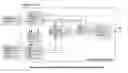







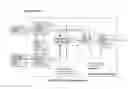
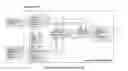
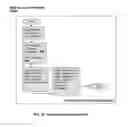
Sources:
- United States Patent and Trademark Office - verify current appl. status at the USPTO↗
Recent applications in this class:
- » 20230113561 2023-04-13
Loudness equalization system - » 20180175816 2018-06-21
Using averaged audio measurements to automatically set audio compressor threshold levels - » 20180138883 2018-05-17
Wide bandwidth variable gain amplifier and exponential function generator - » 20180034435 2018-02-01
Using averaged audio measurements to automatically set audio compressor threshold levels - » 20170126194 2017-05-04
Spectral correction of audio signals - » 20150106083 2015-04-16
Audio signal loudness determination and modification in the frequency domain - » 20140233744 2014-08-21
AUDIO PROCESSING AND ENHANCEMENT SYSTEM - » 20130136266 2013-05-30
System for dynamic spectral correction of audio signals to compensate for ambient noise - » 20130022207 2013-01-24
Method and system for temperature protection of a speaker - » 20120328114 2012-12-27
Audio controlling apparatus, audio correction apparatus, and audio correction method