Ultrasound system and signal processing unit configured for time gain and lateral gain compensation
US20130144169A1
2013-06-06
13/756,274
2013-01-31
✅ Patent granted
US 10,321,891 B2
2019-06-18
-
-
Amanda Lauritzen Moher
Morgan Lewis & Bockius LLP
2035-10-17
Abstract:
The present invention provides an ultrasound system, which comprises: a signal acquiring unit to transmit an ultrasound signal to an object and acquire an echo signal reflected from the object; a signal processing unit to control TGC (Time Gain Compensation) and LGC (Lateral Gain Compensation) of the echo signal; a TGC/LGC setup unit adapted to set TGC and LGC values based on TGC and LGC curves inputted by a user; and an image producing unit adapted to produce an ultrasound image of the object based on the echo signal. The signal processing unit is further adapted to control the TGC and the LGC of the echo signal based on the TGC and LGC values set by the TGC/LGC setup unit.
Inventors:
- Mi Jeoung AHN 30 🇰🇷 Seoul, South Korea
- Doo Sik LEE 12 🇰🇷 Seoul, South Korea
- SAMSUNG MEDISON CO., LTD. 1 🇰🇷 Kangwon-do, South Korea
Assignee:
- SAMSUNG MEDISON CO., LTD. 15 🇰🇷 Kangwon-do, South Korea
- Samsung Medison Co., Ltd. 8 🇰🇷 Hongchun-Gun, Kangwon-Do, South Korea
Applicant:
Interested in similar patents?
Get notified when new applications in this technology area are published.
Classification:
A61B8/467 » CPC main
Diagnosis using ultrasonic, sonic or infrasonic waves; Ultrasonic, sonic or infrasonic diagnostic devices with special arrangements for interfacing with the operator or the patient characterised by special input means
A61B8/00 » CPC further
Diagnosis using ultrasonic, sonic or infrasonic waves
A61B8/14 » CPC main
Diagnosis using ultrasonic, sonic or infrasonic waves; Tomography Echo-tomography
A61B8/4254 » CPC further
Diagnosis using ultrasonic, sonic or infrasonic waves; Details of probe positioning or probe attachment to the patient involving determining the position of the probe, e.g. with respect to an external reference frame or to the patient using sensors mounted on the probe
A61B8/4444 » CPC further
Diagnosis using ultrasonic, sonic or infrasonic waves; Constructional features of the ultrasonic, sonic or infrasonic diagnostic device related to the probe
A61B8/46 » CPC further
Diagnosis using ultrasonic, sonic or infrasonic waves Ultrasonic, sonic or infrasonic diagnostic devices with special arrangements for interfacing with the operator or the patient
A61B8/461 » CPC further
Diagnosis using ultrasonic, sonic or infrasonic waves; Ultrasonic, sonic or infrasonic diagnostic devices with special arrangements for interfacing with the operator or the patient Displaying means of special interest
A61B8/462 » CPC further
Diagnosis using ultrasonic, sonic or infrasonic waves; Ultrasonic, sonic or infrasonic diagnostic devices with special arrangements for interfacing with the operator or the patient; Displaying means of special interest characterised by constructional features of the display
A61B8/463 » CPC further
Diagnosis using ultrasonic, sonic or infrasonic waves; Ultrasonic, sonic or infrasonic diagnostic devices with special arrangements for interfacing with the operator or the patient; Displaying means of special interest characterised by displaying multiple images or images and diagnostic data on one display
A61B8/465 » CPC further
Diagnosis using ultrasonic, sonic or infrasonic waves; Ultrasonic, sonic or infrasonic diagnostic devices with special arrangements for interfacing with the operator or the patient; Displaying means of special interest adapted to display user selection data, e.g. icons or menus
A61B8/5207 » CPC further
Diagnosis using ultrasonic, sonic or infrasonic waves; Devices using data or image processing specially adapted for diagnosis using ultrasonic, sonic or infrasonic waves involving processing of raw data to produce diagnostic data, e.g. for generating an image
A61B8/5269 » CPC further
Diagnosis using ultrasonic, sonic or infrasonic waves; Devices using data or image processing specially adapted for diagnosis using ultrasonic, sonic or infrasonic waves involving detection or reduction of artifacts
A61B8/54 » CPC further
Diagnosis using ultrasonic, sonic or infrasonic waves Control of the diagnostic device
G01S7/52033 » CPC further
Details of systems according to groups of systems according to group particularly adapted to short-range imaging; Details of receivers Gain control of receivers
G01S7/52084 » CPC further
Details of systems according to groups of systems according to group particularly adapted to short-range imaging; Constructional features related to particular user interfaces
G06F3/01 » CPC further
Input arrangements for transferring data to be processed into a form capable of being handled by the computer; Output arrangements for transferring data from processing unit to output unit, e.g. interface arrangements Input arrangements or combined input and output arrangements for interaction between user and computer
G06F3/048 » CPC further
Input arrangements for transferring data to be processed into a form capable of being handled by the computer; Output arrangements for transferring data from processing unit to output unit, e.g. interface arrangements; Input arrangements or combined input and output arrangements for interaction between user and computer Interaction techniques based on graphical user interfaces [GUI]
G06F3/0484 » CPC further
Input arrangements for transferring data to be processed into a form capable of being handled by the computer; Output arrangements for transferring data from processing unit to output unit, e.g. interface arrangements; Input arrangements or combined input and output arrangements for interaction between user and computer; Interaction techniques based on graphical user interfaces [GUI] for the control of specific functions or operations, e.g. selecting or manipulating an object, an image or a displayed text element, setting a parameter value or selecting a range
G06F3/04845 » CPC further
Input arrangements for transferring data to be processed into a form capable of being handled by the computer; Output arrangements for transferring data from processing unit to output unit, e.g. interface arrangements; Input arrangements or combined input and output arrangements for interaction between user and computer; Interaction techniques based on graphical user interfaces [GUI] for the control of specific functions or operations, e.g. selecting or manipulating an object, an image or a displayed text element, setting a parameter value or selecting a range for image manipulation, e.g. dragging, rotation, expansion or change of colour
G06F3/04847 » CPC further
Input arrangements for transferring data to be processed into a form capable of being handled by the computer; Output arrangements for transferring data from processing unit to output unit, e.g. interface arrangements; Input arrangements or combined input and output arrangements for interaction between user and computer; Interaction techniques based on graphical user interfaces [GUI] for the control of specific functions or operations, e.g. selecting or manipulating an object, an image or a displayed text element, setting a parameter value or selecting a range Interaction techniques to control parameter settings, e.g. interaction with sliders or dials
G06T7/0012 » CPC further
Image analysis; Inspection of images, e.g. flaw detection Biomedical image inspection
A61B6/467 » CPC further
Apparatus for radiation diagnosis, e.g. combined with radiation therapy equipment with special arrangements for interfacing with the operator or the patient characterised by special input means
A61B8/08 IPC
Diagnosis using ultrasonic, sonic or infrasonic waves Detecting organic movements or changes, e.g. tumours, cysts, swellings
G06T7/00 IPC
Image analysis
G01S7/52 IPC
Details of systems according to groups of systems according to group
A61B6/00 IPC
Apparatus for radiation diagnosis, e.g. combined with radiation therapy equipment
Description
The present application claims priority from Korean Patent Application No. 10-2006-0123752 filed on Dec. 7, 2006, the entire subject matter of which is incorporated herein by reference.
BACKGROUND
1. Field
The present invention generally relates to an ultrasound system, and more particularly to an ultrasound system adapted to precisely and easily perform TGC (Time Gain Compensation) and LGC (Lateral Gain Compensation).
2. Background
An ultrasound system has become an important and popular diagnostic tool since it has a wide range of applications. Specifically, due to its non-invasive and non-destructive nature, the ultrasound system has been extensively used in the medical profession. Modern high-performance ultrasound systems and techniques are commonly used to produce two or three-dimensional diagnostic images of internal features of an object.
In order to transmit and receive ultrasound signals, the ultrasound system is generally provided with a probe including a wideband transducer. When the transducer is electrically stimulated, it produces ultrasound signals and transmits them into a human body. The ultrasound signals transmitted into the human body are reflected from borders between human tissues and then returned to the transducer. The returned ultrasound echo signals are converted into electric signals. Thereafter, ultrasound image data for imaging the tissues is produced by amplifying and signal-processing the echo signals.
Typically, the ultrasound system is provided with a control panel including a plurality of input units in order to perform a control function of acquiring the ultrasound image, a menu control function, a measurement and annotation function, etc. The control panel is comprised of a touch panel, an image control unit, a measurement control unit, etc. The touch panel displays menus for optimizing an ultrasound image displayed on a display unit. The menus on the touch panel can be touched and selected by a user. The image control unit controls the ultrasound image, whereas the measurement control unit measures a distance to the object, a circumference of the object, etc. As illustrated in FIG. 1, the image control unit includes a plurality of TGC control keys 11 and a plurality of LGC control keys 12. The TGC control keys 11 are used to control a gain of each echo signal based on depth of the position from which the echo signal is reflected. Further, since the echo signal is attenuated at the outer right and left sides, the LGC control keys 12 are used to control a gain of the attenuated echo signal.
In the conventional system, the TGC control keys 11 and the LGC control keys 12 are arranged on different areas of the control panel. The problem associated with such an arrangement is that the size of the control panel must be inevitably increased. Further, a user of the system suffers a great inconvenience when operating the TGC control keys 11 and the LGC control keys 12. Another problem of the conventional system is that since the TGC control keys 11 and the LGC control keys 12 are comprised of slide-type variable resistors, it is very difficult for an unskilled user to finely control TGC and LGC with the TGC control keys 11 and the LGC control keys 12.
In order to resolve the above problems, the present invention is directed to providing an ultrasound system adapted to display a setup screen used to input TGC and LGC curves on a touch panel and perform TGC and LGC based on the inputted TGC and LGC curves.
The present invention provides an ultrasound system, which comprises: a signal acquiring unit adapted to transmit an ultrasound signal to an object and acquire an echo signal reflected from the object; a signal processing unit adapted to perform TGC (Time Gain Compensation) and LGC (Lateral Gain Compensation) upon the echo signal at a coarse compensation mode based on predetermined TGC and LGC values; an image producing unit adapted to produce an ultrasound image of the object based on the TGC and LGC compensated echo signal; an input unit adapted to allow a user to provide TGC and LGC curves; and a TGC/LGC setup processor adapted to set TGC and LGC values based on the TGC and LGC curves provided by the user. The signal processing unit is further adapted to perform the TGC and LGC upon the echo signal at a fine compensation mode based on the TGC and LGC values set by the TGC/LGC setup processor.
In addition, the present invention provides an ultrasound system, which comprises: a processor adapted to configure a setup screen for display; and a touch panel adapted to display the setup screen so as to allow a user to input TGC and LGC curves. The processor is further adapted to calculate the TGC and LGC values based on the inputted TGC and the LGC curves.
BRIEF DESCRIPTION OF THE DRAWINGS
Arrangements and embodiments may be described in detail with reference to the following drawings in which like reference numerals refer to like elements and wherein:
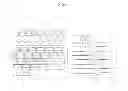
FIG. 1 is a schematic diagram illustrating conventional TGC and LGC control keys;
FIG. 2 is a block diagram showing a structure of an ultrasound system according to one embodiment of the present invention;
FIGS. 3 to 7 illustrate a setup screen according to one embodiment of the present; and
FIG. 8 illustrates an exemplary distinction between TGC and LGC curves according to one embodiment of the present invention.
DETAILED DESCRIPTION OF THE PRESENT INVENTION
A detailed description may be provided with reference to the accompanying drawings. One of ordinary skill in the art may realize that the following description is illustrative only and is not in any way limiting. Other embodiments of the present invention may readily suggest themselves to such skilled persons having the benefit of this disclosure.
Certain embodiments of the present invention will be explained below with reference to FIGS. 2 to 8.
As illustrated in FIG. 2, an ultrasound system 100 comprises: a probe 110; a beam former 120; a signal processing unit 130; a processor 140; a display unit 150; and a TGC/LGC setup unit 160. The probe 110 includes a plurality of transducers 112. Each of the transducers 112 may be configured to transmit an ultrasound signal to an object and receive the ultrasound signal reflected from the object. The beam former 120 may be configured to focus the transmitted ultrasound signals from the transducers 112 on the object and collect the reflected ultrasound signals from the object to the transducers 112 together with corresponding time delay.
The signal processing unit 130 may be configured to amplify the signals collected by the beam former 120 and control gains of the amplified echo signals. Specifically, the signal processing unit 130 may be configured to perform TGC (Time Gain Compensation) and LGC (Lateral Gain Compensation) upon the echo signals based on predetermined TGC and LGC values at a coarse compensation mode (e.g., in an initial operation stage). The signal processing unit 130 may be further configured to perform TGC and LGC upon the echo signals based on TGC and LGC values calculated in a TGC/LGC setup unit 160 using a curve inputted by a user at a fine compensation mode (e.g., during operations).
The processor 140 may be configured to receive the echo signals from the signal processing unit 130 and produce an ultrasound image signal based on the echo signals. The display unit 150 may be adapted to receive the ultrasound image signal from the processor and display an ultrasound image based on the signal.
The TGC/LGC setup unit 160 may include a touch panel 161 and a TGC/LGC setup processor 162.
The touch panel 161 may be configured to display a setup screen and detect TGC/LGC curves inputted by the user on the touch panel 161 to produce a detecting signal. The touch panel 161 detects the user's input according to either the pressure sensing method or the electromagnetic induction method. The touch panel 161 may be a touch panel included in a control panel (not shown) of the ultrasound system 100. Alternatively, it may be separate and apart from the ultrasound system 100.
In one embodiment of the present invention, the touch panel 161 may be configured to display a setup screen 210 (shown in FIG. 3) including an ultrasound image 310 and first and second reference lines 410, 420. The ultrasound image 310 is based on the echo signal, the TGC and LGC of which are controlled based on the predetermined TGC and LGC values. The first and second reference lines 410, 420 may be used to detect a TGC curve 510 and a LGC curve 520 inputted by the user (i.e., to determine whether a curve inputted by the user is a TGC curve 510 or a LGC curve 520). After inputting a curve, the user can modify a portion of the curve.
In another embodiment of the present invention, the touch panel 161 may be configured to display a setup screen 220 (shown in FIG. 4) including first and second ultrasound images 311, 312 and first and second reference lines 410, 420. The first and second ultrasound images 311, 312 are based on the echo signal, the TGC and LGC of which are controlled based on the predetermined TGC and LGC values. The first and second reference lines 410, 420 may be used to detect whether a curve inputted by the user is a TGC curve 510 or a LGC curve 520. The first ultrasound image 311 may be identical to the second initial ultrasound image 312.
In yet another embodiment of the present invention, the touch panel 161 may be configured to display a first setup screen 231 (shown in 5) including an ultrasound image 310 and a first reference line 410. The ultrasound image 310 is based on the echo signal, the TGC and LGC of which are controlled based on the predetermined TGC and LGC values. The first reference line 410 may be used to detect a TGC curve 510 inputted by the user. The touch panel may then display a second setup screen 232 (shown in FIG. 6) including the ultrasound image 310 and a second reference line 420. The second reference lines 420 may be used to detect a LGC curve 520 inputted by the user. Alternatively, the touch panel 161 may be configured to display the second setup screen 232 before the first setup screen 231.
In still yet another embodiment of the present invention, the touch panel 161 may be configured to display a setup screen 240 (shown in FIG. 7) including a virtual ultrasound image 330 and first and second reference lines 410, 420.
The TGC/LGC setup processor 162 may be configured to detect TGC and LGC curves 510, 520 inputted by the user on the touch panel 161. The TGC/LGC setup processor 162 may then calculate new TGC and LGC values in consideration of the detected TGC and LGC curves and transmit the values to the signal processing unit 130.
In one embodiment of the present invention, as illustrated in FIG. 8, the TGC/LGC setup processor 162 may be configured to establish a first group of lines 610 and a second group of lines 620. The first group of lines 610 is perpendicular to a first reference line 410 and the lines in said group are equally spaced apart from each other. The second group of lines 620 is perpendicular to a second reference line 420 and the lines in this group are equally spaced apart from each other. If it is determined that a curve inputted by the user (such as the curve 510) intersects the first group of lines more often than the second group of lines, then the TGC/LGC setup processor 162 recognizes that the curve is a TGC curve. Alternatively, if it is determined that a curve inputted by the user (such as the curve 520) intersects the second group of lines more often than the first group of lines, then the TGC/LGC setup processor 162 recognizes that the curve is a LGC curve. The TGC/LGC setup processor 162 then calculates the new TGC value corresponding to the curve 510 based on the first reference line 410. It also calculates the LGC value corresponding to the LGC curve 520 based on the second reference line 420. The TGC value and the LGC value are transmitted to the signal processing unit 130.
The present invention allows the user to accurately control the TGC and LGC by using the TGC and LGC curves inputted into the touch panel, thereby improving operational accuracy and time. Further, the present invention reduces the size of the control panel to thereby improve the spatial efficiency.
Although the present invention has been described with reference to a number of preferred embodiments thereof, it should be understood that numerous other modifications and embodiments can be devised by those skilled in the art that will fall within the spirit and scope of the principles of this disclosure. More particularly, numerous variations and modifications are possible in the component parts and/or arrangements of the subject combination arrangement within the scope of the disclosure, the drawings and the appended claims. In addition to variations and modifications in the component parts and/or arrangements, alternative uses will also be apparent to those skilled in the art.
Claims
1-13. (canceled)
14. An ultrasound system, comprising:
a signal acquiring unit configured for transmitting an ultrasound signal to an object and acquiring an echo signal reflected from the object;
a touch panel configured for displaying an ultrasound image of the object and configured for receiving a user's touch input overlying the ultrasound image;
a processing unit configured for determining compensation information based on the user's touch input overlying the ultrasound image, and performing a compensation on the echo signal based on the determined compensation information and generating the ultrasound image of the object based on the compensated echo signal.
15. The ultrasound system of claim 14, wherein the user's touch input is a parameter related to TGC or LGC compensation.
16. The ultrasound system of claim 14, wherein the user's touch input is a compensation line.
17. The ultrasound system of claim 15, wherein the compensation line is a Time Gain Compensation (TGC) line or a Lateral Gain Compensation (LGC) line.
18. The ultrasound system of claim 14, wherein the compensation is a TGC or a LGC depending upon whether the received user's input is related to a TGC compensation or LGC compensation.
19. The ultrasound system of claim 14, wherein the processing unit is further configured to perform an initial TGC or LGC on the echo signal at an initial compensation mode based on a predetermined TGC or LGC value before the compensation.
20. The ultrasound system of claim 16, wherein the processing unit is configured to display, on the touch panel, a first reference line and a second reference line, which are perpendicular to each other, on the ultrasound image used to determine whether the compensation line is a TGC line or a LGC line.
21. The ultrasound system of claim 20, wherein the processing unit is configured to display, on the touch panel, a first group of lines perpendicular to the first reference line, each of which is spaced apart from adjacent lines at a first uniform distance, and a second group of lines perpendicular to the second reference line, each of which is spaced apart from adjacent lines at a second uniform distance.
22. The ultrasound system of claim 16, wherein the processing unit is configured to determine that the received compensation line is a TGC line when the received compensation line intersects the first group of lines more than the second group of lines, and the processing unit determines that the received compensation line is a LGC line when the received compensation line intersect the second group of lines more than the second group of lines more than the first group of lines.
23. The ultrasound system of claim 22, wherein the processing unit is configured to calculate a new TGC value based on the received compensation line and the first reference line if the received compensation line is the TGC, and the processing unit calculates a new LGC value based on the received compensation line and the second reference line, if the received compensation line is the LGC line.
24. The ultrasound system of claim 23, wherein the processing unit is configured to compensates the echo signal based on the new TGC value or the new LGC value.
25. The ultrasound system of claim 14, wherein the touch panel is included in a display displaying the ultrasound image of the object.
26. A method for compensating an ultrasound image generated by an ultrasound system, the method comprising steps of:
transmitting an ultrasound signal to an object;
receiving an echo signal reflected from the object;
displaying an ultrasound image of the object based on the echo signal in a touch panel;
receiving a user's input overlying the ultrasound image on the touch panel;
determining compensation information based on the received user's input overlying the ultrasound image;
performing a compensation on the echo signal based on the determined compensation information; and
generating the ultrasound image of the object based on the compensated echo signal.
27. The method of claim 26, wherein the user's touch input is a parameter related to TGC or LGC compensation.
28. The method of claim 26, wherein the user's touch input is a compensation line.
29. The method of claim 28, wherein the compensation line is a Time Gain Compensation (TGC) line or a Lateral Gain Compensation (LGC) line.
30. The method of claim 26, further including:
performing an initial compensation on the echo signal based on a predetermined Lateral Gain Compensation (LGC) value or a predetermined Time Gain Compensation (TGC) value before performing the compensation.
31. The method of claim 28, further including:
determining whether the received compensation line is a LGC line or a TGC line.
32. The method of claim 29, further including:
calculating a new TGC value based on the received compensation line and the first reference line, if the received compensation line is the TGC line; and
calculating a new LGC value based on the received compensation line and the second reference line if the received compensation line is the LGC line, the processing unit.
33. The method of claim 32, further including:
compensating the echo signal based on the new TGC value or the new LGC value.
34. The method of claim 28, wherein the touch panel includes a first reference line and a second reference line, which are perpendicular to each other, on the ultrasound image used to determine whether the compensation line is a TGC line or a LGC line.
35. The method of claim 34, wherein the touch panel further includes a first group of lines perpendicular to the first reference line, each of which is spaced apart from adjacent lines at a first uniform distance, and a second group of lines perpendicular to the second reference line, each of which is spaced apart from adjacent lines at a second uniform distance.
36. The method of claim 35, wherein if the received compensation line intersects the first group of lines more than the second group of lines, the received compensation line is a TGC line, and if the received compensation line intersects the second group of lines more than the second group of lines more than the first group of lines, the received compensation line is a LGC line.
37. The method of claim 27, wherein the touch panel is included in a display displaying the ultrasound image of the object.
38. An ultrasound system, comprising:
a signal acquiring unit configured for transmitting an ultrasound signal to an object and acquiring an echo signal reflected from the object;
a touch panel configured for displaying an ultrasound image of the object and configured for receiving a compensation information inputted by a user's touch, the compensation information overlying the ultrasound image;
a processing unit configured for performing a compensation on the echo signal based on the received compensation information and generating the ultrasound image of the object based on the compensated echo signal.
39. The ultrasound system of claim 38, wherein the compensation information is a parameter related to TGC or LGC compensation.
40. The ultrasound system of claim 38, wherein the compensation information is a compensation line overlying the ultrasound image.
41. The ultrasound system of claim 40, wherein the compensation line is a Time Gain Compensation (TGC) line or a Lateral Gain Compensation (LGC) line.
42. The ultrasound system of claim 38, wherein the compensation is a TGC or a LGC depending upon whether the received user's input is related to a TGC compensation or LGC compensation.
43. The ultrasound system of claim 42, wherein the processing unit is further configured to perform an initial TGC or LGC on the echo signal at an initial compensation mode based on a predetermined TGC or LGC value before the compensation.
44. The ultrasound system of claim 40, wherein the processing unit is configured to display, on the touch panel, a first reference line and a second reference line, which are perpendicular to each other, on the ultrasound image used to determine whether the compensation line is a TGC line or a LGC line.
45. The ultrasound system of claim 44, wherein the processing unit is configured to display, on the touch panel, a first group of lines perpendicular to the first reference line, each of which is spaced apart from adjacent lines at a first uniform distance, and a second group of lines perpendicular to the second reference line, each of which is spaced apart from adjacent lines at a second uniform distance.
46. The ultrasound system of claim 45, wherein the processing unit is configured to determine that the received compensation line is a TGC line when the received compensation line intersects the first group of lines more than the second group of lines, and the processing unit determines that the received compensation line is a LGC line when the received compensation line intersect the second group of lines more than the second group of lines more than the first group of lines.
47. The ultrasound system of claim 44, wherein the processing unit is configured to calculate a new TGC value based on the received compensation line and the first reference line if the received compensation line is the TGC, and the processing unit calculates a new LGC value based on the received compensation line and the second reference line, if the received compensation line is the LGC line.
48. The ultrasound system of claim 47, wherein the processing unit is configured to compensate the echo signal based on the new TGC value or the new LGC value.
49. The ultrasound system of claim 38, wherein the touch panel is included in a display displaying the ultrasound image of the object.
50. A method for compensating an ultrasound image generated by an ultrasound system, the method comprising steps of:
transmitting an ultrasound signal to an object;
receiving an echo signal reflected from the object;
displaying an ultrasound image of the object based on the echo signal in a touch panel;
receiving compensation information overlying the ultrasound image via a user's touch on the touch panel;
performing a compensation on the echo signal based on the received compensation information; and
generating the ultrasound image of the object based on the compensated echo signal
51. The method of claim 50, wherein the compensation information is a parameter for compensating the echo signal.
52. The method of claim 50, wherein the compensation information is a compensation line overlying the ultrasound image.
53. The method of claim 52, wherein the compensation line is a Time Gain Compensation (TGC) line or a Lateral Gain Compensation (LGC) line.
54. The method of claim 50, further including:
performing an initial compensation on the echo signal based on a predetermined Lateral Gain Compensation (LGC) value or a predetermined Time Gain Compensation (TGC) value before performing the compensation.
55. The method of claim 52, further including:
determining whether the received compensation line is a LGC line or a TGC line.
56. The method of claim 52, further including:
calculating a new TGC value based on the received compensation line and the first reference line, if the received compensation line is the TGC line; and
calculating a new LGC value based on the received compensation line and the second reference line if the received compensation line is the LGC line, the processing unit.
57. The method of claim 56, further including:
compensating the echo signal based on the new TGC value or the new LGC value.
58. The method of claim 52, wherein the touch panel includes a first reference line and a second reference line, which are perpendicular to each other, on the ultrasound image used to determine whether the compensation line is a TGC line or a LGC line.
59. The method of claim 58, wherein the touch panel further includes a first group of lines perpendicular to the first reference line, each of which is spaced apart from adjacent lines at a first uniform distance, and a second group of lines perpendicular to the second reference line, each of which is spaced apart from adjacent lines at a second uniform distance.
60. The method of claim 59, wherein if the received compensation line intersects the first group of lines more than the second group of lines, the received compensation line is a TGC line, and if the received compensation line intersects the second group of lines more than the second group of lines more than the first group of lines, the received compensation line is a LGC line.
61. The method of claim 50, wherein the touch panel is included in a display displaying the ultrasound image of the object.
Images & Drawings included:



Sources:
- United States Patent and Trademark Office - verify current appl. status at the USPTO↗
Similar patent applications:
- » 20080139932
Ultrasound system and signal processing unit configured for time gain and lateral gain compensation - » 20110276283
Ultrasound system and signal processing unit configured for time gain and lateral gain compensation - » 20120232393
Ultrasound system and signal processing unit configured for time gain and lateral gain compensation - » 20130064036
Ultrasound system and signal processing unit configured for time gain and lateral gain compensation - » 20130303911
Ultrasound system and signal processing unit configured for time gain and lateral gain compensation - » 20180228472
ULTRASOUND SYSTEM AND SIGNAL PROCESSING UNIT CONFIGURED FOR TIME GAIN AND LATERAL GAIN COMPENSATION --. - » 20220233170
Ultrasound system and signal processing unit configured for Time Gain and Lateral Gain Compensation - » 20230380807
Ultrasound system and signal processing unit configured for time gain and lateral gain compensation
Recent applications in this class:
- » 20250261928 2025-08-21
COHERENT SPREAD-SPECTRUM CODED WAVEFORMS IN SYNTHETIC APERTURE IMAGE FORMATION - » 20250221688 2025-07-10
ULTRASOUND IMAGE PROCESSING METHOD, ULTRASOUND IMAGING APPARATUS, AND ULTRASOUND SYSTEM - » 20250176936 2025-06-05
SYSTEM AND METHOD FOR INTRAOPERATIVE ANATOMICAL IMAGING - » 20250169792 2025-05-29
ULTRASOUND 3D IMAGING SYSTEM - » 20250072864 2025-03-06
ULTRASOUND DIAGNOSIS APPARATUS AND ULTRASOUND DIAGNOSIS METHOD - » 20250009335 2025-01-09
ULTRASOUND DIAGNOSTIC DEVICE CAPABLE OF CHANGING THE SOUND SPEED IN A LOCAL REGION - » 20250000484 2025-01-02
ULTRASOUND IMAGING METHOD, ULTRASOUND IMAGING SYSTEM, AND NON-TRANSITORY COMPUTER-READABLE MEDIUM - » 20240415489 2024-12-19
METHOD OF USING MULTIPARAMETRIC IMAGING DATA TO DIAGNOSE DISEASE STATES AND TO MONITOR THEIR PROGRESSION - » 20240225593 2024-07-11
ULTRASONIC IMAGE PROCESSING DEVICE - » 20230346344 2023-11-02
Ultrasound 3D imaging system
Recent applications for this Assignee:
- » 20130070999 2013-03-21
ULTRASOUND SYSTEM AND METHOD FOR PROVIDING COLOR RECONSTRUCTION IMAGE - » 20130064036 2013-03-14
Ultrasound system and signal processing unit configured for time gain and lateral gain compensation - » 20120232393 2012-09-13
Ultrasound system and signal processing unit configured for time gain and lateral gain compensation - » 20120157848 2012-06-21
Performing receive-focusing based on mid-point algorithm in ultrasound system - » 20120157847 2012-06-21
Ultrasound system and method for processing beam-forming based on sampling data - » 20120157836 2012-06-21
Ultrasound system for controlling power supplied from multiple power supplies - » 20120136254 2012-05-31
Ultrasound system for providing an ultrasound image optimized for posture of a user - » 20120136252 2012-05-31
Performing adaptive frame average process in ultrasound system - » 20120123265 2012-05-17
Ultrasound image enhancement based on entropy information - » 20120095342 2012-04-19
Providing an ultrasound spatial compound image based on center lines of ultrasound images in an ultrasound system