Recirculated-suspension pre-calciner system
US20130164202A1
2013-06-27
13/590,126
2012-08-20
✅ Patent granted
US 9,610,536 B2
2017-04-04
-
-
Jennifer A Leung
2033-11-29
Abstract:
A recirculated-suspension pre-calciner system is disclosed, comprising: a vortex cyclone dust collecting equipment including a plurality of devices, wherein a top device of the vortex cyclone dust collecting equipment is used as a feed system; a vertical combustion kiln; a blower; and a powder purge system, wherein powders in the feed system fall into the vortex cyclone dust collecting equipment and pass through a plurality of the devices to mix and exchange heat with flue gas comprising CO2, generating calcination reaction and releasing CO2 into the flue gas. and the steam is separated and transported to the feed system by the blower and acts as a carrier gas of powders.
Inventors:
- Wei-Cheng Chen 21 🇹🇼 New Taipei City, Taiwan
- Wan-Hsia LIU 1 🇹🇼 Hsinchu City, Taiwan
- Chin-Ming HUANG 2 🇹🇼 New Taipei City, Taiwan
- Shoung OUYANG 2 🇹🇼 Taipei City, Taiwan
- Heng-Wen HSU 2 🇹🇼 Hsinchu County, Taiwan
- WEI-CHENG CHEN 18 🇹🇼 New Taipei, Taiwan
- Wan-Hsia Liu 1 🇹🇼 Hsinchu, Taiwan
- Chin-Ming Huang 2 🇹🇼 New Taipei, Taiwan
- Shoung Ouyang 2 🇹🇼 Taipei, Taiwan
Assignee:
- INDUSTRIAL TECHNOLOGY RESEARCH INSTITUTE 7,890 🇹🇼 HSINCHU, Taiwan
Applicant:
Interested in similar patents?
Get notified when new applications in this technology area are published.
Classification:
Y02C20/40 » CPC further
Capture or disposal of greenhouse gases of CO
Y02C20/40 » CPC further
Capture or disposal of greenhouse gases of CO
Y02E20/32 » CPC further
Combustion technologies with mitigation potential Direct CO mitigation
Y02E20/32 » CPC further
Combustion technologies with mitigation potential Direct CO mitigation
Y02P40/40 » CPC further
Technologies relating to the processing of minerals Production or processing of lime, e.g. limestone regeneration of lime in pulp and sugar mills
Y02P40/40 » CPC further
Technologies relating to the processing of minerals Production or processing of lime, e.g. limestone regeneration of lime in pulp and sugar mills
B01J8/12 IPC
Chemical or physical processes in general, conducted in the presence of fluids and solid particles; Apparatus for such processes with moving particles moved by gravity in a downward flow
C01G53/04 » CPC further
Compounds of nickel Oxides; Hydroxides
B01J6/004 » CPC further
Calcining Heat treatments such as ; Fusing Pyrolysis; Calcining using hot gas streams in which the material is moved
B01J8/0055 » CPC further
Chemical or physical processes in general, conducted in the presence of fluids and solid particles; Apparatus for such processes; Separating solid material from the gas/liquid stream using cyclones
C04B2/10 » CPC further
Lime, magnesia or dolomite Preheating, burning calcining or cooling
B01J8/14 » CPC further
Chemical or physical processes in general, conducted in the presence of fluids and solid particles; Apparatus for such processes with moving particles moving in free vortex flow apparatus
B01D53/10 » CPC further
Separation of gases or vapours; Recovering vapours of volatile solvents from gases; Chemical or biological purification of waste gases, e.g. engine exhaust gases, smoke, fumes, flue gases, aerosols, by adsorption, e.g. preparative gas chromatography with moving adsorbents, e.g. rotating beds with dispersed adsorbents
B01D53/96 » CPC further
Separation of gases or vapours; Recovering vapours of volatile solvents from gases; Chemical or biological purification of waste gases, e.g. engine exhaust gases, smoke, fumes, flue gases, aerosols,; Chemical or biological purification of waste gases Regeneration, reactivation or recycling of reactants
C04B7/434 » CPC further
Hydraulic cements; Manufacture of hydraulic cements in general; Heat treatment, e.g. precalcining, burning, melting; Cooling Preheating with addition of fuel, e.g. calcining
B01D2251/402 » CPC further
Reactants; Alkaline earth metal or magnesium compounds of magnesium
B01D2251/404 » CPC further
Reactants; Alkaline earth metal or magnesium compounds of calcium
B01D2251/602 » CPC further
Reactants; Inorganic bases or salts Oxides
C04B2111/00017 » CPC further
Mortars, concrete or artificial stone or mixtures to prepare them, characterised by specific function, property or use Aspects relating to the protection of the environment
Y02P40/18 » CPC further
Technologies relating to the processing of minerals; Production of cement, e.g. improving or optimising the production methods; Cement grinding Carbon capture and storage [CCS]
Y02P40/18 » CPC further
Technologies relating to the processing of minerals; Production of cement, e.g. improving or optimising the production methods; Cement grinding Carbon capture and storage [CCS]
C01B13/18 » CPC further
Oxygen; Ozone; Oxides or hydroxides in general; Methods for preparing oxides or hydroxides in general by thermal decomposition of compounds, e.g. of salts or hydroxides
C01F11/06 » CPC further
Compounds of calcium, strontium, or barium; Oxides or hydroxides by thermal decomposition of carbonates
B01D53/62 » CPC main
Separation of gases or vapours; Recovering vapours of volatile solvents from gases; Chemical or biological purification of waste gases, e.g. engine exhaust gases, smoke, fumes, flue gases, aerosols,; Chemical or biological purification of waste gases; Removing components of defined structure Carbon oxides
C01F5/06 » CPC further
Compounds of magnesium; Magnesia by thermal decomposition of magnesium compounds
C01G9/02 » CPC further
Compounds of zinc Oxides; Hydroxides
C01G25/02 » CPC further
Compounds of zirconium Oxides
C01G45/02 » CPC further
Compounds of manganese Oxides; Hydroxides
B01J6/00 IPC
Calcining Heat treatments such as ; Fusing Pyrolysis
B01J8/00 IPC
Chemical or physical processes in general, conducted in the presence of fluids and solid particles; Apparatus for such processes
C04B7/43 IPC
Hydraulic cements; Manufacture of hydraulic cements in general Heat treatment, e.g. precalcining, burning, melting; Cooling
Description
CROSS-REFERENCE TO RELATED APPLICATION
This Application claims priority of Taiwan Patent Application No. 100148226, filed on Dec. 23, 2011, and claims priority of Taiwan Patent Application No. 101116464, filed on May 09, 2012, the entirety of which is incorporated by reference herein.
BACKGROUND
1. Technical Field
The present disclosure relates an exhaust treating apparatus and more particularly to a recirculated-suspension pre-calciner system.
2. Description of the Related Art
In 2006, the energy industry, i.e. energy converting industry released 164086000 tons of CO2 which was 61.86% of the total release of fuel combustion in Taiwan if departments do not share CO2 used for electricity power. But, if departments share CO2 used for electricity power, the energy industry, i.e. energy transferring, released 18509000 tons of CO2 which was 6.98% of the total release of fuel combustion in Taiwan. According to the data described above, CO2 from the energy industry electricity generating for the departments is 54.88% of total release of fuel combustion, which almost exceeded half of the total release of CO2 in Taiwan. Therefore, if the release of CO2 from power plants can be effectively captured, the release of CO2 can be reduced significantly.
The cement industry is a major contributor to the release of CO2, but air combustion and equipment' s sealing are not good enough, such that even a calciner is performed to generate CO2, the release of flue gas only has a CO2 concentration of 25-30%. A new CO2 capture technology is required for increasing the CO2 concentration to gain a beneficial result of CO2 reuse and sequestration. In addition, the cement industry is one of six consuming energy industry, which the process uses air combustion and usually the process does not prevent heat dissipation. Therefore, heat loss is too much and fuel utilization efficiency is low. One method to increase efficiency is to recover waste heat to generate electricity power, but it has a high cost and requires a large space. Furthermore, the conventional technology cannot get business opportunity of lightweight calcium carbonate.
BRIEF SUMMARY
The disclosure provides a recirculated-suspension pre-calciner system, comprising a vortex cyclone dust collecting equipment comprising a plurality of devices. A vertical combustion kiln comprises a top side and a bottom side, wherein the top side of the vertical combustion kiln is connected to the lowest device of the vortex cyclone dust collecting equipment, and the bottom side of the vertical combustion kiln is connected to the highest device of the vortex cyclone dust collecting equipment. A blower is connected to the highest device of the vortex cyclone dust collecting equipment, and a powder purge system is connected to the lowest device of the vortex cyclone dust collecting equipment.
The disclosure provides a recirculated-suspension pre-calciner system, comprising a vortex cyclone dust collecting equipment including: a plurality of devices, wherein a top device of the vortex cyclone dust collecting equipment is used as a feed system; a vertical combustion kiln; a blower; and a powder purge system, wherein powders in the feed system fall into the vortex cyclone dust collecting equipment and pass through a plurality of the devices to mix and exchange heat with flue gas, generating calcination reaction and releasing CO2 into the flue gas, and the stream is separated and is transported to the feed system by the blower and acts as a carry gas of powders.
BRIEF DESCRIPTION OF DRAWINGS
The disclosure can be more fully understood by reading the subsequent detailed description and examples with references made to the accompanying drawings, wherein,
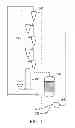
FIG. 1 shows a sketch diagram of a recirculated-suspension pre-calciner system of an embodiment of the disclosure.
DETAILED DESCRIPTION OF DISCLOSURE
It is understood that specific embodiments are provided as examples to teach the broader inventive concept, and one of ordinary skill in the art can easily apply the teaching of the present disclosure to other methods or apparatus. The following discussion is only used to illustrate the disclosure, not limit the disclosure.
The disclosure discloses a calcination equipment of a CO2 capturing system, which captures released CO2, for example, from power plants to substantially increase capture of CO2, reuse adsorbents, reduce reaction time and save fuel, and may reduce capture cost of CO2. The disclosure may apply a recirculated-suspension pre-calciner to calcinate adsorbents, for example CaCO3 is calcinated to CaO, to fabricate a lightweight calcium carbonate or capture CO2.
FIG. 1 shows a sketch diagram of a recirculated-suspension pre-calciner system of an embodiment of the disclosure. Referring to FIG. 1, the recirculated-suspension pre-calciner system of the embodiment comprises a feed system 102, a vortex cyclone dust collecting equipment 104 including a plurality of devices, a vertical combustion kiln 106, a blower 108 and a powder purge system 110, wherein a top device of the vortex cyclone dust collecting equipment 104 is used as the feed system 102. A bottom side of the a device of the vortex cyclone dust collecting equipment 104 is connected through a rotary valve or flange to another device of the vortex cyclone dust collecting equipment 104 to separate pressure of the devices therebetween. As shown in FIG. 1, the vertical combustion kiln 106 comprises a top side and a bottom side, wherein the top side of the vertical combustion kiln 106 is connected to the lowest device of the vortex cyclone dust collecting equipment 104. The bottom side of the vertical combustion kiln 106 is connected to the highest device of the vortex cyclone dust collecting equipment 104. The blower 108 is connected to the highest device of the vortex cyclone dust collecting equipment 104. The powder purge system 110 is connected to the lowest device of the vortex cyclone dust collecting equipment 104.
The feed system 102 is operated by using the blower 108 to move high temperature CO2 with temperatures of 600° C.˜1000° C. at the outlet of the vortex cyclone dust collecting equipment 104 to transport CaCO3 which has come through the calcination procedure to the feed system 102, i.e. the top device of the vortex cyclone dust collecting equipment 104. After gas solid separation in the vortex cyclone dust collecting equipment 104, powders of CaCO3 are exerted by gravity to fall through devices of the vortex cyclone dust collecting equipment 104 and cross with a flue gas transported from the bottom side to the top side, wherein the flue gas is a burning reacting product from a burner, and the flue gas comprises H2O and CO2 in the embodiment. After heat fully exchanging, calcination reaction is generated to form CaO and release CO2. In the embodiment, the flue gas has a temperature of 500° C.˜1000° C. The flue gas comprising CO2 is transported to the feed system through the blower 108, wherein the flue gas acts as a carry gas of the powders. Part of the flue gas is released to be prepared to be sequestrated or reused and to maintain pressure and mass conservation of the entire system. Another part of the mixture gas is used as a carry gas and is added with a suitable amount of oxygen, for example pure oxygen having concentrations larger than 93%, to be heated along with fuel to 900-1200° C. for use as a combustion gas of the vertical combustion kiln 106 after gas solid separation. The mixture gas is then moved to the bottom device of the vortex cyclone dust collecting equipment 104 to increase CO2 concentration and also has a function of restraining high temperature of oxygen combustion to prevent powder sintering and equipment damage. Thereafter, the powder is moved into the powder purge system 110. The quantity of recirculation flow is a key point of controlling flue gas temperature of the equipment. The flue gas flows from bottom to top to fully exchange heat with powders and provides calcination power required for powders, wherein the primary compositions of the hot flue gas are CO2 and steam. Calcination powers can use metal carbonate salts, such as CaCO3, ZeCO3, MgCO3, MnCO3, or NiCO3, etc, as an adsorbent. If the hot flue gas is to be sequestrated or CO2 is to be reused, a step can be performed to separate the water and obtain a high concentration CO2 after cooling down and condensation. The vertical combustion kiln is helpful to improve insufficient removal of carbonate. Height of the vertical combustion kiln 106 can be increased to extend the powder residence time and thus calcination reaction rate can be kept to be more than 90%.
According to the description above, the recirculated-suspension pre-calciner system of the disclosure uses the concept of oxy-combustion to perform CO2-O2 combustion in the calciner. The disclosure calcines metal carbonate salts, uses a flue gas recirculation way to keep temperature of the inlet flue gas at 900-1200° C., and gradually increases CO2 concentration of flue gas in the calciner.
While the disclosure has been described by way of example and in terms of the preferred embodiments, it is to be understood that the disclosure is not limited to the disclosed embodiments. It is intended to cover various modifications and similar arrangements (as would be apparent to those skilled in the art). Therefore, the scope of the appended claims should be accorded the broadest interpretation so as to encompass all such modifications and similar arrangements.
Claims
What is claimed is:1. A recirculated-suspension pre-calciner system, comprising:
a vortex cyclone dust collecting equipment comprising a plurality of devices;
a vertical combustion kiln comprising a top side and a bottom side, wherein the top side of the vertical combustion kiln is connected to the lowest device of the vortex cyclone dust collecting equipment, and the bottom side of the vertical combustion kiln is connected to the highest device of the vortex cyclone dust collecting equipment;
a blower is connected to the highest device of the vortex cyclone dust collecting equipment; and
a powder purge system is connected to the lowest device of the vortex cyclone dust collecting equipment.
2. The recirculated-suspension pre-calciner system as claimed in claim 1, wherein the highest device of the vortex cyclone dust collecting equipment acts as a feed system of the recirculated-suspension pre-calciner system.
3. The recirculated-suspension pre-calciner system as claimed in claim 1, wherein the vortex cyclone dust collecting equipment comprises 3˜7 devices.
4. The recirculated-suspension pre-calciner system as claimed in claim 1, wherein a bottom side of the each device of the vortex cyclone dust collecting equipment is connected through a rotary valve or flange to another device of the vortex cyclone dust collecting equipment.
5. The recirculated-suspension pre-calciner system as claimed in claim 1, wherein powders in the feed system fall into the vortex cyclone dust collecting equipment and pass through a plurality of the devices to mix and exchange heat with flue gas, generating calcination reaction and releasing CO2, and the flue gas comprising CO2 is transported to the feed system by the blower and acts as a carrier gas of powders.
6. The recirculated-suspension pre-calciner system as claimed in claim 5, wherein the powders comprise CaCO3.
7. The recirculated-suspension pre-calciner system as claimed in claim 5, wherein the calcination reaction uses a metal carbonate salt as an adsorbent.
8. The recirculated-suspension pre-calciner system as claimed in claim 7, wherein the metal carbonate salt comprises CaCO3, ZeCO3, MgCO3, MnCO3, or NiCO3.
9. A method for using a recirculated-suspension pre-calciner system, comprising:
providing a vortex cyclone dust collecting equipment comprising a plurality of devices, a vertical combustion kiln, a blower and a powder purge system, wherein a top device of the vortex cyclone dust collecting equipment acts as a feed system;
causing powders in the feed system to fall into the vortex cyclone dust collecting equipment and pass through a plurality of the devices to mix and exchange heat with flue gas comprising CO2, generating calcination reaction and releasing CO2; and
transporting the flue gas comprising CO2 to the feed system through the blower, wherein the flue gas acts as a carrier gas of the powders.
10. The method for using a recirculated-suspension pre-calciner system as claimed in claim 9, wherein a part of the flue gas comprising CO2 transported to the feed system is combusted with pure oxygen in the vertical combustion kiln.
11. The method for using a recirculated-suspension pre-calciner system as claimed in claim 10, wherein the combusted gas is moved to a bottom device of the vortex cyclone dust collecting equipment.
12. The method for using a recirculated-suspension pre-calciner system as claimed in claim 10, wherein pure oxygen and fuel are added during the combustion with pure oxygen.
13. The method for using a recirculated-suspension pre-calciner system as claimed in claim 10, wherein temperature of the combustion with pure oxygen is 900° C.˜1200° C.
14. The method for using a recirculated-suspension pre-calciner system as claimed in claim 9, wherein the powders comprise CaCO3.
15. The method for using a recirculated-suspension pre-calciner system as claimed in claim 9, wherein the powders are reacted to form CaO through calcination.
16. The method for using a recirculated-suspension pre-calciner system as claimed in claim 9, wherein the flue gas comprising CO2 released from calcination has a temperature of 600˜1000° C.
17. The method for using a recirculated-suspension pre-calciner system as claimed in claim 9, wherein the flue gas has a temperature of 500˜1000° C.
18. The method for using a recirculated-suspension pre-calciner system as claimed in claim 9, wherein CO2 of the released flue gas is sealed or reapplied in a further process step.
19. The method for using a recirculated-suspension pre-calciner system as claimed in claim 9, wherein the calcination uses a metal carbonate salt as an adsorbent.
20. The method for using a recirculated-suspension pre-calciner system as claimed in claim 19, wherein the metal carbonate salt comprises CaCO3, ZeCO3, MgCO3, MnCO3, or NiCO3.
Images & Drawings included:

Sources:
- United States Patent and Trademark Office - verify current appl. status at the USPTO↗
Recent applications in this class:
- » 20130260442 2013-10-03
CARBON DIOXIDE CAPTURE PROCESS WITH CATALYTICALLY-ENHANCED SOLVENT AND PHASE SEPARATION - » 20130259784 2013-10-03
Method and system for low energy carbon dioxide removal - » 20130259780 2013-10-03
METHOD FOR CONTROLLING SOLVENT EMISSIONS FROM A CARBON CAPTURE UNIT - » 20130255550 2013-10-03
Method and apparatus for treatment of unburnts - » 20130255495 2013-10-03
System for recovery of ammonia from lean solution in a chilled ammonia process utilizing residual flue gas - » 20130234438 2013-09-12
APPARATUS AND METHOD FOR RECOVERING ENERGY AFTER CARBON DIOXIDE CAPTURE - » 20130171034 2013-07-04
Flu Gas Detoxification System; Carbon Dioxide; Carbon Monoxide; Poisons; Twenty One Stage Reduction; Scrubber Recovery; Hydrochloric Acid HCl Chemical Suppressants; and Distillation Recovery. - » 20130112115 2013-05-09
CO-capturing binder, production method thereof based on the selection, purification and optimisation of carbide lime, and agglomerates having an environmental activity - » 20130064752 2013-03-14
METHOD FOR FIXING CARBON DIOXIDE - » 20130064745 2013-03-14
FLUE GAS TREATMENT AND PERMEATE HARDENING
Recent applications for this Assignee:
- » 20250289330 2025-09-18
MOBILE VEHICLE CHARGING PROTECTION DEVICE FOR ELECTRICAL SAFETY IN LIVESTOCK HOUSES - » 20250287224 2025-09-11
COMMUNICATION DEVICE AND COMMUNICATION METHOD - » 20250286593 2025-09-11
COMMUNICATION DEVICE AND METHOD OF BEAM MANAGEMENT - » 20250284336 2025-09-11
SYSTEM AND METHOD FOR ADJUSTING IMAGE BASED ON PHYSIOLOGICAL INFORMATION AND POSTURE - » 20250281908 2025-09-11
ELECTROCATALYST COMPOSITION AND PREPARATION METHOD THEREOF - » 20250273403 2025-08-28
CAPACITOR AND ELECTRONIC DEVICE - » 20250271759 2025-08-28
POLYMER, POSITIVE PHOTORESIST COMPOSITION, AND METHOD FOR FORMING PATTERNED PHOTORESIST LAYER - » 20250265803 2025-08-21
MULTI-SENSOR COORDINATION METHOD, PROCESSING DEVICE, AND INFORMATION DISPLAY SYSTEM - » 20250263659 2025-08-21
METHOD AND KIT FOR PREPARING AN IMMUNE CELL DIFFERENTIATED FROM A STEM CELL - » 20250252547 2025-08-07
CORROSION POSITIONING SYSTEM, CORROSION INSPECTION VEHICLE AND CORROSION POSITIONING METHOD USING THE SAME