POLYPROPYLENE RESIN COMPOSITION
US20130172455A1
2013-07-04
13/822,299
2011-11-08
Abstract:
This polypropylene resin composition is characterized by containing the following per 100 mass parts of a polypropylene resin: 0.06 to 0.1 mass parts of a specific aromatic metal phosphate, 0.015 to 0.02 mass parts of a specific aromatic triamide compound, and 0.015 to 0.03 mass parts of magnesium hydroxide. This polypropylene resin composition makes it possible to increase the transparency and physical strength of a polypropylene resin with only small amounts of a nucleator and transparentization agent added. The reduction in the amounts of additives also increases resistance to leaching and makes molded articles more sanitary.
Assignee:
- ADEKA CORPORATION 601 🇯🇵 Tokyo, Japan
Interested in similar patents?
Get notified when new applications in this technology area are published.
Classification:
C08K5/52 » CPC main
Use of organic ingredients; Phosphorus-containing compounds; Phosphorus bound to oxygen Phosphorus bound to oxygen only
C08K3/22 » CPC further
Use of inorganic substances as compounding ingredients; Oxygen-containing compounds, e.g. metal carbonyls; Oxides; Hydroxides of metals
C08K5/20 » CPC further
Use of organic ingredients; Nitrogen-containing compounds Carboxylic acid amides
Description
TECHNICAL FIELD
The present invention relates to a polypropylene-based resin composition that uses an aromatic metal phosphate salt, an aromatic triamide compound and magnesium hydroxide in combination, to thereby improve the transparency and physical strength of a polypropylene-based resin with small addition amounts.
BACKGROUND ART
Polypropylene-based resins such as propylene homopolymers and ethylene-propylene copolymers are widely used in automobiles, home electronics, building materials, furniture, packaging containers, toys, convenience goods and the like. However, polypropylene-based resins are inferior to polyethylenes, polyethylene telephthalates, polycarbonates, polystyrenes and the like in transparency, and thus incorporation of various nucleating agents and transparentization agents such as metal benzoates, aromatic metal phosphate salts, metal salts of aliphatic cyclic compounds, dibenzylidene sorbitols and amide compounds have been suggested since before and put into practical use.
Patent Literature 1 suggests using an aromatic metal phosphate salt, and specifically shows a significant effect in improving physical strength and also improves transparency. Patent Literature 2 suggests an amide compound, and a polypropylene resin composition having excellent transparency with a small incorporation amount can be obtained. Furthermore, paragraph (0051) suggests combination use with other nucleating agent. In addition, although Patent Literature 3 and Patent Literature 4 suggest combination use of an aromatic metal phosphate salt and an organic acid amide compound, all of the organic acid amide compounds that are specifically described in Patent Literature 3 are aliphatic acid amide compounds, and Patent Literature 4 describes a di- or more valent amide compound derived from an aliphatic amine, and fails to describe an aromatic triamide compound. Patent Literature 5 suggests combination use of a metal phosphate salt with a silicic acid-based inorganic substance such as talc and mica.
Nucleating agents and transparentization agents improve the properties of polypropylene-based resins, and some additives such as the compounds described in Patent Literature 2 can be added by a low addition amount for improving only transparency, whereas there is no compound that shows an effect to improve physical strength by a small amount; therefore, it is necessary to increase the addition amount so as to express high performance, and the cost is increased, which constitutes an obstruct to the expansion of use of polypropylenes.
CITATION LIST
Patent Literature
- Patent Literature 1: Claims of JP 59-184252 A
- Patent Literature 2: U.S. Pat. No. 7,790,793
- Patent Literature 3: Claims of JP 2005-120237 A
- Patent Literature 4: JP 04-370124 A
- Patent Literature 5: Claims of JP 2003-335968 A
SUMMARY OF INVENTION
Technical Problem
The present invention provides a polypropylene-based resin composition, by which the rising of product costs in accordance with the improvement of physical properties can be suppressed by providing a composition of a nucleating agent and a transparentization agent that improve the physical strength of a polypropylene-based resin by small addition amounts.
Solution to Problem
A polypropylene-based resin composition that is excellent in transparency and physical strength is provided by using an aromatic metal phosphate salt, an aromatic triamide compound and magnesium hydroxide in combination, even by small addition amounts.
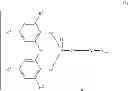
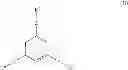
The above-mentioned problem is solved by incorporating 0.06 to 0.1 part by mass of a compound represented by the following general formula (I), 0.015 to 0.02 part by mass of a compound represented by the following general formula (II) and 0.015 to 0.03 part by mass of magnesium hydroxide into 100 parts by mass of a polypropylene-based resin.
wherein R1, R2, R3 and R4 each independently represent a hydrogen atom or an alkyl group having 1 to 8 carbon atoms; X represents a direct bond or an alkylidene group having 1 to 4 carbon atoms; M represents any of an alkali metal, an alkaline earth metal and aluminum; Y represents a hydroxyl group; n represents 1 when M is an alkali metal, represents 2 when M is an alkaline earth metal, or represents 2 or 3 when M is aluminum; and m represents 0 or 1, wherein m represents 0 when M is an alkali metal or alkaline earth metal, or represents 1 when n is 2 or represents 0 when n is 3 when M is aluminum;
wherein Z represents an amide bond, and R5, R6 and R7 each independently represent a straight chain or branched alkyl group having 1 to 8 carbon atoms.
Advantageous Effects of Invention
According to the present invention, the transparency and physical strength of a polypropylene-based resin can be improved with small addition amounts of a nucleating agent and a transparentization agent. Furthermore, the reduction in the addition amounts improves the resistance to leaching and also improves the sanitary property of a molded article.
DESCRIPTION OF EMBODIMENTS
Examples of the polypropylene-based resin used in the present invention may include propylene homopolymers, ethylene-propylene random copolymers, ethylene-propylene block copolymers, copolymers of propylene and a small amount (1 to 10 mass %) of other α-olefin (for example, 1-butene, 1-hexene, 4-methyl-1-pentene and the like), copolymers of propylene and ethylenepropylene (TPO), and the like.
The above-mentioned polypropylene-based resins can be used irrespective of the kinds and presence or absence of a polymerization catalyst and a co-catalyst, the steric regularity, the average molecular weight, the molecular weight distribution, the presence or absence and ratio of a component having a specific molecular weight, the specific gravity, the viscosity, the solubility in various solvents, the stretch rate, the impact strength, the crystallization degree, X-ray diffraction, unsaturated carboxylic acids (maleic acid, itaconic acid, fumaric acid and the like) and derivatives thereof (maleic anhydride, maleic acid monoester, maleic acid diester and the like), an organic peroxide or irradiation of energy ray and the presence or absence of a modification or crosslinking treatment by a combination of these treatments, and the like.
Examples of the alkyl group having 1 to 8 carbon atoms represented by R1, R2, R3 and R4 in the general formula (I), which is used in the present invention, may include methyl, ethyl, propyl, isopropyl, butyl, sec-butyl, tert-butyl, pentyl, tert-pentyl, hexyl, heptyl, octyl, 2-ethylhexyl, tert-octyl and the like.
Examples of the alkylidene group having 1 to 4 carbon atoms represented by X in the general formula (I), which is used in the present invention, may include methylene, ethylidene, 2,2-propylidene, 1,1-butylidene and the like.
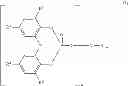
More specific examples of the aromatic metal phosphate salt represented by the general formula (I) may include the compounds of compound No. 1 to No. 4 mentioned below.
Although the production methods for the above-mentioned compounds are not specifically limited, and limitations relating to shape such as a particle size, an aspect ratio and the like, an acid value, parameters derived from a purity such as a chlorine concentration, and the like are also not specifically limited, compounds having a small particle size are preferable since they have excellent dispersibility in the resin, and needle-shaped crystals that have undergone a pulverizing treatment so as to decrease the aspect ratio are preferable since they provide molded articles having small shrink rate anisotropy, and compounds containing small impurities are preferable. However, micropowders also have drawbacks that they are poor in fluidity, they easily generate powder dust, and the like, and pulverizing and purification lead to increase of the production costs, and thus it is preferable to produce and use a micropowder so as to provide an optimal quality from a cost-effectiveness standpoint.
Examples of the straight chain or branched alkyl group having 1 to 8 carbon atoms represented by R5, R6 and R7 in the general formula (II) used in the present invention may include methyl, ethyl, propyl, isopropyl, butyl, sec-butyl, tert-butyl, pentyl, tert-pentyl, hexyl, heptyl, octyl, 2-ethylhexyl, tert-octyl and the like.
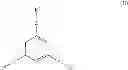
More specific examples of the amide compound represented by the general formula (II) may include the following compounds No. 5 to No. 7, and the like.
Although the production methods for the above-mentioned compounds are not specifically limited, and limitations relating to a shape such as a particle size, parameters derived from a purity, and the like are also not specifically limited, compounds having a small particle size are preferable since they are excellent in dispersibility in the resin, and compounds containing small impurities are preferable. However, micropowders also have drawbacks that they are poor in fluidity, they easily generate powder dust, and the like, and pulverizing and purification lead to increase of the production costs, and thus it is preferable to produce and use a micropowder so as to provide an optimal quality from a cost-effectiveness standpoint.
As the magnesium hydroxide used in the present invention, a commercially available magnesium hydroxide powder can be directly used, and limitations relating to a shape such as a particle size, parameters derived from a purity, and the like are also not specifically limited, compounds having a small particle size are preferable since they are excellent in dispersibility in the resin, and compounds containing small impurities are preferable. However, micropowders also have drawbacks that they are poor in fluidity, they easily generate powder dust, and the like, and pulverizing and purification lead to increase of the production costs, and thus it is preferable to produce and use a micropowder so as to provide an optimal quality from a cost-effectiveness standpoint.
It is preferable to add the following general-purpose resin additives to the polypropylene-based resin composition of the present invention depending on the condition of use and required property: phenol-based antioxidants, phosphorus-based antioxidants, sulfur-based antioxidants, ultraviolet absorbers, hindered amine compounds, flame retardants, flame retardant promoters, other nucleating agents, antistatic agents, heavy metal inactivators, plasticizers, softeners, lubricants, hydrotalcites, metal salts of aliphatic acids, pigments, infrared ray absorbers, antifogging agents, antimisting agents, fillers, antibacterial/anti-mold agents, and the like.
Examples of the phenol-based antioxidants may include 2,6-di-tert-butyl-p-cresol, 2,6-diphenyl-4-octadecyloxyphenol, 2-methyl-4,6-bis(octylthiomethyl)phenol, distearyl (3,5-di-tert-butyl-4-hydroxybenzyl) phosphonate, 1,6-hexamethylenebis[amide(3,5-di-tert-butyl-4-hydroxyphenyl)propionate], 4,4′-thiobis(6-tert-butyl-m-cresol), 2,2′-methylenebis(4-methyl-6-tert-butylphenol), 2,2′-methylenebis(4-ethyl-6-tert-butylphenol), 4,4′-butylidenebis(6-tert-butyl-m-cresol), 2,2′-ethylidenebis(4,6-di-tert-butylphenol), 2,2′-ethylidenebis(4-sec-butyl-6-tert-butylphenol), 1,1,3-tris(2-methyl-4-hydroxy-5-tert-butylphenyl)butane, 1,3,5-tris(2,6-dimethyl-3-hydroxy-4-tert-butylbenzyl)isocyanurate, 1,3,5-tris(3,5-di-tert-butyl-4-hydroxybenzyl)isocyanurate, 1,3,5-tris(3,5-di-tert-butyl-4-hydroxybenzyl)-2,4,6-trimethylbenzene, 2-tert-butyl-4-methyl-6-(2-acryloyloxy-3-tert-butyl-5-methylbenzyl)phenol, stearyl (3,5-di-tert-butyl-4-hydroxyphenyl)propionate, thiodiethylene glycol bis[(3,5-di-tert-butyl-4-hydroxyphenyl)propionate], 1,6-hexamethylenebis[(3,5-di-tert-butyl-4-hydroxyphenyl)propionate], bis[3,3-bis(4-hydroxy-3-tert-butylphenyl)butyric acid]glycol ester, bis[2-tert-butyl-4-methyl-6-(2-hydroxy-3-tert-butyl-5-methyl benzyl)phenyl]telephthalate, 1,3,5-tris[(3,5-di-tert-butyl-4-hydroxyphenyl)propionyloxyethyl]isocyanurate, tetrakis[methyl 3-(3,5-di-tert-butyl-4-hydroxyphenyl)propionate]methane, 3,9-bis[1,1-dimethyl-2-(3-tert-butyl-4-hydroxy-5-methylphenyl)propionyloxy ethyl]-2,4,8,10-tetraoxaspiro[5.5]undecane, triethylene glycol bis[(3-tert-butyl-4-hydroxy-5-methylphenyl)propionate] and the like, and they are used by 0.001 to 10 parts by weight, more preferably 0.05 to 5 parts by weight with respect to 100 parts by weight of the resin.
Examples of the phosphorus-based antioxidants may include trisnonyl phenyl phosphite, tris(2,4-di-tert-butylphenyl)phosphite, tris[2-tert-butyl-4-(3-tert-butyl-4-hydroxy-5-methylphenylthio)-5-methylphenyl]phosphite, tridecyl phosphite, octyl diphenyl phosphite, di(decyl)monophenyl phosphite, di(tridecyl)pentaerythritol diphosphite, di(nonylphenyl)pentaerythritol diphosphite, bis(2,4-di-tert-butylphenyl)pentaerythritol diphosphite, bis(2,6-di-tert-butyl-4-methylphenyl)pentaerythritol diphosphite, bis(2,4,6-tritert-butylphenyl)pentaerythritol diphosphite, bis(2,4-dicumylphenyl)pentaerythritol diphosphite, tetra(tridecyl)isopropylidenediphenol diphosphite, tetra(tridecyl)-4,4′-n-butylidenebis(2-tert-butyl-5-methylphenol)diphosphite, hexa(tridecyl)-1,1,3-tris(2-methyl-4-hydroxy-5-tert-butylphenyl)butane triphosphite, tetrakis(2,4-di-tert-butylphenyl)biphenylene diphosphonite, 9,10-dihydro-9-oxa-10-phosphaphenanthrene-10-oxide, 2,2′-methylenebis(4,6-tert-butylphenyl)-2-ethylhexyl phosphite, 2,2′-methylenebis(4,6-tert-butylphenyl)-octadecyl phosphite, 2,2′-ethylidenebis(4,6-di-tert-butylphenyl)fluorophosphite, tris(2-[(2,4,8,10-tetrakistert-butyldibenzo[d,f][1,3,2]dioxaphosphepin-6-yl)oxy]ethyl)amine, phosphites of 2-ethyl-2-butylpropylene glycol and 2,4,6-tritert-butylphenol, and the like.
Examples of the sulfur-based antioxidants may include dilauryl thiodipropionate, dimyristyl thiodipropionate, dipalmityl thiodipropionate, distearyl thiodipropionate, tetrakis(methyl 3-laurylthiodipropionate)methane, bis(2-methyl-4-(alkyl (a single form or mixture of C8 to C18)thiopropionyloxy)-5-tert-butylphenyl)sulfide, 2-mercaptobenzimidazole and a zinc salt thereof, and the like.
Examples of the ultraviolet absorbers may include 2-hydroxybenzophenones such as 2,4-dihydroxybenzophenone, 2-hydroxy-4-methoxybenzophenone, 2-hydroxy-4-octoxybenzophenone and 5,5′-methylenebis(2-hydroxy-4-methoxybenzophenone); 2-(2′-hydroxyphenyl)benzotriazoles such as 2-(2′-hydroxy-5′-methylphenyl)benzotriazole, 2-(2′-hydroxy-3′,5′-di-tert-butylphenyl)-5-chlorobenzotriazole, 2-(2′-hydroxy-3′-tert-butyl-5′-methylphenyl)-5-chlorobenzotriazole, 2-(2′-hydroxy-5′-tert-octylphenyl)benzotriazole, 2-(2′-hydroxy-3′,5′-dicumylphenyl)benzotriazole, 2,2′-methylenebis(4-tert-octyl-6-benzotriazolyl)phenol and 2-(2′-hydroxy-3′-tert-butyl-5′-carboxyphenyl)benzotriazole; benzoates such as phenyl salicylate, resorcinol monobenzoate, 2,4-di-tert-butylphenyl-3,5-di-tert-butyl-4-hydroxybenzoate, 2,4-di-tert-amylphenyl-3,5-di-tert-butyl-4-hydroxybenzoate and hexadecyl-3,5-di-tert-butyl-4-hydroxybenzoate; substituted oxanilides such as 2-ethyl-2′-ethoxyoxanilide and 2-ethoxy-4′-dodecyloxanilide; cyanoacrylates such as ethyl-α-cyano-β,β-diphenylacrylate and methyl-2-cyano-3-methyl-3-(p-methoxyphenyl)acrylate; triaryltriazines such as 2-(2-hydroxy-4-octoxyphenyl)-4,6-bis(2,4-di-tert-butylphenyl)-s-triazine, 2-(2-hydroxy-4-methoxyphenyl)-4,6-diphenyl-s-triazine and 2-(2-hydroxy-4-propoxy-5-methylphenyl)-4,6-bis(2,4-di-tert-butylphenyl)-s-triazine.
Examples of the hindered amine compounds may include hindered amine compounds such as 2,2,6,6-tetramethyl-4-piperidyl stearate, 1,2,2,6,6-pentamethyl-4-piperidyl stearate, 2,2,6,6-tetramethyl-4-piperidyl benzoate, bis(2,2,6,6-tetramethyl-4-piperidyl)sebacate, bis(1,2,2,6,6-pentamethyl-4-piperidyl)sebacate, bis(1-undecyloxy-2,2,6,6-tetramethyl-4-piperidyl)carbonate, tetrakis(2,2,6,6-tetramethyl-4-piperidylbutane tetracarboxylate, tetrakis(1,2,2,6,6-pentamethyl-4-piperidylbutane tetracarboxylate, bis(2,2,6,6-tetramethyl-4-piperidyl)-di(tridecyl)-1,2,3,4-butane tetracarboxylate, bis(1,2,2,6,6-pentamethyl-4-piperidyl)-di(tridecyl)-1,2,3,4-butane tetracarboxylate, bis(1,2,2,6,6-pentamethyl-4-piperidyl)-2-butyl-2-(3,5-di-tert-butyl-4-hydroxybenzyl)malonate, a polycondensate of 1-(2-hydroxyethyl)-2,2,6,6-tetramethyl-4-piperidinol/diethyl succinate, a polycondensate of 1,6-bis(2,2,6,6-tetramethyl-4-piperidylamino)hexane/dibromoethane, a polycondensate of 1,6-bis(2,2,6,6-tetramethyl-4-piperidylamino)hexane/2,4-dichloro-6-morpholino-s-triazine, a polycondensate of 1,6-bis(2,2,6,6-tetramethyl-4-piperidylamino)hexane/2,4-dichloro-6-tert-octylamino-s-triazine, 1,5,8,12-tetrakis[2,4-bis(N-butyl-N-(2,2,6,6-tetramethyl-4-piperidyl)amino)-s-triazin-6-yl]-1,5,8,12-tetraazadodecane, 1,5,8,12-tetrakis[2,4-bis(N-butyl-N-(1,2,2,6,6-pentamethyl-4-piperidyl)amino)-s-triazin -6-yl]-1,5,8,12-tetraazadodecane, 1,6,11-tris[2,4-bis(N-butyl-N-(2,2,6,6-tetramethyl-4-piperidyl)amino)-s-triazin-6-ylaminoundecane and 1,6,11-tris[2,4-bis(N-butyl-N-(1,2,2,6,6-pentamethyl-4-piperidyl)amino)-s-triazin-6-ylaminoundecane.
As the flame retardants, halogen-based flame retardants such as decabromodiphenyl ether and tetrabromobisphenol A, condensed phosphate esters of polyvalent phenols such as triphenyl phosphate, resorcinol and bisphenol A and monovalent phenols such as phenol and 2,6-xylenol; inorganic phosphorus compounds such as red phosphorus and melamine phosphate; nitrogen-containing flame retardants such as melamine cyanurate; inorganic-based flame retardants such as magnesium hydroxide and aluminum hydroxide; flame retardant promoters such as antimony oxide and zirconium oxide; anti-dripping agents such as polytetrafluoroethylene, and the like are used.
Examples of the flame retardant promoters may include fluorine resins such as polytetrafluoroethylene (PTFE), polyvinylidene fluoride (PVDF), polyvinyl fluoride (PVF), polytetrafluoroethylene-hexafluoropropylene copolymer (FEP) and (meth)acrylic-modified PTFE, silicone resins, and the like.
Examples of the other nucleating agents may include metal salts of benzoic acid such as sodium benzoate, aluminum-p-tert-butylbenzoate and lithium-p-tert-butylbenzoate; metal phosphate salts such as sodium 2,2-methylenebis(4,6-di-tert-butylphenyl)phosphate; benzylidene sorbitols such as dibenzylidene sorbitol, bis(4-methylbenzylidene)sorbitol and bis(4-ethylbenzylidene)sorbitol; metal alcoholates such as zinc glycerin; metal salts of amino acids such as zinc glutamate; aliphatic dibasic acids having a bicyclo structure and metal salts thereof such as bicycloheptanedicarboxylic acid or salts thereof, metal salts of aromatic sulfonic acids such as sodium benzenesulfonate and lithium p-toluenesulfonate, and the like. Combination use with a nucleating agent that improves not only transparency but also the glass transition temperature of the polypropylene-based resin such as metal salt-based compounds such as metal phosphate salts such as sodium 2,2-methylenebis(4,6-di-tert-butylphenyl)phosphate are preferable since an effect that cannot be obtained by the present invention alone can be expected.
Examples of the heavy metal inactivators may include 2-hydroxybenzamide-N-1H-1,2,4-triazol-3-yl, dodecanedioic acid bis[2-(2-hydroxybenzoyl)hydrazide] and the like.
As the above-mentioned hydrotalcite compounds, double salt compounds represented by the following general formula (III) formed of magnesium and aluminum, or magnesium, and aluminum are preferably used, or those obtained by dehydrating crystal water may also be used.
Mgx1Znx2Al2.(OH)2(x1+x2)+4.(CO3)1-y1/2.mH2O (III)
wherein x1, x2 and y1 each respectively show a number that satisfies the condition represented by the following formula, and m shows 0 or an arbitrary integer 0≦x2/x1≦10, 2≦x1+x2<20, 0≦y1≦2.
The above-mentioned hydrotalcite compounds may be either natural substances or synthetic products. Examples of the methods for the synthesis of the synthetic products may include the known synthetic methods described in JP 46-2280 B, JP 50-30039 B, JP 51-29129 B and JP 3-36839 B, JP 61-174270 A, JP 2001-164042 A and JP 2002-53722 A, and the like. Furthermore, in the present invention, the above-mentioned hydrotalcite compounds can be used without limitation by their crystal structures, crystal grain sizes and the like, and it is preferable that the residual amount of heavy metal components such as iron included in the raw material is small within a scope in which the cost for purification is practical.
Alternatively, as the above-mentioned hydrotalcite compounds, those obtained by coating the surfaces thereof with a higher aliphatic acid such as stearic acid, a metal salt of a higher aliphatic acid such as an alkali metal oleate, a metal salt of an organic sulfonic acid such as an alkali metal salt of dodecylbenzenesulfonic acid, a higher aliphatic acid amide, a higher aliphatic acid ester or a wax, or the like.
EXAMPLES
Examples 1 to 3 and Comparative Examples 1 to 13
100 parts by mass of random polypropylene (ethylene content ratio: 2.5%, melt flow index=40), an aromatic metal phosphate salt (see Table 1), an amide compound (see Table 1), magnesium hydroxide (see Table 1), 0.05 part by mass of tetrakis(methyl 3-(3,5-di-tert-butyl-4-hydroxyphenyl)propionate)methane, 0.05 part by mass of tris(2,4-di-tert-butylphenyl)phosphite and 0.05 part by mass of calcium stearate were mixed in a Henschel mixer for 3 minutes, the product was subjected to extrusion molding at 230° C. to give pellets, and the pellets were subjected to injection molding at 230° C. to give a test piece having a thickness of 1 mm.
The haze of the obtained test piece was measured according to JIS K 7361-1 using a tester (Toyo Seiki Seisaku-Sho, Ltd., Haze Guard 2). Furthermore, the heat deformation temperature (HDT) was measured according to JIS K 7191-2 using a tester (Toyo Seiki Seisaku-Sho, Ltd., Automatic HDT-VICAT Test Instrument), and the flexural modulus (FM) were measured according to JIS K 7171 using a bending tester (manufactured by Shimadzu Corporation, AG-IS). The results are shown in Table 1 and Table 2.
| TABLE 1 | ||||||||||
| Comp. | Comp. | Comp. | Comp. | Comp. | Comp. | Comp. | ||||
| Exam. 1 | Exam. 2 | Exam. 3 | Exam. 1 | Exam. 2 | Exam. 3 | Exam. 4 | Exam. 5 | Exam. 6 | Exam. 7 | |
| Compound of | 0.06 | 0.07 | 0.10 | 0.1 | 0 | 0 | 0.08 | 0.08 | 0 | 0.02 |
| Formula (I) | ||||||||||
| Compound of | 0.02 | 0.015 | 0.02 | 0 | 0.1 | 0 | 0.02 | 0 | 0.08 | 0.08 |
| Formula (II) | ||||||||||
| Mg(OH)2 | 0.02 | 0.015 | 0.03 | 0 | 0 | 0.1 | 0 | 0.02 | 0.02 | 0 |
| BzNa*1 | 0 | 0 | 0 | 0 | 0 | 0 | 0 | 0 | 0 | 0 |
| Ethybis*2 | 0 | 0 | 0 | 0 | 0 | 0 | 0 | 0 | 0 | 0 |
| Talc | 0 | 0 | 0 | 0 | 0 | 0 | 0 | 0 | 0 | 0 |
| Haze | 16 | 15 | 16 | 22 | 12 | 28 | 21 | 23 | 19 | 17 |
| HDT | 81.0 | 81.2 | 82.8 | 81.8 | 80.1 | 82.3 | 82.5 | 81.4 | 82.5 | 79.2 |
| FM (MPa) | 1303 | 1305 | 1306 | 1304 | 1288 | 1307 | 1304 | 1301 | 1308 | 1277 |
| *1Sodium benzoate | ||||||||||
| *2Ethylenebisstearic acid amide |
| TABLE 2 | ||||||
| Comp. | Com. | Com. | Comp. | Comp. | Comp. | |
| Exam. | Exam. | Exam. | Exam. | Exam. | Exam. | |
| 8 | 9 | 10 | 11 | 12 | 13 | |
| Compound of | 0.02 | 0 | 0.06 | 0.06 | 0 | 0.06 |
| Formula (I) | ||||||
| Compound of | 0 | 0.02 | 0.02 | 0 | 0.02 | 0 |
| Formula (II) | ||||||
| Mg(OH)2 | 0.08 | 0.08 | 0 | 0.02 | 0.02 | 0 |
| BzNa*1 | 0 | 0 | 0 | 0 | 0.06 | 0 |
| Ethybis*2 | 0 | 0 | 0 | 0.02 | 0 | 0.02 |
| Talc | 0 | 0 | 0.02 | 0 | 0 | 0.02 |
| Haze | 33 | 23 | 21 | 24 | 21 | 25 |
| HDT | 82.8 | 82.3 | 81.2 | 81.4 | 81.0 | 80.6 |
| FM (MPa) | 1308 | 1304 | 1293 | 1309 | 1289 | 1301 |
Claims
1. A polypropylene-based resin composition, containing 0.06 to 0.1 part by mass of a compound represented by the following general formula (I), 0.015 to 0.02 part by mass of a compound represented by the following general formula (II) and 0.015 to 0.03 part by mass of magnesium hydroxide per 100 parts by mass of a polypropylene-based resin:
wherein R1, R2, R3 and R4 each independently represent a hydrogen atom or an alkyl group having 1 to 8 carbon atoms; X represents a direct bond or an alkylidene group having 1 to 4 carbon atoms; M represents any of an alkali metal, an alkaline earth metal and aluminum; Y represents a hydroxyl group; n represents 1 when M is an alkali metal, represents 2 when M is an alkaline earth metal, or represents 2 or 3 when M is aluminum; and m represents 0 or 1, wherein m represents 0 when M is an alkali metal or alkaline earth metal, or represents 1 when n is 2 or represents 0 when n is 3 when M is aluminum;
wherein Z represents an amide bond, and R5, R6 and R7 each independently represent a straight chain or branched alkyl group having 1 to 8 carbon atoms.
Images & Drawings included:


Sources:
- United States Patent and Trademark Office - verify current appl. status at the USPTO↗
Similar patent applications:
- » 20140249259
Polypropylene resin composition, polyolefin resin composition containing polypropylene resin composition, and molded article of polyolefin resin composition - » 20230078722
POLYPROPYLENE RESIN COMPOSITION, METHOD FOR PRODUCING POLYPROPYLENE RESIN COMPOSITION, AND MOLDED BODY - » 20190161603
Polypropylene resin composition for microporous film and use of polypropylene resin composition - » 20240076482
COMPOSITE RESIN COMPOSITION INCLUDING COMPOSITE POLYPROPYLENE RESIN, AND MOLDED PRODUCT PRODUCED THEREFROM - » 20140128520
Transparentization agent composition containing sorbitol compound and method for producing polypropylene resin composition using this sorbitol compound - » 20120296018
TRANSPARENTIZATION AGENT COMPOSITION CONTAINING SORBITOL COMPOUND AND METHOD FOR PRODUCING POLYPROPYLENE RESIN COMPOSITION USING THIS SORBITOL COMPOUND - » 20050154131
Propylene-based polymer, polypropylene resin composition, and injection molded article - » 20050085574
Stabilized polypropylene resin composition - » 20060135672
Polypropylene resin composition - » 20060058434
Polypropylene resin composition and injection molded article made from the same
Recent applications in this class:
- » 20200048433 2020-02-13
Flame retardant composition and flame retardant resin composition containing same - » 20180312665 2018-11-01
STABILIZED POLYMER COMPOSITIONS AND METHODS OF MAKING SAME - » 20180037721 2018-02-08
STABILIZED POLYOLEFIN RESIN MATERIAL - » 20160340493 2016-11-24
Alkylphenol-free Polymeric Polyphosphite Stabilizer for Rubber Compositions - » 20160312008 2016-10-27
Process for preparing a polymer having a 2,5-furandicarboxylate moiety within the polymer backbone and such (co)polymers - » 20160222190 2016-08-04
Polymer compositions comprising one or more protected antioxidants - » 20160032078 2016-02-04
Stabilized polymer compositions and methods of making same - » 20150299429 2015-10-22
Polycyclohexylenedimethylene terephthalate resin composition with high color resistance and heat resistance comprising a non-halogen flame retardant and a non-halogen flame retardant aid - » 20150252175 2015-09-10
EPOXY COMPOSITIONS - » 20150141557 2015-05-21
Stabilizer and composition including the same
Recent applications for this Assignee:
- » 20250163281 2025-05-22
THERMOPLASTIC RESIN COMPOSITION FOR FUSED DEPOSITION MODELING, MODELED BODY, AND METHOD FOR PRODUCING SAME - » 20250163227 2025-05-22
NUCLEATING AGENT FOR POLYOLEFIN RESIN, NUCLEATING AGENT COMPOSITION FOR POLYOLEFIN RESIN CONTAINING SAME, MASTER BATCH FOR POLYOLEFIN RESIN, POLYOLEFIN RESIN COMPOSITION, MOLDED ARTICLE THEREOF, FILM THEREOF, METHOD FOR PRODUCING POROUS FILM, AND PACKAGE - » 20250154648 2025-05-15
PRECURSOR FOR FORMING METAL THIN FILM, MANUFACTURING METHOD USING THE SAME, AND METAL THIN FILM MANUFACTURED THEREBY - » 20250129206 2025-04-24
POLYESTER-BASED PLASTICIZER, VINYL CHLORIDE-BASED RESIN COMPOSITION CONTAINING SAME, AND MOLDED ARTICLE THEREOF - » 20250122147 2025-04-17
ARYL CYCLOHEXANEDIONE DERIVATIVE OR SALT THEREOF, PEST CONTROL AGENT CONTAINING SAME, AND METHOD FOR USE THEREOF - » 20250115741 2025-04-10
CONDUCTIVE RESIN COMPOSITION AND ELECTROMAGNETIC SHIELDING MATERIAL USING THE SAME - » 20250109296 2025-04-03
THIN-FILM FORMING RAW MATERIAL USED IN ATOMIC LAYER DEPOSITION METHOD AND METHOD OF PRODUCING THIN-FILM - » 20250072422 2025-03-06
ARYLCYCLOHEXANEDIONE DERIVATIVE OR SALT THEREOF, PEST CONTROL AGENT CONTAINING SAID COMPOUND, AND METHOD FOR USING SAME - » 20250072421 2025-03-06
ARYL DIHYDROPYRAN DERIVATIVE OR SALT THEREOF, PEST CONTROL AGENT CONTAINING SAME, AND METHOD FOR USE THEREOF - » 20250066303 2025-02-27
ARYL TETRAHYDROPYRIDINE DERIVATIVE OR SALT THEREOF, PEST CONTROL AGENT CONTAINING SAME, AND METHOD FOR USE THEREOF