Energy upload device
US20130200730A1
2013-08-08
13/137,946
2012-02-06
Abstract:
The Energy Uploader is a device using several components to achieve it's end result. The Energy Uploader operates in conjunction with any motor vehicles 12-volt dc charging system and works independently of the vehicles primary electrical system to produce 120-volt ac electrical energy that can be used or sold to the public utility power grid when the car is shut off.
Inventors:
- Raymond William Nowicki 1 🇺🇸 Garfield, NJ, United States
- Robert Joseph Hewitt 1 🇺🇸 Walnutport, PA, United States
Interested in similar patents?
Get notified when new applications in this technology area are published.
Classification:
B60L58/20 » CPC main
Methods or circuit arrangements for monitoring or controlling batteries or fuel cells, specially adapted for electric vehicles for monitoring or controlling batteries of two or more battery modules having different nominal voltages
B60L53/14 » CPC further
Methods of charging batteries, specially adapted for electric vehicles; Charging stations or on-board charging equipment therefor; Exchange of energy storage elements in electric vehicles characterised by the energy transfer between the charging station and the vehicle Conductive energy transfer
B60L53/63 » CPC further
Methods of charging batteries, specially adapted for electric vehicles; Charging stations or on-board charging equipment therefor; Exchange of energy storage elements in electric vehicles; Monitoring or controlling charging stations in response to network capacity
B60L53/64 » CPC further
Methods of charging batteries, specially adapted for electric vehicles; Charging stations or on-board charging equipment therefor; Exchange of energy storage elements in electric vehicles; Monitoring or controlling charging stations Optimising energy costs, e.g. responding to electricity rates
B60L53/65 » CPC further
Methods of charging batteries, specially adapted for electric vehicles; Charging stations or on-board charging equipment therefor; Exchange of energy storage elements in electric vehicles; Monitoring or controlling charging stations involving identification of vehicles or their battery types
B60L53/665 » CPC further
Methods of charging batteries, specially adapted for electric vehicles; Charging stations or on-board charging equipment therefor; Exchange of energy storage elements in electric vehicles; Monitoring or controlling charging stations; Data transfer between charging stations and vehicles Methods related to measuring, billing or payment
B60L55/00 » CPC further
Arrangements for supplying energy stored within a vehicle to a power network, i.e. vehicle-to-grid [V2G] arrangements
B60L2200/18 » CPC further
Type of vehicles Buses
B60L2200/36 » CPC further
Type of vehicles Vehicles designed to transport cargo, e.g. trucks
B60L2200/40 » CPC further
Type of vehicles Working vehicles
B60L2210/14 » CPC further
Converter types; DC to DC converters Boost converters
B60L2210/40 » CPC further
Converter types DC to AC converters
Y02E60/00 » CPC further
Enabling technologies; Technologies with a potential or indirect contribution to GHG emissions mitigation
Y02E60/00 » CPC further
Enabling technologies; Technologies with a potential or indirect contribution to GHG emissions mitigation
Y02T10/70 » CPC further
Road transport of goods or passengers; Other road transportation technologies with climate change mitigation effect Energy storage systems for electromobility, e.g. batteries
Y02T10/70 » CPC further
Road transport of goods or passengers; Other road transportation technologies with climate change mitigation effect Energy storage systems for electromobility, e.g. batteries
Y02T10/7072 » CPC further
Road transport of goods or passengers; Other road transportation technologies with climate change mitigation effect Electromobility specific charging systems or methods for batteries, ultracapacitors, supercapacitors or double-layer capacitors
Y02T10/7072 » CPC further
Road transport of goods or passengers; Other road transportation technologies with climate change mitigation effect Electromobility specific charging systems or methods for batteries, ultracapacitors, supercapacitors or double-layer capacitors
Y02T10/72 » CPC further
Road transport of goods or passengers; Other road transportation technologies with climate change mitigation effect Electric energy management in electromobility
Y02T10/72 » CPC further
Road transport of goods or passengers; Other road transportation technologies with climate change mitigation effect Electric energy management in electromobility
Y02T90/12 » CPC further
Enabling technologies or technologies with a potential or indirect contribution to GHG emissions mitigation; Technologies relating to charging of electric vehicles Electric charging stations
Y02T90/12 » CPC further
Enabling technologies or technologies with a potential or indirect contribution to GHG emissions mitigation; Technologies relating to charging of electric vehicles Electric charging stations
Y02T90/14 » CPC further
Enabling technologies or technologies with a potential or indirect contribution to GHG emissions mitigation; Technologies relating to charging of electric vehicles Plug-in electric vehicles
Y02T90/14 » CPC further
Enabling technologies or technologies with a potential or indirect contribution to GHG emissions mitigation; Technologies relating to charging of electric vehicles Plug-in electric vehicles
Y02T90/16 » CPC further
Enabling technologies or technologies with a potential or indirect contribution to GHG emissions mitigation; Technologies relating to charging of electric vehicles Information or communication technologies improving the operation of electric vehicles
Y02T90/16 » CPC further
Enabling technologies or technologies with a potential or indirect contribution to GHG emissions mitigation; Technologies relating to charging of electric vehicles Information or communication technologies improving the operation of electric vehicles
Y02T90/167 » CPC further
Enabling technologies or technologies with a potential or indirect contribution to GHG emissions mitigation; Technologies relating to charging of electric vehicles; Information or communication technologies improving the operation of electric vehicles Systems integrating technologies related to power network operation and communication or information technologies for supporting the interoperability of electric or hybrid vehicles, i.e. smartgrids as interface for battery charging of electric vehicles [EV] or hybrid vehicles [HEV]
Y02T90/167 » CPC further
Enabling technologies or technologies with a potential or indirect contribution to GHG emissions mitigation; Technologies relating to charging of electric vehicles; Information or communication technologies improving the operation of electric vehicles Systems integrating technologies related to power network operation and communication or information technologies for supporting the interoperability of electric or hybrid vehicles, i.e. smartgrids as interface for battery charging of electric vehicles [EV] or hybrid vehicles [HEV]
Y04S10/126 » CPC further
Systems supporting electrical power generation, transmission or distribution; Monitoring or controlling equipment for energy generation units, e.g. distributed energy generation [DER] or load-side generation the energy generation units being or involving electric vehicles [EV] or hybrid vehicles [HEV], i.e. power aggregation of EV or HEV, vehicle to grid arrangements [V2G]
Y04S30/14 » CPC further
Systems supporting specific end-user applications in the sector of transportation; Systems supporting the interoperability of electric or hybrid vehicles Details associated with the interoperability, e.g. vehicle recognition, authentication, identification or billing
H02J3/32 IPC
Circuit arrangements for ac mains or ac distribution networks; Arrangements for balancing of the load in a network by storage of energy using batteries with converting means
Description
BACKGROUND OF INVENTION
This invention produces usable alternating current (AC) energy from any motorized vehicle with an alternator and puts the AC to power grid. The Energy Uploader can be used with Automobiles, Trucks, Busses, Tractor or any motorized vehicle.
Although certain types of power invertors do exist, they currently do not have the ability safely transfer electrical energy from a motorized vehicle to the power grid.
SUMMARY OF THE INVENTION
The Energy Uploader is used to capture and store the electrical power generated by a motor vehicle once the primary battery is charged. This stored electrical direct current (DC) electrical energy is converted to AC and uploaded to the power grid.
BREIF DESCRIPTION OF THE DRAWINGS
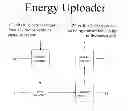
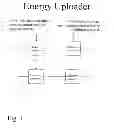
FIG. 1 shows the process and related components to the Energy Uploader.
DETAILED DESCRIPTION
Using the vehicles existing alternator, a battery isolator monitors the rate-of-charge and condition of the vehicles primary battery. Once the primary battery is fully charged the battery isolator redirects the 12-volt dc electrical energy to an electrical step-up converter that converts the 12-volt input to 24-volt output. At this point the 24-volt output is stored in a secondary battery bank. When the battery bank is fully charged the battery isolator signals the alternator that charging is complete. When the vehicle is parked and the vehicle is shut-off. A retractable 15 amp electrical cord that is mounted within the vehicle can be plugged into any standard 15 amps or greater electrical socket. Once this connection is made, the vehicles on-board grid-tie inverter is activated and begins the process of converting the stored 24-volt dc energy into 120-volt ac electrical energy that can be immediately used or uploaded into the utility power grid
Claims
I claim:1. This process of using a motorized vehicle with battery isolator combined with a step up inverter, a battery bank and a grid tie inverter is unique and has not been put together in this process to produce electricity into the power grid.
Images & Drawings included:
Sources:
- United States Patent and Trademark Office - verify current appl. status at the USPTO↗
Similar patent applications:
Recent applications in this class:
- » 20130127475 2013-05-23
System and method for calculating and displaying average auxiliary power in a vehicle - » 20130124117 2013-05-16
ELECTRIC VEHICLE AND METHOD OF DIAGNOSING CURRENT SENSOR - » 20130106176 2013-05-02
Power supply system for electric vehicle and control method thereof - » 20130082521 2013-04-04
System and method for managing electrical loads in a vehicle - » 20130020863 2013-01-24
POWER SUPPLY SYSTEM AND VEHICLE EQUIPPED WITH POWER SUPPLY SYSTEM