Aripiprazole compositions and methods for its transdermal delivery
US20130209552A1
2013-08-15
13/879,485
2011-10-20
✅ Patent granted
US 9,138,402 B2
2015-09-22
WO; PCT/US2011/057080; 20111020
WO; WO2012/058091; 20120503
Snigdha Maewall
Caesar Rivise, PC
2032-01-19
Abstract:
The present invention discloses compositions of liquid and gel formulation containing aripiprazole in the form of a patch for transdermal delivery.
Inventors:
- Fotios M. Plakogiannis 32 🇺🇸 Whitestone, NY, United States
- Muhammed Anwar Hossain 2 🇺🇸 Congers, NY, United States
Assignee:
- TRANSDERMAL RESEARCH PHARM LABORATORIES, LLC 1 🇺🇸 Whitestone, NY, United States
Applicant:
Interested in similar patents?
Get notified when new applications in this technology area are published.
Classification:
A61K9/0014 » CPC main
Medicinal preparations characterised by special physical form; Galenical forms characterised by the site of application Skin, i.e. galenical aspects of topical compositions
A61F13/00 IPC
Bandages, dressings or absorbent pads; First-aid kits
A61F13/00 IPC
Bandages or dressings ; Absorbent pads
A61K9/00 IPC
Medicinal preparations characterised by special physical form
A61K9/06 » CPC further
Medicinal preparations characterised by special physical form Ointments; Bases therefor; Other semi-solid forms, e.g. creams, sticks, gels
A61K9/08 » CPC further
Medicinal preparations characterised by special physical form Solutions
A61K31/496 » CPC further
Medicinal preparations containing organic active ingredients; Heterocyclic compounds having nitrogen as a ring hetero atom, e.g. guanethidine or rifamycins having six-membered rings with two nitrogen atoms as the only ring heteroatoms, e.g. piperazine Non-condensed piperazines containing further heterocyclic rings, e.g. rifampin, thiothixene
A61K47/10 » CPC further
Medicinal preparations characterised by the non-active ingredients used, e.g. carriers or inert additives; Targeting or modifying agents chemically bound to the active ingredient; Organic compounds, e.g. natural or synthetic hydrocarbons, polyolefins, mineral oil, petrolatum or ozokerite containing oxygen, e.g. ethers, acetals, ketones, quinones, aldehydes, peroxides Alcohols; Phenols; Salts thereof, e.g. glycerol; Polyethylene glycols [PEG]; Poloxamers; PEG/POE alkyl ethers
A61K47/32 » CPC further
Medicinal preparations characterised by the non-active ingredients used, e.g. carriers or inert additives; Targeting or modifying agents chemically bound to the active ingredient; Macromolecular organic or inorganic compounds, e.g. inorganic polyphosphates Macromolecular compounds obtained by reactions only involving carbon-to-carbon unsaturated bonds, e.g. carbomers, poly(meth)acrylates, or polyvinyl pyrrolidone
A61K47/44 » CPC further
Medicinal preparations characterised by the non-active ingredients used, e.g. carriers or inert additives; Targeting or modifying agents chemically bound to the active ingredient Oils, fats or waxes according to two or more groups of -; Natural or modified natural oils, fats or waxes, e.g. castor oil, polyethoxylated castor oil, montan wax, lignite, shellac, rosin, beeswax or lanolin
Description
FIELD OF THE INVENTION
The present invention relates to the field of transdermal delivery of pharmaceutical compositions, which have an acceptable in vitro performance and good bioavailability. In particular, the transdermal pharmaceutical compositions of the present invention include liquids or gels of aripiprazole in a patch dosage form.
BACKGROUND OF INVENTION
Aripiprazole (ARPZ) is the first of a new class of atypical antipsychotics (third generation). Biochemically, ARPZ is a partial agonist of the D2 family of dopamine receptors.1,2 It is active against positive and negative symptoms of schizophrenia.3,4 ARPZ is a quinolinone derivative, white crystalline powder, practically insoluble in water, with a low melting point (135-140° C.), MW 448.38 g/mole and partition coefficient of 4.54.
DESCRIPTION OF THE INVENTION
Example
ARPZ is practically insoluble in water and has been formulated as a liquid and gel dosage form (Table 1). All reported values are in weight/volume percentage (W/V)
| TABLE 1 |
| Composition of liquid and gel formulation of Aripiprazole (5% W/V) |
| W/V | W/V | |
| N-methyl-2-pryolidone (NMP) | 40% | 40% |
| Dimethyl Sulfoxide (DMSO) | 40% | 40% |
| Ethyl Alcohol | 15% | 15% |
| Carbopol 971P | — | 0.5% |
| Water | 5% | 4.5% |
| Total | 100.00% | 100.00% |
An optimal mixture design of experiments was used to select the levels of the formulation variables. The optimum composition of a 1% W/V to 20% W/V ARPZ liquid formulation was predicted to have NMP 40%, DMSO 40%, Alcohol 15% and water 5% (Table 1). The gel formulation should contain a gelling agent in the range of about 0.1% to 5% W/V and the optimum APRZ composition should range from about 1% W/V to 20% W/V with about 0.5% W/V of the gelling agent. Therefore, the gel formulation was predicted to have a NMP of 40%, DMSO 40%, Alcohol 15%, Carbopol 971 0.5%, and Water 4.5% (Table 1). However, Table 2 lists other combinations that also could produce successful liquid and gel ARPZ formulations in accordance with the present invention.
| TABLE 2 |
| Concentration Ranges of N-Methyl-2-Pyrolidone |
| (NMP), Dimethl Sulfoxide (DMSO), Ethyl Alcohol, |
| and Water in Liquid Aripiprazole Formulation |
| Formulation | NMP | DMSO | Alcohol | Water |
| 1. | 50 | 50 | — | — |
| 2. | 40 | 40 | 20 | — |
| 3. | 40 | 40 | — | 20 |
| 4. | 40 | 40 | 15 | 5 |
| 5. | 40 | 40 | 10 | 10 |
| 6. | 40 | 40 | 5 | 15 |
| 7. | 30 | 30 | 20 | 20 |
| 8. | 30 | 30 | 30 | 10 |
| 9. | 30 | 40 | 25 | 5 |
| 10. | 40 | 30 | 25 | 5 |
| 11. | 45 | 45 | 10 | 0 |
| 12. | 45 | 40 | 10 | 5 |
Other than these components, other solvents known to those skilled in the art suitable for use in the present invention can be used to prepare the liquid formulation, and combinations thereof, including but not limited to alcohols such as but not limited to (methyl, ethyl, butyl, propyl, isopropyl, isopropyl myristate, etc.), glycols such as, but not limited to(propylene, polyethylene, glycerin, etc.) mineral oils, vegetable oils, and others.
Example
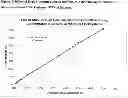
The effect of gelling agents and their concentration on the permeation of ARPZ through artificial membranes and human cadaver skin was evaluated and two characteristic graphs are shown in FIGS. 1 & 2. The optimal desired composition of ARPZ gel formulation contains 0.5% W/V Carbopol 971. ARPZ can be gelled by gelling agents, including but not limited to, natural polymers (such as agar, alginic acid and derivatives, cassia tora, collagen, gelatin, gellum gum, guar gum, pectin, potassium, or sodium carageenan, tragacanth, xanthan, etc), semisynthetic polymers (such as methylcellulose, carboxymethylcellulose, hydroxypropylcellulose, hydroxypropylmethylcellulose, etc.) synthetic polymers (such as carboxyvinyl polymers or carbomers: carbopol 940, carbopol 934, carbopol 971, poloxamer, polyacrylamide, polyvinyl alcohol, polyethylene, and its co-polymers etc), and clays (such as silicates, etc). In addition, other than cellulose membranes, ARPZ can be evaluated with other artificial membranes including but not limited to silicone membranes (polydimethylsiloxane), liposome-coated membranes, solid-supported liquid membranes, lecithin organogel membranes and other. Besides the gel formulations of ARPZ, other dosage forms including, but not limited to, ointments, creams, emulsions, liposomes, etc. may be used.
Example
The effect of enhancers on the flux of ARPZ through human cadaver skin was evaluated and is shown in FIG. 3. The desired optimum composition of ARPZ gel formulation contained Lauric and Myristc acid. Apart from Lauric and Myristc acid enhancer, the ARPZ transdermal delivery can be influenced by enhancers including but not limited to water, sulfoxides, and similar chemicals, dimethylsulfoxide (DMSO), dimethylacetamide (DMAC), dimethylformamide (DMF), decymethylsulfoxide (DCMS) etc, azone, pyrrolidones N-methyl-2-pyrrolidone (NMP), 2-pyrrolidon (2p), etc., fatty acids esters (butyl ethanoate, ethyl ethanoate, ethyl oleate, isopropyl myristate, isopropyl palmiate, methyl ethanoate etc), fatty acids (capric, caprylic, lauric, oleic, myristic, linoleic, stearic, palmitic etc), alcohols, fatty alcohols and glycols (nathanol, dodecanol, propylene glycols, glycerol etc), urea, essential oils, terpene and terpenoids (limonene, thymol, cineole etc), liposomes, niosomes, transferomes, ethanosomes etc.
Example
The effects of pH on the permeation of ARPZ through human cadaver skin were evaluated and a characteristic graph is shown in FIG. 2. The preferred optimum composition of ARPZ gel transdermal formulation had a pH in the range of approximately 6 to 7. Other than these optimal pH values, the ARPZ transdermal delivery may be influenced by pH values outside of the preferred range, but to a lesser extent. Thus, the present invention may still be achieved outside of the preferred pH range of approximately 6 to 7, depending upon the circumstances of use.
The systems of this discovery can deliver ARPZ at a flux between 50 mcg/ch-2. h and 800 mcg/ch-2. h, which can produce the required therapeutic ARPZ blood levels. Flux rate can be changed by modifying such parameters as ARPZ initial concentration, surface area of the patch, pH of the formulation, vehicle composition, enhancer type and composition, etc., in accordance with the teachings of the present invention.
Optimum therapeutic outcome requires not only a proper drug selection but also an effective drug delivery. Psychotropic drug compliance of rigorous regular medication schedules is of great importance. In many instances, oral administration of psychotropic agents is considered a less than optimal delivery system due to patient non-compliance5. Transdermal delivery of psychotropic drugs, especially with prolonged duration of action, would be valuable in increasing medication compliance, especially in the geriatric population. Further, potential advantages of ARPZ transdermal delivery are as follows: lack of hepatic first pass effect; eliminating the potential for over- or under-dosing; allowing the flexibility of terminating the drug administration by simply removing the patch; providing a simplified therapeutic regimen, thereby assisting medication compliance in the geriatric population.
REFERENCES
1. Inoue, T., Domae, M., Yamada, K., and Furukawa, T. Effects of the novel antipsychotic agent 7-([4-2,3-dichlorophenylo-1-piperazinyl] b Neuroutyloxyo-3,4-dihydro2 (1H)-quinolinone (OPC-14597) on prolactin release from the rat anterior pituitary. J. Pharmacol. Exp. Ther. 1996;277(1):137-143.
2. Burris, K. D., Moiski, T. F., Ryan, E., Xu, C., Tottori, K., Kikuchi, T., Yocca, F. D, and Molinoff, P. B. Aripiprazole is a high affinity partial agonist at human D2 dopamine receptors. Int. J. Neuropsychopharmacol. 2000;3(Supp1.), S129.
3.Petrie, J. L., Saha, A. R., and McEvoy, J. P. Aripiprazole, a new atypical antipsychotic: Phase II clinical trial results. Eur. Neuropsychopharm 1997; 7 (Suppl 2): S227.
4. Saha, A. R., McQuade, R., Carson, W. H., Ali, M., W., Durbar, G. C., and Ingenito, G. Efficacy and safety of Aripiprazole and Risperidone vs. Placebo in patients with schizophrenia and schizoaffective disorder. World J. Biol Psych 2001; 2 (Suppl 1): 305S.
5. Geeta, A., Sanju, D., Psychotropic Drugs and Transdermal Delivery. An Overview. Int. J. of Pharma and Bio Science, 2001;V 1(2).
Claims
1. A pharmaceutical composition comprising aripiprazole in a dosage form for transdermal delivery.
2. The pharmaceutical composition of claim 1 wherein the aripirazole is in a gel or liquid form.
3. The pharmaceutical composition of claim 1 wherein the aripirazole is present in the amount of 1 to 20% w/v.
4. The pharmaceutical composition of claim 2 wherein the aripirazole is present in the amount of 1 to 20% w/v.
5. The pharmaceutical composition of claim 2 wherein the gel contains a gelling agent in the range of about 0.1% to 5% w/v.
6. The pharmaceutical composition of claim 1 further comprising approximately 40% N-methyl-2-pyrrolidone, 40% DiMethylsulfoxide, 15% alcohol and 5% water.
7. The pharmaceutical composition of claim 1 being in the form of a liquid and comprising an alcohol, glycol, mineral oil, and/or vegetable oil.
8. The pharmaceutical composition of claim 2 wherein the composition is in a gel form and further comprises a gelling agent selected from the group consisting of natural polymers, semisynthetic polymers, synthetic polymers, carboxyvinyl polymers or carbomers, carbopol 940, carbopol 934, carbopol 971, poloxamer, polyacrylamide, polyvinyl alcohol, polyethylene and co-polymers thereof.
9. The pharmaceutical composition of claim 1 wherein the form is a patch for transdermal delivery.
10. The pharmaceutical composition of claim 1 being in the dosage form of an ointment, cream, emulsion, or liposome.
11. The pharmaceutical composition of claim 10 wherein the aripirazole is present in the amount of 1 to 20% w/v.
12. The pharmaceutical composition of claim 1 further comprising an enhancer.
13. The pharmaceutical composition of claim 12 wherein the enhancer is selected from the group consisting of lauric acid, myristc acid, water, sulfoxides, dimethylsulfoxide, dimethylacetamide, dimethylformamide, decymethylsulfoxide, azone, pyrrolidones, fatty acid esters, fatty acids, alcohols, fatty alcohols and glycols, urea, essential oils, terpene and terpenoids, liposomes, niosomes, transferomes and ethanosomes.
14. The pharmaceutical composition of claim 1 wherein the pH of the composition is approximately 6 to 7.
15. The pharmaceutical composition of claim 4 wherein the pH of the composition is approximately 6 to 7.
Images & Drawings included:


Sources:
- United States Patent and Trademark Office - verify current appl. status at the USPTO↗
Similar patent applications:
Recent applications in this class:
- » 20250281392 2025-09-11
TOPICAL DELIVERY OF EPINEPHRINE AND PRODRUG COMPOSITIONS - » 20250275915 2025-09-04
COMPOSITIONS FOR TOPICAL TREATMENT OF MICROBIAL INFECTIONS - » 20250275914 2025-09-04
PREPARATION METHOD AND CONTAINER FOR A TOPICAL WOUND HEALING GEL - » 20250268815 2025-08-28
TRANSDERMAL DELIVERY SYSTEMS FOR ADMINISTRATION OF HYDROPHILIC MOLECULES AND METHODS OF MAKING AND USING SAME - » 20250241848 2025-07-31
NANOPARTICLE COMPOSITIONS, FORMULATIONS THEREOF, AND USES THEREFOR - » 20250195411 2025-06-19
EYELID DYSFUNCTION TREATMENT SERUM - » 20250195410 2025-06-19
TOPICAL PHARMACEUTICAL COMPOSITION WITH ANTI-INFLAMMATORY AND ANALGESIC ACTIVITY AND USES THEREOF - » 20250195409 2025-06-19
METHODS FOR IMPROVING CUTANEOUS PERMEATION OF CANNABINOIDS AND FATTY ACID AMIDES - » 20250177286 2025-06-05
COMPOSITIONS FOR SENSITIVE SKIN - » 20250144009 2025-05-08
TOPICAL FORMULATIONS COMPRISING TOFACITINIB