Sound measuring and regulating device for a horn
US20130214916A1
2013-08-22
13/881,718
2011-11-01
✅ Patent granted
US 9,266,469 B2
2016-02-23
WO; PCT/BR2011/000408; 20111101
WO; WO2012/058741; 20120510
John A Tweel, Jr.
Nevrivy Patent Law Group P.L.L.C.
2031-11-01
Abstract:
A sound measuring and dispensing device for a horn made by a control panel with switches (1), which by activating one of the switches, sends signals to be evaluated by the command module (2) that is connected to the relay (4), it activates the horn (5) processing a specific sound pre-programmed to that contact. Each control button (1) corresponds to a programmed sound, fulfilling the expectations of the user. The aim being to regulate and dispense these sounds, creating a healthier environment for all, without interfering with the original setup of the wheel's panel (3) which continues activating the factory's original horn.
Inventors:
- Wadih Antonio Garios 1 🇧🇷 Cidade Juiz de Fora, Brazil
- Wadih Antonio Garios 5 🇧🇷 Juiz De Fora, Brazil
Applicant:
Interested in similar patents?
Get notified when new applications in this technology area are published.
Classification:
B60Q5/001 » CPC main
Arrangement or adaptation of acoustic signal devices Switches therefor
B06B1/0215 » CPC further
Methods or apparatus for generating mechanical vibrations of infrasonic, sonic, or ultrasonic frequency making use of electrical energy; Driving circuits for generating pulses, e.g. bursts of oscillations, envelopes
B60Q5/00 » CPC further
Arrangement or adaptation of acoustic signal devices
B60R16/02 » CPC further
Electric or fluid circuits specially adapted for vehicles and not otherwise provided for; Arrangement of elements of electric or fluid circuits specially adapted for vehicles and not otherwise provided for electric constitutive elements
G08B3/10 » CPC further
Audible signalling systems; Audible personal calling systems using electric transmission; using electromagnetic transmission
B60Q1/00 IPC
Arrangement of optical signalling or lighting devices, the mounting or supporting thereof or circuits therefor
B06B1/02 IPC
Methods or apparatus for generating mechanical vibrations of infrasonic, sonic, or ultrasonic frequency making use of electrical energy
Description
The following patent refers to a transport vehicle's horn regulating and dispensing device that sends an acoustic signal, which thanks to its special constructive and performance features, advantageously stands out, in an efficient and practical way.
The acoustic sounds are made by vehicles, by applying pressure on a switch, a horn pad, which activates the horn and makes sound.
Because the horn switches are stiff or hard to manage in some vehicles, its handling becomes complicated, and when they're used, make sounds that are undesired by the user and that don't always communicate the driver's message, thus creating embarrassing situations, conflicts between people involved and even an excess of noise pollution, perpetrating even more problems for humans.
One of these problems occur when the user needs to only alert of the presence of his vehicle in an area disputed with pedestrians, an area common to both, such as the exit of a parking, the entrance of a petrol station, etc . . . In certain situations of public road crossings, people, from teens to adults, cross in front of cars at a very close distance, making it necessary for the driver to alert the pedestrian by use of the horn. Instead of emitting a low and short sound, which is what the driver expects, the horn makes a strident sound, which scares all around. Because of its hard mechanism and the difficultly to manage, it makes this strident sound, causing several types of negative reactions to social interactions and to people's health. This and many other situations are routine and cause a diversity of uncalculated harm to all who co-exist with vehicles.
With the goal of achieving a solution to these problems, and aiming to overcome them, the “Horn's Sound Regulating & Dispenser Device” was created. This is the subject of the present patent, seeking to supply a solution, being that this system regulates and dispenses the sound made by the horn as it is activated by the user. The driver and pedestrian are thus provided with security and comfort, since when it is used the acoustic sound it emits is according to its design.
Its characteristics are efficiency in regulating and dispensing the sound produced by the car's horn, without changing its normal function and low cost production and installation, being easy to operate and upkeep since the car's original horn continues to be used to activate sound in the same way as before.
The purpose of the “Horn's Sound regulator and dispenser device”, topic of the present, patent of invention, may be better understood by the following detailed description, in line with the attached picture.
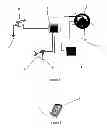
FIGS. 1 and 2 show an overview of the parts, with respective indications, that make up the patent of invention.
To describe the patent of invention in more detail, shown in FIGS. 1 and 2 and accompanied by the present descriptive report, the “horn's sound regulator and dispenser device” is made of a push-button control panel (1), adaptable and preferably set in the wheel (3) or in a position desired by the user.
Besides its arrangement on the panel, this control panel's push buttons are embossed so as to allow the user to identify them by touch, and to activate the correct push button needed for the occasion. By activating any of the push buttons a signal is sent by cable or antenna to the main control module (2) which interprets the signal and activates the relay (4) and turns the horn on (5) processing a specific sound pre-programmed to that contact. Each push button (1) corresponding to a specific sound, fulfils the user's expectations, who is able to evaluate the situation and emit an appropriate acoustic signal without causing any extra discomfort.
Its original mechanism continues to be the same, the structure on the wheel (3) being the horn's switch (5) that is connected to the relay (4) which activates the horn (5) through the battery's (6) energy, giving off an acoustic signal.
To choose the sound for each push button, the switches must each be programmed on the control module according to each situation. For example: The control button (1) is programmed for a very short distance, so the sound emitted by the horn is very low & short, and if the finger is kept on the push button for some time it repeats the same acoustic signal every so often, within a time that is also programmed. Ratifying this example by numbers, we will assume a sound of 0.4 to 0.6 seconds and if the push button is kept pressed, it would repeat every 1.5 seconds. These intervals will be according to the user and his horn's system. Another example, now for the control panel's (1) push button (2): we wily imagine the user chose that it should emit two consecutive short sounds (each with duration of approximately 0.6 seconds) and between the signals a short space in silence (approximately 0.8) which if the push button were pressed again, both of the short sounds would be repeated in a space of for example 1.0 to 1.5 seconds. Thus equally for each of the other push buttons. Each adjustment must be adequate to the specific type of horn. In the case of the command being of 3 or more push buttons, the first could correspond to a warning for short distances, the second for a little farther distances and so forth, or according to the user's need, always seeking to regulate and dispense these sounds to make an atmosphere that's healthier for all.
The control panel (1) is connected to the command module (2) that is connected to the relay (4) and activates the horn (5). When it is activated in the traditional way the control panel ((1) is interrupted without interfering in the original make of the vehicle.
Claims
1. A sound regulator and dispensing device characterized by being made of a push-button control panel (1), adaptable and preferably set in the wheel (3) or in a position desired by the user. By activating any of the push buttons a signal is sent by cable or antenna to the main control module (2) which interprets the signal and activates the relay (4) and turns the horn on (5) processing a specific sound pre-programmed to that contact. Each control button (1) corresponds to a programmed sound, fulfilling the expectations of the user. It remains at the wheel (3) where the horn's original push button is located (5) and connected to the relay (4), which through the energy from the battery (6), produces an acoustic signal for the horn (5) preserving the vehicle's originality.
Images & Drawings included:

Sources:
- United States Patent and Trademark Office - verify current appl. status at the USPTO↗
Recent applications in this class:
- » 20240351517 2024-10-24
Power distribution box with a disabling circuit - » 20240208406 2024-06-27
VEHICLE SEARCH INDICATION METHOD, DEVICE, COMPUTER-READABLE STORAGE MEDIUM, AND VEHICLE - » 20220396204 2022-12-15
VEHICLE HORN SOUND OUTPUT DEVICE - » 20220355732 2022-11-10
System and method for generating virtual engine sound of vehicle - » 20180222384 2018-08-09
AUDIO OF EXTERNAL SPEAKERS OF VEHICLES BASED ON IGNITION SWITCH POSITIONS - » 20170355305 2017-12-14
Airport terminal courtesy car indicator system using speakers for providing instructions - » 20140077943 2014-03-20
Vehicular child alert device - » 20130320650 2013-12-05
High lock warning system for fifth wheel hitches - » 20130249680 2013-09-26
Vehicle presence notification apparatus - » 17544469 2022-04-26
Multifunction siren device locking system