SPLIT-TYPE CONTROLLING DEVICE FOR PRODUCING OXYGEN AND DELIVERING AIR
US20130263853A1
2013-10-10
13/442,661
2012-04-09
Abstract:
The present invention relates to a split-type controlling device for producing oxygen and delivering air and includes an outdoor unit, a plurality of indoor units, and a control panel. The control panel includes a controlling unit, which is utilized to control the outdoor unit and the indoor units. Carrying oxygen produced by the outdoor unit to an indoor space through an oxygen outlet preferably enhances air quality indoors.
Interested in similar patents?
Get notified when new applications in this technology area are published.
Classification:
B01D53/0454 » CPC main
Separation of gases or vapours; Recovering vapours of volatile solvents from gases; Chemical or biological purification of waste gases, e.g. engine exhaust gases, smoke, fumes, flue gases, aerosols, by adsorption, e.g. preparative gas chromatography with stationary adsorbents Controlling adsorption
A61M16/101 » CPC further
Devices for influencing the respiratory system of patients by gas treatment, e.g. mouth-to-mouth respiration; Tracheal tubes; Preparation of respiratory gases or vapours with O features or with parameter measurement using an oxygen concentrator
C01B13/0262 » CPC further
Oxygen; Ozone; Oxides or hydroxides in general; Preparation of oxygen; Purification or separation processes; Physical processing only by adsorption on solids characterised by the adsorbent
A61M16/107 » CPC further
Devices for influencing the respiratory system of patients by gas treatment, e.g. mouth-to-mouth respiration; Tracheal tubes; Preparation of respiratory gases or vapours; Filters in a path in the inspiratory path
A61M16/16 » CPC further
Devices for influencing the respiratory system of patients by gas treatment, e.g. mouth-to-mouth respiration; Tracheal tubes; Preparation of respiratory gases or vapours by mixing different fluids, one of them being in a liquid phase Devices to humidify the respiration air
A61M16/202 » CPC further
Devices for influencing the respiratory system of patients by gas treatment, e.g. mouth-to-mouth respiration; Tracheal tubes; Valves specially adapted to medical respiratory devices; Controlled valves electrically actuated
A61M2016/0033 » CPC further
Devices for influencing the respiratory system of patients by gas treatment, e.g. mouth-to-mouth respiration; Tracheal tubes; Accessories therefor, e.g. sensors, vibrators, negative pressure with a flowmeter electrical
A61M2016/1025 » CPC further
Devices for influencing the respiratory system of patients by gas treatment, e.g. mouth-to-mouth respiration; Tracheal tubes; Preparation of respiratory gases or vapours with O features or with parameter measurement; Measuring a parameter of the content of the delivered gas the O concentration
A61M2205/0205 » CPC further
General characteristics of the apparatus characterised by a particular materials Materials having antiseptic or antimicrobial properties, e.g. silver compounds, rubber with sterilising agent
A61M2205/3561 » CPC further
General characteristics of the apparatus; Communication; Range local, e.g. within room or hospital
A61M2205/3592 » CPC further
General characteristics of the apparatus; Communication with non implanted data transmission devices, e.g. using external transmitter or receiver using telemetric means, e.g. radio or optical transmission
A61M2205/7509 » CPC further
General characteristics of the apparatus with filters for virus
A61M2205/7518 » CPC further
General characteristics of the apparatus with filters bacterial
A61M2205/7545 » CPC further
General characteristics of the apparatus with filters for solid matter, e.g. microaggregates
A61M2205/759 » CPC further
General characteristics of the apparatus with filters for removing preservatives, e.g. heavy metal compositions
A61M2209/01 » CPC further
Ancillary equipment Remote controllers for specific apparatus
A61M2230/10 » CPC further
Measuring parameters of the user; Other bio-electrical signals Electroencephalographic signals
B01D2253/102 » CPC further
Adsorbents used in seperation treatment of gases and vapours; Inorganic adsorbents Carbon
B01D2253/112 » CPC further
Adsorbents used in seperation treatment of gases and vapours; Inorganic adsorbents Metals or metal compounds not provided for in or
B01D2255/802 » CPC further
Catalysts; Type of catalytic reaction Photocatalytic
B01D2256/12 » CPC further
Main component in the product gas stream after treatment Oxygen
B01D2257/102 » CPC further
Components to be removed; Single element gases other than halogens Nitrogen
B01D2257/80 » CPC further
Components to be removed Water
B01D2257/90 » CPC further
Components to be removed Odorous compounds not provided for in groups -
B01D2257/91 » CPC further
Components to be removed Bacteria; Microorganisms
B01D2259/4508 » CPC further
Type of treatment; Gas separation or purification devices adapted for specific applications for cleaning air in buildings
A61M16/00 IPC
Devices for influencing the respiratory system of patients by gas treatment, e.g. mouth-to-mouth respiration; Tracheal tubes
B01D53/02 IPC
Separation of gases or vapours; Recovering vapours of volatile solvents from gases; Chemical or biological purification of waste gases, e.g. engine exhaust gases, smoke, fumes, flue gases, aerosols, by adsorption, e.g. preparative gas chromatography
B01D50/00 IPC
Combinations of methods or devices for separating particles from gases or vapours
B82Y30/00 IPC
Nanotechnology for materials or surface science, e.g. nanocomposites
Description
1. FIELD OF THE INVENTION
The present invention relates to a split-type controlling device for producing oxygen and delivering air, especially to the device that allows an outdoor unit to produce oxygen and delivers the oxygen to indoor units, so that an indoor space could be full of oxygen.
2. DESCRIPTION OF THE RELATED ART
An R.O.C. patent No. 566521 discloses “A SPLIT AIR CONDITIONER PROVIDING OXYGEN AND PURIFICATION”. Wherein, an outdoor unit has an oxygen enrichment device to produce oxygen of high concentration. The oxygen is further delivered to a heat exchanger installed in an indoor unit by a pipe, so that the oxygen that contains high temperature and rich moisture is further processed and thence delivered to an indoor space. Accordingly, the indoor space is provided with high oxygen content.
Afore disclosures have shortcomings as follows:
1. The oxygen enrichment device is a subordinate device to the air conditioner. Namely, there is no exclusive and proper pipe arrangement for delivering oxygen, and there is no controlling module. Accordingly, the oxygen is unsuitably delivered.
2. Referring to FIG. 5 of afore disclosure, an oxygen enrichment module of the oxygen enrichment device utilizes an oxygen enrichment membrane to execute a separation of oxygen over nitrogen. Through the molecule membrane, the air is produced with less than 30% oxygen content. Herein, if the air with less than 30% oxygen content is released in the indoor space, it is in fact not helpful to enhance the oxygen content in the indoor space.
3. The air conditioner of the disclosure does not filter the outdoor air first and then deliver clean air to the oxygen enrichment device for generating oxygen. Accordingly, the oxygen provided by the oxygen enrichment device is not clean enough. As a result, the air quality indoors is influenced.
4. The oxygen flow generated in accordance with the oxygen enrichment membrane is less than 10 liters per minute. Obviously, the oxygen flow is unsatisfactory for enhancing the oxygen content indoors.
5. The oxygen generated in the disclosure does not go through a dehydration process. The oxygen is directly delivered to the indoor unit. Wherein, the pipe easily gathers moss in view of humidity. As a result, the oxygen quality is influenced, and the maintenance of the device and the pipe becomes difficult.
SUMMARY OF THE INVENTION
A split-type controlling device for producing oxygen and delivering air in accordance with the present invention comprises an outdoor unit having an air purification unit, an oxygen condenser, and a molecule sieve that are orderly connected by a pipe; a plurality of indoor units being connected to the molecule sieve through the pipe; each of the indoor units having an oxygen outlet, and an oxygen sensor disposed near the oxygen outlet; and a control panel having a controlling unit; the controlling unit being electrically connected to the outdoor unit and the indoor units so as to control an operation of the outdoor unit and the indoor units; the controlling unit allowing oxygen generated by the outdoor unit to be output from the oxygen outlet of one of the indoor units.
Advantages over the present invention are as follows:
1. The present invention allows a single outdoor unit to be set correspondingly to multiple indoor units. Moreover, the pipe is arranged properly for each indoor unit to be placed in different rooms. Whereby, a supplying mode and a supplying position of the oxygen could be controlled by the control panel, thence conducing to an exclusive device for producing oxygen and delivering the same.
2. When the separation of oxygen over nitrogen in the air is executed by the molecule sieve, the oxygen of high concentration that contains 40% to 50% oxygen could be produced. The flow is also promoted to 40 litters to 50 litters per minute. Accordingly, if such oxygen of high concentration is released in the indoor space, the oxygen content indoors is obviously encouraged.
3. External air is efficiently filtered; therefore, the device produces clean oxygen.
4. The oxygen content can reach to 90% for emergent patients while emergency.
5. The split-type design keeps the indoor space quiet. When Pythoncidere is provided, the air quality indoors is even better.
6. When the control panel is applied for users to choose a manual mode, users are able to manually turn on the outdoor unit as well as the oxygen outlet of any one of the indoor units. Accordingly, the controlling device is more suited to the need of users with economical electricity.
7. When the control panel is further applied for users to choose a semi-automatic mode or an automatic mode, a single controlling means or a united controlling means is accessible. When the single controlling means is adopted, the oxygen sensor automatically enhances or reduces the oxygen concentration according to a predetermined value. When the united controlling means is adopted, a detecting receiver is able to detect and receive a location signal from an emitter. Accordingly, when users approach any detecting receiver, the outdoor unit is automatically turned on so as to produce oxygen. Thereby, the indoor unit set in accordance with where the users stay allows its oxygen outlet to release oxygen. These modes are especially economical of electricity. Moreover, the controlling device for producing oxygen is further intelligent.
BRIEF DESCRIPTION OF THE DRAWINGS
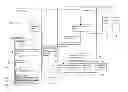
FIG. 1 is a schematic view showing components and their accordant relationships of the present invention;
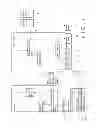
FIG. 2 is a schematic view showing a relationship between switches of a control panel and an emitter of the present invention;
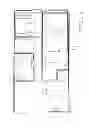
FIG. 3 is a schematic view showing a relationship among an outdoor unit, indoor units, and the control panel of the present invention in operation;
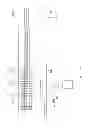
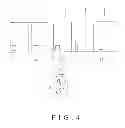
FIG. 4 is a schematic view showing a relationship between an emitter and a detecting receiver of the present invention; and
FIG. 5 is a schematic view showing an electroencephalogram detector included in the indoor unit of the present invention.
DETAILED DESCRIPTION OF THE PREFERRED EMBODIMENTS
Referring to FIG. 1, a split-type controlling device for producing oxygen and delivering air comprises:
an outdoor unit 1 being installed outdoors; the outdoor unit 1 having an air purification unit 11, an exsiccator 12, a catalyst sterilization unit 13, an oxygen condenser 14, and a molecule sieve 15 that are orderly connected by a pipe 2;
at least one indoor unit 3 being installed indoors; the indoor unit 3 being connected to the molecule sieve 15 through the pipe 2; each of the indoor units 3 having a flow controlling unit 31, a humidifying and Pythoncidere unit 32, an oxygen outlet 33, a flow sensor 34, an oxygen sensor 35 that are connected to the indoor unit 3; and
a control panel 4 having a controlling unit 41; the controlling unit 41 being connected to the outdoor unit 1 and the indoor unit 3 so as to control an operation of the outdoor unit 1 and the indoor unit 3.
Wherein, the outdoor unit 1 allows external air to enter the air purification unit 11. Herein, the air purification unit 11 provides three filtering means. A piece of filter paper 111 blocks heavy metal or large dust particles in the air first. Then, a bamboo charcoal filter 112 deodorizes, dehydrates, and filters the air. Next, a nano-silver filter 113 utilizes the nano-silver to achieve antiseptic, deodorized, and anticorrosive functions. Accordingly, by means of the three filters, cleaner air is easily obtainable.
The air that is purified by the air purification unit 11 enters the exsiccator 12 via the oxygen condenser 14, so that moisture contained in the air is eliminated. Subsequently, the dehydrated air enters the catalyst sterilization unit 13 for being processed with photo catalyst or low-temperature catalyst. Herein, both the photo catalyst and the low-temperature catalyst have a high-efficiency broad spectrum. Therefore, such catalysts are good for sterilization and disinfection.
Further, the sterilized air enters the molecule sieve 15. Herein, the nitrogen whose particle size is larger is blocked from the molecule sieve 15. As to the oxygen, the molecule sieve does not block it since the oxygen has a smaller particle size. Therefore, the oxygen continues going forward for resulting in oxygen of high concentration. In this embodiment, there are twelve molecule sieve tubes defined on the molecule sieve 15 for respectively and orderly producing the oxygen of high concentration. As a result, the oxygen with a high flow rate and high concentration is available.
The indoor unit 3 carries the oxygen via the pipe 2, controls the flow rate via the flow controlling unit 31, and monitors the flow rate via the flow sensor 34. The humidifying and Pythoncidere unit 32 is utilized for adjusting relative humidity in the indoor space. Namely, the humidifying and Pythoncidere unit 32 could be switched to a slight mode, a medium mode, or a heavy mode. Moreover, under a certain temperature, the relative humidity should be maintained between 40% and 60%. To do so, a fine spray for increasing humidity enters the pipe 2, the fine spray further mixes with the oxygen, and the oxygen containing moisture is released by means of the oxygen outlet 33 to the indoor space.
Additionally, there is an air hole along with an oil can defined on the humidifying and Pythoncidere unit 32. Whereby, when the oxygen is carried to the air hole, the smell of Pythoncidere is also released to the indoor space. While an emergent oxygen pipe 36 is provided on one indoor unit 3, the oxygen content can reach to 90% for emergent patients in time of emergency.
Referring to FIG. 2, the control panel 4 includes a controlling unit 41 that provides a manual mode 411, a semi-automatic mode 412, and an automatic mode 413. The manual mode 411 has a first switch 4111 for the outdoor unit and five second switches 4112 for the oxygen outlets. The semi-automatic mode 412 has a first switch 4121 for the outdoor unit, five second switches 4122 for the oxygen outlets, a single controlling switch 4123, and a united controlling switch 4124. The automatic mode 413 has a first switch 4131 for the outdoor unit, five second switches 4132 for the oxygen outlets, a single controlling switch 4133, and a united controlling switch 4134. The control panel 4 further includes a transceiver 414, which is electrically connected to the switches correlated to the manual mode 411, the semi-automatic mode 412, and the automatic mode 413, and an emitter 5 disposed correspondingly to the transceiver 414. In this embodiment, the emitter 5 adopts a remote control that generates a selective signal to the transceiver 414, thereby allowing the manual mode 411, the semi-automatic mode 412, or the automatic mode 413 to be adopted. Afore design allows users to freely choose their desiring mode by manual or by remote operation.
Referring to FIGS. 1 and 3, the control panel 4 is installed in a storeroom A. The five indoor units 3 with their respective oxygen outlets 33 are placed in a living room B, a master bedroom C, a first bedroom D, a second bedroom E, and a dinning room/kitchen F. When the control panel 4 is just turned on by either the manual operation or the remote operation, and when no mode is adopted, the oxygen produced by the outdoor unit 1 will be output by the oxygen outlet 33 from the indoor unit 3 in the living room B. When users choose the single controlling switches 4123, 4133 of the semi-automatic mode 412 or the automatic mode 413, the oxygen sensor 35 connected to the indoor unit 3 is accordingly triggered. Basically, the oxygen content of the air is about 20.6% to 20.9%. Indoors, the preferred oxygen content of the air is 21% to 30%. Herein, the controlling unit 41 is able to set appropriate maximum and minimum of the oxygen content. Additionally, when the oxygen sensor 35 senses, a feedback signal is transmitted to the controlling unit 41, so that the accordant oxygen outlet 33 gives oxygen to the indoor space. The control panel 4 provides two options for setting the oxygen content. The first option is to set the oxygen content for health care. Herein, the oxygen content of the first option is similar to the oxygen content of a green shower in nature. Namely, the oxygen sensor 35 helps maintain the oxygen concentration between 21% and 24%, which is suited to normal people. The second option is to set the oxygen content for medical care. Herein, the oxygen concentration in this option is maintained between 24% and 30%, which is suited to patients having pathological hypoxia. Once either option is decided, the oxygen sensor 35 emits a signal to the controlling unit 41 for switching on the flow controlling unit 31 to give oxygen when the oxygen concentration is below the minimum. If the oxygen concentration is over the maximum, the oxygen is not supplied. Accordingly, the automatic mode is achieved.
Referring to FIG. 4, when users turn on the united controlling switches 4123, 4134 of the semi-automatic mode 412 and the automatic mode 413, both the oxygen sensor 35 and a detecting receiver 37 are concurrently triggered. Accordingly, the detecting receiver 37 detects and receives a location signal from the emitter 5 for automatically turning on or turning off the oxygen outlets 33 in the rooms, which is more economical of electricity.
Referring to FIG. 5, each of the indoor units 3 includes an electroencephalogram detector 38 for detecting electroencephalogram of human body indoors and transforming an α value and a β value of the electroencephalogram to electronic signals. Since human body generates different electroencephalograms while receiving diverse oxygen concentration, it could be easily realized that if the present oxygen concentration is suited to the human body. Whereby, the control panel 4 adjusts the output oxygen concentration in accordance with the electronic signals. Therefore, the oxygen concentration indoors is indeed suited to human body.
Claims
I claim:1. A split-type controlling device for producing oxygen and delivering air comprising:
an outdoor unit having an air purification unit, an oxygen condenser, and a molecule sieve that are orderly connected by a pipe;
a plurality of indoor units being connected to said molecule sieve through said pipe; each of said indoor units having an oxygen outlet, and an oxygen sensor disposed near said oxygen outlet; and
a control panel having a controlling unit; said controlling unit being electrically connected to said outdoor unit and said indoor units so as to control an operation of said outdoor unit and said indoor units; said controlling unit allowing oxygen generated by said outdoor unit to be output from said oxygen outlet of one of said indoor units.
2. The split-type controlling device as claimed in claim 1, wherein, said air purification unit includes a piece of filter paper, a bamboo charcoal filter, and a nano-silver filter
3. The split-type controlling device as claimed in claim 1, wherein, said indoor units include a flow sensor.
4. The split-type controlling device as claimed in claim 1, wherein, said indoor units include an emergent oxygen pipe.
5. The split-type controlling device as claimed in claim 1, wherein, said outdoor unit includes an exsiccator connected between said air purification unit and said oxygen condenser through said pipe.
6. The split-type controlling device as claimed in claim 5, wherein, said outdoor unit includes a catalyst sterilization unit connected between said exsiccator and said oxygen condenser.
7. The split-type controlling device as claimed in claim 1, wherein, said indoor units include a flow controlling unit.
8. The split-type controlling device as claimed in claim 1, wherein, said indoor units include a humidifying and Pythoncidere unit.
9. The split-type controlling device as claimed in claim 1, wherein, said control panel includes a manual mode, a semi-automatic mode, and an automatic mode.
10. The split-type controlling device as claimed in claim 9, wherein, said manual mode has a first switch for said outdoor unit and a plurality of second switches for said oxygen outlets.
11. The split-type controlling device as claimed in claim 9, wherein, said semi-automatic mode has a first switch for said outdoor unit, a plurality of second switches for said oxygen outlets, a single controlling switch, and a united controlling switch.
12. The split-type controlling device as claimed in claim 9, wherein, said automatic mode has a first switch for said outdoor unit, a plurality of second switches for said oxygen outlets, a single controlling switch, and a united controlling switch.
13. The split-type controlling device as claimed in claim 9, wherein, said control panel includes a transceiver and an emitter generating a selective signal to said transceiver, thereby allowing said manual mode, said semi-automatic mode, or said automatic mode to be selectively operated.
14. The split-type controlling device as claimed in claim 13, wherein, each indoor unit includes a detecting receiver for detecting and receiving a location signal from said emitter.
15. The split-type controlling device as claimed in claim 13, wherein, each of said indoor units includes an electroencephalogram detector for detecting electroencephalogram of human body and transforming said detection to electronic signals, thereby allowing said control panel to adjust oxygen concentration according to said electronic signals.