Process for the preparation of compounds containing perfluoroalkanesulfonic acid groups
US20130316248A9
2013-11-28
12/499,446
2009-07-08
Abstract:
The invention relates to a method for producing perfluoroalkanesulfonic acid esters and for further transforming the same into the salts thereof. The invention also relates to the use of the produced compounds in electrolytes, batteries, capacitors, supercapacitors, and galvanic cells.
Inventors:
- Nikolai Ignatyev 16 🇩🇪 Duisburg, Germany
- Michael Schmidt 21 🇩🇪 Seeheim-Jugenheim, Germany
- Udo Heider 9 🇬🇧 Winchester, United Kingdom
- Peter Sartori 9 🇩🇪 Utting, Germany
- Andry Kucheryna 3 🇩🇪 Wuppertal, Germany
Interested in similar patents?
Get notified when new applications in this technology area are published.
Classification:
H01G9/038 » CPC main
Electrolytic capacitors, rectifiers, detectors, switching devices, light-sensitive or temperature-sensitive devices; Processes of their manufacture; Details; Electrolytes; Absorbents Electrolytes specially adapted for double-layer capacitors
C07D231/12 » CPC further
Heterocyclic compounds containing 1,2-diazole or hydrogenated 1,2-diazole rings not condensed with other rings having two or three double bonds between ring members or between ring members and non-ring members with only hydrogen atoms, hydrocarbon or substituted hydrocarbon radicals, directly attached to ring carbon atoms
C07D233/56 » CPC further
Heterocyclic compounds containing 1,3-diazole or hydrogenated 1,3-diazole rings, not condensed with other rings having two double bonds between ring members or between ring members and non-ring members with only hydrogen atoms or radicals containing only hydrogen and carbon atoms, attached to ring carbon atoms
C07D249/08 » CPC further
Heterocyclic compounds containing five-membered rings having three nitrogen atoms as the only ring hetero atoms not condensed with other rings 1,2,4-Triazoles; Hydrogenated 1,2,4-triazoles
C07D295/023 » CPC further
Heterocyclic compounds containing polymethylene-imine rings with at least five ring members, 3-azabicyclo [3.2.2] nonane, piperazine, morpholine or thiomorpholine rings, having only hydrogen atoms directly attached to the ring carbon atoms containing only hydrogen and carbon atoms in addition to the ring hetero elements Preparation; Separation; Stabilisation; Use of additives
C07D295/037 » CPC further
Heterocyclic compounds containing polymethylene-imine rings with at least five ring members, 3-azabicyclo [3.2.2] nonane, piperazine, morpholine or thiomorpholine rings, having only hydrogen atoms directly attached to the ring carbon atoms containing only hydrogen and carbon atoms in addition to the ring hetero elements with quaternary ring nitrogen atoms
C07F9/5407 » CPC further
Compounds containing elements of Groups 5 or 15 of the Periodic System; Phosphorus compounds with one or more P—C bonds; Quaternary phosphonium compounds Acyclic saturated phosphonium compounds
C07F9/65688 » CPC further
Compounds containing elements of Groups 5 or 15 of the Periodic System; Phosphorus compounds; Heterocyclic compounds, e.g. containing phosphorus as a ring hetero atom having phosphorus atoms, with or without nitrogen, oxygen, sulfur, selenium or tellurium atoms, as ring hetero atoms having phosphorus atoms as the only ring hetero atoms the ring phosphorus atom being part of a phosphonium compound
H01G11/56 » CPC further
Hybrid capacitors, i.e. capacitors having different positive and negative electrodes; Electric double-layer [EDL] capacitors; Processes for the manufacture thereof or of parts thereof; Electrolytes Solid electrolytes, e.g. gels; Additives therein
H01G11/62 » CPC further
Hybrid capacitors, i.e. capacitors having different positive and negative electrodes; Electric double-layer [EDL] capacitors; Processes for the manufacture thereof or of parts thereof; Electrolytes; Liquid electrolytes characterised by the solute, e.g. salts, anions or cations therein
H01M10/0525 » CPC further
Secondary cells; Manufacture thereof; Accumulators with non-aqueous electrolyte; Li-accumulators Rocking-chair batteries, i.e. batteries with lithium insertion or intercalation in both electrodes; Lithium-ion batteries
H01M10/0568 » CPC further
Secondary cells; Manufacture thereof; Accumulators with non-aqueous electrolyte characterised by the materials used as electrolytes, e.g. mixed inorganic/organic electrolytes the electrolyte being constituted of organic materials only; Liquid materials characterised by the solutes
Y02E60/10 » CPC further
Enabling technologies; Technologies with a potential or indirect contribution to GHG emissions mitigation Energy storage using batteries
Y02E60/10 » CPC further
Enabling technologies; Technologies with a potential or indirect contribution to GHG emissions mitigation Energy storage using batteries
Y02E60/13 » CPC further
Enabling technologies; Technologies with a potential or indirect contribution to GHG emissions mitigation Energy storage using capacitors
Y02E60/13 » CPC further
Enabling technologies; Technologies with a potential or indirect contribution to GHG emissions mitigation Energy storage using capacitors
C07C303/26 » CPC further
Preparation of esters or amides of sulfuric acids; Preparation of sulfonic acids or of their esters, halides, anhydrides or amides of esters of sulfonic acids
C07C309/65 » CPC further
Sulfonic acids; Halides, esters, or anhydrides thereof; Esters of sulfonic acids having sulfur atoms of esterified sulfo groups bound to acyclic carbon atoms of a saturated carbon skeleton
H01M6/16 IPC
Primary cells; Manufacture thereof; Cells with non-aqueous electrolyte with organic electrolyte
H01G9/022 » CPC further
Electrolytic capacitors, rectifiers, detectors, switching devices, light-sensitive or temperature-sensitive devices; Processes of their manufacture; Details Electrolytes; Absorbents
B01J31/02 IPC
Catalysts comprising hydrides, coordination complexes or organic compounds containing organic compounds or metal hydrides
C07D211/20 IPC
Heterocyclic compounds containing hydrogenated pyridine rings, not condensed with other rings with only hydrogen or carbon atoms directly attached to the ring nitrogen atom having no double bonds between ring members or between ring members and non-ring members with hydrocarbon or substituted hydrocarbon radicals directly attached to ring carbon atoms with substituted hydrocarbon radicals attached to ring carbon atoms with hydrocarbon radicals, substituted by singly bound oxygen or sulphur atoms
H01M6/04 IPC
Primary cells; Manufacture thereof Cells with aqueous electrolyte
C07C309/13 IPC
Sulfonic acids; Halides, esters, or anhydrides thereof; Sulfonic acids having sulfo groups bound to acyclic carbon atoms of an acyclic saturated carbon skeleton containing nitrogen atoms, not being part of nitro or nitroso groups, bound to the carbon skeleton
C07D233/64 IPC
Heterocyclic compounds containing 1,3-diazole or hydrogenated 1,3-diazole rings, not condensed with other rings having two double bonds between ring members or between ring members and non-ring members with substituted hydrocarbon radicals attached to ring carbon atoms, e.g. histidine
C07D207/30 IPC
Heterocyclic compounds containing five-membered rings not condensed with other rings, with one nitrogen atom as the only ring hetero atom with only hydrogen or carbon atoms directly attached to the ring nitrogen atom having two double bonds between ring members or between ring members and non-ring members
C07C309/06 IPC
Sulfonic acids; Halides, esters, or anhydrides thereof; Sulfonic acids having sulfo groups bound to acyclic carbon atoms of an acyclic saturated carbon skeleton containing halogen atoms, or nitro or nitroso groups bound to the carbon skeleton
H01M6/18 IPC
Primary cells; Manufacture thereof; Cells with non-aqueous electrolyte with solid electrolyte
Description
The present invention relates to a process for the preparation of compounds containing perfluoroalkanesulfonic acid groups, and to the use of these compounds in batteries, capacitors, supercapacitors and electrochemical cells.
The spread of portable electronic equipment, such as, for example, laptop and palmtop computers, mobile telephones or video cameras, and thus also the demand for lightweight and high-performance batteries, has increased dramatically worldwide in recent years.
In view of this suddenly increased demand for batteries and the associated ecological problems, the development of rechargeable batteries with a long service life is of constantly increasing importance.
Lithium ion batteries and double layer capacitors with very high capacities (so-called super- or ultracapacitors) represent the current state of the art. In both systems, hydrolysis-sensitive and thermally unstable substances in the form of LiPF6 or N(C2H5)4BF4 are currently used as conductive salt. In contact with moist air or with residual water from the solvents, HF can form rapidly. Besides the toxic properties, HF has a very adverse effect on the cycle behaviour and thus on the performance of the electrochemical cells.
Alternatives which have been presented are imides, such as bis(trifluoromethylsulfonyl)imide or bis(pentafluoroethylsulfonyl)imide, or methanides, such as tris(trifluoromethylsulfonyl)methanide and derivatives thereof.
However, quaternary ammonium and phosphonium salts having perfluoroalkanesulfonate anions have also been developed as conductive salts for electrochemical cells. However, the synthesis of these salts is relatively complex, since an intermediate, methyl trifluoromethanesulfonate (methyl triflate), is difficult to prepare.
Methyl triflate is a strong methylating reagent. It is used in preparative chemistry for introduction of methyl groups, for example in the methylation of heterocyclic compounds (Yu, Teylor, Tetrahedron Letter, 1999 (36), 6661-6664) or the methylation of organosulfur compounds (Tsuge, Hafta, Chem. Letter, 1997 (9), 945-946). Methyl triflate is significantly more reactive than methyl iodide, dimethyl sulfate and methyl toluenesulfonate, the methylating reagents usually used in the synthesis of quaternary ammonium and phosphonium salts.
There are various synthetic routes to methyl triflate (Gramstad, J. Chem. Soc., 1956, 173-180 or Beard, J. Org. Chem., 1973 (21), 3673-3677). None of the synthetic routes described is suitable for scale-up since they either use very toxic starting materials, such as, for example, dimethyl sulfate, the yields are very low, the reaction product has to be purified, or hazardous by-products or waste products are formed, such as, for example, sulfuric acid contaminated with dimethyl sulfate.
The object of the invention was therefore to provide a simple process for the synthesis of alkyl perfluoroalkanesulfonates and conductive salts which can be prepared therefrom.
The object is achieved by a process for the preparation of compounds containing perfluoroalkanesulfonic acid groups using a process step in which perfluoroalkanesulfonic anhydride is reacted with dialkyl carbonate in the presence of perfluoroalkanesulfonic acid to give an alkyl perfluoroalkanesulfonate, the reaction being carried out under an anhydrous atmosphere, for example:
( CF 3 SO 2 ) 2 O + ( CH 3 O ) 2 CO CF 3 SO 3 H 2 CF 3 SO 2 OCH 3 + CO 2
Surprisingly, it has been found that the reaction of perfluoroalkane-sulfonic anhydride takes place virtually quantitatively to give the alkyl-perfluoroalkanesulfonate. Only catalytic amounts of perfluoroalkane-sulfonic acid are necessary; usually only 0.01-0.1 mol of perfluoroalkanesulfonic acid is necessary per mole of perfluoroalkanesulfonic anhydride.
The process according to the invention gives alkyl perfluoroalkane-sulfonates which can be used as alkylating reagents. They can be used for the alkylation of heterocyclic compounds or organophosphorus and organosulfur compounds or for the preparation of N-methylamino acid with low racemate formation.
In addition, the compounds containing perfluoroalkanesulfonic acid groups obtained in accordance with the invention can also be employed in electrochemical cells, primary batteries, secondary batteries, capacitors and/or supercapacitors, for example as solvents.
Furthermore, the esters obtained can be reacted further to give perfluoroalkanesulfonic acid salts. It is advantageously not absolutely necessary for the ester initially obtained in accordance with the invention to be isolated, since unreacted dialkyl carbonates may be present as solvents in the subsequent reaction with
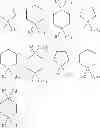
XR1R2R3,
-
- where
- X is P or N and
- R1, R2
- and R3 are identical or different, are optionally bonded directly to one another via a single or double bond and are each, individually or together,
- hydrogen,
- an alkyl group having from 1 to 16 carbon atoms, which may be partially substituted by further groups, preferably F, Cl, N(CnF(2n+1−x)Hx)2, O(CnF(2n+1−x)Hx), SO2(CnF(2n+1−x)Hx), CnF(2n+1−x)Hx, where 1≦n≦6 and 0≦x≦2n+1, an optionally substituted aryl group or an optionally substituted heterocyclic group,
- an alkylaryl group whose alkylene group has from 1 to 16 carbon atoms and which may be partially substituted by further groups, preferably F, Cl, Br, NO2, CN, alkyl, aryl or a heterocyclic group,
- an aryl group, which may be partially substituted by further groups, preferably F, Cl, Br, NO2, CN, alkyl; aryl or a heterocyclic group, or
- a heterocyclic group, which may be partially substituted by further groups, preferably F, Cl, Br, NO2, CN, alkyl, aryl or a heterocyclic group,
- where one, two or three CH2 groups of an alkyl or alkylene group may be replaced by identical or different heteroatoms, preferably O, NH or N(alkyl) having from 1 to 6 carbon atoms, and where R1, R2 and R3 cannot simultaneously be perfluorinated or perchlorinated,
to give the corresponding perfluoroalkanesulfonic acid salts. After the reaction, the perfluoroalkanesulfonic acid salt precipitates out. The unreacted ester merely has to be distilled off, while the remaining perfluoroalkanesulfonic acid is neutralised using XR1R2R3 or can be used for further reactions.
In a preferred variant of the process according to the invention, the subsequent reaction with the ester is carried out using a compound —XR1R2R3 which is selected from the group consisting of
-
- where
- X and Y are P or N, and
- R1, R2
- and R3 are, if desired, identical or different and are each, individually or together,
- hydrogen,
- an alkyl group having from 1 to 16 carbon atoms,
- an alkylaryl group whose alkylene group has from 1 to 16 carbon atoms,
- an aryl group or
- a heterocyclic group,
- where one, two or three CH2 groups in the ring and/or the alkyl groups may be replaced by identical or different heteroatoms, preferably O, NH or N(alkyl) having from 1 to 6 carbon atoms, and where the ring and/or the alkyl group may be partially substituted by further groups, preferably by F, Cl, N(CnF(2n+1−x)Hx)2, O(CnF(2n+1−x)Hx), SO2(CnF(2n+1−x)Hx), CnF(2n+1−x)Hx, where 1≦n≦6 and 0≦x≦2n+1, alkylaryl, aryl and/or a heterocyclic group, and
- where the alkylaryl group, the aryl group and/or the heterocyclic group may be partially substituted by further groups, preferably F, Cl, Br, NO2, CN, alkyl, aryl or a heterocyclic group.
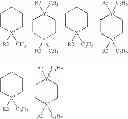
This invention likewise relates to perfluoroalkanesulfonic acid salts of the
Mn+[OSO2CF3]n−,
type, in which Mn+ (n=1 or 2) is selected from the following group:
-
- where
- X and Y are P or N, and
- R1, R2
- and R3 are, if desired, identical or different and are each, individually or together,
- hydrogen,
- an alkyl group having from 1 to 16 carbon atoms,
- an alkylaryl group whose alkylene group has from 1 to 16 carbon atoms,
- an aryl group or
- a heterocyclic group,
- where one, two or three CH2 groups in the ring and/or the alkyl groups may be replaced by identical or different heteroatoms, preferably O, NH or N(alkyl) having from 1 to 6 carbon atoms, and where the ring and/or the alkyl group may be partially substituted by further groups, preferably by F, Cl, N(CnF(2n+1−x)Hx)2, O(CnF(2n+1−x)Hx), SO2(CnF(2n+1−x)Hx), CnF(2n+1−x)Hx, where 1≦n≦6 and 0≦x≦2n+1, alkylaryl, aryl and/or a heterocyclic group, and
- where the alkylaryl group, the aryl group and/or the heterocyclic group may be partially substituted by further groups, preferably F, Cl, Br, NO2, CN, alkyl, aryl or a heterocyclic group.
These perfluoroalkanesulfonic acid salts can be prepared, for example, by the process according to the invention and are used in a variety of ways. Besides their use as conductive salts, for example in electrolytes, they can also be employed as solvents, in particular as ionic liquids. In addition, it is also possible to use the salts according to the invention in chemical catalysis, in particular as phase-transfer catalyst. Phase-transfer catalysis is a synthetic method which is used for a multiplicity of organic reactions and which frequently results in high yields under comparatively mild reaction conditions. In most phase-transfer-catalysed reactions, an anion is transported from an aqueous or solid phase or an interface by means of the phase-transfer catalyst into an organic phase in which it is reacted with increased reactivity. The perfluoroalkanesulfonic acid salts according to the invention are therefore suitable, inter alia, for use as ionic liquids or in phase-transfer catalysis. Their use in this respect causes no difficulties at all to the person skilled in the art.
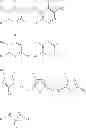
In a further particularly preferred variant of the process according to the invention, perfluoroalkanesulfonic acid salts can be prepared by reacting an ester obtained in accordance with the invention with a compound selected from the following group:
-
- where
- R1 to R5 are identical or different, are optionally bonded directly to one another via a single or double bond and are each, individually or together,
- hydrogen,
- a halogen, preferably fluorine, with the proviso that no N-halogen bond is present,
- an alkyl group having from 1 to 8 carbon atoms, which may be partially substituted by further groups, preferably F, Cl, N(CnF(2n+1−x)Hx)2, O(CnF(2n+1−x)Hx), SO2(CnF(2n+1−x)Hx), CnF(2n+1−x)Hx, where 1≦n≦6 and 0≦x≦2n+1,
- an aryl group,
- an alkylaryl group,
- a heterocyclic group,
- an alkylheterocyclic group.
All compounds containing perfluoroalkanesulfonic acid groups prepared in accordance with the invention, i.e. perfluoroalkanesulfonic acid esters and in particular their salts, can be employed in electrolytes, electrochemical cells, primary and secondary batteries, capacitors, supercapacitors or ultracapacitors, for example as solvents or conductive salts. The salts can be employed as conductive salts here either in pure form or in the form of their mixtures. It is also possible to use the salts as conductive salt together with further salts known to the person skilled in the art.
The compounds containing perfluoroalkanesulfonic acid groups pre-pared in accordance with the invention, in particular the salts, can be used in liquid, gel-like, polymeric or solid electrolytes. To this end, mixtures comprising the conductive salts and suitable polymers and/or suitable solvents can be employed. For the purposes of the present invention, a mixture includes pure mixtures of the components, mixtures in which the salt(s) is (are) included in a polymer or gel, and mixtures in which chemical and/or physical bonds exist between the salt(s) and a polymer or gel. In the case of a gel-like electrolyte, the mixture preferably comprises a suitable solvent in addition to the salt(s) and the polymer.
The solvents employed for liquid or gel-like electrolytes are particularly preferably aprotic solvents or mixtures thereof which are suitable for use in a primary or secondary battery, a capacitor, a supercapacitor or an electrochemical cell, for example carbonates, esters, ethers, sulfo-lanes or nitrites, such as, for example, dimethyl carbonate, diethyl carbonate, butylene carbonate, propylene carbonate, ethylene carbonate, ethyl methyl carbonate, methyl propyl carbonate, 1,2-dimethoxy-ethane, 1,2-diethoxyethane, methyl acetate, γ-butyrolactone, ethyl acetate, methyl propionate, ethyl propionate, methyl butyrate, ethyl butyrate, dimethyl sulfoxide, dioxolane, sulfolane, acetonitrile, acrylonitrile, tetrahydrofuran, 2-methyltetrahydrofuran or mixtures thereof.
The polymers employed for polymeric or gel-like electrolytes are preferably homopolymers or copolymers of acrylonitrile, vinylidene difluoride, methyl(meth)acrylate, tetrahydrofuran, ethylene oxide, siloxane, phosphazene or a mixture of at least two of the above-mentioned homopolymers and/or copolymers, where it is being possible for the polymers to be at least partially crosslinked.
The electrolytes obtained in this way are suitable for use in primary batteries, secondary batteries, capacitors, supercapacitors or ultra-capacitors and electrochemical cells and are likewise a subject-matter of the present invention.
The invention also relates to primary batteries, secondary batteries, capacitors, supercapacitors and electrochemical cells which contain at least one perfluoroalkanesulfonic acid salt prepared in accordance with the invention and optionally further salts and/or additives. These further salts and additives are known to the person skilled in the art, for example from Doron Aurbach, Nonaqueous Electrochemistry, Marc Dekker Inc., New York 1999; D. Linden, Handbook of Batteries, Second Edition, McGraw-Hill Inc., New York 1995 and G. Mamantov and A. I. Popov, Chemistry of Nonaqueous Solutions, Current Progress, VCH Verlagsgemeinschaft, Weinheim 1994.
The complete disclosure content of all applications, patents and publications mentioned above and below, and the corresponding applications DE 101 26 929.3 and DE 101 36 121.1, submitted on 1 Jun. 2001 and on 26 Jul. 2001 respectively, are incorporated into this application by way of reference.
The examples of the subject-matter according to the invention which are described below serve merely for explanation and do not restrict the present invention in any way. In addition, the invention described can be carried out in the entire range claimed.
All NMR spectra were measured on a Bruker WP 80 SY spectrometer.
EXAMPLES
Example 1
Preparation of Methyl Trifluoromethanesulfonate (Methyl Triflate)
646 g (2.29 mol) of trifluoromethanesulfonic anhydride and 36 g (0.24 mol) of trifluoromethanesulfonic acid are initially introduced into a 1 l round-necked flask. 206 g (2.29 mol) of dimethyl carbonate are added at room temperature with constant stirring and reflux cooling. The solution warms to 50-60° C. within 10 minutes and is subsequently stirred at this temperature for a further 1 hour. The solution is subsequently warmed to 100-110° C. using an oil bath and stirred for a further 2 hours. After distillation, 733 g of methyl trifluoromethanesulfonate having a purity of greater than 99% are isolated (boiling range: 98-99° C., yield: 97.7%).
19F- and 1H-NMR are identical with the literature data (Paquette, Encyclopedia of Reagents for Organic Synthesis, 1995, 3617-3622).
731 g (2.59 mol) of trifluoromethanesulfonic anhydride and 232 g (2.58 mol) of dimethyl carbonate are added to the residue, and the process described above is repeated. 837 g of methyl trifluoromethane-sulfonate having a purity of greater than 99% are isolated (yield: 99.1%).
The process can be repeated a number of times.
Example 2
Preparation of Methyl Pentafluoroethanesulfonate
5.74 g (15.0 mmol) of pentafluoroethanesulfonic anhydride and 0.31 g (1.55 mmol) of pentafluoroethanesulfonic acid are initially introduced in a 10 ml round-necked flask. 1.35 g (15.0 mmol) of dimethyl carbonate are added at room temperature with constant stirring and reflux cooling. The solution is stirred for one hour at a temperature of 60° C. and subsequently for a further 3 hours at 110° C. After distillation, 5.41 g of methyl pentafluoroethanesulfonate are isolated (boiling range: 114-115° C., yield: 84.1%).
19F-NMR, ppm: (solvent: CDCl3; standard: CCl3F): −80.44 s (CF3); −115.34 s (CF2)
1H-NMR, ppm: (solvent: CDCl3; standard: TMS): 4.23 s (CH3)
Example 3
Preparation of N-Methyl-N-Triethylammonium Trifluoromethanesulfonate
A solution of 8.35 g (82.7 mmol) of triethylamine in 150 cm3 of dry hexane is initially introduced at room temperature. 13.56 g (82.7 mmol) of methyl triflate, prepared as in Example 1, are added at room temperature over the course of 10 minutes with constant stirring. The solution warms and is stirred for a further half an hour. During this, the solution is returned to room temperature. A white precipitate is filtered off and washed with hexane. The hexane filtrate can be used for a further reaction. After drying under reduced pressure at 60° C., 21.81 g of a white microcrystalline material are isolated (yield: 99.5%).
19F-NMR, ppm: (solvent: acetonitrile-D3; standard: CCl3F): −78.04 s (CF3SO3−)
1H-NMR, ppm: (solvent: acetonitrile-D3; standard: TMS): 1.25 tm (3CH3); 2.86 s (CH3); 3.26 q (3CH2); J3H,H=7.3 Hz
1H-NMR data correspond to the literature data (R. Weiβ, K.-G. Wagner, M. Hertel, Chem. Ber. 117 (1984) pp. 1965-1972)
Example 4
Preparation of Methyl(Triethyl)Phosphonium Trifluoromethanesulfonate
A solution of 8.05 g (68.2 mmol) of triethylphosphine in 150 cm3 of dry hexane is initially introduced at room temperature. 11.19 g (68.2 mmol) of methyl triflate, prepared as in Example 1, are added at room temperature over the course of 10 minutes with constant stirring. The solution warms and is stirred for a further half an hour. During this, the solution is returned to room temperature. A white precipitate is filtered off and washed with hexane. The hexane filtrate can be used for a further reaction. After drying under reduced pressure at 60° C., 19.02 g of a white microcrystalline material are isolated (melting point, 103-104° C., yield: 98.9%).
19F-NMR, ppm (solvent: acetone-D6; standard: CCl3F): −77.82 s (CF3SO3−)
1H-NMR, ppm (solvent: acetone-D6; standard: TMS): 1.30 dt (3CH3); 1.95 d (CH3); 2.40 dq (3CH2); J3H,H=7.7 Hz; J2P,H=13.7 Hz; J2P,H=13.8 Hz; J3P,H=18.8 Hz
Elemental analysis:
found: 33.72% C, 6.57% H, 11.14% S
calculated: 34.04% C, 6.43% H, 11.36% S ((C2H5)3PCH3+CF3SO3−)
Example 5
Preparation of 1,3-dimethylimidazolium Trifluoromethanesulfonate
13.70 g (83.5 mmol) of methyl triflate are added dropwise over the course of 10 minutes to 6.67 g (81.2 mmol) of 1-methylimidazole in a round-bottomed flask with stirring and ice-bath cooling. The reaction mixture warms and is stirred at 70-75° C. for one hour with reflux cooling. The excess methyl triflate is removed at 60° C. under reduced pressure. 20.00 g of a white powder are isolated.
19F-NMR, ppm (solvent: acetonitrile-D3; standard: CCl3F): −78.14 s (CF3SO3+)
1H-NMR, ppm (solvent: acetonitrile-D3; standard: TMS): 3.82 s (2CH3); 7.35 d (2H); 8.53 t (1H); J4H,H=1.6 Hz
1H-NMR data correspond to the literature data (U. Zollner, Tetrahedron, 44, No. 24 (1988), pp. 7413-7426)
Example 6
Preparation of N,N-Dimethylpyrrolidinium Trifluoromethanesulfonate
A solution of 6.83 g (80.2 mmol) of N-methylpyrrolidine in 150 cm3 of dry hexane is initially introduced at room temperature 13.12 g (80.2 mmol) of methyl triflate, prepared as in Example 1, are added at room temperature over the course of 10 minutes with constant stirring, during which the solution warms. After half an hour, the solution is returned to room temperature. The white precipitate deposited is filtered off, washed with hexane and dried at 60° C. under reduced pressure. 16.61 g of a white microcrystalline material are isolated (melting point (with decomposition): 308-310° C., yield 98.3%).
19F-NMR, ppm (solvent: acetonitrile-D3; standard: CCl3F): −78.00 s (CF3SO3−)
1H-NMR, ppm (solvent: acetonitrile-D3; standard: TMS): 2.17 m (2H); 3.07 s (CH3); 3.45 m (2H)
Elemental analysis after recrystallisation from methanol:
found: 33.66% C, 5.68% H, 5.60% N, 13.06% S
calculated: 33.73% C, 5.66% H, 5.62% N, 12.86% S(C7H14F3NO3S)
Example 7
Preparation of N,N-Dimethylpiperidinium Trifluoromethanesulfonate
A solution of 7.76 g (78.2 mmol) of N-methylpiperidine in 150 cm3 of dry hexane is initially introduced at room temperature. 12.83 g (78.2 mmol) of methyl triflate, prepared as in Example 1, are added at room temperature over the course of 10 minutes with constant stirring, during which the solution warms. After half an hour, the solution is returned to room temperature. The white precipitate deposited is filtered off, washed with hexane and dried at 80° C. under reduced pressure. 19.72 g of a white microcrystalline material are isolated (melting point after recrystallisation from methanol: 255-256° C., yield 95.8%).
19F-NMR, ppm (solvent: acetonitrile-D3; standard: CCl3F): −78.06 s (CF3SO3−)
1H-NMR, ppm (solvent: acetonitrile-D3; standard: TMS): 1.79 m (3CH2); 3.02 s (2CH3); 3.27 m (2CH2)
Elemental analysis after recrystallisation from methanol:
found: 36.44% C, 6.07% H, 5.31% N, 12.20% S
calculated: 36.50% C, 6.13% H, 5.32% N, 12.18% S(C8H16F3NO3S)
Claims
1-5. (canceled)
6. A compound of the formula
Mn+[OSO2CF3]n−,
type, in which Mn+ is a ring of the formula:
where
n is 1 or 2,
X and Y are P or N, and
R1,R2
and R3 identical or different and are each, individually or together,
hydrogen,
an alkyl group having from 1 to 16 carbon atoms,
an alkylaryl group whose alkylene group has from 1 to 16 carbon atoms,
an aryl group or
a heterocyclic group,
where one, two or three CH2 groups in the ring and/or the alkyl groups may be replaced by identical or different heteroatoms, and
where the ring and/or the alkyl group may be partially substituted, and
where the alkylaryl group, the aryl group and/or the heterocyclic group may be partially substituted.
7. An electrolyte, comprising at least one salt, wherein said salt is a compound according to claim 6.
8. Primary batteries, secondary batteries, capacitors, supercapacitors or electrochemical cells, comprising at least one salt, wherein said salt is a compound according to claim 6.
9. A liquid, gel, polymeric or solid electrolyte comprising one or more compounds according to claim 6, optionally mixed with other salts.
10. (canceled)
11. A solvent comprising one or more compounds according to claim 6.
12. A phase-transfer catalyst comprising one or more compounds according to claim 6.
13-15. (canceled)
16. A compound according to claim 6, wherein the ring and/or alkyl group is partially substituted by F, Cl, N(CnF(2n+1−x)Hx)2, O(CnF(2n+1−x)Hx), SO2(CnF(2n+1−x)Hx), CnF(2n+1−x)Hx, where 1≦n≦6 and 0≦x≦2n+1, alkylaryl, aryl and/or a heterocyclic group.
17. A compound according to claim 6, wherein the aralkyl group, the aryl group and/or the heterocyclic group are partially substituted by F, Cl, Br, NO2, CN, alkyl, aryl or a heterocyclic group.
Images & Drawings included:

Sources:
- United States Patent and Trademark Office - verify current appl. status at the USPTO↗
Similar patent applications:
Recent applications in this class:
- » 20210050157 2021-02-18
Hybrid electrode materials for bipolar capacitor-assisted solid-state batteries - » 20130292601 2013-11-07
Additives for dye-sensitized solar cells - » 20120304599 2012-12-06
Flexible supercapacitor and preparation method thereof - » 20120282530 2012-11-08
Battery structures, self-organizing structures, and related methods - » 20120271005 2012-10-25
Fluorine-containing polymer having heteroaromatic ring - » 20120251896 2012-10-04
Battery structures, self-organizing structures, and related methods - » 20120243145 2012-09-27
Electric double layer capacitor - » 20120231346 2012-09-13
ELECTROCHEMICAL DEVICE USING SOLID POLYMER ELECTROLYTE USING FINE POLYMER COMPOSITE PARTICLES - » 20120171575 2012-07-05
Energy charge storage device using a printable polyelectrolyte as electrolyte material - » 20120170172 2012-07-05
Additives for electrolyte solution and electrolyte solution