METHOD FOR EFFICIENTLY DELIVERING LIQUID ARGON TO A FURNACE
US20130327404A1
2013-12-12
13/492,578
2012-06-08
Abstract:
A method of improving the efficiency in delivery of a cryogenic liquid (10, 160) to the surface of a metal body in a furnace, the method comprising the steps of a) causing a flow of the liquid cryogen i) from a source of the liquid cryogen (10, 160), ii) to the surface of a metal body, and b) sub-cooling the liquid cryogen or a combination of the liquid cryogen and a cryogen gas (40, 180) between step a), sub-step i) and step a), sub-step ii) to reduce a temperature of the liquid cryogen or the combination of the liquid cryogen and the cryogen gas.
Inventors:
- David C. Braithwaite 19 🇺🇸 Houston, TX, United States
- Rozalia Papp 7 🇺🇸 Orland Park, IL, United States
- Richard Sauer 2 🇺🇸 Hinsdale, IL, United States
- John Bounassisi 1 🇺🇸 Downers Grove, IL, United States
Assignee:
- Air Liquide Industrial U.S. LP 49 🇺🇸 Houston, TX, United States
Interested in similar patents?
Get notified when new applications in this technology area are published.
Classification:
F17C1/00 » CPC main
Pressure vessels, e.g. gas cylinder, gas tank, replaceable cartridge
F17C7/02 » CPC further
Methods or apparatus for discharging liquefied, solidified, or compressed gases from pressure vessels, not covered by another subclass Discharging liquefied gases
F17C2221/016 » CPC further
Handled fluid, in particular type of fluid; Pure fluids Noble gases (Ar, Kr, Xe)
F17C2223/0169 » CPC further
Handled fluid before transfer, i.e. state of fluid when stored in the vessel or before transfer from the vessel characterised by the phase; Two-phase; Liquefied gas, e.g. LPG, GPL subcooled
F17C2223/033 » CPC further
Handled fluid before transfer, i.e. state of fluid when stored in the vessel or before transfer from the vessel characterised by the pressure level Small pressure, e.g. for liquefied gas
F17C2225/0169 » CPC further
Handled fluid after transfer, i.e. state of fluid after transfer from the vessel characterised by the phase; Two-phase; Liquefied gas, e.g. LPG, GPL subcooled
F17C2225/033 » CPC further
Handled fluid after transfer, i.e. state of fluid after transfer from the vessel characterised by the pressure level Small pressure, e.g. for liquefied gas
F17C2227/0341 » CPC further
Transfer of fluids, i.e. method or means for transferring the fluid; Heat exchange with the fluid; Heat exchange with the fluid by cooling using another fluid
F17C2227/0372 » CPC further
Transfer of fluids, i.e. method or means for transferring the fluid; Heat exchange with the fluid; Heat exchange with the fluid; Localisation of heat exchange in or on a vessel in the gas
F17C2260/024 » CPC further
Purposes of gas storage and gas handling; Improving properties related to fluid or fluid transfer Improving metering
F17C2270/05 » CPC further
Applications for industrial use
Y10T137/0318 » CPC further
Fluid handling Processes
F17D3/00 IPC
Arrangements for supervising or controlling working operations
Description
TECHNICAL FIELD
The invention relates to the application of Liquid Argon for inerting the atmosphere above a metal body in a furnace.
BACKGROUND ART
Many metals react to water and/or oxygen in air which intensifies when the metal is melted. There exist a variety of techniques to reduce the level or these air constituents sufficiently. A widely used technique is commercially named SPAL™. The SPAL™ process involves pouring liquid cryogens over the metal to create a continuous covering. As this liquid vaporizes, the surface of the metal is protected from oxygen and water in the air. One continuing issue with SPAL™ is the loss of liquid cryogen prior to pouring on the metal surface. Delivery systems have been optimized with e.g. vacuum jacketed insulation to minimized vaporization in the piping. Most SPAL™ systems still have enough vapor formation within the delivery system to require terminal phase separators. The vapor from such phase separators is generally vented to the atmosphere. In certain advanced SPAL™ systems, the vapor is directed onto the metal surface to augment the inerting by the liquid covering. While these advanced SPAL™ systems make use of the loss vapor from the liquid cryogen, the inerting value of this vapor is not as high that derived by an equal amount of liquid cryogen poured onto the metal. Consequently, it would be useful in many instances if vaporization losses in SPAL™ systems could be further reduced. From a cost analysis perspective, reduction of losses to vaporization will have the most impact when liquid Argon is the inerting liquid cryogen.
DISCLOSURE OF INVENTION
The invention primarily addresses the losses of liquid Argon in a foundry or other metallurgy facilities utilizing a SPAL™ system to provide protection of metals in furnaces from atmospheric exposure. The basic technique to improve liquid Argon utilization efficiency (or possibly use of other cryogenic liquids or mixture) is the sub-cooling of Argon from a liquid Argon bulk source tank. The Argon is ideally sub-cooled as close to the point of dispensation onto the metals as is practical. The sub-cooling should be sufficient to either a) compensate for subsequent in transit heating to reduce the amount of liquid Argon that becomes vaporized prior to dispensation onto the metal or b) condense a portion of Argon vapor that evolves from the liquid Argon due to prior in transit heating and/or pressure reduction between the tank and the SPAL™ piping system, or both (“target temperature”).
Bulk storage tanks are often pressurized while most SPAL™ piping and delivery systems are not pressurized. The depressurization of bulk tank liquid Argon causes a significant amount of liquid Argon from the bulk tank to vaporize upon depressurization. An intervening sub-cooling step can be adapted to condense some or even most of the gaseous Argon back to liquid Argon while also sub-cooling the liquid Argon to the target temperature.
Finally, the sub-cooling of liquid Argon will reduce the amount of Argon gas in the SPAL™ piping and delivery systems. This will provide an added benefit of reduced flow rate variation and sputtering of liquid Argon from a dispensing lance due to gas build up in the pipes.
Target Temperature
The target temperature will vary depending on the specific facility SPAL™ system. For example, foam insulated pipes will generate more gaseous Argon than vacuum insulated pipes. The piping distance from the point of sub-cooling to the dispensing lance will affect the degree of transit associated heat gain and thus the quantity of liquid Argon that is vaporized en route. Other facility specific factors will impact the target temperature.
In addition to facility specific factors, the target temperature for liquid Argon sub-cooling is governed in part by physical limitations. Argon freezes at −189 degrees C. Thus, −189 degrees C. constitutes a lowest end target temperature for making a liquid/solid slush. A liquid/solid slush would need to be sufficiently composed of liquid Argon to flow in the SPAL™ piping. The solid Argon mixed in with the liquid would contribute more heat absorption capacity for the mixture due to the heat required to melt the solid. Forming Argon slush is not required for the invention to operate. For example, this maximum level of sub-cooling will not be of sufficient benefit in terms of Argon vaporization mitigation to justify the energy consumption required. In addition, from a process control perspective, forming consistently flowing liquid/solid slush will be quite difficult. Over-freezing will block the piping and stop flow. Thus, highly preferably the target temperature will be sufficiently above the freezing point to avoid formation of any solid Argon.
The upper end of the target temperature range will be governed in part by the applicable boiling point which in turn depends in part on the pressure. Liquid Argon in bulk storage tanks is generally maintained under pressure (for delivery of liquid Argon from the bulk tank) and at a temperature below the boiling point at the bulk tank pressure. An example from current commercial systems, Liquid Argon may be maintained in bulk tanks at 45±2 psig (310.26 kPa) and −176 degrees C. The pressure in the SPAL™ system will generally be atmospheric to e.g. 22±2 psig (253±115.11 kPa). This means liquid Argon will equilibrate by vaporization-cooling until the temperature of the remaining liquid reaches the boiling point temperature at the lower pressure (at atmospheric pressure, roughly −185.7 degrees C.). Thus, for example, the target temperature for sub-cooling in a pressurized system component could be different than in an atmospheric pressure component of the same system.
Sub-Cooling Location
In principle, the liquid Argon in the bulk tank may be sub-cooled as the sole sub-cooling step, or in combination with a downstream sub-cooling step or series of sub-cooling steps. Preferably however, a single sub-cooling step is integrated into the SPAL™ system as close to the dispensing lance as is practical.
If a particular SPAL™ system has Argon losses primarily due to depressurization from the bulk tank to the SPAL™ system piping, the sub-cooling step may be carried out as close as possible to the bulk tank to also improve flow rate and flow consistency through the piping system which is negatively affected by the presence of large gas volumes.
Multiple sub-cooling steps may be used such as both close to the bulk tank and as close to the SPAL™ lance as possible.
Sub-Cooling Step Equipment
The liquid Argon sub-cooling and/or gaseous Argon condensation to liquid may be implemented by any suitable equipment. For example, liquid Argon in a bulk storage tank may be sub-cooled by the same refrigeration process and similar equipment as used in cryogenic distillation. Alternatively, liquid and gaseous Argon may be passed through a sub-cooling heat exchanger close to the dispensing lance. The refrigerant in the heat exchanger may for example be pressurized Argon gas from the headspace of the bulk storage tank. Alternatively, a separate source of another liquid cryogen such as liquid Nitrogen may be used. Heat from the Argon condensing and sub-cooling will be transferred to the liquid Nitrogen, resulting in Nitrogen vapor generation. The Nitrogen vapor may be vented to the atmosphere.
BRIEF DESCRIPTION OF DRAWINGS
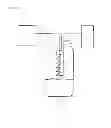
FIG. 1 shows a schematic of an embodiment of the invention with a phase separator and an internal integral condensation coil.
FIG. 2 shows an installation in a foundry having a liquid Nitrogen pool heat exchange sub-cooling system integrated into a pre-existing SPAL™ system.
SUMMARY OF THE INVENTION
The invention is described in part by the following numbered sentences:
-
- 1. A method of improving the efficiency in delivery of a cryogenic liquid to the surface of a metal body in a furnace, the method comprising the steps of:
- a) Delivering a liquid cryogen (10, 20) to a liquid-gas phase separator (30),
- b) Allowing a gaseous cryogen (45) present in a liquid phase (40) of the liquid cryogen to separate from the liquid cryogen (40),
- c) Condensing (60, 70, 80) the gaseous cryogen (45) to an additional amount of liquid cryogen (40),
- d) Delivering the liquid cryogen and the additional amount of liquid cryogen (50) to the surface of a metal body in a furnace.
- 2. The method of sentence 1, wherein the liquid cryogen (10) is at least 90% pure Argon such as industrial grade purity Argon.
- 3. The method of sentences 1-2 wherein the condensation step c) is performed by a heat exchange (80) with liquid Nitrogen (60, 70).
- 4, The method of sentences 1-3 wherein the heat exchange is performed by flowing the liquid Nitrogen (60, 70) through a heat exchange device (80) in thermal communication with the gaseous Argon within the phase separator.
- 5. The method of sentences 1-4 wherein the heat exchange device (80) is a condensation coil.
- 6. The method of sentences 1-5 wherein the condensation coil (80) is also in thermal communication with the liquid Argon (40) within the phase separator (30).
- 7. The method of sentences 1-5, wherein the liquid Nitrogen (80) is at a temperature between the freezing point and the boiling point of the liquid Argon (40), preferably within a ±2 degrees C. range around a half way between.
- 8. A phase separator apparatus for delivery of liquid cryogen to a body of metal in a furnace, the apparatus comprising:
- a) A chamber (30) adapted to retain and hold a volume of a liquid cryogen (40) and further adapted to permit the separation of a gaseous cryogen (45) from the liquid cryogen (40),
- b) An inlet (20),
- c) An outlet (50),
- d) A heat exchange device (80, 90) within the chamber, the heat exchange device (80, 90) being capable of condensing the gaseous cryogen (45) into a liquid cryogen (40).
- 9. The apparatus of sentence 8, wherein the liquid cryogen (10, 40) is at least 90% pure Argon such as industrial grade purity Argon.
- 10. The apparatus of sentence 8 or 9, wherein the heat exchange device is a condensation coil (80) containing liquid Nitrogen (60, 70).
- 11. A method of improving the efficiency in delivery of a cryogenic liquid (160) to the surface of a metal body in a furnace, the method comprising the steps of:
- a) Delivering a first liquid cryogen and a vaporized cryogen gas to a cooling coil (180) which is in heat transfer contact with a second liquid cryogen (140) at a lower temperature than the first liquid cryogen and a vaporized cryogen (160, 170),
- b) Maintaining the first liquid cryogen and the vaporized cryogen gas in the cooling coil (180) for an amount of time sufficient to condense part of the vaporized cryogen gas to an additional amount of the first liquid cryogen,
- c) Delivering the first liquid cryogen and the additional amount of first liquid cryogen to the surface of a metal body in a furnace (190, 150).
- 12. The method of sentence 11, wherein the first liquid cryogen (160) is at least 90% pure Argon such as industrial grade purity Argon.
- 13. The method of sentence 11 or 12 wherein the second liquid cryogen (110, 140) is industrially pure liquid Nitrogen (e.g. 95% N2).
- 14. The method of sentence 13 wherein the second cryogen liquid (110, 140) is contained in a vessel (130) as a pool of liquid cryogen (140) and the cooling coil (180) is at least partially submerged in the pool (140) of liquid cryogen.
- 15. The method of sentences 11-14, wherein the second liquid cryogen (140) is at a temperature between the freezing point and the boiling point of the first liquid cryogen (160, 170), preferably half way between.
- 16. A sub-cooling apparatus for delivery of liquid cryogen (160) to a furnace, the apparatus comprising:
- a) A chamber (130) adapted to retain and hold a volume of a second liquid cryogen (140) and further adapted to reduce the temperature of a mixture of a first liquid cryogen and a cryogen gas (160, 170) by heat transfer from the mixture of the first liquid cryogen and the cryogen gas to the second liquid cryogen (180),
- b) An inlet (170) configured to direct a flow of the mixture of the first liquid cryogen and the cryogen gas (160) into the chamber and into a heat transfer position (180) with the second liquid cryogen (140),
- c) An outlet (190) configured to direct the flow of the first liquid cryogen and any residual cryogen gas (160, 170, 180) out of the chamber (130),
- d) A lance (150) in fluid communication with the outlet (190), the lance (150) configured to emit the flow of the first liquid cryogen (160, 170, 180, 190) into a furnace containing a metal body.
- 17. The apparatus of sentence 16, wherein the first liquid cryogen (160) is at least 90% pure Argon such as industrial grade Argon.
- 18. The apparatus of sentence 16 or 17, wherein the second liquid cryogen (110) comprises liquid Nitrogen such as industrially pure Nitrogen (at least 95% pure).
- 19. A method of improving the efficiency in delivery of a cryogenic liquid (10, 160) to the surface of a metal body in a furnace, the method comprising the steps of
- a) Causing a flow of the liquid cryogen
- i) from a source of the liquid cryogen (10, 160),
- ii) to the surface of a metal body,
- b) Sub-cooling the liquid cryogen or a combination of the liquid cryogen and a cryogen gas (40, 180) between step a), sub-step i) and step a), sub-step ii) to reduce a temperature of the liquid cryogen or the combination of the liquid cryogen and the cryogen gas.
- a) Causing a flow of the liquid cryogen
- 20. The method of sentence 19 wherein the sub-cooling step b) comprises reducing the temperature to a target temperature that is a) below a boiling point of the liquid cryogen and b) above a freezing point of the liquid cryogen, preferably half way between the freezing and boiling points.
- 21. The method of sentence 19 or 20, further comprising a step of sub-cooling a cryogen gas vaporized from the liquid cryogen (45, 180) to reduce a temperature of the vaporized cryogenic gas and thereby to re-condense a portion of the vaporized cryogen gas into an additional amount of the liquid cryogen (40, 180).
- 22. The method of sentences 19-21, wherein the liquid cryogen (10, 160) comprises Argon.
- 23. The method of sentence 22, wherein the Argon is at least 90% pure Argon.
- 24. The method of sentence 22, wherein the target temperature is lower than −170° C. and greater than a freezing point of the liquid cryogen (10, 160).
- 25. The method of sentences 19-24 further comprising reducing the cryogen gas, the vaporized cryogen gas, or both (45, 180) to a condensation target temperature that condenses at least 5% of the gas (45, 180) into an additional amount of the liquid cryogen (40, 180).
- 26. The method of sentence 25 wherein the amount of gas (45, 180) condensed is from 5% to 95% of the starting amount of gas.
- 27. The method of sentence 26, wherein the amount of gas (45, 180) condensed is from 25% to 75% of the starting amount of gas.
- 28. The method of sentence 25 wherein the condensation target temperature is less than −170 degrees C.
- 29. The method of sentence 28, wherein the condensation target temperature is from −185.5 degrees C. to −188.9 degrees C., preferably −187.2 degrees C.
- 30. The method of any of the preceding sentences 1-29 wherein the sub-cooling comprises two or more discrete sub-cooling steps.
- 1. A method of improving the efficiency in delivery of a cryogenic liquid to the surface of a metal body in a furnace, the method comprising the steps of:
MODE(S) FOR CARRYING OUT THE INVENTION
Liquid Argon source 10 source is generally a bulk tank supplied with liquid Argon 40. The liquid Argon is transported by pipe 20 into phase separator 30 then out to a SPAL process generally by diffuser lance 50 with an optional auxiliary phase separator. Liquid Nitrogen source 60 is also generally a bulk tank supplied with liquid Nitrogen. Liquid Nitrogen is delivered by pipe 70 to condensing coil 80 and the liquid and vaporous Nitrogen returns via pipe 90 to liquid Nitrogen source 60. Venting phase separator 100 removes and expels vaporized Nitrogen from the pipe 90 prior to return of the recycled liquid Nitrogen. The liquid Nitrogen should be sufficiently cold to recondense vaporized Argon when passed through the condensation coil. Argon boils at −185.85° C. under standard atmospheric pressure whereas liquid Nitrogen boils at −195.79° C. Nitrogen also has a greater specific heat capacity than Argon. Thus liquid Nitrogen will under normal circumstances be able to recondense the vapor phase Argon in a liquid-vapor Argon phase separator.
The liquid Nitrogen temperature (and pressure) in coil 80 should be selected to provide sufficient cooling under operating condition to condense Argon vapor 45 without freezing it or the liquid Argon 40. The precise operating conditions will depend on the pressure and temperature of the Argon. An optimally balanced system will preferably cool the liquid Argon 40 (which may be in direct contact with cooling coil 80) to a target temperature half way in-between the boiling point and freezing point of the Argon. For example, at 31 psig (315.06 kPa) the boiling point of Argon is −173 degrees C. and the freezing point is −189 degrees C. The preferred target temperature for sub-cooling would thus be −181 degrees C. Because Argon has a narrow temperature range between boiling and freezing, target temperatures at e.g. −188 degrees C. run the risk of excessive Argon freezing due to variations in liquid Nitrogen temperature. By targeting a median temperature in the liquid phase range, the system will tolerate some downward temperature fluctuations in the liquid Nitrogen cooling system without overly sacrificing Argon gas condensation efficiency.
Alternatively, Argon (gas and liquid mix) may be sub-cooled by passage through a heat exchange coil in contact with a body of liquid Nitrogen 140. This inverse configuration may be implemented using various devices on the market (or adaptations thereof). A schematic of this approach is shown in FIG. 2. Liquid Nitrogen source (generally a standard LIN bulk tank) 110 is in fluid communication 120 with vessel 130 having venting line 145. The liquid Nitrogen forms pool 140 into which cooling coil 180 is submerged (partially in FIG. 2). Cooling coil 180 is in fluid communication 170 with a liquid Argon source 160 (generally a standard LAR bulk tank). Cooling coil 180 is also in fluid communication 190 with dispensing lance 150. Dispensing lance 150 emits the liquid Argon onto the surface of a metal body in a foundry furnace. The target temperature is governed by the same considerations as the first mode described above. An additional parameter to be considered in this mode will be residence time of the Argon in coil 180 and effective heat transfer rate. Thus, for example, the Argon target temperature could be achieved by liquid Nitrogen 140 at a much colder temperature by controlling the Argon flow rate through coil 180.
Prophetic Example 1
Prophetic example 1 relates to the mode for carrying out the invention shown in FIG. 2. If it is assumed that the liquid Argon is in equilibrium with the gas at a pressure of 190 psig (1411.33 kPa), the calculated temperature is 122.8 K (−238.6° F.; −150.3° C.). Considering liquid Argon in equilibrium with the gas at a pressure of 0 psig (101.33 kPa), the calculated temperature is 87.3 K (−302.5° F.; −185.7° C.), Because the bulk tank stores liquid Argon at a temperature higher than the normal boiling point, when the pressure is removed, some of the Argon will vaporize, cooling the remaining Argon until the temperature is 87.3 K (−302.5° F.; 185.7° C.). In an adiabatic case, Equation 1 would apply:
Hsat'd,liq190 psig=(1−x)*Hsat'd,liq0 psig+xHsat'd,vap0 psig=Hsat'd,liq0 psig+xΔHvap0 psig Equation 1—Result of adiabatic expansion of liquid Argon.
Based on this equation, 26.6% of the liquid Argon would vaporize upon depressurization to decrease the temperature of the remaining Argon. By sub-cooling all of the Argon to 110.2 K (−261.4° F.; −163° C.) by heat exchange with 200 psig (1480.27 kPa) liquid Nitrogen, the fraction of Argon vapor will decrease to 17.6%. If the pressure of the liquid Nitrogen is decreased from 200 to 60 psig (515 kPa) to decrease the liquid Nitrogen temperature prior to sub-cooling the liquid Argon, the temperature of the sub-cooled Argon will be decreased by heat exchange to 94.4 K (−289.8° F.; −178.78° C.). At this temperature, only 6.4% of the Argon will be in the gas phase.
Working Example 1
A proof of concept working example was validated at an operating foundry using the predicate SPAL™ system. A simple device according to FIG. 2 was installed between the bulk supply tank and the piping/lance delivery system. Argon liquid and gas mixture was sub-cooled to −307 degrees F. (−183.33 degrees C.) by heat exchange with a liquid Nitrogen pool (maintained at approximately 20 psig). Argon vaporization was reduced based on the steadiness of the flow of liquid Argon out of a lance compared to the flow of liquid Argon out of the same lance without sub-cooling. Increased Argon use efficiency was further evaluated in terms of Argon use from the bulk tank over a period of approximately 7 weeks. Compared to the control utilization rates without sub-cooling, even this crude implementation of the invention reduced net Argon use by a surprising 26.6%.
INDUSTRIAL APPLICABILITY
The present invention is at least industrially applicable to the protection of metals in foundry furnaces from air.
It will be understood that many additional changes in the details, materials, steps and arrangement of parts, which have been herein described in order to explain the nature of the invention, may be made by those skilled in the art within the principle and scope of the invention as expressed in the appended claims. Thus, the present invention is not intended to be limited to the specific embodiments in the examples given above.
While the invention has been described in conjunction with specific embodiments thereof, it is evident that many alternatives, modifications, and variations will be apparent to those skilled in the art in light of the foregoing description. Accordingly, it is intended to embrace all such alternatives, modifications, and variations as fall within the spirit and broad scope of the appended claims. The present invention may suitably comprise, consist or consist essentially of the elements disclosed and may be practiced in the absence of an element not disclosed. Furthermore, language referring to order, such as first and second, should be understood in an exemplary sense and not in a limiting sense. For example, it can be recognized by those skilled in the art that certain steps can be combined into a single step.
The singular forms “a”, “an” and “the” include plural referents, unless the context clearly dictates otherwise.
Optional or optionally means that the subsequently described event or circumstances may or may not occur. The description includes instances where the event or circumstance occurs and instances where it does not occur.
Ranges may be expressed herein as from about one particular value, and/or to about another particular value. When such a range is expressed, it is to be understood that another embodiment is from the one particular value and/or to the other particular value, along with all combinations within said range.
Claims
1. A method of improving the efficiency in delivery of a cryogenic liquid (10, 160) to the surface of a metal body in a furnace, the method comprising the steps of
a) causing a flow of the liquid cryogen
i) from a source of the liquid cryogen (10, 160),
ii) to the surface of a metal body,
b) sub-cooling the liquid cryogen or a combination of the liquid cryogen and a cryogen gas (40, 180) between step a), sub-step i) and step a), sub-step ii) to reduce a temperature of the liquid cryogen or the combination of the liquid cryogen and the cryogen gas.
2. The method of claim 1, wherein the sub-cooling step b) comprises reducing the temperature to a target temperature that is a) below a boiling point of the liquid cryogen and b) above a freezing point of the liquid cryogen,
3. The method of claim 2, wherein the target temperature is within ±2 degrees C. of the temperature half way between the freezing and boiling points.
4. The method of claim 1, further comprising a step of sub-cooling a cryogen gas vaporized from the liquid cryogen (45, 180) to reduce a temperature of the vaporized cryogenic gas and thereby to re-condense a portion of the vaporized cryogen gas into an additional amount of the liquid cryogen (40, 180).
5. The method of claim 1, wherein the liquid cryogen (10, 160) comprises Argon.
6. The method of claim 5, wherein the Argon is at least 90% pure Argon.
7. The method of claim 1, wherein the target temperature is lower than −170° C. and greater than a freezing point of the liquid cryogen (10, 160).
8. The method of claim 1, further comprising reducing the cryogen gas, the vaporized cryogen gas, or both (45, 180) to a condensation target temperature that condenses at least 5% of the gas (45, 180) into an additional amount of the liquid cryogen (40, 180).
9. The method claim 8, wherein the amount of gas (45, 180) condensed is from 5% to 95% of the starting amount of gas.
10. The method of claim 8, wherein the amount of gas (45, 180) condensed is from 25% to 75% of the starting amount of gas.
11. The method of claim 8, wherein the condensation target temperature is less than −170 degrees C.
12. The method of claim 8, wherein the condensation target temperature is from −185.5 degrees C. to −188.9 degrees C.
13. The method of claim 8, wherein the condensation target temperature is −187.2 degrees C.±0.5 degrees C.
14. The method of claim 1, wherein the sub-cooling comprises two or more discrete sub-cooling steps.
Images & Drawings included:


Sources:
- United States Patent and Trademark Office - verify current appl. status at the USPTO↗
Similar patent applications:
Recent applications in this class:
- » 20250172244 2025-05-29
SYSTEM AND OPERATING METHOD FOR ENHANCED DORMANCY IN CRYO-COMPRESSED HYDROGEN STORAGE VESSELS - » 20250067396 2025-02-27
PRESSURE VESSEL WITH SMALL DIAMETER AND LONG AXIS - » 20240418316 2024-12-19
SYSTEM AND METHOD FOR STORING AND PROCESSING HYDROCARBONS - » 20240418315 2024-12-19
RESERVOIR TANK COMPRISING A SHELL AND AT LEAST ONE END WALL THAT ARE JOINED TOGETHER SO AS TO LIMIT THE DEFORMATIONS OF SAID END WALL - » 20240401741 2024-12-05
MOBILE LNG STORAGE AND REGASIFICATION UNIT (MSRU) - » 20240369184 2024-11-07
Pressure Vessel, Pressure Vessel System, Motor Vehicle and Method for Forming Ribs - » 20240360956 2024-10-31
TANK COMPRISING INNER AND OUTER ENCLOSURES AND AT LEAST ONE DUCT PASSING THROUGH SAID ENCLOSURES AND FOLLOWING A CURVED TRAJECTORY BETWEEN SAID ENCLOSURES - » 20240353060 2024-10-24
PRESSURE VESSEL FOR GAS STORAGE HAVING STORAGE TUBES AND CONNECTION TUBE - » 20240318779 2024-09-26
Support structure for manufacturing a pressure vessel - » 20240288120 2024-08-29
TANK FOR PRESSURIZED GAS
Recent applications for this Assignee:
- » 20170049126 2017-02-23
METHOD AND DEVICE FOR CREATING FROZEN PELLETS OF A FOODSTUFF - » 20150060722 2015-03-05
Method for proportionally mixing two cryogenic fluids - » 20140220213 2014-08-07
Method and System for Treating Food Items with an Additive and Solid Carbon Dioxide - » 20140186502 2014-07-03
Method and system for treating food items with an additive and solid carbon dioxide - » 20140131422 2014-05-15
Method for reduced cycle times in multi-pass welding while providing an inert atmosphere to the welding zone - » 20140090859 2014-04-03
FIRE SUPPRESSION SYSTEM FOR BIOMASS STORAGE - » 20140059879 2014-03-06
USE OF NITROGEN GAS IN THAWING PLATES IN A LiN-BASED LYOPHILIZATION UNIT - » 20140047953 2014-02-20
Vapor-reinforced expanding volume of gas to minimize the contamination of products treated in a melting furnace - » 20140004236 2014-01-02
Shelling of cooked eggs - » 20140000297 2014-01-02
Production of Particles from Liquids or Suspensions with Liquid Cryogens