Composition comprising (−)-Δ-trans-tetrahydrocannabinol
US20130345299A1
2013-12-26
13/912,823
2013-06-07
✅ Patent granted
US 8,906,956 B2
2014-12-09
-
-
Renee Claytor
RatnerPrestia
2033-06-07
Abstract:
A composition comprising a tetrahydrocannabinol compound, a solvent and an acid, wherein the tetrahydrocannabinol compound may be Δ8 tetrahydrocannabinol, (−)-Δ9-trans-tetrahydrocannabinol or a side chain alkyl derivative of either compound, the solvent may be an oil or C1-C4 alcohol (e.g. sesame oil or ethanol), and the acid may be an organic acid or a mineral acid.
Inventors:
- Ronald Rossi 7 🇺🇸 Mullica Hill, NJ, United States
- Lee Jonathan Silverberg 7 🇺🇸 Cherry Hill, NJ, United States
- Robert Hogan 6 🇺🇸 West Grove, PA, United States
- Ramesh M. Shah 5 🇺🇸 Voorhees, NJ, United States
Assignee:
- JOHNSON MATTHEY PUBLIC LIMITED COMPANY 740 🇬🇧 London, United Kingdom
Applicant:
Interested in similar patents?
Get notified when new applications in this technology area are published.
Classification:
A61K31/353 » CPC main
Medicinal preparations containing organic active ingredients; Heterocyclic compounds having oxygen as the only ring hetero atom, e.g. fungichromin having six-membered rings with one oxygen as the only ring hetero atom condensed with carbocyclic rings, e.g. cannabinols, methantheline 3,4-Dihydrobenzopyrans, e.g. chroman, catechin
A61K47/44 » CPC further
Medicinal preparations characterised by the non-active ingredients used, e.g. carriers or inert additives; Targeting or modifying agents chemically bound to the active ingredient Oils, fats or waxes according to two or more groups of -; Natural or modified natural oils, fats or waxes, e.g. castor oil, polyethoxylated castor oil, montan wax, lignite, shellac, rosin, beeswax or lanolin
C07D311/80 » CPC further
Heterocyclic compounds containing six-membered rings having one oxygen atom as the only hetero atom, condensed with other rings ortho- or peri-condensed with carbocyclic rings or ring systems; Ring systems having three or more relevant rings Dibenzopyrans; Hydrogenated dibenzopyrans
A61K31/35 IPC
Medicinal preparations containing organic active ingredients; Heterocyclic compounds having oxygen as the only ring hetero atom, e.g. fungichromin having six-membered rings with one oxygen as the only ring hetero atom
A61K47/10 » CPC further
Medicinal preparations characterised by the non-active ingredients used, e.g. carriers or inert additives; Targeting or modifying agents chemically bound to the active ingredient; Organic compounds, e.g. natural or synthetic hydrocarbons, polyolefins, mineral oil, petrolatum or ozokerite containing oxygen, e.g. ethers, acetals, ketones, quinones, aldehydes, peroxides Alcohols; Phenols; Salts thereof, e.g. glycerol; Polyethylene glycols [PEG]; Poloxamers; PEG/POE alkyl ethers
Description
CROSS-REFERENCE TO RELATED APPLICATIONS
This application is a division of U.S. patent application Ser. No. 13/596,716, filed Aug. 28, 2012, which is a continuation of U.S. patent application Ser. No. 13/237,388, filed Sep. 20, 2011, which is a division of U.S. patent application Ser. No. 11/595,682, filed Nov. 10, 2006, the disclosures of all of which are incorporated herein by reference in their entireties for all purposes.
FIELD OF THE INVENTION
The present invention relates to a composition comprising (−)-Δ9-trans-tetrahydrocannabinol or related compounds.
BACKGROUND OF THE INVENTION
The compound (−)-Δ9-trans-tetrahydrocannabinol is the active ingredient in marijuana. It is used therapeutically as an inhalant or an oral drug for stimulation of appetite among AIDS and cancer chemotherapy patients. Tetrahydrocannabinols (THCs) can be isolated from marijuana (a mixture of leaves and flowering heads of the plant Cannabis Sativa). Alternatively, THCs can be obtained by synthetic routes, e.g. as described in WO 02/096899.
Pure (−)-Δ9-trans-tetrahydrocannabinol that has been produced synthetically and purified is unstable and is liable to degrade to products such as cannabinol (which is inactive) and Δ8-tetrahydrocannabinol (which is less potent). Although Δ8-tetrahydrocannabinol has similar activity to as (−)-Δ9-trans-tetrahydrocannabinol it is only approx. 75% as potent and also tends to degrade to other compounds including cannabinol. Dissolving the (−)-Δ9-trans-tetrahydrocannabinol in a solvent or carrier improves the stability, but it is still usual to store the solutions under refrigerated conditions, e.g. at 5° C., to prevent degradation. The present inventors have sought to improve the stability of solutions of (−)-Δ9-trans-tetrahydrocannabinol and Δ8-tetrahydrocannabinol.
SUMMARY OF THE INVENTION
Accordingly, the present invention provides a composition comprising:
-
- (a) a tetrahydrocannabinol compound chosen from Δ8 tetrahydrocannabinol, (−)-Δ9-trans-tetrahydrocannabinol and side chain alkyl derivatives of either compound,
- (b) a solvent chosen from oils and C1-C4 alcohols, and
- (c) an acid.
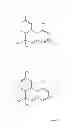
By side chain alkyl derivatives of either compound we mean compounds with the structure of either of the compounds depicted in the FIGURE, in which R represents an alkyl side chain. Of particular interest, are compounds in which R is 1,1 dimethylheptyl.
BRIEF DESCRIPTION OF THE DRAWINGS
The FIGURE shows the chemical structures for alkyl substituted (−)-Δ8-trans-tetrahydrocannabinol derivatives and (−)-Δ9-trans-tetrahydrocannabinol derivatives.
DETAILED DESCRIPTION OF THE INVENTION
The inventors have found that the addition of the acid improves the stability of the composition, i.e. there is less degradation of the tetrahydrocannabinol compound during prolonged storage of the composition. The composition includes a solvent. The solvent may be chosen from oils and C1-C4 alcohols. Suitable examples of oils include sesame oil, olive oil, canola oil and combinations thereof. Suitable examples of C1-C4 alcohols include methanol, ethanol, propanol, iso-propanol and butanol.
According to one embodiment, the solvent is sesame oil. The sesame oil may be refined or unrefined, but is preferably refined (the US Food and Drug Administration standards require that refined sesame oil is used in pharmaceutical products). The composition may further comprise other solvents, but preferably comprises only sesame oil as the solvent. According to an alternative embodiment, the solvent is ethanol.
The acid used in the composition may be an organic acid. When an organic acid is used, the organic acid is suitably chosen from citric acid, ascorbic acid, malic acid, oxalic acid, succinic acid and tartaric acid, and is preferably citric acid.
The acid used in the composition may be a mineral acid. When a mineral acid is used, the mineral acid is suitably chosen from phosphoric acid, hydrochloric acid, nitric acid and sulphuric acid, and is preferably phosphoric acid.
Weak acids have an especially positive stabilizing effect on (−)-Δ9-trans-tetrahydrocannabinol and its derivatives, forming a stabilized composition. If the amount or concentration of strong acid is too large, the Δ9-isomer degrades to the Δ8-isomer.
The acid may be added to the other constituents either as a separate component, or the acid may be formed in a solution of the other constituents. An example of the latter is the use of dissolved CO2 in ethanol, which also stabilizes the Δ9-isomer, probably due to formation of carbonic acid.
The amount of acid is suitably from 0.01-2% as a weight percentage of the composition, preferably from 0.02-1% and most preferably from 0.05-0.5%.
The amount of (−)-Δ9-trans-tetrahydrocannabinol in the composition is suitably from 0.1-15% as a weight percentage of the composition, preferably from 1 to 10%.
The composition may further comprise antimicrobial agents such as methyl paraben or propyl paraben. The composition may further comprise preservatives such as alpha-tocopherol or butylated hydroxytoluene (BHT). The composition may further comprise antioxidants. The antimicrobial agents, preservatives and antioxidants may be used alone or in combination.
In a preferred embodiment, the composition of the invention consists essentially of a tetrahydrocannabinol compound, an oil or a C1-C4 alcohol, and 0.01-2 wt % of an acid chosen from the group consisting of citric acid, ascorbic acid, malic acid, oxalic acid, succinic acid, tartaric acid, phosphoric acid, hydrochloric acid, nitric acid and sulphuric acid. Additional components (e.g. antimicrobial agents, preservatives, antioxidants) may comprise up to 1 wt % of the solution. In an especially preferred embodiment, the composition of the invention consists essentially of (−)-Δ9-trans-tetrahydrocannabinol, sesame oil and 0.05-0.5 wt % citric acid or phosphoric acid, wherein additional components may comprise up to 1 wt % of the solution.
Compositions according to the invention may be prepared by adding the acid to a solution of a tetrahydrocannabinol compound in sesame oil or a C1-C4 alcohol and mixing. Solutions of (−)-Δ9-trans-tetrahydrocannabinol in sesame oil may be prepared by dissolving pure (−)-Δ9-trans-tetrahydrocannabinol in sesame oil, or by mixing sesame oil with a solution of (−)-Δ9-trans-tetrahydrocannabinol in ethanol, and then distilling off the ethanol.
The following examples are illustrative but not limiting of the invention.
Composition Preparation: Sesame Oil Solvent
Sesame oil was degassed under vacuum distillation and blanketed with nitrogen. The sesame oil was refined sesame oil from Jeen International (Compositions 1-2, 7-17) or Dipasa (Compositions 3-6). A solution of (−)-Δ9-trans-tetrahydrocannabinol in ethanol was added to the sesame oil and the acid was also added. The solution was mixed and the ethanol was removed using a rotary evaporator.
Each composition contained 6.65 wt % (−)-Δ9-trans-tetrahydrocannabinol based on the weight of the composition. The additional components in each composition were as shown in Table 1 below:
| TABLE 1 |
| Compositions 1-18 in Sesame Oil Solvent |
| Acid | Other components | |
| Composition 1 | None | None |
| Composition 2 | 0.1 wt % citric acid | None |
| Composition 3 | None | None |
| Composition 4 | 0.1 wt % citric acid | None |
| Composition 5 | None | Methyl paraben, Propyl |
| paraben, Alpha tocopherol, | ||
| BHT | ||
| Composition 6 | 0.1 wt % citric acid | Methyl paraben, Propyl |
| paraben, Alpha tocopherol, | ||
| BHT | ||
| Composition 7 | None | None |
| Composition 8 | 0.1 wt % ascorbic acid | None |
| Composition 9 | 0.1 wt % acetic acid | None |
| Composition 10 | 0.1 wt % citric acid | None |
| Composition 11 | 0.1 wt % lactic acid | None |
| Composition 12 | 0.1 wt % fumaric acid | None |
| Composition 13 | 0.1 wt % malic acid | None |
| Composition 14 | 0.1 wt % oxalic acid | None |
| Composition 15 | 0.1 wt % succinic acid | None |
| Composition 16 | 0.1 wt % salicylic acid | None |
| Composition 17 | 0.1 wt % tartaric acid | None |
| Composition 18 | 0.1 wt % phosphoric acid | None |
Composition Preparation: Ethanol Solvent
Citric acid was added to 2 ml samples of a solution of (−)-Δ9-trans-tetrahydrocannabinol in ethanol (the concentration of the (−)-Δ9-trans-tetrahydrocannabinol was 66.6 mg/ml). The solutions were mixed. The amount of citric acid in each solution is shown in Table 2 below:
| TABLE 2 |
| Compositions 19-24 in Ethanol Solvent |
| Amount | Weight % of citric acid compared | |
| of citric acid (mg) | to the weight of Δ9-THC | |
| Composition 19 | 0.00 | 0.0% |
| Composition 20 | 2.51 | 1.9% |
| Composition 21 | 2.01 | 1.5% |
| Composition 22 | 0.50 | 0.4% |
| Composition 23 | 0.25 | 0.2% |
| Composition 24 | 0.13 | 0.09% |
Stability: Sesame Oil Solvent
The stability of the sesame oil compositions (compositions 1-18) was assessed at three different conditions: 5° C. or Normal Storage (Refrigerated) Conditions; 25° C./60% Relative Humidity or Accelerated Conditions; and 40° C./75% Relative Humidity or High Temperature/High Humidity Conditions. The degradation of the (−)-Δ9-trans-tetrahydrocannabinol was monitored using a High Performance Liquid Chromatography (HPLC) method with ultraviolet detection at 228 nm. Each detected impurity peak was measured using percent peak area (% PA) with respect to the peak area counts for (−)-Δ9-trans-tetrahydrocannabinol for each chromatogram. Each impurity peak was identified with a relative retention time (RRT) relative to the (−)-Δ9-trans-tetrahydrocannabinol peak elution time from each chromatogram. Impurity peaks measuring above 0.05% PA were recorded.
The impurities that are attributed to the degradation of (−)-Δ9-trans-tetrahydrocannabinol elute from the HPLC column at a RRT window of 0.56 to 0.95 and at a RRT of 1.06. The impurities cannabinol and Δ8-tetrahydrocannabinol elute from the column at RRTs of 0.95 and 1.06 respectively.
Table 3 shows the results of the stability tests for compositions 1-18. The period of time after which the degradation of the composition was assessed is indicated beside each table.
| TABLE 3 |
| Stability tests for compositions 1-18 |
| % Peak Areas according to Relative Retention Time (RRT) |
| Condition | 0.56 | 0.57 | 0.58 | 0.61 | 0.63 | 0.66 | 0.67 | 0.70 | 0.74 | 0.78 | 0.90 | 0.95 | 1.06 |
| Composition 1, 1 month |
| Initial | 0.28 | ||||||||||||
| 25° C./60% RH | 4.13 | 4.45 | 0.96 | 3.11 | 10.2 | 2.35 | 0.22 | 0.36 | 1.46 | 4.06 | 5.33 | ||
| 40° C./75% RH | 8.09 | 5.35 | 2.43 | 4.91 | 0.29 | 15.62 | 0.28 | 0.49 | 1.86 | 2.99 |
| Composition 2, 3 months |
| Initial | |||||||||||||
| 5° C. | 0.08 | 0.05 | 0.05 | ||||||||||
| 25° C./60% RH | 0.18 | 0.13 | 0.07 | 0.07 | 0.16 | 0.37 | 0.29 | ||||||
| 40° C./75% RH | 1.96 | 0.22 | 0.91 | 0.17 | 0.45 | 0.36 | 0.3 | 0.05 | 1.25 | 4.16 | 2.17 |
| Composition 3, 3 months |
| Initial | 0.12 | ||||||||||||
| 5° C. | 0.29 | 0.51 | 0.29 | 0.13 | 3.96 | 0.22 | 0.35 | 1.89 | 0.15 | 0.08 | |||
| 25° C./60% RH | 0.85 | 0.74 | 1.97 | 1.23 | 0.72 | 6.13 | 1.81 | 0.06 | 0.23 | 2.55 | 0.44 | 2.03 | 0.64 |
| 40° C./75% RH | 0.16 | 0.52 | 0.31 | 0.65 | 0.74 | 3.72 | 0.45 | 0.02 | 0.08 | 1.02 | 1.96 | 1.46 | 0.7 |
| Composition 4, 3 months |
| Initial | |||||||||||||
| 5° C. | 0.05 | ||||||||||||
| 25° C./60% RH | 0.19 | 0.10 | 0.10 | 0.20 | 0.14 | ||||||||
| 40° C./75% RH | 1.96 | 0.15 | 0.53 | 0.29 | 0.30 | 0.17 | 1.11 | 2.62 | 0.41 |
| Composition 5, 3 months |
| Initial | 1.54 | ||||||||||||
| 5° C. | 0.05 | 0.12 | 0.08 | 0.06 | 1.36 | 0.05 | 0.09 | 0.30 | |||||
| 25° C./60% RH | 0.40 | 0.65 | 0.2 | 0.13 | 0.41 | 0.50 | 0.37 | 0.14 | 0.92 | 0.12 | 0.27 | 0.48 | 1.00 |
| 40° C./75% RH | 1.05 | 0.63 | 0.23 | 0.11 | 0.91 | 0.62 | 0.22 | 1.07 | 0.11 | 0.54 | 1.63 | 1.74 |
| Composition 6, 3 months |
| Initial | 0.05 | 1.54 | |||||||||||
| RF 5° C. | 0.06 | 1.52 | 0.11 | 0.05 | |||||||||
| 25° C./60% RH | 0.09 | 0.06 | 0.07 | 1.52 | 0.53 | 0.3 | |||||||
| 40° C./75% RH | 0.97 | 0.21 | 0.15 | 0.52 | 0.25 | 0.32 | 0.2 | 0.18 | 1.57 | 0.63 | 2.96 | 1.96 |
| Composition 7, 4 weeks |
| Initial | 0.03 | 0.03 | 0.02 | 0.01 | 0.02 | ||||||||
| 5° C. | 0.01 | 0.11 | 0.02 | 0.04 | 0.04 | 0.01 | 0.05 | ||||||
| 25° C./60% RH | 0.19 | 0.16 | 0.13 | 0.11 | 1.76 | 0.51 | 0.22 | 0.01 | 0.05 | 0.05 | |||
| 40° C./75% RH | 0.23 | 0.21 | 0.46 | 1.41 | 0.67 | 5.60 | 0.22 | 0.07 | 1.00 | 0.81 | 0.29 | 0.56 | 0.05 |
| Composition 8, 4 weeks |
| Initial | 0.01 | 0.01 | 0.01 | 0.01 | 0.02 | ||||||||
| 5° C. | 0.02 | 0.01 | 0.02 | ||||||||||
| 25° C./60% RH | 0.03 | 0.03 | 0.02 | 0.01 | 0.02 | ||||||||
| 40° C./75% RH | 0.02 | 0.01 | 0.06 | 0.11 | 0.03 | 0.02 | 0.02 | 0.04 | 0.05 | 0.06 |
| Composition 9, 4 weeks |
| Initial | 0.02 | 0.04 | 0.03 | 0.02 | |||||||||
| 5° C. | 0.17 | 0.10 | 0.02 | 0.1 | 0.02 | 0.67 | 0.16 | 0.15 | 0.15 | 0.02 | 0.05 | ||
| 25° C./60% RH | 0.13 | 0.23 | 0.36 | 1.00 | 0.09 | 3.18 | 0.46 | 0.02 | 0.58 | 0.59 | 0.1 | 0.68 | 0.14 |
| 40° C./75% RH | 0.65 | 1.25 | 0.29 | 2.95 | 0.32 | 2.99 | 1.71 | 0.04 | 0.30 | 0.12 | 0.49 | 3.69 | 0.7 |
| Composition 10, 4 weeks |
| Initial | 0.02 | 0.01 | 0.01 | 0.02 | |||||||||
| 5° C. | 0.01 | 0.01 | |||||||||||
| 25° C./60% RH | 0.04 | 0.03 | 0.01 | 0.02 | |||||||||
| 40° C./75% RH | 0.11 | 0.11 | 0.02 | 0.02 | 0.02 | 0.02 | 0.03 | 0.16 | 0.12 | 0.14 |
| Composition 11, 4 weeks |
| Initial | 0.02 | 0.02 | |||||||||||
| 5° C. | 0.02 | 0.01 | 0.02 | 0.02 | 0.03 | ||||||||
| 25° C./60% RH | 0.02 | 0.01 | 0.09 | 0.01 | 0.04 | 0.11 | 0.07 | ||||||
| 40° C./75% RH | 0.02 | 0.19 | 0.12 | 0.27 | 0.04 | 0.16 | 0.04 | 0.02 | 0.33 | 0.60 | 0.43 |
| Composition 12, 4 weeks |
| Initial | 0.02 | 0.01 | 0.02 | 0.03 | 0.01 | ||||||||
| 5° C. | 0.26 | 0.10 | 0.09 | 0.05 | 0.42 | 0.17 | 0.09 | 0.12 | 0.01 | 0.02 | 0.06 | ||
| 25° C./60% RH | 0.08 | 0.09 | 0.12 | 0.02 | 0.07 | 0.38 | 0.1 | 0.02 | 0.04 | 0.07 | 0.19 | 0.19 | 0.67 |
| 40° C./75% RH | 0.42 | 0.11 | 0.53 | 0.07 | 0.16 | 0.31 | 0.32 | 0.07 | 0.04 | 0.98 | 1.41 | 2.58 |
| Composition 13, 4 weeks |
| Initial | 0.02 | ||||||||||||
| 5° C. | 0.01 | 0.01 | |||||||||||
| 25° C./60% RH | 0.01 | 0.02 | 0.02 | 0.03 | 0.03 | ||||||||
| 40° C./75% RH | 0.15 | 0.02 | 0.06 | 0.04 | 0.03 | 0.03 | 0.15 | 0.18 | 0.18 |
| Composition 14, 4 weeks |
| Initial | 0.01 | 0.02 | |||||||||||
| 5° C. | 0.05 | 0.01 | 0.02 | ||||||||||
| 25° C./60% RH | 0.16 | 0.03 | 0.03 | 0.02 | |||||||||
| 40° C./75% RH | 0.04 | 0.03 | 0.35 | 0.02 | 0.11 | 0.12 | 0.02 |
| Composition 15, 4 weeks |
| Initial | 0.02 | 0.02 | 0.01 | 0.02 | |||||||||
| 5° C. | 0.01 | 0.01 | 0.02 | ||||||||||
| 25° C./60% RH | 0.03 | 0.02 | 0.01 | 0.03 | |||||||||
| 40° C./75% RH | 0.05 | 0.01 | 0.25 | 0.03 | 0.08 | 0.08 | 0.03 | 0.03 | 0.11 | 0.10 | 0.28 |
| Composition 16, 4 weeks |
| Initial | 0.01 | 0.04 | 0.01 | 0.01 | 0.02 | 0.01 | 0.03 | ||||||
| 5° C. | 0.01 | 0.16 | 0.03 | 0.08 | 0.04 | 0.05 | 0.15 | 0.01 | 0.22 | 0.07 | |||
| 25° C./60% RH | 0.36 | 0.1 | 1.87 | 0.58 | 0.63 | 0.75 | 0.01 | 0.19 | 2.76 | 0.05 | 4.27 | 0.15 | |
| 40° C./75% RH | 0.41 | 0.27 | 0.99 | 0.17 | 0.45 | 0.34 | 0.77 | 0.05 | 0.08 | 2.97 | 0.64 | 4.5 | 0.59 |
| Composition 17, 4 weeks |
| Initial | 0.02 | 0.01 | 0.02 | 0.02 | |||||||||
| 5° C. | 0.01 | 0.02 | |||||||||||
| 25° C./60% RH | 0.02 | 0.02 | 0.02 | 0.02 | |||||||||
| 40° C./75% RH | 0.13 | 0.04 | 0.04 | 0.01 | 0.04 | 0.03 | 0.12 | 0.12 | 0.17 |
| Composition 18, 16 days |
| Initial | 1.58 | 0.26 | 0.55 | 0.36 | 0.05 | ||||||||
| 25° C./60% RH | 3.39 | 0.20 | 0.17* | 0.09 | 0.09 | 1.08 | |||||||
| 40° C./75% RH | 3.39 | 0.20 | 0.18* | 0.08 | 0.10 | 1.08 | |||||||
| data after 1 week, not 16 days |
Compositions 1, 3, 5 and 7 did not contain any organic acid, and the tables show that considerable degradation occurred during the observation period. By contrast, the degradation observed for compositions 2, 4 and 6 (which all contained 0.1 wt % citric acid) was considerably less. Compositions 5 and 6 both contained antimicrobial agents and preservatives, yet composition 6 (containing 0.1 wt % citric acid) was more stable than composition 5.
Compositions 8-18 contained a variety of acids. Compositions 8, 10, 11, 12, 13, 14, 15, 17 and 18 (containing 0.1 wt % ascorbic acid, 0.1 wt % citric acid, 0.1 wt % lactic acid, 0.1 wt % fumaric acid, 0.1 wt % malic acid, 0.1 wt % oxalic acid, 0.1 wt % succinic acid, 0.1 wt % tartaric acid and 0.1 wt % phosphoric acid respectively) all showed improved stability compared to composition 7 (containing no organic acid). Compositions 9 and 16 (containing 0.1 wt % acetic acid and 0.1 wt % salicylic acid) did not show an appreciable improvement compared to composition 7 and it would seem that these acids are less effective at improving stability (although the inventors believe that these acid may provide an improvement if used at another concentration).
Stability: Ethanol Solvent
The stability of the ethanol compositions (compositions 19-24) was assessed in substantially the same manner as for the sesame oil compositions except that they were only assessed at only one set of conditions (40° C.) and the compositions were analysed after 60 hours and 1 month.
Table 4 shows that the composition that did not contain citric acid (composition 19) showed the greatest degradation and there seems to be a slight correlation between increasing citric acid content and increased stability.
| TABLE 4 |
| Stability tests for compositions 19-24 |
| % Peak Areas according to Relative Retention Time (RRT) |
| Condition | 0.57 | 0.58 | 0.59 | 0.61 | 0.63 | 0.66 | 0.67 | 0.70 | 0.74 | 0.78 | 0.82 | 0.90 | 0.95 | |
| Initial | 0.11 | |||||||||||||
| Composition 19 | 40° C./60 hr | 0.04 | 0.04 | 0.25 | 0.02 | 1.80 | 0.35 | 0.02 | ||||||
| 40° C./1 mo | 0.34 | 0.34 | 0.14 | 8.6 | 1.58 | 5.13 | 0.13 | 2.33 | 0.07 | 1.46 | 0.52 | 0.34 | ||
| Composition 20 | 40° C./60 hr | 0.3 | 0.02 | 0.04 | 0.07 | |||||||||
| 40° C./1 mo | 0.02 | 2.38 | 0.19 | 0.03 | 0.06 | 0.02 | 0.05 | 0.01 | 0.58 | |||||
| Composition 21 | 40° C./60 hr | 0.04 | 0.3 | 0.02 | 0.01 | 0.05 | 0.08 | |||||||
| 40° C./1 mo | 0.02 | 2.51 | 0.2 | 0.02 | 0.06 | 0.02 | 0.05 | 0.01 | 0.6 | |||||
| Composition 22 | 40° C./60 hr | 0.35 | 0.03 | 0.07 | 0.11 | 0.04 | ||||||||
| 40° C./1 mo | 0.02 | 3.37 | 0.27 | 0.06 | 0.06 | 0.03 | 0.23 | 0.02 | 0.69 | |||||
| Composition 23 | 40° C./60 hr | 0.31 | 0.03 | 0.11 | 0.11 | 0.02 | ||||||||
| 40° C./1 mo | 0.02 | 0.02 | 3.03 | 0.25 | 0.12 | 0.04 | 0.03 | 0.42 | 0.01 | 0.51 | ||||
| Composition 24 | 40° C./60 hr | 0.02 | 0.28 | 0.03 | 0.16 | 0.02 | 0.11 | 0.02 | ||||||
| 40° C./1 mo | 0.02 | 1.71 | 0.14 | 0.13 | 0.02 | 0.03 | 0.39 | 0.24 | ||||||
Claims
1. A composition comprising:
(a) (−)-Δ9-trans-tetrahydrocannabinol,
(b) a solvent comprising sesame oil, and
(c) an acid selected from the group consisting of acetic acid, lactic acid, oxalic acid, succinic acid, salicylic acid and tartaric acid, and
wherein after up to 4 weeks at (i) 5° C., (ii) 25° C./60% relative humidity, or (iii) 40° C./75% relative humidity, the composition comprises:
a′) ≦3.69% cannabinol when the acid is acetic acid;
b′) ≦0.60% cannabinol when the acid is lactic acid;
c′) ≦0.12% cannabinol when the acid is oxalic acid;
d′) ≦0.1% cannabinol when the acid is succinic acid;
e′) ≦4.5% cannabinol when the acid is salicylic acid; or
f′) ≦0.12% cannabinol when the acid is tartaric acid.
2. A composition comprising:
(a) (−)-Δ9-trans-tetrahydrocannabinol,
(b) a solvent comprising sesame oil, and
(c) phosphoric acid, and
wherein the composition comprises ≦1.08% cannabinol after up to 16 days at (i) 25° C./60% relative humidity, or (ii) 40° C./75% relative humidity.
3. A composition according to claim 1, wherein after up to 4 weeks at (i) 5° C., (ii) 25° C./60% relative humidity, or (iii) 40° C./75% relative humidity, the composition comprises:
a′) ≦0.7% Δ8-tetrahydrocannabinol when the acid is acetic acid;
b′) ≦0.43% Δ8-tetrahydrocannabinol when the acid is lactic acid;
c′) ≦0.02% Δ8-tetrahydrocannabinol when the acid is oxalic acid;
d′) ≦0.28% Δ8-tetrahydrocannabinol when the acid is succinic acid;
e′) ≦0.59% Δ8-tetrahydrocannabinol when the acid is salicylic acid; or
f′) ≦0.17% Δ8-tetrahydrocannabinol when the acid is tartaric acid.
4. A composition according to claim 3, wherein after up to 4 weeks at (i) 5° C., (ii) 25° C./60% relative humidity, or (iii) 40° C./75% relative humidity, the composition comprises:
a′) ≦3.18% of any impurity having a relative retention time of from 0.56 to 0.90, when the acid is acetic acid;
b′) ≦0.33% of any impurity having a relative retention time of from 0.56 to 0.90, when the acid is lactic acid;
c′) ≦0.35% of any impurity having a relative retention time of from 0.56 to 0.90, when the acid is oxalic acid;
d′) ≦0.25% of any impurity having a relative retention time of from 0.56 to 0.90, when the acid is succinic acid;
e′) ≦2.97% of any impurity having a relative retention time of from 0.56 to 0.90, when the acid is salicylic acid; or
f′) ≦0.13% of any impurity having a relative retention time of from 0.56 to 0.90, when the acid is tartaric acid.
5. A composition according to claim 2, wherein the composition comprises ≦3.39% of any impurity having a relative retention time of from 0.56 to 0.90 after up to 16 days at (i) 25° C./60% relative humidity, or (ii) 40° C./75% relative humidity.
6. A composition according to claim 1 further comprising one or more anti-oxidants, antimicrobial agents, preservatives or a combination thereof.
7. A composition according to claim 2 further comprising one or more anti-oxidants, antimicrobial agents, preservatives or a combination thereof.
8. A composition according to claim 1 further comprising alpha-tocopherol or butylated hydroxytoluene.
9. A composition according to claim 2 further comprising alpha-tocopherol or butylated hydroxytoluene.
10. A composition according to claim 1, wherein the acid is present in an amount of from 0.01-2 wt. %.
11. A composition according to claim 2, wherein the phosphoric acid is present in an amount of from 0.01-2 wt. %.
12. A composition according to claim 1, wherein the acid is present in an amount of from 0.02-1 wt. %.
13. A composition according to claim 2, wherein the phosphoric acid is present in an amount of from 0.02-1 wt. %.
14. A composition according to claim 1, wherein the acid is present in an amount of from 0.05-0.5 wt. %.
15. A composition according to claim 2, wherein the phosphoric acid is present in an amount of from 0.05-0.5 wt. %.
16. A composition according to claim 1, wherein the (−)-Δ9-trans-tetrahydrocannabinol is present in an amount from 0.1-15 wt. %.
17. A composition according to claim 2, wherein the (−)-Δ9-trans-tetrahydrocannabinol is present in an amount from 0.1-15 wt. %.
18. A composition according to claim 1, wherein the (−)-Δ9-trans-tetrahydrocannabinol is present in an amount from 1-10 wt. %.
19. A composition according to claim 2, wherein the (−)-Δ9-trans-tetrahydrocannabinol is present in an amount from 1-10 wt. %.
Images & Drawings included:
Sources:
- United States Patent and Trademark Office - verify current appl. status at the USPTO↗
Similar patent applications:
Recent applications in this class:
- » 20250275939 2025-09-04
CO-CRYSTALS - » 20250275938 2025-09-04
COMPOSITIONS AND METHODS FOR TREATMENT OF CANCER - » 20250262183 2025-08-21
Antibiotic Topical Composition for Absorption into Systemic Bloodstream - » 20250134854 2025-05-01
PHARMACEUTICAL DRUG CONTAINING HETEROCYCLIDENE ACETAMIDE DERIVATIVE - » 20250120940 2025-04-17
COMPOSITION FOR IMPROVING FATIGUE, EXERCISE PERFORMANCE, OR ENDURANCE COMPRISING GALLOCATECHIN GALLATE AND ISOQUERCITRIN - » 20250099420 2025-03-27
SMALL MOLECULE MODULATORS OF GPR139 COMPLEX - » 20250082604 2025-03-13
COMPOSITIONS CONTAINING A HIGH CONTENT OF PROANTHOCYANIDINS AND METHODS OF PREPARATION AND USE THEREOF - » 20250082603 2025-03-13
OPHTHALMIC COMPOSITION CONTAINING RECOFLAVONE FOR THE TREATMENT OF DRY EYE DISEASE AND METHOD FOR PREPARING THE SAME - » 20250082602 2025-03-13
OPHTHALMIC COMPOSITION CONTAINING RECOFLAVONE FOR THE TREATMENT OF DRY EYE DISEASE - » 20250057805 2025-02-20
METHODS FOR ADDRESSING INJECTION SITE REACTIONS ASSOCIATED WITH THE ADMINISTRATION OF BEVEMIPRETIDE
Recent applications for this Assignee:
- » 20250154890 2025-05-15
Catalytic wall-flow filter - » 20250067209 2025-02-27
AMMONIA-BURNING COMBUSTION ENGINE - » 20240287923 2024-08-29
Catalytic wall flow filter - » 20240133327 2024-04-25
Exhaust gas joule heater - » 20240109055 2024-04-04
Transition metal incorporated alumina for improved three way catalysts - » 20240091745 2024-03-21
Composite, zoned oxidation catalys for a compression ignition internal combustion engine - » 20240066468 2024-02-29
EXHAUST GAS TREATMENT SYSTEM - » 20240024898 2024-01-25
Apparatus and method for coating substrates with washcoats - » 20240011421 2024-01-11
System comprising vehicular compression ignition engine and an emissions control device comprising an electrically heatable element - » 20230347326 2023-11-02
METHOD OF TREATING EXHAUST GAS AND SYSTEM FOR SAME