Flame-retardant thermoplastic starch material, flame-retardant thermoplastic starch-based bio-composite, and method for manufacturing the same
US20140005299A1
2014-01-02
13/708,460
2012-12-07
✅ Patent granted
US 9,127,156 B2
2015-09-08
-
-
Liam J Heincer
Muncy, Geissler, Olds & Lowe, P.C.
2033-01-09
Abstract:
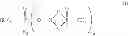
In one embodiment, A flame-retardant thermoplastic starch material, including (A1) 100 parts by weight of starch; (A2) 5 to 75 parts by weight of plasticizer; and (A3) 5 to 30 parts by weight of organic phosphonate flame-retardant, wherein the organic phosphonate flame-retardant has the following formula (I):
-
- wherein X is a trivalent aliphatic hydrocarbon radical containing 3 to 12 carbon atoms; R1 and R2 are independently C1 to C8 alkyl; and n is 0 or 1.
Inventors:
- Yao-Chu CHUNG 5 🇹🇼 KAOHSIUNG CITY, Taiwan
- Fu-Ming CHIEN 10 🇹🇼 HSINCHU CITY, Taiwan
- Sheng-Ju Liao 6 🇹🇼 Hsinchu City, Taiwan
- Chien-Ming CHEN 9 🇹🇼 Yangmei Township, Taiwan
- Chih-Jen CHANG 3 🇹🇼 Toufen Township, Taiwan
- Sheng-Ju Liao 4 🇹🇼 Hsinchu, Taiwan
- Yao-Chu Chung 2 🇹🇼 Kaohsiung, Taiwan
- Fu-Ming Chien 6 🇹🇼 Hsinchu, Taiwan
- Chien-Ming Chen 6 🇹🇼 Yangmei Township, Taoyuan County, Taiwan
- Chih-Jen Chang 1 🇹🇼 Toufen Township, Miaoli County, Taiwan
Assignee:
- INDUSTRIAL TECHNOLOGY RESEARCH INSTITUTE 254 🇹🇼 Chutung, Taiwan
- Industrial Technology Research Institute 243 🇹🇼 Chutung Hsinchu, Taiwan
Applicant:
Interested in similar patents?
Get notified when new applications in this technology area are published.
Classification:
C08K5/5357 » CPC further
Use of organic ingredients; Phosphorus-containing compounds; Phosphorus bound to oxygen bound to oxygen and to carbon only; Phosphonic compounds, e.g. R—P(:O)(OR'); Esters of phosphonic acids cyclic
C08L3/02 » CPC further
Compositions of starch, amylose or amylopectin or of their derivatives or degradation products Starch; Degradation products thereof, e.g. dextrin
C08L55/02 » CPC further
Compositions of homopolymers or copolymers, obtained by polymerisation reactions only involving carbon-to-carbon unsaturated bonds, not provided for in groups - ABS [Acrylonitrile-Butadiene-Styrene] polymers
C08L67/02 » CPC further
Compositions of polyesters obtained by reactions forming a carboxylic ester link in the main chain ; Compositions of derivatives of such polymers Polyesters derived from dicarboxylic acids and dihydroxy compounds
C09K21/12 » CPC further
Fireproofing materials; Organic materials containing phosphorus
C08L3/06 » CPC further
Compositions of starch, amylose or amylopectin or of their derivatives or degradation products; Starch derivatives, e.g. crosslinked derivatives Esters
C08L3/08 » CPC further
Compositions of starch, amylose or amylopectin or of their derivatives or degradation products; Starch derivatives, e.g. crosslinked derivatives Ethers
C08L2201/02 » CPC further
Properties Flame or fire retardant/resistant
C08L3/00 IPC
Compositions of starch, amylose or amylopectin or of their derivatives or degradation products
C08L67/00 IPC
Compositions of polyesters obtained by reactions forming a carboxylic ester link in the main chain ; Compositions of derivatives of such polymers
C08L69/00 » CPC main
Compositions of polycarbonates; Compositions of derivatives of polycarbonates
C08K5/053 IPC
Use of organic ingredients; Oxygen-containing compounds; Alcohols; Metal alcoholates Polyhydroxylic alcohols
C08L47/00 » CPC further
Compositions of homopolymers or copolymers of compounds having one or more unsaturated aliphatic radicals, at least one having two or more carbon-to-carbon double bonds; Compositions of derivatives of such polymers
C08K13/02 » CPC further
Use of mixtures of ingredients not covered by one single of the preceding main groups, each of these compounds being essential Organic and inorganic ingredients
Description
CROSS REFERENCE TO RELATED APPLICATIONS
This Application claims priority of Taiwan Patent Application No. 101122930, filed on Jun. 27, 2012, the entirety of which is incorporated by reference herein.
TECHNICAL FIELD
The technical field relates to a flame-retardant thermoplastic starch material, a flame-retardant thermoplastic starch-based bio-composite, and a method for manufacturing the same.
BACKGROUND
In general, plants store energy in starch, and the starch may be stored in grain, beans, tubers, or the like. Since these natural sources of starch are cheap and abundant all over the earth, it has been applied to various industrial applications, including the food, paper, textile, and glue industries. Native starch refers to partially crystallized nano-level particles. Hydrogen bonds between these particles make them assemble with each other to become a huge assembly. Therefore, it is difficult for the native starch to be used in a melting process. Conventionally, starch is often used as filler in plastics to decrease cost and increase rigidity.
The hydrogen bonds between starch particles may be broken by adding polyol into the starch. The polyol may be glycerol, sorbitol, or polyethylene oxide (PEO), for example. As a result, the molecular chain entanglement and chain motion of the starch can reach a point where the starch develops characteristics of thermoplasticity. Thus, the thermoplastic starch may have a mobility similar to that of other synthesized polymers, and therefore it may be suitable for use in molding and extruding the thermoplastic. However, pure thermoplastic starch has poor mechanical strength, resulting in limited applications. Therefore, a mixture of thermoplastic starch and a biodegradable polymer, or a mixture of thermoplastic starch and polyolefin may be used.
In Taiwan, over 1.5 million tons of plastic material is used every year. If all this plastic material could be replaced with an eco-friendly material (biomass content 25%), consumption of the petroleum-based material could be reduced by about 400,000 tons per year.
In addition, in some applications such as automobile interiors, domestic electrical devices, or electronic products, the plastic material needs to be flame-retardant. However, since thermoplastic starch itself is inflammable and exhibits melt-dripping behavior, it is very difficult to develop a flame-retardant starch-based bio-composite. Thus, petrol materials with high impact resistance, such as polystyrene, acrylonitrile butadiene styrene (ABS), polycarbonate (PC)/ABS, are still the most commonly used plastic materials.
Therefore, a novel thermoplastic starch and bio-composite with flame-retardant properties is required.
SUMMARY
A detailed description is given in the following embodiments with reference to the accompanying drawings.
In one embodiment, a flame-retardant thermoplastic starch material is provided, comprising: (A1) 100 parts by weight of starch; (A2) 5 to 75 parts by weight of plasticizer; and (A3) 5 to 30 parts by weight of organic phosphonate flame-retardant, wherein the organic phosphonate flame-retardant has the following formula (I):
wherein X is a trivalent aliphatic hydrocarbon radical containing 3 to 12 carbon atoms; R1 and R2 are independently C1 to C8 alkyl; and n is 0 or 1.
In another embodiment, a flame-retardant thermoplastic starch-based bio-composite is provided, comprising: (A) 5 to 40 parts by weight of the flame-retardant thermoplastic starch material as described previously; (B) 60 to 90 parts by weight of thermoplastic polymer; and (C) 3 to 10 parts by weight of impact modifier.
In still another embodiment, a method for manufacturing a flame-retardant thermoplastic starch-based bio-composite is provided, comprising: mixing (A1) 100 parts by weight of starch, (A2) 5 to 75 parts by weight of plasticizer, and (A3) 5 to 30 parts by weight of organic phosphonate flame-retardant and performing a roll mill plasticizing process to form a flame-retardant thermoplastic starch (A), wherein the organic phosphonate flame-retardant has the following formula (I):
wherein X is a trivalent aliphatic hydrocarbon radical containing 3 to 12 carbon atoms, R1 and R2 are independently C1 to C8 alkyl; and n is 0 or 1; and performing a blending process to (A) 5 to 40 parts by weight of the flame-retardant thermoplastic starch, (B) 60 to 90 parts by weight of thermoplastic polymer, and (C) 3 to 10 parts by weight of impact modifier to form a flame-retardant thermoplastic starch-based bio-composite.
DETAILED DESCRIPTION
The following description is of the best-contemplated mode of carrying out the disclosure. This description is made for the purpose of illustrating the general principles of the disclosure and should not be taken in a limiting sense. The scope of the disclosure is best determined by reference to the appended claims.
Moreover, the formation of a first feature over or on a second feature in the description that follows may include embodiments in which the first and second features are formed in direct contact, and may also include embodiments in which additional features may be formed between the first and second features, such that the first and second features may not be in direct contact.
In one embodiment, a flame-retardant thermoplastic starch material is provided. The flame-retardant thermoplastic starch material comprises (A1) 100 parts by weight of starch; (A2) 5 to 75 parts by weight of plasticizer; and (A3) 5 to 30 parts by weight of organic phosphonate flame-retardant. In another embodiment, the flame-retardant thermoplastic starch material comprises (A1) 100 parts by weight of starch; (A2) 20 to 45 parts by weight of plasticizer; and (A3) 10 to 20 parts by weight of organic phosphonate flame-retardant.
Examples of the starch (A1) may include, but are not limited to, corn starch, cassava starch, potato starch, esterified starch, etherified starch, or combinations thereof. Examples of the plasticizer (A2) may include, but are not limited to, water, polyol, or combinations thereof. Examples of the polyol may include, but are not limited to, glycerol, sorbitol, polyethylene oxide (PEO), or the like. The polyol may break hydrogen bonds between starch molecules such that the starch molecules, which have chain entanglement and chain motion, may reach a better thermoplastic ability.
The organic phosphonate flame-retardant (A3) may have the following formula (I):
wherein X is a trivalent aliphatic hydrocarbon radical containing 3 to 12 carbon atoms; R1 and R2 are independently C1 to C8 alkyl; and n is 0 or 1. In one embodiment, the trivalent aliphatic hydrocarbon radical has the following formula (II):
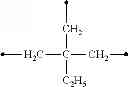
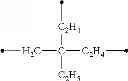
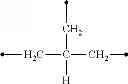
wherein R3 is C1 to C8 alkylene or a single bond; R4 is C1 to C3 alkyl or hydrogen; and R5 and R6 are independently C1 to C5 alkylene. Table 1 illustrates some examples of the trivalent aliphatic hydrocarbon radical in this disclosure. However, these structures are, of course, merely examples and are not intended to be limiting.
| TABLE 1 | ||
| 1 | ||
| 2 | ||
| 3 | ||
| 4 | ||
| 5 | ||
In one embodiment, the organic phosphonate flame-retardant (A3) is a liquid. Therefore, it can be miscible with water/glycerol, such that they can be evenly mixed with the starch.
In another embodiment, a method for manufacturing a flame-retardant thermoplastic starch-based bio-composite is provided. In the method for manufacturing a flame-retardant thermoplastic starch-based bio-composite, (A1) 100 parts by weight of starch, (A2) 5 to 75 parts by weight of plasticizer, and (A3) 5 to 30 parts by weight of organic phosphonate flame-retardant are first mixed and a roll mill plasticizing process is performed to form a flame-retardant thermoplastic starch (A) at 60° C. to 100° C. In another embodiment, the roll mill plasticizing process is performed at 70° C. to 90° C.
Next, a blending process is performed to (A) 5 to 40 parts by weight of the flame-retardant thermoplastic starch as described above, (B) 60 to 90 parts by weight of thermoplastic polymer, and (C) 3 to 10 parts by weight of impact modifier to form a flame-retardant thermoplastic starch-based bio-composite. In one embodiment, the blending process is performed at 170° C. to 260° C. In another embodiment, the blending process is performed at 190° C. to 240° C.
The resulting flame-retardant thermoplastic starch-based bio-composite may comprise (A) 5 to 40 parts by weight of the flame-retardant thermoplastic starch material (FR-thermoplastic starch); (B) 60 to 90 parts by weight of thermoplastic polymer; and (C) 3 to 10 parts by weight of impact modifier. In another embodiment, the flame-retardant thermoplastic starch-based bio-composite may comprise (A) 5 to 40 parts by weight of the flame-retardant thermoplastic starch material (FR- thermoplastic starch); (B) 70 to 85 parts by weight of thermoplastic polymer; and (C) 5 to 7 parts by weight of impact modifier. It should be noted that the plasticizer (A2) in the resulting flame-retardant thermoplastic starch-based bio-composite does not contain water (only polyol), resulting from the process performed at a high temperature that removes all the water in the plasticizer (A2).
Examples of the thermoplastic polymer (B) may include, but are not limited to, polycarbonate (PC), acrylonitrile butadiene styrene (ABS), polybutylene terephthalate (PBT), or combinations thereof. In addition, the polycarbonate, which has a shorter carbon chain than ABS and PBT (ABS and PBT are more inflammable than PC), may have a better miscibility with the flame-retardant thermoplastic starch. A blending temperature in the embodiment may be at least 200° C. It is noted that conventional flame-retardant may start to react and/or decompose at this high temperature, and therefore the conventional flame-retardant may not be used in this composite system. In addition, according to various embodiments, the flame-retardant thermoplastic starch is added into polycarbonate, and impact modifier which is compatible with the starch is also added into the mixture. Therefore, the toughness (impact resistance) of the composite material may be improved, and its flame-retardant properties may achieve a rating to UL-94V0 level, resulting from its compatibility and optimization by adjusting its composition.
In one embodiment, the impact modifier (C) is a rubber system having a core-shell structure. The shell portion of the rubber system may be polymethylmethacrylate (PMMA). The shell portion may improve its miscibility with the thermoplastic polymer and fix the size of the impact modifier. The core portion of the rubber system may comprise acrylic rubber, silicone-acrylic rubber, or combinations thereof. The core portion may provide the toughness (impact resistance) of the material.
It is noted that in the present disclosure, the organic phosphonate flame-retardant (A3) is first mixed and plasticized with starch, and then a blending process is performed afterwards. However, in some other research, the flame-retardant is added into the polymer matrix directly (rather than being plasticized first). In this case, the flame-retardant thermoplastic starch (which has flame-retardant properties itself) can not be formed.
In addition, since conventional thermoplastic starch contains a great amount of polyol, the starch-based bio-composite forming therefrom is usually inflammable and has melt dripping characteristics. However, in various embodiments of the disclosure, some of the polyol is replaced by the flame-retardant when the thermoplastic starch with flame-retardant properties is formed. Therefore, the amount of the plasticizer used may be decreased, and a bio-composite with flame-retardant properties may be formed.
The flame-retardant thermoplastic starch-based bio-composite in various embodiments has high workability at high temperatures, good molding ability and mechanical strength, and flame-retarding properties. Therefore, the flame-retardant thermoplastic starch-based bio-composite may be used in automobile interiors, domestic electrical devices, or electronic products.
EXAMPLES 1-17
In examples 1 to 17, the flame-retardant thermoplastic starch-based bio-composites were formed. The composition and material used in different examples are illustrated in Tables 2 to 5.
100 parts by weight of starch, 30 to 70 parts by weight of water, 5 to 30 parts by weight of glycerol, and 5 to 30 parts by weight of flame-retardant were mixed according to the composition shown in Tables 2 and 4. The flame-retardant included Chemguard-1045 (ORGANIC PHOSPHONATE; CG-1045; Chembridge International Corp.; as shown below), triphenyl phosphate (TPP), phosphate base flame-retardant (Resorcinol bis(dixylenyl phosphate); PX-200), or combinations thereof.
wherein n is 1.
Then, the mixture described above was put into a roll mill machine. The roll mill process was performed at 60° C. to 100° C. for 30 minutes to 80 minutes to plasticize the material. A granulator was then used to form a flame-retardant thermoplastic starch.
A blending process was performed to (A) 5 to 40 parts by weight of the resulting flame-retardant thermoplastic starch, (B) 60 to 90 parts by weight of PC, ABS, or PBT, and (C) 3 to 10 parts by weight of impact modifier, according to the composition shown in Tables 3 and 5. The process continued for 1 minute to 5 minutes at 170° C. to 260° C. to form the flame-retardant thermoplastic starch-based bio-composite.
COMPARATIVE EXAMPLE 1
The flame-retardant thermoplastic starch-based bio-composite in comparative example 1 was formed using the following method. The composition and material used in different examples are illustrated in Tables 4 and 5.
100 parts by weight of starch, 50 parts by weight of water, and 5 parts by weight of glycerol were mixed. Then, the mixture was put into a roll mill machine. The roll mill process was performed at 80° C. for 30 minutes to plasticize the material. A granulator was then used to form a thermoplastic starch.
A blending process was performed to (A) 30 parts by weight of the resulting thermoplastic starch, (B) 70 parts by weight of PC, (C) 10 parts by weight of organic phosphonate flame-retardant (ORGANIC PHOSPHONATE; Chembridge International Corp), and (D) 5 parts by weight of impact modifier. The process continued for 2 minutes at 230° C. to form the flame-retardant thermoplastic starch-based bio-composite.
COMPARATIVE EXAMPLE 2
The flame-retardant thermoplastic starch-based bio-composite in comparative example 2 was formed using the following method. The composition and material used in different examples are illustrated in Tables 4 and 5.
100 parts by weight of starch, 50 parts by weight of water, and 10 parts by weight of glycerol were mixed. Then, the mixture was put into a roll mill machine. The roll mill process was performed at 80° C. for 30 minutes to plasticize the material. A granulator was then used to form a thermoplastic starch.
A blending process was performed to (A) 30 parts by weight of the resulting thermoplastic starch, (B) 70 parts by weight of PC, (C) 15 parts by weight of organic phosphonate flame-retardant (PX-200), and (D) 5 parts by weight of impact modifier. The process continued for 2 minutes at 230° C. to form the flame-retardant thermoplastic starch-based bio-composite.
COMPARATIVE EXAMPLE 3
The flame-retardant thermoplastic starch-based bio-composite in comparative example 3 was formed using the following method. The composition and material used in different examples are illustrated in Tables 4 and 5.
100 parts by weight of starch, 50 parts by weight of water, and 10 parts by weight of flame-retardant (9,10-dihydro-9-oxa-10-phosphaphenan-threne-10-oxide; DOPO) were mixed. Then, the mixture was put into a roll mill machine. The roll mill process was performed at 80° C. for 30 minutes to plasticize the material. A granulator was then used to form a thermoplastic starch.
A blending process was performed to (A) 20 parts by weight of the resulting thermoplastic starch, (B) 80 parts by weight of PC, and (C) 5 parts by weight of impact modifier. The process continued for 2 minutes at 230° C. to form the flame-retardant thermoplastic starch-based bio-composite.
COMPARATIVE EXAMPLE 4
The flame-retardant thermoplastic starch-based bio-composite in comparative example 4 was formed using the following method. The composition and material used in different examples are illustrated in Tables 4 and 5.
100 parts by weight of starch, 50 parts by weight of water, and 10 parts by weight of glycerol were mixed. Then, the mixture was put into a roll mill machine. The roll mill process was performed at 80° C. for 30 minutes to plasticize the material. A granulator was then used to form a thermoplastic starch.
A blending process was performed to (A) 10 parts by weight of the resulting thermoplastic starch, (B) 90 parts by weight of PC, (C) 5 parts by weight of DOPO and 10 parts by weight of CG-1045, and (D) 5 parts by weight of impact modifier. The process continued for 2 minutes at 230° C. to form the flame-retardant thermoplastic starch-based bio-composite.
| TABLE 2 |
| Forming flame-retardant thermoplastic starch in examples 1-10 |
| Example 1 | Example 2 | Example 3 | Example 4 | Example 5 | Example 6 | Example 7 | Example 8 | Example 9 | Example 10 | |
| Starch |
| Corn starch | 100 | 100 | 100 | 0 | 0 | 0 | 0 | 0 | 0 | 100 |
| Cassava starch | 0 | 0 | 0 | 100 | 100 | 100 | 0 | 0 | 0 | 0 |
| Potato starch | 0 | 0 | 0 | 0 | 0 | 0 | 100 | 100 | 100 | 0 |
| Water | 50 | 50 | 50 | 50 | 50 | 50 | 40 | 50 | 60 | 50 |
| Glycerol | 5 | 10 | 15 | 10 | 10 | 10 | 10 | 10 | 10 | 10 |
| Flame-retardant |
| CG-1045 | 15 | 15 | 20 | 15 | 15 | 15 | 15 | 15 | 15 | 15 |
| TPP | 0 | 0 | 0 | 5 | 10 | 10 | 0 | 0 | 0 | 0 |
| PX-200 | 0 | 0 | 0 | 0 | 0 | 0 | 5 | 10 | 15 | 0 |
| TPS flame-retardant test |
| UV-94 | V0 | V0 | V0 | V0 | V0 | V0 | V0 | V0 | V0 | V0 |
| * Above values illustrate the composition of each material used during the manufacturing process (Unit: parts by weight) |
| TABLE 3 |
| Forming flame-retardant thermoplastic starch-based bio-composite in examples 1-10 |
| Example 1 | Example 2 | Example 3 | Example 4 | Example 5 | Example 6 | Example 7 | Example 8 | Example 9 | Example 10 | |
| Thermoplastic polymer |
| PC | 70 | 70 | 70 | 80 | 80 | 80 | 80 | 80 | 80 | 65 |
| PBT | 0 | 0 | 0 | 0 | 0 | 0 | 0 | 0 | 0 | 5 |
| Thermoplastic starch |
| Thermoplastic | 30 | 30 | 30 | 0 | 0 | 0 | 0 | 0 | 0 | 30 |
| corn starch | ||||||||||
| Thermoplastic | 0 | 0 | 0 | 20 | 20 | 20 | 0 | 0 | 0 | 0 |
| cassava starch | ||||||||||
| Thermoplastic | 0 | 0 | 0 | 0 | 0 | 0 | 20 | 20 | 20 | 0 |
| potato starch |
| Impact modifier |
| Acrylic rubber | 5 | 5 | 3 | 5 | 7 | 10 | 0 | 0 | 0 | 3 |
| Silicone-acrylic | 0 | 0 | 0 | 0 | 0 | 0 | 5 | 5 | 5 | 0 |
| rubber |
| Flame-retardant |
| PX-200 | 0 | 0 | 0 | 0 | 0 | 0 | 0 | 0 | 0 | 0 |
| CG-1045 | 0 | 0 | 0 | 0 | 0 | 0 | 0 | 0 | 0 | 0 |
| * Above values illustrate the composition of each material used during the manufacturing process (Unit: parts by weight) |
| TABLE 4 |
| Forming thermoplastic starch in examples 11-17 and comparative examples 1-4 |
| Exam- | Example | Example | Example | Example | Example | Example | Comparative | Comparative | Comparative | Comparative | |
| ple 11 | 12 | 13 | 14 | 15 | 16 | 17 | Example 1 | Example 2 | Example 3 | Example 4 | |
| Starch |
| Corn | 100 | 100 | 100 | 100 | 100 | 100 | 100 | 100 | 0 | 0 | 0 |
| starch | |||||||||||
| Cassava | 0 | 0 | 0 | 0 | 0 | 0 | 0 | 0 | 100 | 0 | 0 |
| starch | |||||||||||
| Potato | 0 | 0 | 0 | 0 | 0 | 0 | 0 | 0 | 0 | 0 | 0 |
| starch | |||||||||||
| Esterified | 0 | 0 | 0 | 0 | 0 | 0 | 0 | 0 | 0 | 0 | 0 |
| starch | |||||||||||
| Etherified | 0 | 0 | 0 | 0 | 0 | 0 | 0 | 0 | 0 | 100 | 100 |
| starch | |||||||||||
| Water | 50 | 50 | 50 | 50 | 50 | 50 | 50 | 50 | 50 | 50 | |
| Glycerol | 10 | 10 | 10 | 10 | 10 | 10 | 10 | 10 | 10 | 10 | 50 |
| Flame-retardant |
| CG-1045 | 10 | 20 | 15 | 15 | 20 | 20 | 20 | 0 | 0 | 0 | 10 |
| TPP | 0 | 0 | 0 | 0 | 0 | 0 | 0 | 0 | 0 | 0 | 0 |
| PX-200 | 0 | 0 | 0 | 0 | 0 | 0 | 0 | 0 | 0 | 0 | 0 |
| DOPO | 0 | 0 | 0 | 0 | 0 | 0 | 0 | 0 | 0 | 10 | 0 |
| * Above values illustrate the composition of each material used during the manufacturing process (Unit: parts by weight) |
| TABLE 5 |
| Forming flame-retardant thermoplastic starch-based bio-composite in examples 11-17 and comparative examples 1-4 |
| Exam- | Exam- | Exam- | Example | Example | Example | Example | Comparative | Comparative | Comparative | Comparative | |
| ple 11 | ple 12 | ple 13 | 14 | 15 | 16 | 17 | Example 1 | Example 2 | Example 3 | Example 4 | |
| Thermoplastic polymer |
| PC | 60 | 50 | 65 | 65 | 65 | 65 | 65 | 70 | 70 | 80 | 90 |
| PBT | 10 | 20 | 0 | 0 | 0 | 0 | 0 | 0 | 0 | 0 | 0 |
| ABS | 0 | 0 | 5 | 10 | 5 | 5 | 10 | 0 | 0 | 0 | 0 |
| Thermoplastic starch |
| Thermoplastic | 30 | 30 | 30 | 30 | 30 | 30 | 30 | 30 | 0 | 0 | 0 |
| corn starch | |||||||||||
| Thermoplastic | 0 | 0 | 0 | 0 | 0 | 0 | 0 | 0 | 30 | 0 | 0 |
| cassava starch | |||||||||||
| Thermoplastic | 0 | 0 | 0 | 0 | 0 | 0 | 0 | 0 | 0 | 0 | 10 |
| potato starch | |||||||||||
| Thermoplastic | 0 | 0 | 0 | 0 | 0 | 0 | 0 | 0 | 0 | 20 | 0 |
| esterified | |||||||||||
| starch | |||||||||||
| Thermoplastic | 0 | 0 | 0 | 0 | 0 | 0 | 0 | 0 | 0 | 0 | 0 |
| etherified | |||||||||||
| starch |
| Impact modifier |
| Acrylic rubber | 3 | 3 | 3 | 3 | 3 | 3 | 3 | 5 | 5 | 5 | 5 |
| Flame-retardant |
| PX-200 | 0 | 0 | 0 | 0 | 0 | 0 | 0 | 0 | 15 | 0 | 10 |
| CG-1045 | 0 | 0 | 0 | 0 | 0 | 0 | 0 | 10 | 0 | 0 | 5 |
| * Above values illustrate the composition of each material used during the manufacturing process (Unit: parts by weight) |
Workability
Tables 6 and 7 further illustrate the workability of the resulting flame-retardant thermoplastic starch-based bio-composite in examples 1-17 and comparative examples 1-4. In examples 1 to 17, during the preparation of thermoplastic starch, some polyol was replaced with organic phosphate flame-retardant. Therefore, the polymer was added to the thermoplastic starch to perform a blending process after the flame-retardant was plasticized with the starch. On the other hand, in comparative examples 1, 2, and 4, the flame-retardant was added directly into the composite to form a starch-based bio-composite. In comparative example 3, DOPO was used as the flame-retardant, and the resulting starch-based bio-composite had poor melting ability and was difficult to extrude. Accordingly, the flame-retardant thermoplastic starch-based bio-composite in the examples had better workability than those in the comparative examples.
During the manufacturing process, the flame-retardant thermoplastic starch-based bio-composite in these examples required less plasticizer. In addition, they were workable at higher temperatures and had a better molding ability, mechanical strength, and flame-retardant properties. Thus, they represent an eco-friendly material which might be used in automobile interiors, domestic electrical devices, or electronic products.
While the disclosure has been described by way of example and in terms of the preferred embodiments, it is to be understood that the disclosure is not limited to the disclosed embodiments. On the contrary, it is intended to cover various modifications and similar arrangements (as would be apparent to those skilled in the art). Therefore, the scope of the appended claims should be accorded the broadest interpretation so as to encompass all such modifications and similar arrangements.
| TABLE 6 |
| Characteristics of the resulting flame-retardant thermoplastic starch-based bio-composite in examples 1-10 |
| Example 1 | Example 2 | Example 3 | Example 4 | Example 5 | Example 6 | Example 7 | Example 8 | Example 9 | Example 10 | |
| Workability | ◯ | ◯ | ◯ | ◯ | ◯ | ◯ | ◯ | ◯ | ◯ | ◯ |
| Flame-retardant | V-0 | V-1 | V-0 | V-1 | V-1 | V-1 | V-1 | V-1 | V-1 | V-0 |
| UL-94 | ||||||||||
| Impact | 6.48 | 6.87 | 4.86 | 7.68 | 14.24 | 15.82 | 12.56 | 8.44 | 7.86 | 3.35 |
| resistance | ||||||||||
| (kgf-cm/cm) | ||||||||||
| Flexural | 29100 | 27704 | 29572 | 27292 | 25738 | 24382 | 25292 | 26380 | 26654 | |
| modulus | ||||||||||
| (kg/cm2) | ||||||||||
| Heat deflection | 108 | 106 | 109 | 109 | 110 | 109 | 109 | 110 | 108 | 108 |
| temperature | ||||||||||
| (° C./264 psi) | ||||||||||
| * Workability valuation: | ||||||||||
| ◯: capable of extruding and injection molding; | ||||||||||
| Δ: poor melting ability, difficult to extrude; | ||||||||||
| X: not able to extrude |
| TABLE 7 |
| Characteristics of the resulting flame-retardant thermoplastic starch-based bio-composite |
| in examples 11-17 and comparative examples 1-4 |
| Exam- | Exam- | Example | Example | Example | Example | Example | Comparative | Comparative | Comparative | Comparative | |
| ple 11 | ple 12 | 13 | 14 | 15 | 16 | 17 | Example 1 | Example 2 | Example 3 | Example 4 | |
| Workability | ◯ | ◯ | ◯ | ◯ | ◯ | ◯ | ◯ | X | Δ | X | Δ |
| Flame- | V-1 | V-1 | V-2 | V-2 | V-0 | V-0 | V-1 | V-2 | V-2 | ||
| retardant | |||||||||||
| UL-94 | |||||||||||
| Impact | 2.83 | 2.30 | 3.61 | 4.14 | 3.23 | 3.25 | 3.06 | 2.27 | 2.73 | ||
| resistance | |||||||||||
| (kgf-cm/cm) | |||||||||||
| Heat | 100 | 93 | 110 | 107 | 101 | 101 | 94 | 82 | 97 | ||
| deflection | |||||||||||
| temperature | |||||||||||
| (° C./ | |||||||||||
| 264 psi) | |||||||||||
| * Workability valuation: | |||||||||||
| ◯: capable of extruding and injection molding; | |||||||||||
| Δ: poor melting ability, difficult to extrude; | |||||||||||
| X: not able to extrude |
Claims
What is claimed is:1. A flame-retardant thermoplastic starch material, comprising
(A1) 100 parts by weight of starch;
(A2) 5 to 75 parts by weight of plasticizer; and
(A3) 5 to 30 parts by weight of organic phosphonate flame-retardant, wherein the organic phosphonate flame-retardant has the following formula (I):
wherein X is a trivalent aliphatic hydrocarbon radical containing 3 to 12 carbon atoms; R1 and R2 are independently C1 to C8 alkyl; and n is 0 or 1.
2. The flame-retardant thermoplastic starch material as claimed in claim 1, wherein the trivalent aliphatic hydrocarbon radical has the following formula (II):
wherein R3 is C1 to C8 alkylene or a single bond; R4 is C1 to C3 alkyl or hydrogen; and R5 and R6 are independently C1 to C5 alkylene.
3. The flame-retardant thermoplastic starch material as claimed in claim 1, wherein the plasticizer comprises water, polyol, or combinations thereof.
4. The flame-retardant thermoplastic starch material as claimed in claim 1, wherein the starch comprises corn starch, cassava starch, potato starch, esterified starch, etherified starch, or combinations thereof.
5. A flame-retardant thermoplastic starch-based bio-composite, comprising:
(A) 5 to 40 parts by weight of the flame-retardant thermoplastic starch material as claimed in claim 1;
(B) 60 to 90 parts by weight of thermoplastic polymer; and
(C) 3 to 10 parts by weight of impact modifier.
6. The flame-retardant thermoplastic starch-based bio-composite as claimed in claim 5, wherein the thermoplastic polymer comprises polycarbonate (PC), acrylonitrile butadiene styrene (ABS), polybutylene terephthalate (PBT), or combinations thereof.
7. The flame-retardant thermoplastic starch-based bio-composite as claimed in claim 5, wherein the impact modifier is a rubber system having a core-shell structure, and a shell portion of the rubber system is polymethylmethacrylate (PMMA), and a core portion of the rubber system comprises acrylic rubber, silicone-acrylic rubber, or combinations thereof.
8. The flame-retardant thermoplastic starch-based bio-composite as claimed in claim 5, wherein the flame-retardant thermoplastic starch-based bio-composite is used in automobile interiors, domestic electrical devices, or electronic products.
9. A method for manufacturing a flame-retardant thermoplastic starch-based bio-composite, comprising:
mixing (A1) 100 parts by weight of starch, (A2) 5 to 75 parts by weight of plasticizer, and (A3) 5 to 30 parts by weight of organic phosphonate flame-retardant and performing a roll mill plasticizing process to form a flame-retardant thermoplastic starch (A), wherein the organic phosphonate flame-retardant has the following formula (I):
wherein X is a trivalent aliphatic hydrocarbon radical containing 3 to 12 carbon atoms, R1 and R2 are independently C1 to C8 alkyl; and n is 0 or 1; and
performing a blending process to (A) 5 to 40 parts by weight of the flame-retardant thermoplastic starch, (B) 60 to 90 parts by weight of thermoplastic polymer, and (C) 3 to 10 parts by weight of impact modifier to form a flame-retardant thermoplastic starch-based bio-composite.
10. The method for manufacturing a flame-retardant thermoplastic starch-based bio-composite as claimed in claim 9, wherein the roll mill plasticizing process is performed at 60° C. to 100° C.
11. The method for manufacturing a flame-retardant thermoplastic starch-based bio-composite as claimed in claim 9, wherein the blending process is performed at 170° C. to 260° C.
12. The method for manufacturing a flame-retardant thermoplastic starch-based bio-composite as claimed in claim 9, wherein the plasticizer comprises water, polyol, or combinations thereof.
13. The method for manufacturing a flame-retardant thermoplastic starch-based bio-composite as claimed in claim 9, wherein the starch comprises corn starch, cassava starch, potato starch, esterified starch, etherified starch, or combinations thereof.
14. The method for manufacturing a flame-retardant thermoplastic starch-based bio-composite as claimed in claim 9, wherein the thermoplastic polymer comprises polycarbonate (PC), acrylonitrile butadiene styrene (ABS), polybutylene terephthalate (PBT), or combinations thereof.
15. The method for manufacturing a flame-retardant thermoplastic starch-based bio-composite as claimed in claim 9, wherein the impact modifier is a rubber system having a core-shell structure, and a shell portion of the rubber system is polymethylmethacrylate (PMMA), and a core portion of the rubber system comprises acrylic rubber, silicone-acrylic rubber, or combinations thereof.
Images & Drawings included:




Sources:
- United States Patent and Trademark Office - verify current appl. status at the USPTO↗
Recent applications in this class:
- » 20250289953 2025-09-18
ANTI-DRIP POLYCARBONATE COMPOSITIONS - » 20250282949 2025-09-11
RESIN COMPOSITION, PELLET, AND FORMED ARTICLE - » 20250282948 2025-09-11
RESIN COMPOSITION, PELLET, FORMED ARTICLE, AND METHOD FOR PRODUCING RESIN COMPOSITION - » 20250263551 2025-08-21
E/E COMPONENT CONTAINING POLYCARBONATE MATERIAL HAVING HIGH TRACKING RESISTANCE - » 20250263550 2025-08-21
MINERAL-FILLED POLYCARBONATE BLEND MOULDING COMPOSITION HAVING A LOW BPA CONTENT, AND METHOD FOR PREPARING SAME - » 20250257212 2025-08-14
POLYCARBONATE COMPOSITION, ARTICLES FORMED THEREFROM, AND METHODS FOR THE MANUFACTURE THEREOF - » 20250257211 2025-08-14
POLYCARBONATE COMPOSITION - » 20250257210 2025-08-14
METHOD FOR PRODUCING A COMPOSITE COMPONENT WITH A SUPPORT COMPRISING POLYCARBONATE OF A SPECIFIC OH CONTENT - » 20250257209 2025-08-14
Thermally Conductive Flame-Proof Polycarbonate Compositions Having a High Comparative Tracking Index - » 20250257208 2025-08-14
Polycarbonate Composition
Recent applications for this Assignee:
- » 20250091158 2025-03-20
CONTINUOUS LASER PROCESSING SYSTEM AND PROCESSING METHOD - » 20220214654 2022-07-07
Processing method and system for automatically generating machining feature - » 20220023461 2022-01-27
STERILIZATION DEVICE WITH DOSE FUNCTION - » 20210175509 2021-06-10
Positive electrode material, positive electrode and battery employing the same - » 20200193050 2020-06-18
Method and computer program product for generating secure alternative representation for numerical datum - » 20200070367 2020-03-05
LOAD BALANCING DEVICE FOR ROBOT ARM - » 20190372634 2019-12-05
Communication system and operating method thereof - » 20190266439 2019-08-29
System and method for object labeling - » 20190251187 2019-08-15
Blockchain system and method thereof - » 20190233309 2019-08-01
Fluid sterilizing device