ERGONOMICAL PILLOW FOR HEAD REST
US20140033438A1
2014-02-06
13/566,419
2012-08-03
Abstract:
An ergonomical pillow for head rest, comprising: a pillow surface, a pillow, a shock absorbing and pressure relief cushion, the pillow surface and the pillow are made from soft buffer material, the pillow has at least one hollow pore, the shock absorbing and pressure relief cushion covers top of the hollow pore, the pillow surface covers top of the shock absorbing and pressure relief cushion. The pillow surface and shock absorbing and pressure relief cushion can settle into a groove, where the level of which is subject to user's weight, to provide appropriate support for a body type. The present invention provides excellent extent for coverage and user's head positioning such that the head and neck are settled in a proper position, and guides user to rest his/her shoulder near bottom edge of the pillow to avoid neck muscle spasm, and can offer equalized pressure relief.
Interested in similar patents?
Get notified when new applications in this technology area are published.
Classification:
A47G9/109 » CPC main
Bed-covers; Counterpanes; Travelling rugs; Sleeping rugs; Sleeping bags; Pillows; Pillows comprising a neck support, e.g. a neck roll adapted to lie on the side and in supine position
A47G2009/1018 » CPC further
Bed-covers; Counterpanes; Travelling rugs; Sleeping rugs; Sleeping bags; Pillows; Pillows Foam pillows
A47G9/10 IPC
Bed-covers; Counterpanes; Travelling rugs; Sleeping rugs; Sleeping bags; Pillows Pillows
Description
BACKGROUND OF THE INVENTION
1. Field of the Invention
The present invention generally relates to a pillow for head rest, particularly to an ergonomical pillow for head rest wherein the pillow can be used to stabilize movement of user's head and provide appropriate support to user according to his/her body type.
2. Description of Related Art
Humans spend on average one-third of his/her whole lives for sleeping. Researches have shown that sleep quality may take toll on our health, for an example demonstrating such discovery, sleep has been confirmed to be the best way to regain vitality, and sufficient amount of sleep is instrumental to youth's growth. Our brain continues to give instructions during our sleep time to different parts of our body for self-regeneration in order to sustain their normal functions. As well, our brain can also put together the information and knowledge we hear and learn during the day, and restructure them so as to formulate a memory block. In summary, sleep is an indispensable and essential component of our daily lives and health, and excellent sleep quality is instrumental to maintaining a good health.
Among other possible attributing factors to sleep quality, the pillow quality itself can be an important one. However, it is to be noted here that the Chinese proverbial saying that goes as “sleeping high on tall pillow keeps worry away” is actually a misleading conception. Under normal conditions, the human body is more adaptable to maintain a natural posture where the vertebral column is kept in a straight line as looking from the front, but if viewed from a side perspective, the seven vertebrae of the cervical curve will appear in a curve in such a fashion to protrude forward. Therefore, the height of the pillow should also satisfy the arc length of such curve such that the cervical vertebrae can be maintained in a natural condition. Either a overshooting or low-pass pillow height can hardly keep the cervical vertebrae in a natural condition. This has been reported by users to be contributing to neck pain, or the so-called neck muscle spasm.
Medical experts have suggested that the pillow height for users lying with back on the floor to be kept between 5 to 8 cm as a best mode of practice. In another perspective, a majority of people cannot constantly remain in the same sleep posture while sleeping, for which the most common postures are lying on his/her back or on his/her side. As such, the most ideal pillow height, taking into consideration of each person's body type and shoulder width, gender, and age is between 8 to 10 cm. In another perspective, it is commonly known to best place the bottom edge of the pillow close to user's shoulder, and keep away from suspending the cervical vertebrae and back in mid-air. It will be understood to persons skilled in the art that such arrangement is sufficient to provide proper weight support and pressure relief.
Traditional pillows are known to be equal and symmetrical in terms of their shape, and the pillow surface used mainly for supporting user's head (particularly back of head) is a flat surface, and the majority of these traditional pillows tend not to be designed by ergonomical standards and without consideration of adapting to human body curves. Pillow surface highly suitable for back lying may appear to be slightly low for side lying. There has been proposed a memory pillow made from memory cotton, of which the central area is a flat surface, the edge of which has winding protrusions and is higher than the pillow surface such that the edge having protrusions can support weight of back of user's neck. However a disadvantage of the such design is suitable only for the back lying sleep posture because the protruding edge will become higher than the flat pillow surface in the middle, and such arrangement can cause the side of user's head (especially ears) to be turned to an inappropriate downward inclination posture.
SUMMARY OF THE INVENTION
In order to solve the aforementioned issue raised by traditional arts in the field of pillow technology and to provide better health and comfort benefits, the present invention provides an ergonomical pillow for head rest having a capability to stabilize a user's head position such that the user can be saved from undesirable neck muscle spasm, while at the same time keeping a uniform pressure relief to the user to also provide comfort and excellent sleep quality.
An embodiment of the ergonomical pillow for head rest of the present invention comprises:
-
- a pillow surface, which is a sheet-like element made from a soft buffer material;
- a shock absorbing and pressure relief cushion, which is a sheet-like element made from a shock absorbing and pressure relief material; and
- a pillow, wherein the pillow is made from a soft buffer material, and has at least a hollow compartment, the hollow compartment is located in an essential position on the pillow for supporting the weight of a user's head, wherein when a user's head is lying on the pillow surface sitting above the hollow compartment, the pillow surface and shock absorbing and pressure relief cushion will settle into the hollow compartment due to weight of user's head. This also will guide the user to move his/her shoulder near the bottom edge of the pillow to avoid neck muscle spasm, and will offer comfort and excellent sleep quality through the shock absorbing and pressure relief cushion beneath the pillow surface.
According to an embodiment of the present invention, the pillow has a first hollow compartment and a left hollow compartment and right hollow compartment deposed respectively on the two sides of the first hollow compartment. The first hollow compartment is located on an essential location of the pillow for supporting the weight of a user's head. The first hollow compartment is suitable for use in supporting rear side of head, the depth of the left hollow compartment and right hollow compartment are smaller than the first hollow compartment, which can support head's side surface when the user is lying on his/her side. The level of settlement of head depends on the user's body type and weight, and the pillow can provide suitable support when the user is either lying on his/her side or back.
According to a structure of an embodiment of the present invention, the shock absorbing and pressure relief cushion can be made from shock absorbing and pressure relief material selected from a gel or silicon.
According to an embodiment, the soft butter material for making the pillow can be selected from foam, high density foam, and latex.
As will be understood from the above disclosure, the ergonomic pillow for head rest of the present invention has at least a hollow compartment on the main distribution location of the weight of the user's head. When the user's head is lying on the pillow surface above the hollow compartment of the pillow, the pillow surface and the shock absorbing and pressure relief cushion covering the top of the hollow compartment will settle into the hollow compartment due to weight of user's head. This type of pillow surface is capable of stabilizing user's head, and can place the head and neck in an appropriate location, and further guiding user's shoulder to be near the bottom edge of the pillow in order to avoid neck muscle spasm. In another embodiment of the present invention, hollow compartments of different depth are used, which can provide appropriate support depending on body type, and offer uniform pressure relief through the shock absorbing and pressure relief cushion beneath the pillow surface.
These features and advantages of the present invention will become fully apparent from the following description and appended claims, or may be learned by the practice of the invention as set forth hereinafter.
BRIEF DESCRIPTION OF THE DRAWINGS
In order that the advantages of the invention will be readily understood, a more particular description of the invention briefly described above will be rendered by reference to specific embodiments that are illustrated in the appended drawings. Understanding that these drawings depict only typical embodiments of the invention and are not therefore to be considered to be limiting of its scope, the invention will be described and explained with additional specificity and detail through the use of the accompanying drawings, in which:
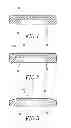
FIG. 1 is an embodiment of the present invention, showing a cross-sectional structure of the ergonomical pillow for head rest;
FIG. 2 is another embodiment of the present invention, showing a cross-sectional structure of the ergonomical pillow for head rest having a covering layer;
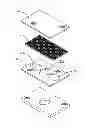
FIG. 3 is a schematic diagram for an embodiment of the pillow of FIG. 2, showing the construction elements of the pillow;
FIG. 4 is a schematic diagram for another embodiment of the pillow of FIG. 2, showing the construction elements of the pillow;
FIG. 5 is another embodiment of the present invention, showing a cross-sectional structure of the ergonomical elements of the pillow;
FIG. 6 is yet another embodiment of the present invention, showing a cross-sectional structure of the ergonomical elements of the pillow;
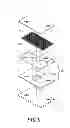
FIG. 7 is a schematic diagram for an embodiment of the pillow of FIG. 6, showing the construction elements of the pillow;
FIG. 8 is another embodiment of the present invention, showing a cross-sectional structure of the ergonomical pillow having pressure relief capability;
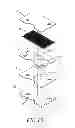
FIG. 9 is a schematic diagram for the pillow of FIG. 8, showing the construction elements of the pillow;
FIG. 10 is an illustrative diagram of another embodiment of the present invention, showing an arc-like groove on an edge of the ergonomical pillow having pressure relief capability;
FIG. 11 demonstrates a situation when the ergonomical pillow for head rest of the present invention is in use, showing a user's head settling into a hollow compartment when the user is in a back-lying position; and
FIG. 12 demonstrates a situation when the ergonomical pillow for head rest of the present invention is in use, showing a user's head settling into a left hollow compartment when the user is in a side-lying position.
DETAILED DESCRIPTION OF THE PREFERRED EMBODIMENTS
Referring now to FIG. 1, an embodiment for an ergonomic pillow for head rest according to the present invention comprises:
-
- a pillow surface 10, which is a sheet-like element made from a soft buffer material;
- a shock absorbing and pressure relief cushion 20, which is a sheet-like element made from a shock absorbing and pressure relief material, which can selected from gel and silicon; and
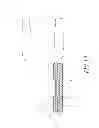
- a pillow 30, wherein the pillow 30 is made from a soft buffer material, and the pillow 30 has at least one hollow compartment 31, the hollow compartment 31 is located on the essential distribution location of a user's weight, such is suitable for use in supporting back of user's head. The shock absorbing and pressure relief cushion 20 covers the top of the hollow compartment 31, the pillow surface 10 covers the top of the shock absorbing and pressure relief cushion 20, pillow surface 10 is attached to the shock absorbing and pressure relief cushion 21 and pillow 30 with a glue-based connecting means. When the user's head is lying on the pillow surface 10 above the hollow compartment 31, the pillow surface 10 and the shock absorbing and pressure relief cushion 20 covering on top of the hollow compartment 31 will settle into a groove 31 due to the weight of the user's head (as shown in FIG. 11).
Gel is a polymeric compound that can have properties ranging from excellent pressure conduction and shock absorbability, and can also be a copolymer, and shows high thermoplasticity. An example of which is SERS as it can form an elastic gel by realizing a vulcanization using appropriate bridge catalyst after ovening. In addition, its hardness can also be adjusted depending on actual needs, which has low elasticity and is therefore particularly suitable for producing highly soft pressure relief material. In an embodiment of the present invention, the surface of a shock absorbing pressure relief cushion 20 can be set up to have network of protrusions (as shown in FIG. 3), and can also be set up to have a texture of a bulb-like structure, which can serve to provide a massaging function, or making the shock absorbing pressure relief cushion into a solid body having a planar surface.
According to an embodiment of the present invention, the soft buffer material used in producing a pillow 30 can be selected from a group of foam, high density foam, and latex.
According to another embodiment of the present invention, the exterior surface of the pillow 10 and pillow 30 has a covering layer 40 (as shown in FIG. 2), the covering layer 40 can be selected from a group consisting of a man-made leather (ex. PVC or PU man-made leather), man-made fabric cloth, and natural fabric cloth.
In practice when producing an embodiment for the pillow 30 as in FIG. 2, which is shown in FIG. 3, a processing technology (ex. cutting) is used to form a hollow compartment 31 on the pillow 30, the hollow compartment 31 can conduct through the pillow 30 along the direction the user's head applies to the pillow 30, the shock absorbing pressure relief cushion 20 covers the top of the hollow compartment 31, and the pillow surface 10 covers additionally on top of the shock absorbing and pressure relief cushion 20. FIG. 4 is the structure of another embodiment of the ergonomic pillow for head rest of the present invention, wherein the bottom of the pillow 30 has a support cushion 50, with which the support cushion 50 can increase the height of the ergonomic pillow for head rest of the present invention. Support cushion 50 is another sheet-like element made from soft buffer material, and the support cushion 50 can be attached to the bottom of the pillow 30 through a connecting means including taping.
Referring now to FIG. 5, a structure for another embodiment of the ergonomic pillow for head rest of the present invention is provided, further comprising:
-
- a shock absorbing and pressure relief cushion 20, which is a sheet-like element made from a shock absorbing and pressure relief material, and can be a material selected from the group consisting of gel, silicon;
- a pillow 30, the pillow 30 is made by soft buffer material, the pillow 30 can have at least a hollow compartment 31, the hollow compartment 31 is located on essential locations for weight of user's head, so as to support back of user's head, the shock absorbing and pressure relief cushion 20 covers the top of the hollow compartment 31; and
- a covering layer 40, which covers exterior surfaces of the pillow 30 and the shock absorbing and pressure relief cushion 20.
According to yet another embodiment of the present invention, the covering layer 40 and shock absorbing and pressure relief cushion 20 can be disposed of a plurality of through-out ventilation pores, making the ergonomic pillow for head rest of the present invention more well ventilated.
FIG. 6 is a schematic diagram showing yet another embodiment of the present invention, comprising:
-
- a pillow surface 10, which is a sheet-like element made from a soft buffer material;
- a shock absorbing and pressure relief cushion 20, which is a sheet-like element made from a shock absorbing and pressure relief cushion, which is made by a material selected from a group consisting of gel and silicon; and
- a pillow 30, the pillow 30 is made by a soft buffer material, the pillow 30 has a first hollow compartment 31a and a left hollow compartment 31b and a right hollow compartment 31c disposed respectively on two sides of the first hollow compartment 31a, the first hollow compartment 31a provides support to weight of a user's head on essential locations of the pillow 30, wherein the first hollow compartment 31a is suitable for supporting back of head, the depth of the left hollow compartment 31b and the right hollow compartment 31c is smaller than the first hollow compartment 31a, which can offer support to a side of head when the user is lying on his/her side (see FIG. 12). The shock absorbing and pressure relief covers the first hollow compartment 31a, left hollow compartment 31b and right hollow compartment 31c. The pillow surface 10 covers on top of the shock absorbing and pressure relief cushion 20, and is attached to the pillow 30 through a connecting means including taping. When the user is lying on his/her back, the user's head resets on the pillow surface 10 above the first hollow compartment 31a, the pillow surface 10 and the shock absorbing and pressure relief cushion 20 covering on top of the first hollow compartment 31a will settle downward into the first hollow compartment 31a due to the weight of the user's head. When the user is lying on his/her side, regardless of the direction to which the user faces, the user can choose to from using the left hollow compartment 31b and the right hollow compartment 31c for supporting the side of the user's head. Although it may appear apparent to some that the shoulder width of the user when he/she is lying on his/her side, the width of which may cause the height of the neck to be slightly higher than that when the user is lying on his/her back, such disadvantage may be solved with the present invention to provide appropriate support for body type as the depth of the left hollow compartment 31b and the right hollow compartment 31c are smaller than the first hollow compartment 31a.
Another embodiment of the pillow 30 as shown in FIG. 6 is shown in FIG. 7, the pillow 30 has a top layer material A1 and a bottom layer material A2 that are made from soft buffer material and overlap with each other. The top layer material A1 and the bottom layer material A2 can be attached together through a connecting means including taping, wherein a processing technology (ex. cutting) forms a first central compartment 32a on the essential locations from which the bottom layer material A2 support the weight of the user's head. The top layer material A1 forms a second central compartment 32b on the essential locations from which the top layer material A1 support the weight of the user's head. There are also disposed on two sides of the second central compartment 32b a left hollow compartment 31b and a right hollow compartment 31c, wherein the left hollow compartment 31b and the right hollow compartment 31c all passes through the top layer material A1. The second central compartment 32b passes through top of the first central compartment 32a and connects with the first central compartment 32a, and the first central compartment 32a and the second central compartment 32b constitute the first hollow compartment 31a. The shock absorbing and pressure relief cushion 20 covers the top of the first hollow compartment 31a , the left hollow compartment 31b and the right hollow compartment 31c. The pillow surface 10 then covers the top of the shock absorbing and pressure relief cushion 20. The depth of the first hollow compartment 31a, left hollow compartment 31b and the right hollow compartment 31c are set out to be different as a result of the abovementioned structing arrangement.
FIG. 8 and FIG. 9 show another embodiment of the pillow 30 of FIG. 6, wherein the bottom of the pillow 30 has a support cushion 50, and the height of the ergonomic pillow for head rest is increased by use of the support cushion 50. The support cushion 50 is a sheet-like element made from a soft buffer material, and the support cushion 50 can be attached to the bottom of the pillow 30 through a connecting means including taping.
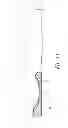
FIG. 10 is an illustrative diagram of another embodiment of the present invention, wherein the edge of the pillow 30 has an arc-like groove 33, the groove 33 is made in such a way to respond to the back of the user's neck such that the bottom edge of the ergonomic pillow falls near the user's shoulder, providing appropriate support to cervical vertebrae and user's back.
The present invention may be embodied in other specific forms without departing from its spirit or essential characteristics. The described embodiments are to be considered in all respects only as illustrative and not restrictive. The scope of the invention is, therefore, indicated by the appended claims rather than by the foregoing description. All changes which come within the meaning and range of equivalency of the claims are to be embraced within their scope.
Claims
1-8. (canceled)
9. An ergonomic pillow for head rest, comprising:
a first layer made of a soft buffer material and having a flat surface;
a second layer made of gel or latex and disposed under the first layer;
a third layer made of a soft buffer material, disposed under the second layer, and having a hollow compartment at the center of the third layer; and
a fourth layer made of a soft buffer material and disposed under the third layer.
10. (canceled)
11. The ergonomic pillow for head rest of claim 9, wherein an edge of each of the first layer, the third layer, and the fourth layer has an arc-like groove adaptable to a back of the user's head.
12. The ergonomic pillow for head rest of claim 9, wherein the soft buffer material is selected from the group consisting of a foam, high density foam, and latex.
13. The ergonomic pillow for head rest of claim 9, further comprising a covering layer covering the first layer, the second layer, the third layer, and the fourth layer.
14. An ergonomic pillow for head rest, comprising:
a first layer made of a soft buffer material and having a flat surface;
a second layer made of gel or latex and disposed under the first layer;
a third layer made of a soft buffer material, disposed under the second layer, and having a second central compartment, a right hollow compartment, and a left hollow compartment; and
a fourth layer made of a soft buffer material, disposed under the third layer, and having a first central compartment corresponding to the second central compartment.
15. The ergonomic pillow for head rest of claim 14, wherein an edge of each of the first layer, the third layer, and the fourth layer has an arc-like groove adaptable to a back of the user's head.
16. The ergonomic pillow for head rest of claim 14, wherein the soft buffer material is selected from the group consisting of a foam, high density foam, and latex.
17. The ergonomic pillow for head rest of claim 14, further comprising a covering layer covering the first layer, the second layer, the third layer, and the fourth layer.
18. An ergonomic pillow for head rest, comprising:
a first layer made of a soft buffer material and having a flat surface;
a second layer made of gel or latex and disposed under the first layer;
a third layer made of a soft buffer material, disposed under the second layer, and having a second central compartment, a right hollow compartment, and a left hollow compartment; and
a fourth layer made of a soft buffer material, disposed under the third layer, and having a first central compartment corresponding to the second central compartment; and
a fifth layer made of a soft buffer material and disposed under the fourth layer.
19. The ergonomic pillow for head rest of claim 18, wherein an edge of each of the first layer, the third layer, the fourth layer, and the fifth layer has an arc-like groove adaptable to a back of the user's head.
20. The ergonomic pillow for head rest of claim 18, wherein the soft buffer material is selected from the group consisting of a foam, high density foam, and latex.
21. The ergonomic pillow for head rest of claim 18, further comprising a covering layer covering the first layer, the second layer, the third layer, the fourth layer, and the fifth layer.
Images & Drawings included:


Sources:
- United States Patent and Trademark Office - verify current appl. status at the USPTO↗
Similar patent applications:
- » 20140317852
Ergonomical pillow for head rest
Recent applications in this class:
- » 20240374060 2024-11-14
A side sleeper pillow - » 20240260770 2024-08-08
FUNCTIONAL PILLOW - » 20240251974 2024-08-01
PILLOW - » 20240023734 2024-01-25
Head pillow apparatus with neck support, shoulder cavity and height adjustability - » 20240000245 2024-01-04
Earbud Accomodating Pillow Device - » 20230190017 2023-06-22
THERAPEUTIC PILLOW - » 20230148772 2023-05-18
ORTHOPEDIC PILLOW WITH INTERCHANGEABLE CERVICAL SUPPORT - » 20230075429 2023-03-09
Hybrid Pillow - » 20220257034 2022-08-18
Anti-Wrinkle Pillow Attachment - » 20220202212 2022-06-30
DOUBLE PILLOW WITH CERVICAL SUPPORT